

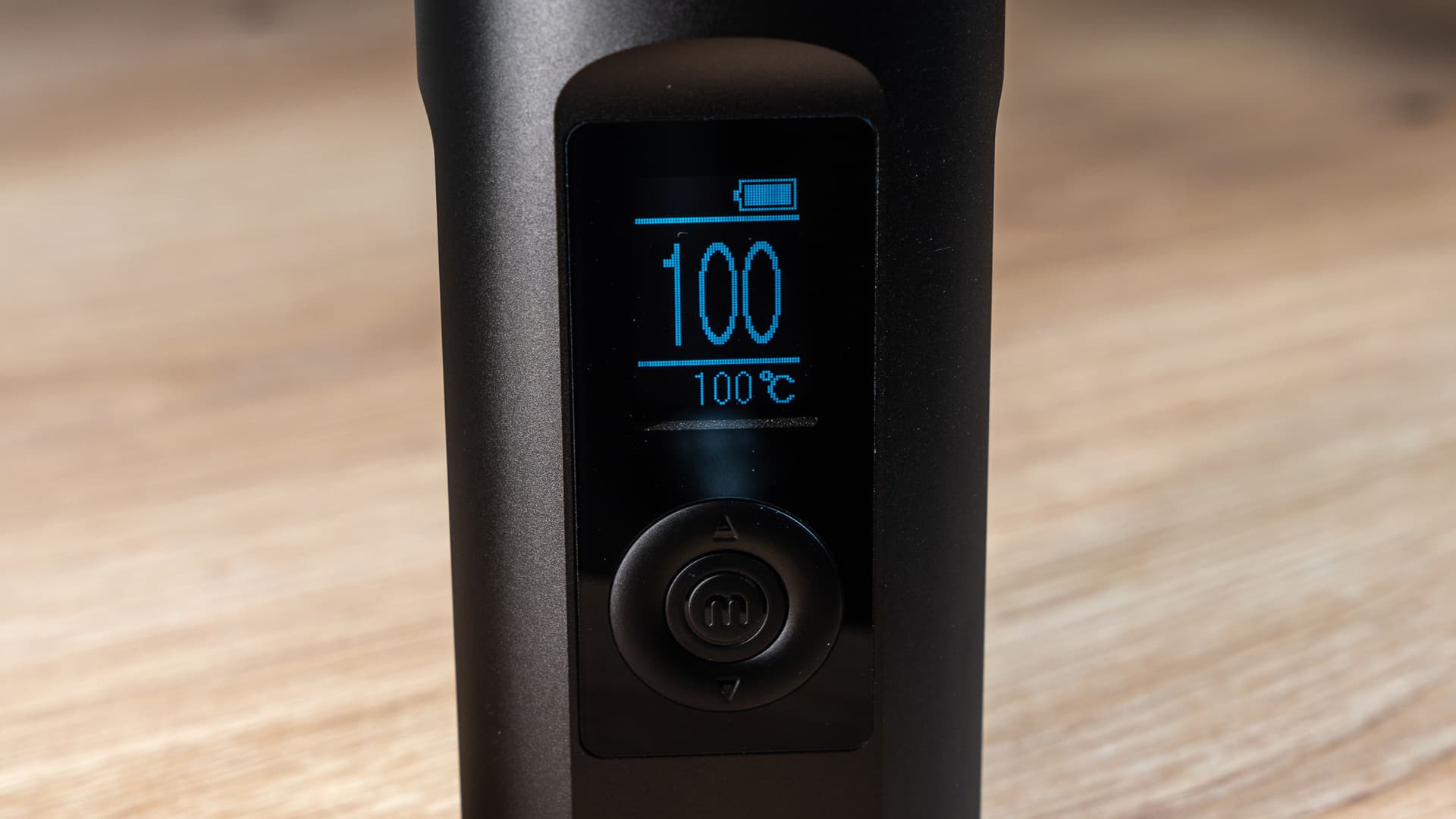
Apart from the cannabis itself, temperature is the biggest thing you control in a vaporizer session. A 20°C shift changes which terpenes you taste, how fast the load gives up its cannabinoids, and whether the vapor feels light and flavorful or thick and toasty.
The short answer: start at 185°C. Go lower for flavor, higher for thick vapor and a faster bowl, and keep flower at or below 220°C.
| Goal | Setting |
|---|---|
| Flavor first | 170-180°C |
| Everyday balance | 185-195°C |
| Thick vapor, fast bowl | 200-210°C |
| Finishing a stepped session | 210°C |
Most cannabis sessions happen between 160°C and 220°C. Drag through that window below to see what changes as you climb. If you're just getting started with vaporizers, our New to Vaping hub covers temperature alongside every other beginner essential.
Pick a setting
Drag the dial or tap a preset
185°C
BalancedVapor turns visible and the strain still tastes like itself. Most of our sessions land here, and 185°C is where we tell everyone to start.
The 180-210°C range works for most cannabis sessions
We recommend 180-210°C as the starting range for most people. The low end gives you bright flavor, the top end gives you dense vapor, and everything in between is room to find your spot.
Below 180°C, you get wispy vapor with bright flavor but slow extraction. Above 210°C, extraction is faster, but flavor degrades and vapor becomes harsher on the throat.
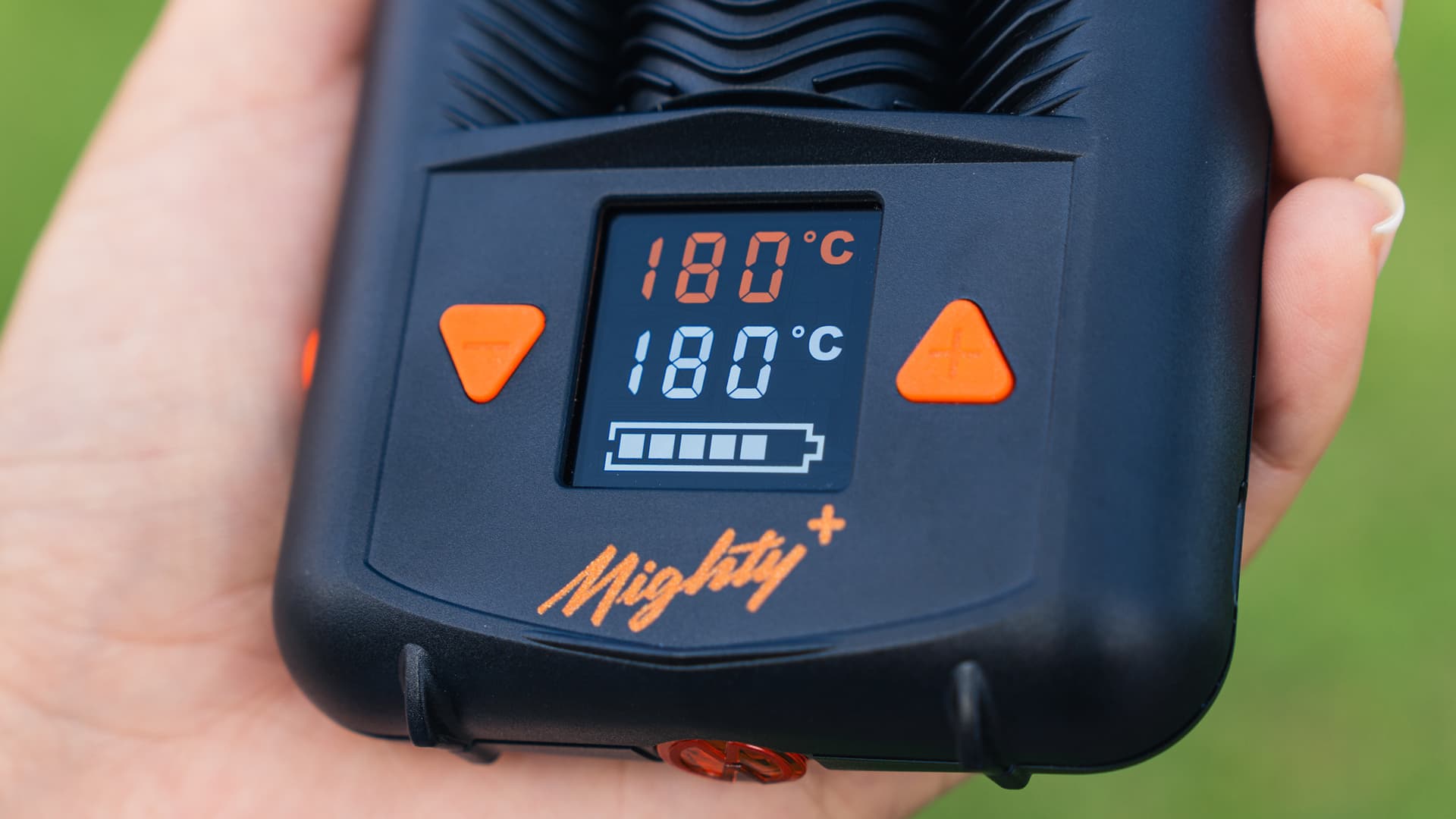
The Mighty+ set to 180°C, the bottom of our recommended range, where flavor stays bright before you dial upward. A few sessions in, try nudging it toward 185°C.
Your ideal temperature within this range depends on three things: the flavor and vapor you like, the cannabis you're using, and your vaporizer's heating method.
Tip
Low-temp vaping (160-180°C) prioritizes flavor over clouds
Sessions at 160-180°C are all about taste. You get your cannabis at its most aromatic, but vapor production is thin.
THC is already coming off at these settings, so a low-temp session can still get you properly high. If you're microdosing, control the amount with a smaller load, not a lower number on the dial. With medicinal cannabis, follow your prescribed instructions.
The tradeoff is extraction speed. You pull less from each load, so your leftover AVB comes out lighter in color and still holds cannabinoids for edibles or water curing.
Mid-temp vaping (180-200°C) balances flavor, effects, and vapor density
The 180-200°C range hits the overlap where terpenes and cannabinoids are both coming off nicely. Our sweet spot is 185-195°C when we want fuller vapor without sacrificing flavor.
Vapor becomes visible here and draws feel more satisfying. This is where most of our own sessions land: flavor holds up, clouds show up, and there's still room to climb.
High-temp vaping (200-220°C) extracts the most from your cannabis
On vapes that go this high for flower, sessions at 200-220°C pull the most from a load, and the fastest. Vapor is thick and visible, and each draw feels heavier.
Lighter terpene flavors fade quickly at this heat, and the taste shifts from nuanced to toasty. How much you get out also depends on the vape itself: lab tests on several vaporizers found cannabinoid recovery varied from model to model.
A full oven finishes in noticeably fewer draws than at 180°C. The tradeoff is harsher vapor, especially without water filtration.
Warning
No visible vapor at low temps is normal
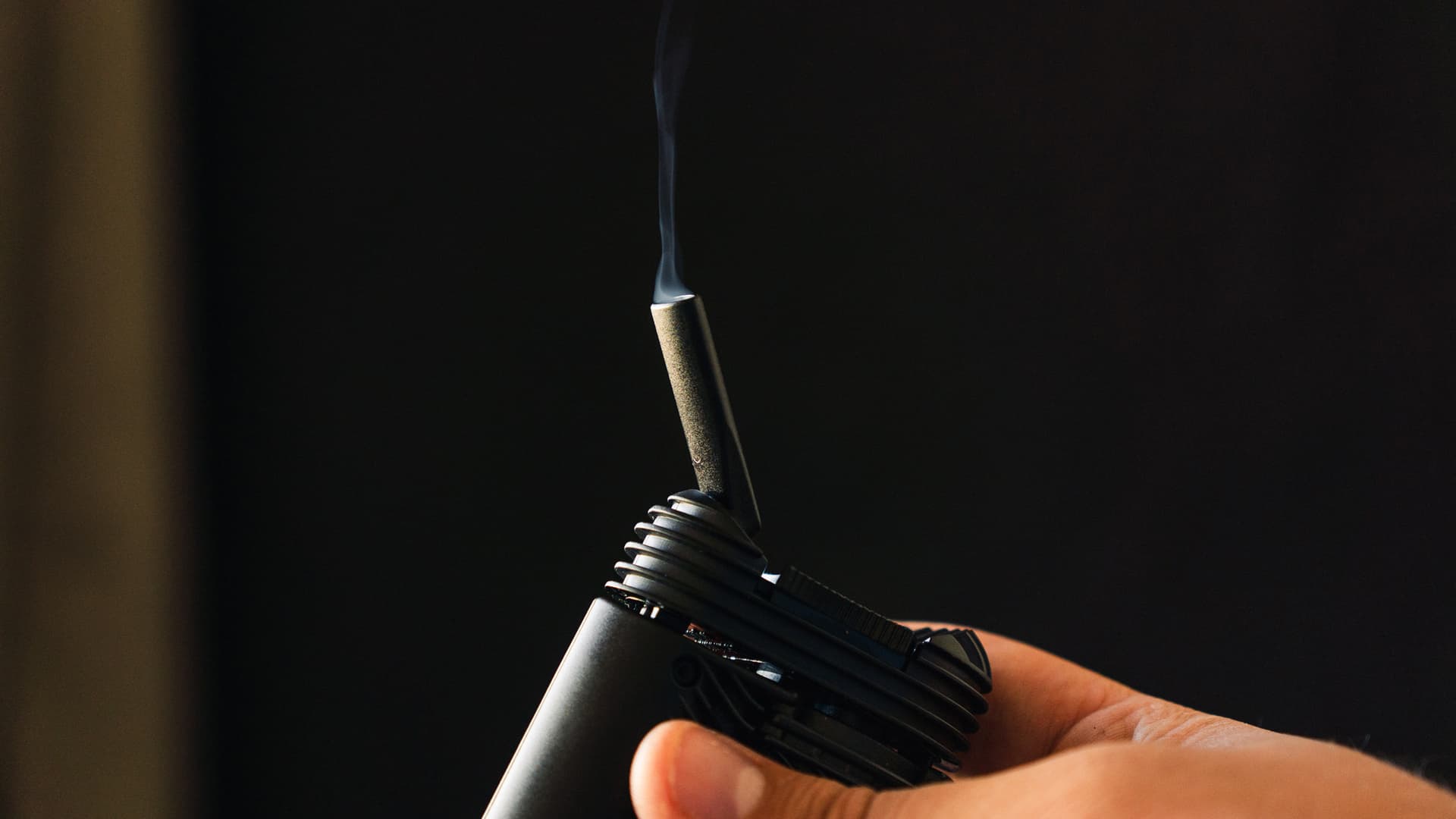
At 170-180°C vapor can be almost invisible, and you're still getting THC. If you taste nothing after a few draws and your leftovers look unchanged, check the basics: a full preheat, a tight seal, a medium grind and cannabis that isn't damp. Our troubleshooting guide covers the rest.
Temperature stepping gives you flavor first, then clouds
Temperature stepping means starting a session low and raising the temperature in stages. It's how we run most of our own sessions: bright flavor early, dense vapor later, all from one load.
One load, four steps
170-180°C
1Bright flavorThe terpenes taste their best.
185-190°C
2Fuller vaporClouds thicken, taste deepens.
200°C
3Dense vaporPulls more from what's left.
210°C
4Finish or stopClear the bowl, or stop earlier.
First draws taste bright and aromatic. Final draws are thicker and toastier. Inhaled cannabis can take 10 to 30 minutes to reach full effect, so there's no rush to climb.
Vaporizers with precise digital controls make stepping easy. The Volcano Hybrid lets you set exact temperatures through its app, while the Mighty+ and Venty adjust in 1°C steps right on the vape.
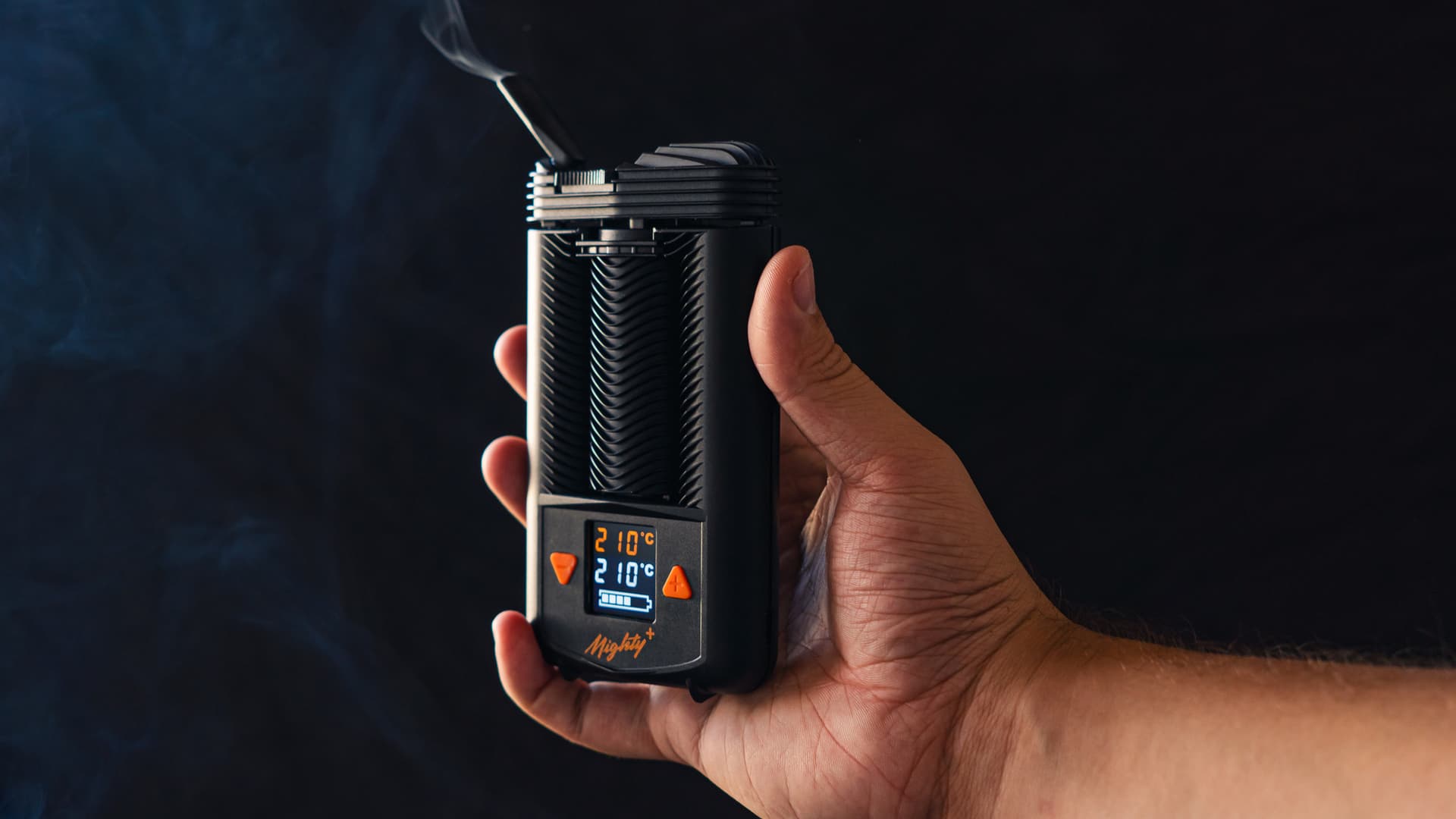
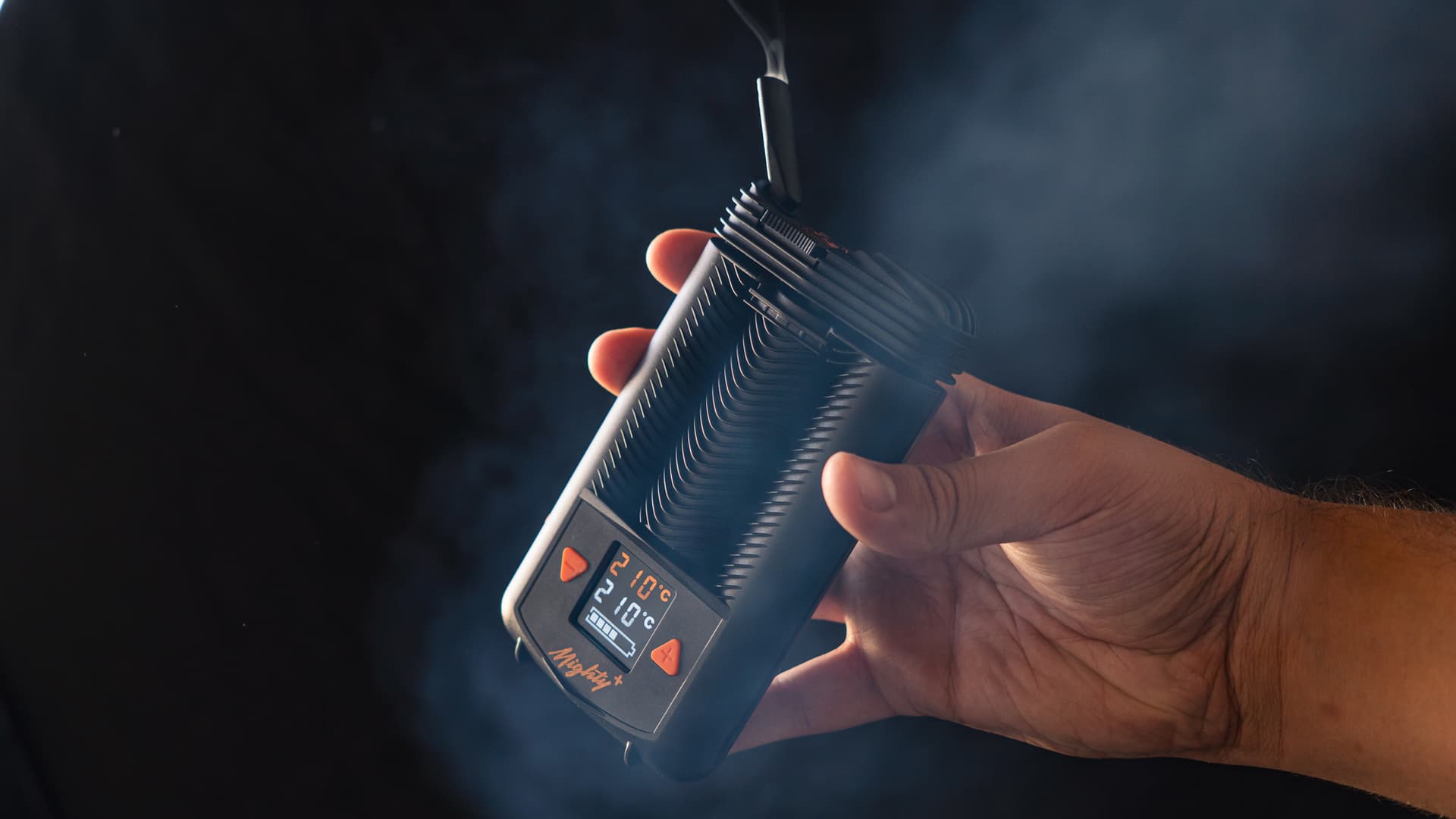
The Mighty+ at 210°C, its top setting and the last step in our sequence. Start low, take a few draws, then climb.
Your leftovers tell you how your sessions ran
The color of your AVB (already vaped bud) is a free check on your sessions. With the same cannabis and vape, lighter leftovers mean a cooler session, and that AVB has more to give when you reuse it. Darker brown means you ran hotter or longer and pulled more out of the flower.
Read your leftovers
Cooler or shorter
More left for edibles or water curing
Hotter or longer
More pulled out of the flower
If your AVB comes out patchy, light and dark in the same oven, the culprit is usually uneven heating rather than your temperature setting. Stir mid-session, tighten up your grind, or switch to dosing capsules on vapes that take them.
Your heating method shifts the ideal temperature setting
Not all vaporizers deliver heat the same way. The method directly affects which temperature setting produces the best results.
Conduction
Heat from the walls in
The outside of the load toasts first. Stir between draws.
Convection
Hot air through the load
Heats evenly. The display reads the heater, not the flower.
Hybrid
Walls and air together
Even vapor with little stirring. Set it and adjust by taste.
Torch
Flame and feel
Heat until the cap clicks. Aim near the tip for flavor, lower for thicker vapor.
Conduction vaporizers heat from the walls in
Conduction vaporizers heat cannabis by direct contact with a hot surface. Material touching the oven walls gets hotter than material in the center, creating uneven extraction. If the outer layer scorches while the center stays green, drop the temperature a few degrees.
Stirring between draws and using a fine, consistent grind help even out the heat.
Convection vaporizers heat with moving air
Convection vaporizers pass hot air through the cannabis, so the load heats more evenly than it does from wall contact alone. The number on the display comes from a sensor at the heater, not inside your flower. Storz & Bickel measures the Volcano Hybrid at its heat exchanger, for example. Set by taste and adjust from there.
Pure convection portables like the Tinymight 2 step just as well, only by number: it uses a numbered dial instead of a degree readout. In on-demand mode it stops heating between draws, so little heat goes to waste.
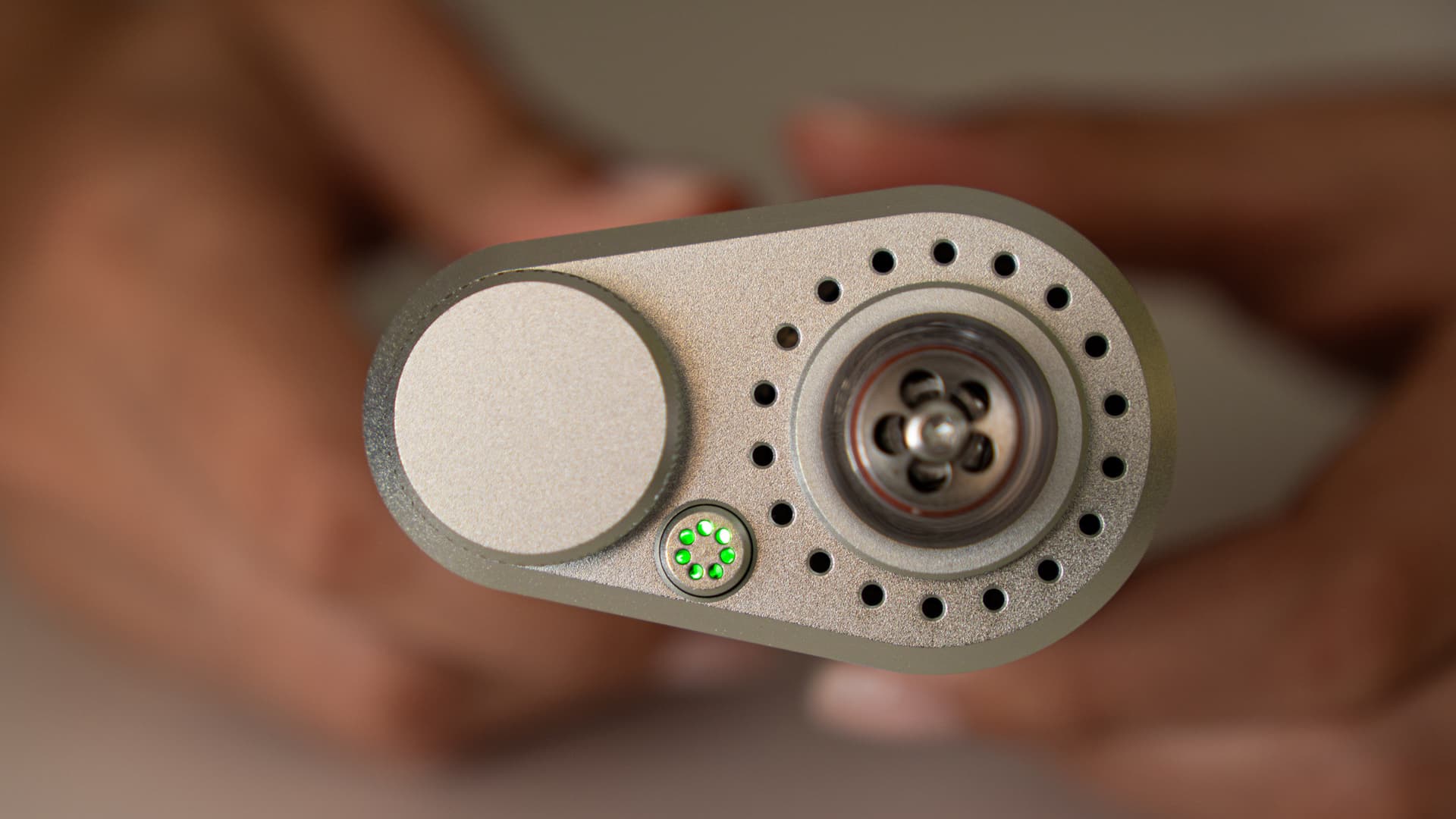
The Tinymight 2 bowl from above, with the heater at its base and a ring of air holes around it.
Hybrid heating splits the difference
Hybrid heating combines both methods. The oven walls provide conduction while hot air adds convection. On the hybrids we use most, like the Mighty+ and Venty, vapor stays consistent with little stirring. No fixed offset is needed; set a temperature and adjust by taste.
Torch-powered vaporizers require technique over settings
Butane-powered vapes like the DynaVap M7 have no digital temperature display. You control temperature by where you aim the flame and how long you heat. Heating near the tip produces lower temperatures (more flavor), while heating near the base produces higher temperatures (thicker vapor).
Heat until the cap clicks, stop, and wait for the cooling click before you heat again. This manual approach is less precise but builds intuitive control over time. The learning curve is steeper, and consistent results take practice.
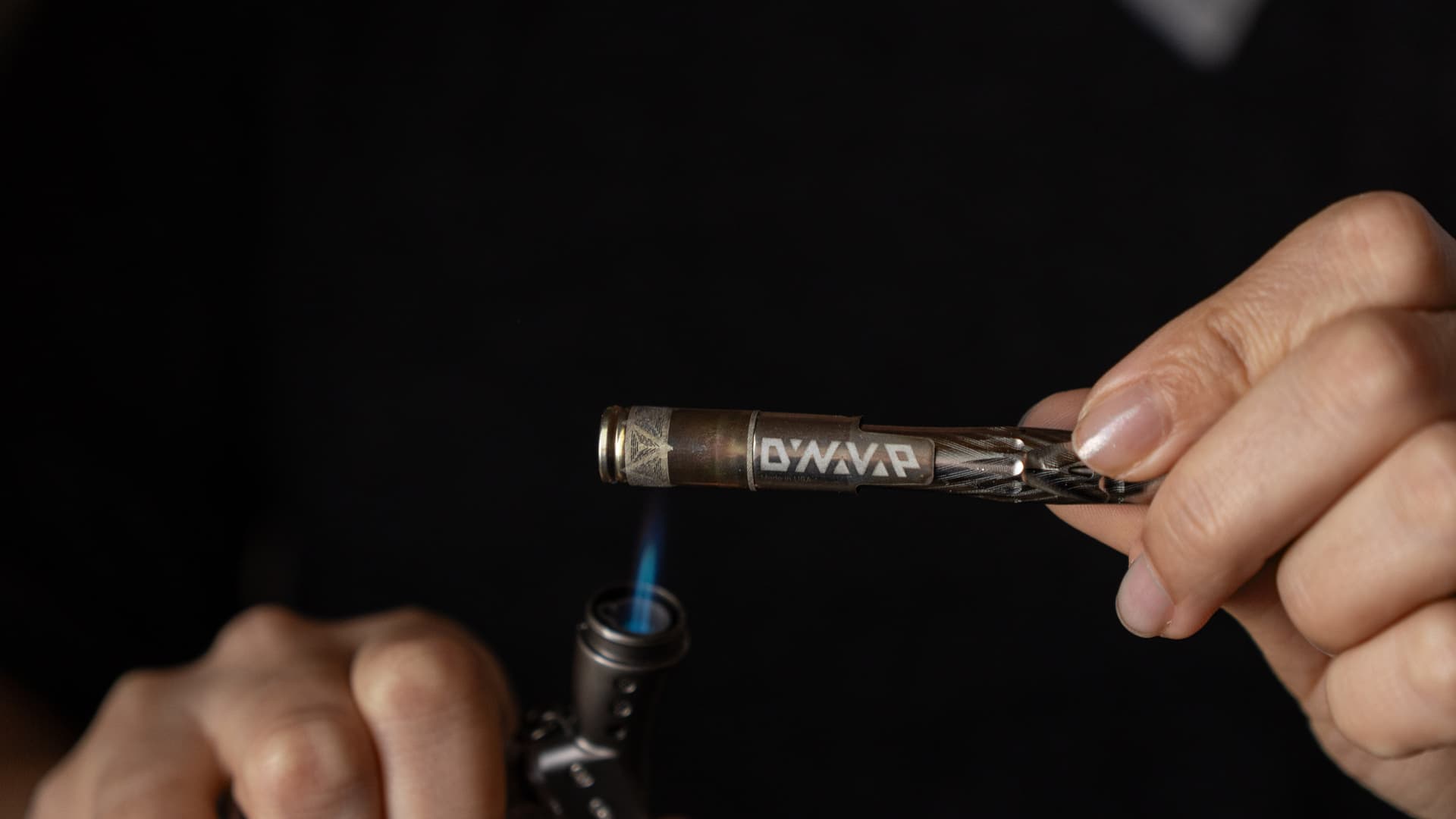
Torch-powered vapes trade digital precision for feel. Where you aim the flame sets how hot the session runs.
Boiling-point charts are a map, not a switch
Researchers have identified 125 cannabinoids and 120 terpenes in cannabis. Vaporization heats the flower until these compounds turn to vapor, and many start leaving below their listed boiling points. That's why boiling-point charts, including ours below, work as a rough map rather than an on switch. Some of the cannabinoid figures were measured under vacuum, not at the normal air pressure inside your vape.
The other key process is decarboxylation: heat converts the acid forms THCA and CBDA into THC and CBD. THCA doesn't get you high on its own, so this step is a big part of why heated flower works. Heat and time both drive it, and lab tests on cannabis extracts tracked the conversion across 80-145°C.
Burning is what you're trying to avoid. Smoke carries tar and carbon monoxide, and in a 2004 lab test the vapor from a Volcano was almost all cannabinoids while the smoke held over 111 compounds. That study puts combustion near 230°C, so past 220°C you're getting close. If the vapor tastes acrid or the flower turns black, turn the heat down. More in our vaping vs smoking guide.
Listed boiling points
Cannabinoids
- THC157°C
- CBD170°C
- CBN185°C
- CBC220°C
Terpenes
- Pinene155°C · pine
- Myrcene167°C · earthy
- Limonene176°C · citrus
- Linalool198°C · floral
- Caryophyllene≈260°C · pepper →
Cannabinoids list between 157°C and 220°C
THC is listed at 157°C and comes off even at low settings. CBD, the non-intoxicating headline compound in CBD-rich and balanced strains, sits at 170°C. CBN (185°C) forms as THC breaks down, so aged flower carries more, and CBC (220°C) is a minor cannabinoid usually present in small amounts.
Most terpenes boil between 155°C and 200°C
Terpenes drive cannabis aroma and flavor, and they can also change how cannabinoids feel, which researchers call the entourage effect. In a 2024 trial, adding limonene to vaporized THC lowered some anxiety ratings compared with THC alone. Terpenes are far more volatile than cannabinoids, so they taste best early in a session and fade as you turn up the heat.
Different strains contain different terpene ratios, which is why the same temperature produces noticeably different flavor across cultivars.
Tip
Key Takeaway
- 185°C as a starting point. Good flavor and visible vapor for most sessions
- 170-175°C for flavor. Terpenes taste brightest early and low
- 200-210°C for extraction. Thick vapor, toasty flavor, faster bowls
- Step temperatures. Start low, climb in stages, and stop whenever you've had enough
- Watch the load, not just the dial. Burnt taste or blackened flower means turn it down