

What is AVB, and does it still get you high?
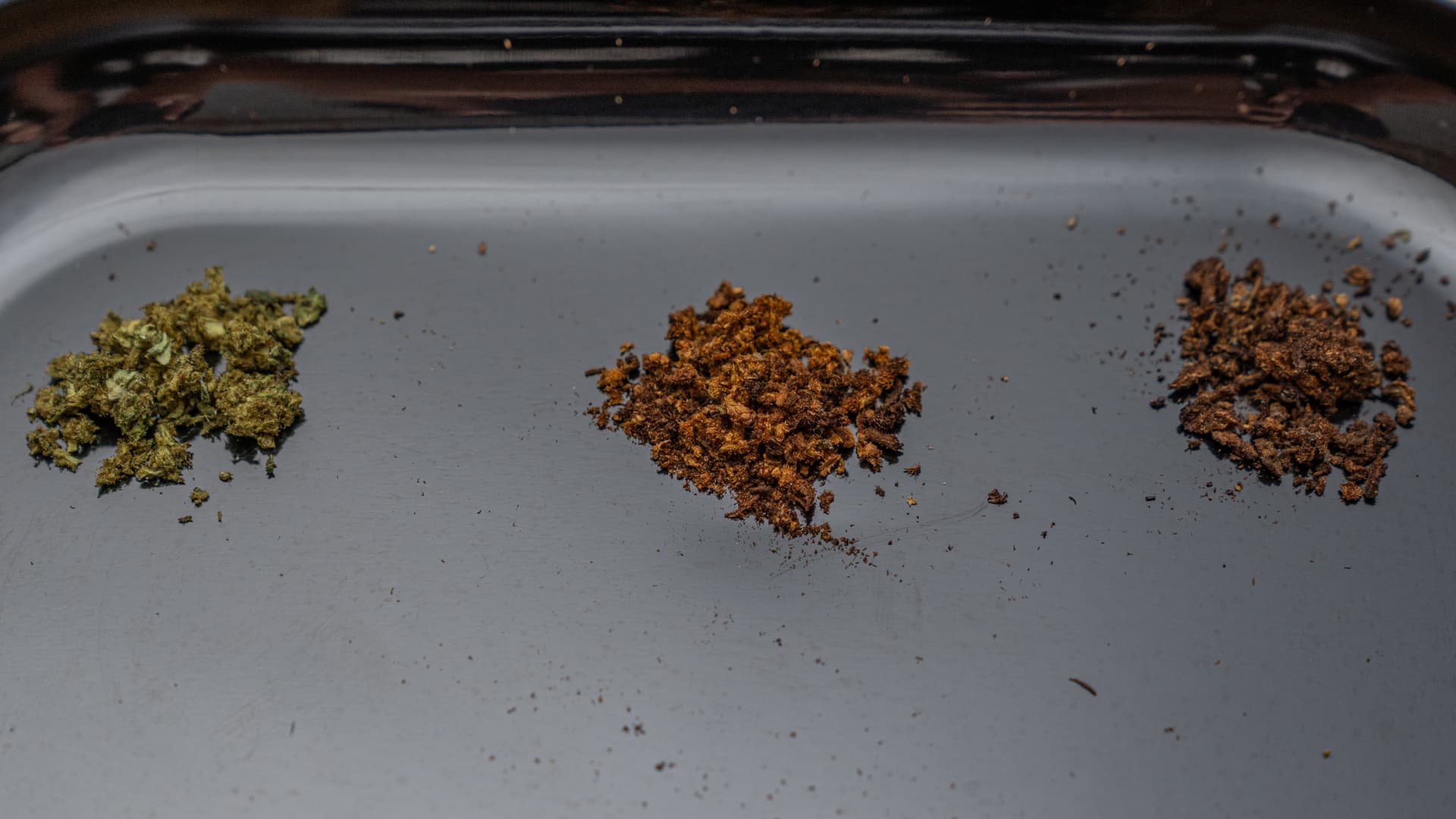
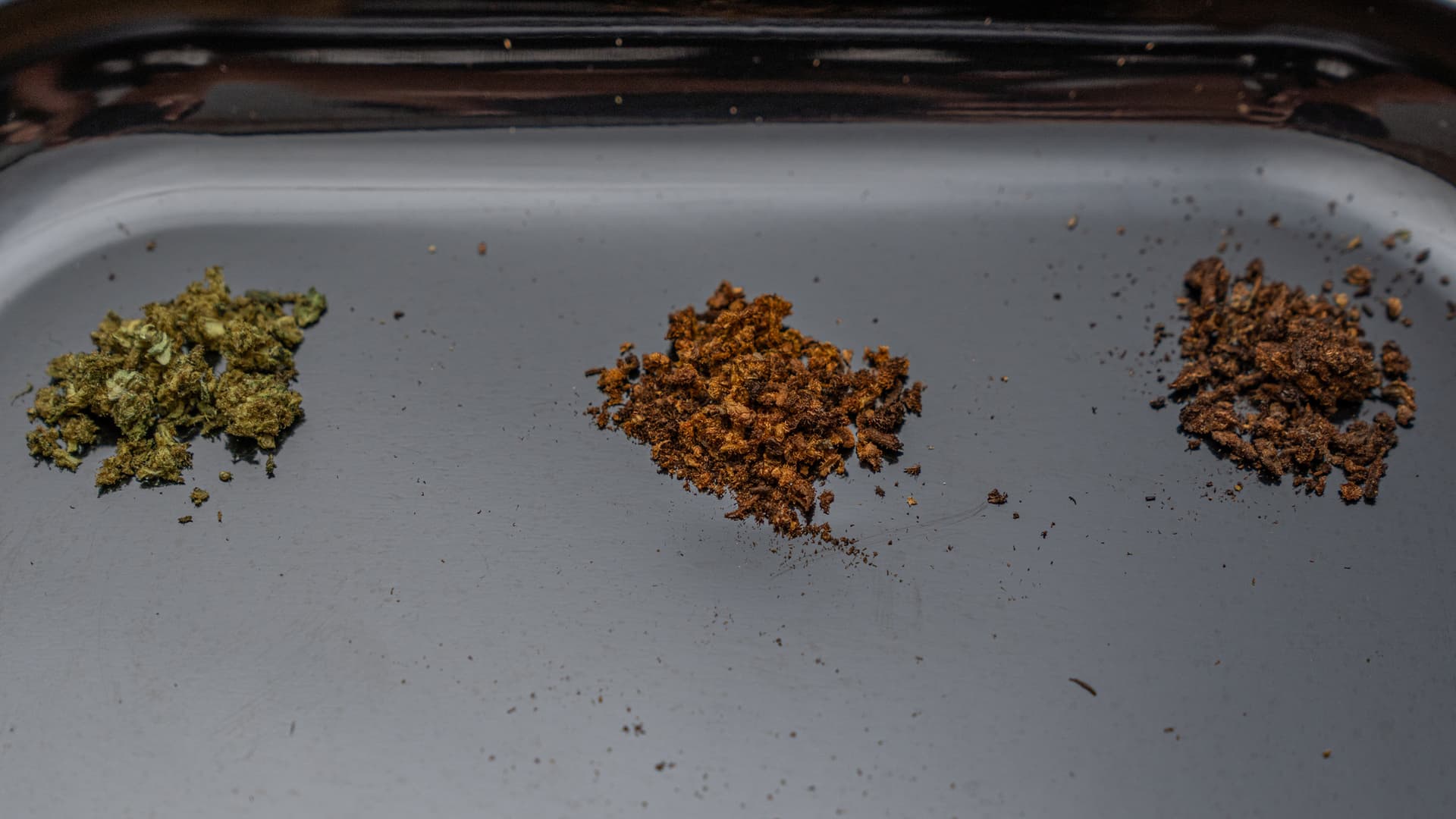
Fresh green cannabis on the left turns light brown and then deep brown as your vape pulls out cannabinoids, leaving already vaped bud on the right.
AVB (Already Vaped Bud) is the brown, dry cannabis left in your oven after a vaporizer session. Most people toss it. Don't.
Yes, AVB still gets you high when you eat it. It's weaker than fresh flower, but the THC left in it is already activated, so a small amount in food can hit like an edible.
Key Takeaway
- Quick answer: yes, you can eat it. Your vape already decarbed most of the THC in your AVB
- Eat it straight with a fatty food like peanut butter or yogurt
- Make AVB butter or coconut oil on low heat
- Fill size 00 capsules to skip the taste
- Make a tincture with high-proof, food-grade ethanol
- Brew tea with whole milk or a pat of butter
- Bake a firecracker with peanut butter and graham crackers
- Make a balm from AVB coconut oil for sore muscles
- Dose low: start with a small weighed portion and wait 4 hours
Vaporizing heats cannabis below combustion temperatures, so it releases cannabinoids and terpenes without burning the plant material. The leftover flower still holds some THC, CBD and other active compounds. How much depends on the flower you started with, the temperature you vaped at, the length of your session and your vaporizer.
A 2023 Swiss government-funded lab study of three vaporizers found that the amount left behind varied with the model and the setting.
The best part: vaping heat decarboxylates cannabinoids, turning THCA into THC. That means most AVB is orally active without another trip through the oven. You can eat it straight, stir it into food, or extract it into oils and tinctures.
What to do with AVB: 7 ways to use it
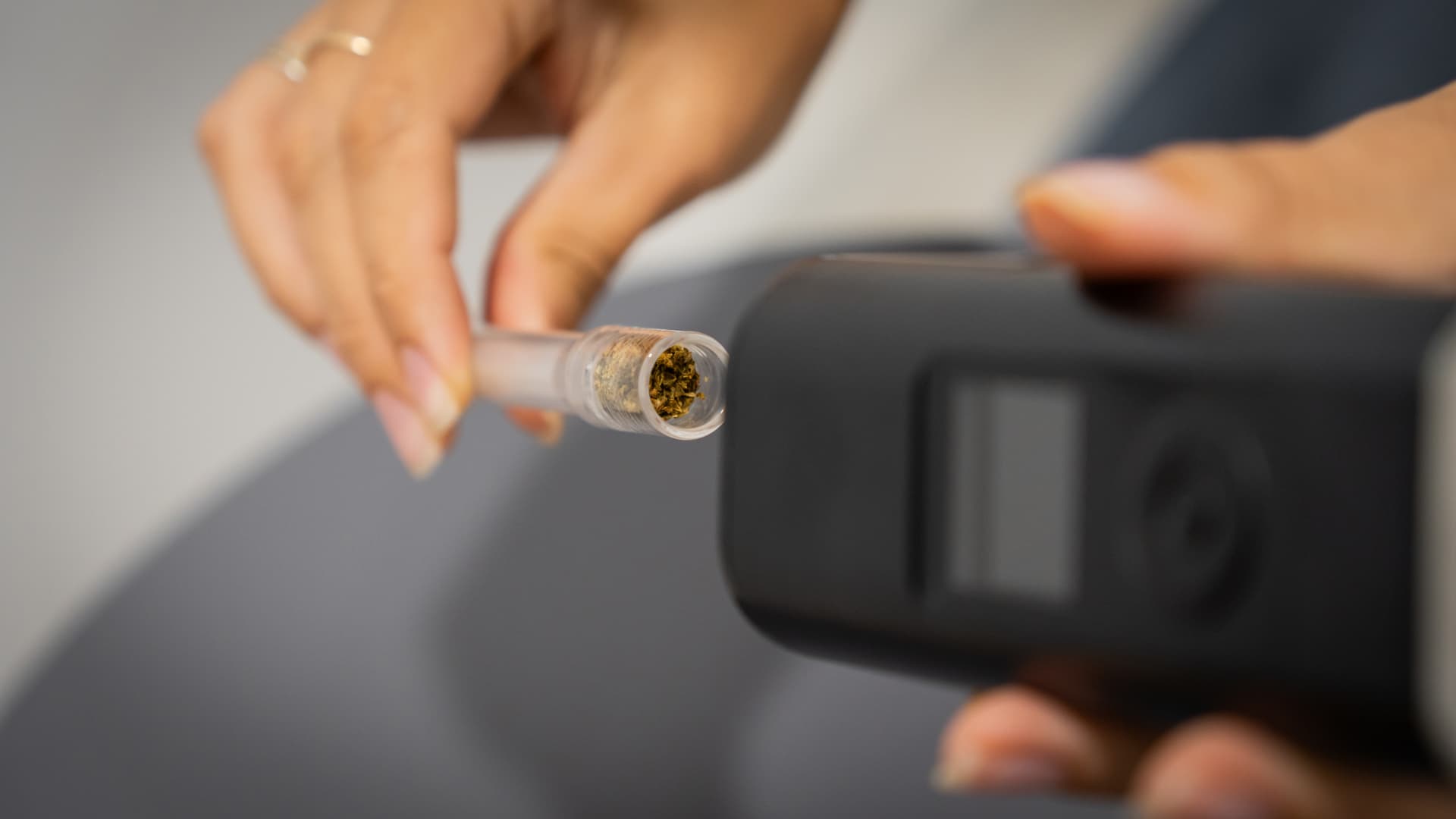
The Solo 3's glass stem shows you exactly what's left and tips straight into your jar.
Every method below works with AVB straight from your jar. For the fewest steps, eat it straight or fill capsules. For recipes, make butter first. And to get more from your flower before it ever turns into AVB, collect the kief from your grinder and vape it on its own.
1. Eat it straight (the simplest method)
Vaping already decarboxylated most of it, so you can eat AVB as-is. Sprinkle a small amount onto peanut butter toast, yogurt or a smoothie. The fat in these foods helps your body absorb the cannabinoids.
The taste is toasted and earthy, sometimes unpleasant. Washing it down with something rich, like a milkshake, helps. Start small and wait a full four hours before adding more.
2. Make AVB butter or coconut oil
Warm AVB in butter or coconut oil on the lowest heat setting, stirring occasionally. Keep the fat below a simmer, around 90°C, for 2 to 3 hours. Start with about 7 grams of AVB per 1 cup (225 grams) of butter, then adjust to taste and tolerance. Strain through cheesecloth, mix well and refrigerate. Use the same AVB-to-fat ratio each time so your batches stay comparable.
Because vaping already decarbed most of your AVB, you skip the oven step that fresh cannabis requires. Use the infused fat in any recipe: brownies, pasta sauce, salad dressing. Its strength depends on your AVB and your ratio, so try a small serving first and label the container. Homemade infused oils belong in the fridge, since plant bits and moisture in oil can let bacteria grow at room temperature.
3. Fill capsules to skip the taste
Packing AVB into empty gelatin or vegetable capsules is the easiest way to get it down without tasting it. Grind your AVB into a fine powder, mix the batch well and fill size 00 capsules. Weigh a few filled capsules so you know how much each one holds. Swallow with water and a fatty snack.
Start with one capsule and track effects over several sessions to find your personal threshold. Keep a simple log of capsule count, batch and perceived effect. Label the bottle clearly and keep it apart from your regular medicine.
4. Make a tincture with high-proof alcohol
Cover AVB with high-proof, food-grade ethanol (Everclear or similar) in a mason jar. Shake daily for a week or two, then strain through a coffee filter into a dropper bottle. Never use rubbing or denatured alcohol, and keep the jar away from flames and heat.
Start with a few drops under your tongue. Whatever you swallow follows edible timing, so give it the same four hours before taking more. Store the tincture in a dark glass bottle.
5. Brew AVB tea or coffee
Steep a small amount of AVB in hot (not boiling) water with a fat source like whole milk, coconut milk or a pat of butter. THC barely dissolves in water, so the fat does the heavy lifting. In a 2024 study of cannabis tea, plain water carried over less than 2% of the THC. Adding cream during steeping pushed that past half.
Steep for 10-15 minutes, strain and drink. It kicks in like an edible, so pace it the same way. The flavor is mild compared to eating AVB straight, especially if you water cure first (see below).
6. Bake a firecracker (no butter needed)
Spread a thick layer of peanut butter or Nutella on a graham cracker, press a small weighed pinch of AVB into it and top with a second cracker. Wrap it in foil and bake at 150°C for about 20 minutes. The gentle heat melts the spread so the fat soaks up the cannabinoids. One firecracker is one edible, so wait four hours before a second.
7. Make a balm for sore spots
Warm a quarter cup of your AVB coconut oil with a tablespoon of beeswax until blended, pour it into a tin and let it set. Rub it into sore muscles or joints. A balm works where you put it and won't get you high, which makes it a good home for dark-brown AVB.
Vaping temperature shapes how much is left in your AVB
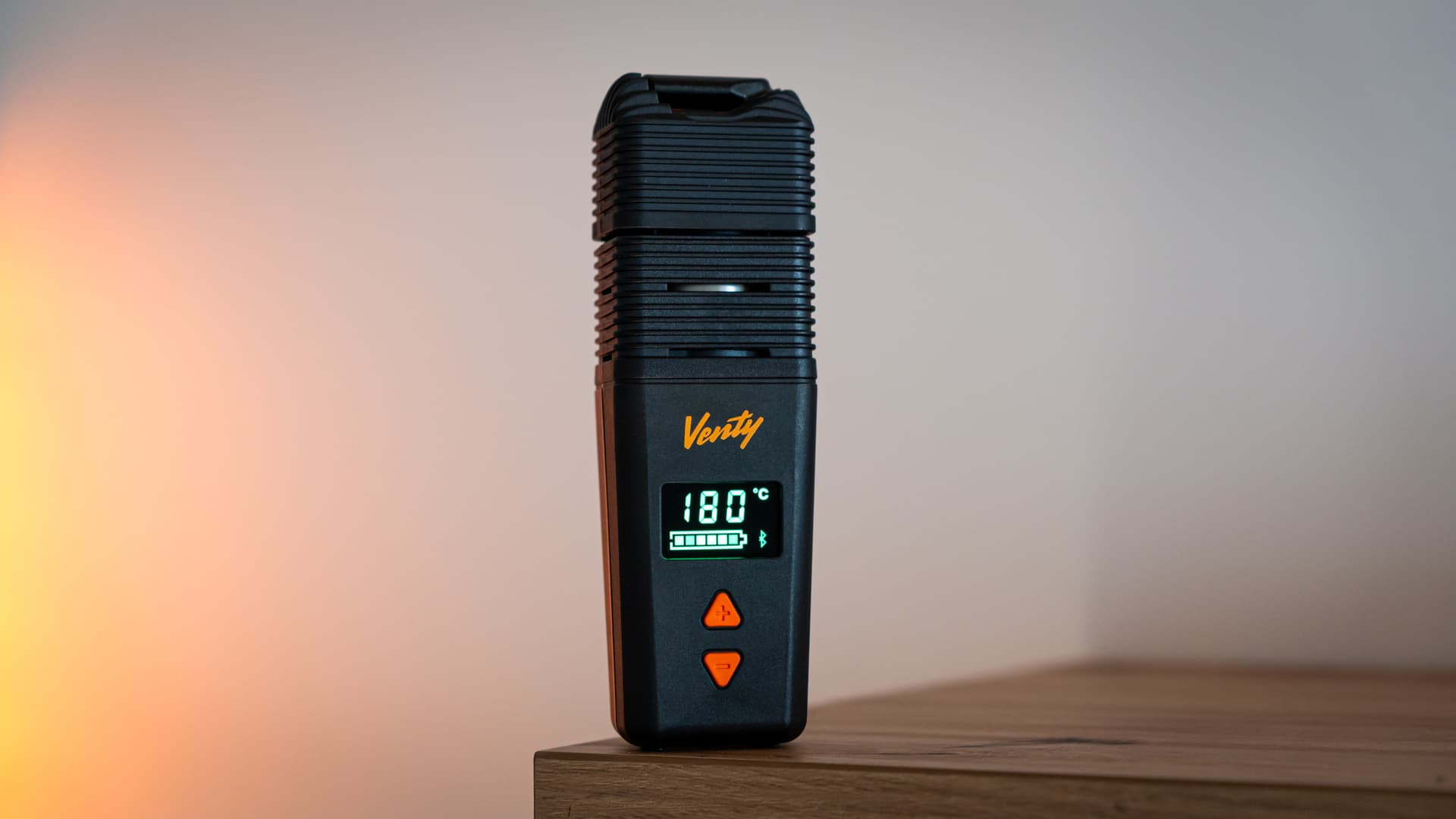
The Venty at 180°C, a popular mid-range setting. Note your temperature and you'll always know where a batch of AVB came from.
Temperature is the setting you control most directly. With the same flower, lower temperatures leave more cannabinoids in the leftovers. Higher temperatures and longer sessions extract more and leave less behind. Our temperature guide covers how flavor and effects shift across the dial.
Your vape's design matters too. The heater, oven, airflow and packing all change how evenly a load gets extracted. That's why two vapes at the same setting can leave very different AVB. Our guide to heating methods explains the differences.
If you vape low for flavor, you're effectively banking a second harvest. If you chase thick clouds at 210°C and above, expect a jar of darker, heavily extracted material. Plan your edible doses around a small test portion.
Use your usual setting to sort each batch:
| Your usual setting | Typical AVB color | Best use |
|---|---|---|
| 170-185°C | Light gold to tan | Butter, capsules, firecrackers |
| 185-200°C | Medium brown | Any method |
| 200°C and up | Dark brown | Balm, tea, water-cured butter |
The AVB color chart: how to read your leftovers
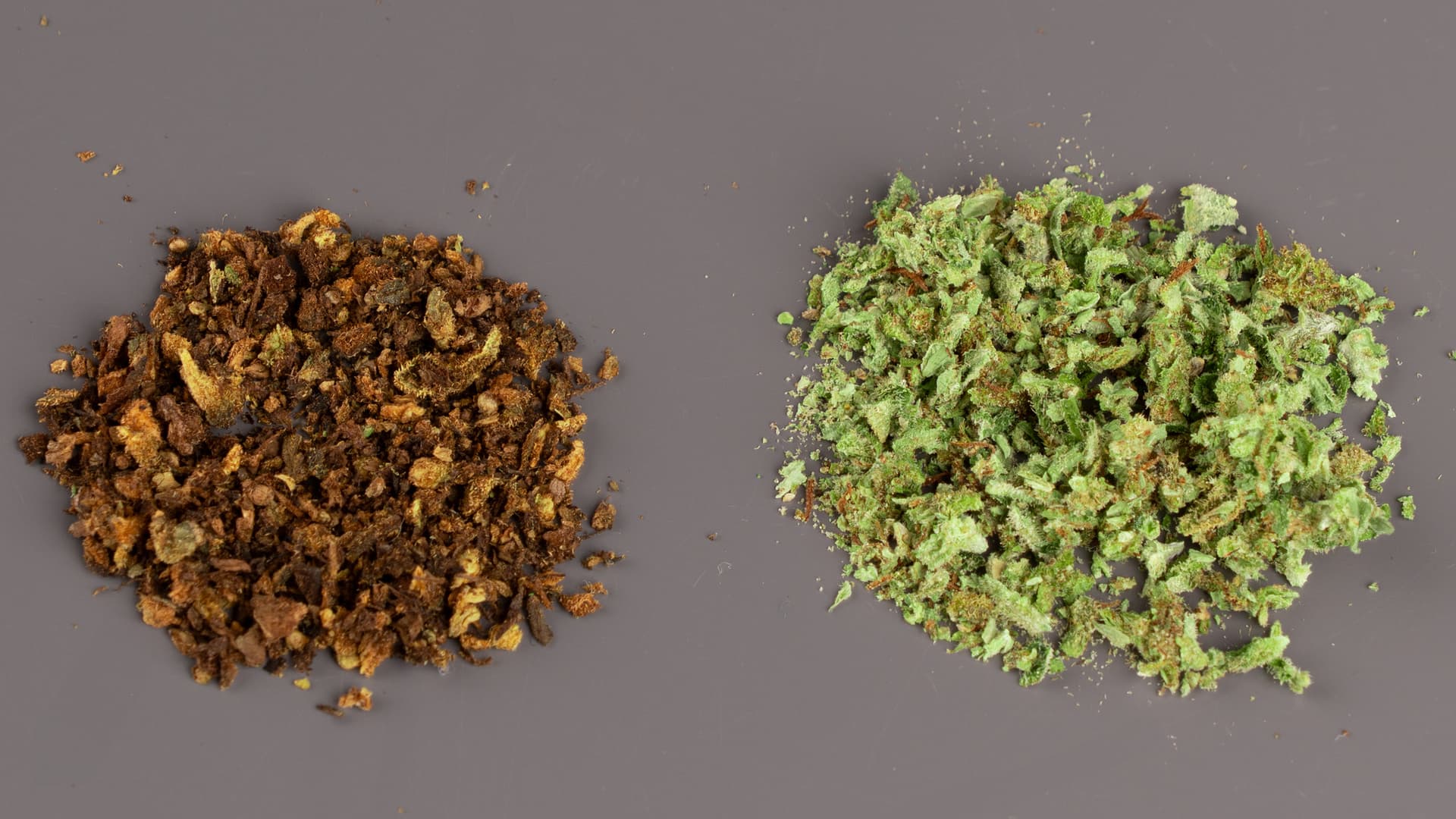
Fresh ground cannabis (right) vs. AVB (left). The shift from green to brown shows how hard the load was vaped.
Color is the fastest way to read your AVB. It shows roughly how much heat a load took, which makes it a handy way to sort batches. Hold a pinch up to natural light and compare:
Light gold to tan
This AVB came from low-temperature or short sessions, or from a load that heated unevenly. It usually tastes the mildest. Save it separately if you can.
Medium brown (peanut butter shade)
The most common AVB from everyday sessions. It works well in edibles, capsules and infusions.
Dark brown to near-black
Heavily extracted material from high-temperature or extended sessions. It tastes the harshest of the bunch. You can still use it. If it looks charred or ashy, it burned, so toss it.
Unevenly colored
Mixed light and dark patches mean the load heated unevenly. Check your grind and packing, and stir the oven mid-session if your vape benefits from it. Dosing capsules make AVB collection clean and simple. The Mighty+ and Venty both take Storz & Bickel dosing capsules (see how they compare).
How to collect and store AVB
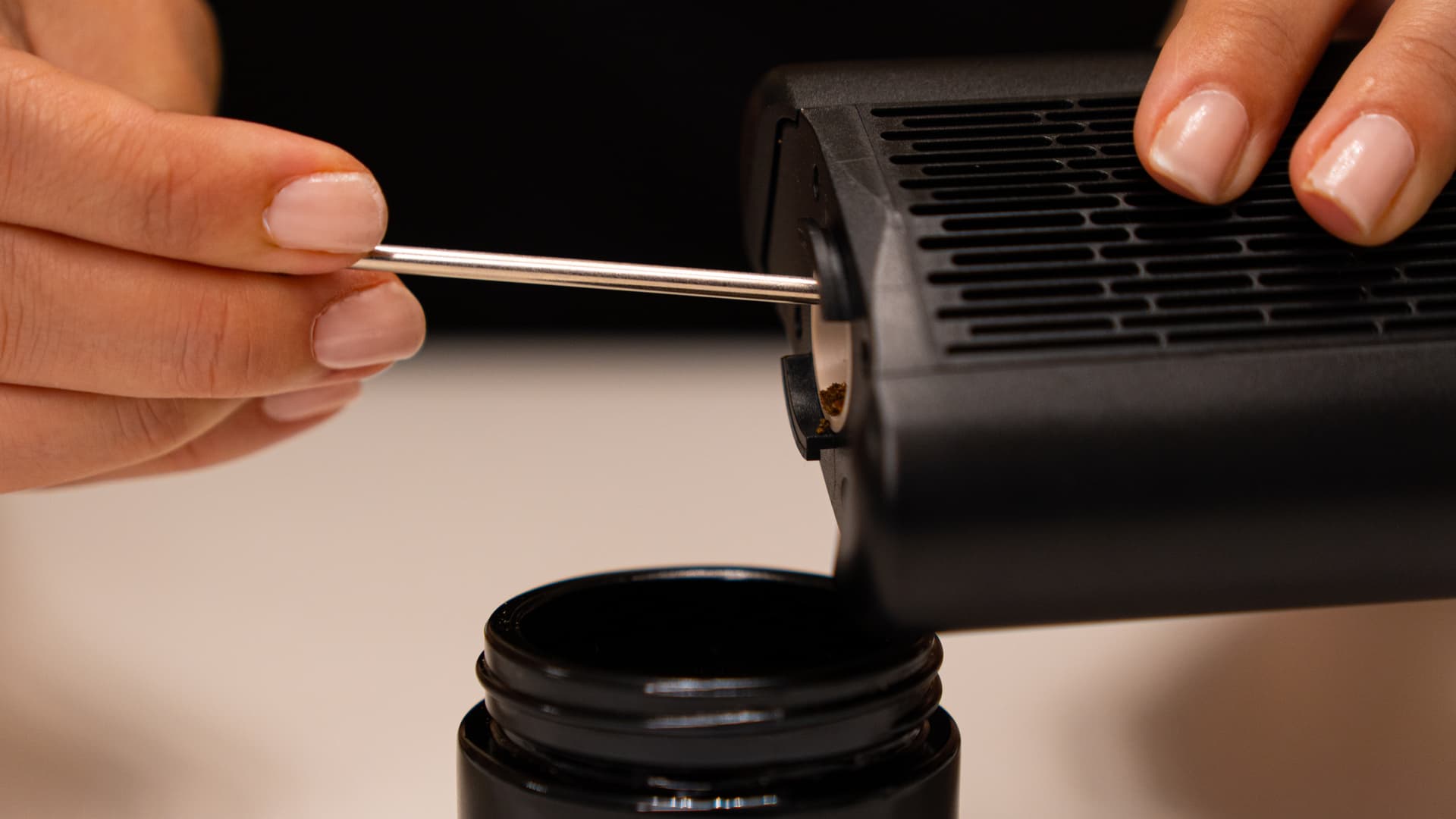
Empty each session straight into your AVB jar, and let the material cool before you seal the lid.
Keep AVB dry, sealed and out of the light. A glass mason jar in a cool, dark cabinet works fine.
Avoid open containers. AVB is dry and absorbs moisture from the air, which invites mold. If you spot fuzzy white or green patches, or a batch smells off or feels damp, discard the whole thing.
Label each jar clearly as cannabis, with the date and roughly how hot you vaped. Keep it away from kids, pets and your regular food. Separating light-gold AVB from dark-brown AVB keeps each batch's history clear. Many people keep a small jar next to their vaporizer and tip each cooled session into it. Emptying after every session also makes it quicker to clean your oven.
Water curing tames the bitter taste
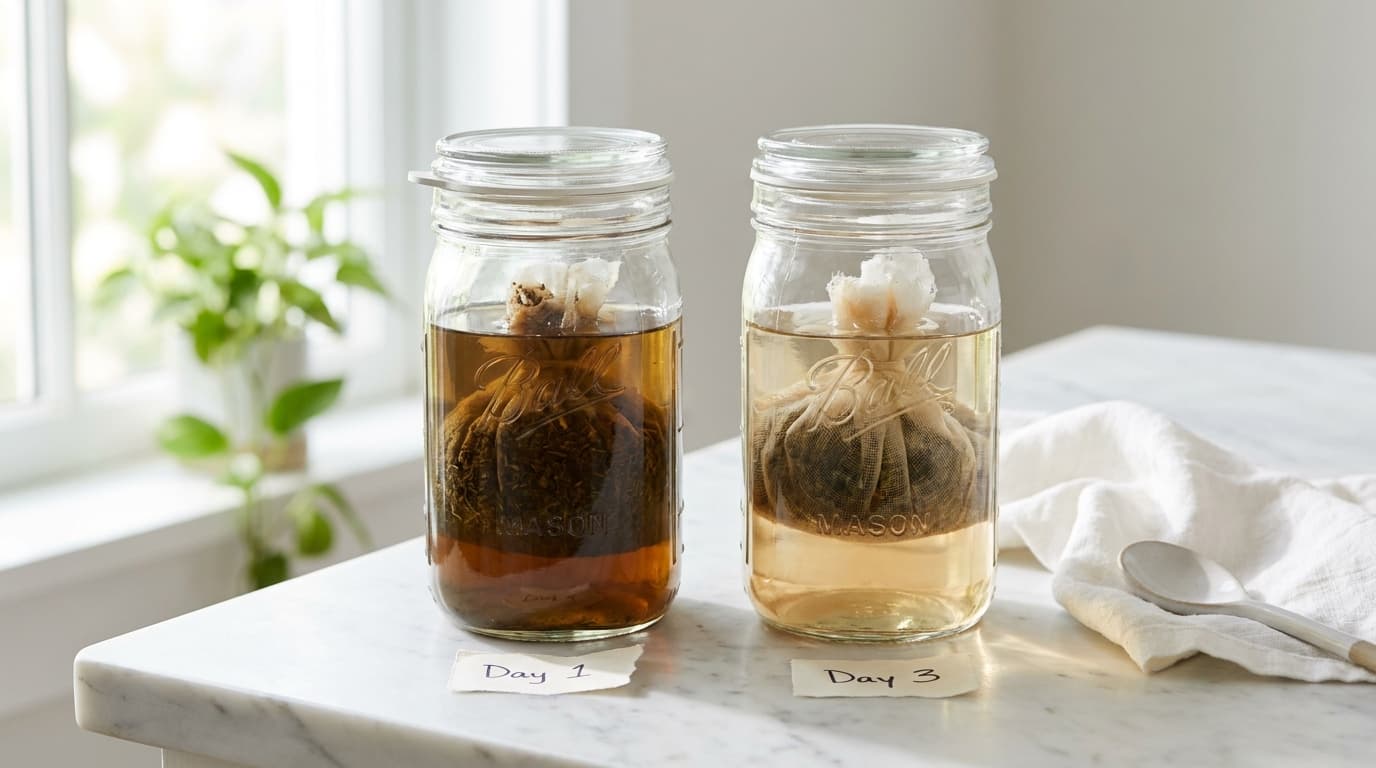
Illustration: the rinse water starts murky brown and clears as you keep changing it.
Water curing means soaking AVB in water to pull out the water-soluble compounds behind that harsh, bitter flavor. THC barely dissolves in water, so most of it stays in the plant material, though some fine particles wash away.
Here's the method:
- Place your AVB in a cheesecloth bundle or a fine mesh strainer
- Submerge it in a jar of cold drinking water, cover it and keep it in the fridge like any perishable food
- Replace the water a few times a day (it turns dark brown, then progressively lighter)
- Repeat for a few days until the water runs mostly clear
- Drain well and use it right away in butter, oil or food. For capsules, spread it thin on a tray and let it air-dry fully before grinding. Never put damp AVB back in your jar.
Water-cured AVB tastes noticeably milder in edibles. The trade-off is time: the full process takes a few days of water changes. Capsule users can usually skip it, since a capsule already hides the taste.
Common AVB mistakes
- Sealing warm AVB: let it cool before you close the jar, or condensation invites mold
- Storing water-cured AVB wet: use it right away, or air-dry it fully before it goes into capsules
- Decarbing AVB again in the oven: your vape already did that job, and extra heat only breaks THC down
- Boiling your infusion: keep the fat on low, below a simmer
- Dosing a new batch like the last one: weigh and test every batch
- Cooking with charred, ashy AVB: if it burned, toss it
Dosing AVB: start low, go slow
AVB edibles hit harder and last longer than you might expect. They can take 30 minutes to 2 hours to kick in, and up to 4 hours to reach full effect. Effects can last up to 12 hours, with some lingering for up to 24.
Start with a small, weighed portion of a single batch on your first try. Wait a full 4 hours before considering a second dose. Feeling nothing after an hour is normal with edibles.
A few factors that affect your experience:
- How you vaped it: With the same flower, cooler and shorter sessions leave more behind
- Tolerance: Regular cannabis users need more
- Stomach contents: Taking AVB with a fatty meal increases absorption
- Strain: Different cannabis strains retain different cannabinoid ratios in AVB
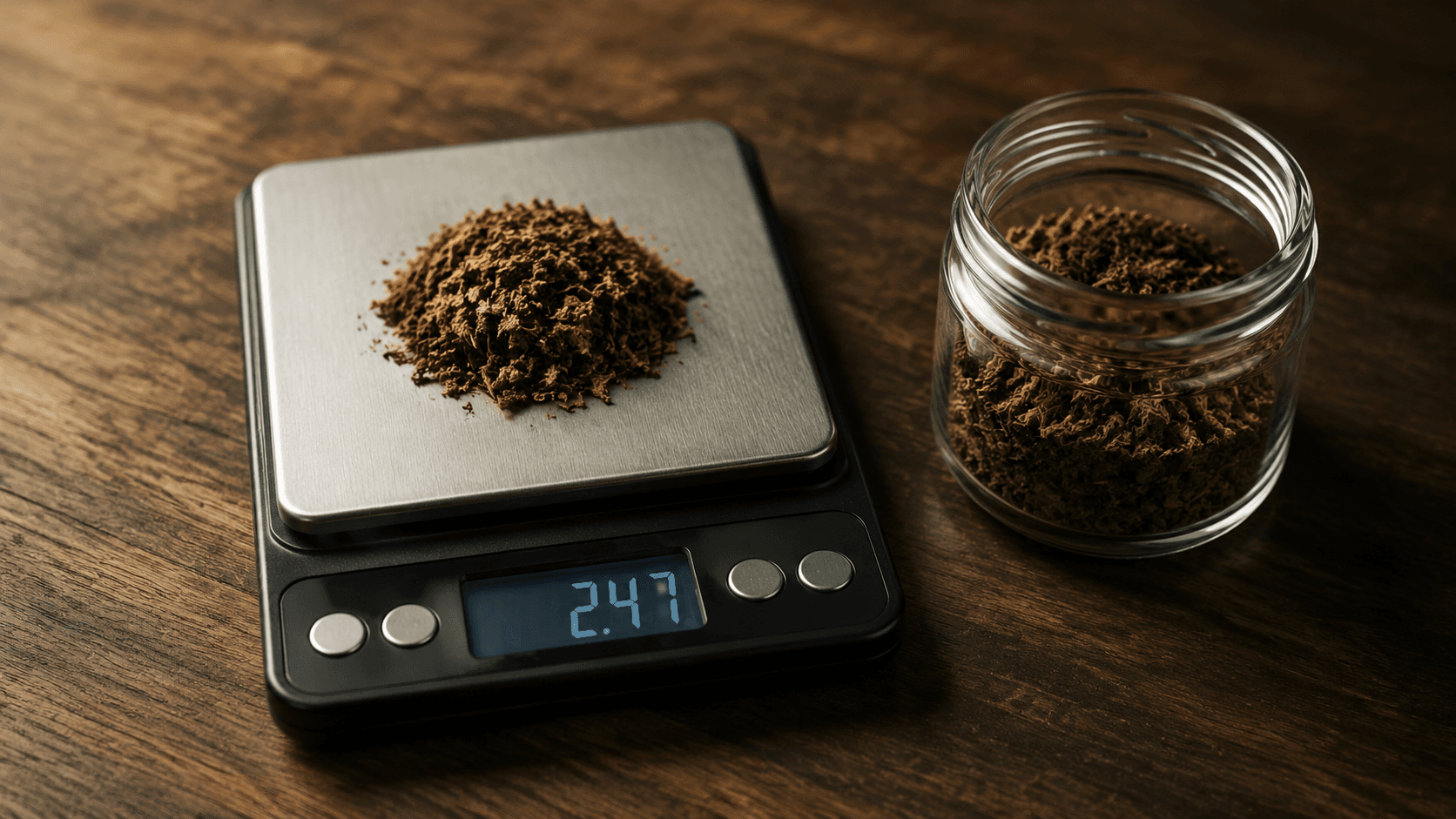
A kitchen scale makes every portion repeatable, and a simple log turns those portions into your own reference.
AVB potency varies batch to batch, which is why a simple log beats any generic chart. Track grams, batch, time to onset and an effect rating for your first 5-10 sessions.