

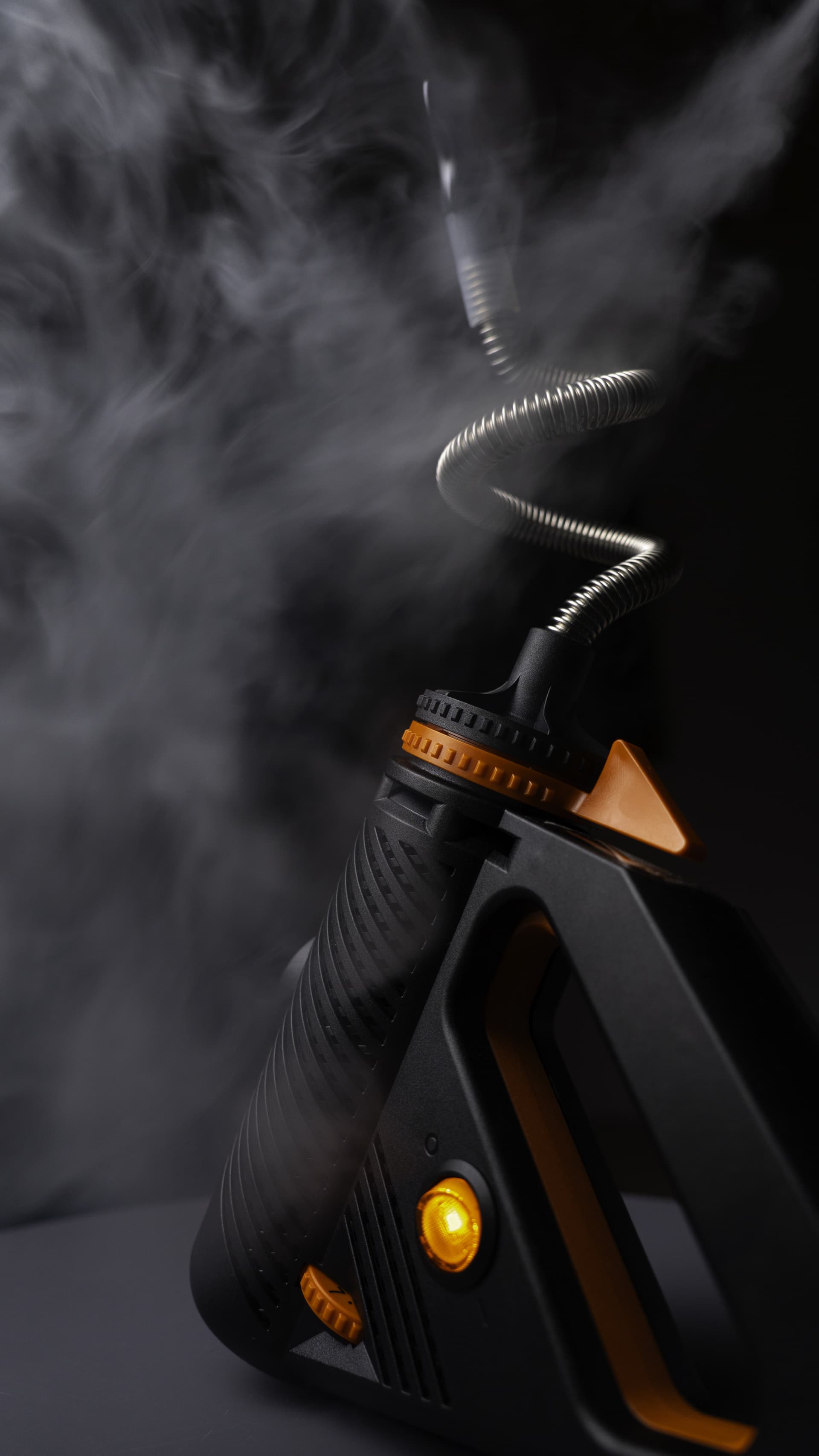
The heating method inside a cannabis vaporizer shapes flavor, vapor density, extraction speed, and how you need to inhale. Along with the chamber, airflow, and controls, it's one of the most important things to understand before buying a flower vape.
Three primary approaches dominate: conduction (direct contact), convection (hot air), and hybrid heating (both combined). Each produces noticeably different vapor, and choosing the right heating method depends on whether you prioritize flavor clarity, cloud density, or convenience.
We've reviewed vapes from every category, from pocket conduction ovens to desktop ball vapes. Here's how each heating method works and what we've noticed in real sessions. New to vaporizers? Our Start Here hub puts heating methods in context alongside everything else a beginner needs to know.
Heat activates cannabinoids and carries terpenes into vapor
Cannabis is packed with cannabinoids and terpenes, and heat does two jobs with them. It converts acids like THCA into active THC, and it turns those compounds into vapor you can inhale. Lab work on decarboxylation shows that time matters alongside temperature.
The goal is to heat the flower enough to vaporize it without scorching or burning it. How your vaporizer delivers that heat affects which compounds come off first, how evenly the load cooks, and how much flavor survives. Our vaporizer temperature guide covers the settings we use for different kinds of sessions.
Conduction heats cannabis through direct surface contact
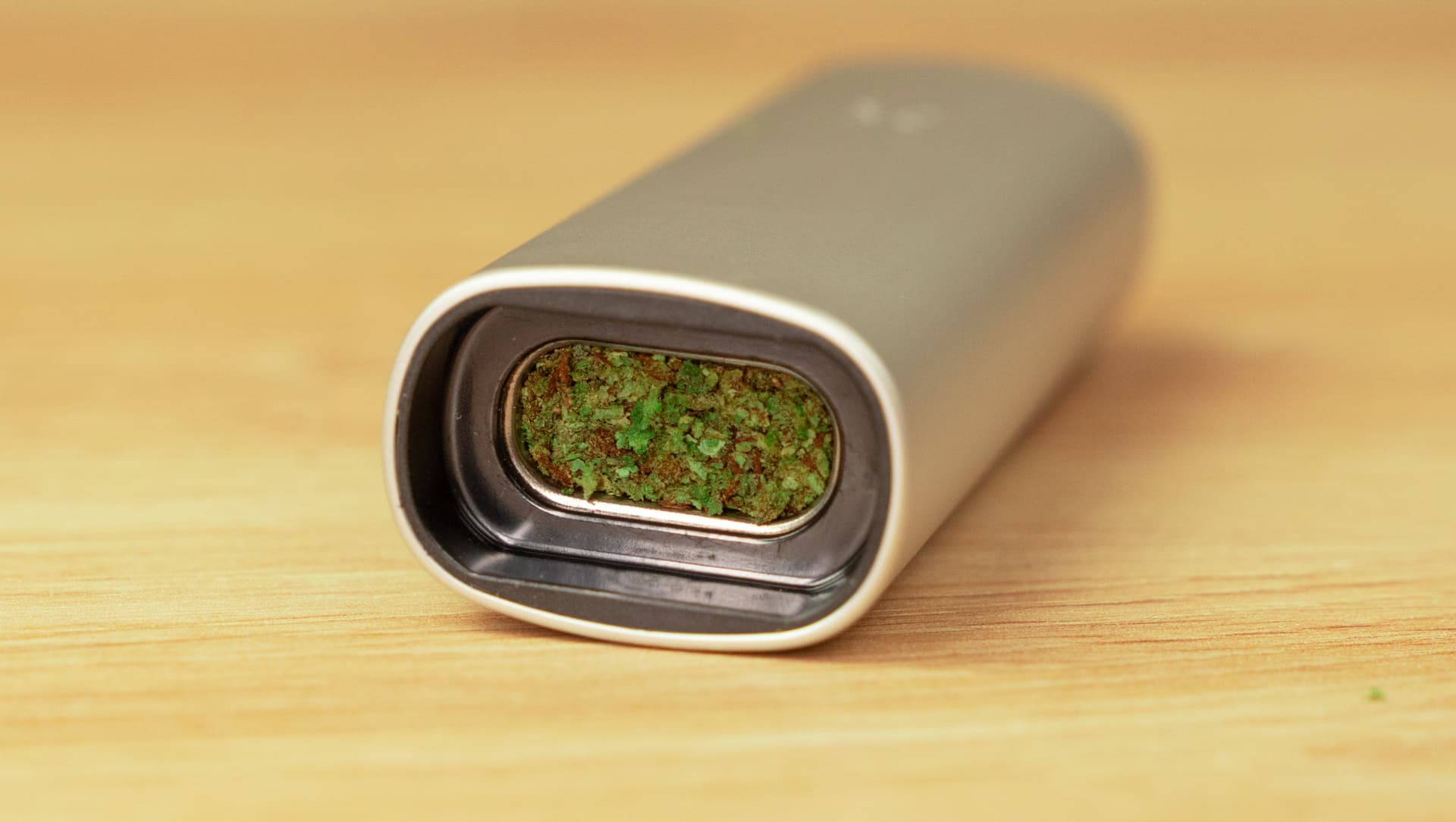
A loaded conduction oven. The cannabis touching the hot steel walls cooks first, which is why a quick stir mid-session helps.
Conduction works like a frying pan. The oven walls heat up, and cannabis touching those walls vaporizes first. The heat then spreads inward through the rest of the load.
The PAX Mini 2 heats its stainless steel oven in about 22 seconds. Conduction designs like it tend to be compact and simple, which helps keep both size and price down.
Uneven extraction is the main trade-off
Cannabis touching the oven walls heats faster than the flower in the center. That can leave hotspots, and a quick stir mid-session evens things out.
Skip the stir and you'll often taste bright flavor on the early draws, then a toasted, popcorn-like note as the outer layer browns. The center can stay underdone. Most conduction portables are session vaporizers that keep the oven hot for a timed session (the length varies by model), so your cannabis keeps cooking whether you're drawing or not.
Compact ovens like the Mini 2's work best with a medium-fine grind and a firm pack, which is what PAX's quick-start guide calls for. Firm packing maximizes contact with the hot walls, so heat moves through the whole load.
Convection passes hot air through cannabis
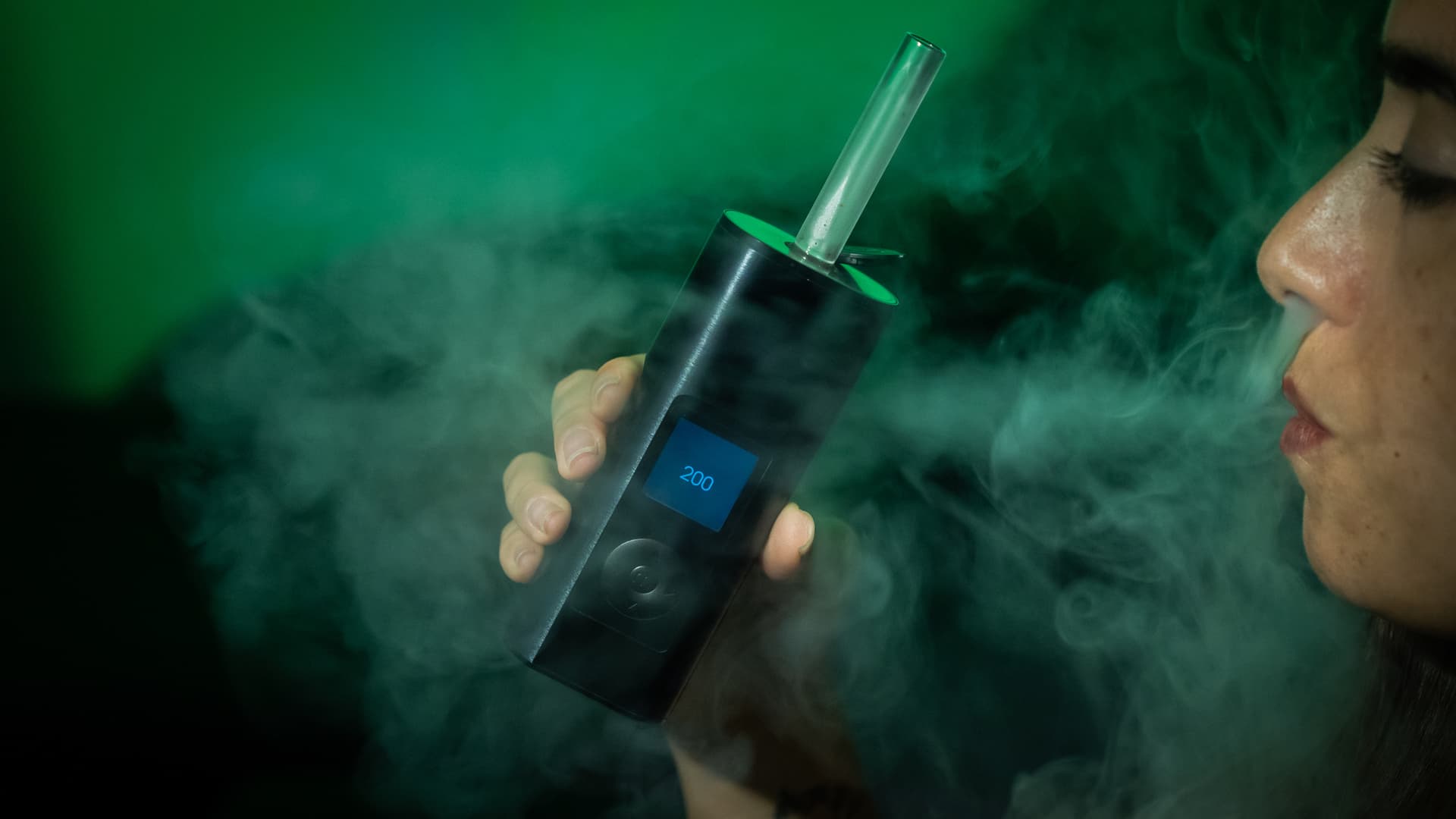
The Solo 3 is a convection-heavy hybrid with a glass stem, and one of the most flavorful portables we've reviewed.
Convection works like a hot air oven. Air picks up heat from the heater, then flows through your cannabis when you inhale (or when a fan pushes it). The hot air surrounds the flower instead of cooking it against one wall, so a well-packed load heats more evenly.
In our sessions, that shows up as cleaner, more layered flavor. You pick out individual terpene notes more easily, especially at lower settings below about 190°C. The Tinymight 2 is a good example. It uses a pure convection heater, and its vapor stays dense and clean.
On-demand convection heats one draw at a time
Many convection portables offer an on-demand mode (some also do sessions) that heats one draw at a time. On the Tinymight 2, you hold the button while you draw and let go when you're done. Let go and the heat drops off, so the rest of the bowl mostly waits for your next hit. That makes on-demand convection great for a single hit or a few small ones spread through the day.
Desktop convection vaporizers take a different approach. The Volcano Classic uses a fan to push hot air through the cannabis and fill a balloon bag with vapor, so your lungs don't do any of the work. Others use a whip, which you draw through yourself unless the model has a fan to help.
The main downside is technique. Convection portables like slow, steady draws. Pull too hard and the air rushes past the heater before it can pick up enough heat, so the vapor turns wispy. Slow down and it clicks fast.
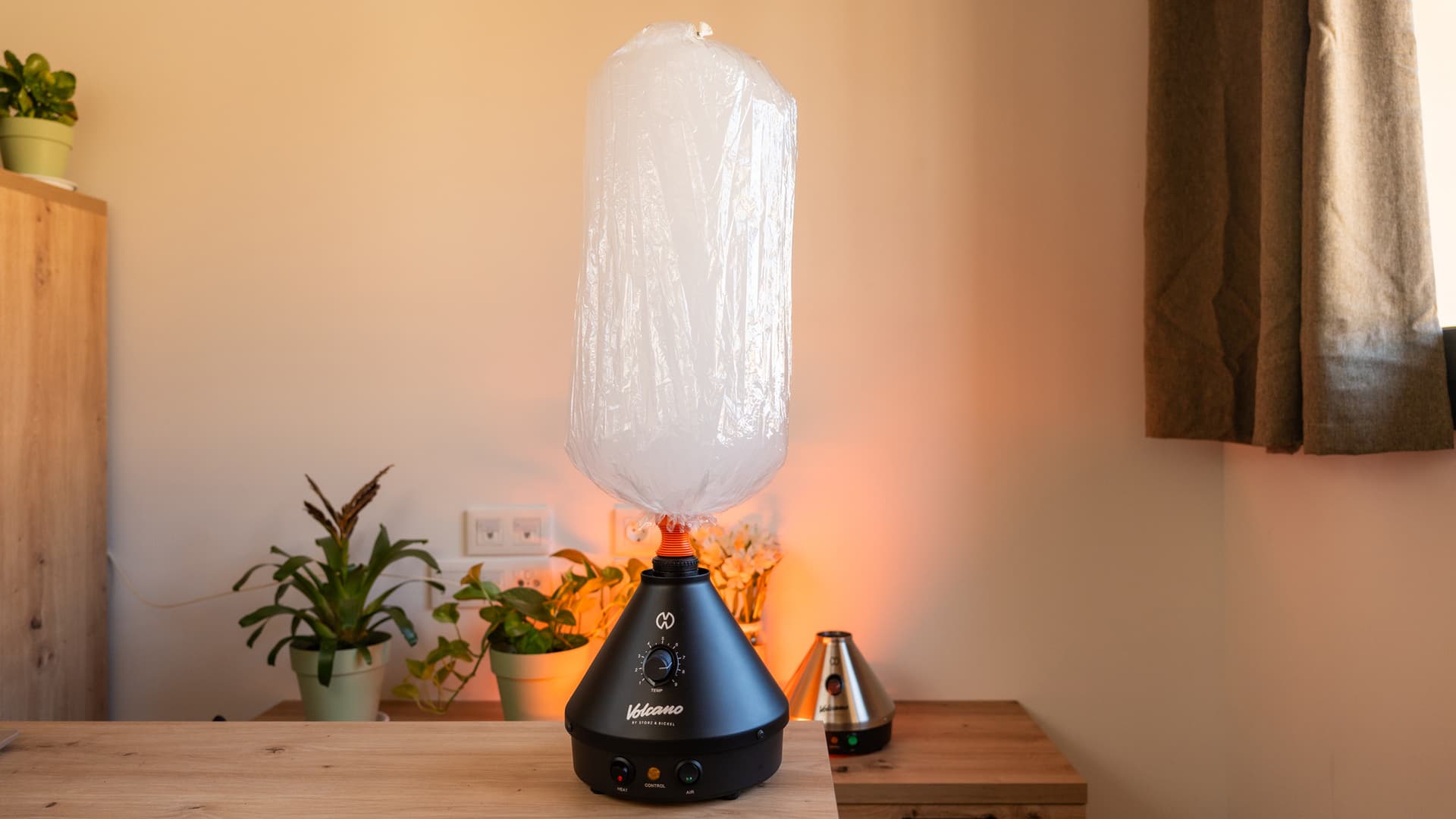
The Volcano's fan fills the balloon for you. Detach it and sip at your own pace.
Many portables sold as convection are really convection-heavy hybrids. The Arizer Solo 3 is a good example: Arizer's own spec puts it at 80% convection and 20% conduction, and that glass path is why it tastes so clean.
Hybrid heating delivers balanced performance with minimal technique
Hybrid vaporizers heat the oven walls (conduction) and pass hot air through the cannabis (convection) at the same time. Done well, you get the steady contact heat of conduction plus the more even cooking of convection. The balance shifts with the load and how you draw.
The Venty is a strong example. Storz & Bickel's spec sheet puts its peak power draw at 130 W. A flowmeter adjusts the heat to how hard you're pulling, with adjustable airflow up to 20 L/min, so it keeps up whether you sip slowly or pull harder. It's ready in about 20 seconds.
The Mighty+ uses the same Storz & Bickel hybrid approach but is slower off the mark. S&B's support page lists about 60 seconds to heat up.
A regulated hybrid like these asks the least of you. Load the oven, set a temperature, and draw naturally. You usually don't need to stir, and there's no special draw speed to learn. That makes them the most forgiving choice if you're moving from smoking to vaporizing. Manually heated hybrids, like torch-lit DynaVaps, are the exception and take some practice.
Heat-up speed depends on the vape, not the method
The old rule says conduction heats faster. It doesn't hold up anymore: the Tinymight 2, a convection portable, is ready in about 5 seconds, while the PAX Mini 2, a conduction oven, takes about 22. Conduction's strengths are size and simplicity: the Mini 2 fits a pocket and costs $150 at US list price.
| Vape | Heating | Heat-up | US list price |
|---|---|---|---|
| Tinymight 2 | Convection | About 5 s | $349 |
| DynaVap M7 | Hybrid (torch) | 5 to 7 s | $89 |
| Arizer Solo 3 | Hybrid | About 15 s | $299 |
| Venty | Hybrid | About 20 s | $449 |
| PAX Mini 2 | Conduction | About 22 s | $150 |
| Volcano Hybrid | Hybrid | About 40 s | $699 |
| Mighty+ | Hybrid | About 60 s | $399 |
| FlowerPot B1 | Ball vape | 3 to 5 min | $515 |
Ball vapes push convection heating to its extreme
Ball vapes pack their heater with small balls, often ruby or zirconia, that soak up and store heat. When you draw, air rushes past the hot balls and then through your cannabis, which sits in a separate bowl, never on the balls themselves.
The result is fast, dense vapor. In our sessions, the FlowerPot B1 has cleared a 0.25 g bowl in one or two draws. A warmed metal bowl adds a bit of contact heat too, so a full ball-vape setup isn't pure convection. Our ball vape guide covers the full physics of how stored heat creates this effect.
Most ball vapes run as desktop setups with a coil heater and a PID controller, and many people pair them with a water pipe to tame the dense vapor. Water isn't required, though, and portables exist too. The Tempest 2 is a portable ball vape with a cooling stem, no water needed.
Induction, halogen, and butane are different ways to make heat
These aren't extra heating methods so much as different heat sources. Each one still warms your cannabis through contact, hot air, or both.
Induction heating uses an electromagnetic field to heat a metal part without a traditional coil. The Dr. Dabber Switch 2 uses it mainly for concentrates, and its spec sheet lists 5 to 20 seconds to heat up, depending on the setting. For flower, torch-heated vapes like the Tempest 2 also work with induction heaters. Its manual covers the iSpire Wand and the YLL 3.0, trading the torch for push-button heat.
Halogen heating uses a halogen bulb as the heat source. The Angus Enhanced runs a 100 W halogen bulb with ruby balls that store heat. Your draw carries that heat through the cannabis, so it behaves a lot like a convection vape. It remains a niche method with limited options.
Butane-powered vapes like the DynaVap M7 use a torch to heat a metal cap, and the heat reaches your cannabis through both contact and hot air. They need no battery and no electronics, and a compatible induction heater can stand in for the torch. They do demand more skill to use consistently.
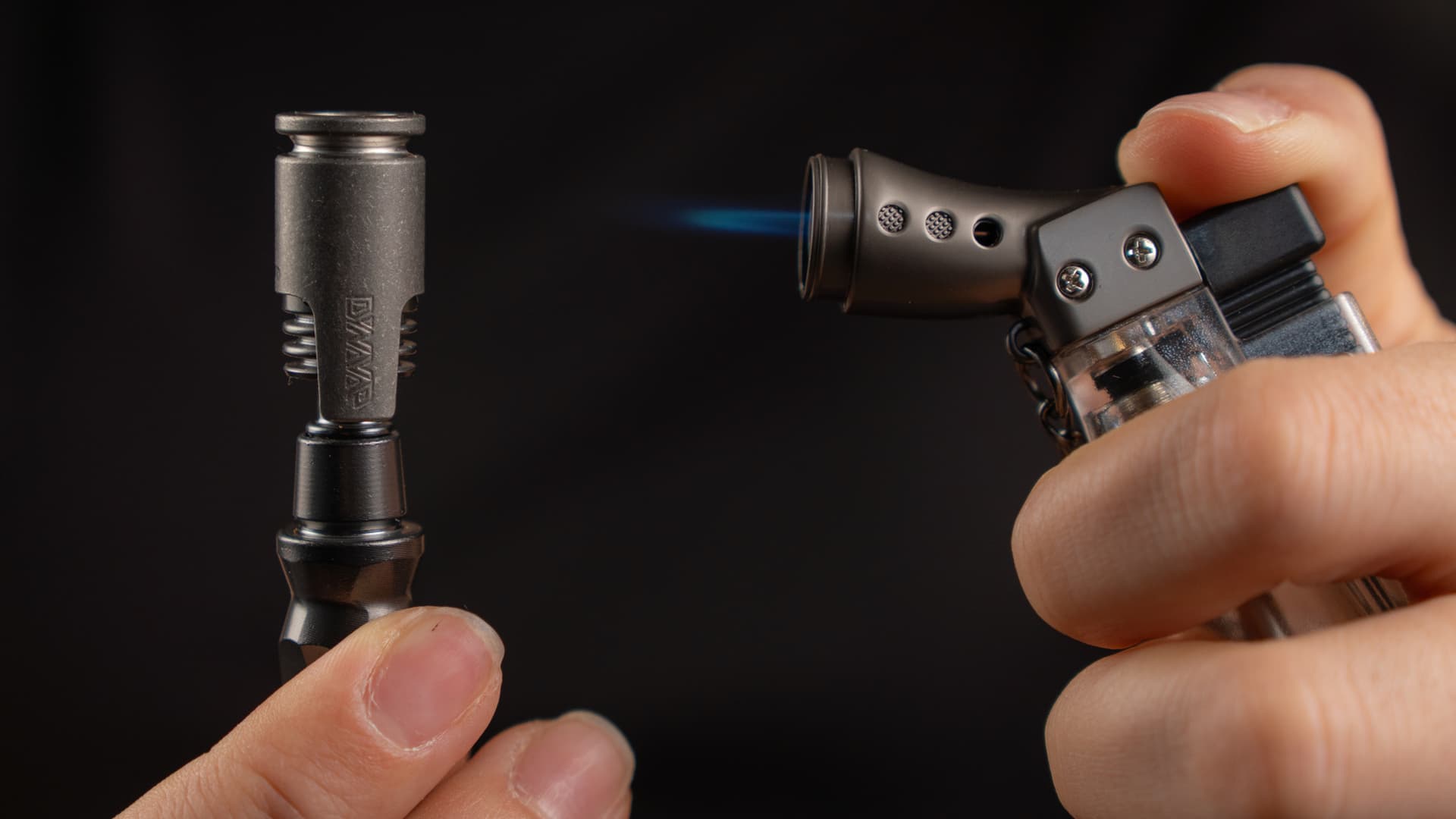
Heat the cap until it clicks (about 5 to 7 seconds on the M7), then draw until the second click tells you it has cooled.
Your heating method shapes how you should inhale
Draw resistance and the best draw speed vary by heating method and by the vape itself. Getting the draw right often does more for your vapor than fiddling with the temperature.
| Method | Draw Style | Why |
|---|---|---|
| Conduction | Moderate, relaxed (like a cigar) | The oven stays hot whatever your airflow |
| Convection | Slow, steady | Air needs time near the heater to pick up heat |
| Hybrid | Natural, comfortable | Contact heat backs up the airflow, so pace matters less |
| Ball vape | Slow to medium, steady | Cannabis Hardware's advice for the FlowerPot; faster pulls run cooler |
Tip
How to match a heating method to your priorities
Choosing the right heating method comes down to what you value most.
| Method | Best For | Trade-off |
|---|---|---|
| Conduction | Pocket size and a lower price (the Mini 2 is $150 at US list price) | Stir mid-session; less flavor nuance |
| Convection | Flavor first, especially at lower temps | Takes a slow, steady draw; good portables cost more (the Tinymight 2 is $349 at US list price) |
| Hybrid | All-around ease and dense clouds | Often larger and pricier; torch hybrids take practice |
| Ball vape | Big, dense sessions at home | Hot heads to handle, longer warm-up, extra gear |
The Volcano Hybrid tops our desktop rankings, and its hybrid heating is a big reason why: it takes most of the user error out of the equation.
AVB color tells you how evenly your load cooked. After a session, check your already-vaped bud. Even brown AVB means the load heated evenly. Splotchy AVB with green patches means uneven heating. Hybrids and convection vapes leave the most even AVB in our sessions, which is handy if you reuse your already-vaped bud.
Key Takeaway
- Conduction. Compact and simple, give it a stir mid-session for even cooking
- Convection. The cleanest flavor in our sessions, rewards a slow, steady draw
- Hybrid. Best all-around, and regulated hybrids are the most forgiving for beginners
- Ball vape. Fast, dense sessions, mostly desktop, with portable options like the Tempest 2
- Choose carefully. The heating method is built into the hardware, so pick the one that fits how you vape