

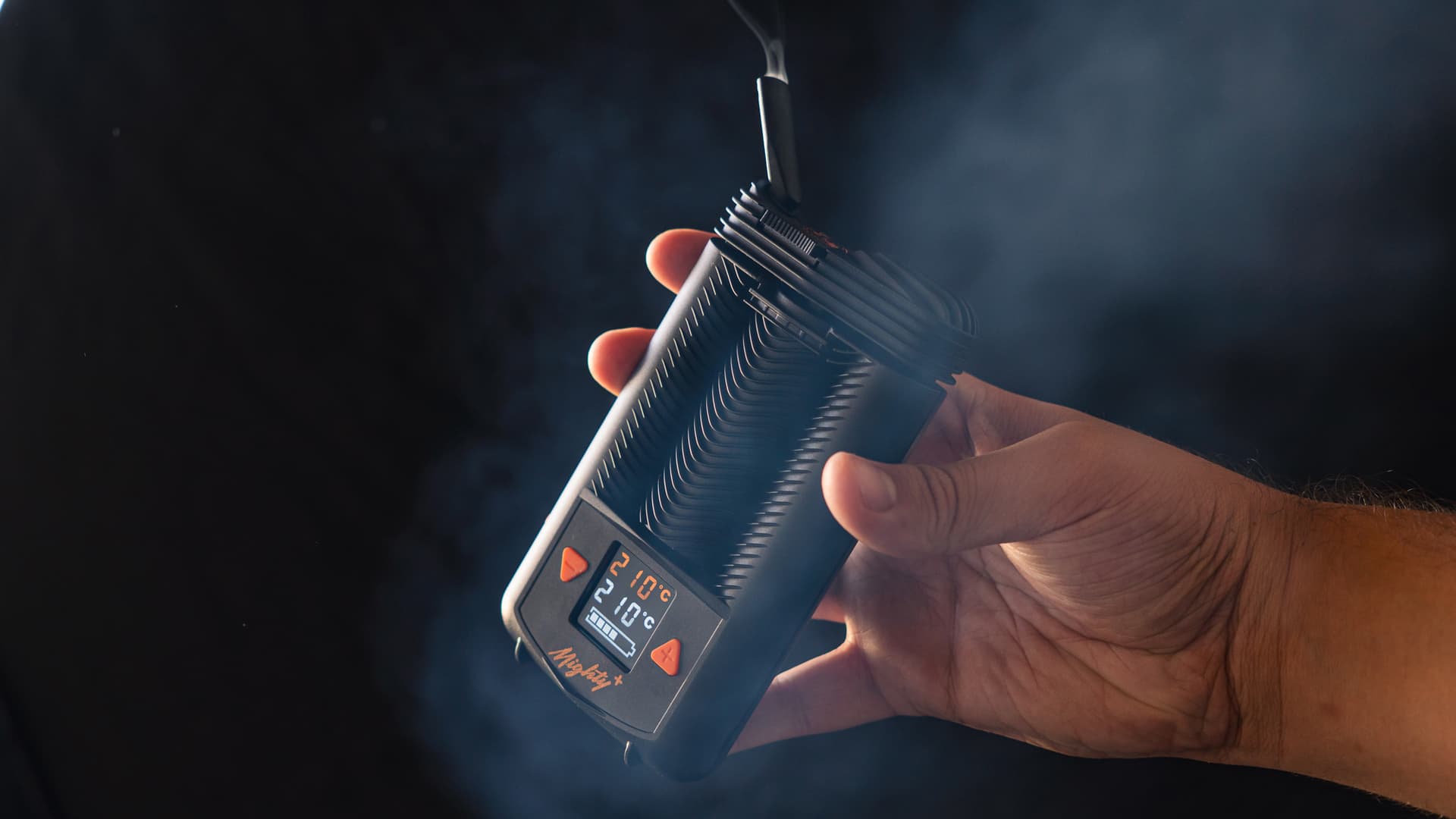
The heating method inside your vaporizer shapes flavor, vapor density and session behavior. It's one of the first things we check on any new vape. Convection pushes hot air through cannabis, and the best convection vapes deliver cleaner, more detailed flavor. Conduction heats cannabis through direct contact with a hot surface, trading some flavor clarity for simpler, more compact designs.
A third category, hybrid heating, combines both approaches and powers most of the top-rated portables we review. Hybrids dominate our current rankings, but pure convection and pure conduction vapes each serve specific use cases better.
Convection vs conduction: the quick answer
Convection tastes better, conduction is smaller and simpler, and a hybrid gives you most of both. For most people, a hybrid is the right first buy.
- Convection heats cannabis with hot air. You get cleaner flavor and even extraction, and many convection vapes heat only while you draw. Our picks: the XMax V4 Pro on a budget and the Tinymight 2 for on-demand hits.
- Conduction heats cannabis through a hot oven wall. It's simple, small and affordable, but the flavor turns toastier and you stir mid-session. Our pick: the PAX Mini 2.
- Hybrid does both and is the easiest to get right. Our picks: the Venty, the Fury 3 on a budget and the Mighty+.
Conduction heats from the walls in, convection pushes hot air through, and hybrid does both at once.
Conduction
Heat from the walls in
The outside of the load toasts first. Stir between draws.
Convection
Hot air through the load
Heats evenly. The display reads the heater, not the flower.
Hybrid
Walls and air together
Even vapor with little stirring. Set it and adjust by taste.
Torch
Flame and feel
Heat until the cap clicks. Aim near the tip for flavor, lower for thicker vapor.
Conduction heats cannabis through direct surface contact
Conduction vaporizers work like a frying pan. Cannabis sits directly on heated oven walls, usually ceramic or stainless steel, and the material touching those walls vaporizes first.
This direct-contact approach keeps designs simple and compact. The PAX Mini 2 weighs just 89 g and the Flowermate Aura hits 100 g, so both disappear into a pocket.
The main drawback is uneven heating. Cannabis against the oven walls heats faster than the center of the load, creating hot spots. A fine to medium grind improves contact across the load. On the Mini 2, PAX recommends medium-fine with a firm pack.
Tip
Most battery-powered conduction vapes are session vaporizers. Once the oven heats up, cannabis keeps cooking whether you draw or not. That makes them great for a steady session but wasteful if you only want a single hit.
Where conduction shines
Conduction earns its place in three scenarios: ultra-portability, budget builds, and group sessions where simplicity matters. These are load, heat and pass vapes, with very little to learn.
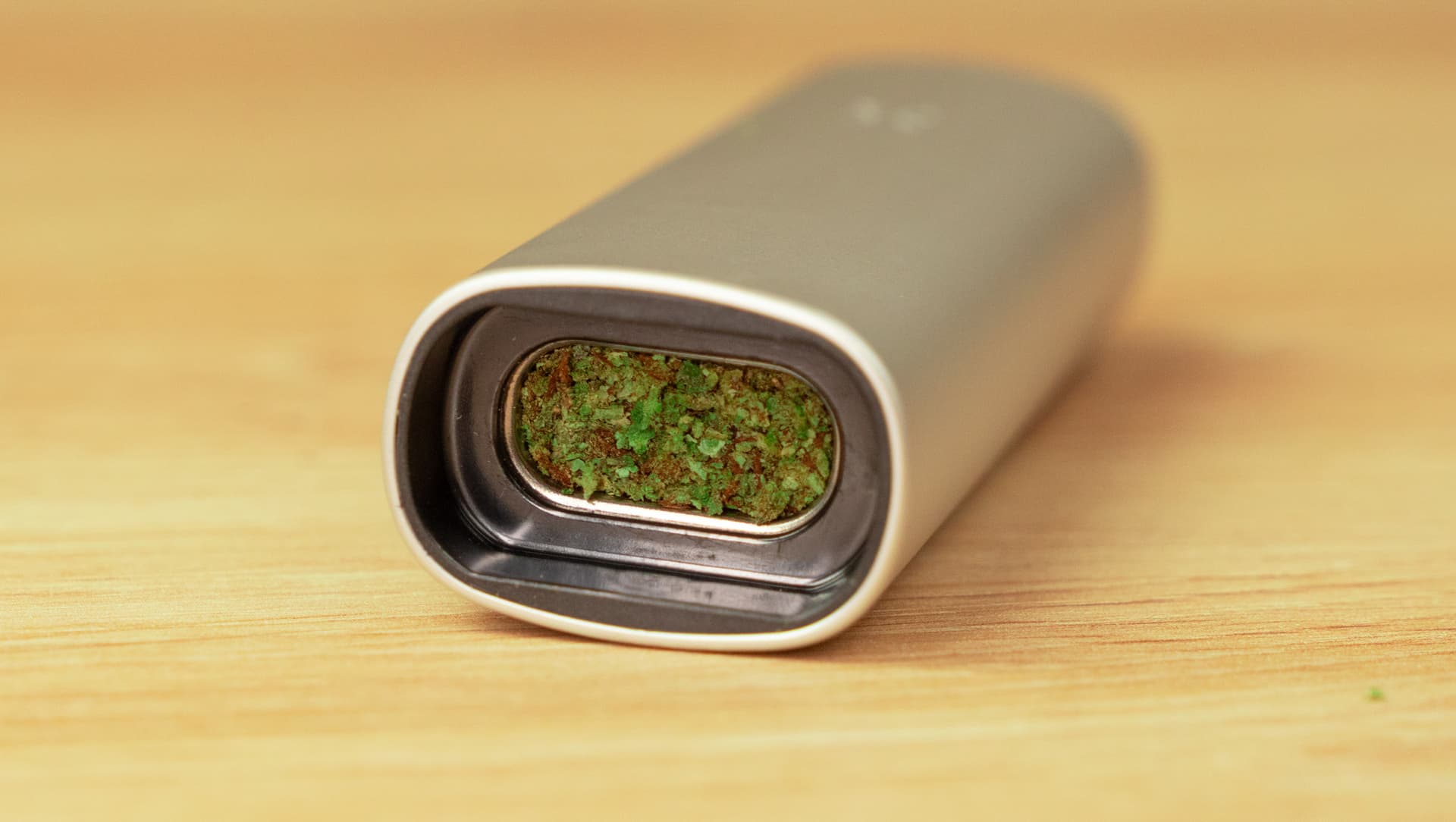
PAX ovens are stainless steel, and the Mini 2 is ready in about 22 seconds. The cannabis touching the walls heats first, which is why an even grind and a mid-session stir matter.
Convection uses hot air for more even heating
Convection vaporizers pass heated air through cannabis rather than pressing it against a hot surface. With a good pack, the hot air reaches the whole load and draws out terpenes and cannabinoids more evenly. In our sessions, that means clearer flavor, especially at lower temperatures.
The Tinymight 2 is a pure convection portable that heats up in 2 to 5 seconds, and we get full flavor from the very first draw. In on-demand mode it only heats while you hold the button, so the heater isn't cooking your load between hits.
On-demand heating is the biggest practical perk of many convection vapes. You can take a single hit, set the vape down and come back minutes later without the heater running in the background. The Tinymight 2 also has a session mode for when you'd rather keep the heat on.
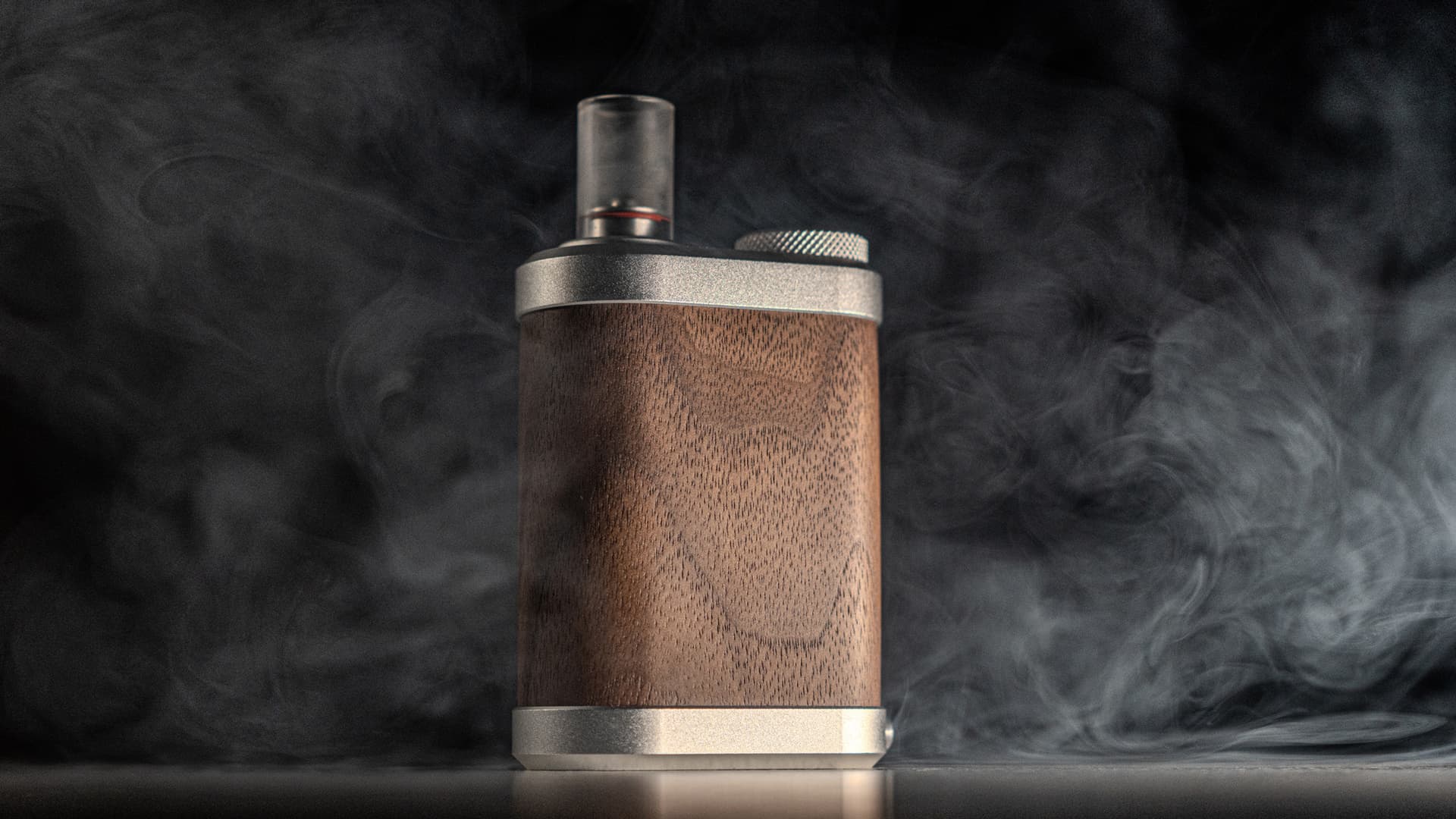
A walnut Tinymight 2 with its glass stem, wrapped in vapor. It heats in 2 to 5 seconds, and in on-demand mode it heats only while you hold the button, so the load stays fresher between hits.
The tradeoffs
Premium convection portables cost and weigh more than pocket conduction vapes, but not every convection vape does. The XMax V4 Pro puts full convection in a 120 g body at a $109 US list price, below the PAX Mini 2 at $150. Pure convection portables also demand proper draw technique, so the hot air can work through the whole load.
Tip
Ball vapes push convection to its extreme. A stack of heated ruby or ceramic balls sits above a separate cannabis bowl and blasts hot air through the load. In our sessions, they deliver dense vapor fast. Most are desktop rigs, though portable ball setups exist too.
Hybrid heating combines both methods for balanced performance
Hybrid heating uses a heated oven (conduction) plus a flow of hot air through the material (convection). The oven starts vaporizing cannabis on contact while the hot air pulls vapor from the center of the load at the same time.
In our experience, this dual approach gives denser vapor than most pure convection and more even heating than pure conduction. The Mighty+ is a textbook hybrid portable and one of the most consistent session vapes we test. It heats its ceramic-coated chamber and the air flowing through the load at once.
Hybrid designs dominate our portable vaporizer rankings because they balance flavor and vapor production without requiring advanced draw technique. If you're choosing your first vaporizer, a hybrid is the easiest starting point for most people.
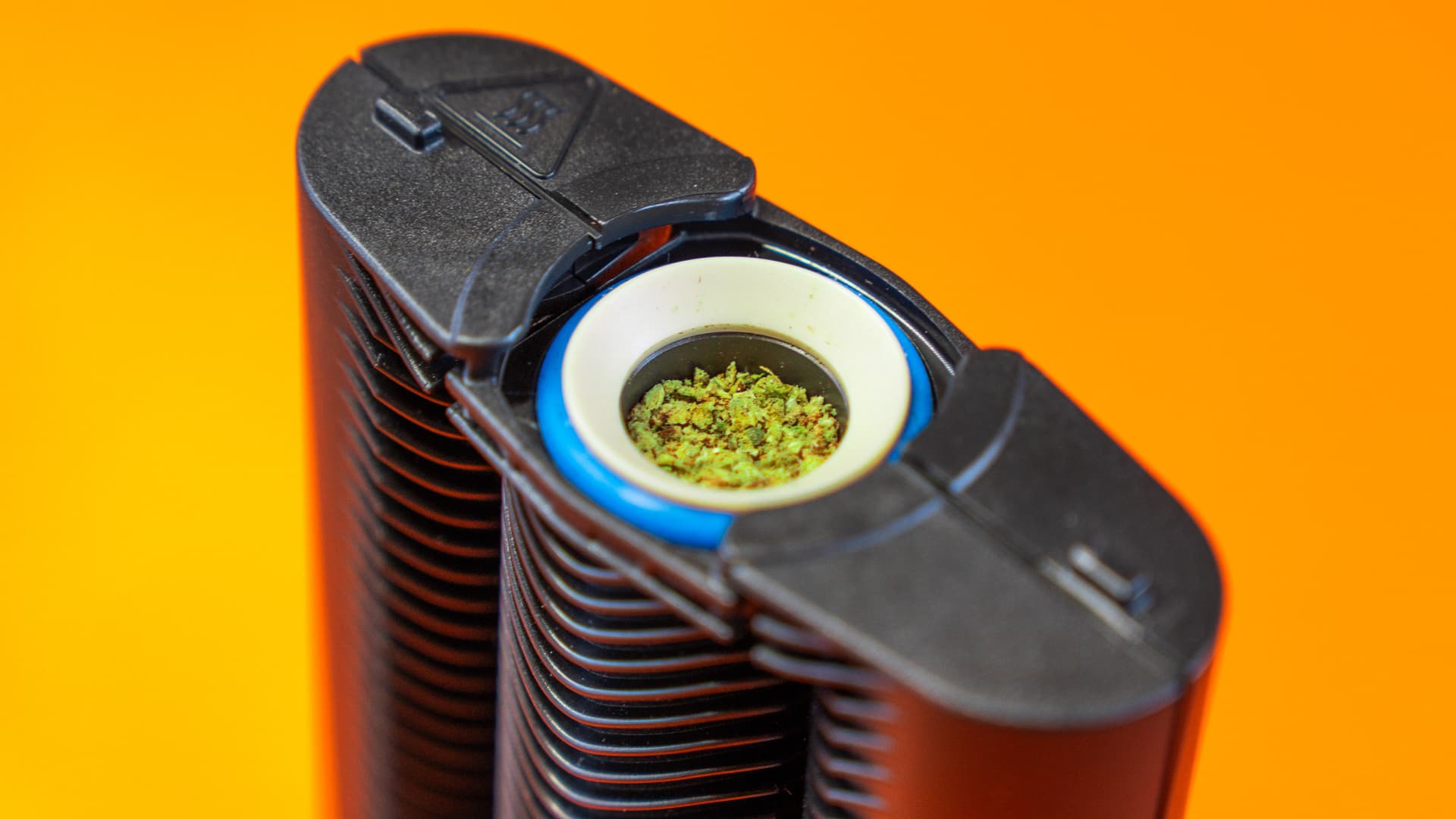
The Mighty+ heats its ceramic-coated chamber walls and the air moving through the load, so the cannabis gets contact heat and hot air together.
How to tell which heating a vape uses
Check the spec sheet, not the shape. Marketing labels blur the line: a portable sold as convection can still lean on a hot chamber wall for part of the work, which makes it a hybrid in practice. Two quick tells: a vape that heats only while you press the button or draw points to convection, and a maker that describes heated ceramic or steel chamber walls plus airflow is selling a hybrid. Every review we publish lists the heating method in the specs, so check there before you buy.
Convection vs conduction vs hybrid compared
Here's how the three heating methods compare across the categories buyers care about most, based on our hands-on reviews. For a head-to-head between a convection and a hybrid favorite, see Tinymight 2 vs Mighty+.
Convection vs conduction vs hybrid side by side
| Metric | Conduction | Convection | Hybrid |
|---|---|---|---|
| Heat-up | About 22 s (PAX Mini 2) | 2-5 s (Tinymight 2), about 10 s (XMax V4 Pro) | About 20 s (Venty, Fury 3), about 60 s (Mighty+) |
| Battery life | Drains steadily while the oven stays hot | On-demand mode uses power mainly while you heat | The Fury 3 squeezes 6 sessions from 159 g |
| Draw resistance | Set by the oven, screens and pack | Set by the heater, air path and pack | Varies (some offer adjustable airflow controls) |
| Flavor | Toasty, fades as the session goes on | Cleanest, clearest at low temps | Close to convection, a touch less separation |
| Vapor density | Dense early, thinner late | Lighter at low temps, builds with a slow pull | Densest of the three for most people |
| Stirring | Usually at the halfway mark | Rarely | Sometimes, when the AVB looks patchy |
| Grind and pack | Medium-fine, firm pack | Medium, looser pack so air can flow | Medium, light to medium pack |
| Single hits | No, the oven keeps cooking | Yes, on on-demand models | Depends on the model |
| US list price | $79 (Flowermate Aura) to $150 (PAX Mini 2) | $109 (XMax V4 Pro) to $349 (Tinymight 2) | $119 (Fury 3) to $449 (Venty) |
| Best for | Pocket carry, full sessions | Flavor, single hits | First vape, daily use |
Flavor quality
Convection delivers the cleanest terpene flavor in our sessions, and it's at its clearest at 175-185°C. Conduction tends to turn toastier and more roasted as the session goes on. Hybrid falls between the two, with better flavor clarity than pure conduction but slightly less separation than pure convection.
If you want to dial in flavor, our temperature guide breaks down how each temperature range tastes.
Extraction efficiency
Convection usually browns the load evenly without stirring. Conduction often needs a mid-session stir to expose fresh cannabis to the hot oven walls. Hybrid heating reduces this unevenness by adding airflow through the load, though a stir still helps when the AVB looks patchy.
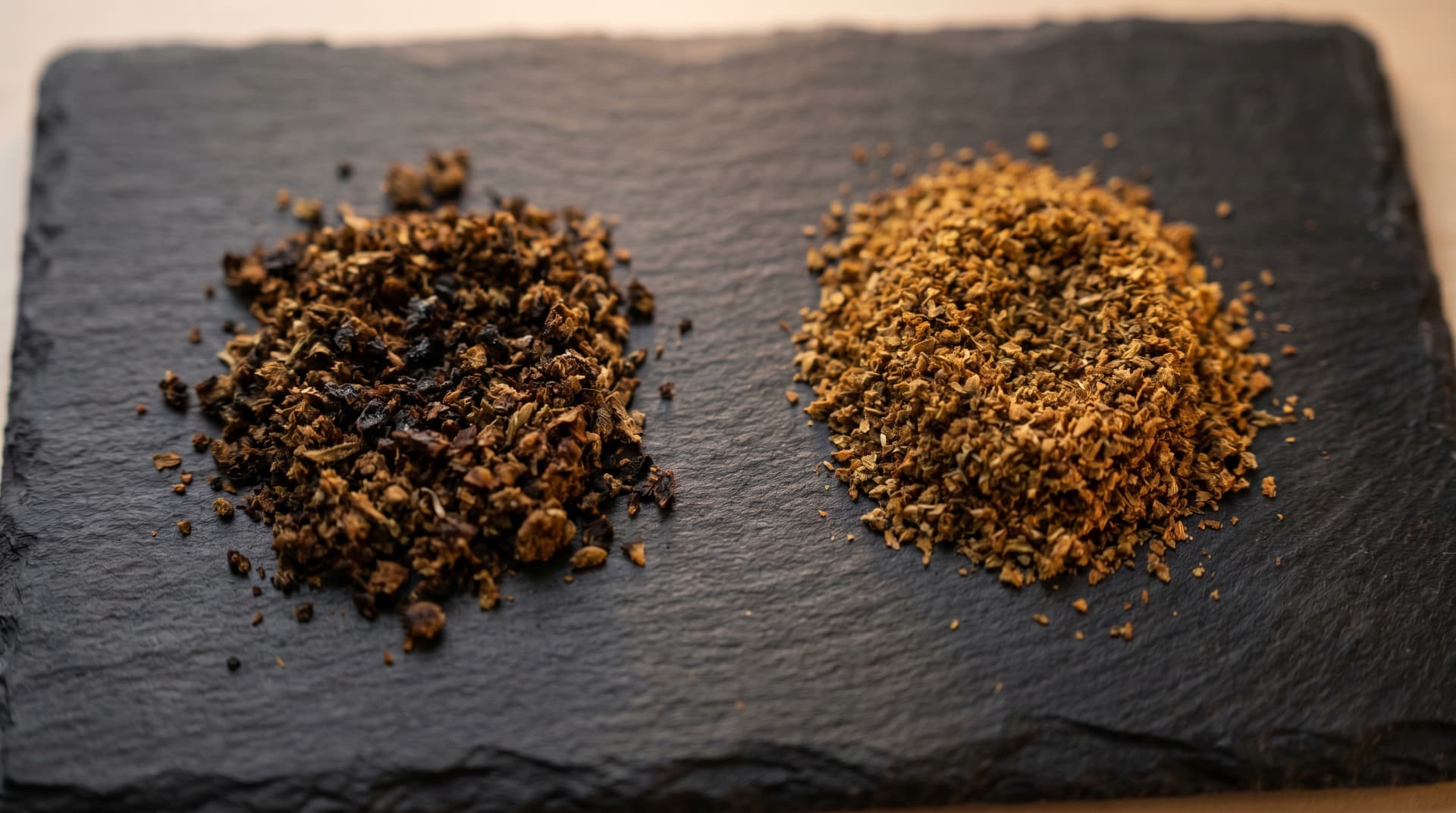
Patchy, dark AVB like the pile on the left is your cue to stir or repack. An even golden brown, like the right, is what you're after.
Convection or conduction: which should you buy?
The "best" heating method depends entirely on how you vape. Use this framework:
Choose conduction if you want maximum portability and plan to sit down for full sessions. Conduction vapes are simple, pocket-sized and affordable, and the 89 g PAX Mini 2 is our most discreet budget pick. They suit people who value ease of use over flavor nuance.
Choose convection if you prioritize flavor clarity, want on-demand single hits, or vape at lower temperatures. Flagship convection costs more, but the XMax V4 Pro tops our budget vaporizer rankings at $109. Plan on learning a slow draw, and pick a model with an on-demand mode if single hits are the goal. The Frolic packs a 120 W heater and airflow control up to 25 L/min for anyone who wants serious power from a portable.
Hybrid vapes produce good vapor right out of the box, with no fussy draw speed and less stirring. They suit first-time buyers and daily users equally well.
Choose hybrid if you want the most versatile experience with the least learning curve. The Venty, Fury 3 and Mighty+ all use hybrid heating and all make our top 11 portables. The Venty leads the list at 9.2. Torn between hybrid and pure convection? See Venty vs Tinymight 2.
How to choose your first vaporizer
A complete framework for matching a vape to your budget, use case, and lifestyle, beyond just the heating method.
Common mistakes
- Pulling hard and fast on convection. Fast draws cool the air before it heats the load. Take slow 6 to 8 second draws, as our draw technique guide explains.
- Packing a conduction oven loose. Loose cannabis barely touches the hot walls. Use a medium-fine grind and a firm pack.
- Skipping the stir on conduction. If your AVB comes out patchy, stir the load at the halfway mark.
- Starting too hot. Begin around 180°C for flavor and step up in small increments. Our temperature guide covers each range.
- Letting residue build up. Resin on the screens and in the air path mutes flavor and tightens the draw. Our cleaning guide walks you through it.
- Packing a convection bowl too tight. Hot air needs a path through the load. Use a medium grind and a loose to medium pack, the opposite of a conduction oven.
Key Takeaway
- First vape → start hybrid (Mighty+) for the easiest learning curve
- Flavor or single hits → pure convection (Tinymight 2) heats on demand
- Smallest pocket size → conduction (PAX Mini 2, 89 g)
- Budget flavor → convection (XMax V4 Pro, $109)
- Patchy AVB → stir mid-session, especially on conduction
- Hybrid dominates rankings because it balances flavor, vapor and ease of use