

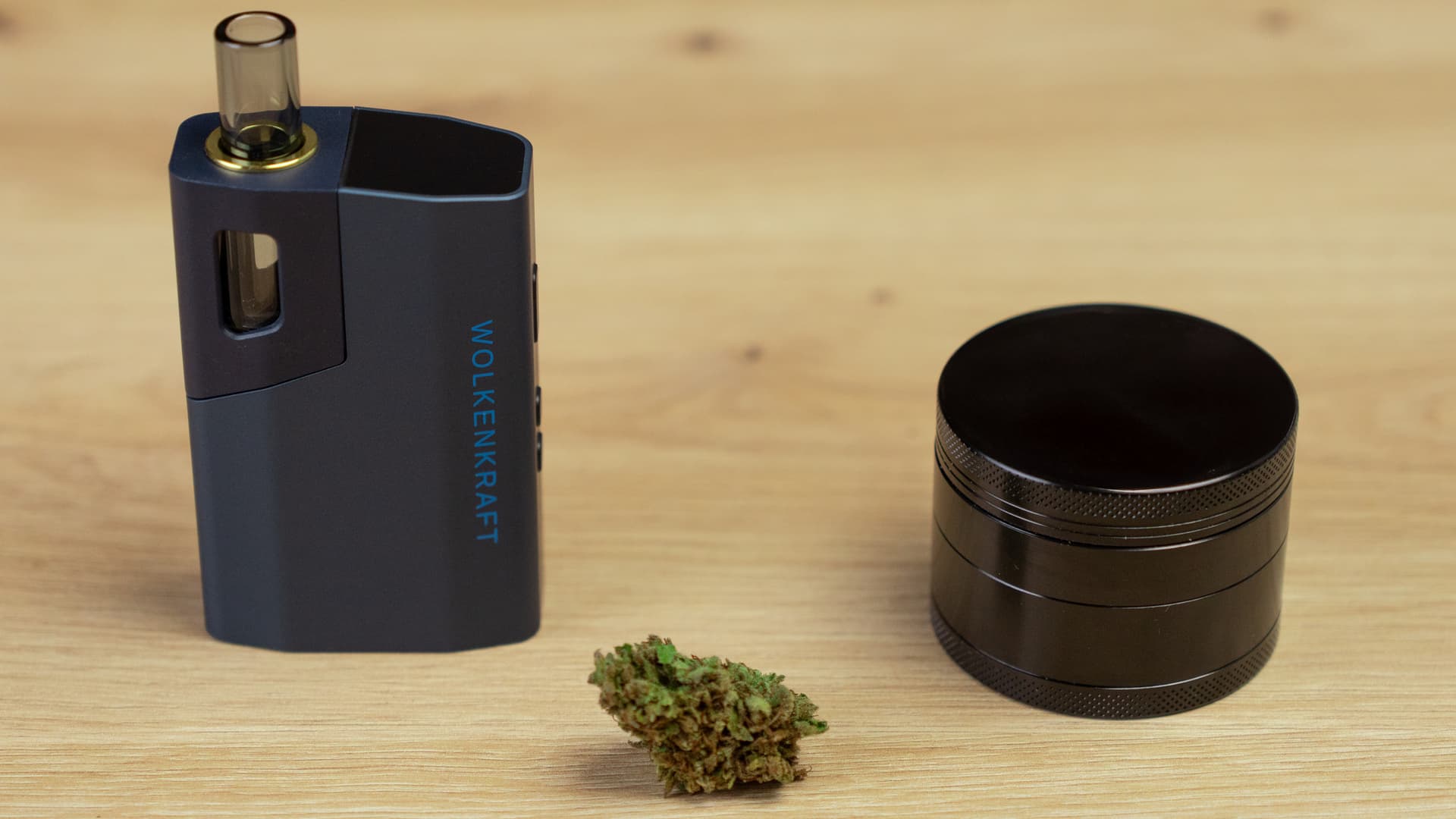
The best grind for most cannabis vaporizers is medium-fine, about the texture of coarse sand. It exposes plenty of surface area for good extraction while leaving gaps for hot air to flow through your cannabis. But the ideal consistency depends on your vaporizer's heating method and how you pack it. Get it wrong and you lose flavor, potency and efficiency.
Grind size by heating type
| Heating type | Grind | Feels like | Load |
|---|---|---|---|
| Conduction | Fine | Table salt | Pack firmly (PAX Mini 2) |
| Convection | Medium | Dried oregano | Load loosely (Tinymight 2) |
| Hybrid | Medium-fine | Coarse sand | Gentle press (Mighty+, Venty, Arizer Solo 3) |
We've used fine, medium and coarse grinds across conduction, convection and hybrid heating vaporizers. Matching the grind to the vape makes a clear difference in flavor and cloud density. This guide covers which grind to use for your vaporizer, how to get it, and what mistakes to avoid. Grinding is step one of using a vaporizer well, so it pays to get it right.
The best grind for each type of vaporizer
Every vaporizer heats cannabis in one of three ways, and each likes a slightly different grind. A mismatched grind is a common reason new users get thin, flavorless vapor.
Here's where we start with each.
Fine grind for conduction vaporizers
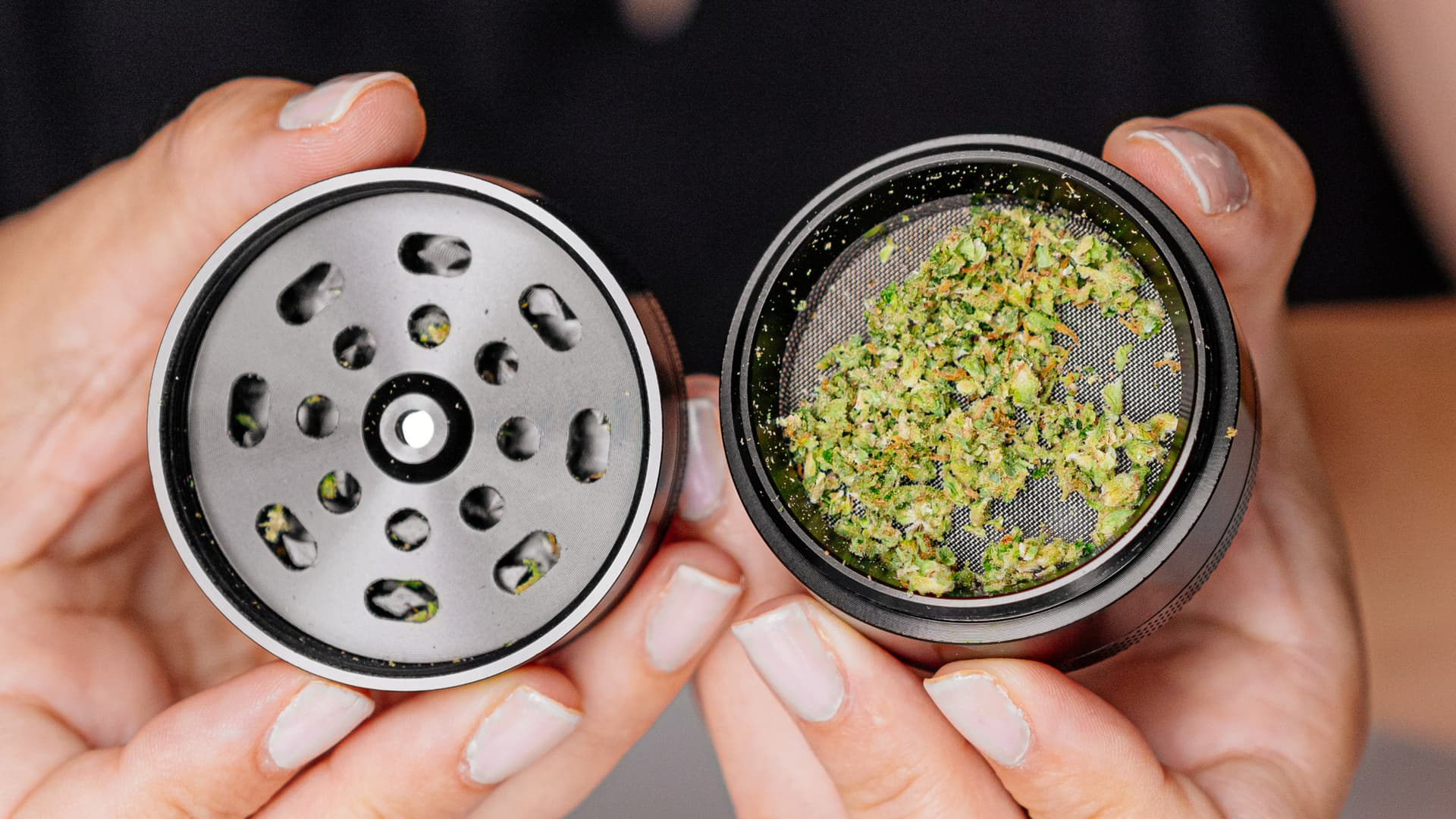
A medium-fine grind (right) is the starting point for most vaporizers. The plate's holes (left) set the size. The mesh below only sifts out kief.
Conduction vaporizers heat cannabis by direct contact with a hot surface, like a pan on a stove. More surface area touching the oven walls means faster, more even heating. A fine grind (similar to table salt) packs snugly against the heated surfaces for dense, flavorful vapor. Just don't crush it into a brick, or the draw gets tight.
The PAX Mini 2 is a textbook example. Its stainless steel oven heats by contact, and we got noticeably thicker clouds with a fine grind than with a medium one. A fine grind also heats more evenly in a conduction oven, so you stir less mid-session.
Loose loads for convection vaporizers
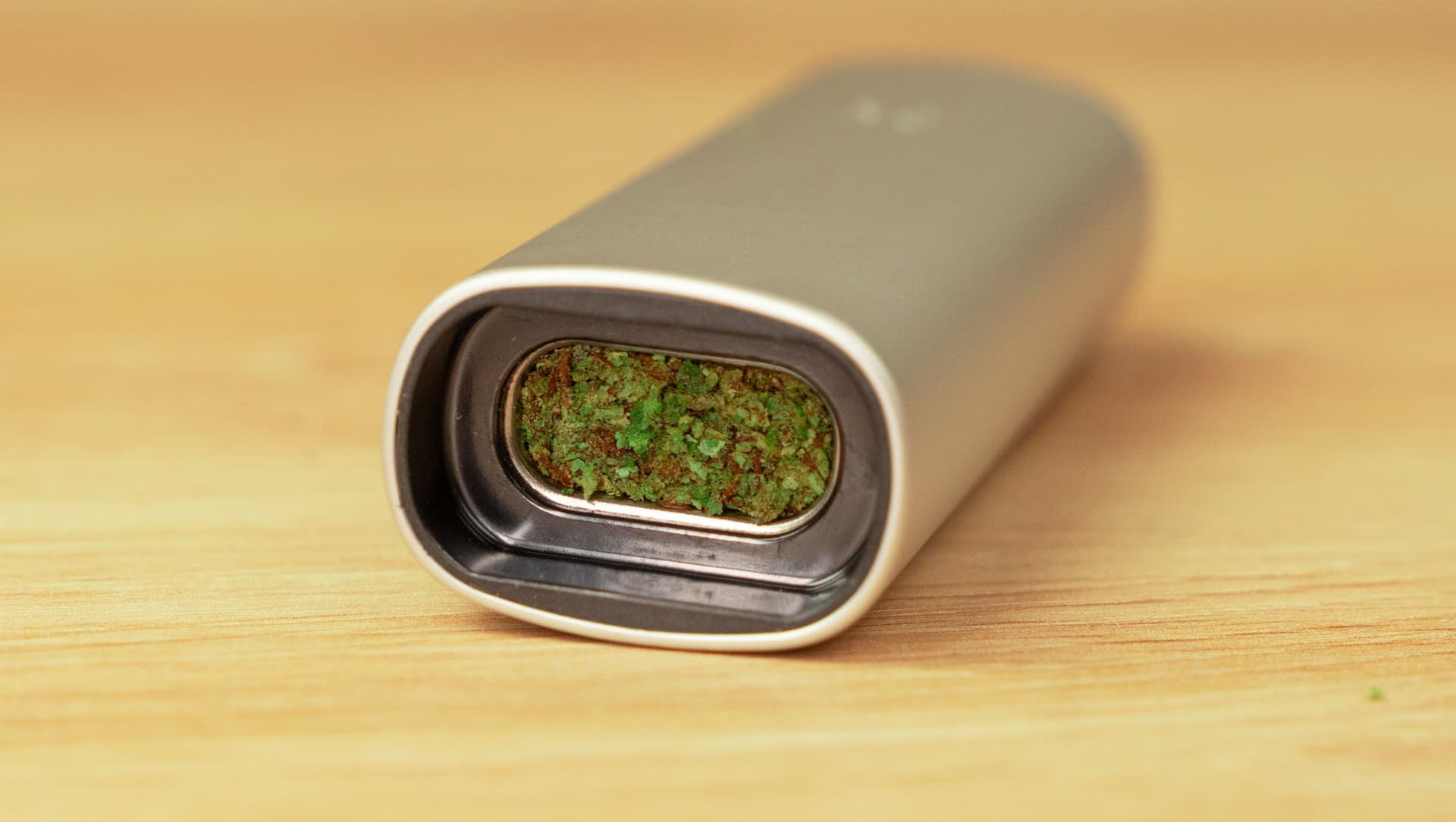
Convection vaporizers pass hot air through your cannabis. If the grind is too fine or packed too tight, it compacts into a dense puck that blocks airflow. That raises draw resistance and chokes vapor production. A medium grind (like dried oregano), loaded loosely, leaves air pockets that let hot air circulate freely. If the draw still feels hard, go a notch coarser. With a medium grind, give the bowl a quick stir halfway through if the vapor thins out. It exposes the unvaped cannabis in the middle.
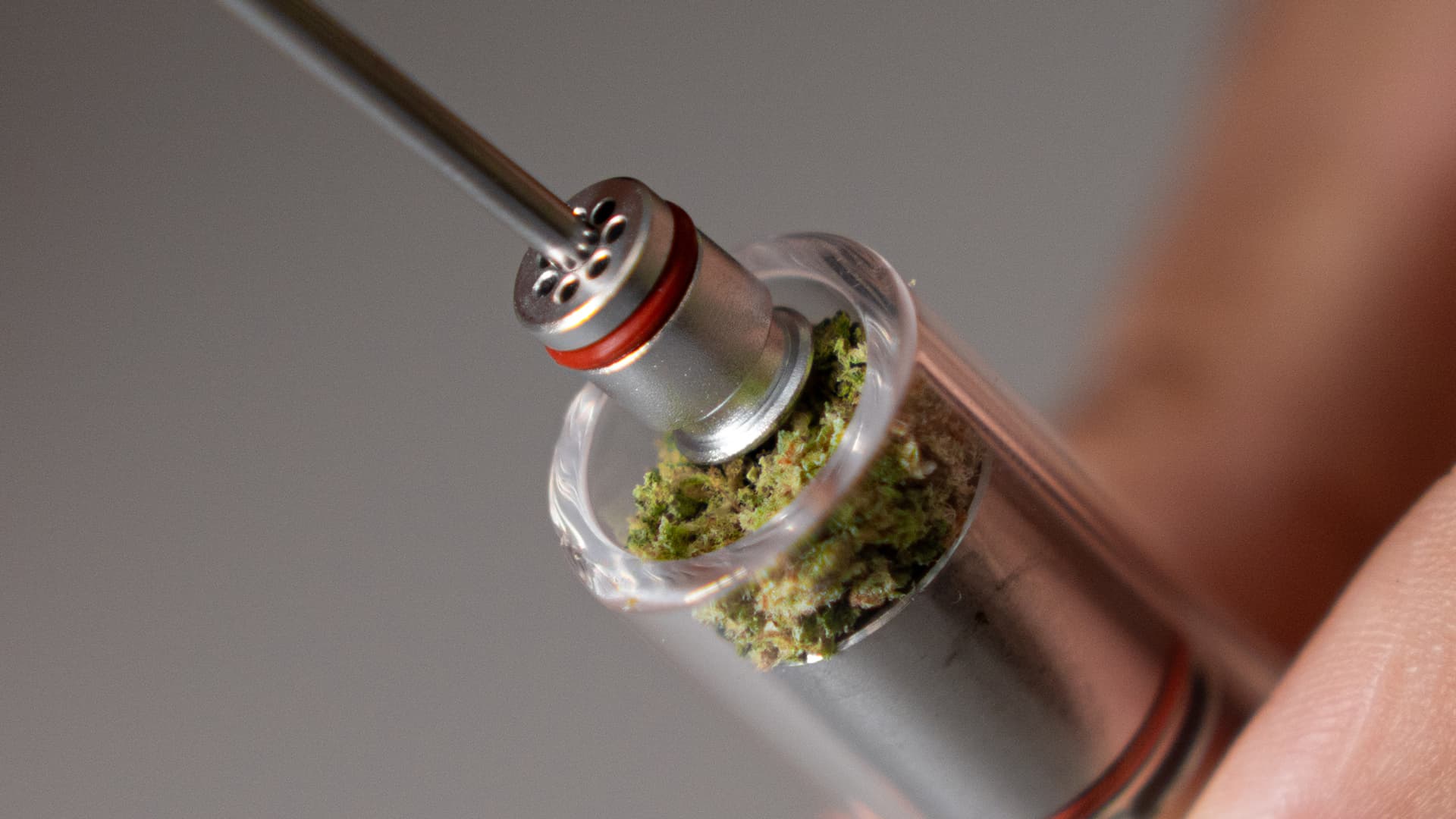
The Tinymight 2 runs on convection, and Tinymight's own guide calls for a medium-fine grind, a notch finer than we use in other convection vapes. We drop it into the stem loosely, without packing, which keeps the draw open at that finer grind.
Medium-fine grind for hybrid vaporizers
Hybrid vaporizers combine both heating methods, so you split the difference. A medium-fine grind (like coarse sand) gives the oven walls enough contact for conduction while keeping enough space for convection airflow.
The Mighty+ and Venty both use hybrid heating and work best for us at this consistency. Fill the chamber as directed without packing it hard. We found that a medium-fine grind in the Mighty+ gives consistent vapor for a full session, usually without stirring. Choosing between them? See our Mighty+ vs Venty comparison. For a deeper breakdown of these heating styles, see our convection vs conduction guide.
The Arizer Solo 3 is a hybrid too, but its glass bowl leans on airflow, so keep the pack light and the holes clear. Shopping for a hybrid? Start with our best portable vaporizers ranking.
Desktop vaporizers
Big desktop chambers like the Volcano Hybrid are more forgiving. A medium grind, filled to the top without pressing, works well for balloon and whip sessions.
How to use a 4-piece grinder in 4 steps
A 4-piece grinder with a kief screen is our favorite tool for the job. The teeth and the plate's holes set your grind, and the middle chamber catches it. Below that, a screen sifts kief (the fine, resin-rich trichomes) into the bottom chamber for later.
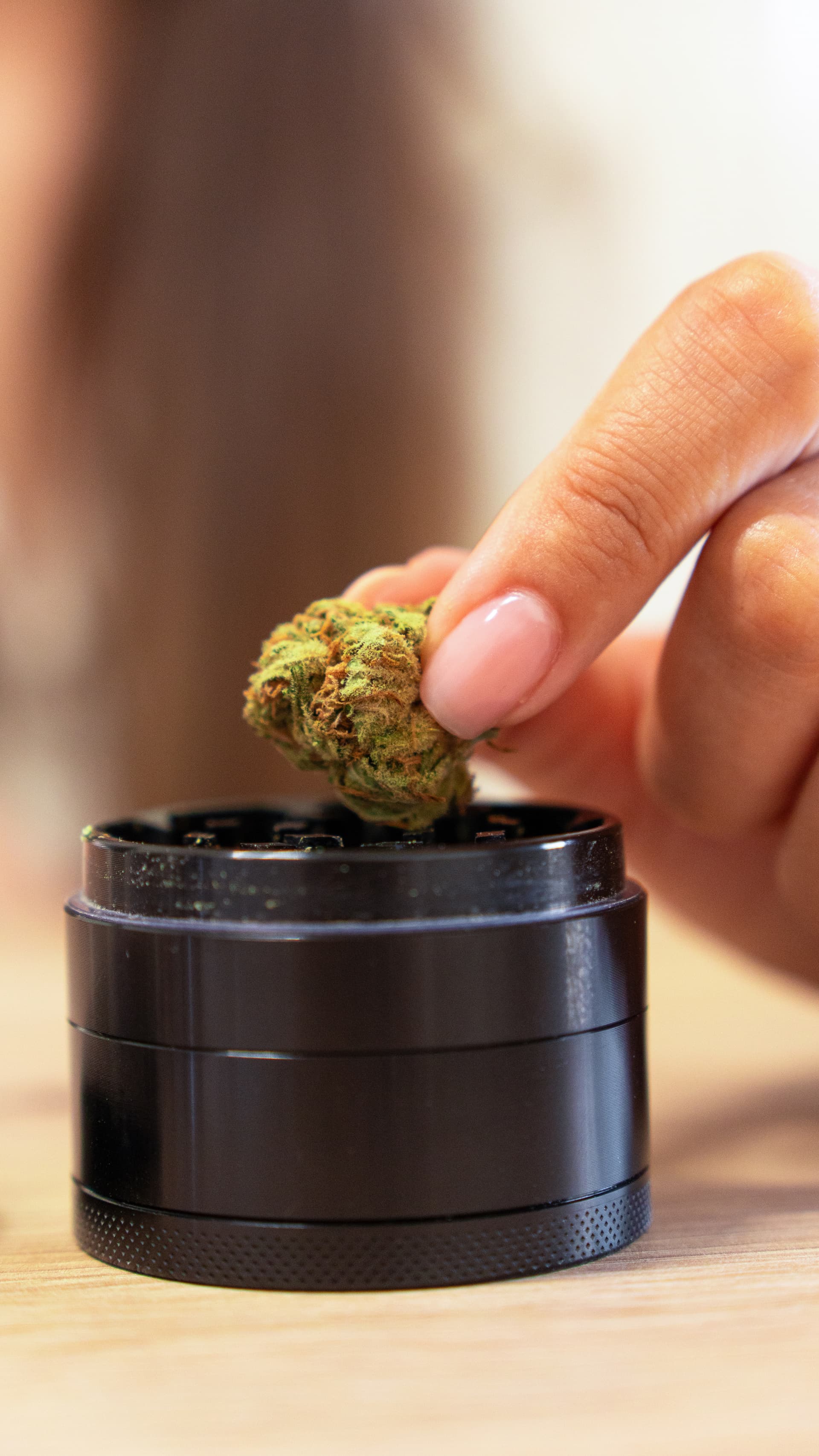
Close-up of a hand placing a cannabis bud into an open black four-piece grinder on a wooden surface
Step 1: Break buds into pea-sized pieces. Remove stems and seeds first. Drop a few pieces between the teeth of the top chamber, around the outside rather than over the center pin. Don't overfill: the teeth need room to rotate.
Step 2: Grind, then check. Twist back and forth a few times and take a look. Stop at coarse sand for medium-fine, or keep going toward table salt for fine. Your grinder's teeth and plate matter as much as the number of turns, so check rather than count.
Step 3: Tap the grinder. Give the closed grinder a few light taps against your palm. This knocks ground cannabis through the holes into the collection chamber and clears material stuck between the teeth.
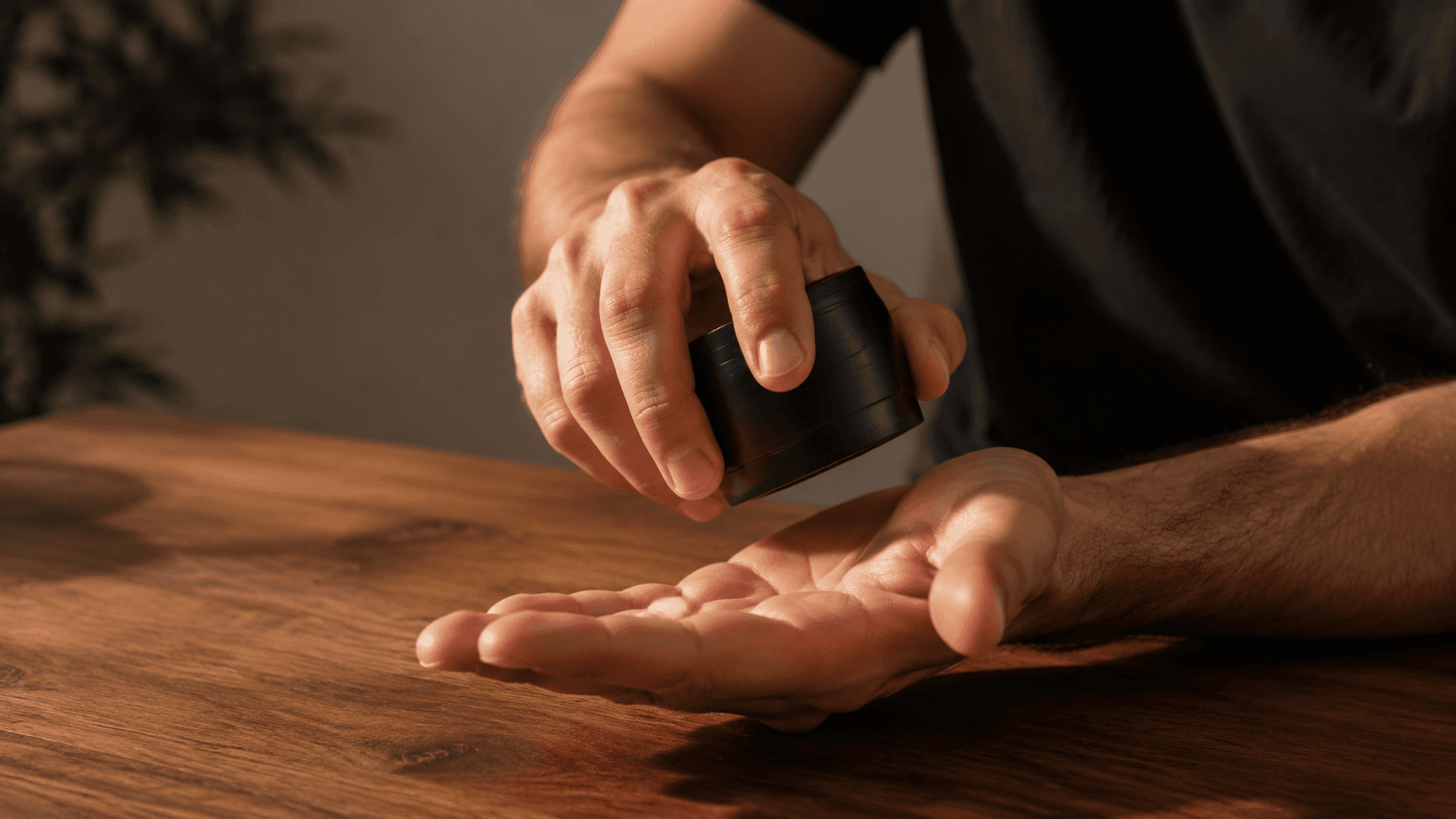
Illustration of a hand tapping a closed black grinder against an open palm over a wooden table
Step 4: Load your oven. Scoop cannabis from the collection chamber with the provided tool or a small spoon. As a rule of thumb, pack conduction ovens firmly, load convection vapes loosely and give hybrids a gentle press. Then take a test draw and adjust.
What a good grind looks like
Pinch some between two fingers. A good grind feels light and fluffy, the pieces are roughly the same size, and there's no dust at the bottom of the collection chamber and no whole chunks left. If you see both powder and chunks, your grinder teeth are dull or you overloaded it.
Grinder types ranked by consistency
Not all grinders produce the same results. Here's how the three main types compare in our hands.
4-piece aluminum grinders deliver the best results
A quality 4-piece aluminum grinder with sharp teeth gives us the most even grind. The screen separates kief into the bottom chamber, and the middle chamber collects your ground cannabis. Look for anodized aluminum, a magnetic lid and a grip that feels good in your hand. See our vaporizer accessories guide for the other kit worth owning.
Acrylic grinders are cheap, but their teeth dull fast and they crack. Aluminum is the sweet spot, and stainless steel lasts longest at a higher price.
2-piece grinders work but skip the sorting
Two-piece grinders have no collection chamber, so ground cannabis stays between the teeth until you tap it out. You check the texture as you go. Some, like Brilliant Cut's two-piece models, come in fine, medium and coarse cuts, so you pick your texture up front.
Electric grinders are fast but harder to dial in
Battery-powered grinders chew through cannabis in seconds. The ones we've used tend to leave a mix of powder and chunks unless you grind in short bursts and check in between. They're great for users with limited hand mobility, less so for dialing in a specific consistency.
You don't need a grinder to get started
If you don't have a grinder, these methods work as substitutes. None match a good 4-piece grinder for consistency, but they'll get the job done.
Scissors in a shot glass. Drop a small nug into a shot glass and snip with clean scissors until the pieces look even. This produces a medium consistency suitable for most hybrid vapes. It's our favorite no-grinder method.
The coin and container method. Place dried cannabis and a clean coin in a small, clean pill bottle. Shake hard, then check the texture. The coin breaks up the material through impact. Results are coarse and uneven but acceptable for convection vapes.
Finger breaking. Tear buds apart by hand. This produces the coarsest, most uneven grind and should be a last resort. It does work for a big desktop chamber like the Volcano Hybrid's, as long as you keep the pieces small and even.
Dosing capsules change the grind equation
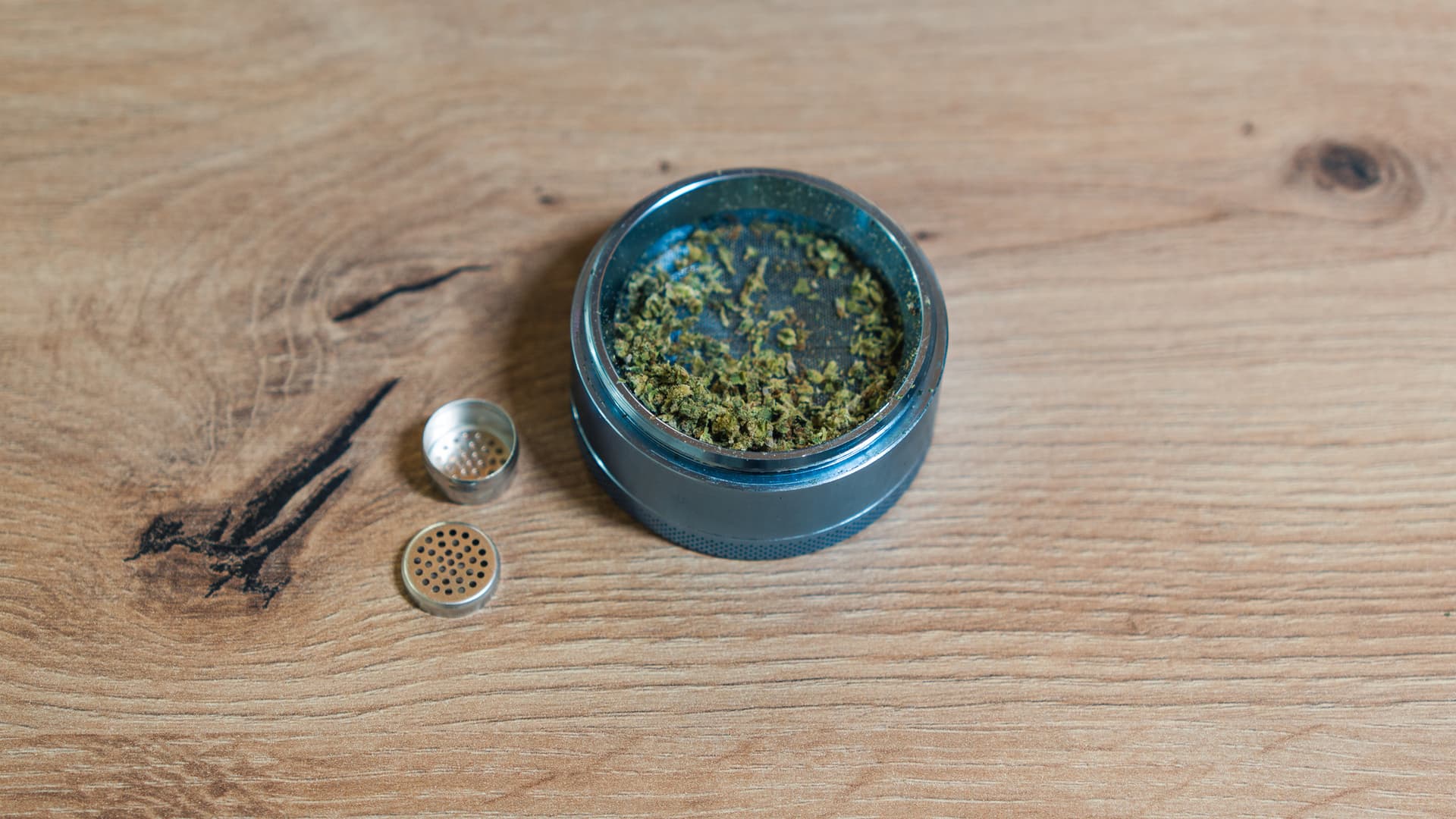
Capsules add a little draw resistance, so fill them evenly and keep the pack loose.
Dosing capsules put a small perforated metal cup between your cannabis and the oven walls, which changes how air and heat reach it. The capsule adds some draw resistance on its own, so fill it evenly and don't pack it hard. A tightly packed fine grind in a capsule chokes the draw fast.
The Mighty+, Venty, Crafty+ and Volcano Hybrid all take Storz & Bickel's dosing capsules (the Volcano Hybrid through an adapter), and the Tinymight 2 has its own. In our sessions, a fine-to-medium grind in a capsule tasted as good as a medium-fine grind loaded straight into the chamber. Check our dosing capsules guide for more on this workflow.
6 grinding mistakes that hurt vapor quality
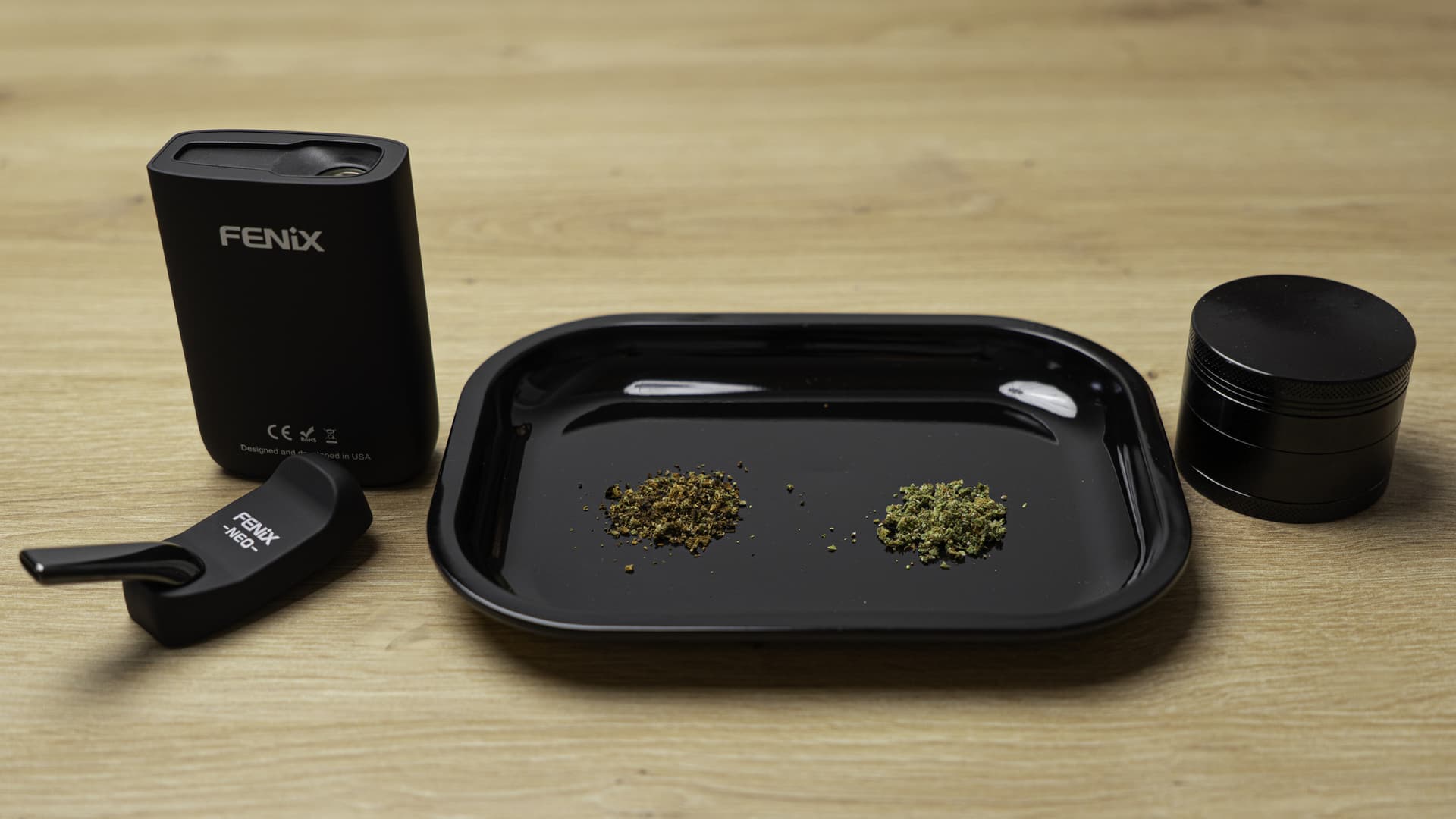
Spent AVB should come out evenly brown. Green or dark patches mean uneven heating, often from the grind or the pack.
Grinding too fine for convection vapes. Powder compacts and blocks airflow, producing thin, wispy vapor. If your convection vape feels hard to draw from, try a coarser grind or a lighter pack before blaming the vape. Clear any residue off the screen while you're at it. Still weak? Work through our vaporizer troubleshooting guide.
Grinding too coarse for conduction vapes. Large chunks leave air gaps against the oven walls. Heat doesn't transfer efficiently, so you waste cannabis and get underwhelming clouds.
Using wet cannabis. Moist buds clump together in the grinder and pack into a dense plug that resists airflow. A small stem should snap cleanly. If it bends, seal the flower in a jar with a 58% or 62% humidity pack before grinding. Boveda's own guide (the packs now sell as Vivi Fresh) says to give it 24 to 48 hours.
Grinding bone-dry cannabis. Flower that crumbles when you touch it turns to dust in the grinder and chokes convection vapes. A 62% humidity pack in the jar for a day or two brings it back.
Overpacking the grinder. Stuffing too much material between the teeth prevents even shredding. Load enough to sit between the teeth without stacking on top of them. A few small pieces at a time is plenty, and smaller batches help if the lid gets hard to turn.
Never cleaning the grinder. Resin builds up on the teeth and screen over time, gumming up the mechanism and blocking kief collection. Brush it out regularly and deep clean when the lid starts to stick. Isopropyl alcohol is the go-to for metal grinders, but check the maker's care advice first. Brilliant Cut, for one, allows alcohol or mild soapy water and warns against long soaks. Dry it fully before refilling, and give it the same care you'd bring to cleaning your vaporizer.
Signs your grind is wrong
Your draw and your spent bowl tell you when the grind is off. Find what you notice, then apply the fix.
| What you notice | Cause | Fix |
|---|---|---|
| Hard draw, thin vapor | Too fine or packed too tight | Go a notch coarser, load looser |
| Weak vapor, green patches in AVB | Too coarse or uneven | Grind finer, stir halfway |
| Cannabis in the mouthpiece | Powder slipping through the screen | Stop at coarse sand, check the screen |
| Clumps in the grinder | Cannabis too wet | Dry it with a humidity pack first |
| Dust instead of flakes | Cannabis too dry | Rehydrate with a 62% pack |
Save your ground AVB for edibles
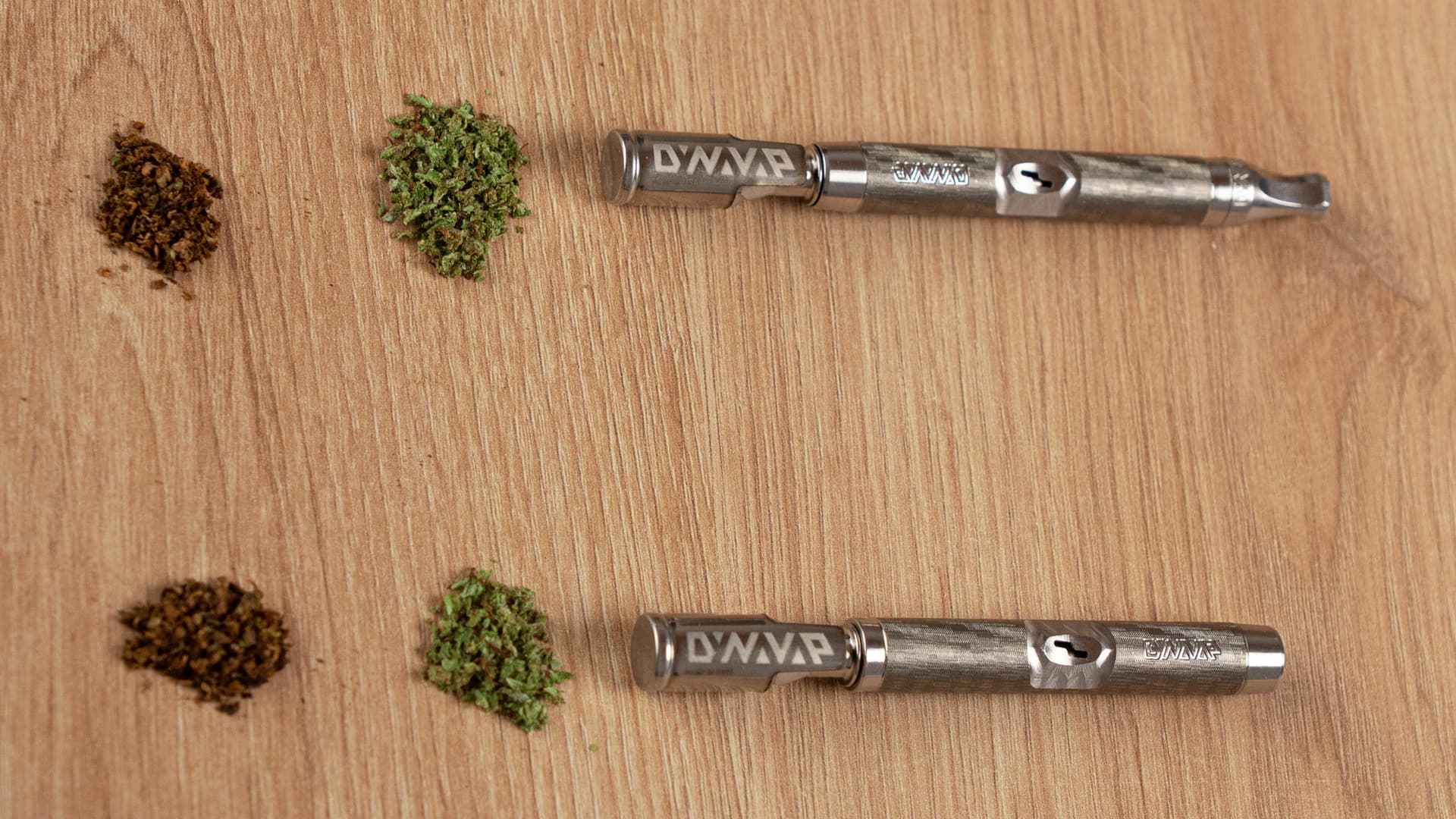
Fresh ground cannabis (green) next to evenly vaped AVB (brown).
Properly ground cannabis vapes evenly, so your AVB (already vaped bud) comes out evenly browned too. Coarsely ground cannabis tends to vape unevenly, leaving some material under-extracted and some over-cooked. AVB strength still varies with the flower, your temperature and how long you vaped, so start small with AVB edibles.
If you want to get the most from your AVB, start with a consistent grind matched to your vape type. Our AVB repurposing guide covers exactly how to store and use spent cannabis.