

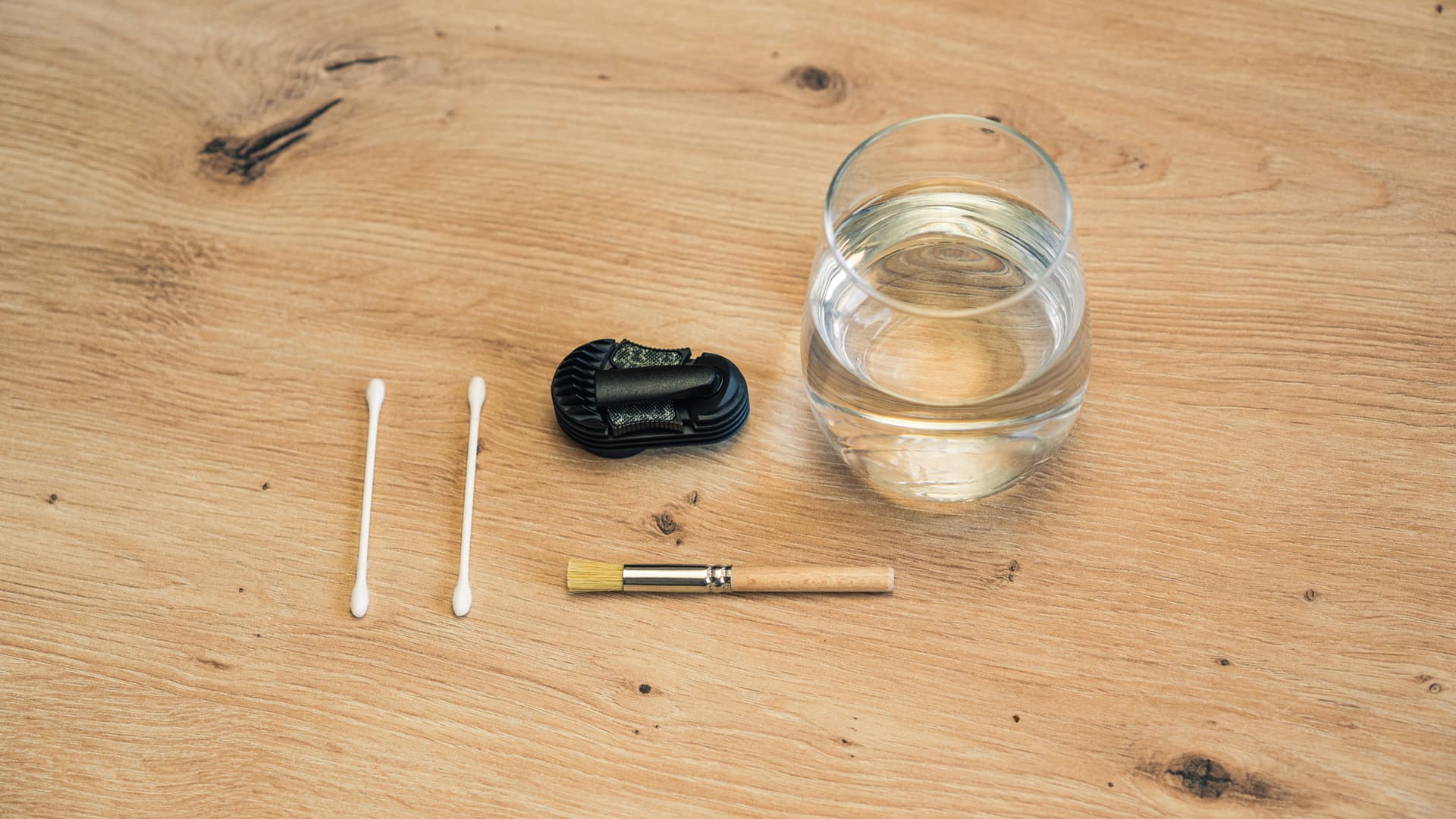
A dirty vaporizer gives you worse flavor, weaker vapor and higher draw resistance. Cleaning costs almost nothing, a quick brush takes a minute or two, and it keeps your vape tasting clean and drawing freely.
The short version:
- Switch off and let it cool.
- Tap out the AVB, then brush the oven and screen.
- Swab the oven walls with isopropyl alcohol (ISO) on a cotton swab, if your manual allows it. Never pour it in.
- Soak removable cooling parts or glass in ISO, only the parts your manual clears. That's 30 minutes max for Mighty+ and Crafty+ parts.
- Rinse, dry completely, then reassemble.
We clean every vaporizer we test, and the difference between a freshly cleaned oven and one that's gone 10+ sessions is obvious in both taste and airflow. This guide covers the method we use, from quick care after every vaping session to full deep cleans, with model-specific tips for the most popular vapes. It is written for dry cannabis vaporizers. Concentrate vapes, wax pens and eRigs have their own routine in our eRig cleaning guide.
How often to clean your vaporizer
Brush the oven and screen after every session. That's what Storz & Bickel tells Mighty+ and Crafty+ owners, and it's the habit that saves the most work later. For a full clean, follow your manual's schedule. Tinymight, for example, suggests a weekly clean for heavy use and every two weeks for light use. Clean sooner whenever flavor fades or draws start to feel tight.
A quick brush takes a minute or two. A deep clean takes longer, mostly because soaked parts need their time in the bath and then time to dry completely. Skip maintenance for too long and you get clogged screens, tight airflow and a stale, burnt taste. Restricted airflow forces you to draw harder, which pulls loose particles into the vapor path. Left long enough, hardened resin stops the cooling unit from seating properly and causes air leaks. The longer a vape goes between cleans, the harder the resin sets and the longer the next deep clean takes. Turning the temperature down won't fix any of that, because a blocked screen needs cleaning.
| Part | How often | How |
|---|---|---|
| Oven and screen | After every session | Tap out the AVB, then brush |
| Mouthpiece | Every few sessions | Wipe it, or swab with ISO if your manual allows |
| Cooling unit or glass stem | When flavor fades or the glass turns amber | Soak per your manual (30 minutes max for Mighty+ and Crafty+ parts) |
| Oven walls | Every full clean | ISO swab, if your manual allows it |
| Screens | When cleaning stops restoring airflow | Replace |
Some makers set a tighter schedule. PAX, for example, has PAX Mini 2 owners run the alcohol-dampened wire brush through the vapor path every 3 to 5 sessions.
Supplies you need
You don't need specialty cleaning products. Here's what we keep on hand:
- Isopropyl alcohol (ISO): 91% or stronger is the usual pick, and it's what Tinymight specifies. Use it only on parts your manual clears for alcohol.
- Cotton swabs (Q-tips): standard size for ovens, pointed tips for tight spots.
- Small cleaning brush: most vapes ship with one. A soft-bristle toothbrush works as a backup.
- Paper towels or microfiber cloth: for drying and wiping exteriors.
- Small container or zip-lock bag: for soaking removable parts.
- Pipe cleaners: for detached mouthpieces and glass stems.
Keep liquids away from the electronics, charging port and buttons. ISO cuts through cannabis resin fast and evaporates cleanly, which is why it's the go-to cleaner. It can also damage some plastics, rubber seals, coatings and glues, so check your manual before a part goes in the bath. Always switch the vape off and let it cool first. ISO is highly flammable, so work somewhere ventilated and away from lighters.
Tip
What can you clean a vaporizer with?
| Cleaner | Use it on | Watch out for |
|---|---|---|
| Isopropyl alcohol, 91% or stronger | Resin on the parts your manual clears for alcohol | Keep it off seals, O-rings and wood |
| Warm water and mild dish soap | Glass, silicone, and Mighty+ and Crafty+ cooling parts | Rinse well, dry fully and keep it away from the oven |
| High-proof drinking alcohol, like Everclear | Glass and metal parts, when you're out of ISO | Same rules as ISO: only parts cleared for alcohol |
| Acetone and vinegar | Nothing, skip them | Acetone attacks plastics and finishes, and vinegar is weak on cannabis resin and leaves a smell |
Whatever you reach for, your manual has the final say on which parts it can touch.
How to clean the oven in 3 steps
The oven (also called the chamber) is where residue builds up fastest. Leftover plant material bakes onto the heated walls and dulls the flavor over time. On some vapes the oven is fixed in the body. On others, like the Arizer Solo 3 and Tinymight 2, the cannabis sits in a removable tube, and the heater opening below it isn't a bowl to scrub.
Step 1: Empty the AVB
Once the oven is cool enough to handle, turn the vaporizer upside down and tap out the spent cannabis. Tap gently, and never knock glass against a hard surface or scrape with anything sharp. Save your AVB (already vaped bud) if you want to repurpose it in edibles.
Step 2: Brush out remaining particles
Use the included cleaning brush or a dry cotton swab to sweep out any remaining material. For conduction ovens (like the PAX Mini 2), brush the walls and the floor of the oven, where direct contact causes the most buildup. For convection vapes like the Tinymight 2, take out the loading tube and cooling unit and brush them separately. Never push a pipe cleaner down into the heater.
Step 3: Swab with isopropyl alcohol
If your manual allows it, dip a cotton swab in ISO, squeeze off the excess, and wipe the inside walls of the cooled oven. The alcohol loosens sticky resin fast. Switch to a fresh swab whenever one comes out dark, and stop when they come out clean.
Never pour isopropyl alcohol directly into the oven. Apply it to the swab only. Excess liquid can seep into the electronics and damage the heater. On glass-tube vapes like the Arizer, the body stays dry and only the detached glass gets cleaned.
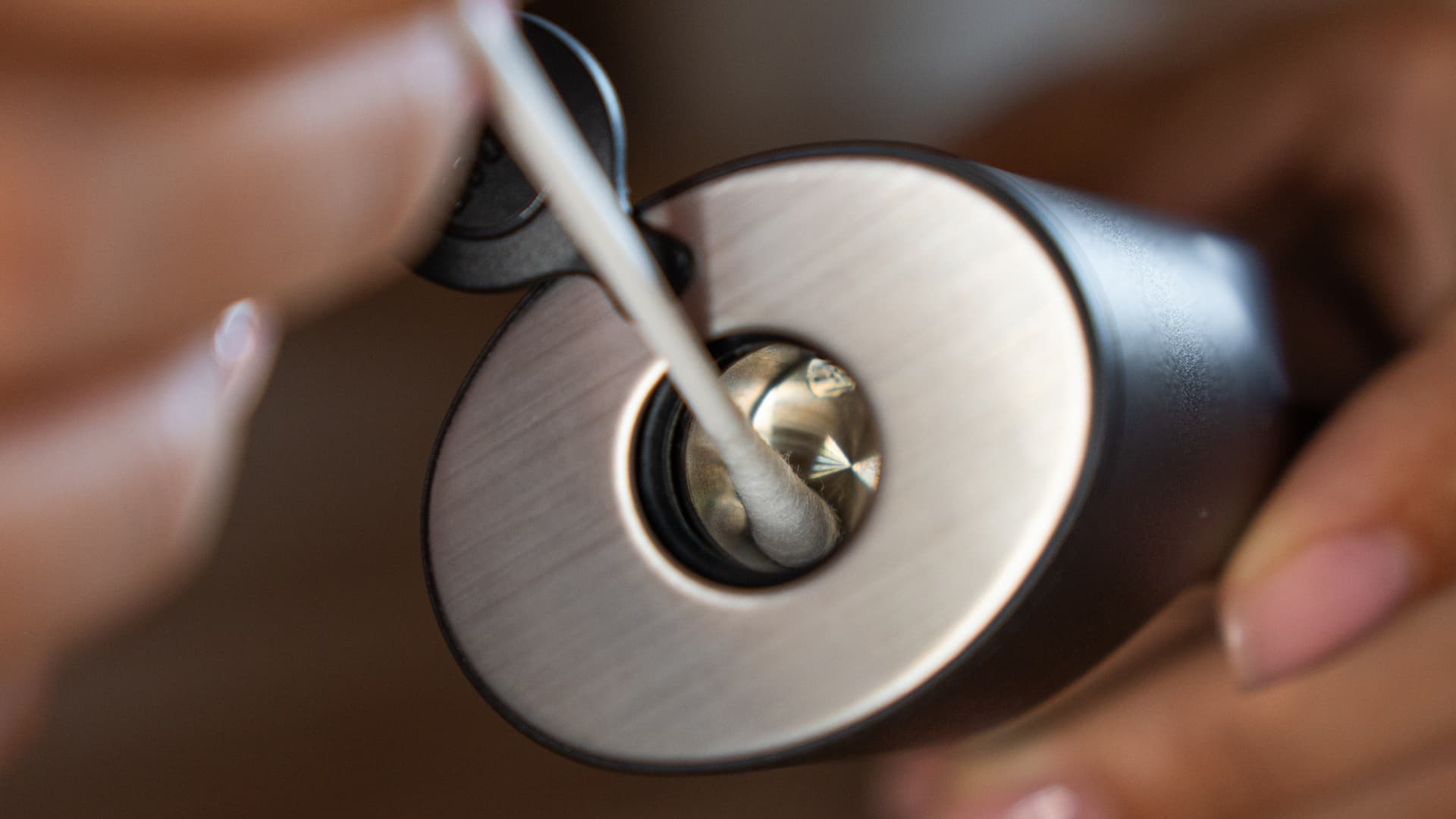
Know what you're swabbing. On some vapes, a metal-lined opening like this holds the heater, not the cannabis.
How to clean the cooling unit and vapor path
The cooling unit is the part between the oven and your mouth. It cools the vapor before you inhale, but it also collects a lot of resin over time. Storz & Bickel vapes (the Venty, Mighty+ and Crafty+) have a dedicated plastic cooling unit that comes apart into several pieces. Other brands use glass stems, silicone tubing or metal vapor paths.
Storz & Bickel cooling units
Take the cooling unit apart using the diagram in your manual. Set the cap lock aside first. On the Crafty+ its hologram is a sticker, and the Mighty+ keeps its cap lock out of the bath too. Drop the remaining parts into a zip-lock bag with enough ISO to cover them. Seal it and soak for up to 30 minutes, shaking now and then.
Thirty minutes is Storz & Bickel's limit for Mighty+ and Crafty+ parts, so don't leave them overnight. Rinse every piece under running water for at least a minute. Let everything dry completely before you reassemble, and swap out any cracked part or worn seal while it's apart.
The cooling unit on Storz & Bickel portables collects a honey-colored resin that builds up on the ridged fins inside. Leaving it in place restricts airflow and makes every draw feel tighter.
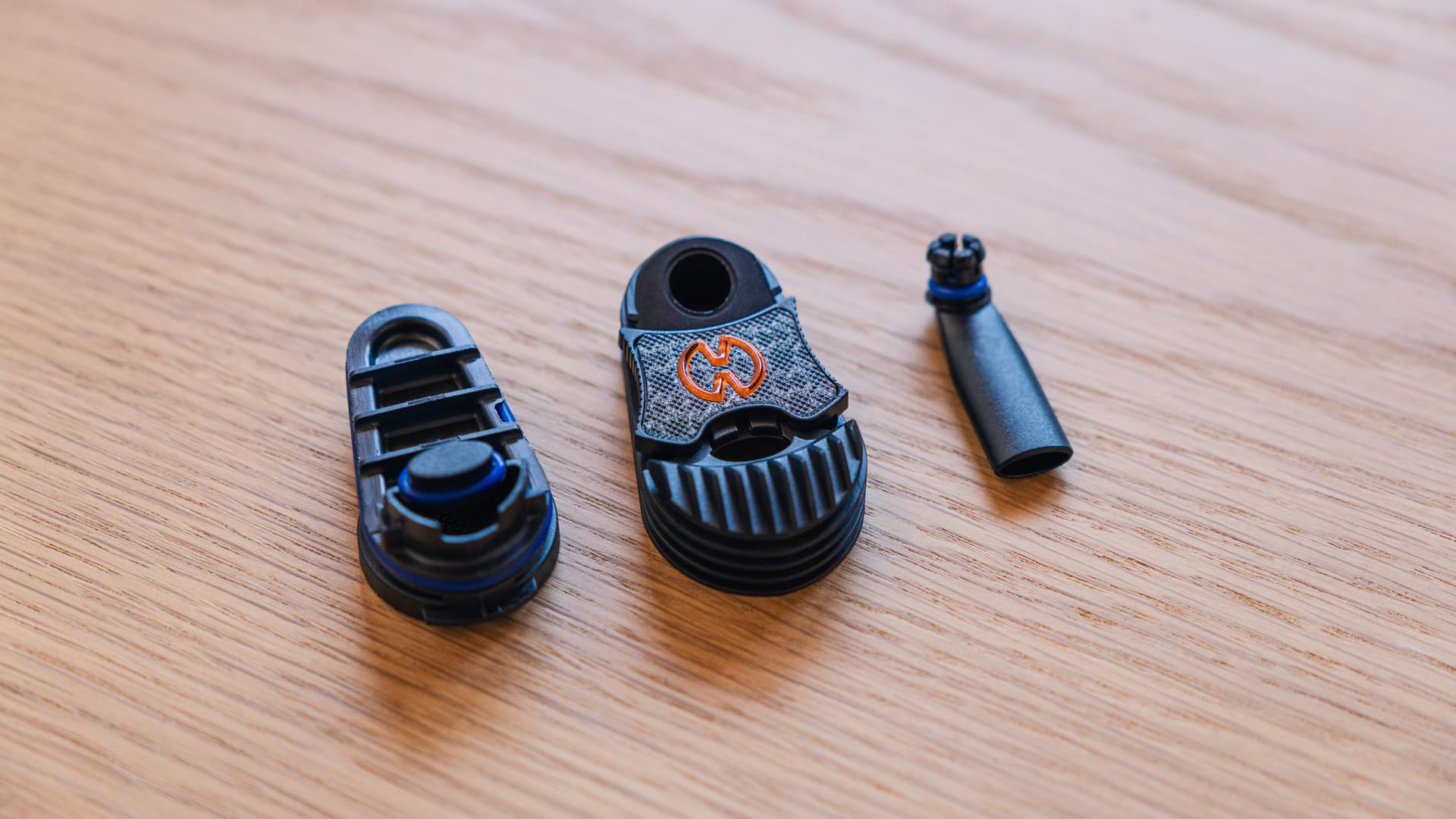
The cooling unit comes apart by hand. On the Crafty+, take the cap lock off before an alcohol soak.
Glass stems and mouthpieces
Vapes with glass vapor paths, like the Arizer Solo 3, are the easiest to clean. Let the glass cool fully first, since a sudden temperature change can crack it. Then drop the stem into ISO. Arizer recommends a couple of hours. Rinse with warm water, run a pipe cleaner gently through the tube, and let it dry fully.
Glass stems offer a visual advantage: you can see the buildup. When the inside of the stem turns amber, it's time to clean.
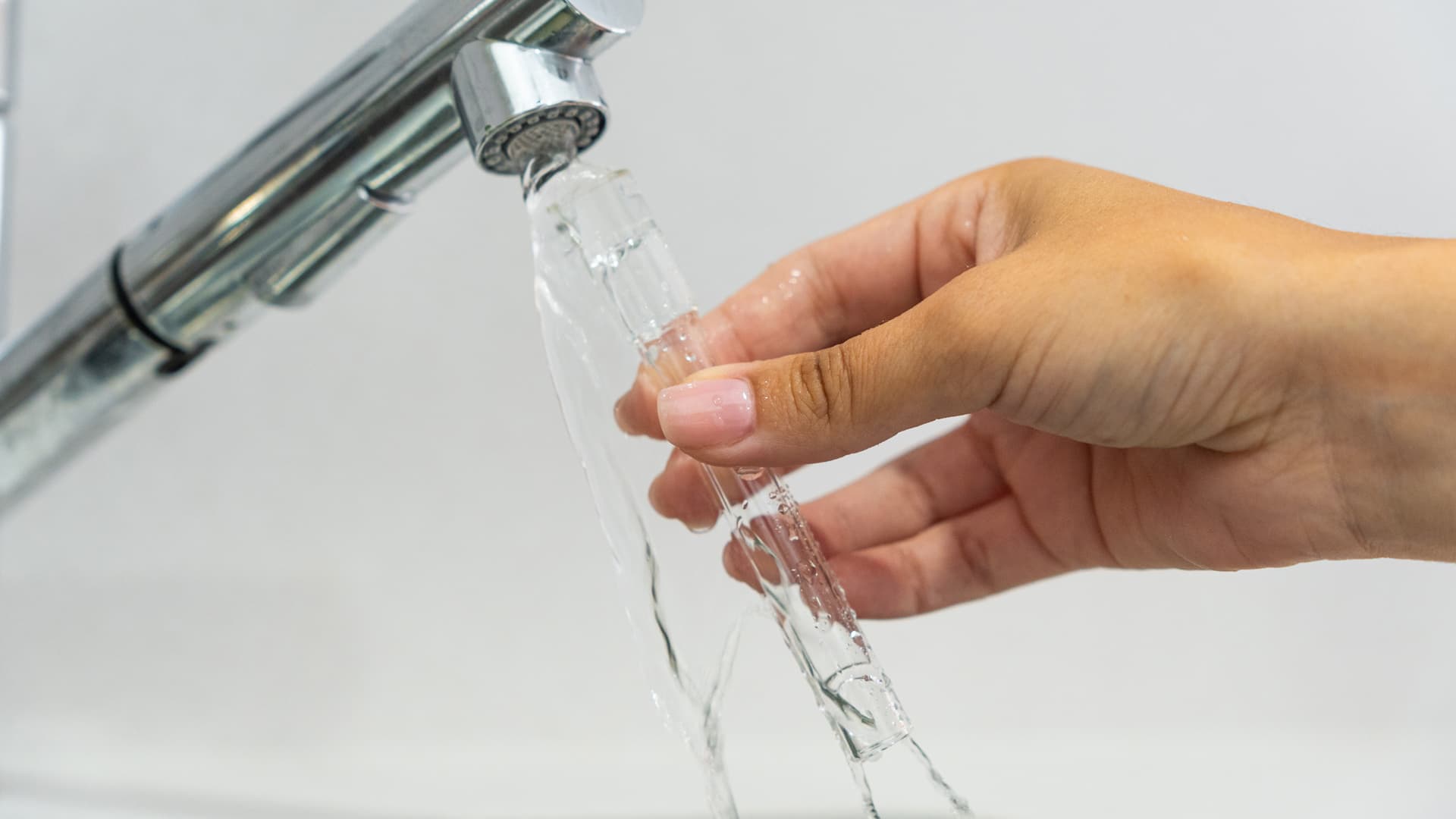
Glass shows you exactly when it needs cleaning. After the soak, rinse it under the tap and let it dry fully.
Metal and ceramic vapor paths
For vapes with metal or ceramic vapor paths, sort the parts the way your manual lists them. Soak only the removable parts it names, like mouthpieces and adapters. Swab the fixed surfaces, and just wipe silicone gaskets and O-rings. Never submerge the powered body. These paths are harder to inspect visually, so cleaning on a regular schedule matters more.
When and how to replace screens
Screens are the small mesh filters that keep plant material out of the vapor path. They clog over time, even with regular cleaning.
Before you replace a clogged screen, soak it in ISO with the other parts and brush it clear. Many come back fully, and you can save the spares for when one bends or tears.
Replace a screen when cleaning no longer restores airflow, or when it's bent, torn or won't sit flat. Many manufacturers include spare screens in the box.
Screens come out differently from model to model. Some push out through an air channel and others lift out of the cooling unit, so use the method in your manual. Press the new screen into place with your finger or the flat end of a tool, and make sure it sits flush. A poorly seated screen lets debris through and clogs the vapor path downstream.
If you use dosing capsules, your oven stays cleaner for much longer. The capsule holds the cannabis, so loose material stays off the oven walls. Vapor still flows through it, so keep brushing the screens and cleaning the cooling unit as usual.
The dosing capsule shortcut to cleaner ovens
Capsules keep loose cannabis out of the chamber, so the oven stays cleaner between cleans. Here's how to load them, which vapes support them, and when they're worth it.
How to deep clean your vaporizer
A deep clean goes beyond the oven and cooling unit. Here is the full process we follow at VapeExperts:
- Switch off, let it cool and take apart what's meant to come apart. Mouthpiece, cooling unit, screens, glass stems. Check your manual's diagram if you're unsure.
- Soak the parts your manual clears for alcohol. Use a small glass jar or zip-lock bag. Stick to the manual's time: 30 minutes max for Mighty+ and Crafty+ cooling parts, a couple of hours for Arizer glass. Keep O-rings, wood, decorated parts and anything electronic out of the bath.
- Swab the oven, if your manual allows it. Keep the swab damp, not dripping, and rotate to a clean side each pass until no residue transfers.
- Clean the mouthpiece and detached vapor path. The mouthpiece touches your lips every session, so give it a swab or soak (if your manual clears it) each full clean. Run a pipe cleaner gently through removable tubes and mouthpieces. Never force a tool into the heater or into a channel it doesn't fit.
- Wipe the outside with a soft, dry or slightly damp cloth. That's Storz & Bickel's advice for its portables, and it keeps alcohol off finishes that can't take it. Keep moisture out of charging ports and button openings. If your vape has exposed battery or charging contacts, wipe them with a dry swab. Keep liquid away from them entirely.
- Rinse the soaked parts under warm running water. This removes dissolved resin and leftover alcohol.
- Dry everything completely. Pat off what you can with a lint-free cloth, then let the parts air dry, longer for anything with small recesses. Reassembling with moisture inside causes problems.
- Reassemble and check the fit. Make sure seals and screens sit right. If your manual calls for an empty heat cycle, run it only once everything is bone dry. Never use heat to evaporate leftover alcohol.
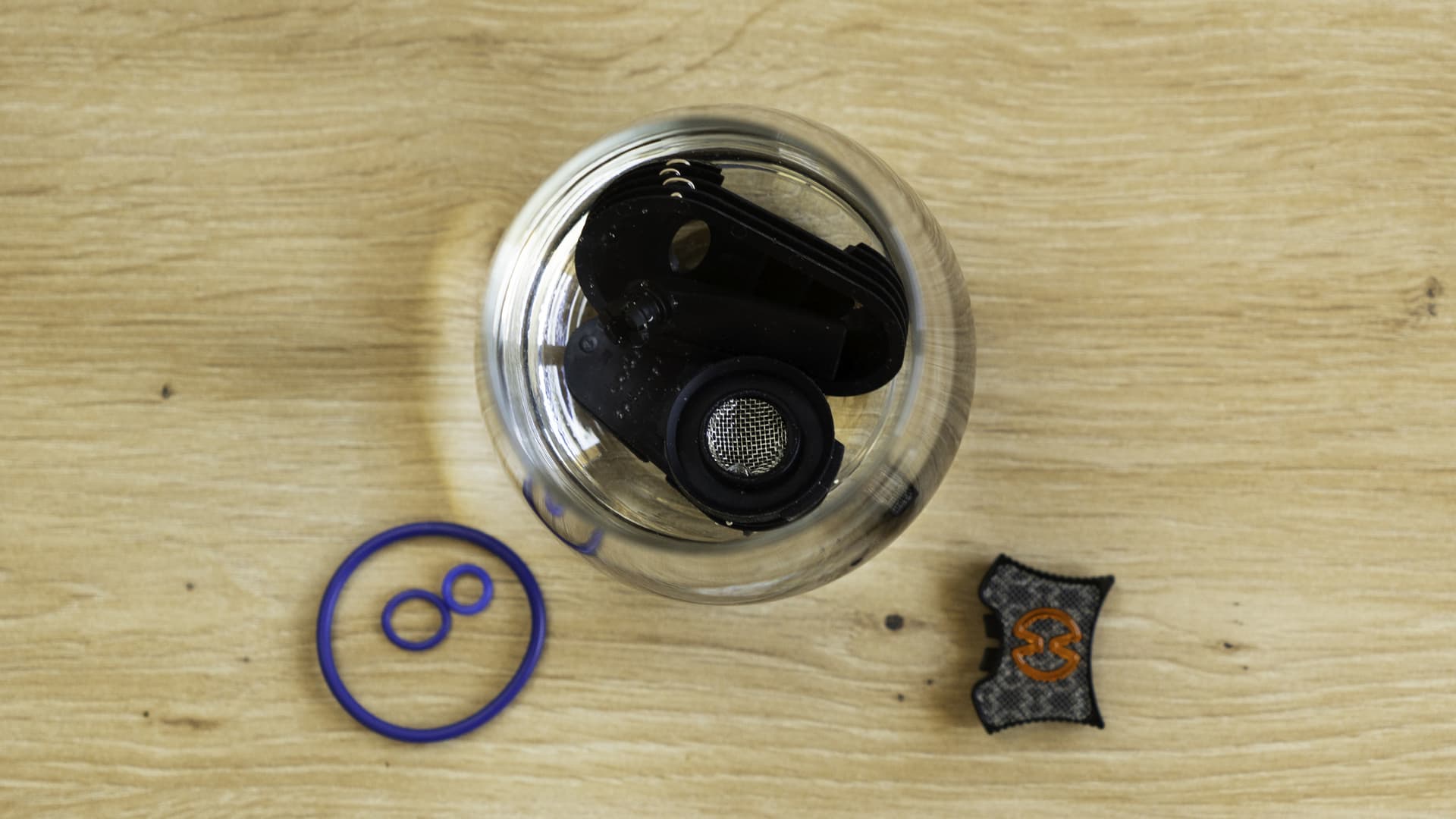
Most of a deep clean is passive soak time. Keep the seals and the cap lock out of the bath and let the ISO do the work.
Warning
Should you do a burn-off after cleaning?
Only once every part is bone dry, and only if your manual calls for it. A burn-off is an empty heat cycle that clears light residue and any lingering smell. It is not a way to dry your vape. Heating a vape that still holds alcohol puts flammable vapor next to the heater, so let everything air dry first, then run one empty cycle if your manual asks for it.
Which vaporizers are easiest to clean?
- Storz & Bickel Venty (9.2/10, $449 US list price): the cooling unit twists off in a quarter-turn and comes apart for a soak (30 minutes max in ISO), and it takes dosing capsules, so the chamber stays cleaner.
- Tinymight 2 (8.7/10, $349 US list price): pure convection keeps the oven cleaner, and the stem and cooling unit come out for cleaning.
- Arizer Solo 3 (8.4/10, $299 US list price): the vapor path is a glass stem you can see into, so you know when it needs a soak.
Torn between the top two? See Tinymight 2 vs Venty. Picking a new vape? Our portable vaporizer rankings and desktop vaporizer rankings list our top-scoring picks.
Cleaning tips by vaporizer type (Mighty+, Volcano, Tinymight)
Different heating systems and materials call for slightly different approaches:
| Heating Type | Example Vapes | Key Cleaning Pattern |
|---|---|---|
| Hybrid | Mighty+, Venty, Rogue 2 | Screens and vapor path need regular brushing; on the Storz & Bickel pair, a spare cooling unit on rotation cuts downtime |
| Pure convection | Tinymight 2 | Oven stays cleaner; the tube, screen and cooling unit collect most residue, and the walnut shell stays dry |
| Desktop | Volcano Hybrid | Less frequent oven cleaning; replace the EASY VALVE balloon, mouthpiece and tube every two weeks, one set per person |
| Ball vape | Freight Train | Follow your model's head and bowl instructions; never soak the coil, cable or controller |
For the Volcano, replace the tube on that schedule rather than pushing an alcohol-soaked cloth through it. Storz & Bickel sells replacement cooling units for its portables, and keeping a spare on rotation means no downtime while the other one soaks.
How to keep your vaporizer cleaner between deep cleans
A few habits take seconds and stretch the time between deep cleans.
Empty the oven after each session. Once it's cool enough to handle, tap out the AVB so loose material doesn't build up and get cooked again next time.
Use dosing capsules if your vape supports them. The Mighty+, Venty and Crafty+ all take Storz & Bickel dosing capsules. The Tinymight 2 takes capsules too, sold separately. The capsule catches the mess instead of the oven. Swap in a fresh one, empty the used one once it cools, and the oven stays much cleaner.
Brush the oven after every session. A 10-second brush after emptying keeps buildup from hardening between cleans.
Grind to suit your vape. Too fine a grind clogs screens faster. Most vapes do well with a medium grind (the Tinymight 2 likes medium-fine), and our grinding guide covers the details.
Store it cool, dry and switched off. If airflow still feels tight after a clean, our guide to common performance issues walks you through the fixes.
Tip
Common cleaning mistakes
These are the slip-ups that damage parts or bring the bad taste back:
- Pouring ISO into the oven. It goes on the swab, never straight in.
- Soaking seals, O-rings, the cap lock or wood. Wipe them or set them aside.
- Leaving plastic cooling parts in ISO overnight. Mighty+ and Crafty+ parts get 30 minutes max.
- Reassembling while anything is still damp. Let every part dry completely.
- Heating the vape to burn off leftover alcohol. Wait until everything is bone dry instead.
- Knocking glass against a hard surface. Tap it gently to empty it.
- Pushing a pipe cleaner into the heater. Pipe cleaners are for detached tubes and mouthpieces.
Key Takeaway
- Empty and brush after every session: a quick sweep of the oven and screen takes seconds
- Deep clean on your manual's schedule: soak only parts cleared for alcohol, 30 minutes max for Mighty+ and Crafty+ cooling parts
- Dry fully before reassembly: never use heat to burn off leftover alcohol
- Replace screens when cleaning stops helping: bent, torn or still-blocked screens go
- Dosing capsules keep the oven cleaner: the cannabis stays in the capsule, not on the oven walls