

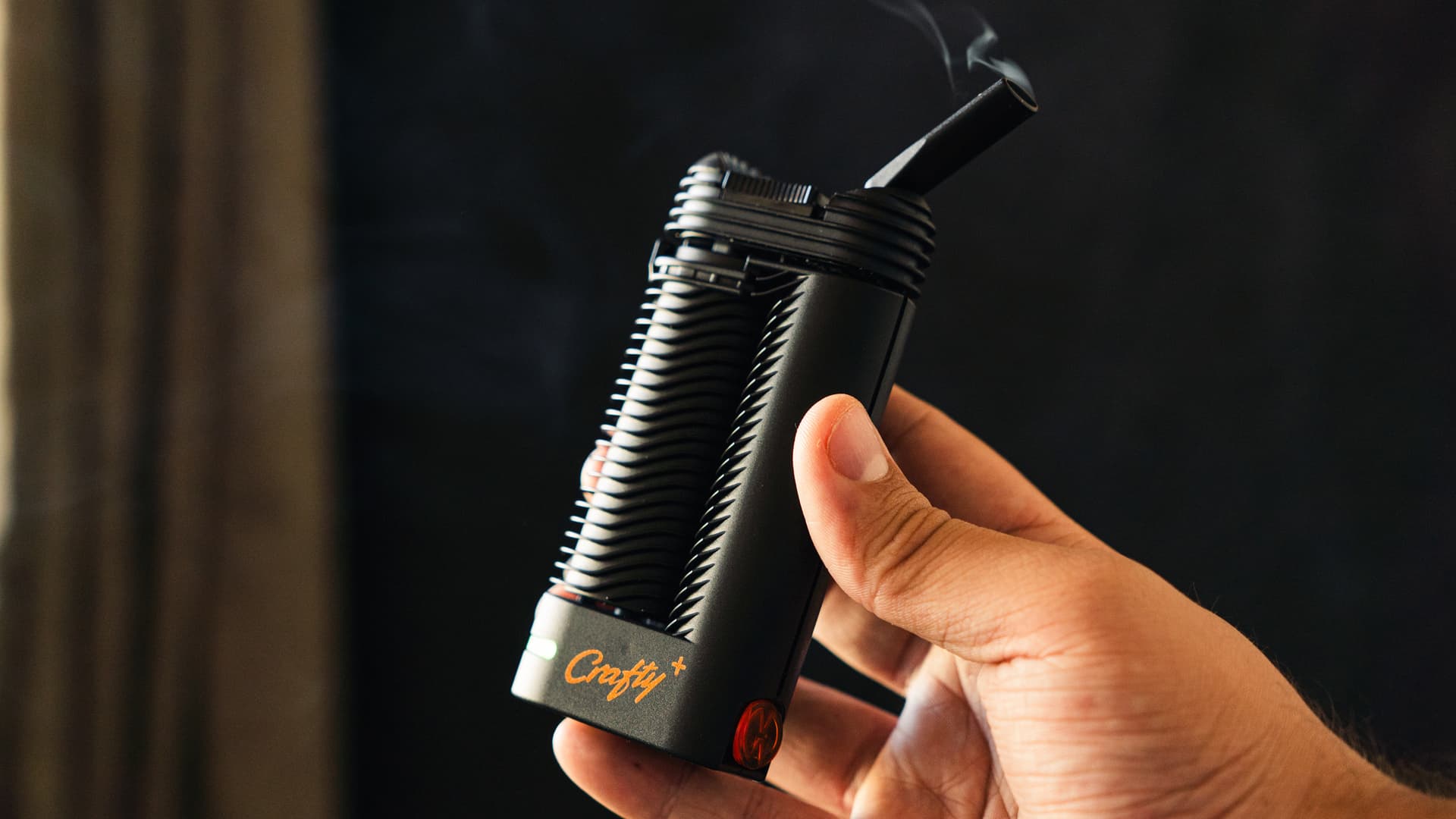
Yes, cannabis vaporizers (the flower vapes shops list as dry herb vaporizers) produce a noticeable smell. The odor is lighter than cannabis smoke, though, and it fades much faster.
The difference is combustion. Smoking burns plant material into tar and sticky residue. Vaporizing heats cannabis just enough to release terpenes and cannabinoids as a light aerosol.
That said, less smell is not no smell. Anyone in the same room will notice. A few factors, from temperature settings to the type of vape, push vaporizer odor from barely there to unmistakable.
Vapor smells lighter than smoke
The core reason vaporizers smell less than smoking is the absence of combustion. When you light cannabis, the plant material burns. That produces tar, carbon monoxide and a heavy, smoky smell that tends to hang on in fabrics and hair.
Most flower vapes run somewhere between 160°C and 230°C. They heat the cannabis without burning it, so you get a thinner, lighter aerosol. It smells more like warm cannabis than smoke, and it thins out quickly.
We've compared both side by side at home. Smoke from a joint was easy to smell from the next room with the door closed. Vapor from a Venty at 190°C, in the same room with the same closed door, could not be smelled from outside.
In our closed room, vapor faded within 15 to 30 minutes. Smoke from the same strain hung around for 3 to 4 hours.
How long the smell lasted in our tests
| Where we tested | How long we could smell it |
|---|---|
| Closed room, vapor | 15 to 30 minutes |
| Closed room, window cracked | Under 10 minutes |
| Closed room, smoke from the same strain | 3 to 4 hours |
| Parked car, windows up, 190°C | About 20 minutes |
| Parked car, two windows cracked | Under 8 minutes |
| Hotel room, HVAC fan running, 185°C | 30 minutes |
| Hotel room, window open | 10 minutes |
| Clothes after a 10-minute session, outdoors | 2 to 3 minutes |
Temperature is the easiest way to control vapor smell
Lower temperatures produce less smell. Temperature is also the setting you control most directly.
At 170°C, the vapor is thin and flavorful, and it fades fast. By 210°C, you get denser, more visible clouds that carry a more noticeable odor.
Push the heat higher still and the vapor turns harsher, with a toasted, smokier edge that lingers longer. Our temperature guide explains what changes as you turn the heat up. When smell matters, we keep sessions below 195°C.
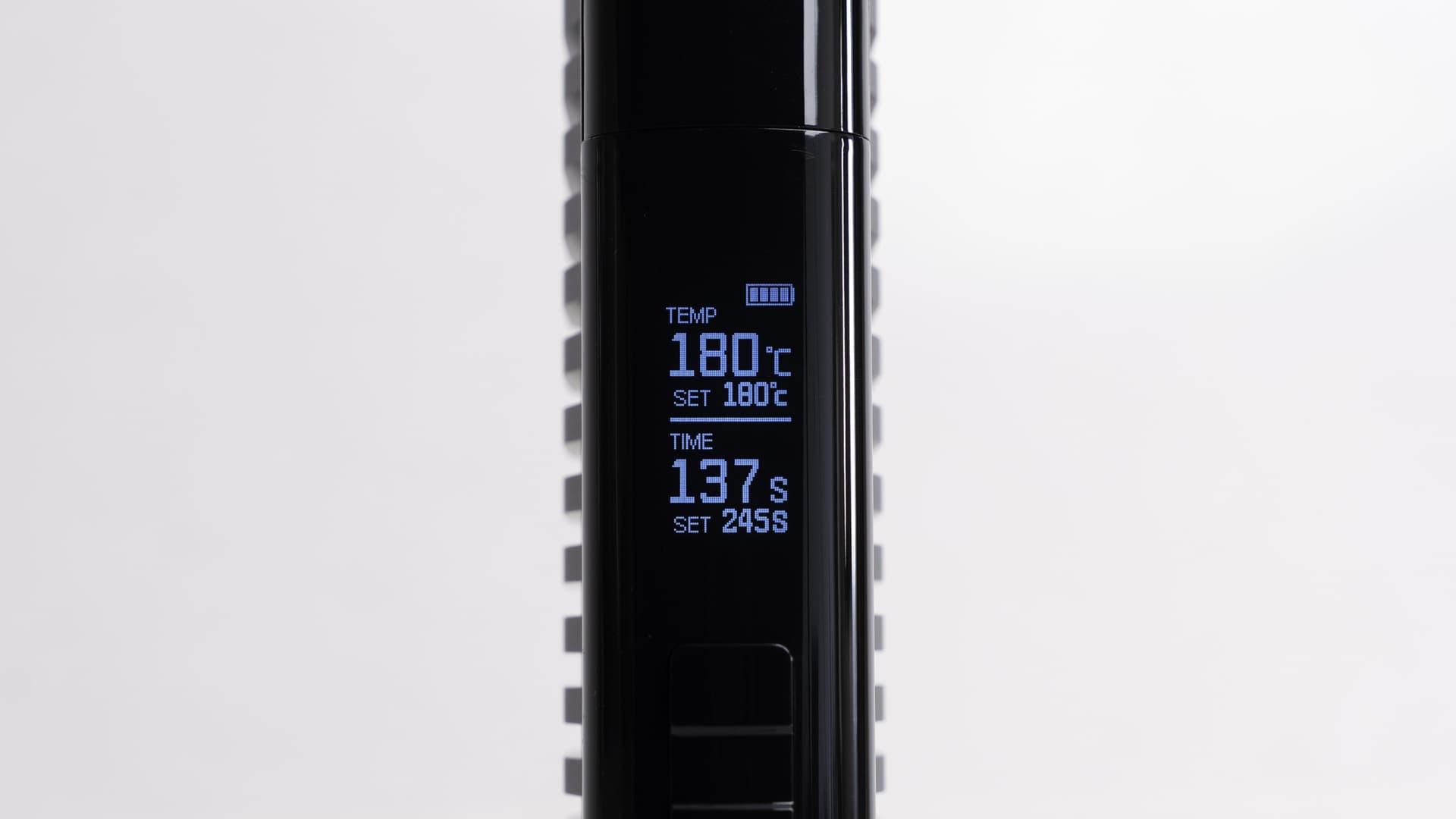
At 180°C, the vapor stays thin and light. Above 210°C, denser clouds carry noticeably more scent.
The terpene factor
Some cannabis simply smells louder than others. That classic skunky note comes largely from volatile sulfur compounds, not only from the terpenes printed on the label. So the jar is a better guide than the terpene list: if the flower smells loud when you open it, expect louder vapor.
Your choice of flower matters as well as your temperature setting. We cover this in our guide to how strains affect vaporizing.
On-demand vapes smell less between draws
A session vaporizer keeps the oven hot for the whole session, so the load keeps releasing aroma between draws. That means a steady low-level smell from the vape itself, not just from your exhale. Most conduction vapes, which heat cannabis through contact with a hot oven wall, work this way.
An on-demand vaporizer heats only when you ask it to. The Tinymight 2 is the classic example. It's a convection vape that pushes hot air through the cannabis while you hold the button, and it's ready in about 2 to 5 seconds. Let go and the heating stops, so the load starts cooling between hits and gives off less smell.
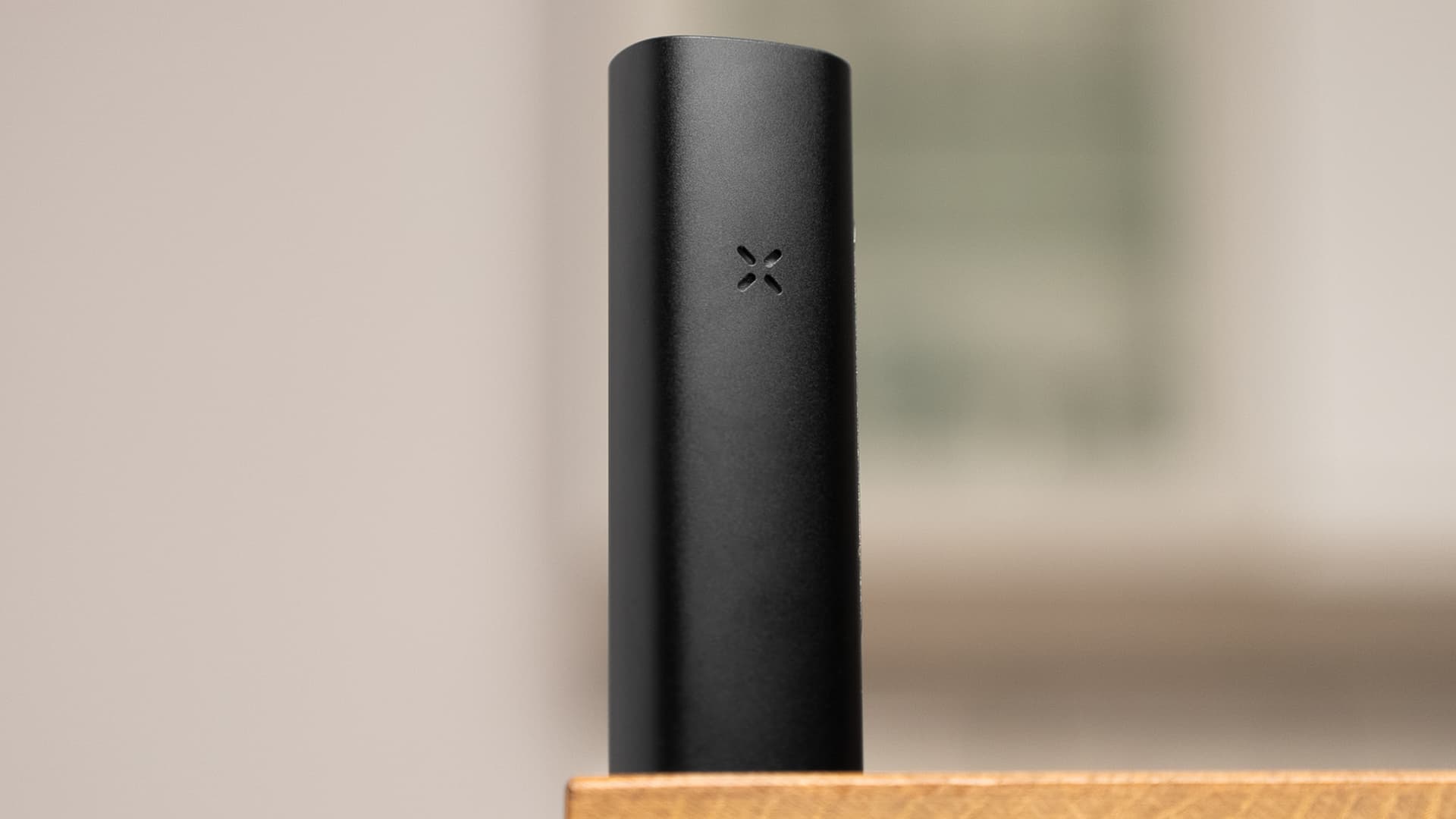
Hybrid heating vapes like the Mighty+ and PAX 4 mix conduction and convection, while the PAX Mini 2 is a conduction vape. With any of them, the less time a load spends hot, the less it smells. Our heating methods guide explains how the three systems differ.
Desktop vapes and balloon smell
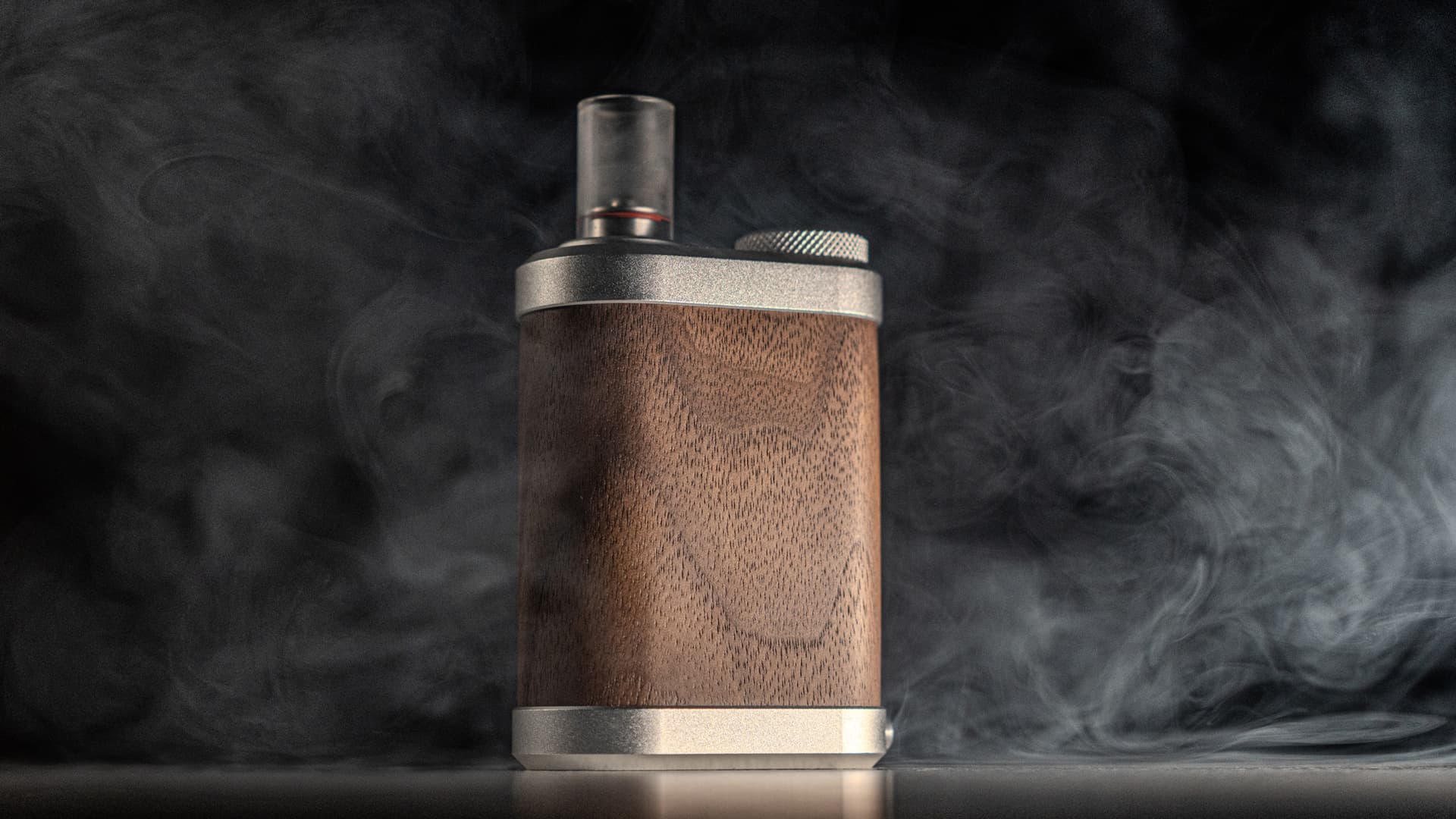
Balloon bag systems like the Volcano Hybrid hold the vapor in a bag until you inhale it. That keeps most of it contained. Filling the bag still lets a little smell out, your exhale still carries odor, and any balloon leak releases concentrated vapor into the room.
With a whip, vapor travels through a tube straight to you. Nothing holds it back, so everything you exhale goes into the room.
How long does vaporizer smell linger indoors?
In a closed room with no ventilation, we stopped smelling vapor after 15 to 30 minutes. With a window cracked, that dropped to under 10 minutes. Smoke from the same strain in the same room was still noticeable after 3 to 4 hours.
The bigger difference is what stays behind in fabrics. After a week of vaping indoors, we smelled nothing lasting on curtains, upholstery or clothing. A single smoking session left the same materials smelling for days.
Vapor still leaves some residue, though. A 2019 study found measurable THC on 6 of 15 hard-surface samples from a room where cannabis was vaporized, so give tables and screens a wipe now and then.
Outdoors: Vapor thins out fast in open air, much faster than smoke. A breeze spreads it out, but it also carries the scent downwind, so mind who is standing there.
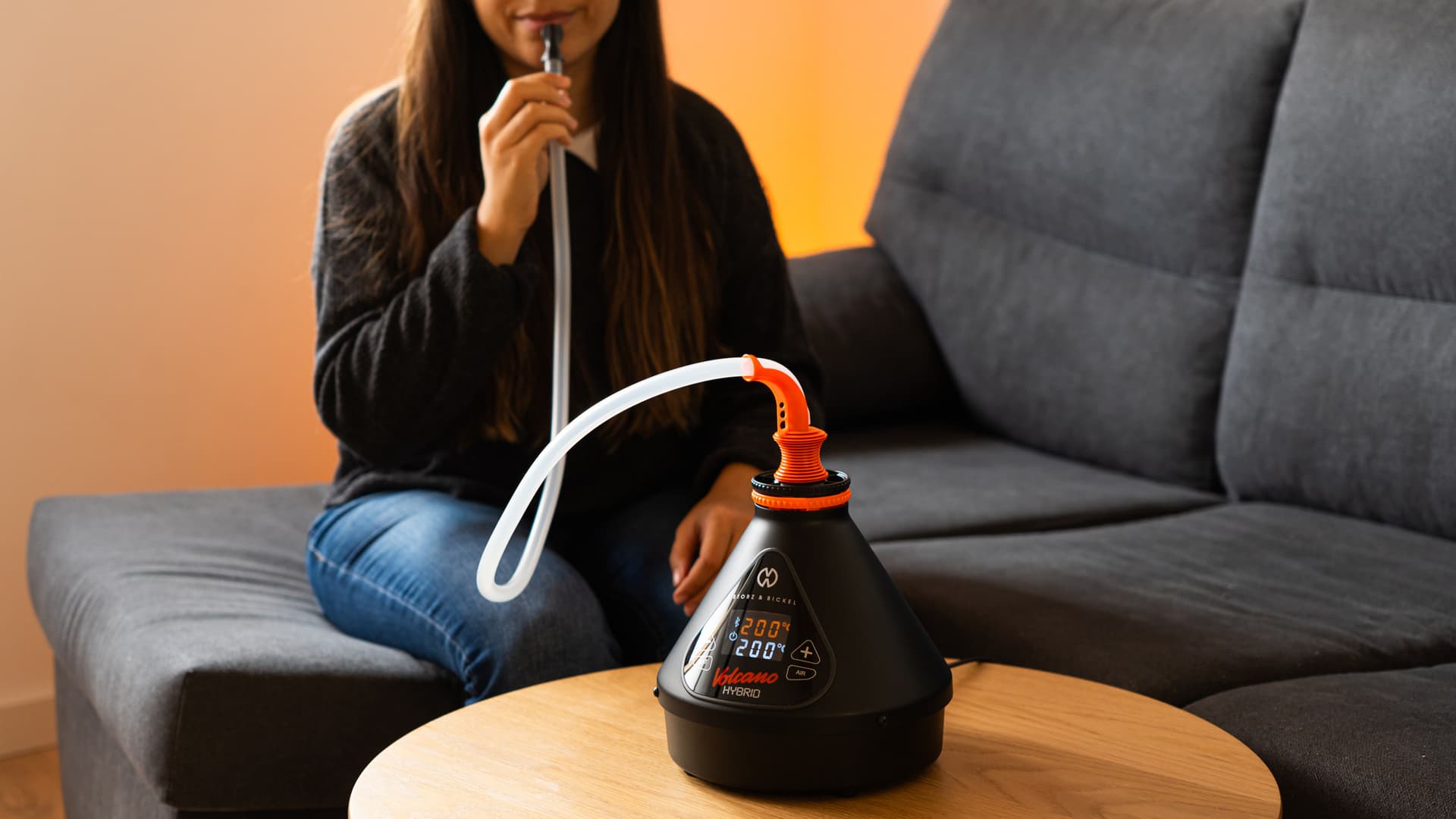
A desktop vape set up on a living-room side table. In a room like this, cracking a window clears the air much faster.
Will your neighbors smell it?
Through a shared wall, cannabis vapor is hard to detect. In our apartment, we couldn't smell a session vape from the hallway with the door closed.
Two things make it more likely that neighbors notice. Shared HVAC systems can move air between units, carrying trace vapor odor with it. And vaping near an open window can push scent toward neighboring windows or balconies.
If your neighbors are a real concern, watch those two leak paths: shared HVAC returns and windows facing other units.
Tip
7 ways to minimize vaporizer smell
1. Vape at lower temperatures
Stay between 170°C and 195°C. You give up some vapor density and extraction, but in our experience the room smells noticeably less. Our temperature guide covers how to pick a setting.
2. Use dosing capsules
A dosing capsule is a small perforated metal cup that holds a pre-measured load. Air flows right through it, so the win for smell is cleaner handling. You fill capsules at home, drop one into the oven without spilling flower, and pop out the spent cannabis without scraping the chamber. Storz & Bickel makes them for the Mighty+ and Venty. Learn more in our dosing capsule guide.
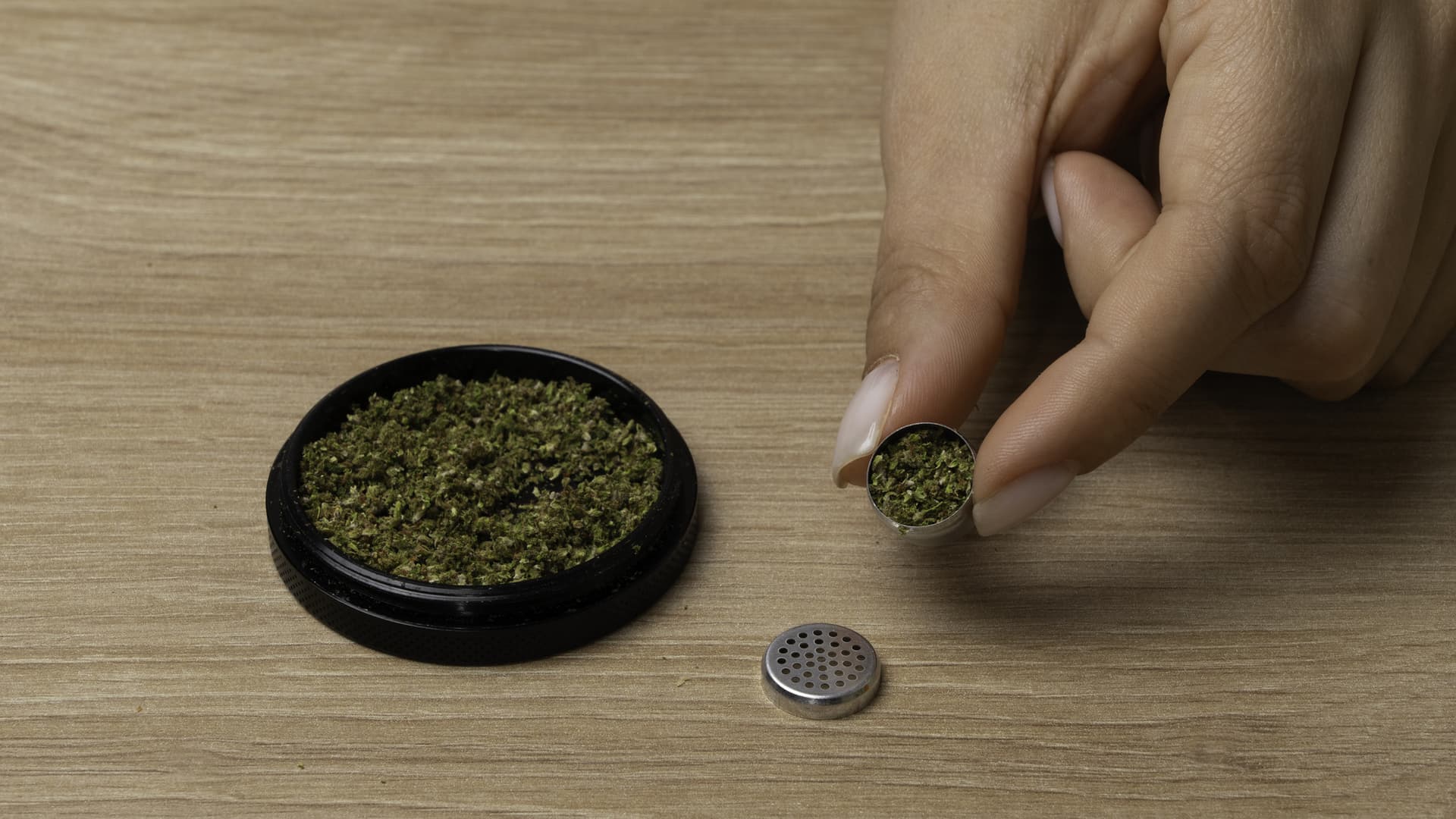
A loaded capsule keeps the flower in one tidy, perforated cup that drops straight into the oven.
3. Choose an on-demand vape over a session vape
On-demand vapes heat cannabis only when you ask them to. Between hits, the oven cools down and gives off less aroma. Session vapes keep the oven hot for the whole session, which means a steady low-level smell.
4. Exhale through a window or carbon filter
Exhaling straight out a window is the simplest approach. For rooms without one, use a personal filter you exhale through, like a Smokebuddy. The activated carbon inside traps odor from the breath you push through it, and it wears out as it fills up. It only cleans your exhale, so the vape and your jar still need their own care. The Smokebuddy MEGA has a filter twice the size of the Original, which suits bigger exhales from desktop or high-temp sessions.
A room air purifier only helps with smell if it has an activated carbon stage, since a HEPA filter alone catches particles, not odor gases.
5. Clean your vape regularly
Residue in the oven, cooling unit and mouthpiece gives off a stale smell even when the vape is off. A regular clean, with isopropyl alcohol on the parts that can take it, clears most of it. Our vaporizer cleaning guide covers the process for each type of vape.
6. Switch off and cap your vape after a session
A warm oven left open after a session keeps releasing aroma for a while. Power the vape off right after your last draw. Once it has cooled, empty the oven and close the mouthpiece or cap before you pack it away.
7. Store your cannabis in a sealed jar
Often the loudest smell in the room is not the vape at all. It is an open jar of flower on the table. A glass jar with a silicone seal keeps that smell in until you open it. Keep your grinder in the jar or case too. An open grinder full of fresh-ground flower often smells louder than the vapor.
How to clean every type of vaporizer
Old residue makes a vape smell even when it's off. Our cleaning guide walks through oven, cooling unit and mouthpiece care.
Will vaping in a car leave a smell?
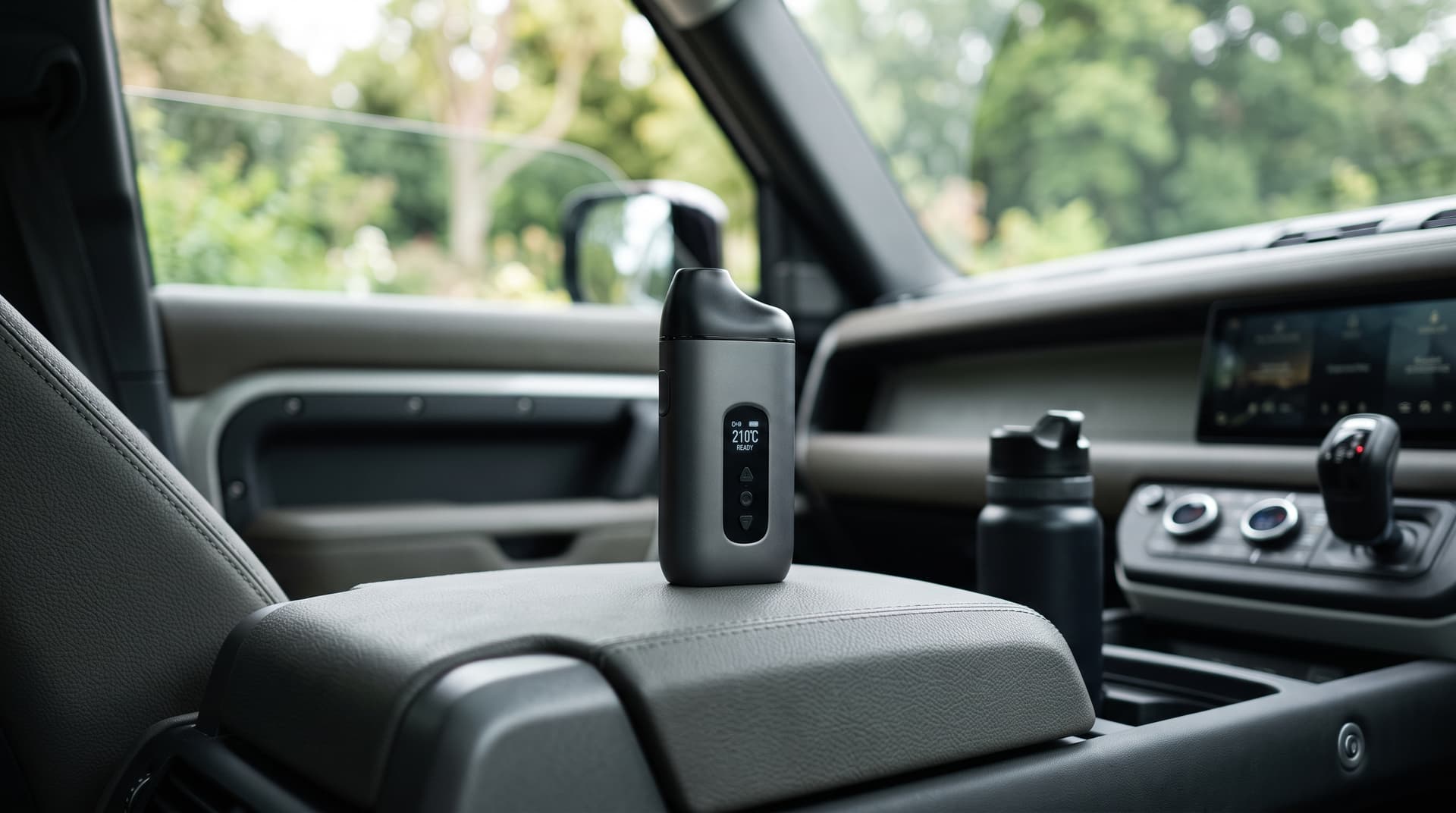
A portable vape on the armrest beside a cracked side window, which gives vapor somewhere to go.
This is one of the most common discretion questions we get. The short answer: yes, for a while, but with the windows cracked it clears quickly.
In a parked sedan with the windows up, we could smell a 190°C session for about 20 minutes. With two windows cracked 5 cm, that dropped to under 8 minutes. At 170°C with the windows cracked, a second person getting into the car after 5 minutes smelled nothing.
The key factors in a car:
- Temperature: Stay below 195°C. Higher temps produce denser, more lingering clouds in a small space.
- Ventilation: Crack at least two windows to create cross-flow. Recirculate mode just moves the same air around the cabin; use fresh-air mode instead.
- Exhale direction: Blow toward the cracked window. Vapor that hits the windshield or headliner takes longer to clear.
- Rental cars: A faint smell won't get you out of a no-vaping clause or its cleaning fee.
Watch out for one thing. If you leave a loaded, warm oven sitting open in a cupholder, the cannabis keeps giving off aroma and the cabin will smell of it. Power off your vape when you're done, and cap it once it cools.
Vaping in hotels, Airbnbs, and rental properties
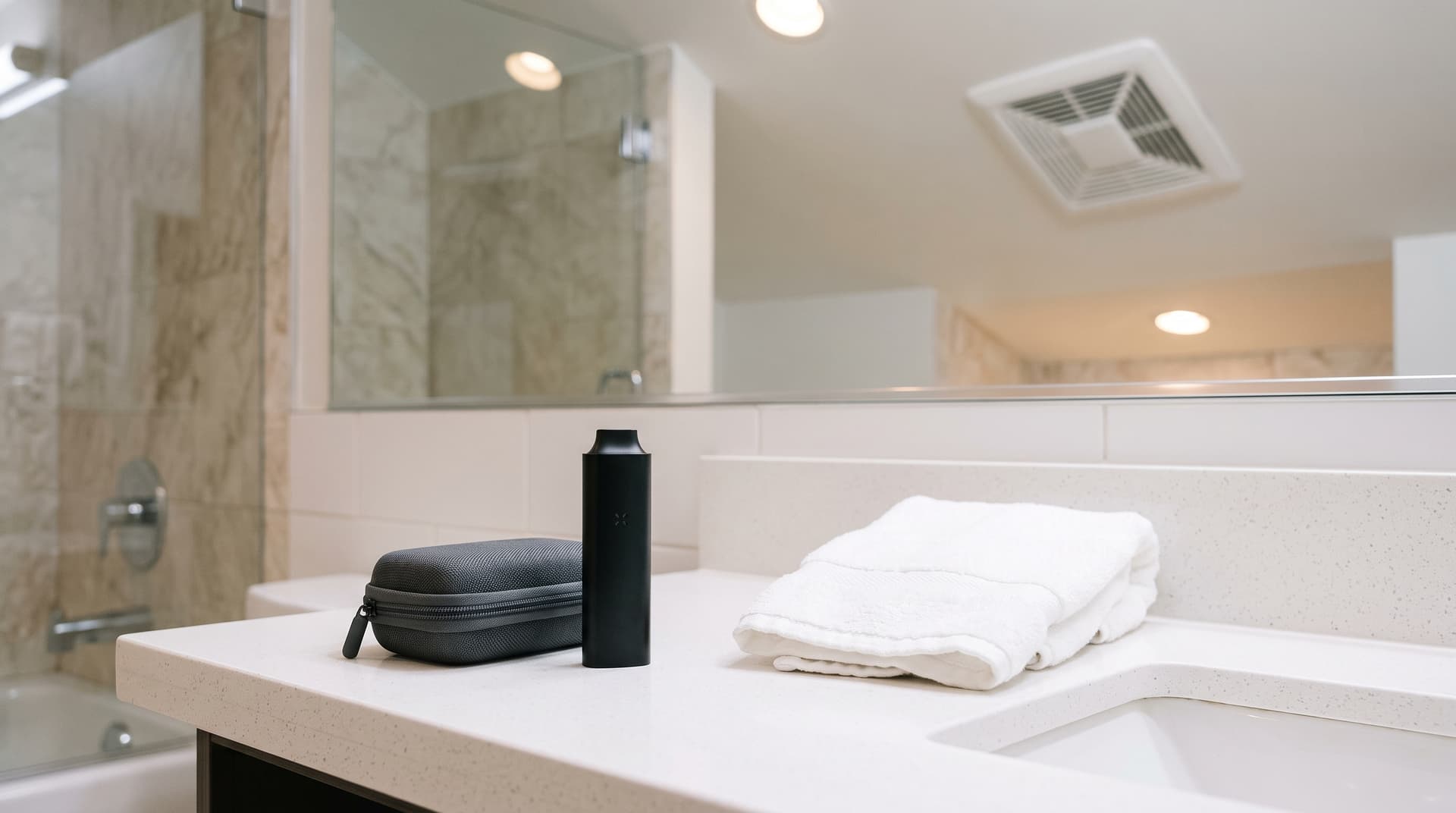
A portable vape and its zippered case on a bathroom counter, with the exhaust vent in the mirror. Running the fan helps clear a small room.
Hotels and short-term rentals are where discretion matters most. Many ban vaping indoors, and smoke detectors, cleaning staff and neighbors all create pressure. Here's what we found:
Smoke detectors: Standard smoke detectors react to particles in the air, and vapor is an aerosol. Dense clouds from high-temperature sessions or concentrate rips can set them off. We don't recommend testing this, and never cover or tamper with a detector.
Airing out the room: In a hotel-sized room, we could no longer smell a 15-minute session at 185°C after 30 minutes with the HVAC fan running. Opening a window cut that to 10 minutes.
Practical tips for hotel stays:
- Run the HVAC or bathroom exhaust fan, or open a window, during and after your session
- Stay below 195°C
- Keep sessions short
- Pack your cooled vape in a smell-proof case (see the storage section below)
Tip
Best vaporizers for discretion
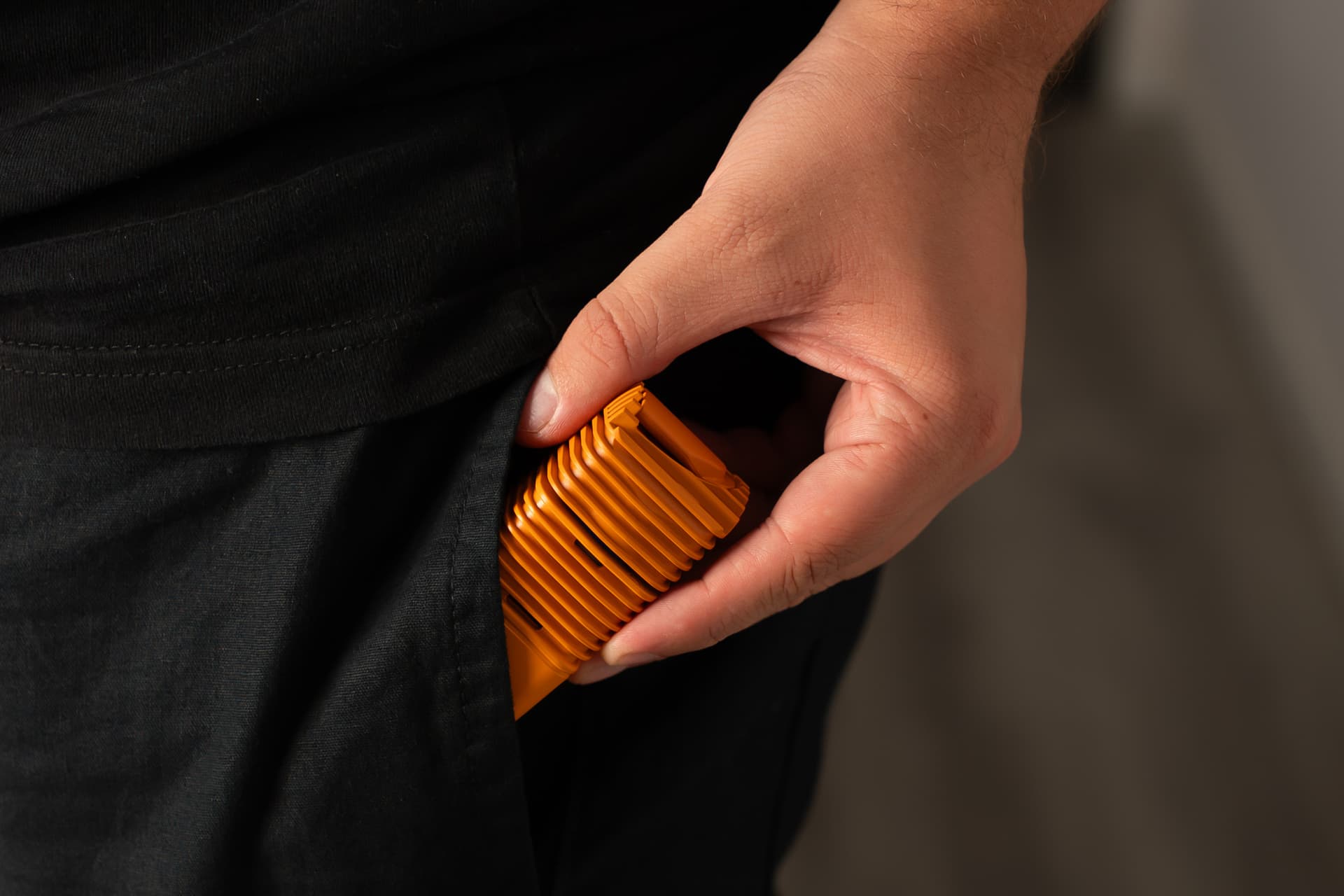
The Veazy slides into a front pocket, which makes it easy to carry once it has cooled.
If keeping smell down is your top priority, these four portables are our picks, based on heating method, session control and how easy they are to carry. Check the linked reviews for current prices in your region.
Tinymight 2 (on-demand convection). It heats only while you hold the button and stops when you let go, so the load cools between hits. In our experience it smells less between draws than a session vape.
Venty (hybrid, adjustable airflow). The airflow dial lets you set how each draw feels, and at around 180°C the vapor stays light. Fast heat-up makes short sessions easy.
PAX Flow (hybrid). The side-loading oven door keeps the flower closed in. Lip-sensing controls and a slim body make it quick to use and easy to pocket once it cools.
Veazy (hybrid). A compact Storz & Bickel with no glass in the vapor path, so it slips into a pocket once it cools. Best value of the four for discretion-focused buyers.
Smell-proof storage and travel gear
The vaporizer itself is only half the equation. Your flower, your AVB and the vape in your bag all add to the smell between sessions.
Smell-proof cases: Ryot and Stashlogix make carbon-lined bags, and Pelican makes gasketed hard cases that close tight. Activated carbon soaks up odor molecules, and a good gasket keeps the air in. A quality case holds your cooled vape, grinder and flower jar and keeps the smell from spreading through your bag.
Exhale filters: The Smokebuddy from tip 4 packs small. Take the regular size for portable sessions and keep the MEGA for bigger desktop sessions at home.
AVB containers: Already vaped bud has a distinct toasted smell. Once it has cooled, store it in a sealed glass jar or silicone container. AVB left out on a table or in an open grinder will keep scenting the room.
Airtight flower storage: A mason jar with a silicone seal or an Infinity Jar (UV-blocking glass) keeps raw flower from scenting your whole bag. Add a Boveda humidity pack inside to keep the flower fresh. The pack handles moisture, and the jar handles smell.
Concentrates can smell less than flower
Concentrate vapes and eRigs can give off less of that classic cannabis smell than flower vapes. Distillate cartridges are usually the quietest option of all, while flower vapes and terpene-rich live resin or rosin carry the most aroma.
Dabbing through an eRig like the Dr. Dabber Switch 2 gives a brief, intense terpene burst during the hit. There is no flower sitting warm in an oven between hits. Keep the atomizer and glass clean, since old concentrate residue smells too.
If discretion is your top priority, a low-terpene concentrate vape is worth a look. Our comparison of cannabis consumption methods covers this tradeoff in full.
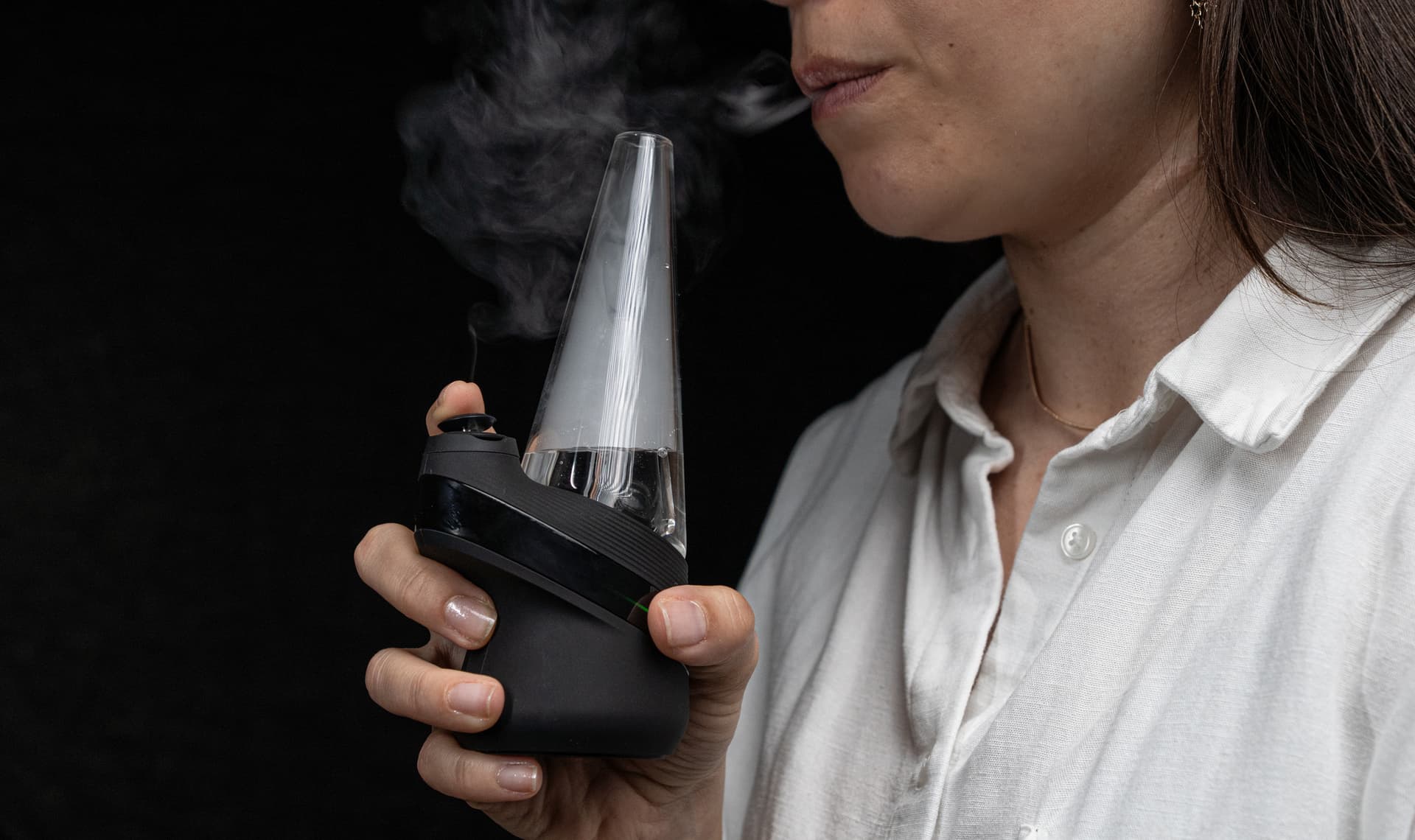
An eRig has no flower load sitting warm between hits, but the concentrate still carries its own aroma.
Vapor clings to clothes and hair less than smoke
Vapor doesn't hang on to fabric or hair the way smoke does. After a 10-minute session, we stepped outside for 2 to 3 minutes and could no longer smell cannabis on our clothes. Smoke smell usually takes a wash to get out.
Long sessions in a small, closed room are where vapor smell builds up. Enough of it hangs in the air to leave a faint scent on nearby fabrics and your hair for a while. Airflow helps a lot, and vaping outdoors helps most.
A dirty vaporizer smells even when it's off
A clean, empty vaporizer smells of very little when it's powered off. A dirty one absolutely does.
Resin buildup inside the oven, on screens and in the cooling unit or mouthpiece develops a stale, unmistakable cannabis smell over time. Regular cleaning takes care of most of it.
AVB (already vaped bud) left in the oven after a session also has a distinct toasted smell. If discretion matters, empty and brush your oven after each session once it cools.
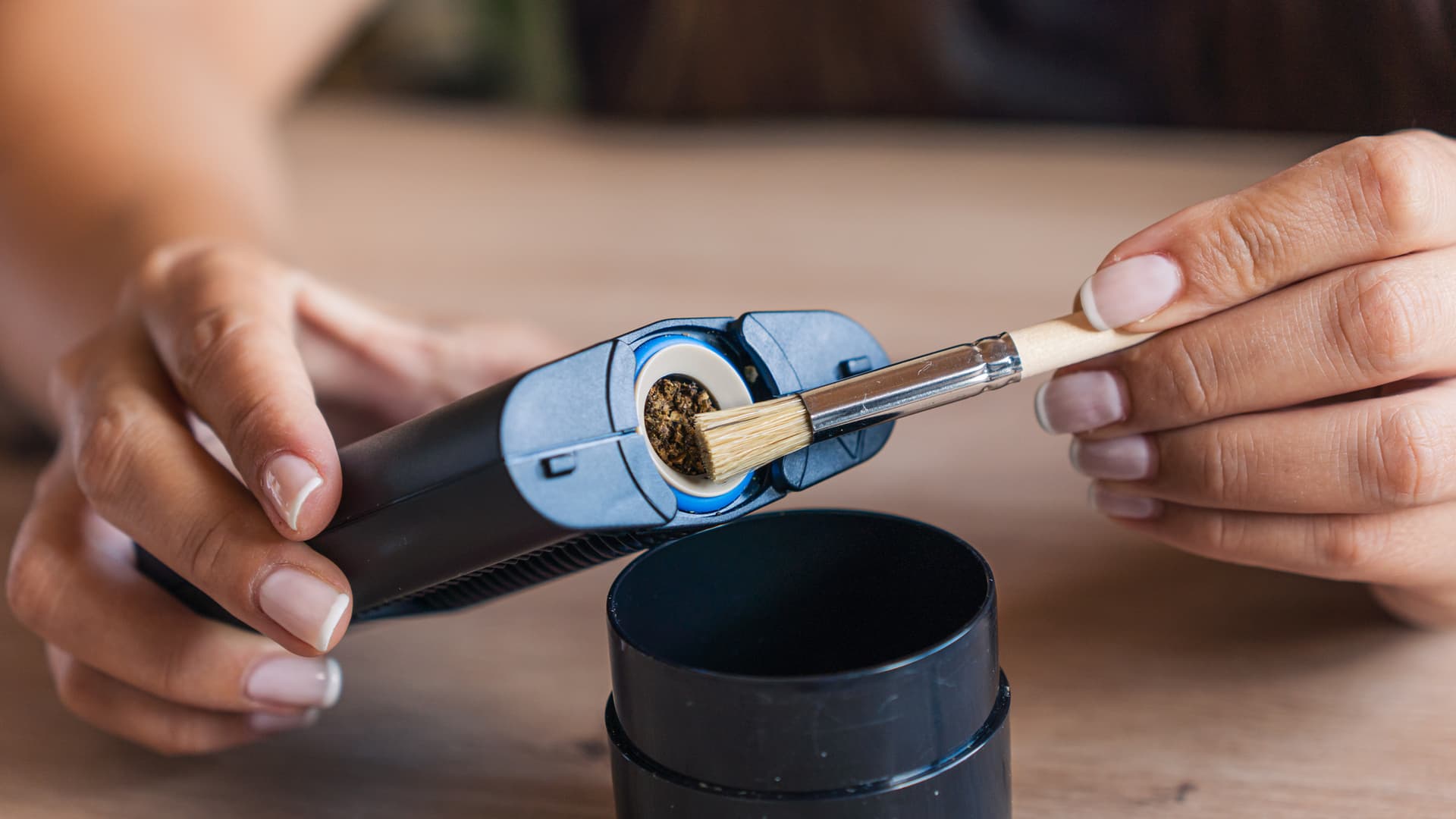
Resin in the oven, screens and cooling unit makes a vape smell between sessions. A quick brush once it cools helps.
Key Takeaway
- Expect some smell. Vapor fades much faster than smoke, but people in the room will notice
- Stay below 195°C. The easiest way to keep room odor down
- Pick an on-demand vape. It stops heating between draws, so there's less idle smell
- Crack two car windows. Our parked car cleared in under 8 minutes that way
- Air out hotel rooms. A fan or open window cleared our room in 10 to 30 minutes
- Clean your vape regularly. Old resin keeps a vape smelling even when it's off
- Get a smell-proof case. A carbon-lined bag or gasketed case cuts odor on the go