

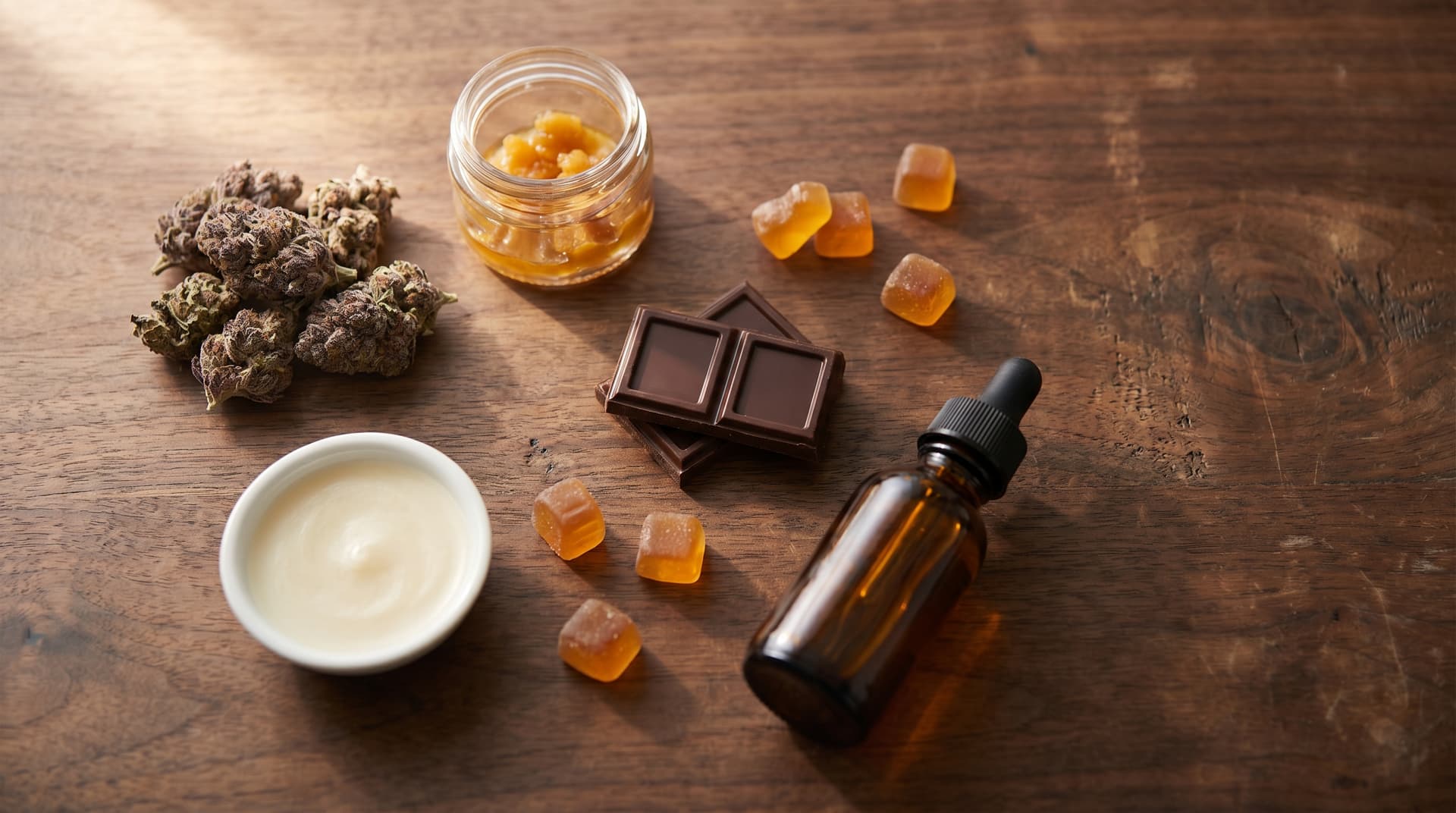
Every cannabis method takes a different route into your body, and that route sets how fast it hits, how long it lasts and what it costs your lungs. If you want the short answer: vaporizing gives you smoking's speed without the smoke, and edibles give you the longest ride with the least control.
Vaporizers are our specialty, but this guide covers all six main ways to consume cannabis. You'll get real numbers on onset speed, duration, and health trade-offs for each one.
Smoking delivers effects within seconds to minutes
When you light a joint, pipe, or bong, the flame burns the cannabis and its heat converts THCA into THC. Inhaled smoke carries THC into the bloodstream through the lungs, so you feel it within seconds to minutes. The full effect builds over 10-30 minutes.
The trade-off is combustion itself. Health Canada points out that cannabis smoke contains many of the same harmful and cancer-causing chemicals as tobacco smoke.
Smoking remains popular because it needs no electricity, no expensive equipment, and hits fast. But the health costs of smoke are real, which is why many users explore switching from smoking to vaporizing.
Warning
Vaporizing heats cannabis without burning it
Most flower vaporizers run at 160-230°C, hot enough to release terpenes and cannabinoids as vapor without setting the cannabis alight. As long as you don't scorch the load, you inhale vapor instead of smoke. A 2007 survey of 6,883 cannabis users in Harm Reduction Journal found that the 152 who mainly vaporized reported fewer respiratory symptoms than smokers.
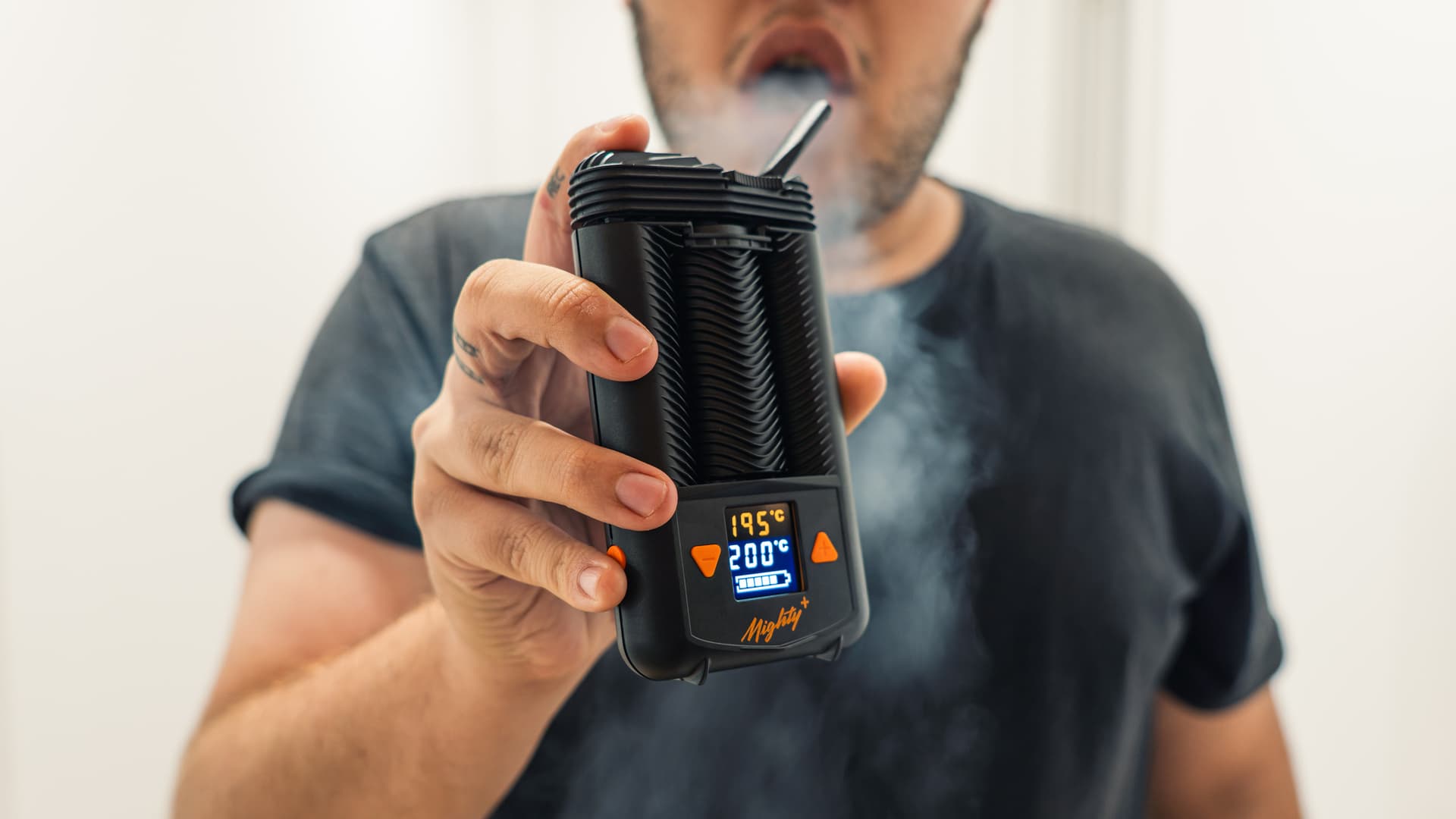
A Mighty+ at 195°C, heading for its 200°C target. Lower settings give lighter, tastier vapor, and higher ones give thicker clouds.
The real advantage is control. A vaporizer with 1°C temperature steps lets you find the setting you like and land on it every session. Cannabinoids and terpenes start evaporating well below their boiling points, so each setting gives you a blend. Turning it up shifts that blend toward denser vapor. Our temperature guide breaks down the ranges we use for flavor, vapor density, and efficiency.
Three heating methods shape the vapor
How a vaporizer heats cannabis directly shapes what you taste and inhale:
| Method | How It Works | Trade-off |
|---|---|---|
| Conduction | Presses cannabis against a hot surface | Material at the chamber walls can cook faster than the center, so stir mid-session |
| Convection | Passes hot air through the material | Your draw pulls the heat through, so draw speed shapes every hit |
| Hybrid | Combines both approaches | Warms the load by contact and finishes it with hot air, as in the Venty and Mighty+ |
The Venty uses a hybrid heater, heats up in about 20 seconds and has adjustable airflow up to 20 L/min. It's a top-performing session vaporizer for daily use. For single-hit users, the convection Tinymight 2 works as an on-demand vaporizer: hold the button and it heats in 2-5 seconds. It has a session mode too. Desktop vaporizers like the Volcano Hybrid pump vapor into a balloon bag, or you switch the pump off and draw straight through a tube.
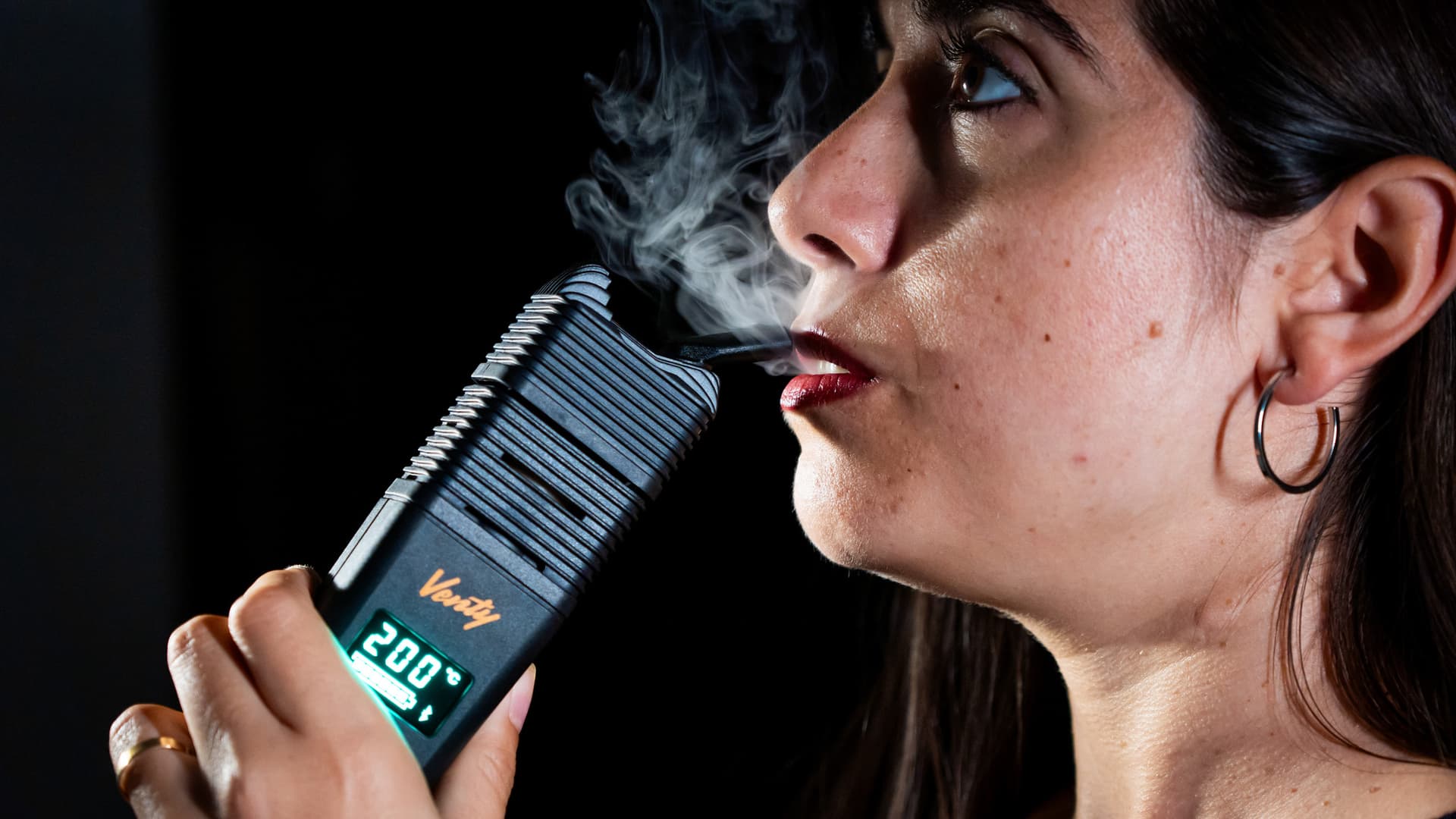
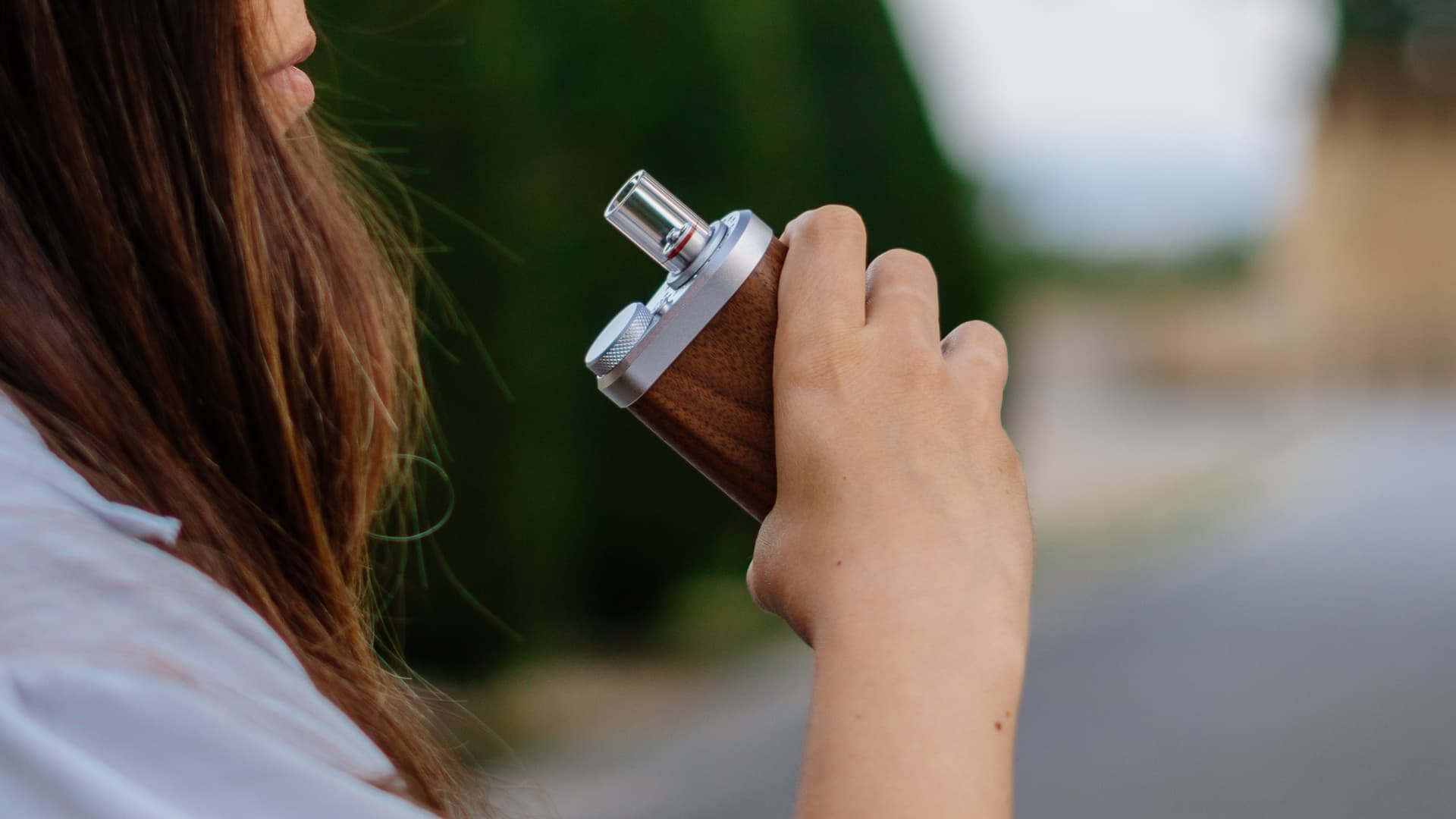
Flower vaporizers heat plain ground cannabis, nothing added. The 2019 lung-injury outbreak was tied to vitamin E acetate in illicit THC cartridges, not to flower vaporizers, so buy carts only from licensed shops.
Vaporized cannabis leaves behind reusable material
Unlike smoking, which reduces cannabis to ash, vaporizing leaves behind AVB (already vaped bud). This brown, dry material still holds some cannabinoids, and plenty of people cook it into edibles or pack it into capsules. How much is left depends on how hot and how long you ran the session. Our AVB guide covers how to use it.
Many session vaporizers also support dosing capsules, pre-loaded metal containers that simplify loading and keep loose material out of the oven.
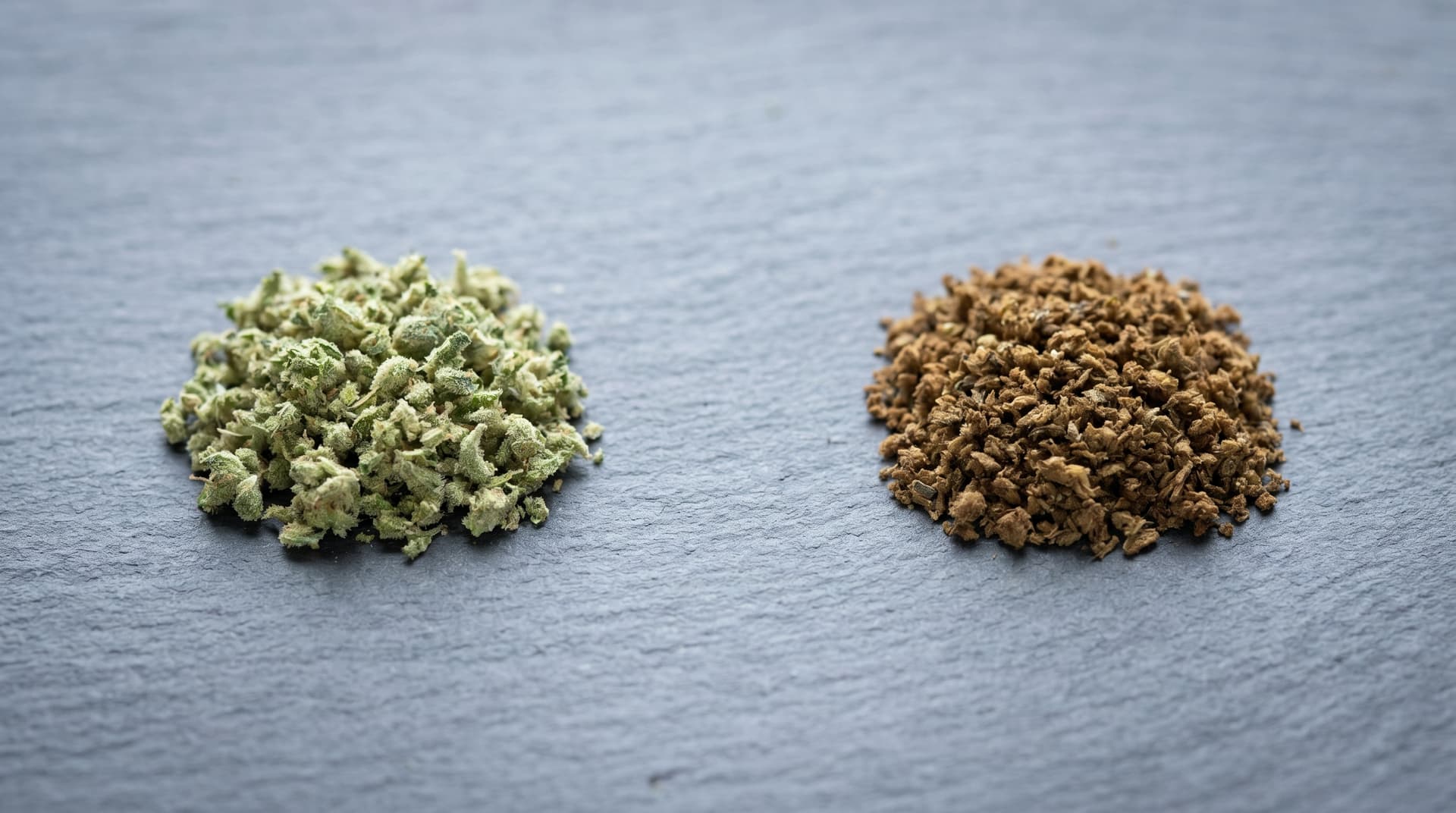
Illustration of fresh ground cannabis (left) next to already-vaped bud (right). Vaping leaves the load brown and dry instead of turning it to ash.
Vaporizing vs smoking: what changes
More effect from the same dose. In a 2018 Johns Hopkins trial published in JAMA Network Open, 17 occasional users took the same THC doses (10 mg and 25 mg) smoked and vaporized. Vaporizing produced stronger effects and higher blood THC levels, so start with a smaller load than you would roll into a joint.
Less smell. Vapor smells like warm cannabis instead of burnt plant, and it fades far faster, since nothing burns into tar or sticky residue. Our vaporizer smell guide shows how temperature and airflow keep it down.
More upfront, more from every gram. A lighter costs next to nothing, while our top budget pick, the XMax V4 Pro, has a $109 US list price and our top pick overall, the Venty, has a $449 US list price. Your cannabis goes further, though, because the brown AVB left in the chamber still holds cannabinoids you can cook with.
Easier on your lungs. In the Harm Reduction Journal survey above, people who mainly vaporized reported fewer respiratory symptoms than smokers. Vaporizing skips combustion, the source of the tar and carbon monoxide in smoke. Our vaping vs smoking guide and health evidence guide cover the full research.
If you smoke flower today, a flower vaporizer changes the most and asks the least of you.
Concentrates pack far more THC into less material
Dabbing means vaporizing cannabis concentrates on a heated surface and inhaling the vapor. Concentrates like wax, shatter, and live resin often test at 60-90% THC, compared to 15-30% for most dried flower. Check the label for the real number. In a 2020 study of regular users, the concentrate group took in far more THC than the flower group but didn't feel proportionally higher.
The equipment ranges from traditional torch-and-glass setups to electronic eRigs like the Dr. Dabber Switch 2. It uses induction heating and a quartz insert, so there's no atomizer to keep replacing. A traditional setup includes a heated surface (a dab nail or quartz banger), a carb cap to regulate airflow, and often a water piece.
Onset is as fast as smoking, seconds to minutes. What changes is how much THC goes into each hit: 0.02 g of a 70% THC concentrate holds 14 mg of THC before any heating losses. Keep the heat sensible, too, since a scorching dab breaks terpenes down into harsh byproducts. For a deeper breakdown, see our concentrates guide.
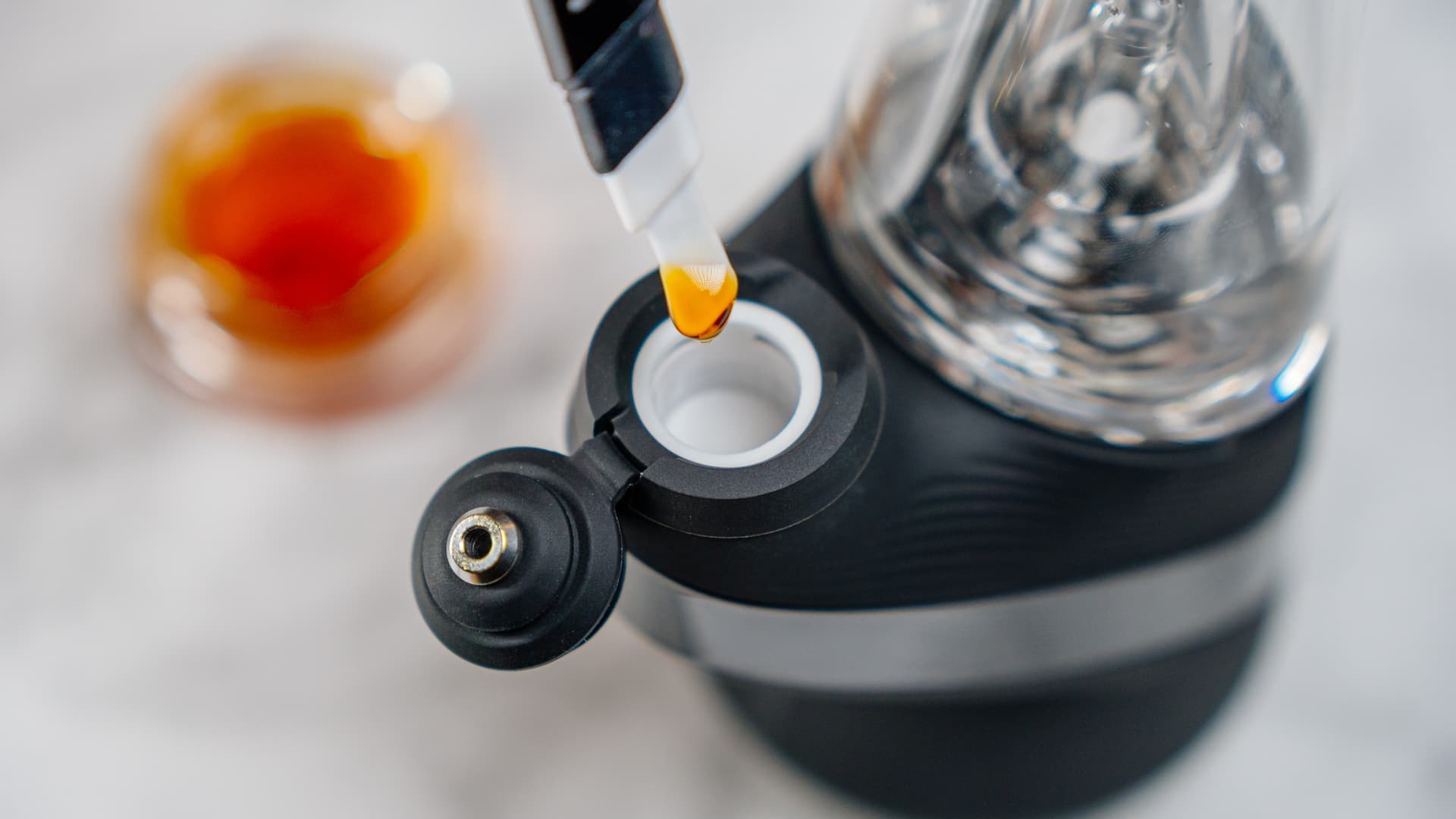
Loading concentrate into a Puffco New Peak's ceramic chamber. Start with a small dab and build up from there.
Edibles take up to 2 hours to kick in but last far longer
Edibles deliver cannabinoids through the digestive system. When you eat a cannabis-infused product, THC passes through the stomach and liver before reaching the bloodstream. The liver converts part of the delta-9-THC into 11-hydroxy-THC, an active metabolite that adds its own effects.
That trip through the liver is a big part of why edibles feel different from inhalation. Onset takes 30 minutes to 2 hours, depending on your metabolism, what's in your stomach, and the product. The full effect can take up to 4 hours to arrive. Effects can last up to 12 hours, and Health Canada notes that some can linger for up to 24.
The long duration and lack of smoke make edibles popular for evenings at home and situations where discretion matters. The biggest practical risk is overconsumption: because effects are delayed, new users sometimes take a second dose before the first one kicks in.
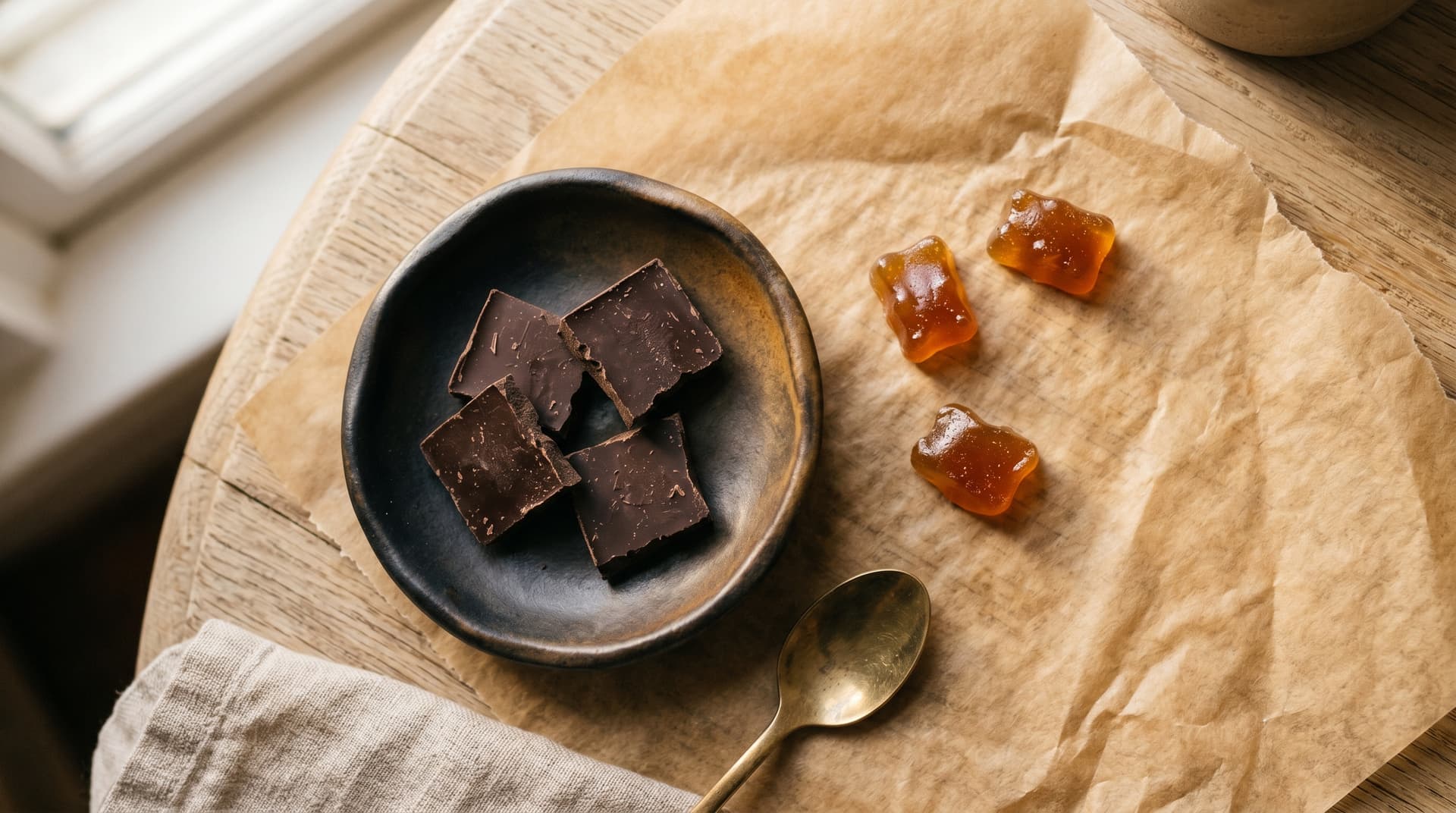
Illustration of common edible formats. New to edibles? Start at 2.5 mg of THC or less, and go by the milligrams on the label, not the size of the piece.
Sublingual tinctures kick in within 15-40 minutes
Tinctures are liquid cannabis extracts you hold under your tongue. Some of the cannabinoids absorb through the lining of your mouth, while whatever you swallow takes the slower digestive route. That makes onset faster than an edible, usually 15-40 minutes. Effects peak at 1.5-4 hours and can last up to 12.
Most tinctures come in measured dropper bottles, so you can take the same amount every time. Check the label for milligrams per mL to work out your dose. Tinctures are popular with medical users who want repeatable dosing without inhaling anything. Food and your own body chemistry still shift how much you absorb.
Topicals go on the skin, without the high
Cannabis topicals (creams, balms, transdermal patches) are applied directly to the skin. Standard creams and balms are made for local use, where cannabinoids interact with CB1 and CB2 receptors in the skin and underlying tissue. They aren't meant to produce a psychoactive "high."
Results vary a lot from product to product. A four-week trial in 29 people with nerve pain found one CBD oil eased some symptoms. A 2024 pilot in people with chemo-related nerve pain found a CBD cream did no better than placebo. Transdermal patches are the exception. They use permeation enhancers to push cannabinoids through the skin and into your bloodstream, so they can affect your whole body.
Onset ranges from seconds (inhalation) to 2 hours (edibles)
The two factors that matter most when choosing a consumption method are how fast it hits and how long it lasts. Here's how each method compares, with timing from Health Canada's published ranges and what each one does best:
Inhalation hits in seconds and wears off within hours. Oral methods can take two hours to land and stay for the rest of the day. Choose the method that matches the duration you actually need.
| Method | Onset | Full Effects | Duration | Best for |
|---|---|---|---|---|
| Smoking | Seconds to minutes | 10-30 min | Up to 6 hours | No gear, no charging |
| Vaporizing | Seconds to minutes | 10-30 min | Up to 6 hours | Flavor, dose control, no smoke |
| Dabbing | Seconds to minutes | 10-30 min | Up to 6 hours | High tolerance, strong hits |
| Edibles | 30 min to 2 hours | Up to 4 hours | Up to 12 hours | Long, smoke-free evenings |
| Sublingual | 15-40 min | 1.5-4 hours | Up to 12 hours | Repeatable measured doses |
| Topical | Varies by product | Varies by product | Varies by product | Local use, no high |
Inhalation methods (smoking, vaporizing, dabbing) give you the fastest feedback. You feel the first effects within minutes, which makes it easy to stop at the level you want. Just give each hit time to build. Oral methods (edibles, tinctures) trade speed for duration, and with any route some lingering effects can last up to 24 hours.
Tip
Vaporizing is the best upgrade for smokers
We've spent years testing vaporizers, and for anyone who already smokes, vaporizing delivers the strongest combination of flavor, dosing control, and reduced exposure to smoke.
Our health evidence guide walks through what the research shows. You skip the combustion, taste more of the terpenes that give each strain its character, and end up with reusable AVB that stretches your cannabis further than burning it.
If you're into concentrates, electronic dab rigs take the torch out of the process and make each dab more repeatable, with precise temperature control replacing guesswork.
Switching from Smoking to Vaping
A practical guide to making the switch: choosing your first vaporizer, learning the controls, and what to expect when you leave smoke behind.
Key Takeaway
- Inhalation hits in seconds. Smoking, vaporizing, and dabbing build fully within 10-30 minutes and can last up to 6 hours
- Oral methods last longer. Edibles take up to 2 hours to start and can last up to 12; tinctures land in 15-40 minutes
- Vaporizing avoids combustion. You skip the smoke, keep the flavor, and get AVB you can cook with
- Dose control matters. Inhalation lets you build up draw by draw; edibles commit you before effects arrive
- One method to start with. If you smoke now, vaporizing is the easiest switch to make
The Best Portable Vaporizers
Our current rankings across every price tier, with hands-on notes on every pick.