

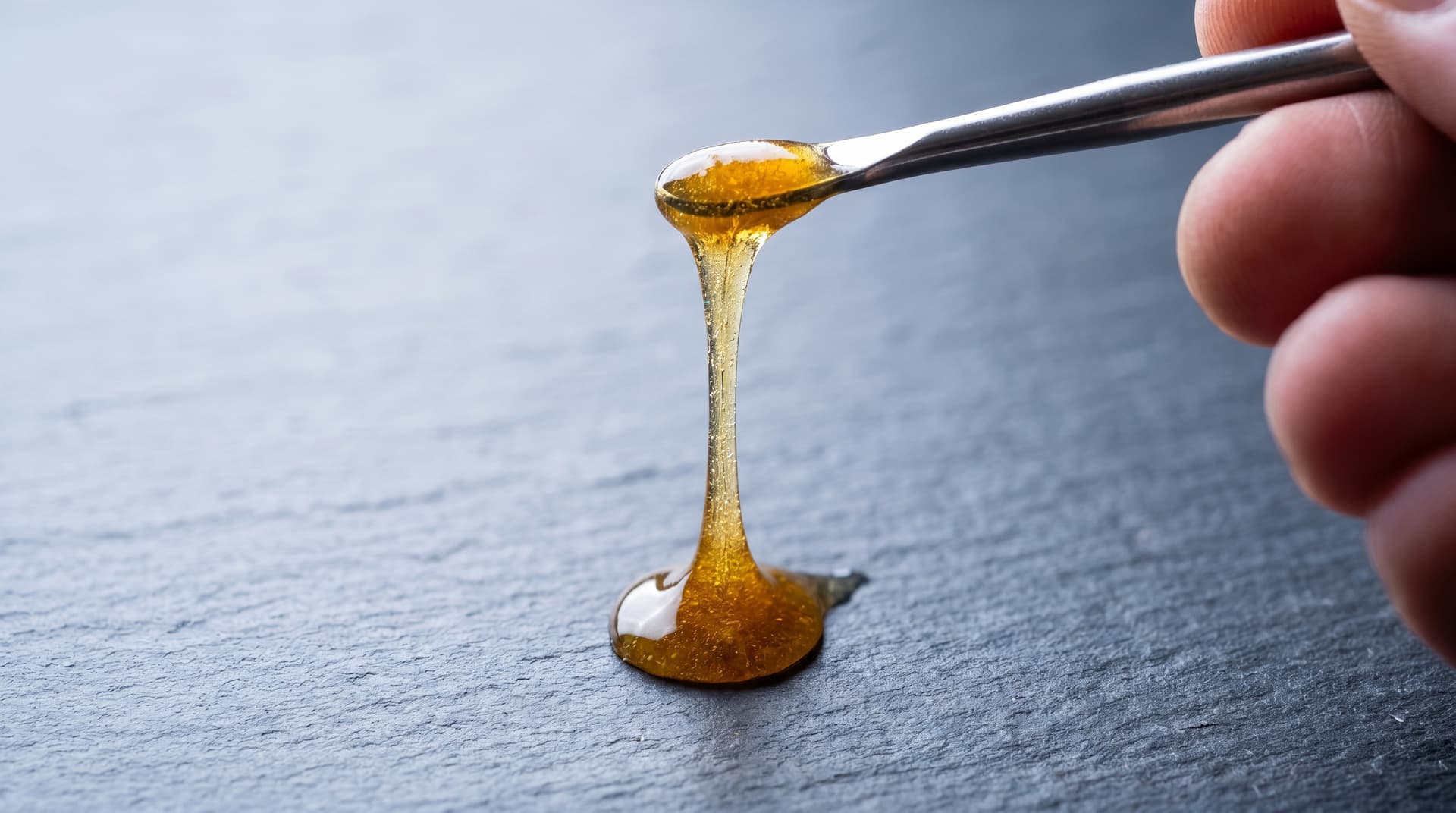
Cannabis concentrates are products made by separating cannabinoids and terpenes from the rest of the cannabis plant. Gram for gram, they typically carry far more THC than even strong flower.
Whether you call it wax, shatter, rosin or live resin, each one packs a lot into a small amount. Understanding the differences between them helps you pick the right concentrate for the way you like to consume.
What are cannabis concentrates?
A cannabis concentrate is resin separated from the plant, so you get the cannabinoids and terpenes without most of the leaf and stem. The result is a smaller, stronger product, so a little goes a long way.
According to NIDA's concentrates fact sheet, solvent-based concentrates average 54-69% THC, with some above 80%, and solventless ones average 39-60%. Flower seized by the DEA averages just over 15%.
When you compare products, read the label closely. THC, THCa, total THC and total cannabinoids are different measurements, so match like with like before deciding which jar is stronger.
That strength makes portion control the key skill. A dab is both the small portion you load and the act of vaporizing it on a hot surface. Start with a small dab, give it time, and only then decide on another. Our complete dabbing guide walks through loading and heating step by step.
Tip
How concentrates are made: solvent vs. solventless
Concentrates fall into two broad extraction categories, depending on how the resin gets separated from the plant.
Solvent-based extraction dissolves cannabinoids out of the plant
Solvent-based methods use butane, propane, CO₂ or ethanol to dissolve cannabinoids and terpenes out of the plant material. The producer then recovers and purges the solvent, typically with heat, vacuum or both, and finishes the extract.
Butane hash oil (BHO) is the best-known solvent method. Post-processing turns it into shatter, wax, budder, sugar or sauce, and rosin makers use some of the same texture names. CO₂ extraction is another common route, often used in vape cartridges.
In California, for example, licensed labs test every batch for residual solvents, pesticides, heavy metals and other contaminants. The results go on a certificate of analysis (COA), which is worth checking before you buy.
Warning
Solventless extraction uses heat, pressure or water
Solventless methods rely on physical separation instead of an added solvent. These include ice water hash, dry sift and rosin pressing. Many users prefer solventless products because nothing like butane or ethanol ever touches the cannabis.
Rosin is the best-known solventless concentrate. It's made by squeezing cannabis flower or hash between heated plates, which pushes out a sticky, sap-like concentrate. You can even press rosin at home with a dedicated press. A press's tonnage rating is its total force, and the pressure on your material depends on the bag size.
Ice water hash (bubble hash) uses ice water and agitation to separate trichome heads from plant material, then filters them through progressively finer mesh bags. Top-shelf "full melt" hash gets its name from how completely it melts when heated.
Whichever method you prefer, what matters most is the starting material and whether the batch was tested. Untested black-market extracts can contain residual solvents, pesticides or heavy metals, regardless of method.
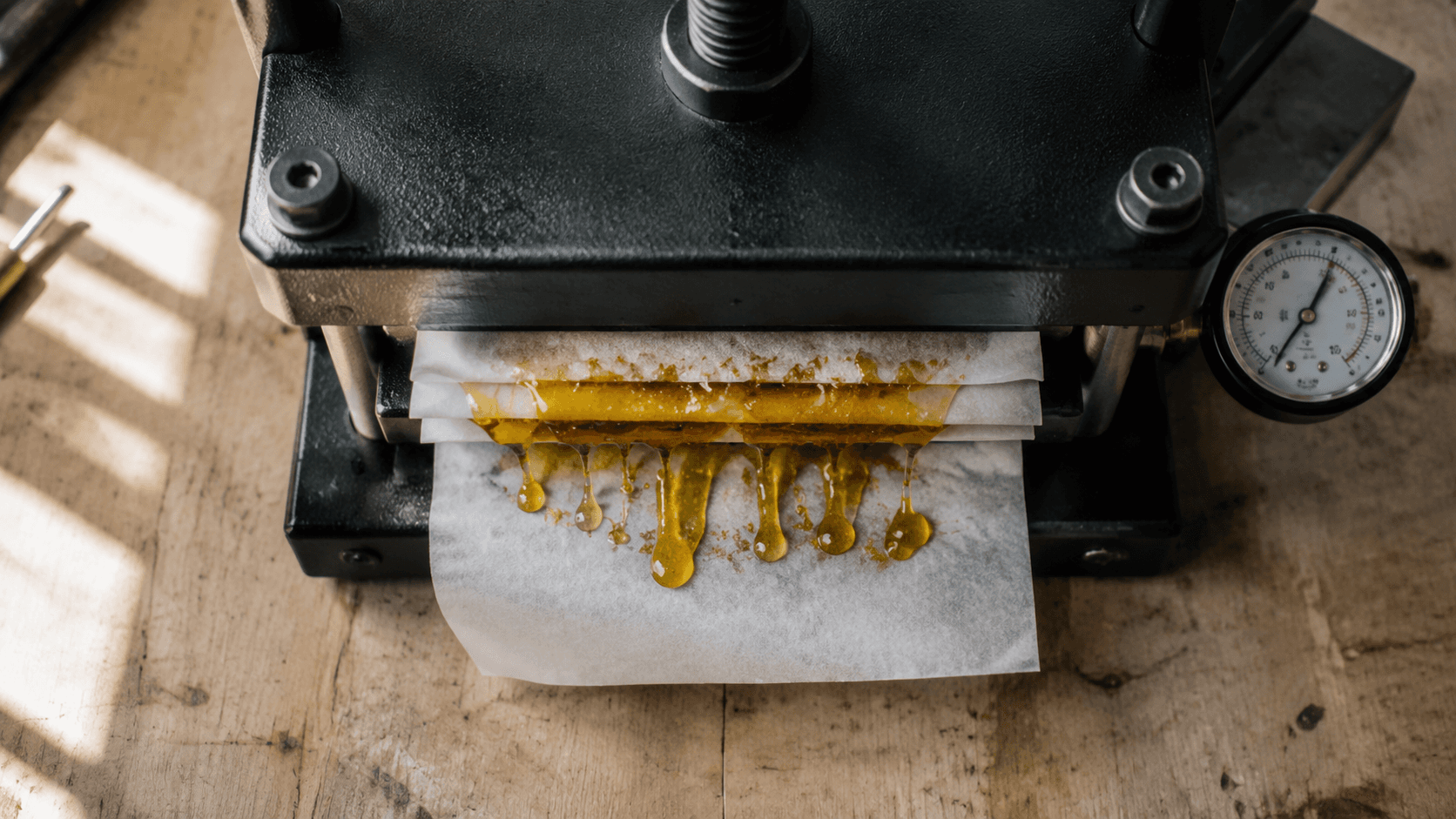
Heat and pressure squeeze the resin out onto collection paper, with no solvent involved.
Types of concentrates: texture, flavor and best uses
The texture of a concentrate decides how easy it is to handle and load into your vaporizer. Here are the types you'll run into most often.
| Type | Made with | Texture | Easiest gear |
|---|---|---|---|
| Shatter | Solvent (BHO) | Glassy, brittle, snaps | Concentrate pen or eRig |
| Wax, budder, batter | Solvent or rosin, whipped or cured | Crumbly to frosting-smooth | Concentrate pen or eRig |
| Sugar, crumble | Solvent or rosin, post-processed | Grainy and wet, or dry and falling apart | eRig or concentrate pen |
| Live resin | Solvent, fresh-frozen cannabis | Sauce, sugar or budder | eRig at a low setting |
| Rosin, live rosin | Heat and pressure, no solvent | Sappy to creamy | eRig at a low setting |
| Diamonds and sauce | Crystallized extract | THCa crystals in terpene-rich sauce | eRig |
| Kief, hash | Sifting, pressing or ice water | Dusty powder or solid block | Flower vaporizer, sandwiched in flower |
| Distillate | Solvent extract, then distilled | Oil, often with added terpenes | Prefilled cartridge on a 510 battery |
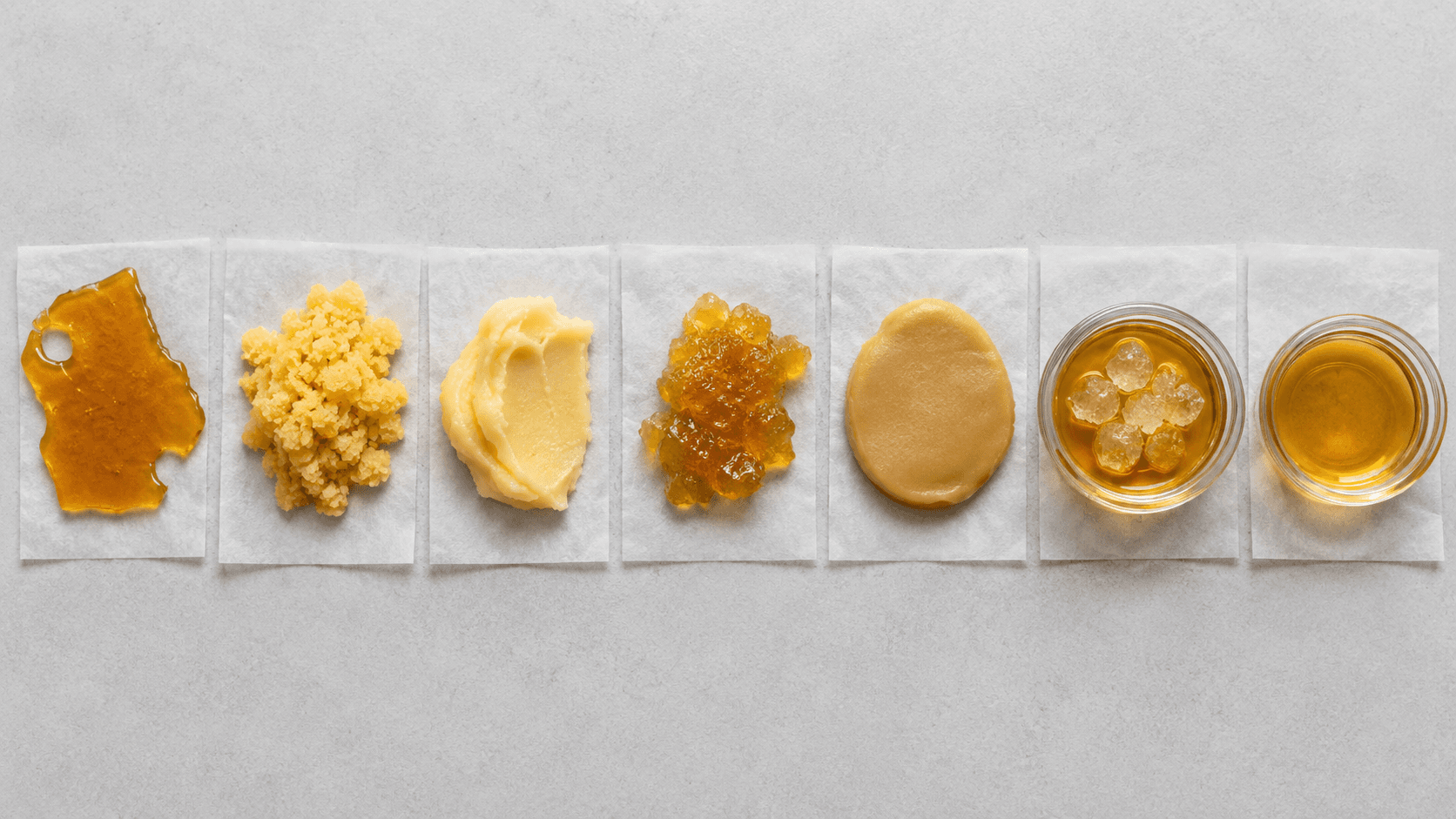
Seven textures side by side, from brittle, glassy sheets and crumbly wax to smooth pastes and runny oil.
Tip
Shatter: glass-like and easy to handle
Shatter is a translucent, brittle concentrate that snaps when bent, though warmth and time can soften it. Its glass-like consistency makes it one of the easiest concentrates to handle.
Break off a small piece, load it into your atomizer or onto your dab nail the way your setup calls for, and inhale. It doesn't cling to your dab tool the way softer textures do.
Wax, budder and batter: soft and scoopable
These three get their texture in post-processing, where whipping, curing and crystallization all play a part. Wax is crumbly and opaque. Budder and batter (also called badder) are smoother, like cake frosting.
The result is a soft product that's easy to scoop with a dab tool. Producers use the names a little differently, so the same texture can show up under more than one label.
Two close cousins handle differently. Sugar is grainy and wet, with crystals that form in the oil. Crumble, or honeycomb, is dry and falls apart, so pinch it into the chamber rather than scooping.
Live resin starts with fresh-frozen cannabis
Live resin is a solvent extract made from cannabis flash-frozen right after harvest, skipping the drying and curing process. Freezing holds on to volatile terpenes that normally escape while cannabis dries and cures.
The result is a bright, fresh flavor that many dabbers seek out. Live resin comes in various textures: sauce, sugar, budder or a combination.
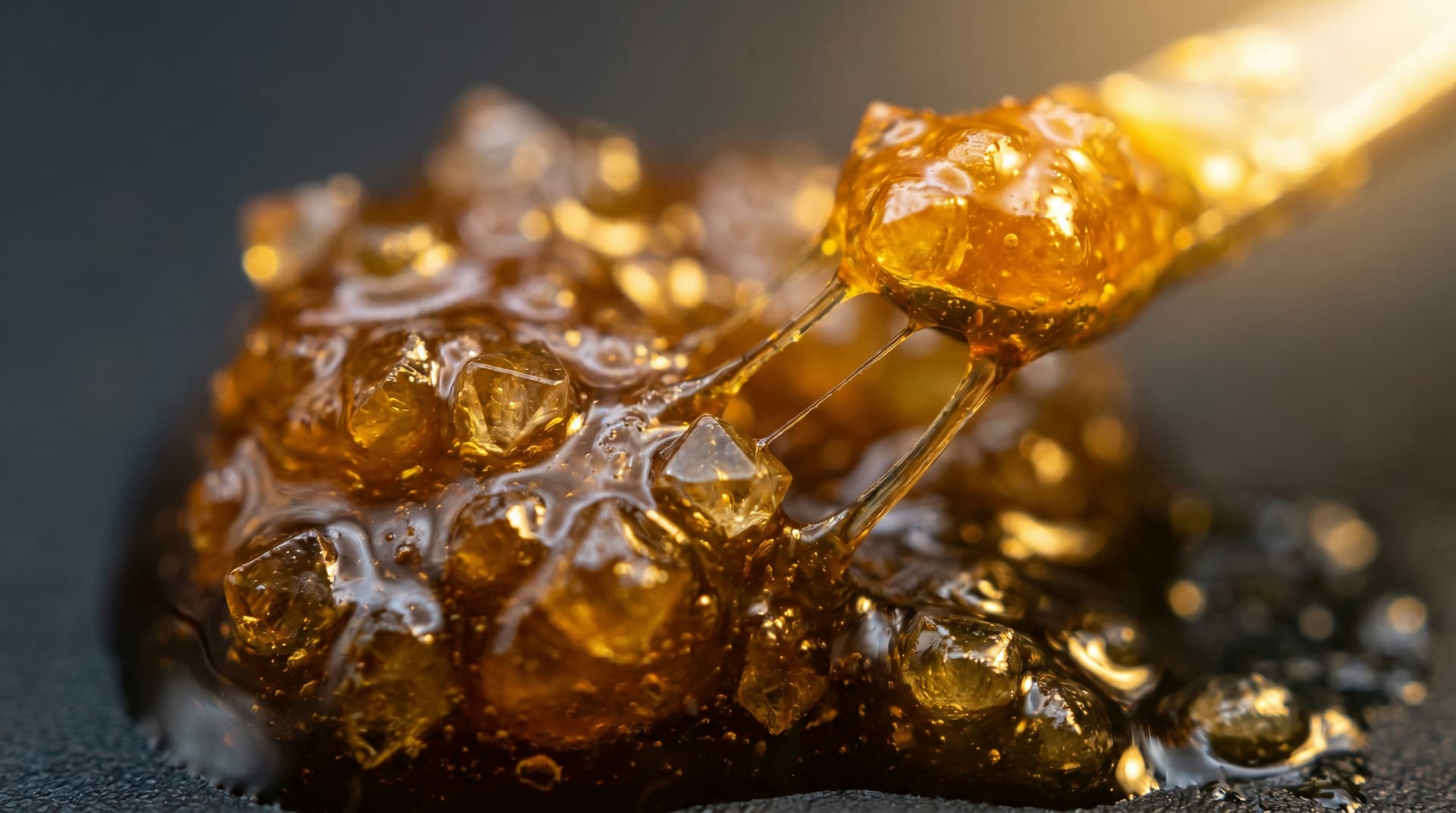
Diamonds sit in a glossy, terpene-rich sauce. Heat converts their THCa into THC as you dab.
Rosin: the solventless favorite
Rosin ranges from sappy and translucent to opaque and creamy, depending on the starting material and pressing conditions. Flower rosin is pressed from flower, while hash rosin is pressed from ice water hash. Some producers cure it further into a soft rosin badder.
Many concentrate enthusiasts consider hash rosin the gold standard for flavor, because it combines solventless processing with concentrated trichome material.
Live rosin is hash rosin made from fresh-frozen cannabis, so it keeps the bright terpenes of live resin with no solvent.
Live resin vs. live rosin
Both start from fresh-frozen cannabis. Live resin is extracted with a hydrocarbon solvent, while live rosin is pressed from ice water hash with heat and pressure alone. The small yields of that solventless route make live rosin the rarer and pricier of the two.
Diamonds and sauce: potent crystals, flavorful sauce
THCa diamonds are crystals made up mostly of THCa. They're often sold in a terpene-rich "sauce" that adds flavor, so the label for the whole jar tells you more than the crystals' own number.
THCa is the precursor to THC. Heat converts it through decarboxylation, and how much converts depends on temperature and time.
Loading diamonds into an eRig gives you steady, repeatable heat. Start at a lower setting to taste the sauce terpenes, then move up through your rig's settings for the crystals.
Every concentrate balances flavor, texture and strength differently. Pick for what you want to taste and feel, not for the biggest number on the label.
Kief and hash: the originals
Kief is the dusty layer of resin glands that collects in your grinder's bottom chamber, usually with a little plant material mixed in. Traditional hash presses kief into a solid block with heat and pressure, and ice water hash is another way to make it.
Both kief and hash work in many flower vaporizers, ideally sandwiched between layers of ground flower to keep the sticky resin contained. Some vapes also take a concentrate adapter, like the DynaCoil for the DynaVap M7. Our hash and kief guide covers loading, temperatures and cleanup.
Distillate: refined and versatile
Distillate goes through extra refinement after the first extraction, using molecular distillation to separate out specific cannabinoids. The process strips out much of the original terpene content. Isolate goes one step further, down to a single cannabinoid as a white powder or crystal with almost no flavor.
Manufacturers often add botanical or cannabis-derived terpenes back in for flavor. Distillate shows up in vape cartridges as well as edibles and other products. Most prefilled cartridges run on a standard 510-thread battery. Make sure an oil is made for inhaling before it goes near a dab chamber.
How to vaporize concentrates: 3 main methods
The way you consume concentrates affects flavor, efficiency and convenience. Each method suits different priorities, and our best concentrate vaporizers ranking compares the current picks.
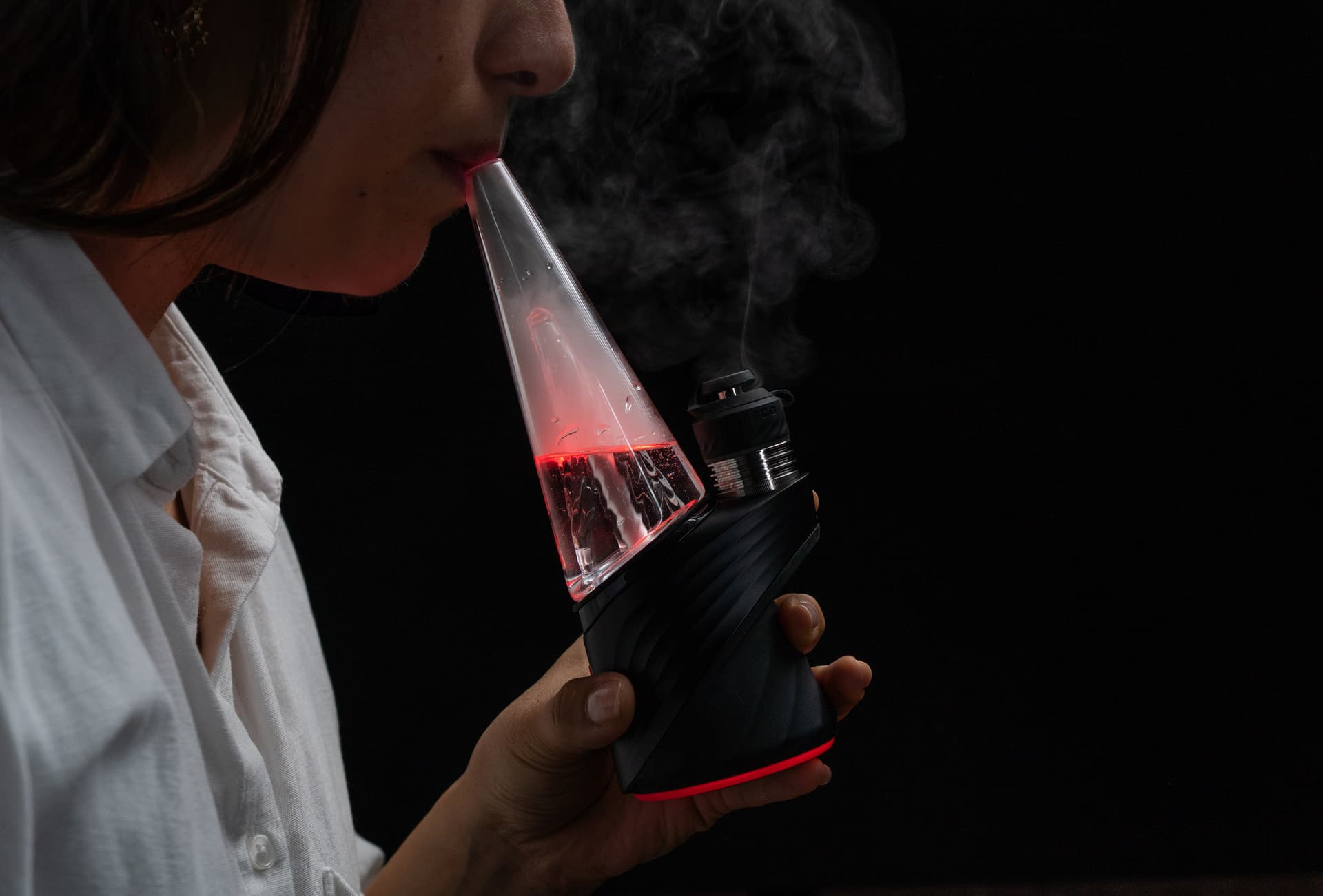
An eRig handles the heat for you, with no torch or timer to manage.
eRigs take the torch out of dabbing
An eRig is an electronic dab rig that replaces a torch with a battery-powered heater. Depending on the model, you get heat presets or a numeric temperature setting. Some, like the Puffco Peak Pro, add app control and water filtration through integrated glass.
The Dr. Dabber Switch 2 uses induction heating and an infrared temperature sensor, with a removable insert in place of a traditional coil atomizer. The Bomb eRig Aerix heats in about 5 seconds and gives you a numeric temperature control. Both run vapor through water glass.
For flavor-focused sessions, the Ispire Daab uses induction to heat a glass cup with metal sealed inside, so your concentrate only touches glass. It gave us some of the cleanest terpene flavor we've tasted from an eRig.
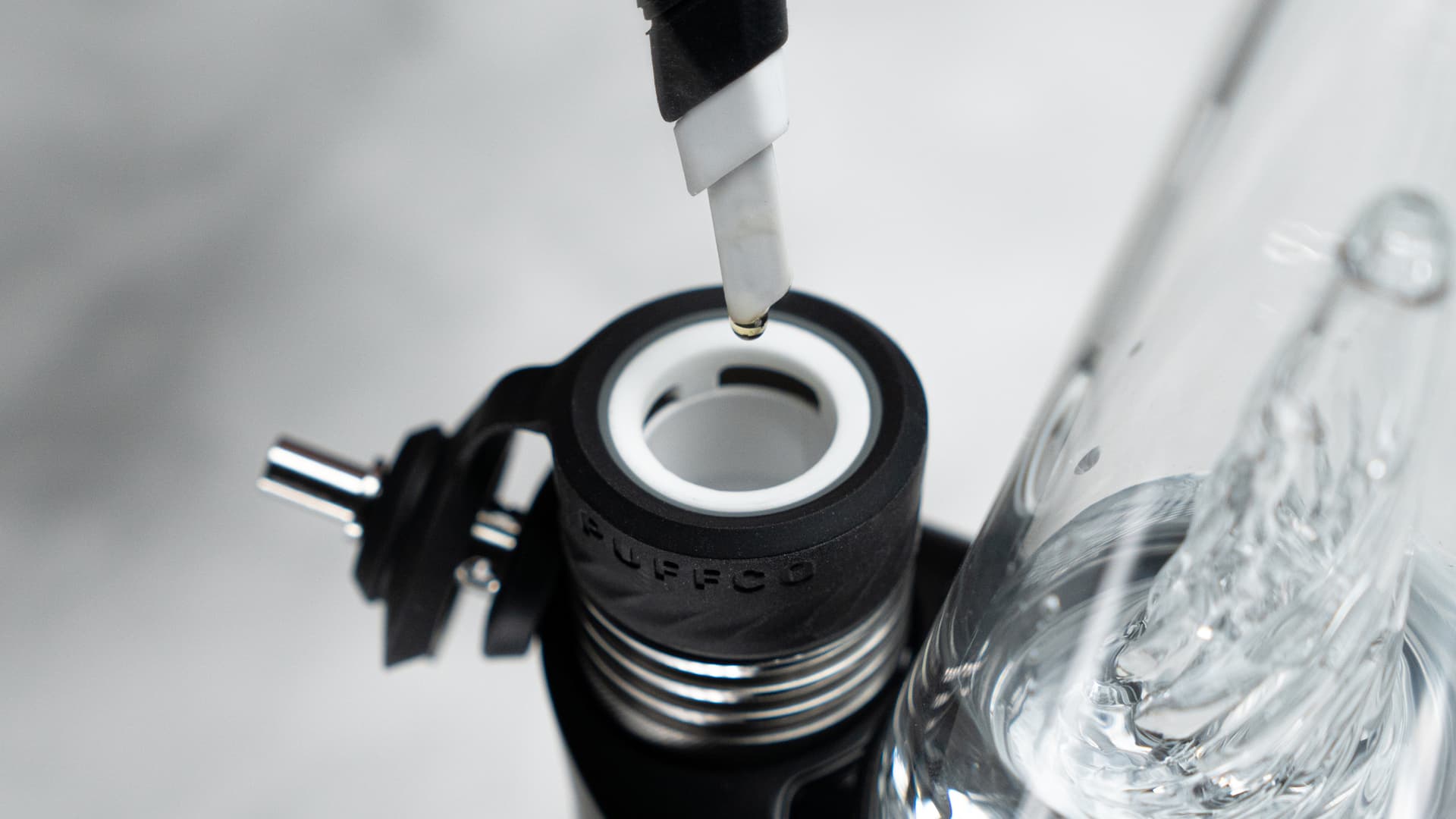
A warm loading tool helps sticky concentrate slide off into the chamber without scraping the ceramic.
Concentrate pens put portability first
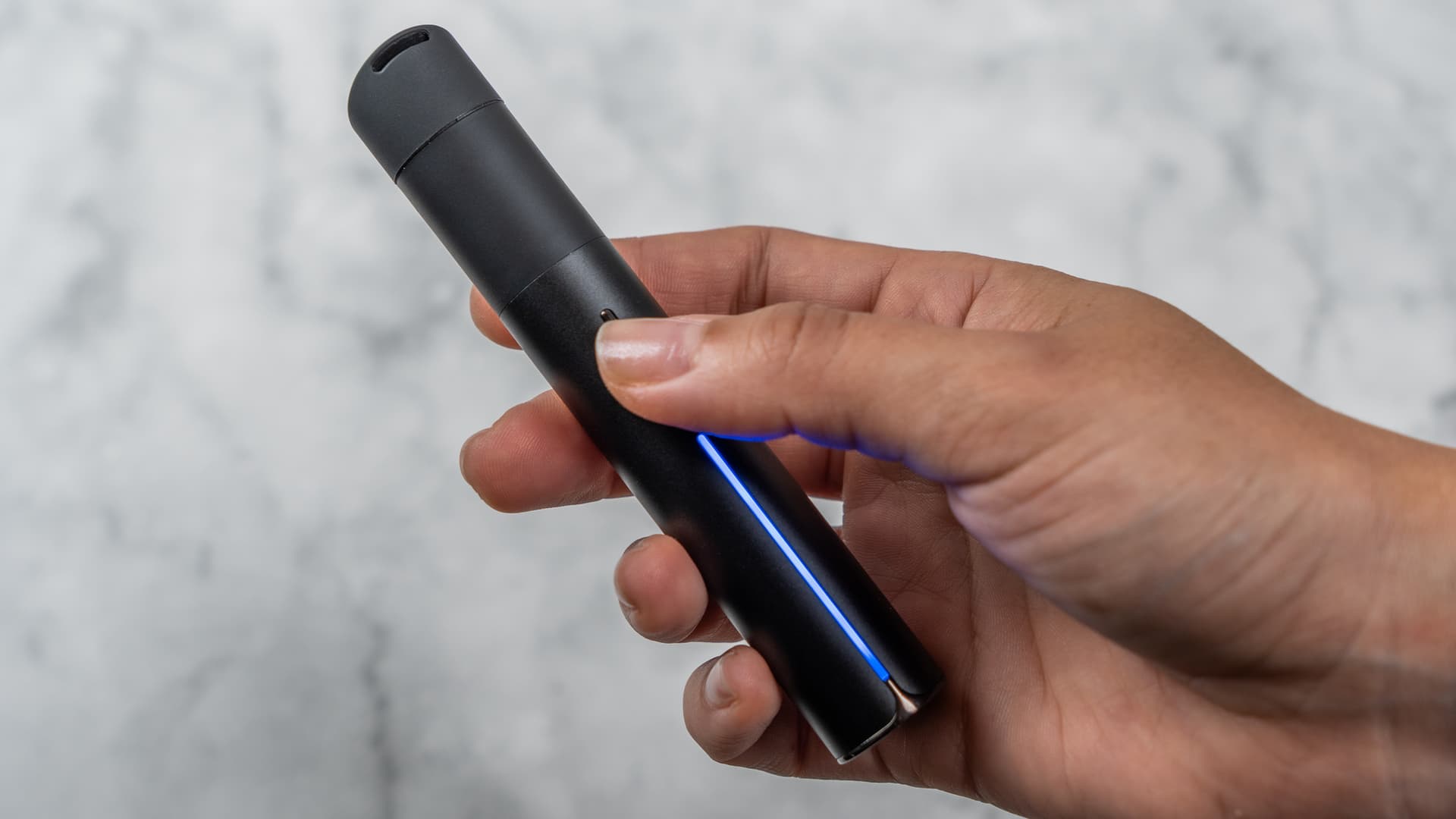
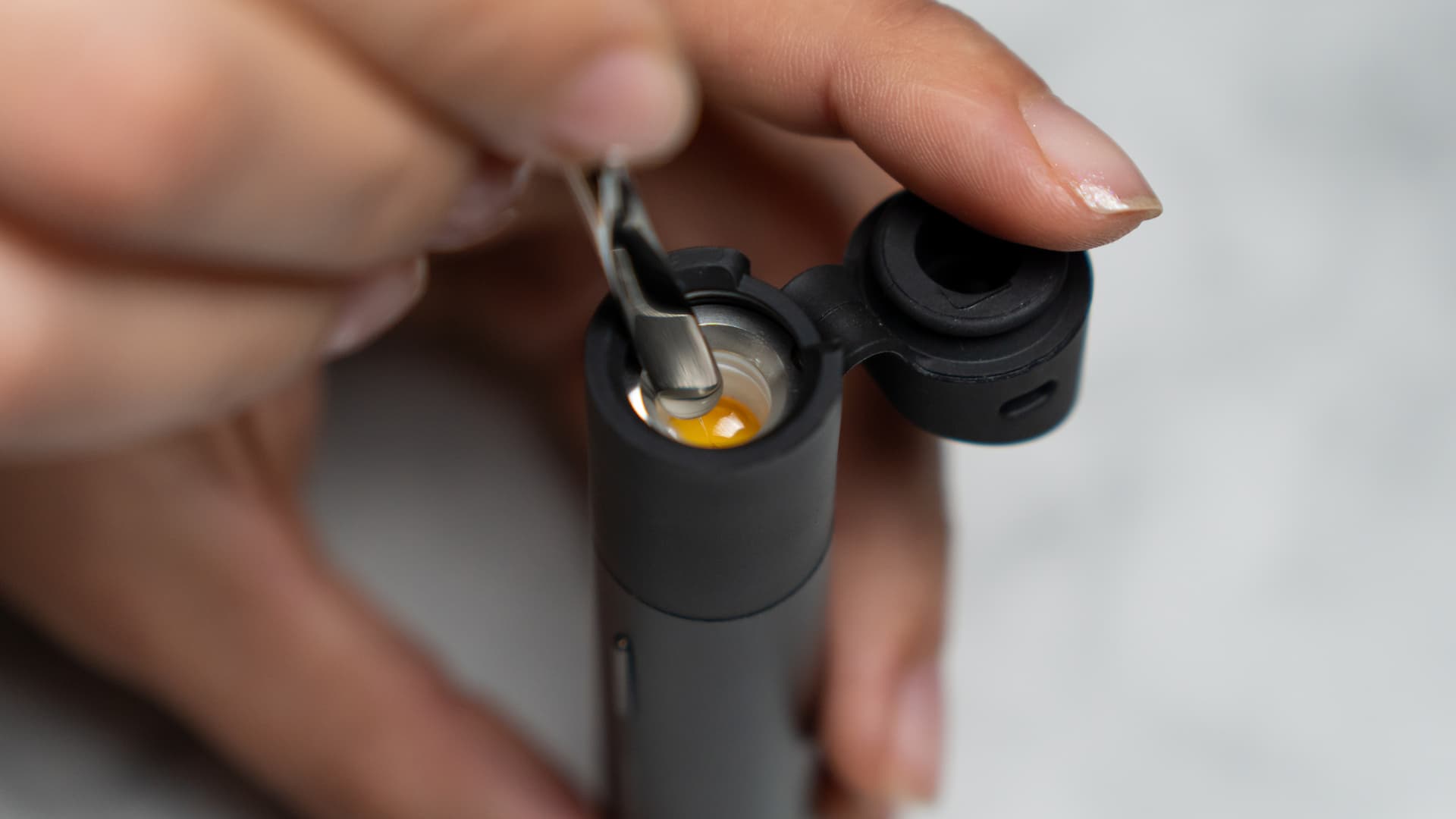
Concentrate pens heat a small amount of wax or shatter on a coil or ceramic surface. They're pocket-sized and quick to use, though you still charge, load and clean them.
The tradeoff is a smaller chamber and usually a few presets rather than full temperature control. The Puffco Pivot puts a regulated ceramic 3D Chamber and four heat presets into an 85 g pen body. In our sessions it tasted better than coil-based pens. Our guide to choosing a concentrate vape covers which form factor fits different use cases. For how pens and dabbing stack up against smoking, flower vapes and edibles, see our consumption methods comparison.
Desktop vapes: check the bowl before you dab
Some desktops pair a flower pathway with a dedicated concentrate surface, so one vape covers both. That setup appeals to anyone who wants one machine for everything, but plenty of ball vapes are flower-only. Cannabis Hardware builds the FlowerPot B1 for flower alone, so keep dabs out of its bowl.
Only add a concentrate accessory your vape's maker lists for your exact setup. Check our ball vape explainer if you're new to the category.
Temperature shapes flavor and vapor
Dabbing temperature, along with load size and airflow, shapes what you taste and how the vapor feels. Lower temperatures keep more terpene flavor and produce smoother vapor. Higher temperatures make denser vapor but sacrifice flavor and smoothness.
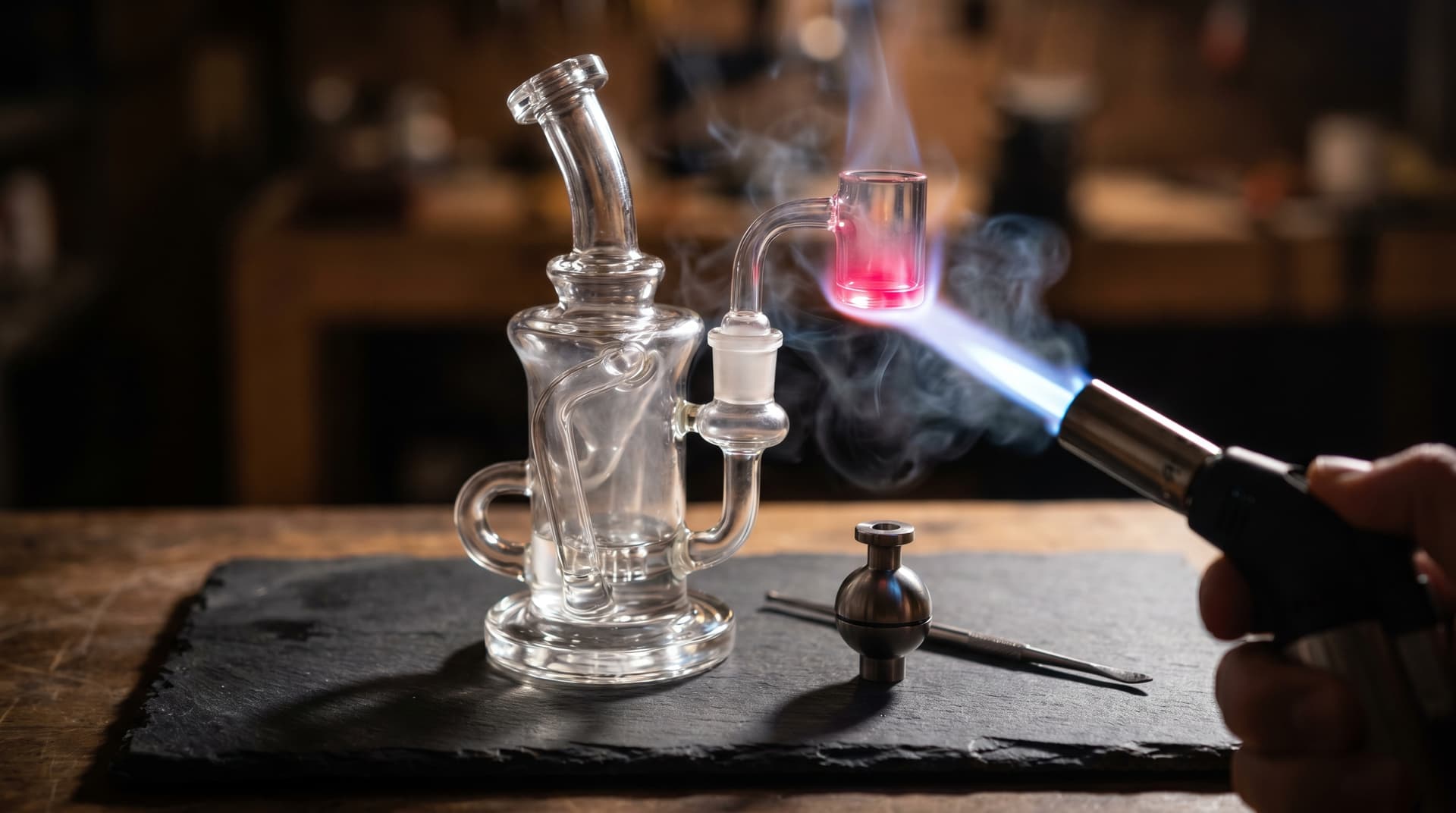
A banger hot enough to glow is far past flavor territory. Let it cool before you dab, and expect thicker quartz to hold heat longer.
| Range | Temperature | Vapor | Best for |
|---|---|---|---|
| Low | 150-175°C | Wispy, smooth | Live resin, hash rosin. The brightest terpene flavor |
| Mid | 175-220°C | Visible, not harsh | Everyday dabs. Balanced flavor and vapor |
| High | 220-315°C | Dense, hot | Big clouds, at the cost of flavor and smoothness |
Our temperature guide goes deeper on how heat changes flavor and vapor.
A cold start dab means loading concentrate into a cool quartz banger and heating it gradually. That way you move from low to high temperatures in one session. Some eRigs offer ascending temperature profiles that work in a similar way.
The complete dabbing guide
Step-by-step technique for eRigs and torch rigs: loading, carb caps, cold starts, temperature control and cleanup.
Storing concentrates properly keeps them fresh
Heat, light, air and moisture all wear down a concentrate over time, and poorly stored live resin can go flat and dull. An airtight glass jar in a cool, dark place is a solid default. Beyond that, follow the producer's storage advice. 710 Labs' storage advice treats fresh-press rosin and water hash differently from cured badders, and its filled vapes differently again.
Tip
Concentrates vs. flower: which is better for vaporizing?
Neither is objectively better. They serve different purposes. Flower offers the plant's natural mix of terpenes and cannabinoids, easygoing sessions and simpler prep. Concentrates pack more strength into a smaller load and deliver intense flavor at the right temperature.
Many experienced users keep both. A flower vaporizer handles daily sessions. An eRig or concentrate pen covers the times you want stronger effects or want to taste a specific cultivar's terpene profile in concentrated form.
We recommend starting with flower if you're new to vaporizing. Concentrates are there when you want them, not a level you have to reach. Keeping your eRig clean keeps it running well and stops old residue from muddying the flavor.
Common concentrate mistakes
- Chasing the biggest number on the label. Pick for flavor and texture, and compare matching label figures (total THC with total THC).
- Redosing before 30 minutes. An inhaled dose can take that long to reach full effect.
- Dabbing on a banger that's still glowing. Glowing quartz is far past flavor territory, so let it cool first.
- Putting concentrates in a flower-only bowl. The FlowerPot B1 is built for flower alone, so keep dabs out of it.
Key Takeaway
- Stronger per gram than flower. Keep dabs small and give each one time before redosing
- Texture is about handling. Soft wax and budder scoop easily but still run strong
- Lower temps, better flavor. Hot dabs trade taste for density and harshness
- eRig or quality pen. Set the heat instead of guessing with a torch
- Solventless = no added solvents. Rosin and hash rosin skip butane and ethanol entirely