

Switching from smoking to vaping cannabis comes down to four things: a forgiving first vape, a lower temperature than you'd expect, a medium grind and about two weeks of patience. Vapor feels lighter and tastes different, and that's the point.
This guide pulls together what we've learned reviewing vaporizers. If you're still weighing the health case, our breakdown of vaping versus smoking covers the science. If you're brand new to vaporizers entirely, our New to Vaping hub covers the fundamentals, and our guide on how to use a vaporizer walks you through a first session. Otherwise, let's get into the transition.
The switch in six steps
- Pick a simple session vape: the XMax V4 Pro or Fury 3 under $120 (US list price), or the Mighty+ if you can spend more.
- Start at 180°C and step up to 210°C as the bowl goes.
- Grind medium and pack snug, not stuffed.
- Draw slow and long, like sipping through a thin straw, not quick joint puffs.
- Take a small load and wait 10 to 30 minutes before more.
- Clean when the draw tightens.
Vapor feels lighter than smoke, and that's normal
A common complaint after the first session or two is that vapor feels "weaker" than smoke. It isn't. In a 2018 study, the same dose of THC generally hit harder vaporized than smoked. Burning cannabis adds tar, carbon monoxide and other combustion byproducts. Those irritants cause much of the throat burn and chest heaviness that smokers read as potency.
Vapor delivers cannabinoids and terpenes without burning the flower, so the hit feels smoother and lighter. In an inpatient study, people who vaporized got similar THC levels with far less carbon monoxide than when they smoked. Vapor is still something you inhale, and our health and safety overview covers what that means for your lungs.
Give it a few sessions before you judge the experience. You'll likely start picking up flavors in your cannabis that smoke was hiding. If a draw feels harsh, turn the temperature down rather than pushing through it.
Vapor isn't weaker than smoke. It's smoother. The lightness ex-smokers mistake for weakness is the missing burn, not missing effect.
How long does it take to adjust to vaping?
Most smokers settle in after about two weeks of mostly vaping. The first few sessions feel unfamiliar and you'll miss the throat hit. By the second week the flavor and the smoother draw usually win you over, and a joint starts to taste harsh by comparison.
If you roll your joints with tobacco, remember that a cannabis vape drops the nicotine too. Some of the cravings you feel early on may be the tobacco talking, not the cannabis.
Cold turkey or a three-week taper
- Week one: vape every daytime session and keep one evening joint.
- Week two: vape the evening session too, and smoke only on weekends or socially.
- Week three: vape only, and put the papers, pipe and lighter somewhere out of reach.
If you'd rather quit in one go, give the vape three straight weeks before you decide. Either way, keep your best cannabis for the vape so every vape session is the good one.
Which vaporizer is best for switching from smoking?
The best first vaporizer for an ex-smoker has simple controls, fast heat-up, easy loading and cleaning, and enough vapor to feel familiar. Choosing the wrong one is one of the easiest ways to sour the switch. Start from how you smoke now.
| How you smoke now | Vape style that feels closest | Our pick (US list price, our score) |
|---|---|---|
| Joints and blunts | Session vape | XMax V4 Pro ($109, 8.9/10) or Fury 3 ($119, 8.8/10) |
| Pipe or one-hitter | On-demand vape | Tinymight 2 ($349, 8.7/10) |
| Bong | Any vape that connects to a water pipe | Fury 3 or Mighty+ ($399, 8.7/10) |
| You love the lighter ritual | Battery-free torch vape | Tempest 2 ($225, 9.0/10) |
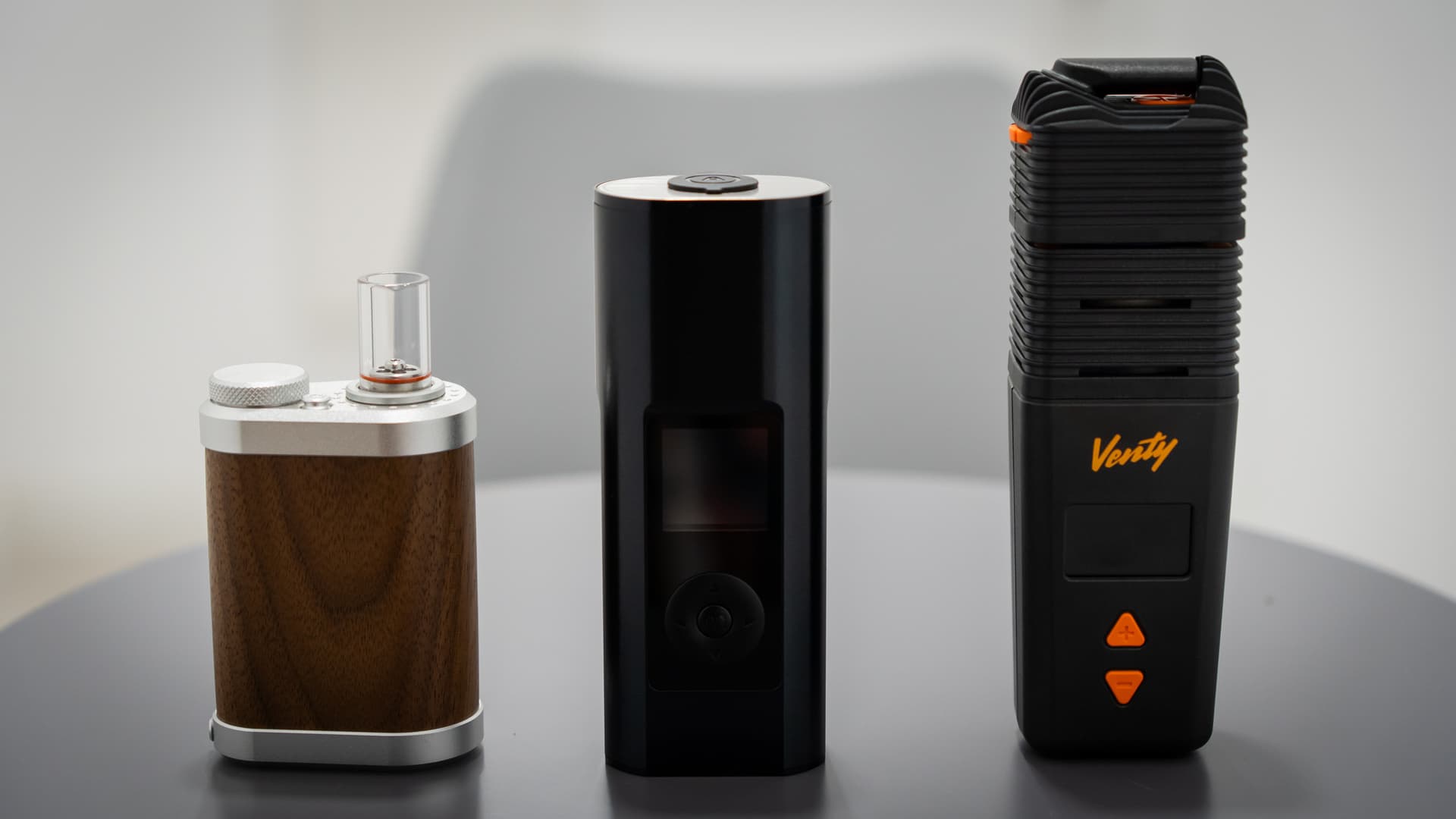
The Tinymight 2, Arizer Solo 3 and Venty, three portables with different sizes and controls. Your smoking habit is the best hint at which style will stick.
Session vaporizers are the easiest starting point
A session vaporizer heats your cannabis continuously for a timed session of a few minutes, similar to how a joint burns. You load it, turn it on, and puff. There's very little technique to learn. The XMax V4 Pro runs in both session and on-demand modes, so you can try both routines. The Fury 3 heats in about 20 seconds and weighs 159 g. At US list prices of $109 and $119, both sit in our budget vaporizer picks and are among the most forgiving entry points we've reviewed.
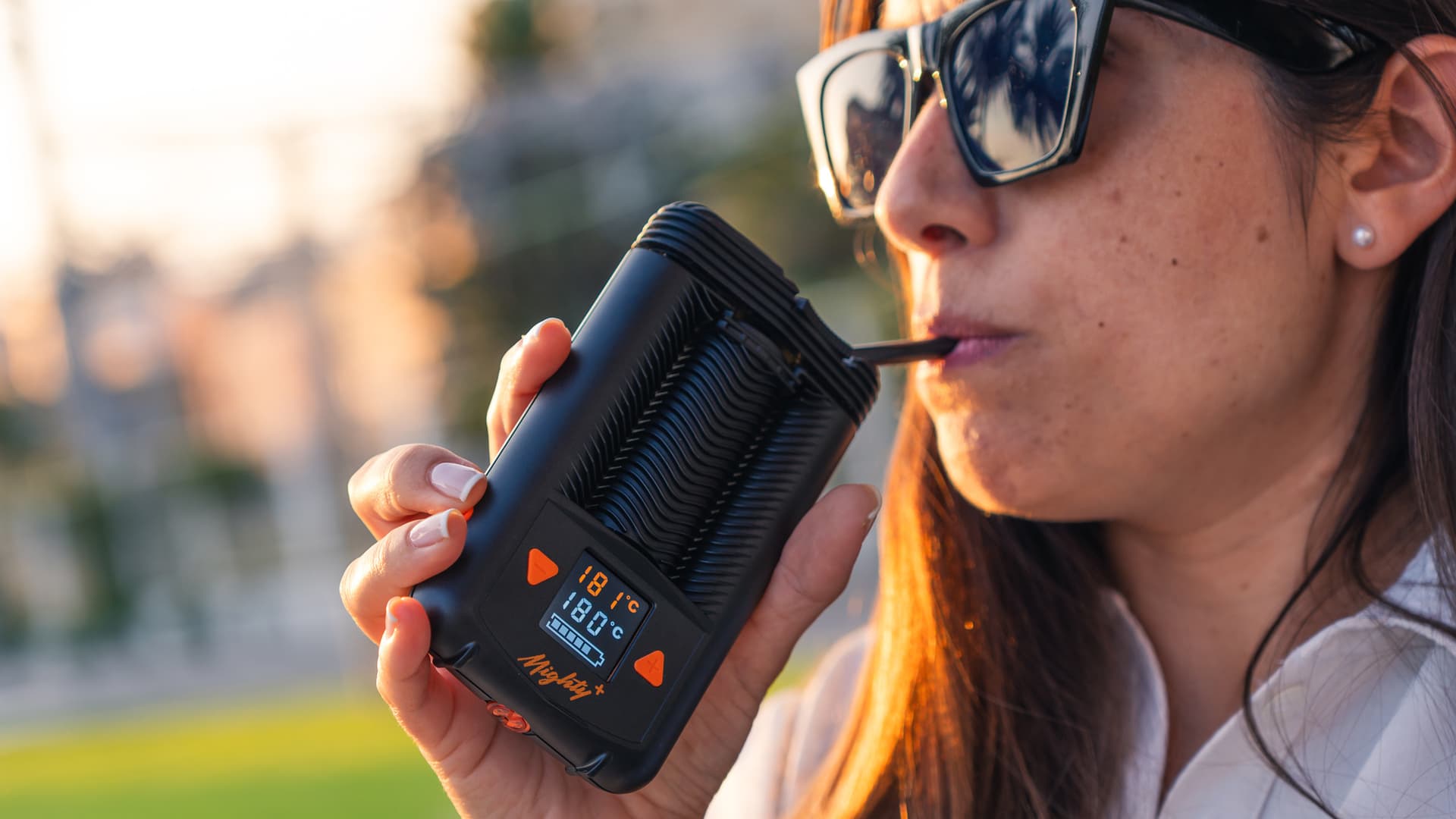
If you can spend more, the Mighty+ ($399 US list price) remains our default recommendation for switchers. Its hybrid heating system (combining conduction and convection) produces thick, consistent vapor with little need to stir. It takes about a minute to reach 180°C, which is slower, but the vapor density rivals what most smokers expect. For the rest of the field, see our full portable vaporizer rankings.
On-demand vaporizers mimic single hits
An on-demand vaporizer heats only while you hold the button, letting you take a hit and walk away. This mirrors how many smokers use a pipe or one-hitter. The Tinymight 2 ($349 US list price) heats in about 5 seconds and delivers pure convection flavor. It also has a session mode, but it takes more draw technique practice than a session vaporizer. Torn between it and the Mighty+? See our Mighty+ vs Tinymight 2 comparison.
Battery-free options for smokers who like rituals
If you enjoy the ritual of lighting up, a battery-free vape like the Tempest 2 ($225 US list price) replaces the lighter-and-paper routine with a torch. You heat its zirconia ball heater head with a single-flame torch or an induction heater like the YLL 3.0, watch the visual heat indicator, and draw. The 46 g build has no battery to charge or firmware to update. Let the cap cool after each session, and swap the seals when they wear. Our ball vape guide covers the heating routine step by step, and our ball vaporizer picks rank the alternatives.
Bong smokers: run your vape through water
If you miss the big bong hit, run your vape through water. The XMax V4 Pro's glass mouthpiece fits a 14 mm joint directly, and the Fury 3, Mighty+, Tinymight 2 and Tempest 2 connect through a water pipe adapter matched to your bong's joint size. Water cools the vapor so you can pull a fuller draw, which is the closest a vaporizer gets to the rip you're used to. Our bong setup guide covers the adapter and the setup step by step.
If you want the full breakdown of form factors before you decide, our deeper guide walks through every category.
How to choose your first vaporizer
Form factors, heating styles, budget tiers, and the practical questions to answer before you buy.
Start at 180°C and work up from there
Temperature control is the biggest advantage vaporizing has over smoking. A joint burns at roughly 600-900°C, and much of the flavor goes up in smoke. A vaporizer lets you pick the heat, and that changes the flavor, the vapor and how the session feels.
For ex-smokers in their first week, we recommend starting at 180-195°C. This range produces visible vapor with strong flavor. It won't produce smoke-level clouds, but you'll still feel it.
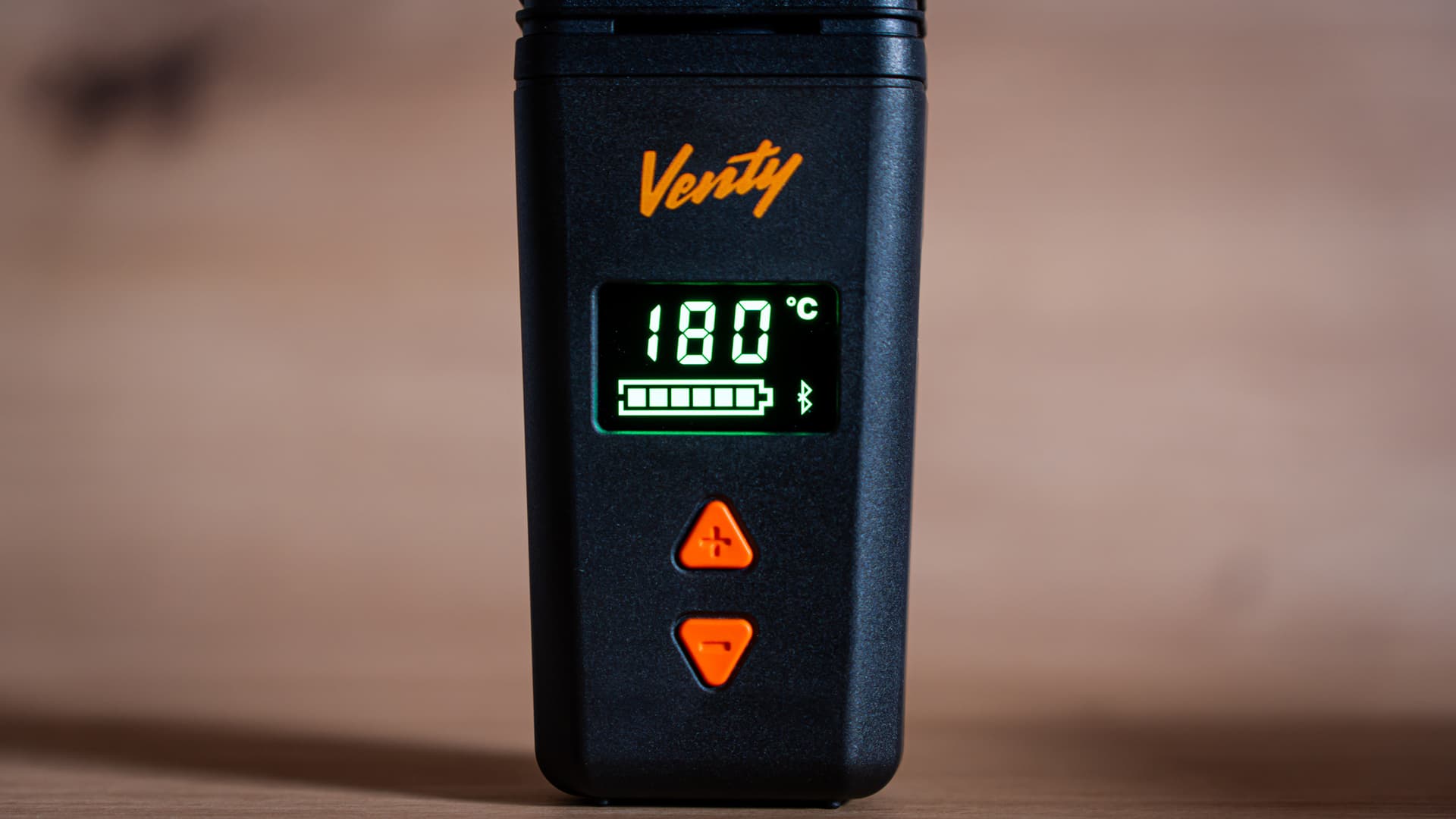
The Venty set to 180°C, a smooth and flavorful place to start. Step up toward 210°C as the bowl goes.
After your first week, experiment with temperature stepping. One bowl can give you three different sessions. Our temperature guide goes deeper on what changes as you turn up the heat.
Tip
There's rarely a reason to push much past 210°C. Up there the vapor gets harsher and you lose the flavor that makes the switch worthwhile.
Grind consistency matters more than you think
Smoking is forgiving with grind quality. Vaporizing is not. The heated air (or heated surface) needs to reach as much of the cannabis as possible, and grind consistency directly affects how evenly it vapes.
A medium grind works for most vaporizers. Fine enough that air flows through evenly, coarse enough that it doesn't pack into a dense block. A decent two-piece or four-piece grinder gets you there. Our grinding guide covers specific grinder recommendations and technique by vaporizer type.
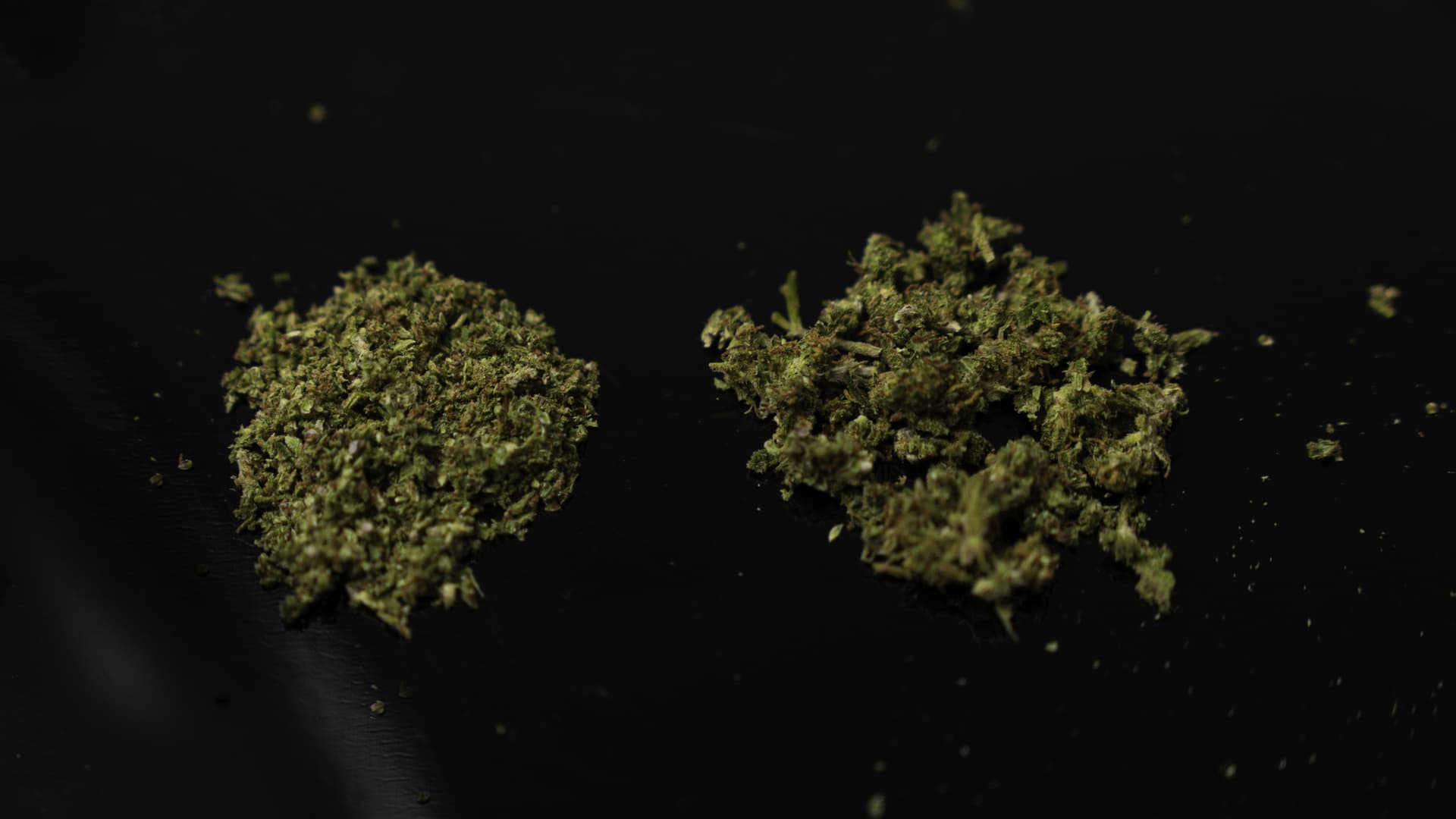
A finer grind (left) next to coarser chunks (right). The finer pile gives hot air more surface to work with.
For most ovens, press the cannabis down until you feel gentle resistance, not a compressed puck. Think of it like filling a tea infuser: snug, not stuffed. The tips below cover the vapes that want something different.
Warning
Loading tips for specific vaporizers
Conduction vaporizers like the PAX Mini 2 want a medium-fine grind and a firm pack, because the cannabis must touch the heated walls. The hybrid POTV Lobo does better with a loose fill and a light press that lets hot air circulate. Dosing capsules make loading and emptying much tidier (use the ones made for your vape), which we cover in our dosing capsule guide.
Start small and track what you use
Because vapor can hit harder than you expect, start with a small load and see how you feel before packing more. A first load of 0.1 g to 0.15 g is plenty (0.15 g fills the Tinymight 2's chamber). A light bowl often goes further than smokers assume.
If saving money is part of the plan, weigh your bowls for the first month (a cheap pocket scale does it) and compare against what you used to roll. Keep a simple note of what you buy for the first couple of months, and count accessories and upkeep too. That tells you what the switch is really saving you.
There's a bonus: your already-vaped cannabis (AVB) still holds some of its cannabinoids. You can save and repurpose it in edibles, stretching your supply even further. Its strength varies from bowl to bowl, so go low with AVB edibles.
What to do with already-vaped bud (AVB)
Your spent cannabis still holds some of its cannabinoids. Recipes and methods for putting it to work.
5 mistakes that send ex-smokers back to combustion
The same few slip-ups come up again and again. Avoid these and the switch gets a lot easier.
1. Judging vapor by cloud size
Thick, visible clouds do not equal potency. Plenty of great vapes produce wispy, barely visible vapor at lower temperatures and still deliver strong effects. Judge by how you feel over the next 10 to 30 minutes, not by what you see when you exhale.
2. Not cleaning the vaporizer
A dirty oven and clogged airpath increase draw resistance and mute flavor. Our cleaning guide has step-by-step instructions for popular vaporizers. If the vapor still feels off after a clean, our troubleshooting guide covers the common fixes.
Tip
3. Expecting instant satisfaction
Inhaled cannabis kicks in within seconds to minutes, but the full effect can take 10 to 30 minutes to arrive. Give each session that long before deciding you need more. Taking more in that window can hit harder than you meant.
4. Buying on price alone
Starting with a well-reviewed vape from our budget-friendly picks makes a noticeable difference in vapor quality and satisfaction. Poor first impressions from subpar hardware are hard to shake.
Warning
5. Ignoring your tolerance
If you smoke heavily, your tolerance comes with you to the vape. A break before you switch makes the vape feel stronger, but real recovery takes a while. In a receptor-imaging study, heavy users' cannabinoid receptors had bounced back after about four weeks off.
If you use every day, stopping can bring withdrawal symptoms like poor sleep and mood changes. Ease off gradually if a full break is hard, and get support if you need it.
Vapor impairs you like smoke does, so don't drive after a session. If a cough, wheeze or chest pain sticks around after you switch, see a doctor.
Key Takeaway
- Adjustment period: give vape-only use about two weeks before you judge it
- First vape: forgiving session vape (XMax V4 Pro, Fury 3, Mighty+) with parts and support you can count on
- Temperature start: 180-195°C, step up across each session
- Grind and pack: medium consistency, snug pack, follow your vape's loading style
- Effects and spending: wait 10 to 30 minutes before taking more, and track what you use