

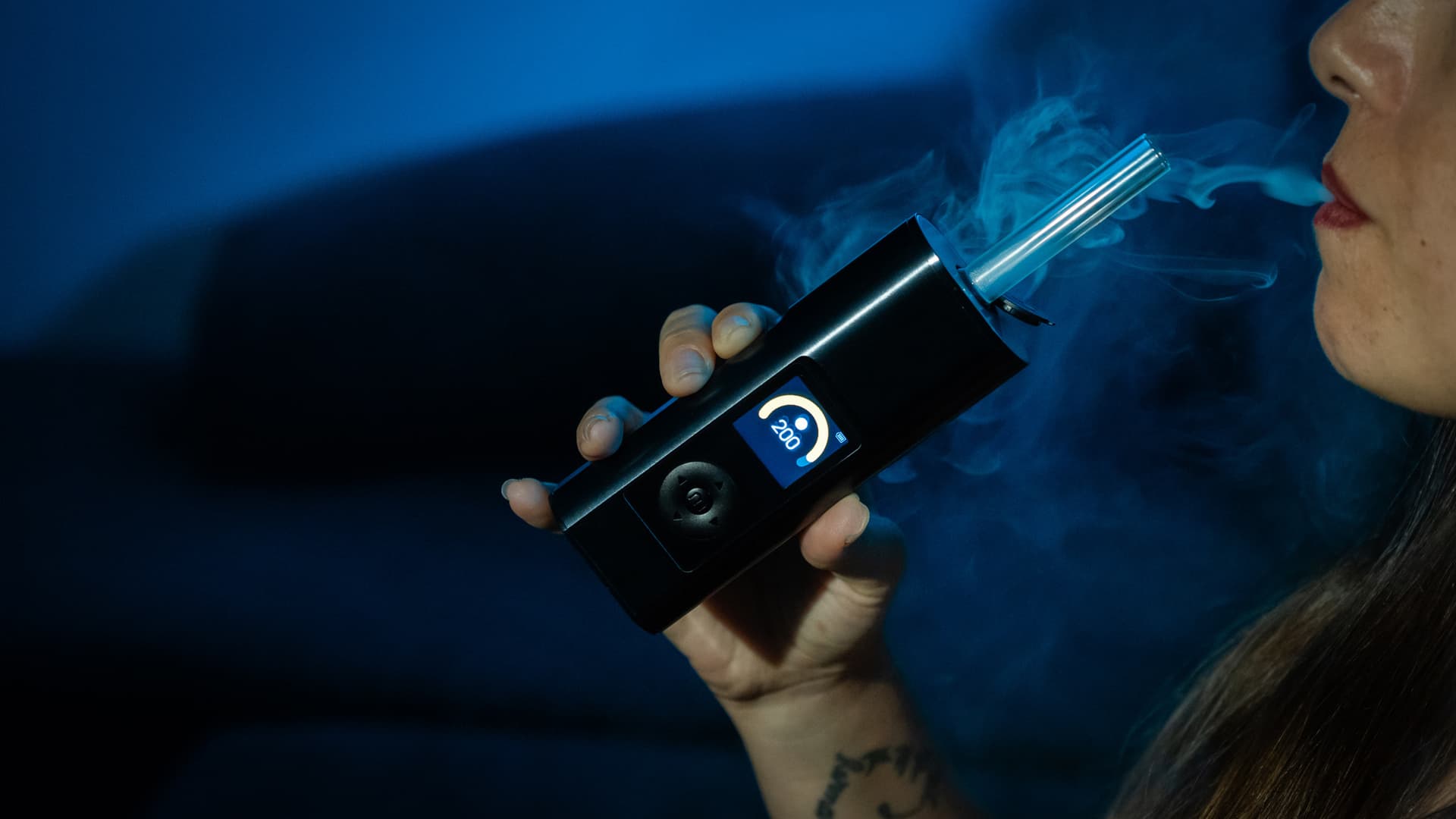
If you're switching from smoking, the hard, quick pull you're used to can cost you flavor and vapor. A vaporizer releases cannabinoids and terpenes from cannabis flower by heating it with hot surfaces, hot air or both. Nothing burns. That difference means the draw that worked for joints, pipes and bongs often works against you here.
The core principle is simple: slow, steady and gentle. When a first session disappoints, draw speed is the first thing we look at. Get it right and you'll often get more flavor and fuller vapor from the same load. If you haven't picked a vape yet, our New to Vaping hub covers choosing one, and our how-to-use guide walks you through your first sessions.
A slow, steady draw is the best place to start
On many vapes, especially small portables, pulling too fast moves more air than the heater can keep hot, and the vapor comes out thin. Pull too slowly on some models and the vapor cools and condenses in the airpath before it reaches you.
On a lot of portables, a gentle 10-15 second draw at moderate intensity is our go-to. That slow, even suction gives the heater time to keep up with your breath. Go shorter if that feels like a stretch, and never force a lungful.
Don't judge the first draw by the cloud. Low settings and a fresh load often make faint vapor that still carries flavor and effect, and the next draws usually look fuller.
Tip
Mouth-to-lung vs direct-to-lung: match the airflow
There are two basic ways to inhale, and the right one comes down to your vaporizer's draw resistance and what feels comfortable to you.
Mouth-to-lung (MTL)
Draw vapor into your mouth first, then inhale it into your lungs with a second breath of fresh air. This two-step technique feels natural on vapes with a tighter draw. On the Mighty+, Storz & Bickel's instructions call for an even inhale of a few seconds, which suits MTL nicely. The PAX 4 is built for both gentle sips and stronger pulls, so try each.
MTL feels familiar if you're used to puffing a pipe or a joint. Plenty of us also like the flavor, since the vapor sits on your palate for a moment before it goes down.
Direct-to-lung (DTL)
Inhale vapor straight into your lungs in one continuous breath. This suits vaporizers with open airflow. The Venty has adjustable airflow up to 20 L/min, so you can open it wide for direct-lung draws or close it down for a tighter pull.
Desktop vaporizers used with a whip or water pipe also pair well with direct-lung draws, since the longer vapor path cools the vapor before it reaches you. Keep it a comfortable breath, though, not your biggest one.
Heating type shapes your ideal draw speed
Your vaporizer's heating method is one of the best clues to how it wants to be drawn. Heater power, controls and how you load it matter too. As we explain in our heating methods guide, the three main approaches each respond differently to airflow.
Convection portables need your breath to carry the heat
Convection heats cannabis with hot air moving through it. On a direct-draw portable, your inhale moves that air, so your breath is part of the extraction. A fan-driven desktop moves the air for you. Pull too hard on a small portable and the air may not stay hot enough, so the vapor thins out.
The Tinymight 2 is a good example. In on-demand mode you hold the button to heat and let go to stop, while session mode keeps it hot on its own. Either way, we like a slow 10-12 second ramp: start gentle, pull a little harder mid-draw, then taper off. The gentle start gives the heater a moment to settle before you ask for full output.
Conduction vaporizers are more forgiving
Conduction heaters warm the cannabis through the hot walls of the oven. During a session those walls stay hot whether you're drawing or not, so the load keeps heating between hits.
Fast draws through a conduction vape tend to feel cooler and thinner, and slow draws warmer and denser. On a pen-style conduction vape like the Flowermate Aura, we start with a moderate draw of about 8-10 seconds, then adjust for comfort and vapor.
Hybrid heaters reward consistency
Hybrid heating combines both methods and rewards the most consistent draw speed you can manage. Avoid surging or pulsing your breath. A steady, even draw of about 10 seconds is a good place to start.
| Heating Type | Starting Draw | Key Behavior |
|---|---|---|
| Convection | 10-12 sec, ramped | On portables, your breath moves the hot air |
| Conduction | 8-10 sec, moderate | Oven walls keep heating between draws |
| Hybrid | ~10 sec, steady | Avoid pulsing; consistency matters |
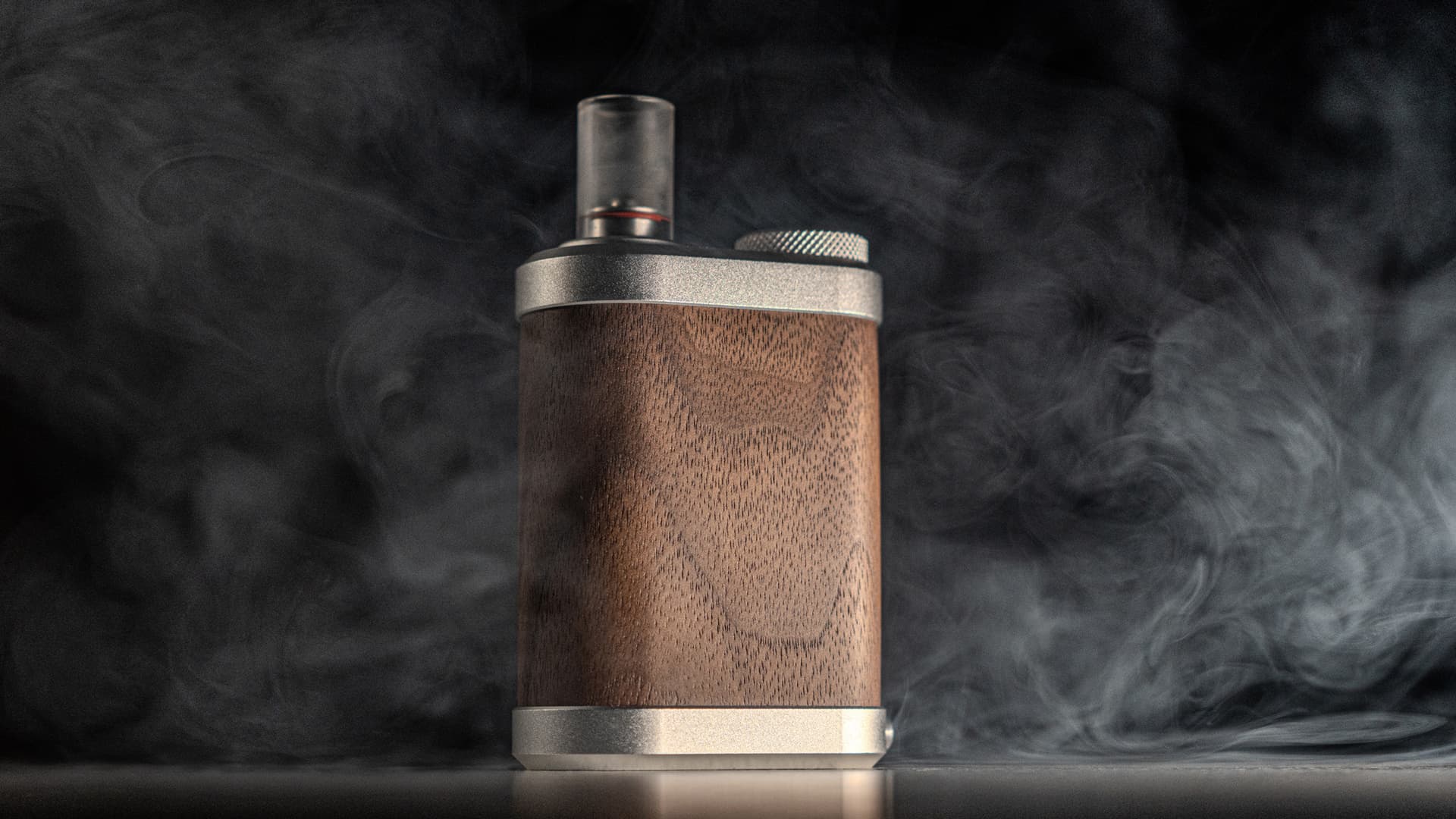
The Tinymight 2 heats while you hold the button, or on its own in session mode. Start gentle, build a little mid-draw, then taper off.
Butane vapes like the DynaVap M7
On a torch vape like the DynaVap M7, heat the side of the cap while you rotate the vape, and stop as soon as it clicks. Then take a slow, steady draw while you cover or feather the airport, and wait for the cooldown click before you reheat. DynaVap's how-to-use page walks through each step.
Desktop vaporizers use different techniques
Most desktop setups use one of two delivery methods, and each needs its own approach.
Balloon bags let you inhale at your own pace
A balloon bag fills with vapor from a fan-driven unit like the Volcano Hybrid. Once it's full, you detach the bag and inhale at whatever speed feels comfortable. The extraction already happened inside the machine. Your only job is getting the vapor from bag to lungs.
Take a few normal-paced breaths from the balloon rather than one massive inhale. It's smoother that way, and you can stop whenever you've had enough. Some vapor condenses inside the bag as it cools, so fill only what you plan to use soon.
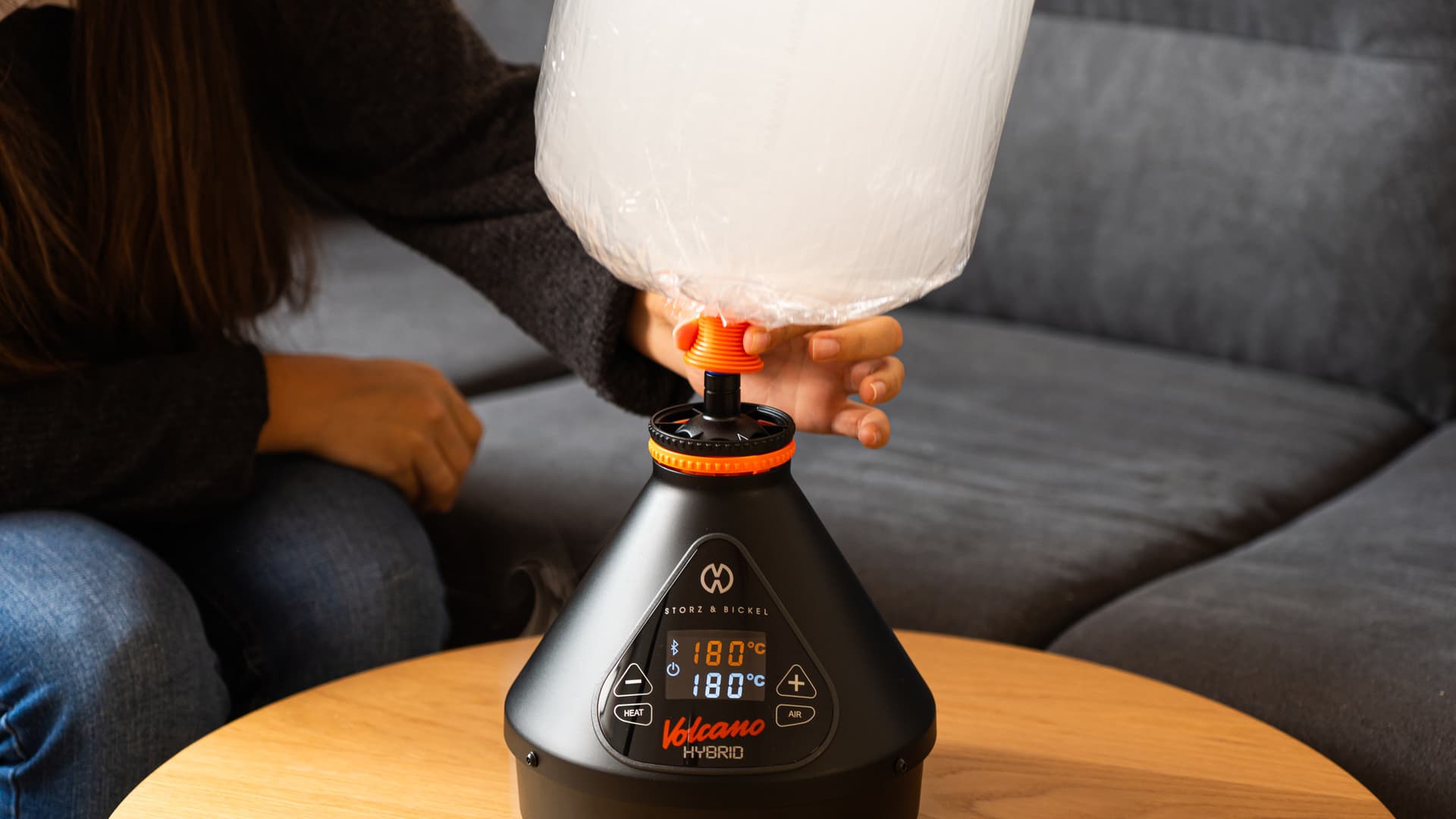
The Volcano's pump fills the balloon for you. Once it's detached, take normal breaths from it, not one massive inhale.
Whips and ball vapes reward the slow-sip approach
With a whip-style desktop, a tube runs from the heater to your mouthpiece. Many ball vaporizers sit on a bowl connected to a water pipe instead. Either way, your draw pulls air through the hot load. Your speed controls extraction in real time, much like a convection portable with a bigger heater behind it.
We like to open with a gentle sip of a few seconds, then settle into a long, slow draw. A big ball-vape heater can often take a stronger pull through water than a small portable can, and the water cools the hit on the way. On the Volcano Hybrid, switch the pump off when you use the tube. Our guide to using vaporizers with bongs covers the setup details.
You do not need to hold vapor in your lungs
Holding a hit feels like it should get you higher, but it makes little difference to how high you feel. In a small 1995 smoking study, seven regular cannabis users held each hit for zero, 10 or 20 seconds. With the stronger joints, longer holds raised blood THC, but the high people reported wasn't significantly stronger. Twenty seconds did no better than ten.
Earlier smoking studies from 1989 and 1991 found much the same. So skip the long hold.
Warning
Common draw mistakes and easy fixes
We see these a lot, especially from people switching from smoking.
Hitting it like a joint
A joint burns, so you can rip it hard and still get a massive hit. Do that on a small portable vape and you'll often get a thin, flavorless wisp that makes people think vaporizers don't work.
Slow down first. Then check that the vape has finished heating, the load suits the chamber and the screen is clear. A strong heater with open airflow can take a harder pull just fine.
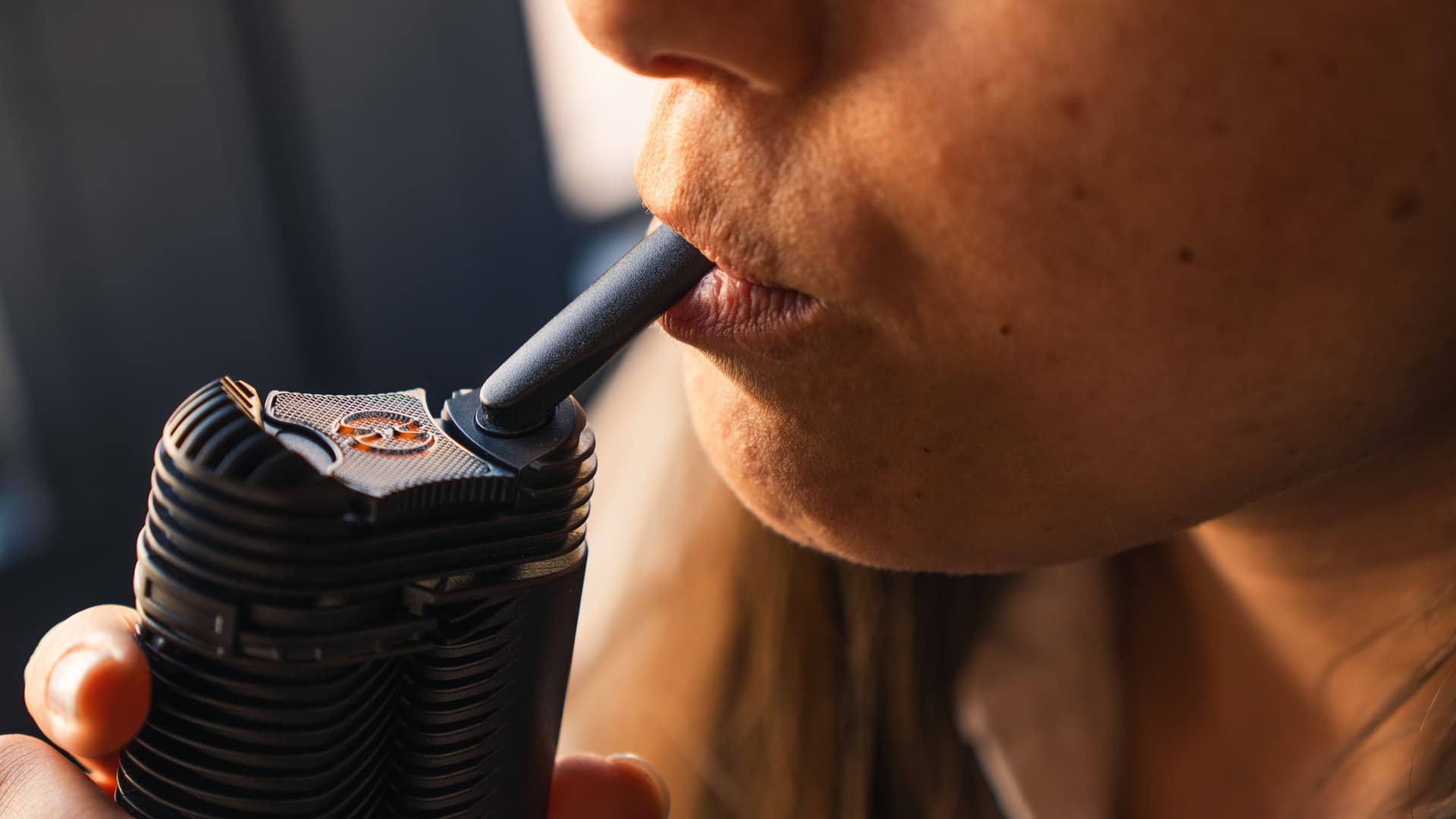
Taking a draw from a Crafty+. Start at a comfortable pace and adjust from there.
Walking away from a hot session
A session vaporizer keeps the oven hot for a set cycle, and how long depends on the model and your settings. While it's hot, the cannabis keeps heating whether you inhale or not. Take two draws and set it down, and some of what's left gets cooked off for nobody.
You don't need to hit a set number of draws, so stop when you've had enough. If you prefer the odd hit to a full session, look at an on-demand vaporizer that heats only when you ask it to, or pack a smaller load. Some ovens handle a half pack well with a finer grind. Our grinding guide explains the loading tradeoffs.
You can start to feel inhaled cannabis within seconds to minutes, but the full effects can take 10-30 minutes, so give it time before you load more.
Covering the air intake
Most portables have an air intake on the bottom or side. Cover it with your hand and you restrict airflow, so you end up pulling harder, which defeats the purpose. Find your vape's intake, keep your fingers clear of it, and make sure the screen isn't clogged.
Coughing on every hit
A cough usually means the hit is too hot or too big. Take a smaller, slower sip, step your temperature down about 5°C, and let a cooling unit, glass stem or water pipe take the edge off. If the harshness stays at low settings, clean the screen and mouthpiece.
Temperature and draw technique work together
Lower temperatures, 170-185°C, produce lighter, flavor-forward vapor. Slow mouth-to-lung draws pair nicely here if you want to taste the terpenes. You'll see less vapor, and that's normal.
Higher temperatures, 195-220°C, produce thicker clouds and a warmer hit, and many people switch to direct-lung draws here. If you see almost nothing on the exhale, try a slower pull or a slightly higher setting.
A practical approach: start your session at 180°C with slow mouth-to-lung draws for the first 3-4 hits, then bump to 200°C and switch to direct-lung. The early hits lean on flavor, and the later ones come out thicker and warmer. Our temperature guide helps you pick a starting point.
Tip
How draw technique changes with a cooling unit
A cooling unit sits between the oven and your mouth, giving vapor a longer path and more surface to cool against. Storz & Bickel portables use one, and the glass stem on the Arizer Solo 3 does the same job. Both let you draw a little faster in comfort, because the vapor arrives cooler.
With a glass stem, we like a moderate, steady draw. Watching the vapor move through the glass makes it easy to keep your pace even.
Without a cooling unit (short, direct mouthpieces), keep draws gentler and try stepping your temperature down about 5°C if the vapor feels hot.
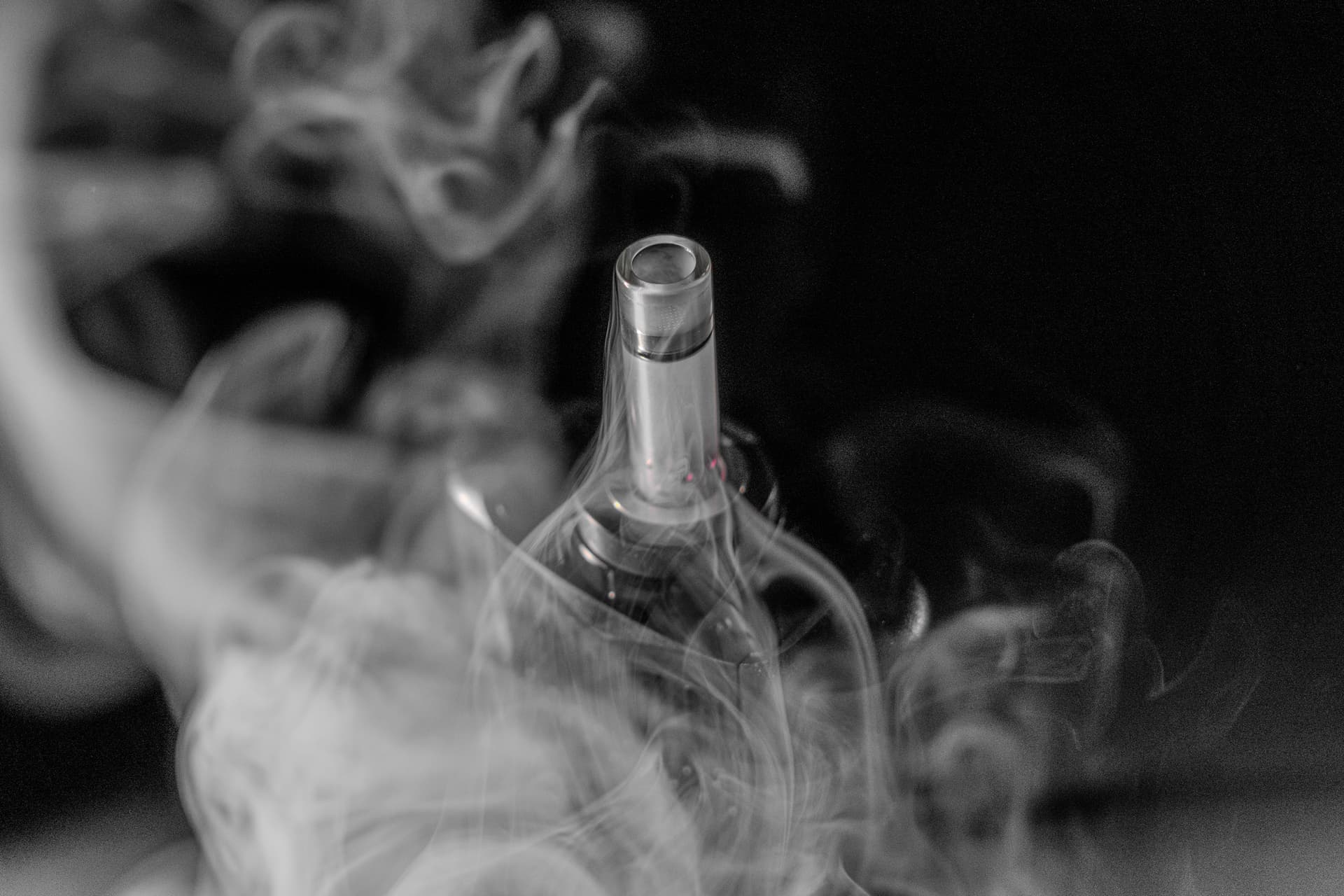
Glass gives vapor extra surface to cool against before it reaches you.
Drawing on a concentrate vape is different
Cup design, airflow and heat controls all change how a concentrate vape likes to be drawn. Our concentrate vape roundup compares the setups.
Key Takeaway
- Sip, don't rip. Start with a gentle, steady draw and stretch it toward 10-15 seconds if it feels good
- Match heating type. Ramp for convection, moderate for conduction, steady for hybrid
- Skip the long hold. Breathe in comfortably and exhale; holding longer won't get you noticeably higher
- Stop when you've had enough. A session has no draw quota, and full effects can take 10-30 minutes
- Step up if you like. 180°C MTL for flavor, then 200°C DTL for thicker vapor