

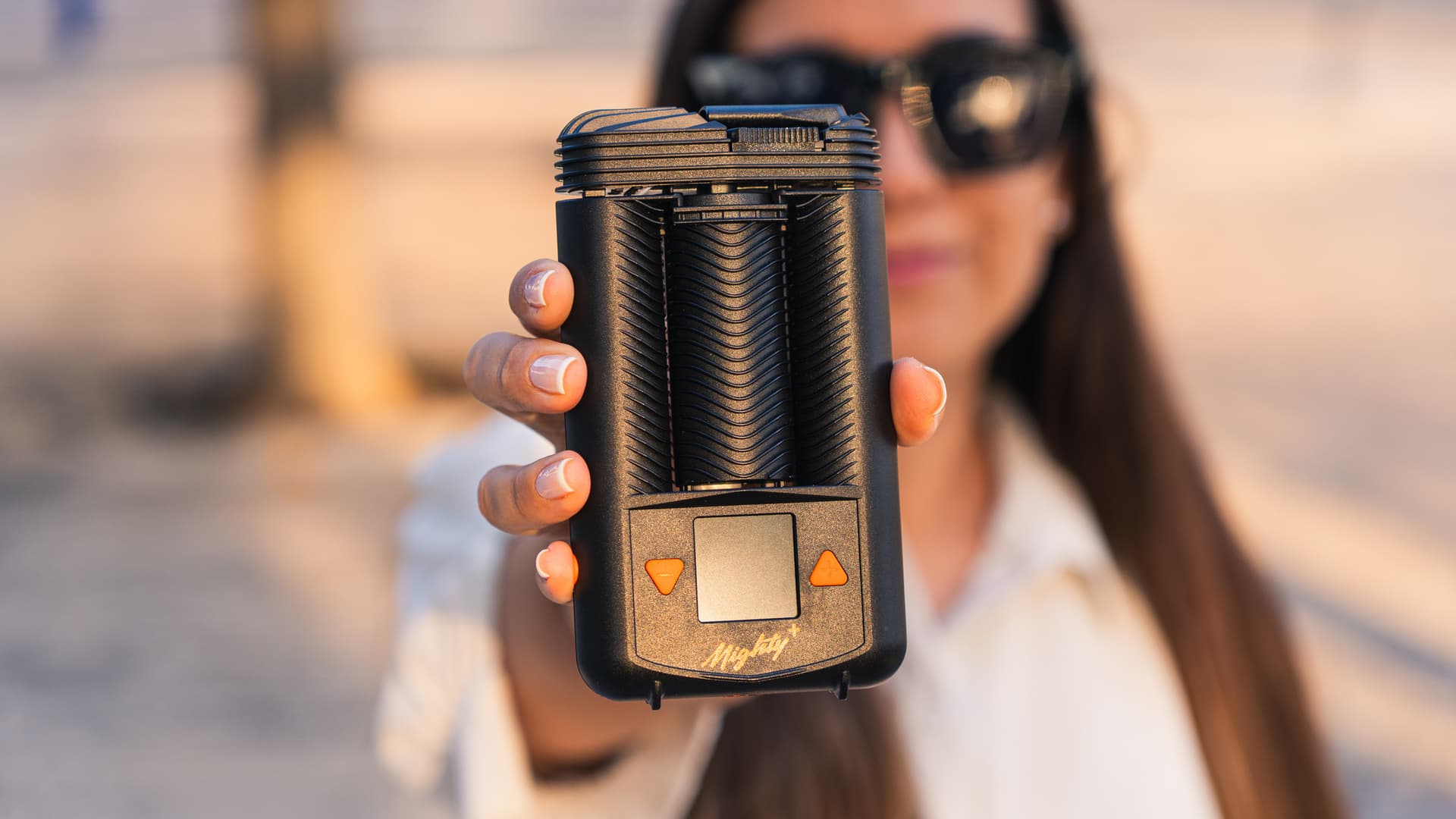
Choosing your first cannabis vaporizer comes down to four decisions: portable or desktop, heating method, budget, and whether you want session or on-demand hits. Get those right, and everything else falls into place.
One check comes first: this guide is for cannabis flower. If you mostly dab wax or rosin, our concentrate vape guide is the better start.
- Portable or desktop: where you vape.
- Heating: hybrid for beginners, convection for flavor.
- Session or on-demand: session if you're new.
- Budget: under $150 to start, $150 to $300 for the sweet spot, $300 and up for flagships.
We've reviewed 50 vaporizers, and the classic beginner mistake is buying on brand name or looks instead of how you actually plan to use the vape. A sleek pocket vape looks great on a shelf, but if you vape at home every evening, a desktop may serve you far better.
This guide walks through each decision with specific recommendations at every price point. If you're switching from smoking to vaporizing, start here before spending a dollar. And if you're completely new and want the full picture first, our New to Vaping hub organizes everything from basics to your first session.
Quick picks: which vaporizer fits you
| You want | Our pick | US list price | Our score |
|---|---|---|---|
| First vape on a budget | Fury 3 | $119 | 8.8/10 |
| Best flavor under $150 | Rogue 2 | $139 | 8.8/10 |
| Just trying vaping | XMAX V3 Nano | $50 | 7.9/10 |
| No battery to charge | DynaVap M7 | $89 | 8.4/10 |
| Single hits and microdosing | Tinymight 2 | $349 | 8.7/10 |
| Best portable overall | Venty | $449 | 9.2/10 |
| Nightly sessions at home | Volcano Hybrid | $699 | 9.1/10 |
Portable vapes go anywhere, desktops anchor your home setup
Most first-time buyers are best off starting with a portable. Portables fit in a pocket or bag and let you vape anywhere. Most run on a battery, while DynaVap models heat with a butane torch or an induction heater instead. They range from sub-$100 starters to flagships at $300 and up.
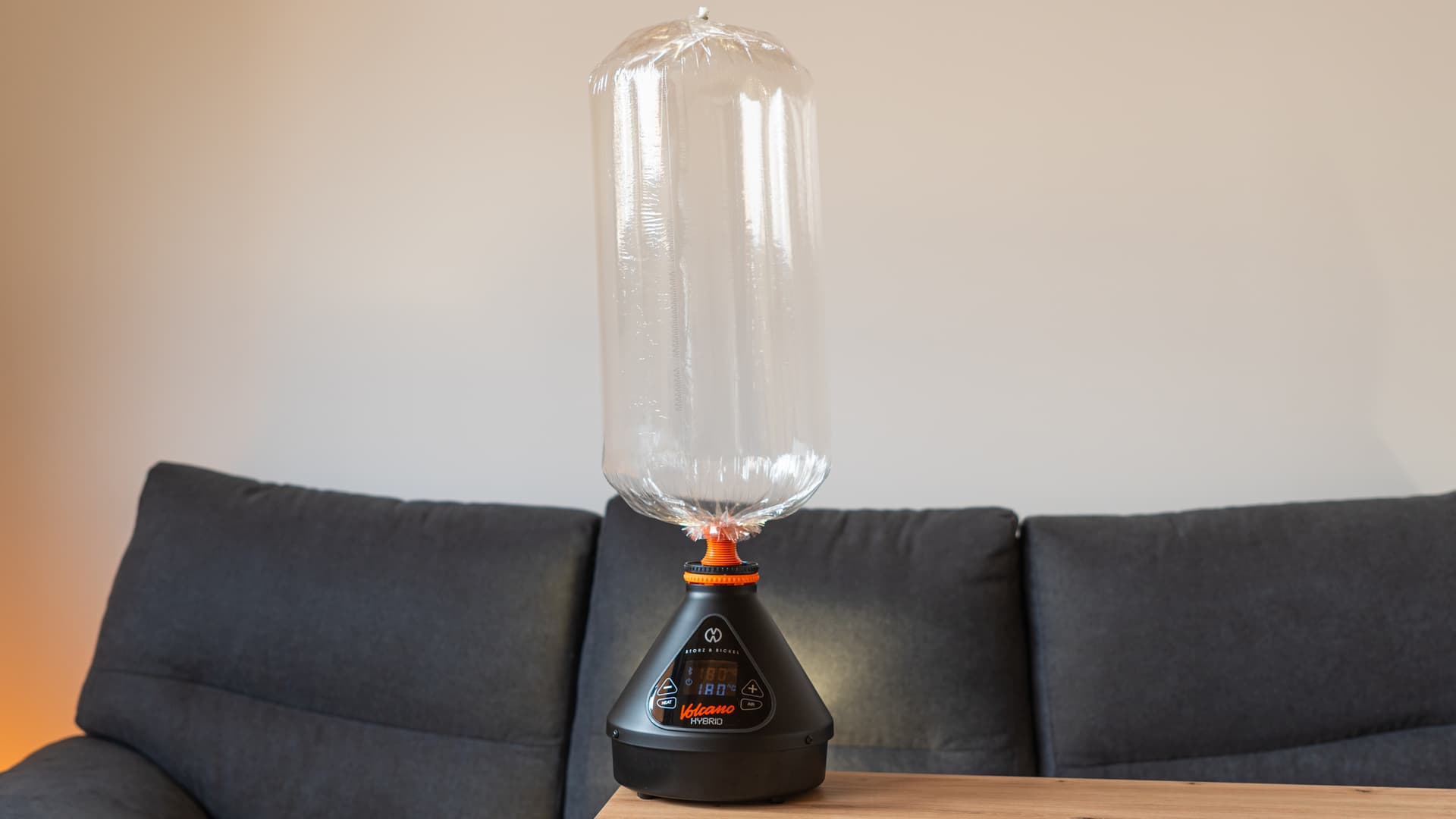
Desktops plug into the wall and stay on your table. They handle long sessions without any battery worries, and many offer bigger bowls or balloon delivery. The Volcano Hybrid fills vapor balloon bags or delivers through a tube, and it's still our benchmark desktop 7 years after release.
Pick portable if you vape on the go, outdoors, or in multiple rooms. Pick desktop if you vape mostly at home and want a dedicated station. If you're unsure, a portable is the safer first purchase. You can always add a desktop later. Check our best portable vaporizer rankings for current top picks across every budget. Our Venty vs Volcano Hybrid comparison puts the two approaches side by side.
Your heating method shapes flavor, efficiency, and ease of use
How a vaporizer heats cannabis is one of the biggest factors in how it tastes and feels, alongside the oven, temperature control and your draw. There are three methods, and each one behaves differently in use.
Conduction: heat straight from the oven walls
Conduction heats cannabis through contact with a hot surface, like a pan on a stove. Operation is usually dead simple: load, press, wait, draw.
The cannabis touching the oven walls heats first, so how you pack the oven matters. On many conduction vapes, a quick stir mid-session evens out the bowl. Others are designed to run without one, so follow the model's loading guidance.
Convection: clean flavor, more technique required
Convection passes hot air through your cannabis, although the oven walls still warm up around the load. Done well, it gives clean, flavorful vapor, and it rewards good technique.
Convection vapes range from quick on-demand models to slower session designs. Airflow, grind and packing all shape the draw, so learning how to grind correctly makes a real difference in vapor quality.
Hybrid heating: our usual pick for beginners
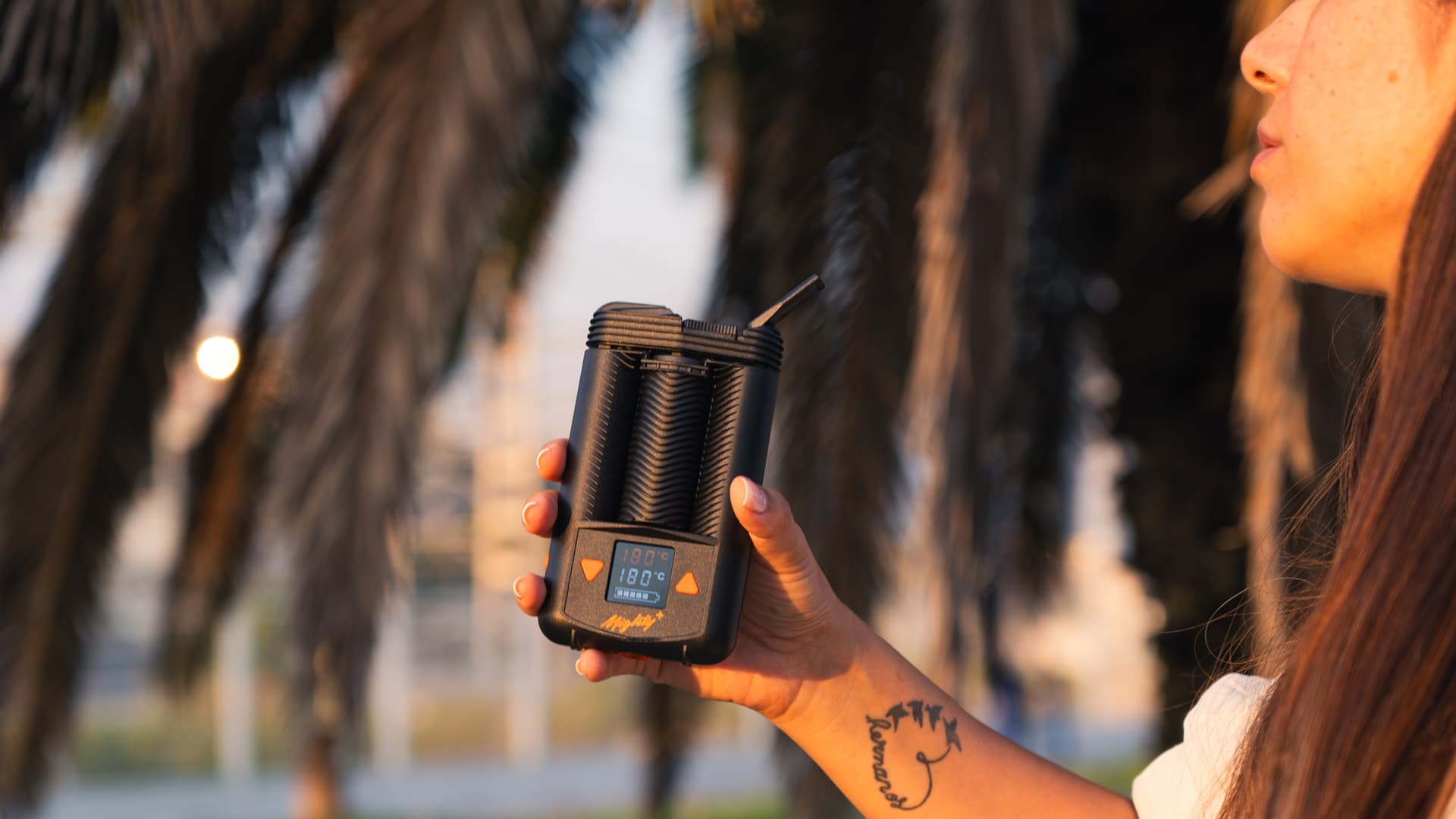
Hybrid heating combines conduction and convection. The oven walls provide base heat while hot air flows through the load. Many of our favorite portables use hybrid systems, including the Mighty+ and Venty from Storz & Bickel.
For first-time buyers, hybrid is where we'd start. Models like these pair simple controls with a relaxed session routine. Heat-up still varies by model: Storz & Bickel quotes about 20 seconds for the Venty and 60-70 seconds for the Mighty+.
| Method | How it heats | What to watch |
|---|---|---|
| Conduction | Contact with the hot oven walls | Packing, and whether a mid-session stir helps |
| Convection | Hot air moving through the load | Grind, airflow and a steady draw |
| Hybrid | Hot walls plus heated airflow | The model's own heat-up time and controls |
For first-time buyers, hybrid is the easiest place to start, but the specific model matters more than the heating label.
The proof is in the bowl. After a session, patchy browning in your already-vaped cannabis shows where the heat didn't reach evenly, so you know to adjust your grind, packing or stirring.
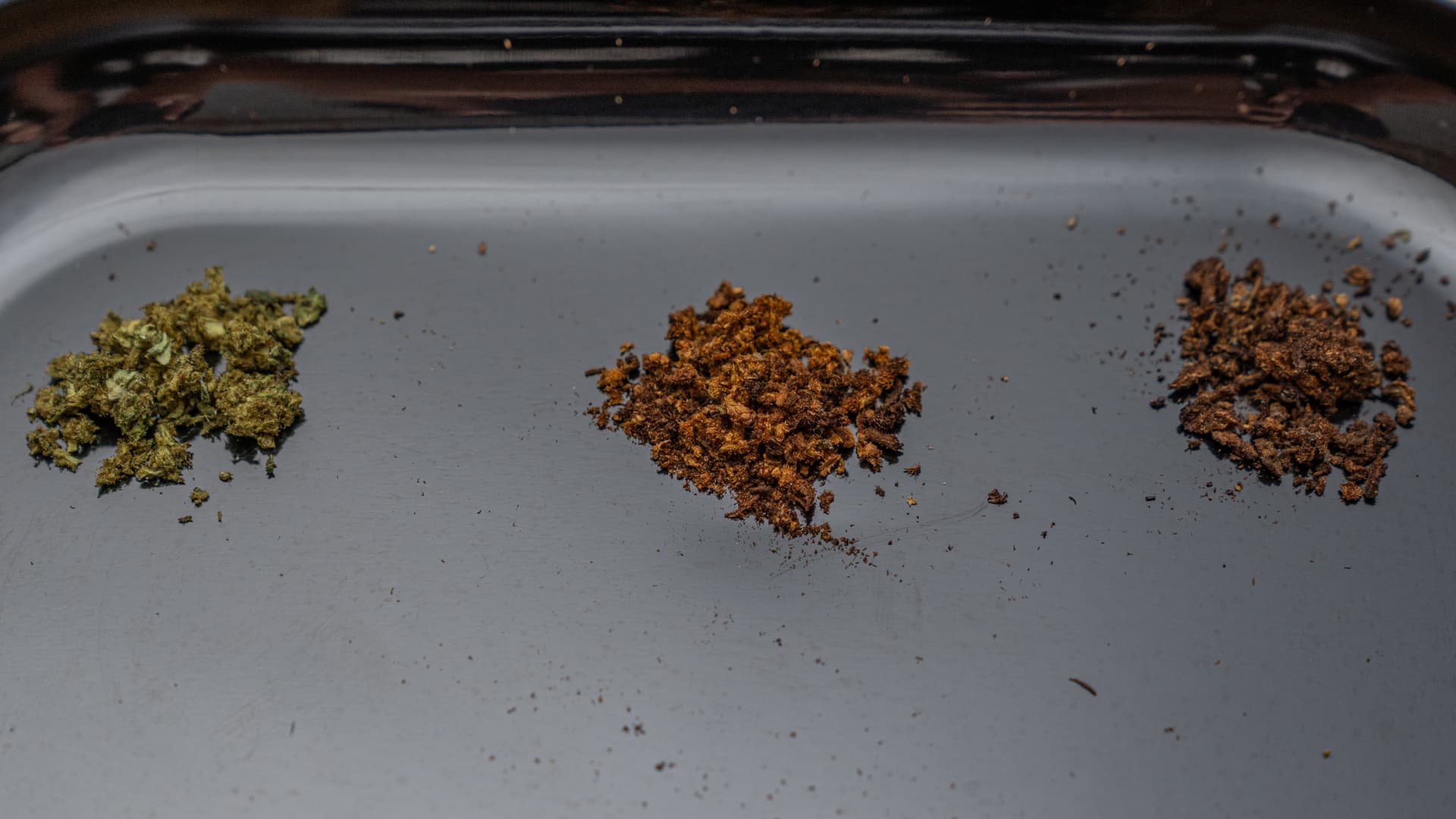
Light, medium, dark: uneven color in your spent cannabis is a cue to check your grind and packing.
Session vapes suit beginners, on-demand vapes reward technique
A session vaporizer heats your cannabis continuously for a set period. You load the oven, turn it on, and draw at your pace until the session ends or the material is spent. The Fury 3 is a textbook session vape: press the button, wait about 20 seconds, and draw through an adjustable 3-7 minute session.
An on-demand vaporizer heats only when you ask it to, usually while you hold a button, and stops when you let go. The bowl stays warm for a bit, but you can take a single hit, put it down, and come back 20 minutes later for another. The Tinymight 2 heats in about 5 seconds and works in both on-demand and session modes. The Arizer Solo 3 also switches between the two modes. If you're choosing between on-demand and a flagship session vape, read Tinymight 2 vs Venty.
Session vapes are more forgiving for beginners. You don't need perfect timing or draw technique. On-demand vapes suit a quick hit here and there from a small load, but they punish poor technique with thin, wispy hits. If you want to microdose, on-demand is worth the learning curve.
Tip
How much to spend on a vaporizer, tier by tier
Budget tier: under $150
Budget vapes have improved dramatically. The Fury 3 ($119 US list price) gives you haptic feedback, USB-C charging and about 6 sessions per charge.
The Rogue 2 from Healthy Rips pairs hot air with a touch of radiant heat and runs its vapor through titanium, stainless steel and glass. At $139, its flavor punches well above its price. Torn between the two? They tie at 8.8, and our Fury 3 vs Rogue 2 comparison shows which one fits how you vape.
At this tier, every model compromises somewhere, whether that's controls, oven size, materials, runtime or cleaning. Pick the one whose trade-offs you mind least. A good budget vape still beats smoking on flavor.
The DynaVap M7 offers a different path into this bracket. It has no battery at all and heats with a butane torch or a compatible induction heater. DynaVap puts torch heating at about 5-7 seconds, and a click tells you when it's ready. Budget for the heat source, but you'll never worry about charging the vape itself. See our best butane vaporizers.
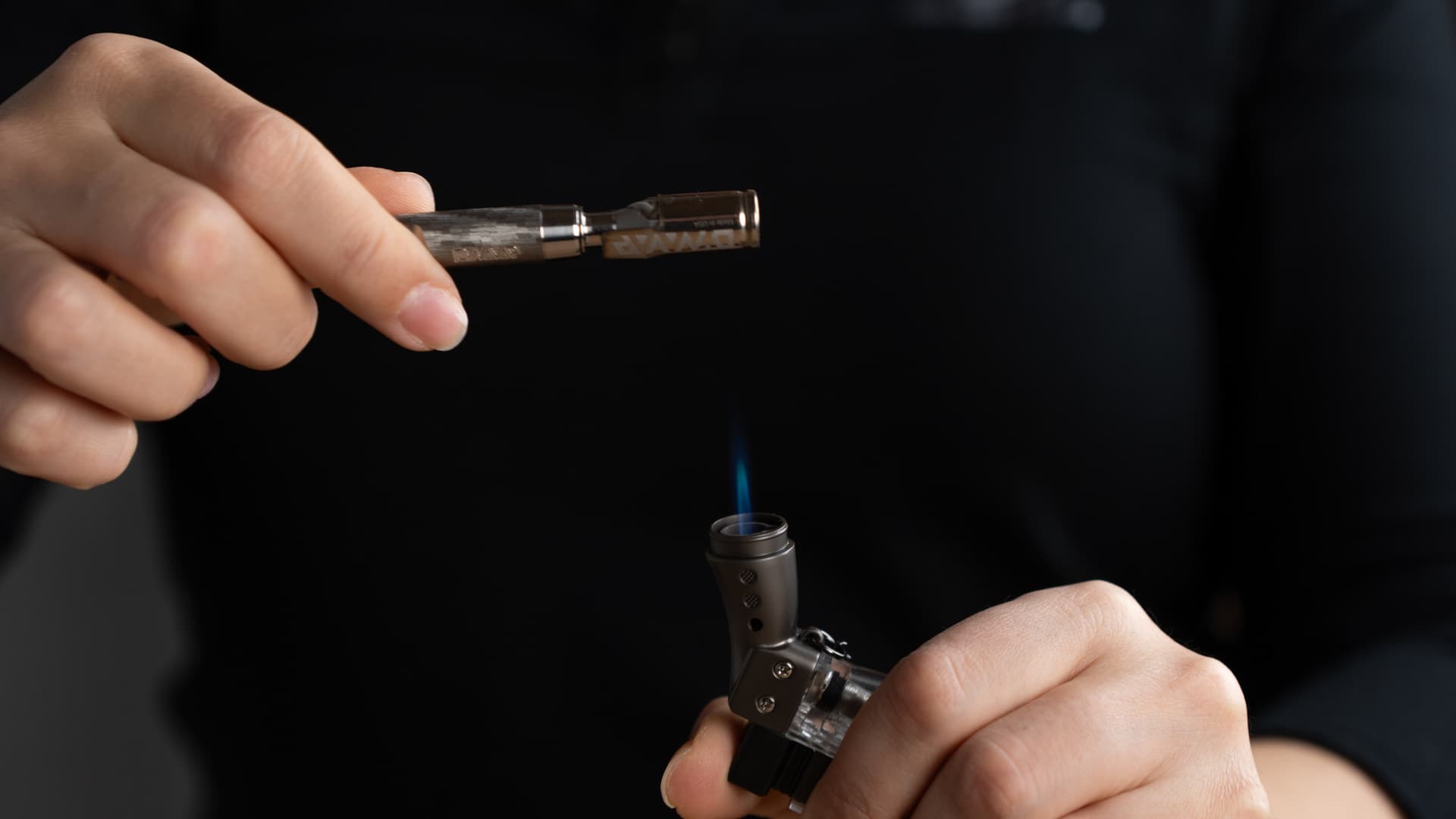
No battery inside. The DynaVap M7 heats with a butane torch in about 5-7 seconds, or with a compatible induction heater.
The XMAX V3 Nano costs less than most dinners for two and still delivers hybrid heating through a glass mouthpiece.
Check our best budget vaporizer picks if you want to start small and upgrade later.
Mid-range: $150 to $300
This is the sweet spot for most first-time buyers, and many of our favorite beginner picks live here. The POTV Lobo combines hybrid heating with a replaceable 18650 cell and a two-year warranty. Weighing it against the Fury 3? Our Fury 3 vs POTV Lobo comparison lays out the trade.
The Arizer Solo 3 ($299) runs session or on-demand hits through a glass vapor path.
The Fenix 2 MAX packs a 4800 mAh battery that Weecke rates at 70 minutes of use per charge.
Flagship tier: $300 and up
Flagship portables like the Venty ($449) pack serious performance into a portable body: about 20 seconds to heat up and adjustable airflow up to 20 L/min. The Mighty+ ($399) remains one of our go-to recommendations. Can't pick between them? See Mighty+ vs Venty.
Desktops at this tier include the Volcano Hybrid (balloon and tube delivery, web-app control) and ball vapes like the FlowerPot B1, with its separate heated head and bowl. Our best desktop vaporizers ranking covers the full field.
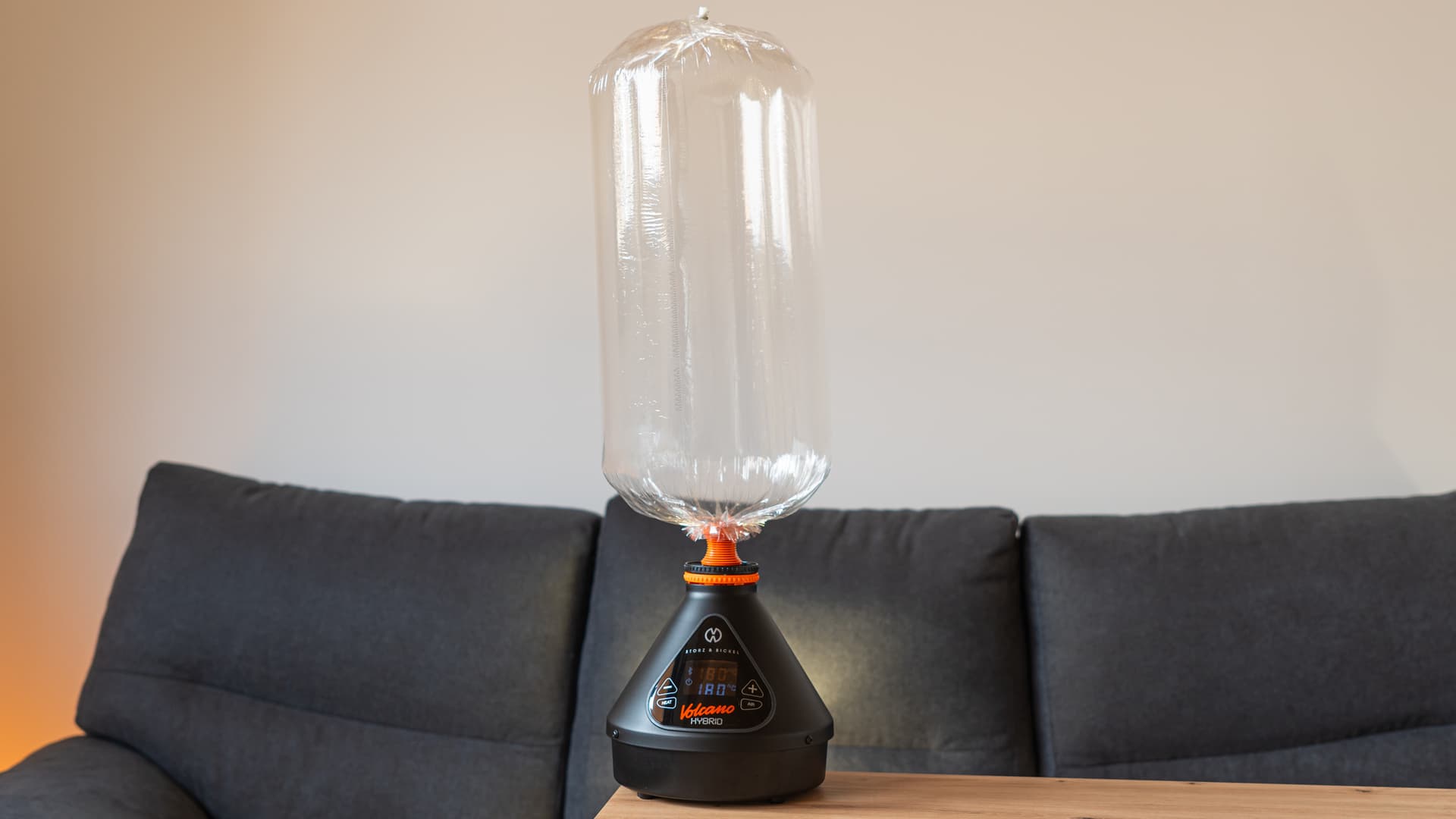
The Volcano Hybrid is our benchmark desktop, with balloon or tube delivery for a fixed home setup.
Replaceable batteries make an aging cell an easy fix
Every rechargeable battery wears down with use and age, and sooner or later the runtime starts to feel short. With a built-in battery, the fix usually means sending the vape in for service.
A replaceable 18650 or 21700 battery makes this easy. When runtime drops, you swap in a fresh cell that matches the size and current rating your vape calls for. The Tinymight 2 takes an 18650 through a cap at the top, and swapping it is quick. The XLUX Roffu also uses an 18650, and the Frolic takes a larger 21700.
The Arizer Solo 3 is different: its battery is built in, and Arizer handles replacements as a service.
For daily users, a replaceable battery is a real long-term advantage. Occasional weekend users put far fewer cycles on a built-in pack, so it matters less. Our vaporizer battery guide breaks down the full tradeoffs.
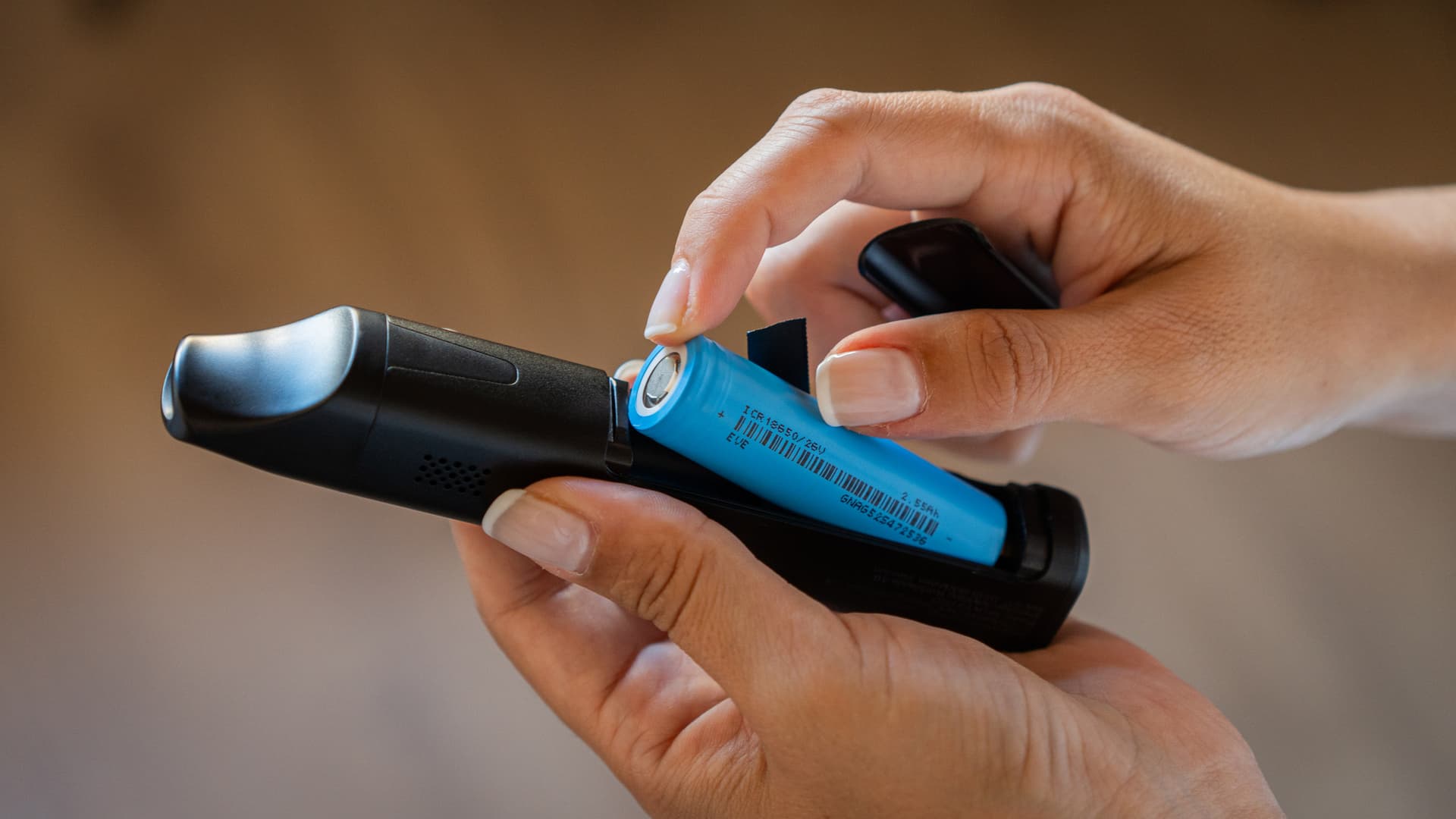
A replaceable cell turns an aging battery into a quick swap. Use the exact cell your vape calls for.
What to look for in a beginner vaporizer: six features
1. Precise temperature control
Single-degree temperature control lets you dial in your preferred balance of flavor and vapor density, then repeat it. Lower temperatures, around 170-185°C, give lighter, more flavorful hits. Higher temperatures, 200-220°C, give denser, heavier vapor.
Vapes with only a few preset temperatures give you less room to fine-tune, though they work fine when a preset suits your taste. Full-range control in 1°C steps is worth it if you like to experiment. Our temperature guide covers where to start and how to adjust.
App control is convenient for temperature profiles but not necessary. Plenty of our favorites (Tinymight 2, Arizer Solo 3, Fenix 2 MAX) work perfectly without one.
2. USB-C charging
USB-C uses the same cable as your phone, which makes it the easiest standard to live with. Charge speed depends on the vape and charger more than the plug, so check the actual charge time and whether you can vape while it charges. The PAX Mini 2 uses magnetic contacts on the vape with a USB-C plug on the cable. Micro-USB still works, but it means carrying one more cable.
3. Glass or ceramic vapor path
The material between the oven and your mouth affects flavor. In our experience, glass and ceramic paths taste the cleanest. Some vaporizers use glass stems packed with ruby or glass cooling balls that cool the vapor further. Look at the whole path, not just the stem, and check how easily it comes apart for cleaning. If flavor matters to you, prioritize glass or ceramic.
4. Dosing capsule compatibility
Dosing capsules are small containers you pre-load with cannabis and drop into the oven. They keep most of the mess out of the oven, make loading faster, and let you pre-pack several sessions. You'll still clean the mouthpiece and cooling path. Storz & Bickel's capsules fit the Mighty+, Venty and Crafty+. The Fury 3 and POTV Lobo have their own compatible capsules.
5. Low draw resistance
Draw resistance is how hard you have to inhale. High resistance feels like sucking through a coffee stir straw. Low resistance feels natural, like breathing. In our experience, an open draw feels more intuitive when you're starting out. Check reviews for draw resistance before buying, and remember that packing changes it too. Vapes with adjustable airflow let you set it to your preference.
6. Oven size and heat-up time
The oven size tells you how much cannabis a load holds, and the heat-up time tells you how long you wait before the first draw.
| Vape | Oven | Heat-up |
|---|---|---|
| XMAX V3 Nano | 0.08 g | 30 s |
| Tinymight 2 | 0.15 g | 5 s |
| Fury 3 | 0.2 g | 20 s |
| Venty | 0.3 g | 20 s |
| Mighty+ | 0.3 g | 60 s |
| Arizer Solo 3 | 0.5 g | 15 s |
| Volcano Hybrid | 0.75 g | 40 s |
Small ovens suit solo sessions and microdosing, big ones suit sharing.
Five mistakes that cost first-time buyers money
Buying on price alone. The cheapest vape on the page is no bargain if it doesn't fit how you vape. Compare what's in the box, what you'll need to add (a heater, charger or grinder), and whether the controls suit your routine.
Ignoring cleaning requirements. Every vaporizer needs regular cleaning. Some need their mouthpiece and cooling parts taken apart and soaked every few sessions, others just need a quick brush. Never soak the electronics. Check how many parts need cleaning and how often before you buy, and see our cleaning guide for the routine. If you hate maintenance, look for vaporizers with dosing capsule support, as they cut down on oven residue.
Choosing form over function. Sleek, slim vapes look great, but some trade airflow and vapor for looks. The PAX Mini 2 is beautiful and ultra-compact, with four heat modes and full and half oven lids. Its tight draw and conduction heating suit slow sippers, while cloud chasers will do better with a bulkier hybrid portable at a similar price.
Skipping the grinder. A vaporizer is only as good as the grind you feed it. For most vapes, a consistent medium-fine grind gives the heat more surface to work with and evens out your hits. Hand-breaking works in a pinch but is hard to get even. Budget $15-20 for a decent grinder, plus any other accessories you actually need.
Ignoring the warranty. Warranty terms vary widely. Storz & Bickel gives two years on the Venty and Mighty+, plus an extra year if you register within four weeks. The POTV Lobo also gets two years, the Tinymight 2 three, and the Fury 3 one. DynaVap backs the M7 with a limited lifetime warranty.
Already bought and hits feel thin? Our troubleshooting guide fixes the usual causes.
Tip
Key Takeaway
- Portable or desktop first: portables for flexibility, desktops for a dedicated home setup
- Hybrid heating is our usual beginner pick: simple controls, but check each model's heat-up time
- Price the whole kit: include any heater, grinder and spare parts
- Replaceable batteries are easy to refresh: swap a matched cell instead of sending the vape in
- Grind quality matters: budget $15-20 for a grinder alongside your vape
Once you have your vaporizer, our beginner's guide walks through loading, temperature selection, draw technique, and maintenance step by step.
Once it arrives: how to actually use your new vaporizer
Loading, grinding, temperature selection, draw technique, and the first-week mistakes to avoid. The step-by-step companion to this buyer's guide.
This guide covers cannabis flower. Some flower vapes handle concentrates with a dedicated insert or kit and others don't, so match the hardware to your material.
Buying for concentrates instead? Read this guide.
Wax, rosin, and live resin need different hardware: e-rigs, dab pens, heated-tip vapes and the right desktop setups. The buyer's guide for concentrate-first users.