

The battery inside your vaporizer determines how many sessions you get, how fast you start vaping, and how many years the vape stays useful. We've reviewed portables ranging from 4 sessions per charge to 20, all running on lithium-ion cells between about 1500 mAh and 5000 mAh.
Understanding what those numbers mean (and what they don't) helps you pick the right vape for your lifestyle. A battery of the same size can deliver very different session counts from one vaporizer to the next. The difference comes down to heater design, heating method, power management and how long each session runs.
Nearly every portable vape runs on lithium-ion
Lithium-ion (Li-ion) batteries power virtually every electronic portable vaporizer sold today. Torch-heated vapes skip the battery entirely. They come in two main setups: removable cylindrical cells (like the 18650 and 21700) and built-in packs sealed inside the vape.
Both use the same underlying chemistry. Lithium ions shuttle between the anode (usually graphite) and the cathode during charge and discharge. Plenty of built-in packs are made from the very same cylindrical cells. The key difference for you is whether you can pop the cell out and replace it yourself.
18650 cells: the most common replaceable format
The 18650 (about 18 mm across and 65 mm long) is the workhorse of portable vaporizers. Typical capacity runs from 2500 mAh to 3500 mAh per cell, and high-drain cells like the Molicel P30B (3000 mAh) are a popular choice.
The Tinymight 2 and the XLUX Roffu each run on a single 18650. Tinymight calls for a high-drain cell rated for 20 A continuous, so match the spec your vape asks for. Carry a charged spare in a battery case and a dead battery no longer ends your day in the field.
21700 cells: more capacity in a slightly larger package
The 21700 format (about 21 mm x 70 mm) typically holds 4000-5000 mAh per cell. It's becoming more common in high-powered portables like the Frolic, which pairs its 120W convection heater with a removable 5000 mAh Molicel P50B.
The trade-off is size: a 21700 is a slightly bigger, heavier cell than an 18650. For high-draw vaporizers, that extra capacity is worth carrying.
Built-in battery packs
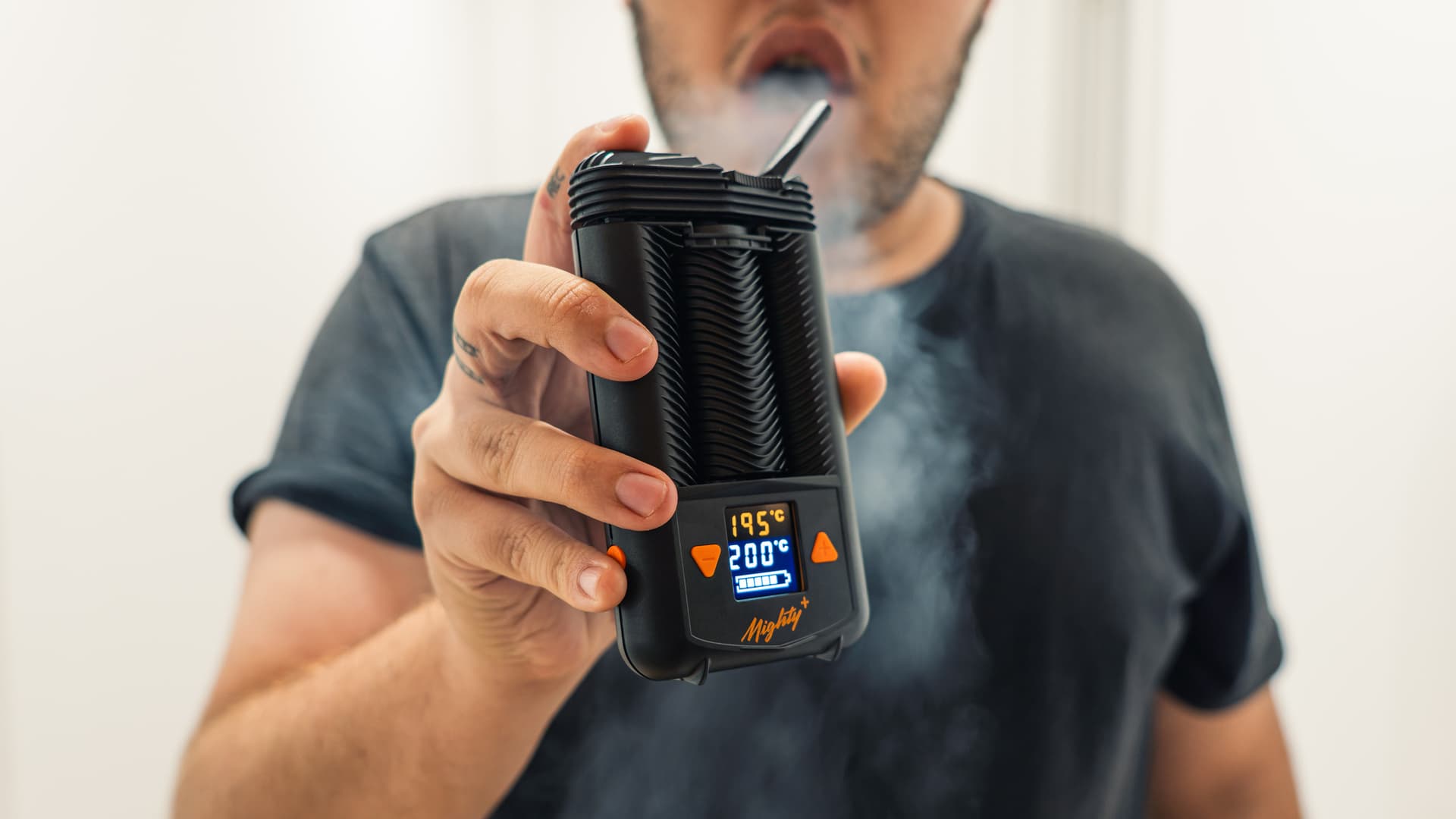
Many manufacturers build the battery permanently into the vape. The Mighty+ and Venty both take this approach, each running on two built-in lithium-ion cells (18650s in the Venty). Storz & Bickel rates the Mighty+ at 3300 mAh.
The downside: when a built-in battery wears out, you need a manufacturer repair or a new vape. How soon that happens comes down to how much you vape and how you charge, which is why the habits below matter.
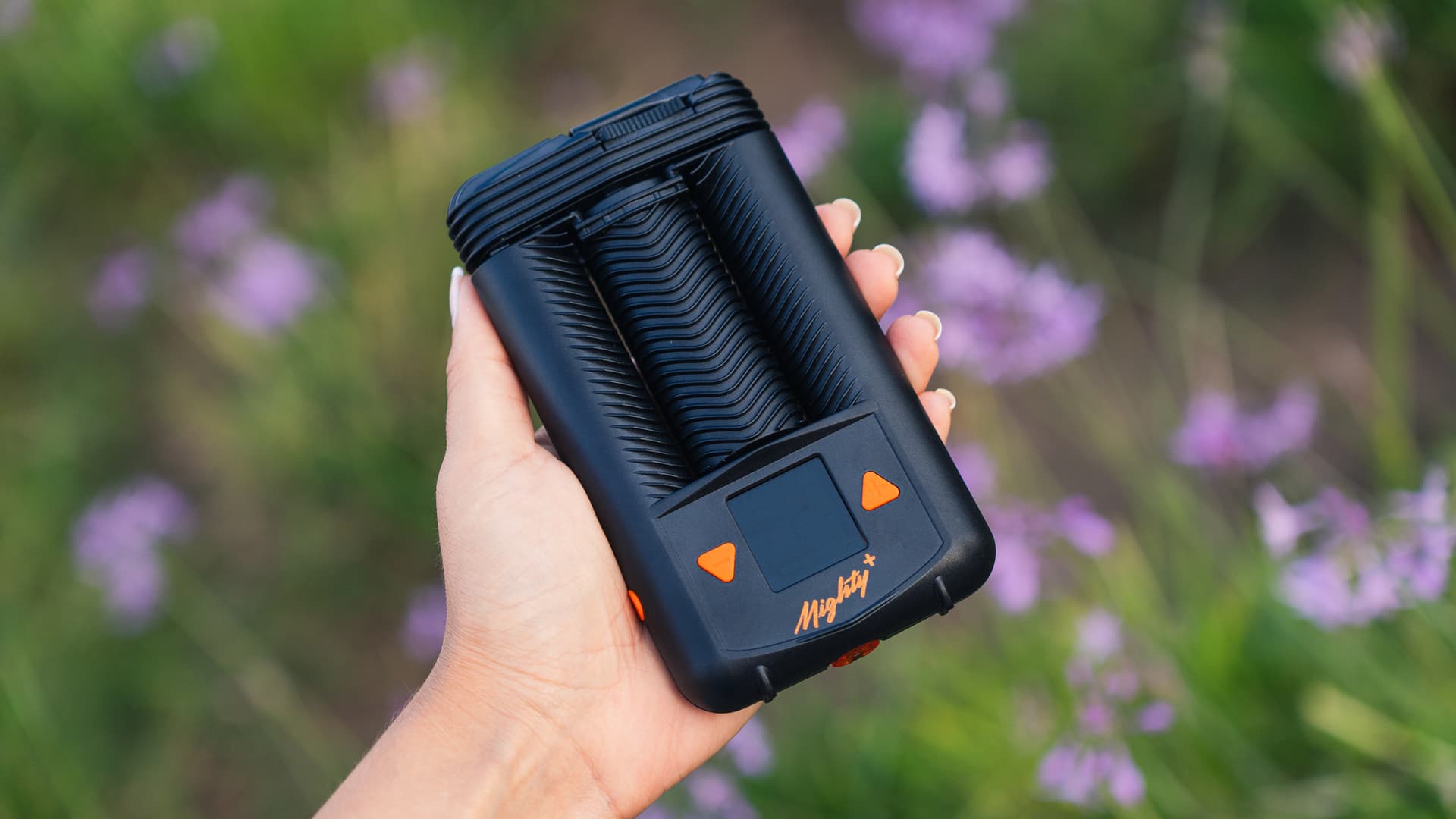
The Mighty+ runs on two built-in lithium-ion cells. When they wear out, it's a service job rather than a quick swap.
mAh tells you capacity, not how many sessions you'll get
Milliamp-hours (mAh) measure how much charge a battery stores, not how long your vaporizer will last. A vape with a 4800 mAh battery doesn't automatically outlast one with 3000 mAh, because sessions per charge depend on how much power the heater draws and for how long.
Adding up mAh can mislead you too. Stored energy is really watt-hours (volts × amp-hours). Wire two 3000 mAh cells in series and you double the voltage, not the mAh, for about 21.6 Wh in total.
The Arizer Air Max runs on a single 5000 mAh cell, and it gave us 13 sessions per charge. The Venty runs on two 18650 cells, and its hybrid heater (130W max) gets 11. The gap comes down to heater design and session length as much as capacity.
At VapeExperts, we rate battery life in sessions per charge, not mAh. That gives you a number you can actually plan your day around.
A 5000 mAh cell delivers 13 sessions in one vaporizer. A two-cell pack manages 11 in another. Heater design matters as much as capacity.
What counts as one session?
We define a session as one full oven, heated from cold and vaped until the load is spent. For a session vaporizer, that's roughly 5-7 minutes of continuous heating. For an on-demand vaporizer like the Tinymight 2, we count the series of hits it takes to finish one oven load.
Heater power and heating time work together
Peak wattage is only half the story. A powerful heater that reaches temperature fast and then eases off can use less energy than a weaker one running flat out for the whole session. How long the heater runs, how well the oven holds heat and how hard you draw all add up.
Check our vaporizer temperature guide for how temp settings affect both vapor character and battery drain.
Heating Methods: Conduction vs Convection vs Hybrid
How conduction, convection and hybrid heaters work, and what each one means for vapor, runtime and heat-up time.
Replaceable batteries keep you off the charger
The strongest argument for a replaceable battery is simple math. A spare 18650 costs a few dollars and swaps in seconds. Replacing a built-in battery means a repair fee plus shipping, or a new vape.
For travel, outdoor use, or heavy daily sessions, replaceable cells take the anxiety out of running dry. XMax rates the XMax V4 Pro at about 12 six-minute sessions per charge at 220°C, and a charged spare 18650 roughly doubles that before you need a wall outlet.
Replaceable cells also stretch the vape's total lifespan. When your 18650 holds noticeably less charge, a new cell costs about as much as a coffee. The rest of the vaporizer keeps going as long as the heater and electronics hold up.
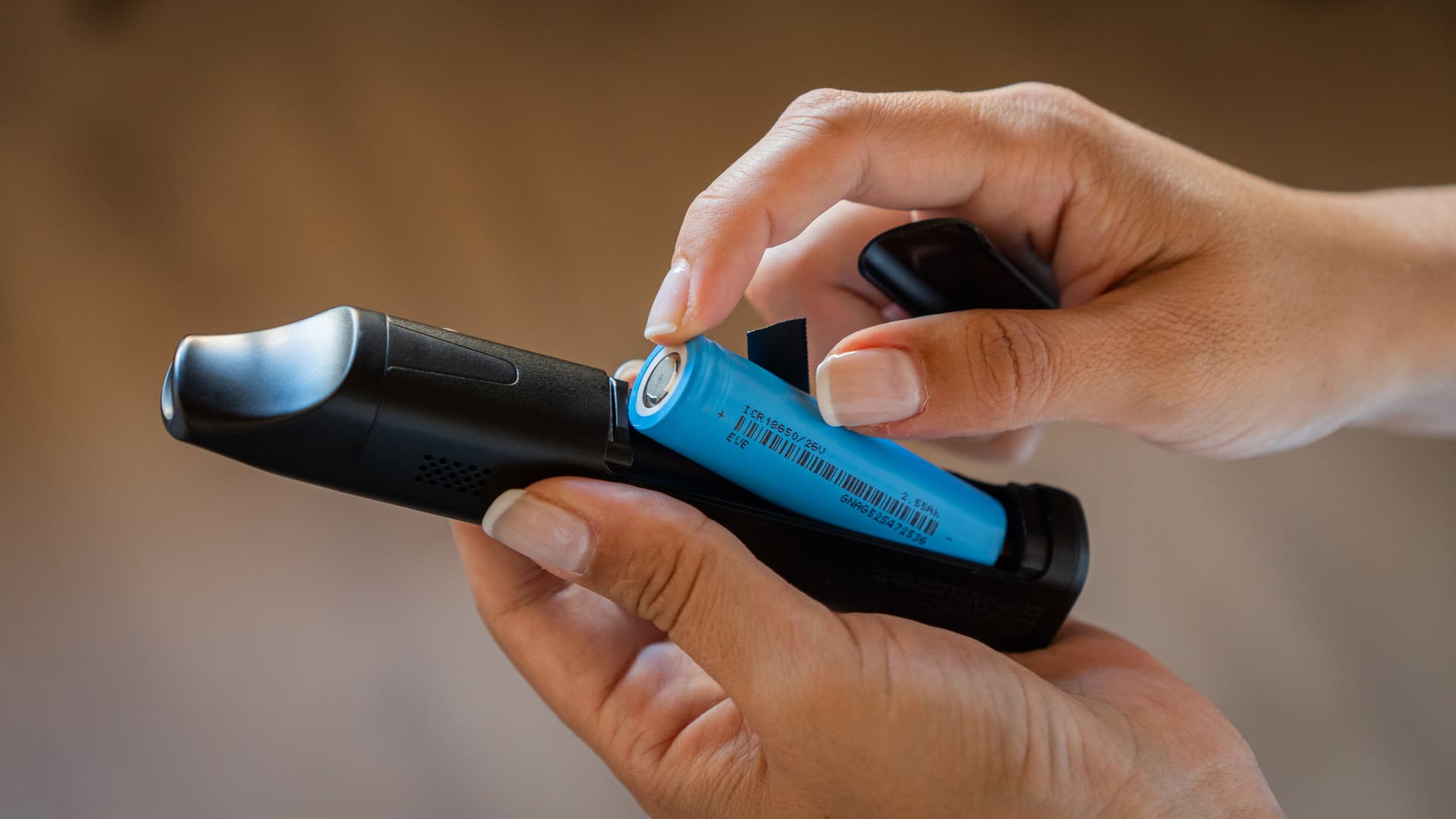
Swapping a cell takes seconds and no tools. Switch the vape off first and follow the polarity marks.
Safety basics for loose cells
Buy genuine cells from reputable vendors, and match the spec your vape calls for: size, continuous discharge rating and terminal type. Counterfeit 18650s with inflated capacity ratings are common, so be suspicious of any 18650 with a sky-high mAh claim. Never use a cell with a torn wrap or one pulled from an old battery pack. Our accessories guide covers the cases and chargers worth owning.
Warning
Built-in batteries trade swappability for simplicity
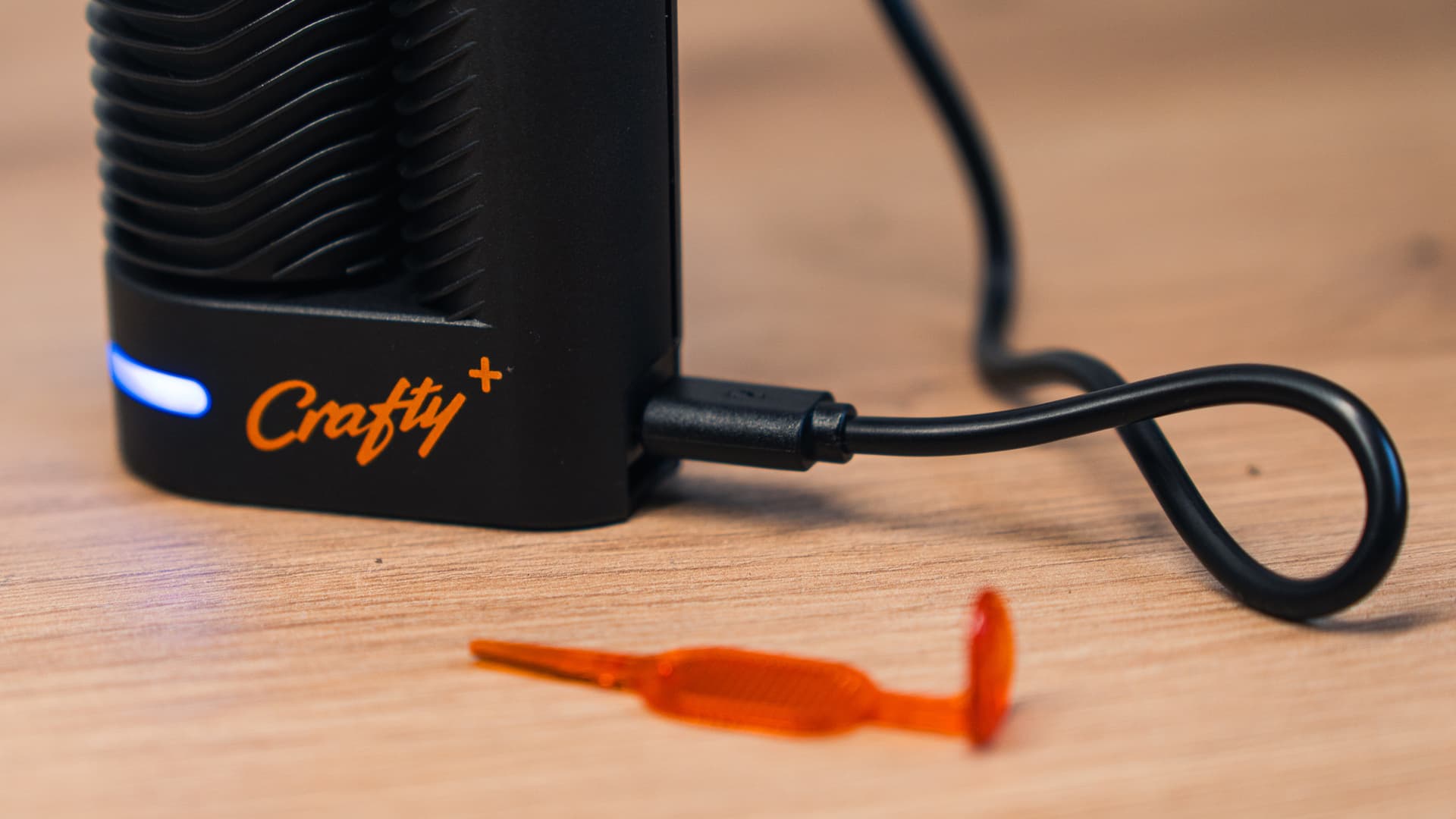
Sealed batteries aren't a flaw. You never have to think about spare cells, cases or external chargers. The Crafty+ fits Storz & Bickel's hybrid heater and its battery into a pocketable 135 g body.
The cost is a battery you can't swap. The Crafty+ manages 4-5 sessions per charge, and once its lithium-ion battery wears down, you're looking at a paid repair or a new vape. Normal battery wear usually isn't a warranty defect, so ask about service before you buy.
If you choose a built-in-battery vape, the best protection is good charging habits (covered below).
Tip
Higher temperatures drain batteries faster
Every step up in your vaporizer's temperature setting asks more energy from the battery. Running an oven at 210°C uses more power per session than running at 180°C.
If you need to stretch battery life on a long day, dropping your temp by 10-15°C often buys you an extra session or two. Switch off between sessions, too, rather than letting the vape sit hot.
Adjustable airflow also plays a role. The Venty's flowmeter adjusts heating to how you draw, with airflow adjustable up to 20 L/min. Open it wide and pull hard, and you get thicker vapor, but the heater works harder and the battery drains faster than on a tighter setting.
Tip
USB-C fast charging cuts your downtime
USB-C is now the standard charging port for portable vaporizers. Charging speed comes from the vape, the charger and the cable working together, and fast charging usually runs over USB Power Delivery. Get that combo right and the Venty hits 80% in about 40 minutes on S&B's Supercharger. The Solo 2 Max takes about 3 hours for a full charge.
A few older models still use Micro-USB. If you're buying new, USB-C is non-negotiable.
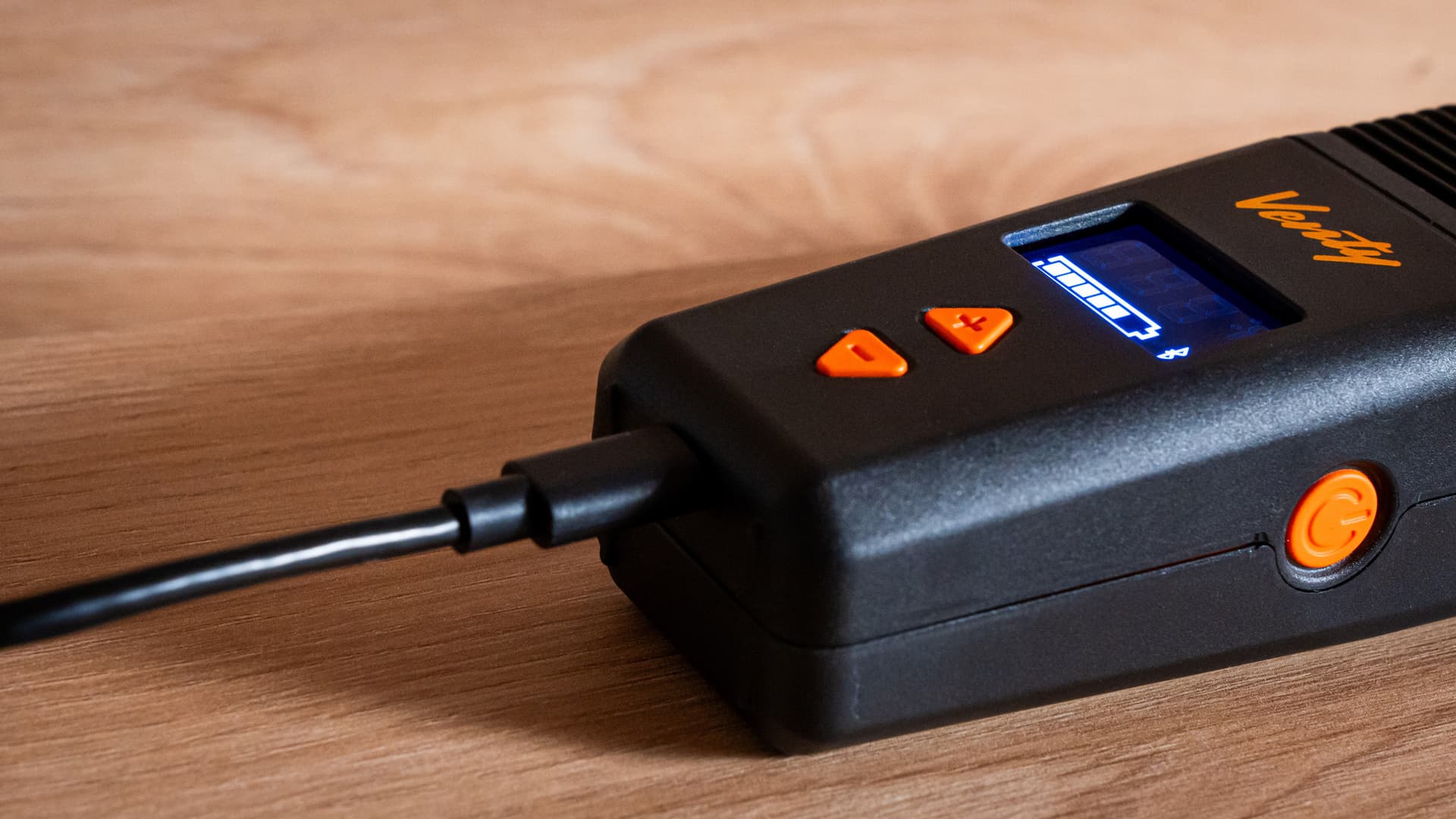
Pair a fast-charging vape with the right charger and cable, and a short top-up between sessions goes a long way.
Pass-through charging keeps you vaping while plugged in
Pass-through charging lets you use a vaporizer while it charges. The Mighty+ supports it on a USB-C Power Delivery charger (15 V, 3 A) with a USB-C to USB-C cable. Its display shows "dct" once it recognizes the supply. The Venty doesn't offer pass-through. The Solo 2 Max does, but an empty battery needs 5-10 minutes on the charger first.
Warning
6 habits that extend your battery's lifespan
Lithium-ion cells wear out over time no matter what you do. These habits slow that wear and keep your battery performing well for years.
Tip
1. Avoid full discharges
Running your battery flat stresses the cell. Your vape cuts off before true zero, so the odd empty battery is no big deal. Draining to the auto-shutoff every time wears the cell faster, though. Plug in when you're around 20%, and never leave a dead vape sitting for months.
2. Don't leave it at 100% for days
A fully charged lithium-ion cell sitting at high voltage ages faster. If you won't use your vape for a month or more, charge it to about 50% and store it somewhere cool and dry. Venty owners can switch on ECO charging in the S&B web app.
3. Keep it out of extreme temperatures
Heat is the big one. Never leave your vaporizer in a hot car or on a sunny windowsill. Cold mostly cuts runtime until the battery warms back up, but let a cold vape reach room temperature before you plug it in.
4. Use the included charger or a quality USB-C cable
Stick with the manufacturer's cable or a reputable USB-C cable rated for 3A. Some vapes need a specific setup to fast-charge. The Mighty+ wants a 45W Power Delivery supply with a 15 V profile and a 3A USB-C to USB-C cable. A bigger charger won't push more power than your vape accepts.
5. For replaceable cells, use a dedicated charger
An external charger like the Nitecore NEW i2 or XTAR VC2S tops up your spare while the other cell is in the vape. The XTAR has an LCD readout; the Nitecore sticks to indicator lights. Match the charger to your cells: the VC2S takes unprotected 21700s but not protected ones.
6. Rotate spare batteries evenly
If you carry two 18650 cells, alternate which one goes in the vape. That keeps both in similar shape, so one doesn't sit idle for months. Check the wraps while you're at it, and retire any cell with a torn wrap or damaged terminal. If your vape takes two cells at once, keep them together as a matched pair.
How we measure battery life at VapeExperts
Our battery runs are simple: a normal grind and pack, 195°C, and back-to-back sessions until the battery cuts out. We record the total sessions and whether vapor quality held steady or faded near the end. Those are the sessions-per-charge numbers you see across our reviews.
Some vapes hold full vapor quality to the last hit. Others fade noticeably in the final session.
Which vaporizers last longest per charge?
These are the standout performers from our reviews:
| Vaporizer | Battery | Sessions/Charge | Heating Method |
|---|---|---|---|
| Fenix 2 MAX | 4800 mAh (built-in) | 70 minutes (Weecke rating) | Convection |
| Arizer Solo 2 Max | Built-in dual 18650 pack | 15 | Hybrid |
| Venty | Two built-in 18650 cells | 11 | Hybrid, 130W max |
| Mighty+ | 3300 mAh (two built-in Li-ion cells) | 11 | Hybrid |
| Crafty+ | Built-in Li-ion | 4-5 | Hybrid |
| XLUX Roffu | 3200 mAh (removable 18650) | 20+ three-minute sessions (XVape rating) | Convection |
Fenix 2 MAX: A Big-Battery Session Vape
A 4800 mAh built-in battery that Weecke rates at 70 minutes per charge, plus a titanium chamber that lifts out for easy cleaning.
For most daily users, 8-10 sessions per charge covers a full day comfortably. If you need more, a replaceable-battery vape with a spare cell is the most cost-effective path to all-day use. Our buying guide helps you match runtime to your routine.
Key Takeaway
- Sessions per charge matters more than mAh. Heater design and session length shape real-world runtime as much as raw capacity
- Replaceable cells keep you going. A spare 18650 costs a few dollars and swaps in seconds
- Built-in batteries suit home users. No cells to manage, and many can be serviced when they wear out
- Charge at 20%, store at 50%. Avoiding full discharges and long stretches at 100% keeps the cell healthier for longer
- Lower temps stretch battery. Dropping 10-15°C often buys an extra session or two