

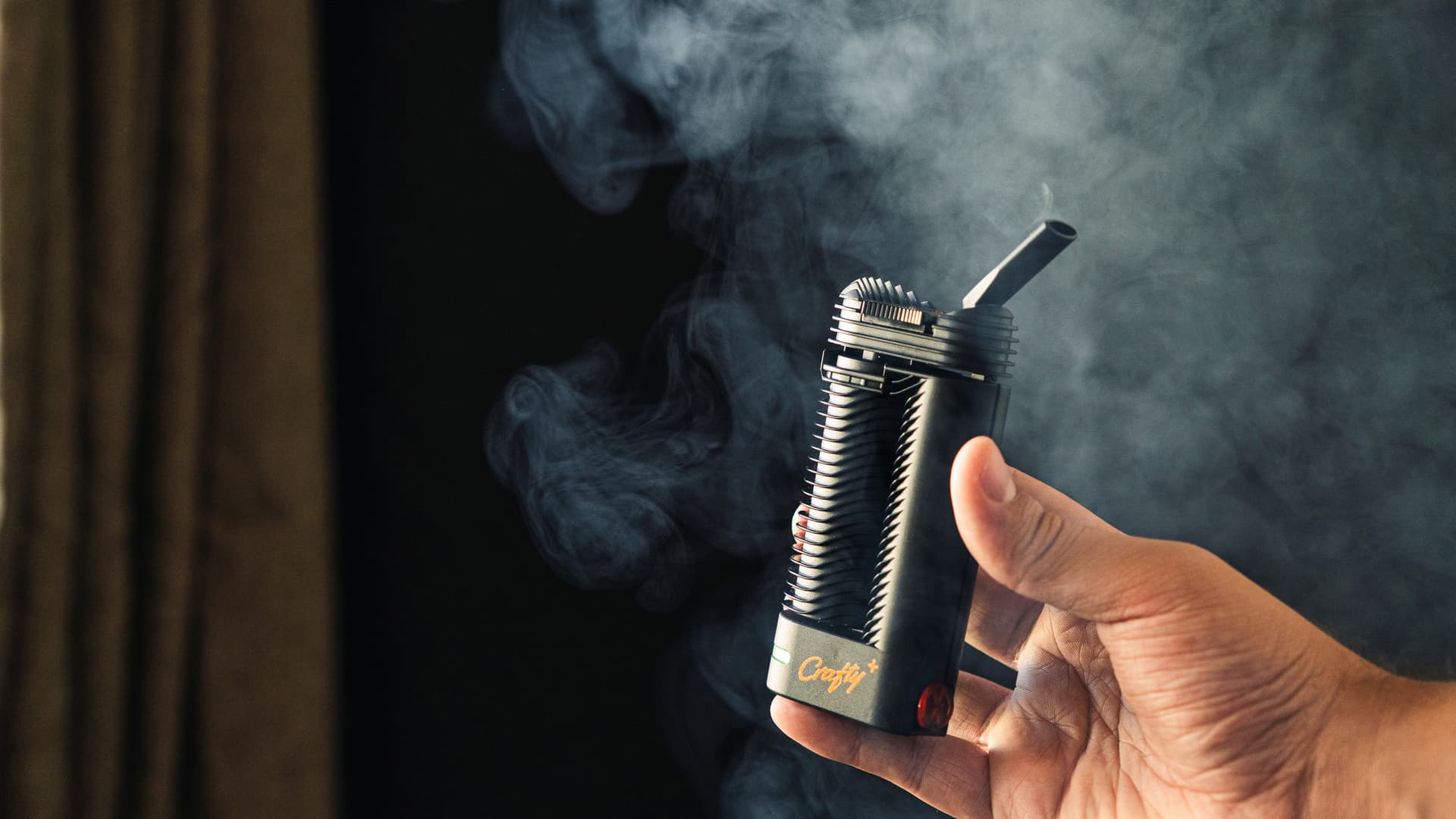
A cannabis vaporizer heats flower or concentrates just enough to release cannabinoids and terpenes as an inhalable vapor, without burning the material. Skip the flame and you skip the smoke. You get the active compounds you want with far less of the combustion byproducts.
Our catalogue covers 50 vaporizers across every category. Whether you are switching from smoking or exploring cannabis for the first time, understanding how these vapes work will help you choose the right one and use it well. For a guided walkthrough of everything from picking a vape to your first session, see our New to Vaping hub. Curious how vaporizers got here? Our history of vaporizers tells the story.
A vaporizer heats cannabis without burning it
Inside a flower vaporizer, a heating element warms ground cannabis until its volatile compounds turn into vapor. That means cannabinoids like THC and CBD, plus the terpenes behind the flavor. Concentrate vapes do the same job with an extract.
Combustion creates tar, carbon monoxide and a long list of other byproducts. Vaporizing avoids much of that by keeping the heat under control, and our vaping vs smoking guide compares the two side by side. In a small controlled 2007 study led by Donald Abrams at UCSF, people breathed out less carbon monoxide after vaping than after smoking. A 2004 lab test of the Volcano found 111 compounds in cannabis smoke, while the vapor was almost entirely cannabinoids with trace amounts of three other compounds, even with the Volcano at its highest setting. A 2006 study of the Volcano found the THC your lungs take up from its balloon is comparable to smoking. Our health and safety overview covers the wider research.
The vapor usually looks thinner than smoke, carries less odor and clears faster than you might expect, especially in a ventilated room. In our experience the flavor is the first thing people notice. Individual terpene profiles come through at lower temperatures instead of getting scorched by a flame.
A vaporizer gives you the active compounds without the smoke that comes with fire. Once you taste the difference, it is hard to go back.
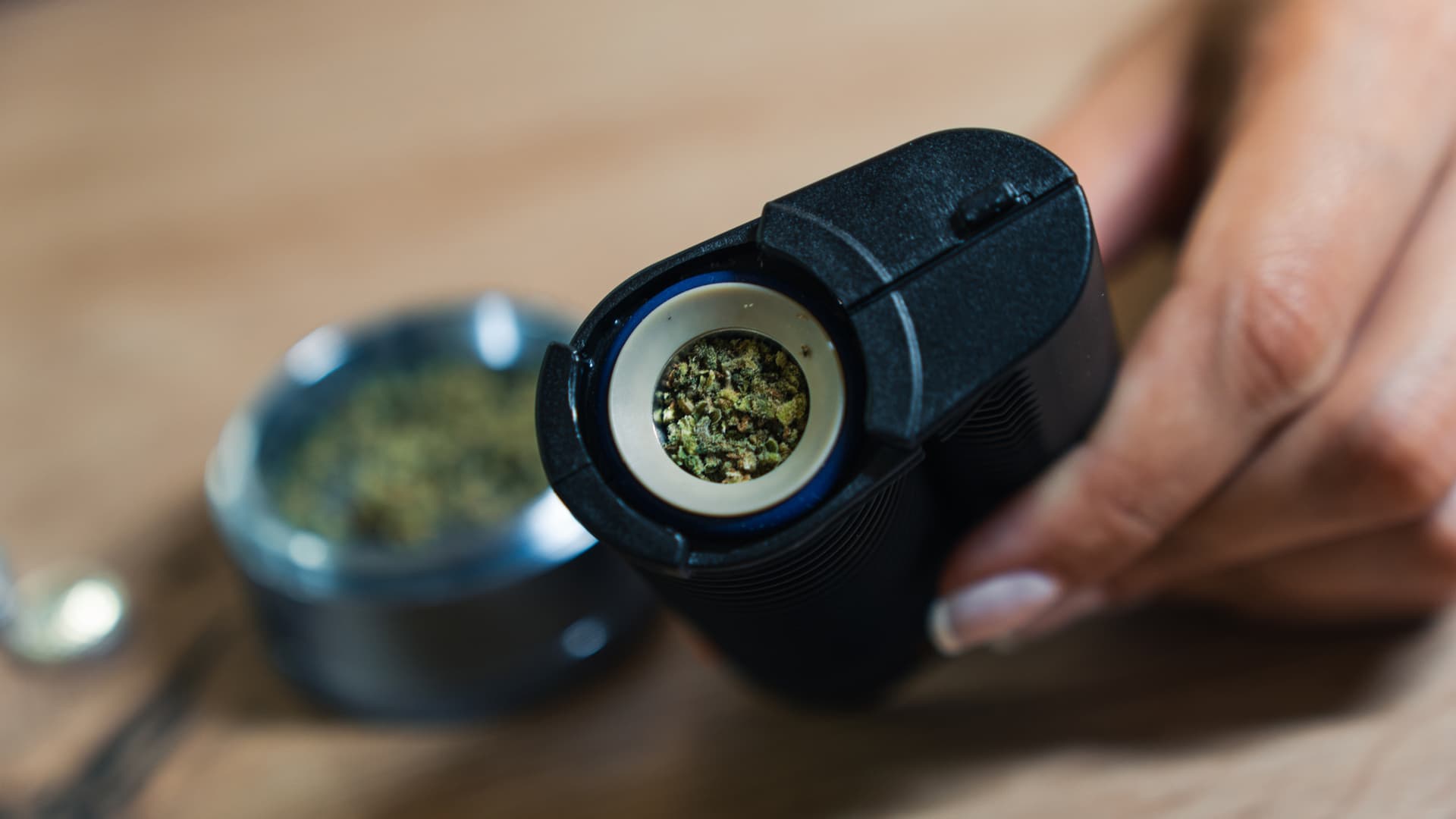
A medium-fine grind suits most vapes and exposes more surface area to heat. Overpacking chokes airflow and vapor.
Three ways a vaporizer heats your flower
How a vaporizer applies heat shapes its flavor, efficiency and vapor density. The three main approaches are conduction, convection and hybrid heating, and our heating methods guide covers each in depth.
Conduction: heat through contact
Conduction vaporizers press cannabis against a heated surface, usually the oven wall. The flower touching that surface vaporizes first, which is why a quick stir mid-session evens things out. Conduction heats fast and works well in compact portables like the PAX Mini 2, which is ready in about 22 seconds.
The tradeoff: flower near the oven walls can over-extract while the center lags behind. A stir or a finer grind fixes most of that. Our convection vs conduction guide covers the practical differences.
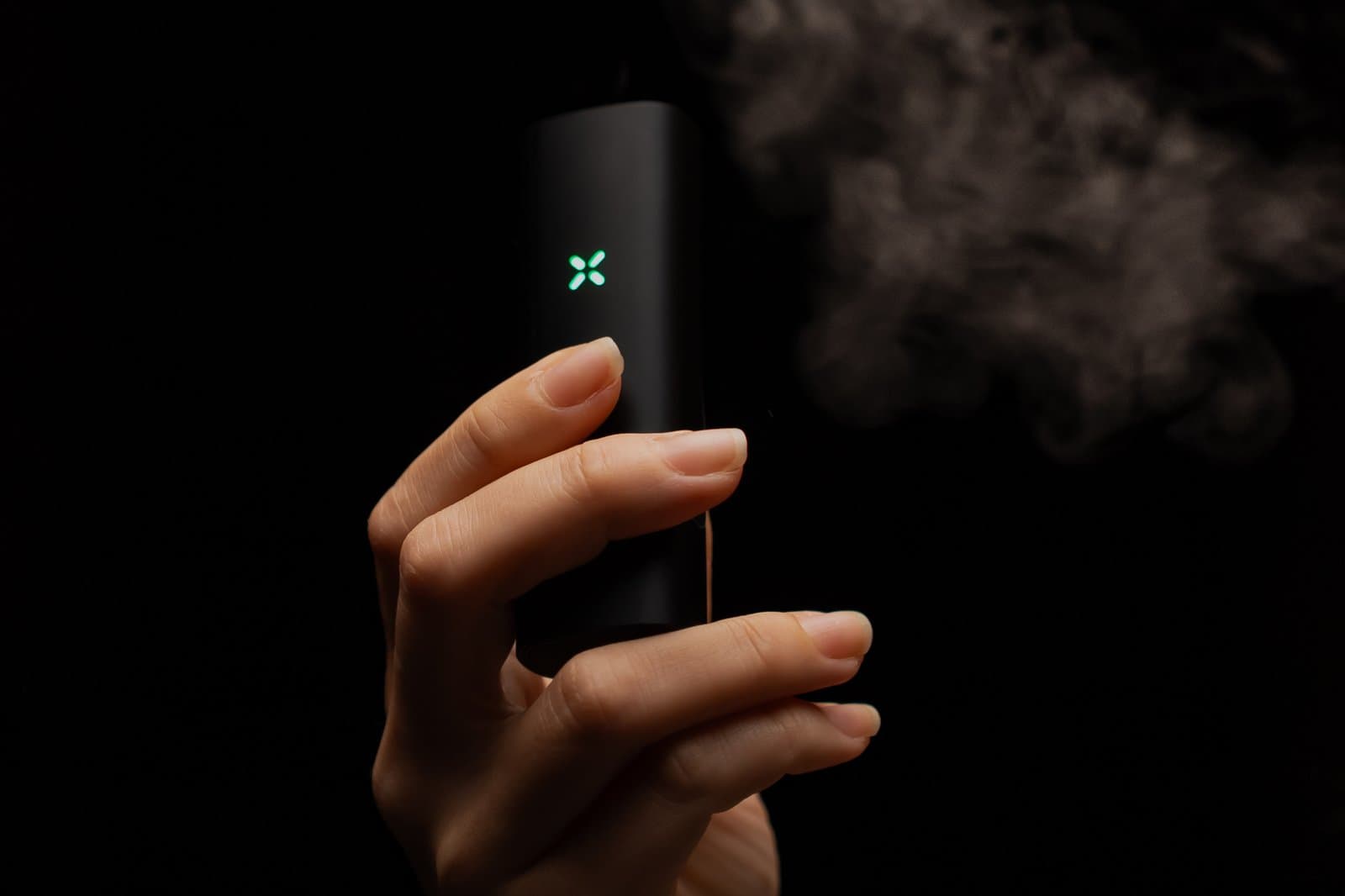
The PAX Mini 2 heats by conduction and is ready in about 22 seconds. Its petal lights turn green when the oven is ready.
Convection: hot air extraction
Convection passes heated air through the cannabis, so hot air does the extracting instead of a hot wall. A good convection vape heats the whole load evenly and puts the flavor front and center. The Volcano Hybrid uses this approach (combined with conduction) to fill balloons you can detach and pass around.
The Tinymight 2 is a convection portable that heats up in 2 to 5 seconds. You choose between on-demand hits and a full session mode.
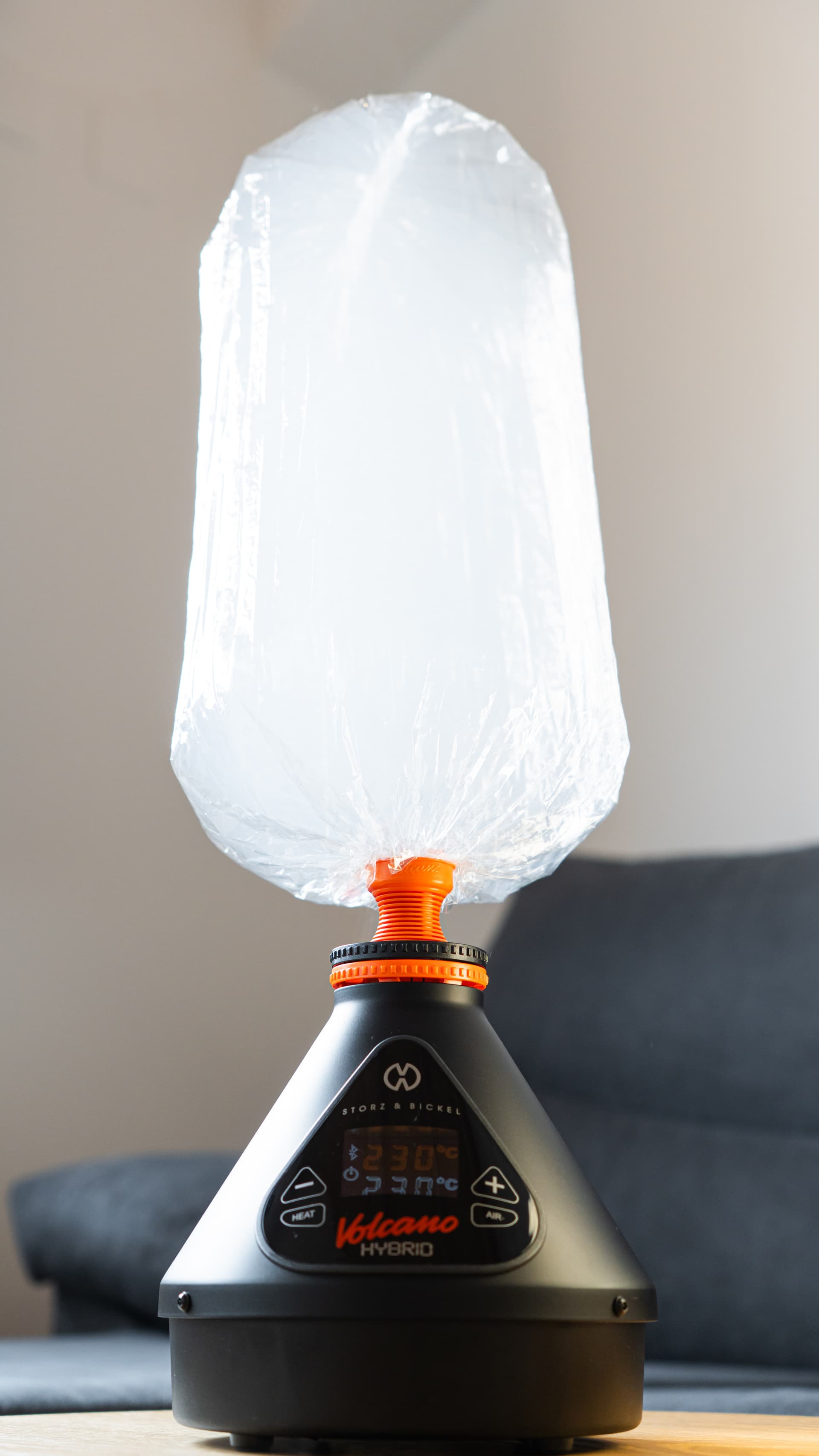
The Volcano balloon is the most recognizable picture of convection (heated air passing through cannabis, captured in a bag you can take anywhere in the room).
Hybrid: a mix of both
Hybrid heating combines a heated oven surface with moving hot air. This approach balances fast heat-up times with even extraction. Plenty of mid-range and flagship portables use it, including Storz & Bickel's Venty, which heats up in about 20 seconds. A flowmeter adjusts the heat to how hard you draw.
Tip
Other kinds of vaporizers
Butane and torch-powered vaporizers
Manual vaporizers use a torch, a lighter or an external induction heater instead of a built-in battery. The DynaVap M7 heats in about 5 to 7 seconds with a torch, and the cap clicks when it is ready. The vape itself has nothing to charge (an induction heater does), but you need to learn the heating technique. Our butane vaporizer ranking lays out the best manual picks.
Ball vapes are their own family. Heated ceramic, ruby or zirconia balls store heat and pass it to the air on its way through your flower. Some plug into the wall, like the FlowerPot B1. Portables like the Tempest 2 take a torch or an induction heater.
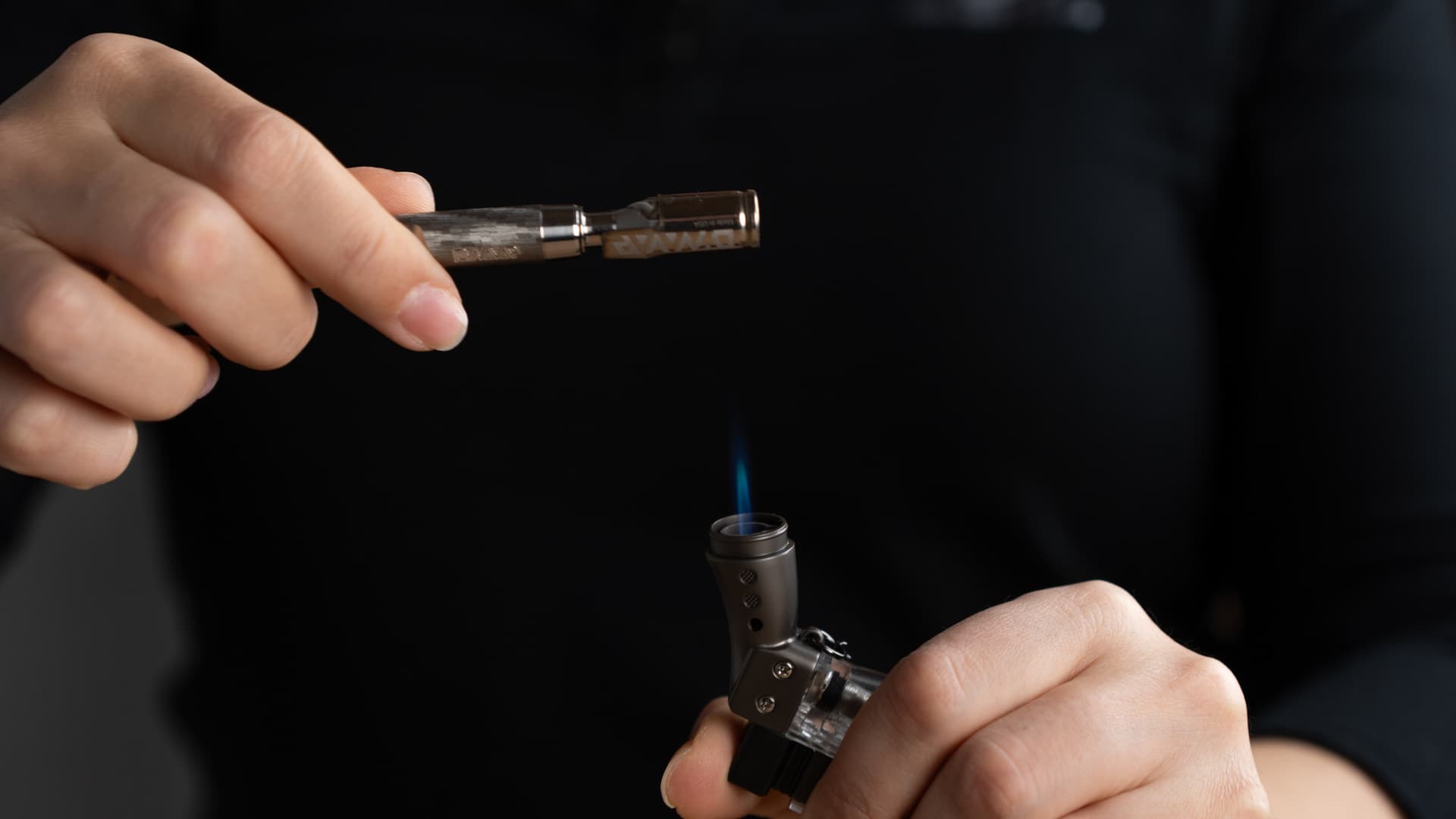
Heat the side of the cap and keep rotating. Stop at the click, then wait for the cooldown click before you heat it again.
Concentrate vaporizers
Some vaporizers are built for cannabis concentrates (wax, shatter, live resin) rather than flower. eRigs swap the traditional torch-and-banger setup for electric heat. The Dr. Dabber Switch 2 uses induction heating and an infrared sensor to hold your temperature. It ships with a quartz insert for concentrates, and Dr. Dabber sells a titanium insert for flower.
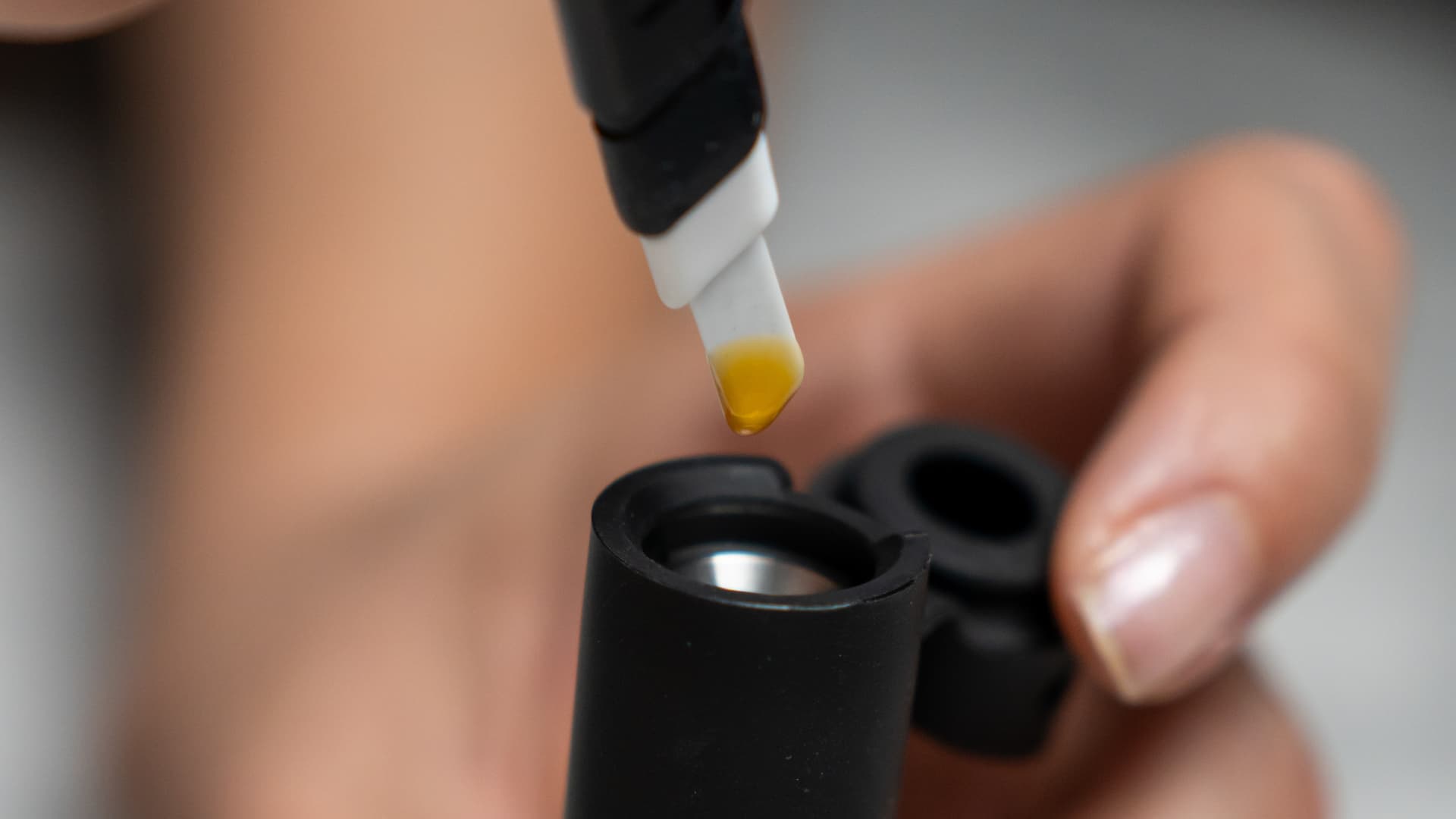
Concentrates usually pack far more THC than flower. Check the potency on the label and start with a small dab.
Portable, desktop or pen
Portables run on a battery and travel with you, from the pocket-sized PAX Mini 2 to the Venty. Desktops plug into the wall and suit home users who like a fixed setup and do not need to take their vape on the go. The Volcano Hybrid is one, with balloons you fill and pass around. Our portable, desktop and concentrate rankings list the best of each.
Pens come in two kinds: refillable concentrate pens and 510-thread batteries for prefilled oil cartridges. Buy cartridges only from a licensed store. The 2019 lung-injury outbreak the CDC called EVALI was tied mainly to vitamin E acetate in illicit THC cartridges.
Temperature controls what you inhale
Different cannabinoids and terpenes vaporize at different temperatures. Adjusting your vaporizer's temperature changes the flavor, density and feel of each session.
On most flower vapes we work within three ranges:
| Range | Temperature | Character | Best for |
|---|---|---|---|
| Low | 160-180°C | Light vapor, terpene-forward flavor | Tasting a new strain |
| Mid | 180-200°C | Fuller vapor, rounded flavor | Everyday sessions |
| High | 200-220°C | Dense, hotter, toasty vapor | Finishing a load |
Our cannabis temperature guide breaks down each range in more detail.
What to expect as a first-time user
Switching from smoking to vaporizing feels different. The vapor is usually lighter and cooler than smoke. The flavor is more pronounced, especially at lower temperatures. Effects kick in within seconds to minutes because both methods deliver cannabinoids through the lungs, and the strongest effects usually arrive 10 to 30 minutes in.
Your first session in six steps:
- Charge it or plug it in.
- Grind medium-fine (our grinding guide shows how).
- Fill the oven to the rim and tamp gently, so the load feels firm but still springy.
- Set about 180°C and wait for the ready signal.
- Draw slowly for 5 to 10 seconds. There is no need to hold your breath.
- Stir and step up 10°C as the flavor fades.
Our full how-to covers each step in detail.
It is easy to underestimate the potency. In a controlled trial, the same dose of THC hit harder vaporized than smoked, so you may need less cannabis than you are used to. Start with a half load, take a couple of draws and give it time before going back for more.
Ready to pick your first vaporizer?
Our buyer's guide walks through heating methods, budget tiers, and the four decisions that determine which vape fits your lifestyle.
Key Takeaway
- Pick your material first. Flower and concentrates usually need different vapes (or a different insert)
- Match form to setting. Portables for pockets, desktops for home sessions
- Choose your technique level. Push-button electric or manual torch-and-rotate
- Start low on temperature. Around 180°C keeps flavor front and center; raise it for density
- Load less than you think. Vapor can hit harder than smoke, so start small and build up