
The DynaVap M7 is the best entry point into battery-free vaping. At 33 g and 92 mm tall, this stainless steel torch vape fits in your pocket like a pen and heats in 5-7 seconds. It delivers vapor quality that outperforms battery-powered portables costing two to three times more.
DynaVap's 7th-generation M-series introduces improved airflow through a redesigned captive cap and increased convection heating compared to earlier models. The oven holds just 0.1 g of cannabis, but that's the point. This is a vape built around efficiency and ritual, not marathon sessions.
We purchased the M7 and tested it over 6 weeks of daily use. We scored it 8.4 overall, with 9.2 for portability, 9.0 for value and 8.8 for build quality. Ease of use (6.5) is its weakest score: the torch technique took us 5 to 10 bowls to get right, and overshooting the click can scorch the bowl. Vapor quality (8.5) is strong for a 0.1 g oven, and torch position plus the airport let you trade flavor for thicker clouds.
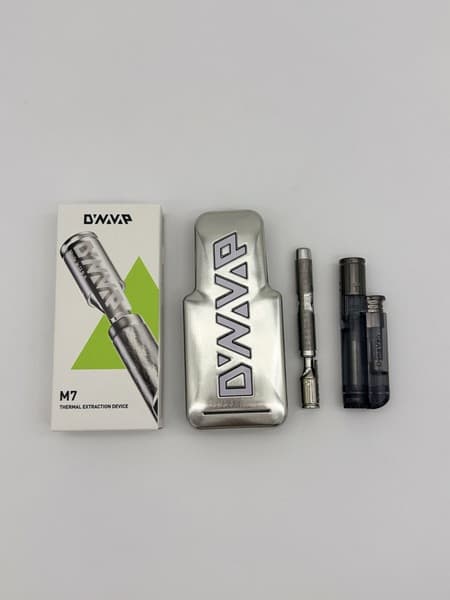
The box includes the M7, tin case, and torch
DynaVap keeps packaging minimal. The retail box is as slim as the vape inside. The M7 box contains:
- DynaVap M7 (assembled: cap, tip, condenser, O-rings, stem)
- DynaVap Tin Case and Pink Slip cleaning tab
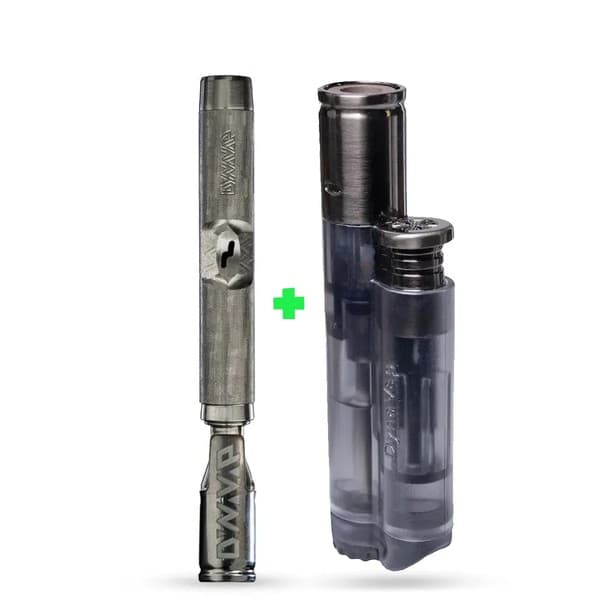
- DynaTorch single-flame lighter (ships empty)
 The M7 XL and standard M7 retail boxes.
Nothing fancy, just the essentials. You'll need butane fuel to fill the included torch before your first session.
Stainless steel, 33 g, and built to take a beating
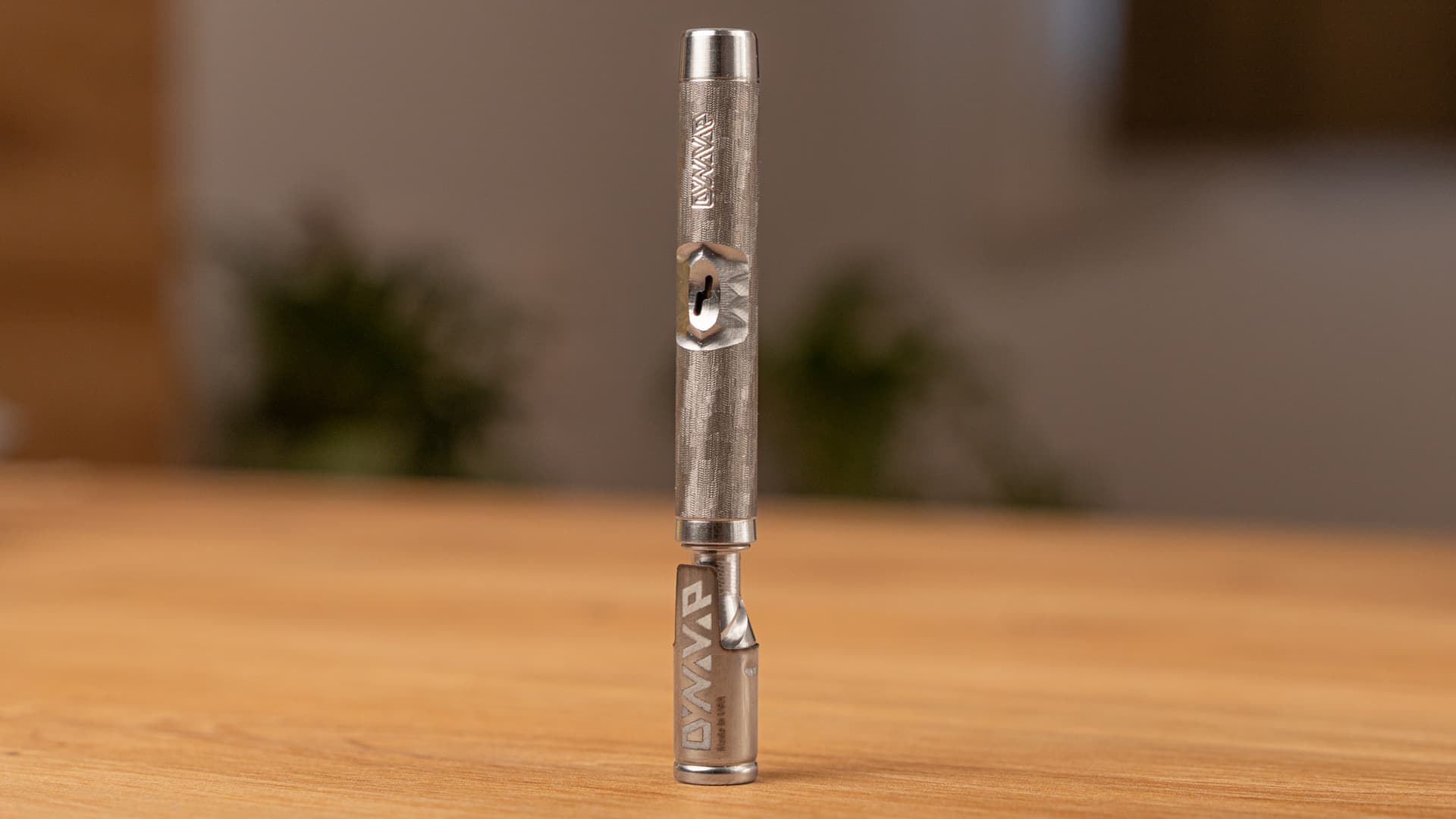
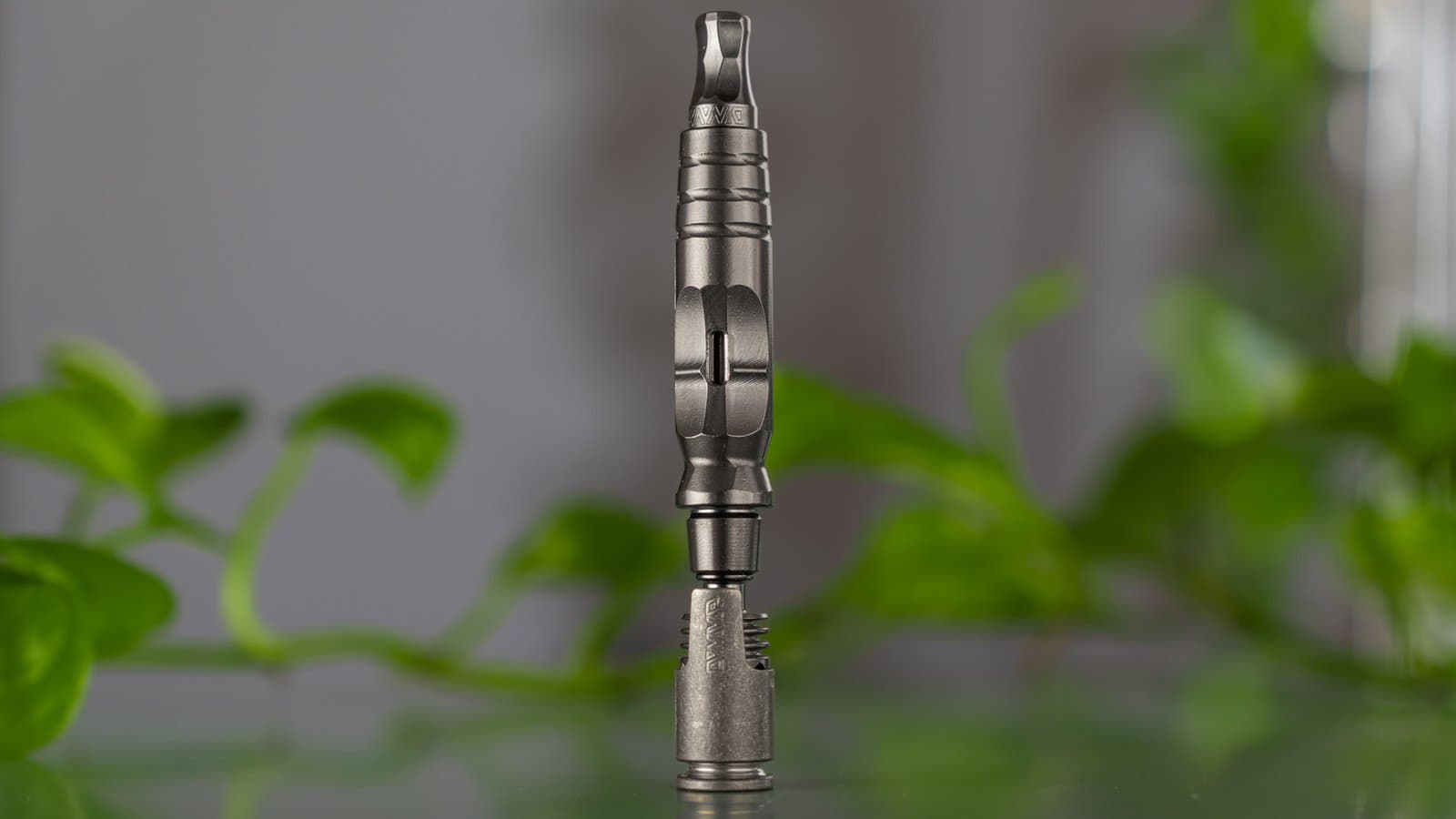
The tip, stem, and condenser are all stainless steel, with four O-rings sealing the joints. At 33 g, you'll barely notice it in a pocket. The body measures 92 mm long and 10 mm in diameter, making it one of the most pocketable vaporizers in our testing lineup.
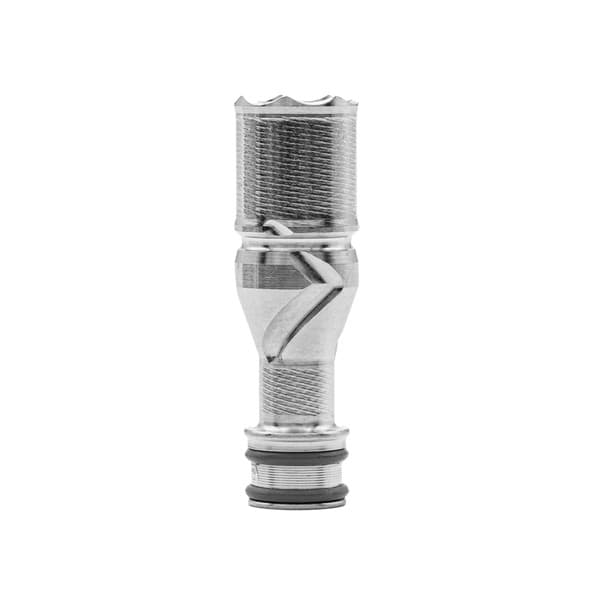
The captive cap is a welcome refinement over older DynaVap models. It grips the tip snugly during use, so you're far less likely to drop a hot cap mid-session. Check the fit before heating and adjust the cap if it ever feels loose. The double-crown design at the mouthpiece end adds visual character and a bit of extra grip when drawing.
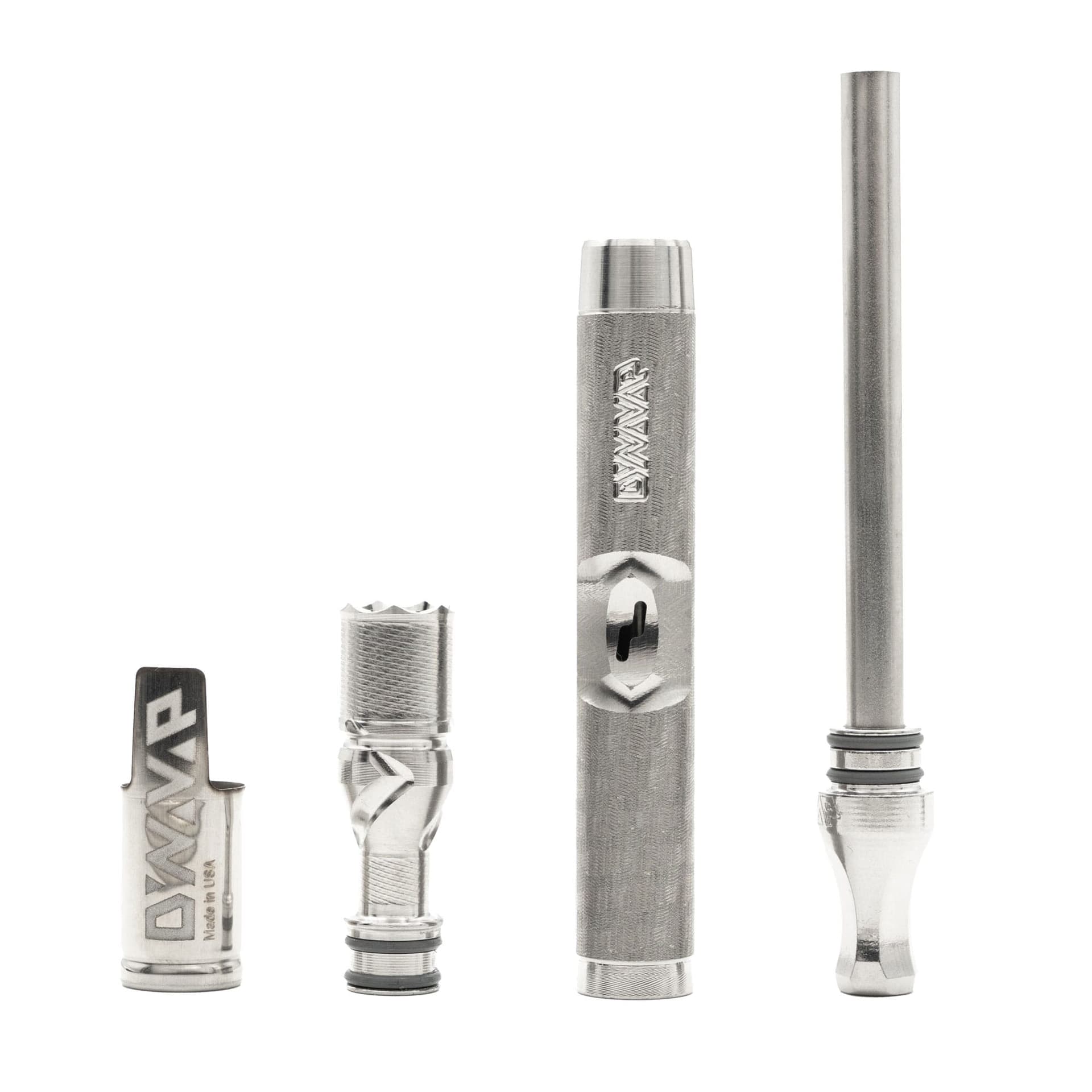
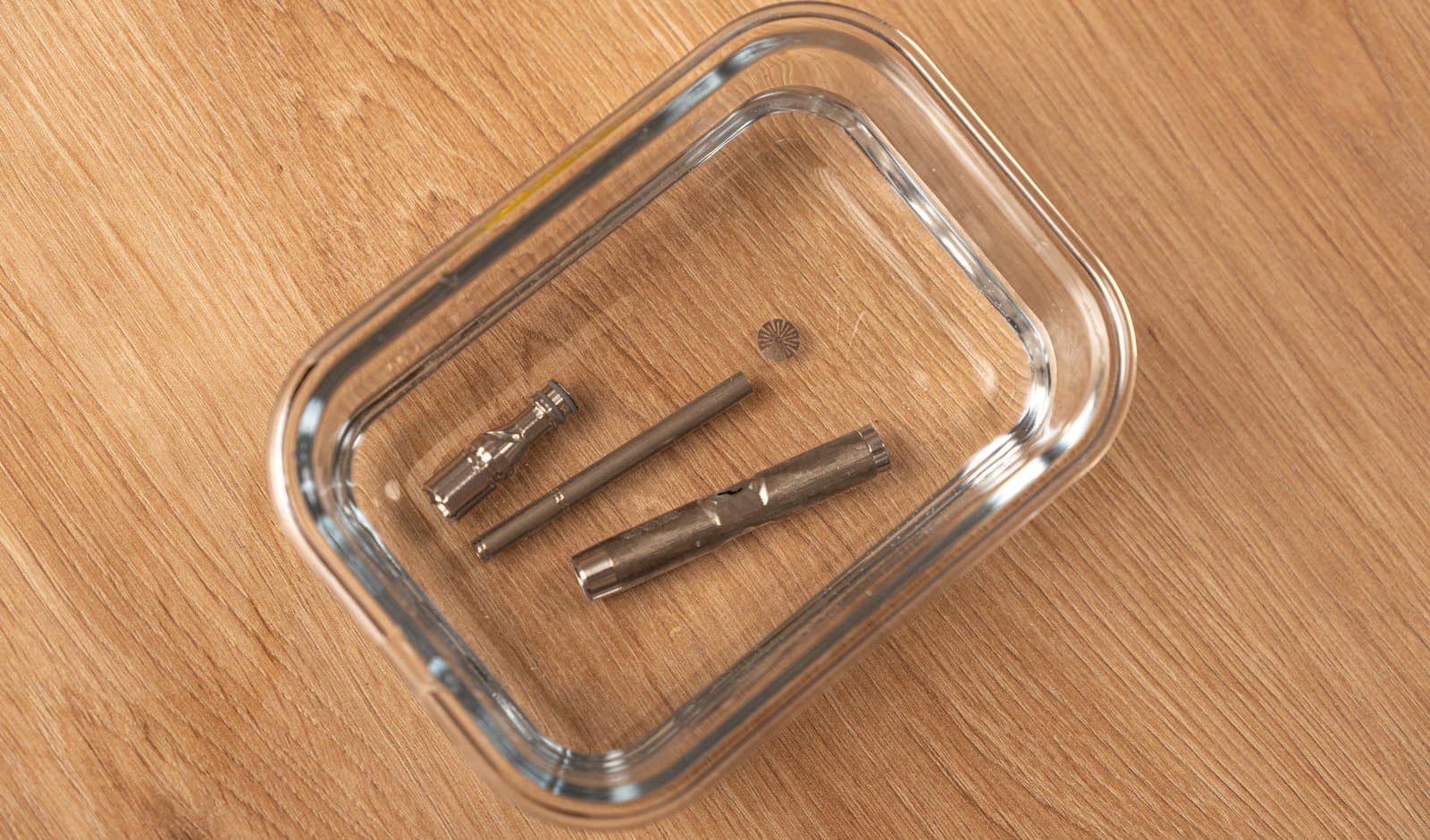
Every main part pulls apart in seconds for cleaning. Four main parts plus the O-rings and a screen make up the whole vape. The parts that do wear, the cap and O-rings, are easy to replace. DynaVap also backs the M7 with a limited lifetime functional warranty and a 90-day satisfaction guarantee.
 The M7's four main parts: condenser, stem, tip and captive cap.
5-7 second heat-up delivers dense, flavorful hits
The M7 uses hybrid heating. Conduction comes from the heated stainless steel tip walls, and convection from hot air pulled through the oven during your draw. You heat the cap with a butane torch until it clicks (a built-in bi-metallic disc that signals vaporization temperature), then inhale.
Heat-up takes about 5-7 seconds with a single-flame torch. Stop heating as soon as you hear the click, take your hit, and wait for the cooldown click before you reheat. Keep the flame on the side of the cap and rotate as you go, never on the end face.
 Vapor rising from the captive cap after the click.
The 0.1 g oven is small by design. This is an on-demand vaporizer built for 1 to 3 heat cycles per bowl, not 10-minute sessions. Each cycle delivers a surprisingly dense hit relative to the oven size. Push the screen up to activate half-bowl mode (roughly 0.05 g) for precise cannabis microdosing, making this one of the most efficient vapes we've tested.
Adjustable airflow comes from the airport (carb hole), a small cutout in the body. Cover it fully for restricted, hotter draws, or feather it open for cooler, airier pulls. The M7's redesigned cap fitment lets more air flow around the tip than previous generations.
 The airport on the stem, the M7's airflow control.
Draw resistance sits in the moderate range out of the box. The condenser inside the stem can be adjusted or removed entirely to open up the draw. We found the stock configuration works well for most people, though opening it up rewards users who prefer a free-flowing pull.
The M7 also handles concentrates with the optional DynaCoil. It fits a 10 mm female water-pipe joint directly, and larger joints just need a matching adapter. Running it through a small bubbler cools the vapor and smooths out any harshness at higher temperatures. Our guide to using vaporizers with water pipes covers adapter setup details.
Heat control: flame position and the airport
The M7 has no digital settings. It works across 150-220°C, and where you land in that range comes down to where you aim the flame and what you do with the airport.
| What you do | What you get |
|---|---|
| Flame near the closed end of the cap | Lighter, flavor-forward hits |
| Flame toward the open base of the cap | Denser, hotter clouds |
| Airport covered | A hotter, restricted draw |
| Airport feathered open | A cooler, airier pull |
Torch or induction heater
The DynaTorch in the box is all you need. An induction heater is the alternative: it removes the flame, which makes it the calmer choice indoors or in public, but it costs extra and it's another powered gadget to keep charged or plugged in. Start with the torch, and add an induction heater later if the flame becomes the sticking point.
No battery means no charging breaks
The M7 has no battery, no charging port, and no electronics. Your power source is a butane torch lighter, so as long as it has fuel, you're ready to go.
A standard single-flame torch runs for dozens of heat cycles on a single butane fill. Refill cans cost a few dollars and last months of regular use. You never deal with battery degradation, dead vapes, or hunting for USB cables.
 Heating the cap with a single-flame torch.
There are no lithium cells losing capacity, no circuit boards to short, and no charging ports to corrode. The tradeoff is clear: you need fire, and a torch in public draws attention.
How to use the DynaVap M7 (5 to 10 bowls to master)
The M7's ease of use sits below the portable vaporizer average, but that reflects the torch technique rather than any design flaw. Once you've dialed in your heating routine, the process becomes second nature.
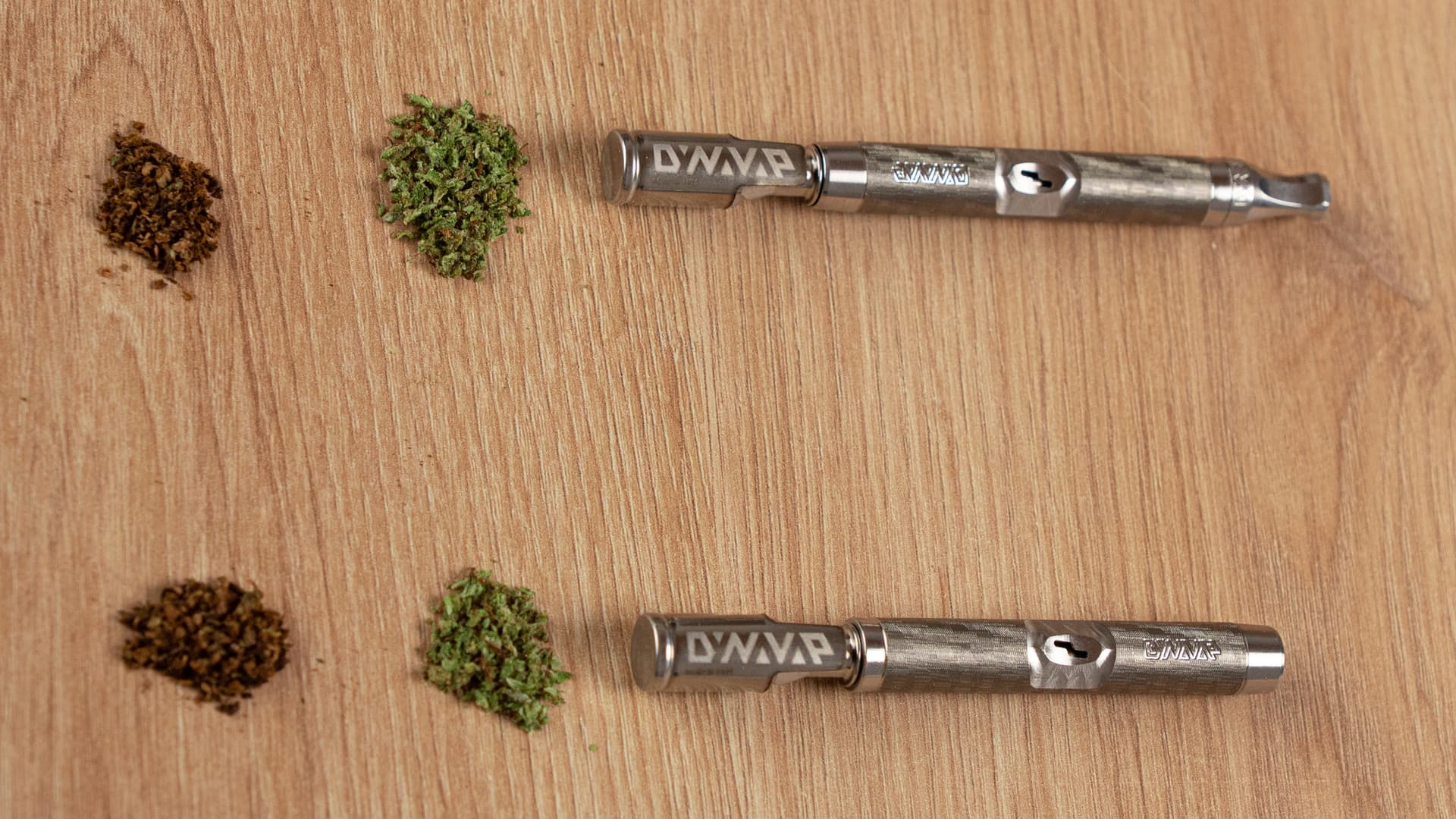
Loading is simple: remove the cap, press ground cannabis into the 0.1 g tip, replace the cap. A medium-fine grind works best. The oven's funnel shape guides cannabis in naturally with no tool required. That's the entire prep.
 A freshly loaded 0.1 g tip, grinder beside it.
Heating takes practice. Hold the torch flame on the cap while slowly rotating the vape, listen for the click, then inhale while covering or feathering the airport. Your first few sessions might produce thin vapor or, occasionally, combustion if you overshoot the click. In our experience, the learning curve is shorter than its reputation. After 5 to 10 bowls, we were hitting it right every time.
Cleaning is where the M7 genuinely shines. Let it cool, pull off the cap and O-rings, and clean the metal body parts with isopropyl alcohol or hot soapy water. Keep the cap out of the bath and swab its inside with a little soapy water instead. Rinse, let everything dry completely, and reassemble.
M7 or M7 XL: same oven, cooler draw
The M7 XL is the same vape with a longer back end. It uses the same stem, tip and cap as the standard M7, so the 0.1 g oven, the click and your heating routine stay the same. The difference is an extended condenser that slides into a separate mouthpiece.
That extra length does three things. It cools the vapor further before it reaches your lips, it gives bigger hands a more comfortable grip, and setting the condenser at different depths in the mouthpiece gives you six airflow settings. The XL costs a little more and gives up some pocketability.
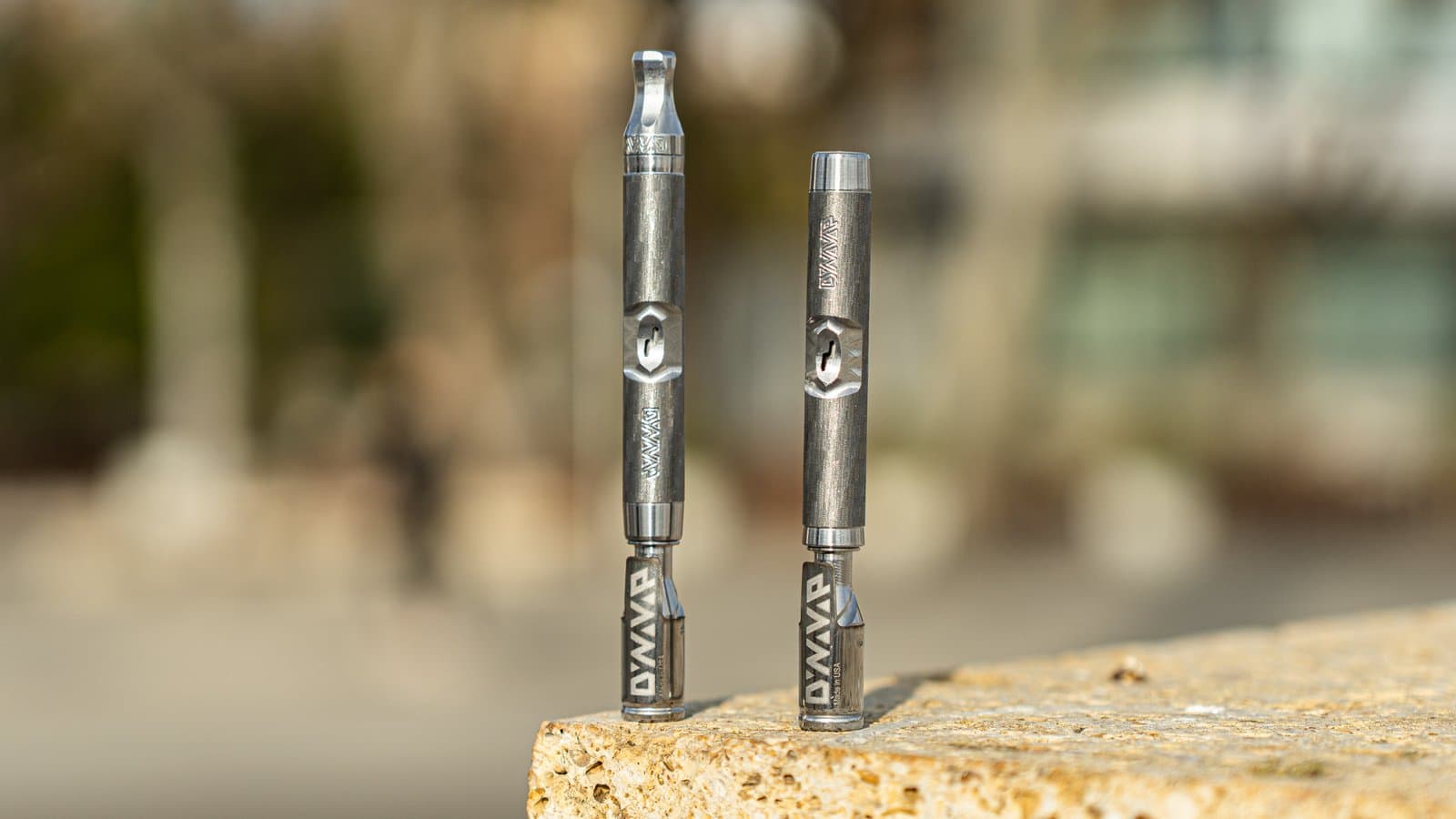
 The standard M7 next to the longer M7 XL.
Pick the XL if stem heat on your lips bothers you. Pick the standard M7 if you want the smallest possible carry.
DynaVap M7 vs HyperDyn, UniDyn, Tempest 2, Vapman and Anvil
| Vaporizer | Our score | Body | Bowl | Weight | US list price |
|---|---|---|---|---|---|
| DynaVap M7 | 8.4 | Stainless steel | 0.1 g (0.05 g half bowl) | 33 g | $89 |
| DynaVap UniDyn | 7.8 | Titanium | 0.1 g | 30 g | $119 |
| DynaVap HyperDyn | 8.5 | Titanium | 0.25 g | 55 g | $229 |
| Tempest 2 | 9.0 | Titanium | 0.1 to 0.2 g | 46 g | $225 |
| Vapman 2.0 | 8.1 | Hardwood | 0.1 g | 50 g | $199 |
| Vestratto Anvil | 8.7 | Stainless steel | 0.1 g | 65 g | $229 |
Weighing a torch vape against a battery portable instead? Our DynaVap M7 vs XMax V3 Pro comparison puts the M7 up against that convection portable in detail.
 The Venty and XMax V3 Pro next to two DynaVaps.
DynaVap M7 vs DynaVap HyperDyn
The DynaVap HyperDyn 8.5 is the lineup's heavy hitter with a 0.25 g titanium oven (2.5x the M7's capacity) and 7 adjustable airflow settings. It's built for users who want bigger bowls and single-cycle full extraction. The M7's 0.1 g stainless steel oven is better suited for solo microdosing and efficiency-focused sessions. The HyperDyn costs considerably more, so the upgrade only makes sense if you consistently need larger loads. See our full HyperDyn vs M7 breakdown for a detailed head-to-head.
DynaVap M7 vs DynaVap UniDyn
The DynaVap UniDyn 7.8 keeps the same 0.1 g bowl size but swaps to a 30 g titanium unibody and a BallR Cap, a cap filled with stainless steel balls for ball-assisted convection. It costs $119 at US list price. We rated it 7.8/10 because that cap extracted unevenly in our testing. The M7's classic click cap is more predictable, and the M7 costs $30 less. The UniDyn body also takes standard DynaVap caps, if you want the titanium with a familiar click.
DynaVap M7 vs Tempest 2
The Tempest 2 9.0 is our #1 ball vape and our 9.0/10 pick for battery-free flavor. It's a 46 g titanium ball vape with a 0.1 to 0.2 g bowl and a visual heat gauge that works alongside its clicks, at a $225 US list price. The M7 is lighter at 33 g and costs $89. Start with the M7 as your way into torch vaping, and step up to the Tempest 2 when you want cleaner flavor and a gauge to heat by.
DynaVap M7 vs Vapman 2.0
The Vapman 2.0 8.1 takes a different approach with a hardwood body and gold-plated copper chamber. The Vapman's flavor profile runs slightly warmer and woodier, while the M7 delivers a cleaner, more neutral stainless steel character. The Vapman has adjustable airflow and a replaceable heating pan, but it can't match the M7's range of swappable tips, stems, and upgrades. The two are shaped very differently, and the DynaVap wins on ecosystem and price. See our full M7 vs Vapman 2.0 comparison for the head-to-head.
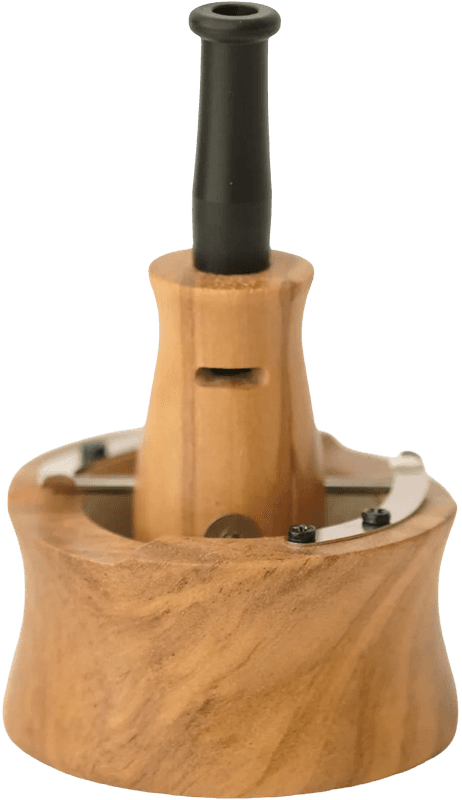
 The M7 (left) next to the wooden Vapman 2.0.
DynaVap M7 vs Vestratto Anvil
The Vestratto Anvil 8.7 pairs a stainless steel vapor path with a CopperCore thermal battery that stores heat for one-hit full extraction. It delivers desktop-class vapor density from a 65 g package, but sits at a considerably higher price tier. If single-hit extraction power is your top priority, the Anvil outperforms the M7. For everyday use where efficiency and budget matter most, the M7 holds its own and offers a far lower barrier to entry into torch vaping. See our full DynaVap M7 vs Vestratto Anvil comparison for the head-to-head.
Who should buy the DynaVap M7
Smokers making the switch get a ritual that mirrors rolling and lighting up. The torch, click, and inhale sequence feels familiar, but you're pulling vapor instead of smoke. Our guide to transitioning from smoking covers the adjustment period in detail.
Budget-conscious buyers who refuse to compromise on vapor quality get a vape that competes with portables costing two to three times more. There are no battery replacement costs on the horizon, either.
Minimalists and travelers who want a 33 g vape with zero breakable electronics can pair it with a small torch. That's a complete setup that fits in any pocket. The 92 mm body all but disappears in the hand.
 The 92 mm M7 in hand.
Skip it if:
- You want to vape in public without a flame and don't want to buy an induction heater.
- You need big bowls for sharing. The 0.25 g HyperDyn is the DynaVap for that.
- You want set-and-forget temperature control. The M7 has no digital settings, so the heat depends on your technique.
VapeExperts' final verdict
The DynaVap M7 earns its place on our best butane vaporizers and best budget vaporizers rankings through pure efficiency. You get 0.1 g bowls, 5-7 seconds of heating, and vapor quality that outclasses most battery-powered portables at this price point. The learning curve is real but short. With no battery inside, the only parts that wear are the cap and O-rings, and both are easy to replace.
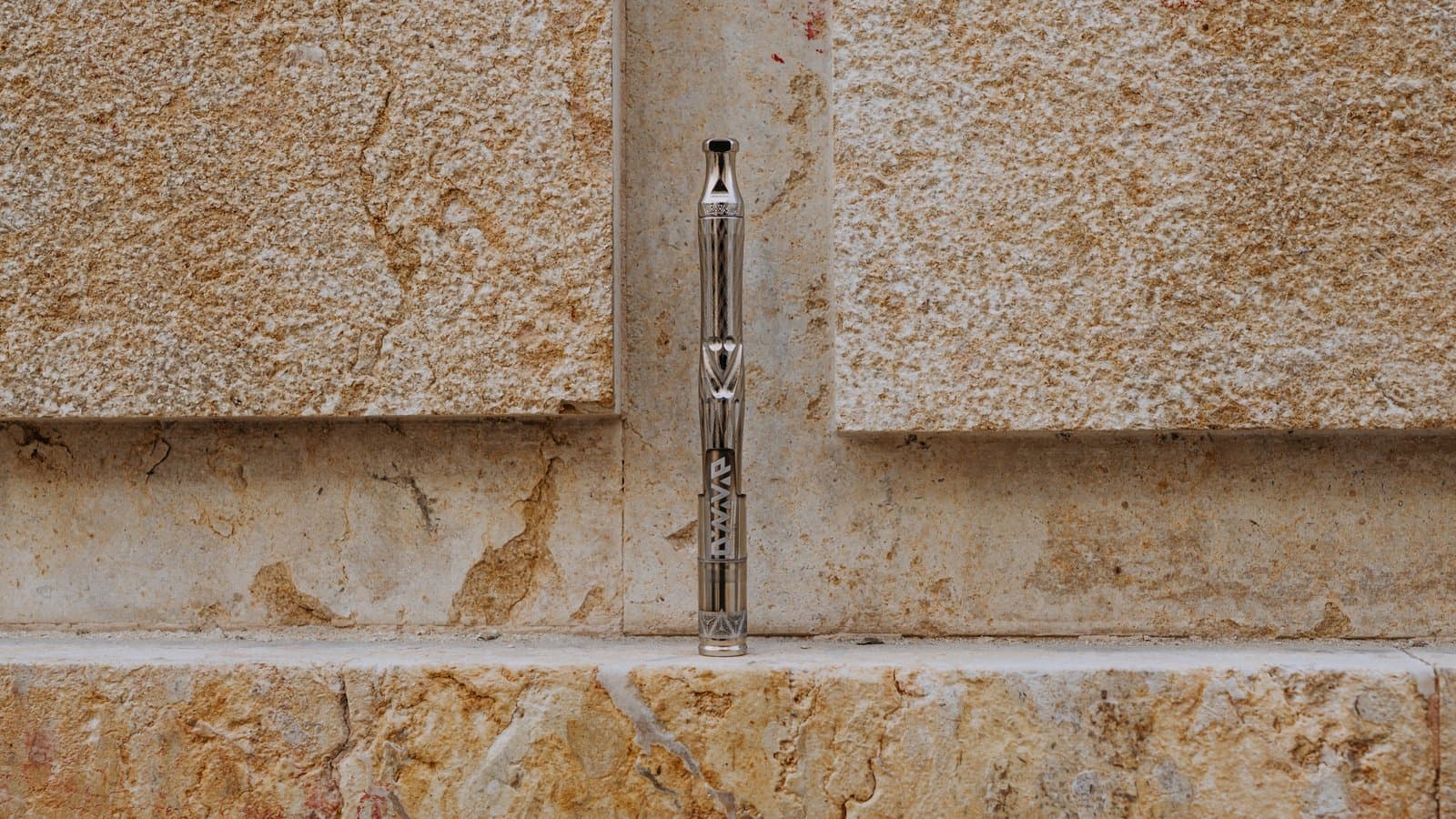
 The M7 outdoors on a stone ledge.
If you're willing to use a torch, the M7 is the best value in cannabis vaping we've found. Pair it with our vaporizer temperature guide to dial in your preferred heat range once you've mastered the click.