

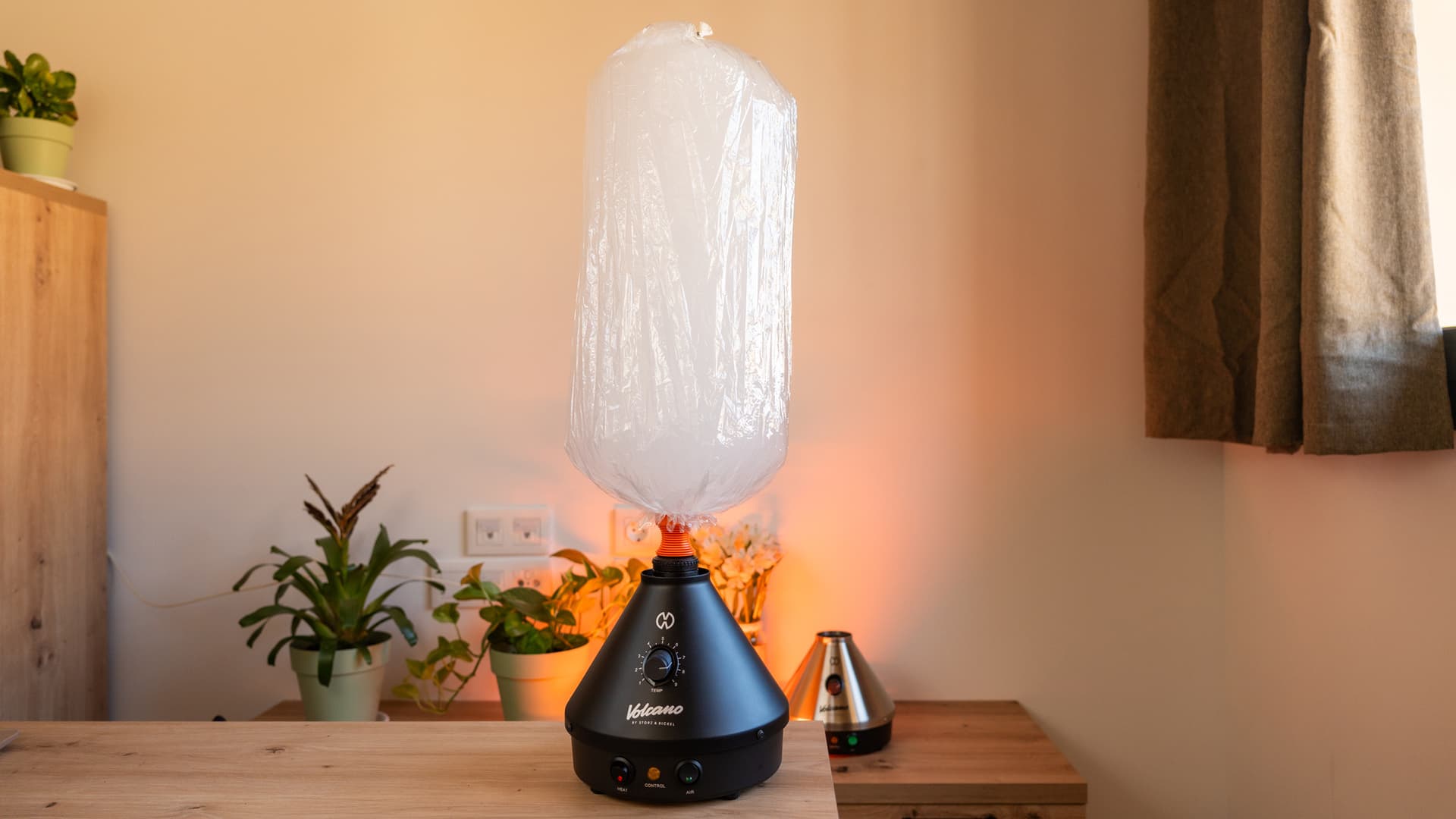
Vaporizing cannabis flower is safer than smoking it, but it is not harmless. Heating flower without burning it cuts your exposure to smoke toxins, and vaporizer users report fewer breathing problems than people who smoke joints. The risks that remain are THC itself, dosing (vapor can hit harder), what your vapor path is made of, and what goes into the product. The 2019 EVALI outbreak traced back to oil cartridges from informal sources, not to flower vaporizers.
At VapeExperts, we test vaporizers for performance, not emissions. This article sums up the peer-reviewed research so you can make informed choices about how you consume cannabis.
Vaporizing cuts your exposure to smoke
A joint burns the flower. A vaporizer heats it just enough to release cannabinoids and terpenes without setting it alight. That difference is the core of the harm reduction argument, and the research supports it.
In a 2007 UCSF study, 18 healthy adults used cannabis through a Volcano and as joints over six days. Vaporizing gave them similar THC levels with less carbon monoxide in their breath.
A 2022 commentary in the Canadian Journal of Public Health looked at the wider evidence and discussed vaporizing as a harm reduction option.
The reason is simple. Burning plant material creates a long list of byproducts, and some of them are known carcinogens. For a broader look at how vaporizers stack up against joints, edibles and other methods, we cover the full spectrum in a dedicated guide.
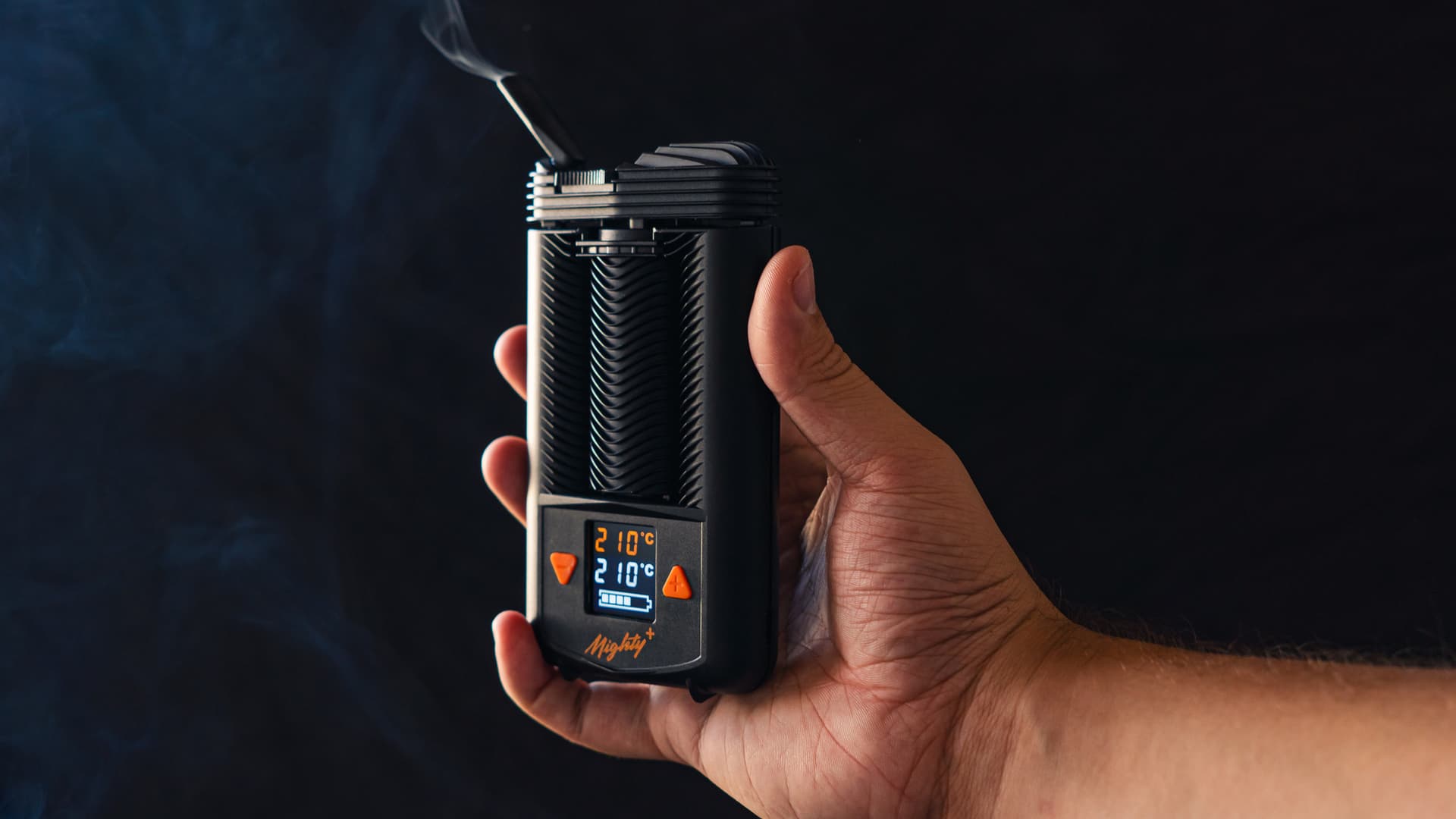
Vapor rising from the Mighty+ at 210°C, the top of its temperature range.
How vaporizers heat cannabis without burning it
Vaporizers heat cannabis without burning it in three main ways.
Conduction heaters warm cannabis through a hot surface, like the walls of an oven. Convection heaters push hot air through the material. Hybrid heating combines both for more even extraction. The Volcano Hybrid is a good example, since it uses convection and conduction together.
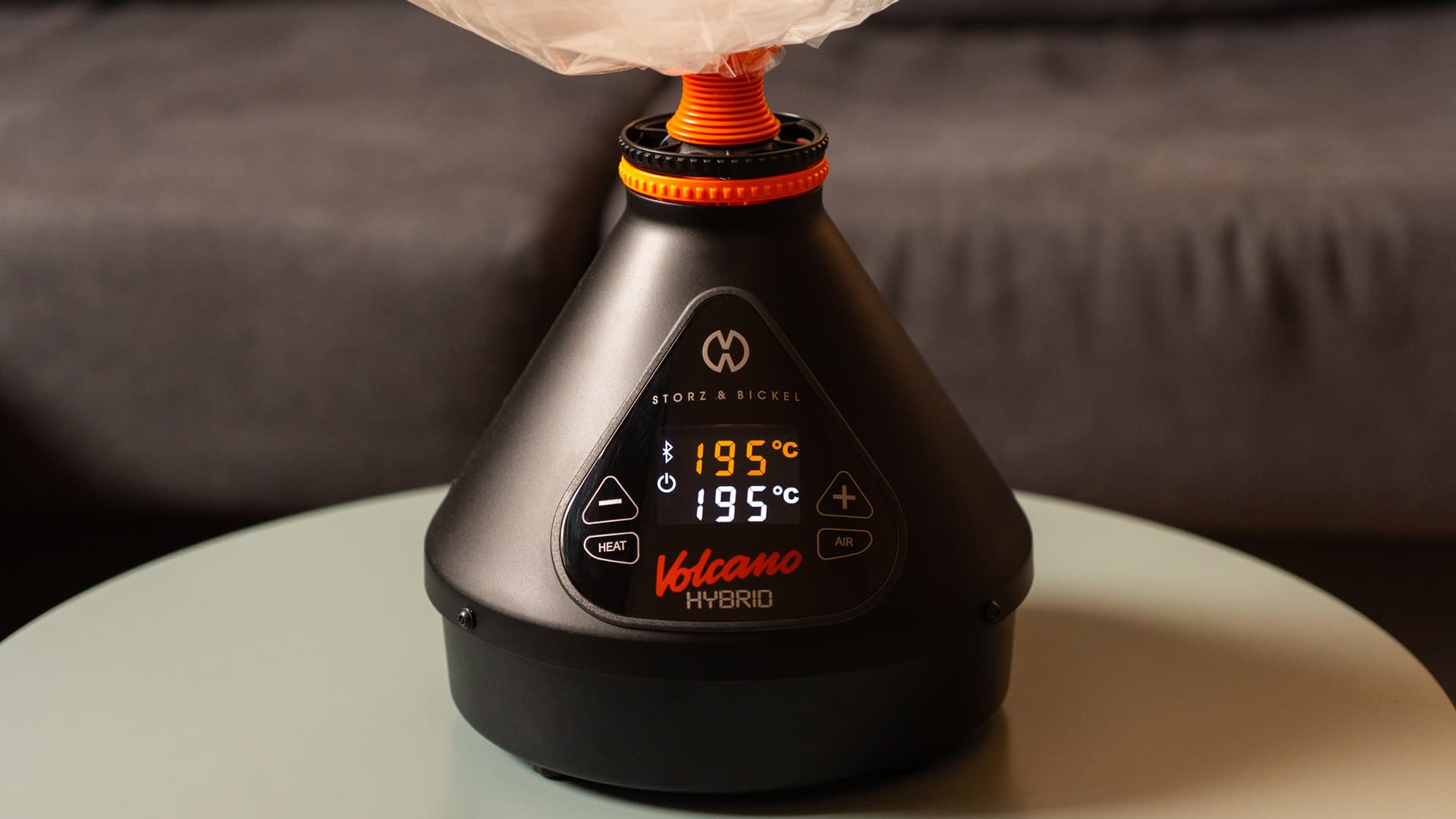
Temperature accuracy varies between vaporizers, and a heater that overshoots will scorch your flower. The number on the screen is the heater's reading, not the temperature inside your bowl. On the Volcano Hybrid, the sensor sits at the heat exchanger.
Vaporizer users report fewer breathing problems
A 2007 survey in the Harm Reduction Journal covered 6,883 cannabis users, 152 of whom mainly used vaporizers. The vaporizer users reported fewer respiratory symptoms, like coughing, phlegm and chest tightness. That held even after accounting for tobacco use and how much cannabis people used.
A separate 2010 pilot at the University at Albany had 20 frequent cannabis users with breathing symptoms switch to a vaporizer for a month. The 12 who didn't catch a respiratory illness during the study reported fewer symptoms and scored better on a lung capacity test. A 2015 review in the Canadian Journal of Respiratory Therapy pulled these findings together and concluded that switching to a vaporizer is easier on your lungs than smoking. If you are switching from smoking, that is an encouraging sign.
Vaporizing still isn't risk-free. A 2008 study in Addiction found high ammonia levels in vapor from heated street cannabis, far more than from research-grade cannabis, and nobody has followed daily vaporizer users over decades yet. We break down the full comparison between vaping and smoking in a separate article.
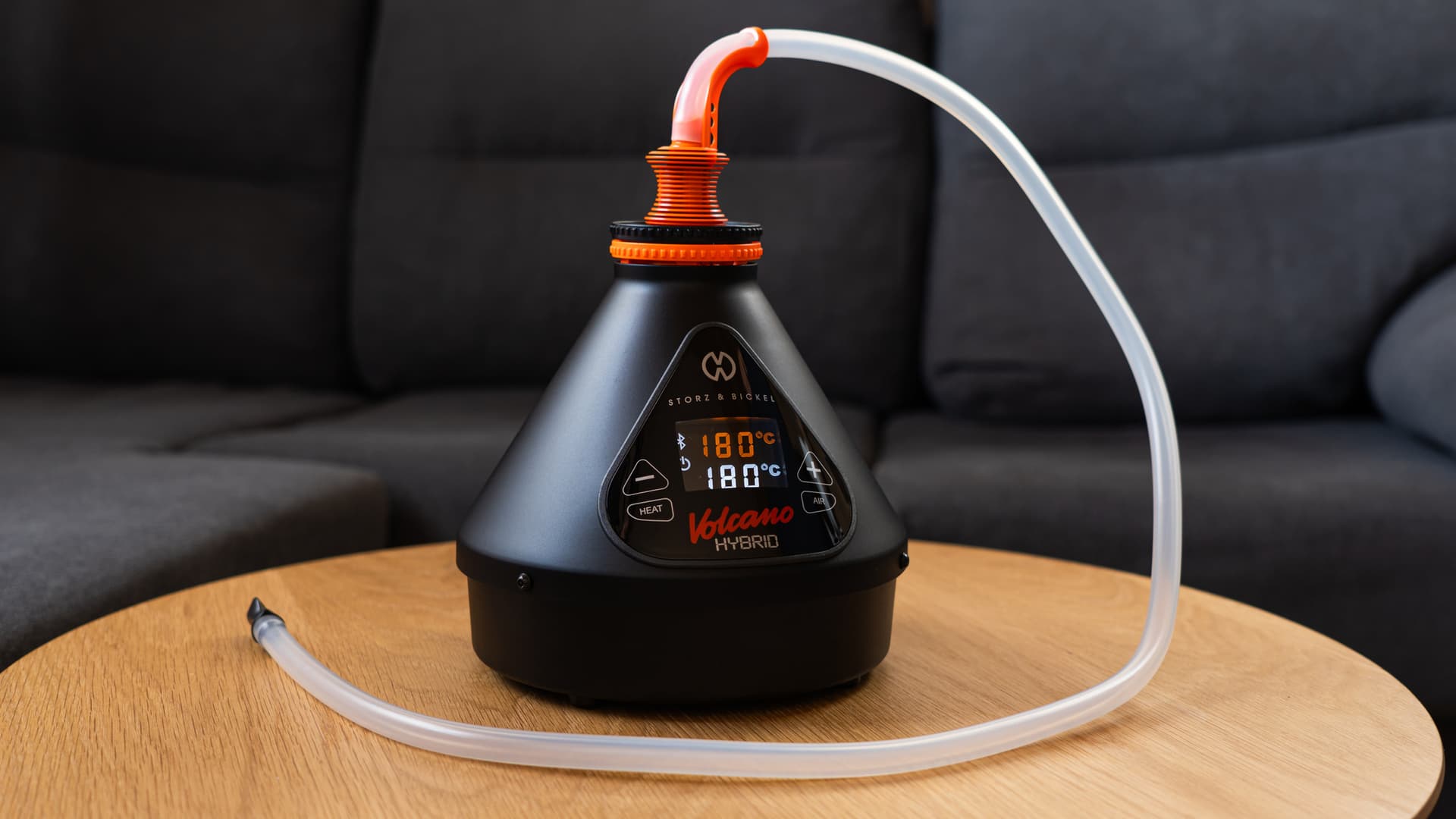
The Volcano Hybrid with its whip attached. This is the consumer model; Storz & Bickel sells its certified medical Volcano separately.
THC works on your heart the same way, vaped or smoked
A 2024 University of Guelph study in the Journal of the American Heart Association had 22 young, healthy cannabis users smoke THC-dominant cannabis, vaporize THC-dominant cannabis and vaporize CBD-dominant cannabis. Smoked and vaped THC raised heart rate and blood pressure by similar amounts, and those jumps tracked with stiffer arteries and a heart that relaxed less well between beats. The CBD-dominant flower left heart rate and blood pressure flat. A vaporizer spares your lungs the smoke, but a racing heart comes with the THC, not the heater.
The 2019 EVALI outbreak centered on THC oil cartridges
In 2019, a wave of severe lung injuries hit the United States. The CDC labeled it EVALI (E-cigarette or Vaping Product Use-Associated Lung Injury). By February 2020, it had counted 2,807 hospitalized cases or deaths, including 68 deaths. Early reporting blamed "vaping" without distinction, creating confusion that persists today.
The CDC's outbreak report tied most cases to THC vaping products, especially ones from friends, dealers and other informal sources. Its prime suspect was vitamin E acetate, a thickening agent added to some THC oil.
The distinction matters: oil cartridges and flower vaporizers are different products. Nicotine e-cigarettes are a third category. Their risks come from nicotine, flavorings and the liquids they heat, and none of those are in a flower chamber. Flower vaporization lets you control the input (whole cannabis flower with no additives).
Warning
Temperature controls what you extract
Higher temperatures pull more cannabinoids out of your flower but give harsher, hotter vapor. Most of our sessions land between 180°C and 210°C, where flavor and extraction balance out.
| Temperature | Vapor character | Trade-off |
|---|---|---|
| Below 180°C | Light, terpene-rich | Slower extraction |
| 180-210°C | Balanced flavor and potency | Where most of our sessions sit |
| Above 210°C | Dense, maximum extraction | Harsher vapor, flavor fades fast |
Go much hotter than the top of your vaporizer's range and you start to scorch the flower, which brings back the smoke you switched to avoid.
Our temperature guide covers how temperature changes flavor, vapor and extraction. Fine temperature control is worth having. The Mighty+ and Venty adjust in 1°C steps, so you can dial in exactly the vapor you like. Budget vaporizers with only three or four presets give you less room to fine-tune.
Vaporizer temperature guide
How temperature changes flavor, vapor and extraction, with our recommended ranges for every kind of session.
Know what your vapor path is made of
Every surface between the heater and your mouth touches your vapor. Our team prefers glass, ceramic and stainless steel in the vapor path, because they take heat well, clean up easily and keep the flavor clean.
Check the cooling unit as well as the chamber. On the Mighty+ and Venty, for example, the cooling unit is plastic. The Volcano Hybrid is a consumer model, and a brand's medical certification only covers the specific models that earned it. That matters if you use medical cannabis.
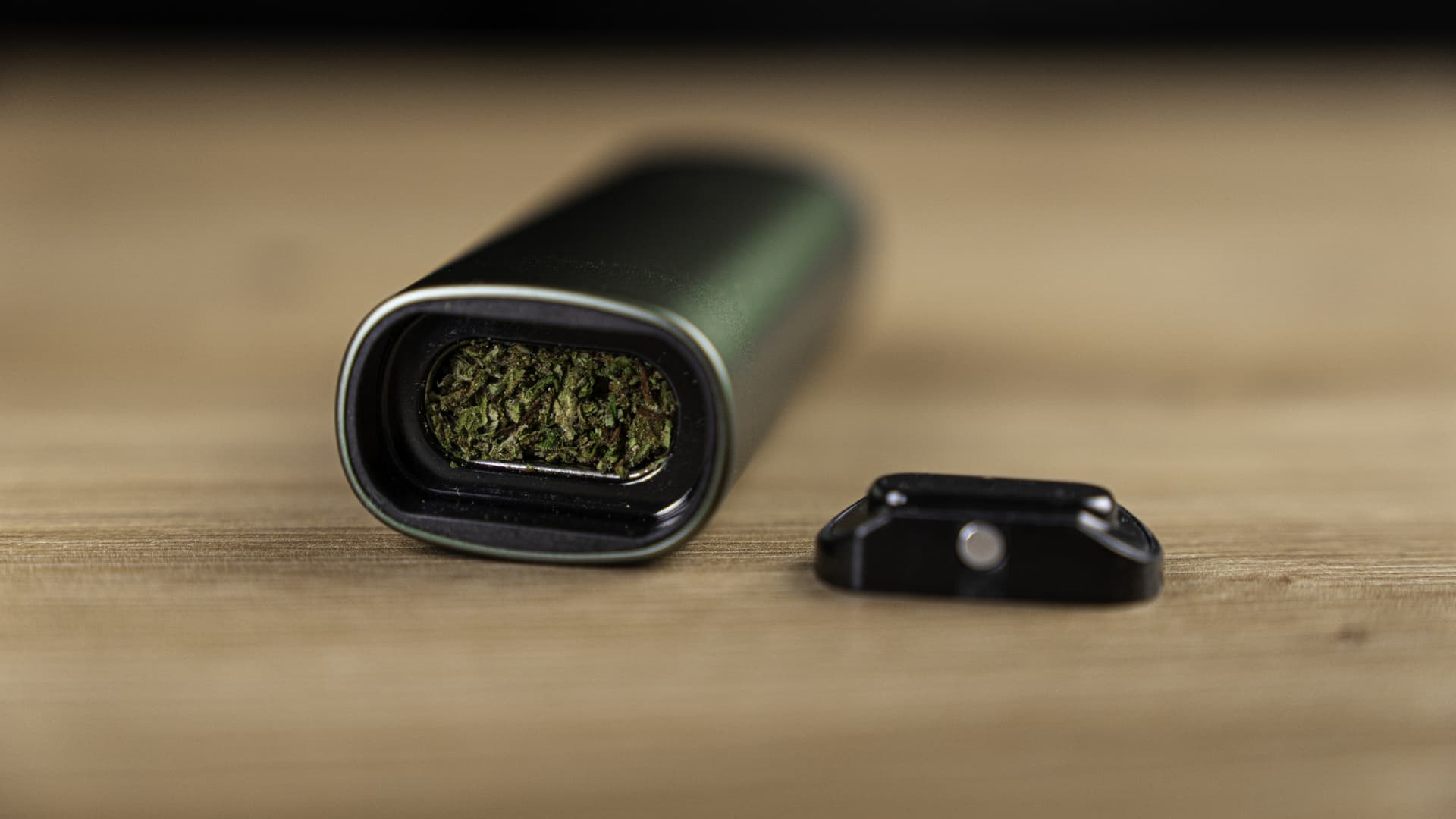
The Arizer Solo 3 takes a different approach: your cannabis sits in a glass aroma tube that doubles as the mouthpiece. Some budget vaporizers put plastic or silicone in the vapor path instead.
Maintenance matters too. Built-up residue makes vapor taste harsh and stale, and a regular cleaning schedule keeps the path clear. Desktop vaporizers cool vapor more thoroughly through longer paths. Portables with big cooling units, like the Venty or Mighty+, narrow the gap.
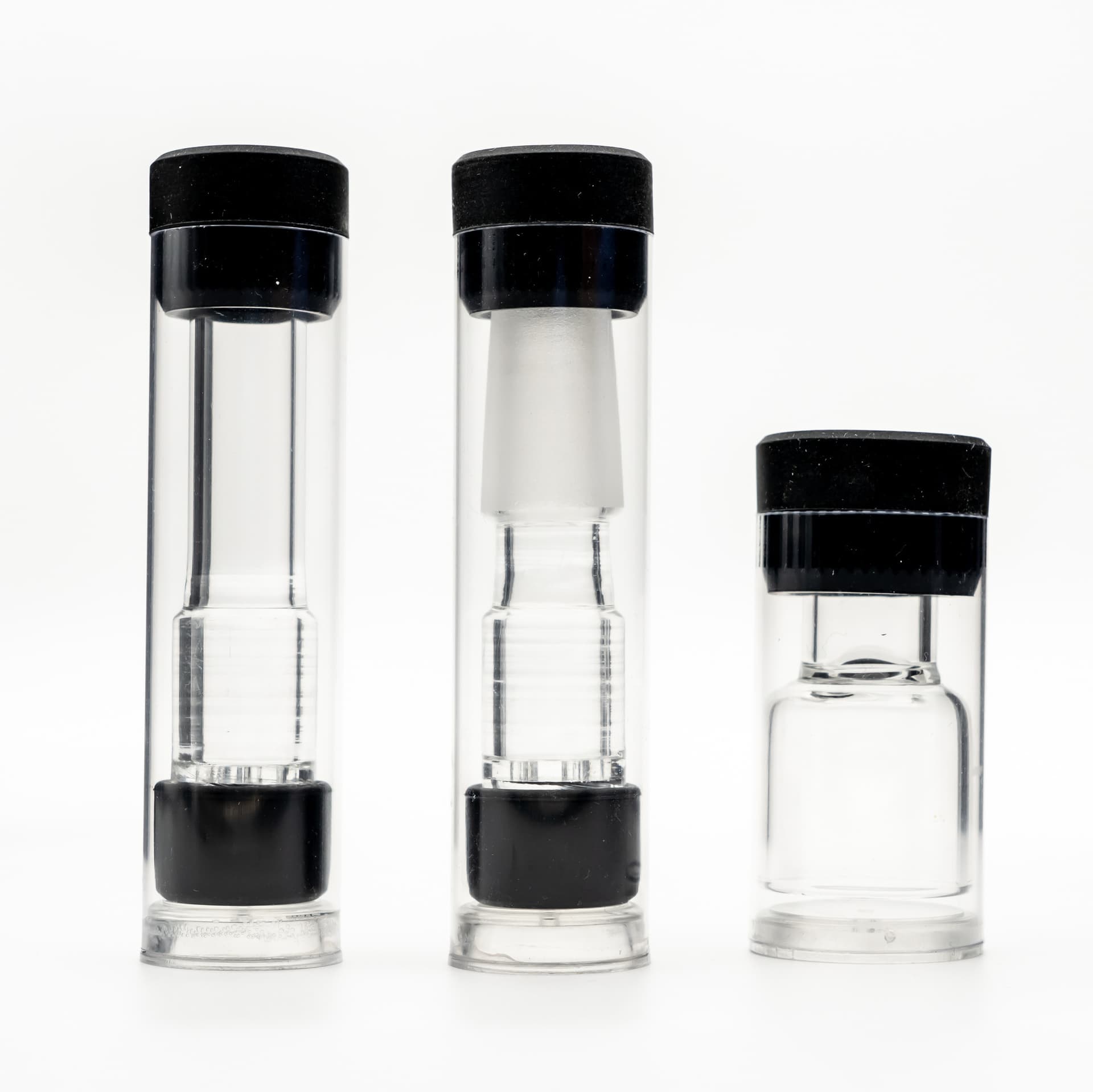
Arizer glass accessories. Glass makes a vapor path easy to check and easy to clean.
Vaping can hit harder than smoking the same dose
In a 2018 Johns Hopkins trial, 17 healthy adults who hadn't used cannabis in the past month took part. On separate days, they smoked or vaped the same THC doses (10 mg and 25 mg). Vaping with a Volcano Medic produced stronger effects, higher blood THC levels and more impairment than smoking the same dose.
In practice, your usual smoking amount can hit harder through a vaporizer.
Your spent flower, known as AVB (already vaped bud), still holds some cannabinoids. Many users repurpose AVB in edibles, extending value from every gram. Its strength varies from batch to batch, so start small.
Tip
Practical safety guidelines for everyday use
Here is what we recommend for safer vaporizer use.
Keep your THC intake in check
Canada's lower-risk cannabis use guidelines favor vaping over smoking, and they also recommend lower-THC products and using less often. THC can still bring on anxiety and a racing heart, whatever heats it. Switching heaters won't make you any less high, so skip driving after a session.
Buy from manufacturers with transparent materials
Look for vaporizers whose makers list the materials for every part of the vapor path on the exact model you're buying. Skip any vaporizer that keeps its vapor path materials a mystery.
Clean your vaporizer regularly
Residue buildup makes vapor harsh and chokes airflow. Follow your model's manual for cleaners and soak times, since they differ. The Mighty+ Medic cooling unit, for example, calls for 70% isopropyl alcohol and no more than 30 minutes of soaking.
Replace worn components
Screens, seals, glass and cooling unit parts wear out over time. A torn screen lets plant material into the vapor path, and a worn seal leaks air and weakens your draw. Swap out cracked glass or a damaged battery right away.
How to clean your vaporizer
A step-by-step routine that keeps your vapor path clear, with photos for every part of the vaporizer.
Key Takeaway
- Less smoke exposure: In a UCSF study, vaping delivered similar THC to joints with less carbon monoxide
- Easier breathing: Vaporizer users report fewer respiratory symptoms than smokers
- Temperature shapes your vapor: Lower settings favor flavor, higher settings pull more and hit harsher
- Materials matter: Know what your exact model's vapor path is made of
- Start low: Vaping can hit harder than smoking the same THC dose, so take less when you switch