

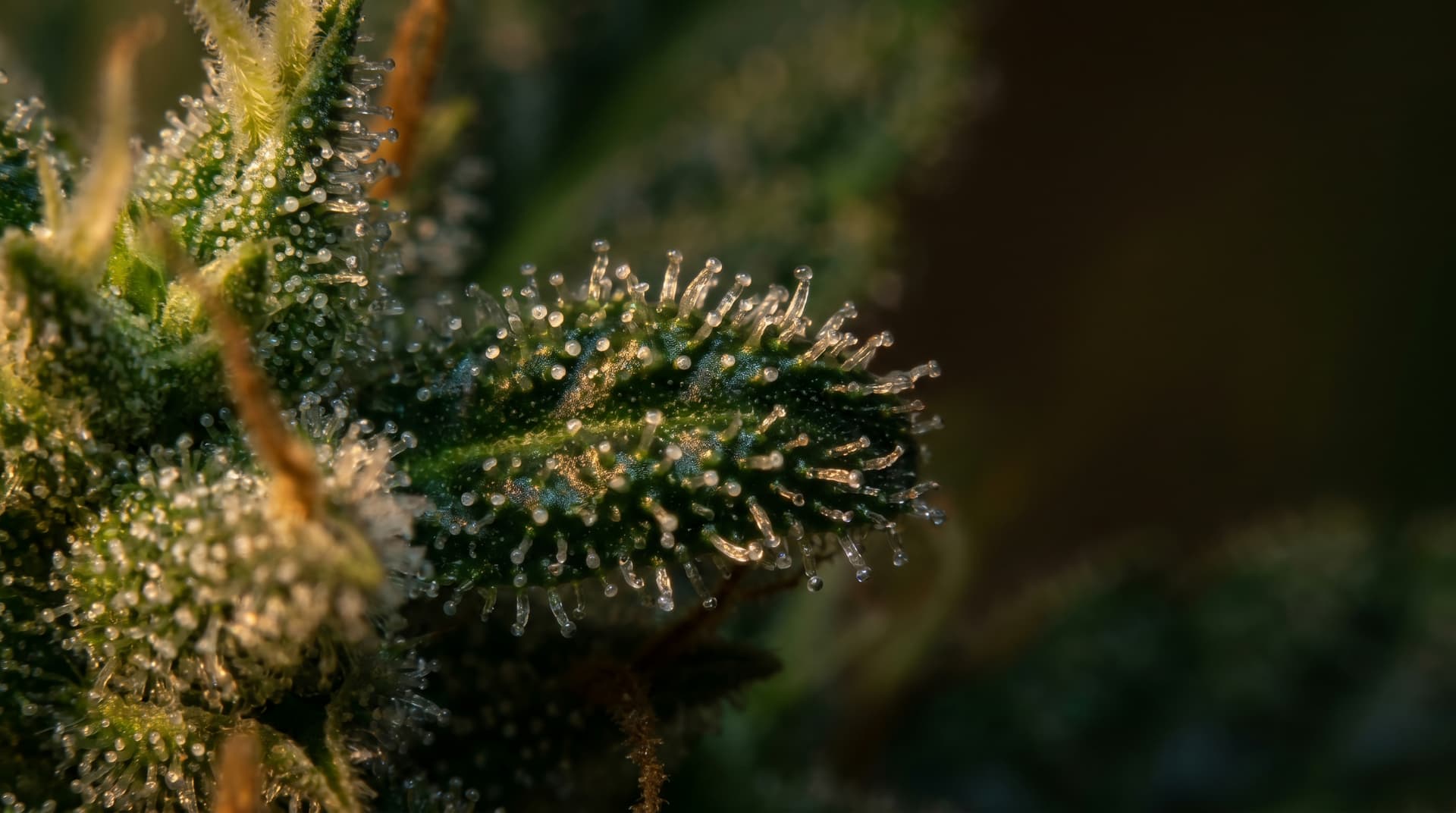
Cannabinoids are the active chemical compounds in cannabis, from THC, which gets you high, to CBD, which doesn't. Together with terpenes, they shape what you feel when you vaporize. Scientists have identified over 100 distinct cannabinoids in the plant, each with its own chemistry and its own way of interacting with your body.
For vaporizer users, cannabinoids matter because your vape is what switches them on. Heat converts the acids in raw flower into THC and CBD. Your temperature setting then shapes how fast you extract them and how the vapor tastes. Understanding these compounds gives you more control over your sessions.
The main cannabinoids at a glance
Here's how the eight you'll see most often on lab reports compare. The details and sources for each one follow below.
| Cannabinoid | Gets you high? | Where it comes from | Strongest evidence so far |
|---|---|---|---|
| THC | Yes | THCA in the flower, activated by heat | Lab-made THC (dronabinol) is FDA-approved for chemo nausea |
| CBD | No | CBDA in the flower, activated by heat | FDA-approved as Epidiolex for three seizure disorders |
| CBN | Mildly | THC that breaks down with age, light and air | Missed its main sleep goal in a 2026 insomnia trial |
| CBG | No | Leftover CBGA, activated by heat | Under study for inflammation and bacteria |
| CBC | No | CBCA in the flower, activated by heat | Activated CB2 receptors in cell experiments |
| THCV | Not at low doses | THCVA in a few strains, activated by heat | Made THC feel weaker for 9 of 10 men in a pilot study |
| Delta-8-THC | Yes, often milder | Mostly converted from CBD | Binds the same CB1 receptors as regular THC |
| CBDV | No | CBDVA in the flower, activated by heat | No better than placebo for focal seizures in a 2021 trial |
Cannabis produces over 100 unique cannabinoids
Cannabinoids are a class of chemical compounds produced in the trichomes of the cannabis plant. These resinous glands coat the flowers and leaves, concentrating the compounds that give each strain its unique effects and flavor.
The cannabis plant makes most of its cannabinoids as acids, like THCA and CBDA. These acids convert to THC and CBD through a process called decarboxylation, which takes heat and time.
This is where vaporizers come in. A vape heats your cannabis enough to activate THC and release terpenes without setting the flower on fire. A lighter flame burns the plant material instead, and much of that flavor goes up in smoke. Our temperature guide covers the settings in detail.
Tip
Your body has a built-in cannabinoid system
The endocannabinoid system (ECS) is a biological signaling network present in all mammals. It consists of three components: endocannabinoids your body produces naturally, the receptors they bind to, and the enzymes that break them down.
Your body produces its own cannabinoids (called endocannabinoids) including anandamide and 2-AG. These molecules help regulate baseline functions like sleep, appetite, and immune response. Two enzymes do most of the cleanup, as a review in Biological Psychiatry lays out: FAAH breaks down anandamide and MAGL breaks down 2-AG. Plant-derived cannabinoids from cannabis interact with the same receptor network, which is why the effects are so wide-ranging.
CB1 receptors concentrate in the brain
CB1 receptors are most abundant in the brain and nervous system, though they show up elsewhere too. They help regulate mood, memory, pain perception, and appetite. THC's psychoactive effects come mainly from its interaction with CB1 receptors. When you vaporize THC-rich cannabis, these receptors are the main target.
CB2 receptors are found throughout the immune system
CB2 receptors sit mostly on immune cells, including those in the spleen and gut. CBD and many other cannabinoids also act on targets beyond CB1 and CB2, and a 2015 review counted more than 65 reported targets for CBD alone. Their effects don't split neatly into a "high" receptor and a "healing" receptor.
Your body already makes cannabinoids of its own. Cannabis works on you because it taps into that same signaling network.
THC and CBD are the two most researched cannabinoids
Delta-9-tetrahydrocannabinol (THC) is the primary psychoactive compound in cannabis. It binds directly to CB1 receptors in the brain, producing the euphoria, altered perception, and appetite stimulation associated with cannabis use.
Cannabidiol (CBD) doesn't produce intoxication. It works on several targets in the body, modulating CB1 and CB2 receptors without binding strongly to either. Its best-proven use is as a prescription medicine. The FDA has approved Epidiolex, a purified oral CBD, for seizures linked to Lennox-Gastaut syndrome, Dravet syndrome and tuberous sclerosis complex. The FDA has also approved dronabinol (Marinol, Syndros) and nabilone (Cesamet), both lab-made THC-type drugs, for chemotherapy nausea, and dronabinol for appetite loss in people with AIDS. Researchers are also studying CBD for anxiety and inflammation.
The ratio of THC to CBD in your cannabis matters as much as the strain name, mostly because it tells you how much THC you're getting. A 1:1 strain usually carries far less THC per gram than a 20:1 THC-dominant strain, so the same bowl hits very differently. If you're exploring CBD-forward strains for therapeutic use, our guide to vaporizers for medical cannabis covers the best options.
CBD doesn't cancel THC. In a 2023 trial, 46 occasional users inhaled 10 mg of THC with 0, 10, 20 or 30 mg of CBD. The extra CBD didn't soften the THC at any of those doses. Balanced strains feel easier mostly because each draw carries less THC, which is why many people like them for daily use.
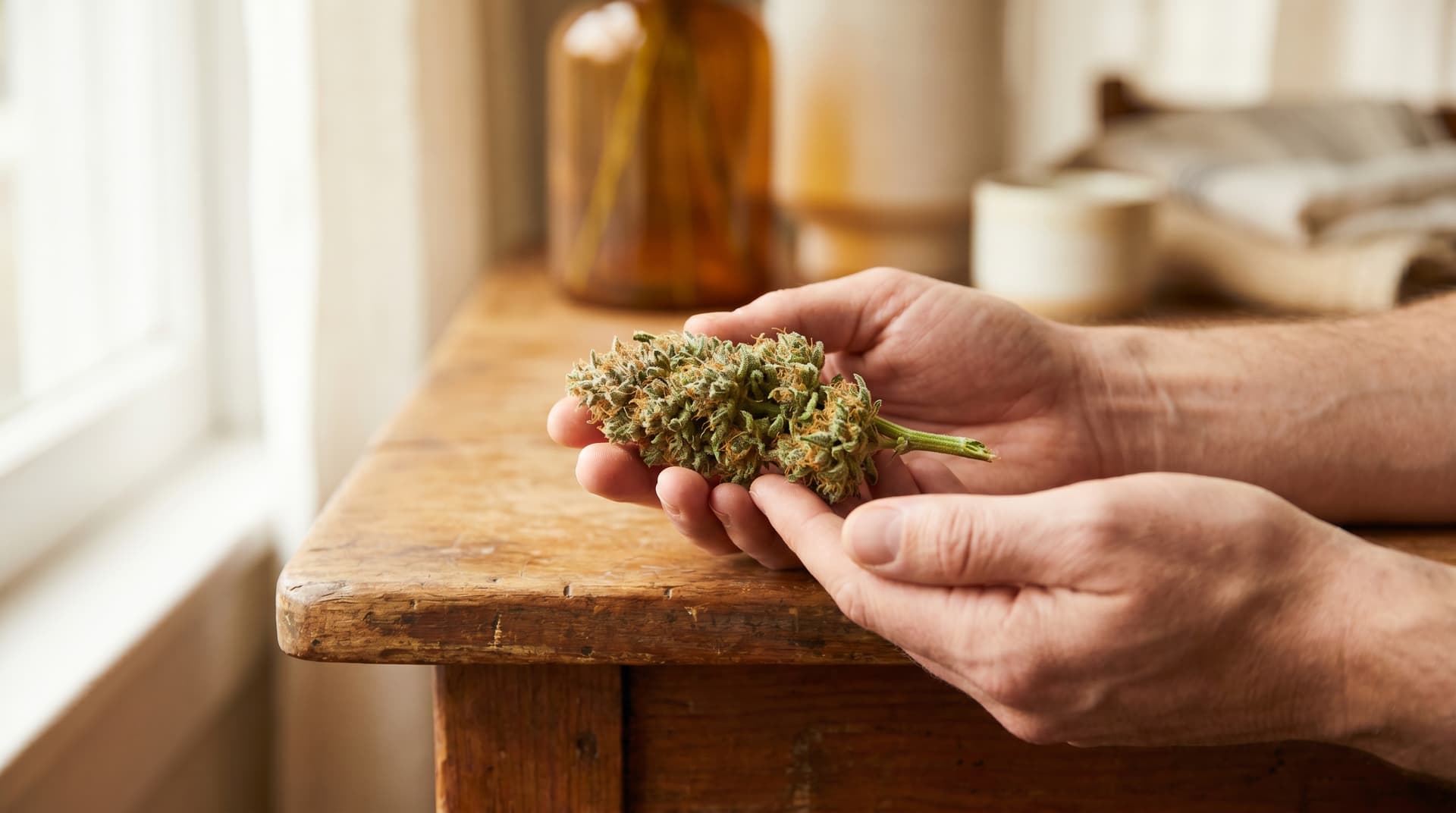
A cannabis bud in hand. A balanced strain feels gentler mostly because it carries less THC per bowl, so watch the dose, not just the ratio.
6 minor cannabinoids worth knowing
Beyond THC and CBD, cannabis carries dozens of minor cannabinoids. "Minor" just means the plant makes less of them. Here are six you'll often see on lab reports and product labels. Names ending in V (THCV, CBDV) are the varins, shorter-chain cousins of THC and CBD that the plant builds from a slightly different starting block.
CBN (Cannabinol)
CBN forms when THC breaks down through exposure to heat, light, or oxygen, so older cannabis tends to carry more of it. It's mildly psychoactive and widely sold as a sleep aid. A 2026 trial gave 20 adults with insomnia 30 mg or 300 mg of oral CBN. Neither dose improved the main measure, time awake after first falling asleep, though a few secondary sleep measures improved at 300 mg.
Tip
CBG (Cannabigerol)
CBG starts life as CBGA (cannabigerolic acid), the precursor the plant uses to build the major cannabinoids. As the plant grows, enzymes convert CBGA into THCA, CBDA, or CBCA. Any CBGA left over becomes CBG when heated, and CBG doesn't get you high. CBG-dominant strains are increasingly cultivated, and researchers are studying CBG for possible anti-inflammatory and antibacterial effects.
CBC (Cannabichromene)
CBC is the heated form of CBCA, one of the three acids the plant builds from CBGA. It doesn't bind effectively to CB1 receptors, so it produces no high on its own. In cell experiments, CBC activated CB2 receptors, one reason researchers are looking at it for pain relief.
THCV (Tetrahydrocannabivarin)
THCV is structurally similar to THC but behaves differently. At low doses it can block CB1 receptors, the same receptors THC uses to get you high. In a small pilot study, 10 men took oral THCV daily for five days before a dose of THC. Nine of them said the THC felt weaker. THCV shows up in only a few strains, so check the lab report if you're hunting for it.
Delta-8-THC
Delta-8-THC occurs naturally in trace amounts. It binds to the same CB1 receptors as Delta-9-THC and still gets you high, though it's often described as milder. Most commercial Delta-8 products are made by chemically converting CBD.
Warning
CBDV (Cannabidivarin)
CBDV is a close chemical cousin of CBD. It drew early interest as a seizure treatment, with a slightly different pharmacological profile from CBD. In a 2021 trial with 162 patients, oral CBDV added to their usual medication did no better than placebo at reducing focal seizures.
What to watch out for
A few things are worth knowing before you load up.
- CBD can clash with your other medicines. The FDA warns that CBD can change how other drugs work, and it saw signs of liver injury in trials of the prescription CBD drug Epidiolex. Talk to your doctor before you make CBD a daily habit.
- THC slows you down behind the wheel. It slows your reaction time and impairs coordination, according to the CDC. Don't drive high.
- Frequent use can turn into cannabis use disorder. The CDC says the risk climbs for people who use often and for people who start young.
- Labels often overstate THC. In a 2023 test of 23 flower samples from Colorado dispensaries, 18 carried less THC than the lowest figure on the label. Read the full lab report (COA), treat the THC number as a ceiling, and start a new jar with a small load.
Why boiling-point charts don't match your vape
You've probably seen charts that give each cannabinoid its own boiling point, as if turning up the heat releases one compound at a time. Real flower doesn't work like that. It's a mix of hundreds of compounds, published boiling points shift with air pressure, and the number on your display isn't the temperature at every point in the load.
What temperature does control is pace. Higher settings pull more out of the load, faster, with denser vapor and a toastier taste. Here's what each part of the picture tells you.
| What you check | What it tells you |
|---|---|
| Lab report (COA) | Which cannabinoids are in your flower, and how much |
| Temperature setting | How hot your heater runs, and how fast you extract |
| Color of the spent flower | How much is left in the load |
Precise control still pays off, because it makes a session you liked easy to repeat. The Volcano Hybrid adjusts in 1°C steps, and in our experience its balloons taste consistent from the first draw to the last. Portable vapes with less precise heaters can swing from hit to hit, so flavor and density drift as you go.
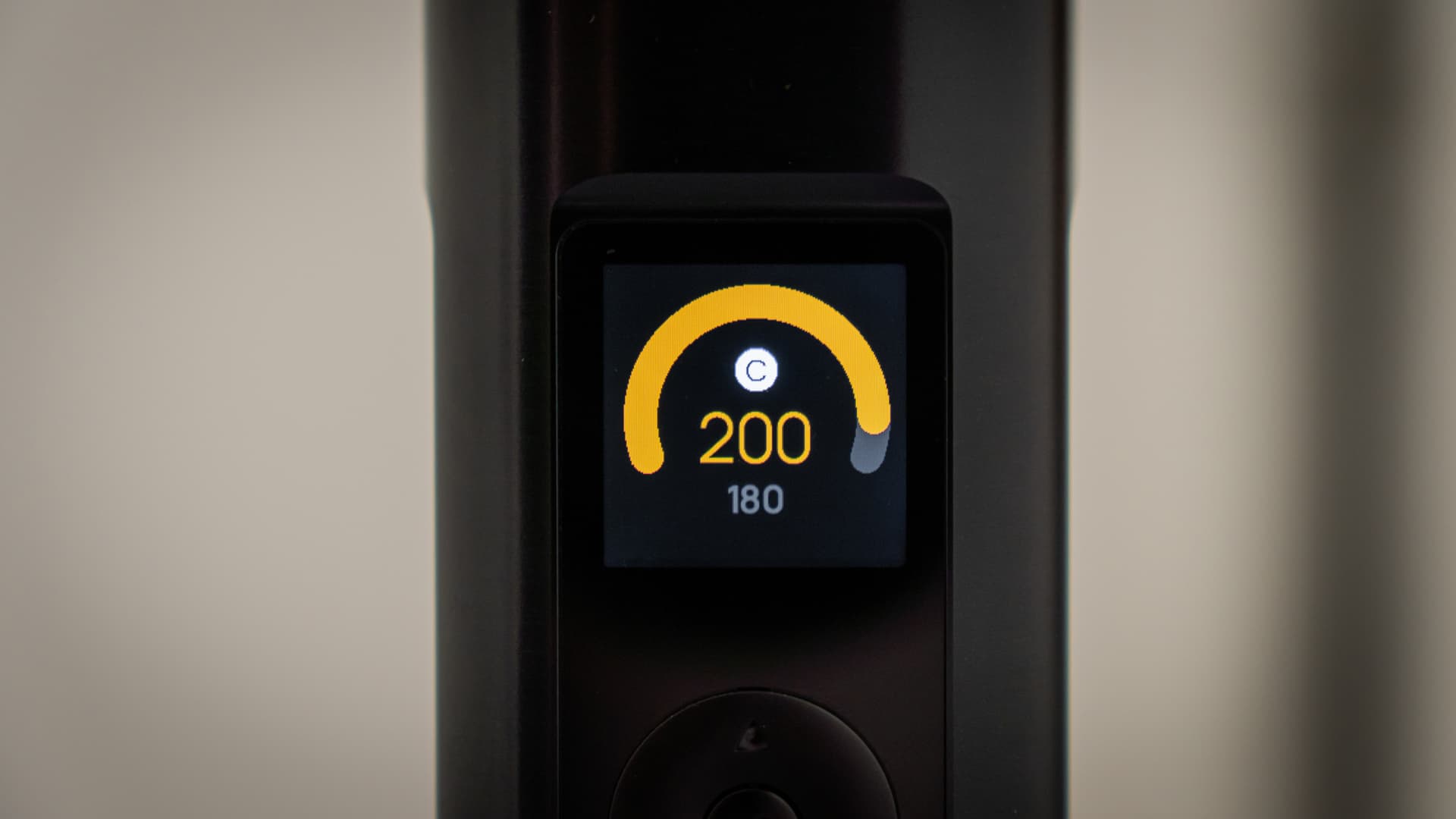
An Arizer Solo 3 display reading 200, with a smaller 180 below. A clear readout lets you step up a few degrees at a time and repeat what works.
The entourage effect is about the whole plant
The entourage effect is the theory that cannabinoids, terpenes, and flavonoids work together to produce effects greater than any single compound alone. Dr. Ethan Russo made the case in a 2011 review in the British Journal of Pharmacology, pointing to a range of possible synergies between cannabinoids and terpenes.
Popular examples include myrcene helping THC reach the brain and linalool adding to CBD's calming effect. Lab tests have since pushed back on part of the theory. A 2019 receptor study found that six common terpenes didn't change how THC acts at CB1 or CB2 receptors.
Where vaping clearly shines is flavor. Because your vape heats the flower without burning it, you taste the strain instead of smoke. Stepping up your temperature through a session lets you enjoy that flavor early and still finish the load.
How cannabis strains shape your vaporizer experience
Pair strain selection with the right temperature to get the most terpene flavor and the fullest extraction from every load.
Vaporizers deliver cannabinoids with a fraction of the smoke
A 2004 study in the Journal of Cannabis Therapeutics tested the Volcano, a convection desktop. On average it delivered about 47% of the THC in the sample, ranging from 36% to 61% across runs. The same cannabis burned in a glass pipe under lab conditions gave up about 78%. That setup kept smoke loss to a minimum, unlike a real joint or bowl. Later lab work on five vaporizers found that THC recovery varies a lot from model to model.
The bigger difference is what comes along with the THC. In the 2004 study, the vapor was almost entirely cannabinoids, with trace amounts of three other compounds. The smoke contained over 111 compounds, including several known toxins called PAHs. Our health and safety overview covers the research in depth.
Efficiency also depends on your vaporizer's heating method. Hybrid heating combines conduction from the oven walls with hot air flowing through the load. The Mighty+ uses this approach, and it's one of the most consistent extractors we've used. Pure convection vapes like the Tinymight 2 can match it hit for hit, but take more technique.
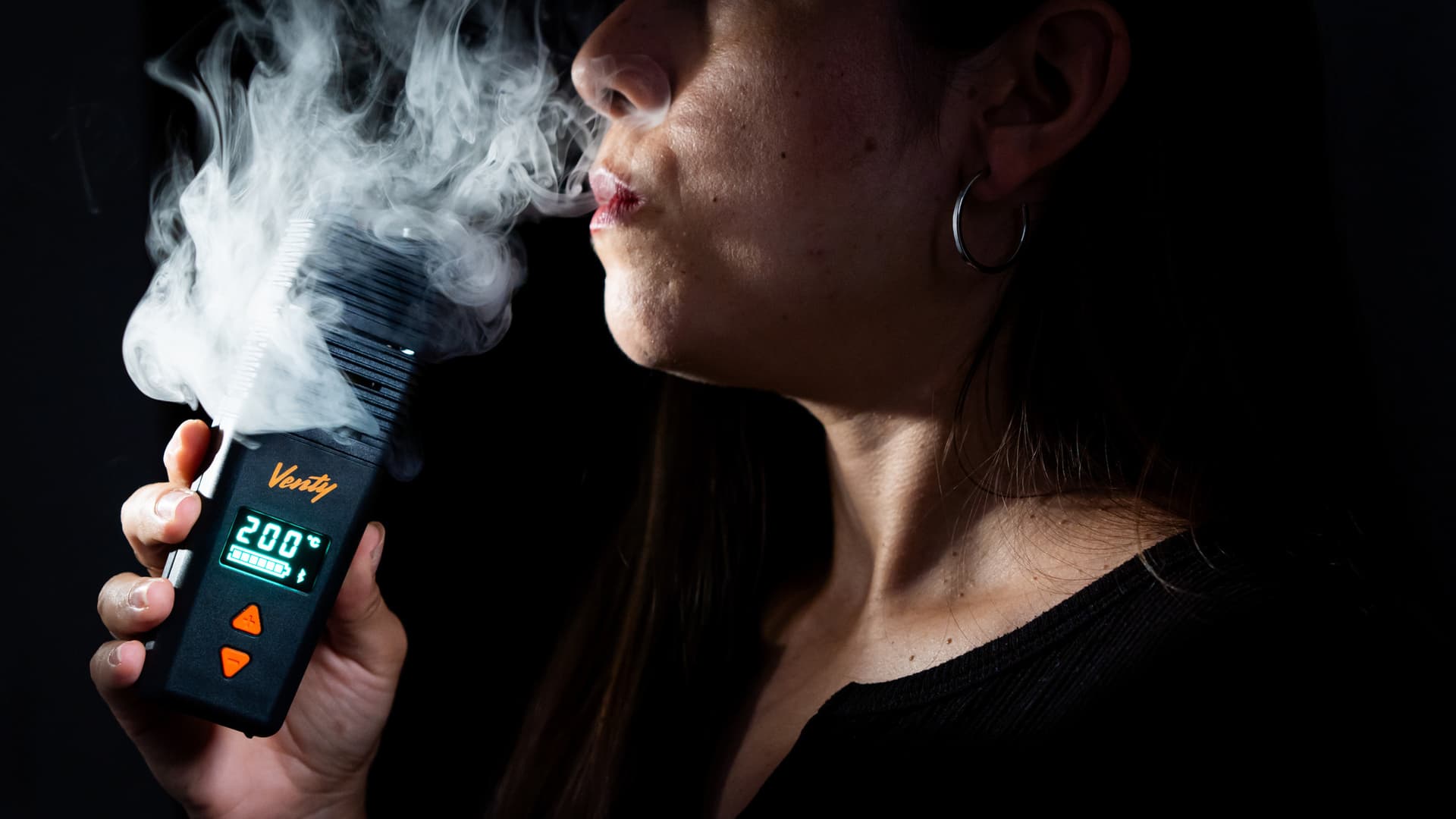
A thick exhale from a Venty set to 200°C. A vape heats the cannabis without setting it on fire, so this is vapor, not smoke.
Practical temperature ranges for every session
We recommend a three-stage approach to get the most flavor and the fullest extraction from a single load.
170-180°C: Flavor first
Light, flavorful vapor with the strain's terpenes up front. Best for short sessions and microdosing.
185-195°C: Balanced extraction
The sweet spot for most users. Vapor gets fuller, the flavor turns roastier, and each draw carries more. Most session vaporizers perform best in this range.
200-210°C: Maximum extraction
Vapor becomes dense and the taste turns toasty. This is where you finish the load and pull out what's left.
Tip
The Venty makes this easy. It's a session vaporizer that heats up in about 20 seconds and has adjustable airflow. Start low, take a few terpy draws, then bump the temperature to finish the same load. You get flavor early and dense vapor late without committing to a single temperature. Our heating methods guide explains how different heater types affect extraction behavior.
Key Takeaway
- 100+ cannabinoids, one receptor system. THC and CBD lead, and minor compounds like CBN and CBG round out the mix
- Heat activates your flower. Your vape turns THCA into THC without burning the cannabis
- CBD won't cancel THC. Watch how much THC you take, not just the ratio
- Step your temperature up. Start around 175°C for flavor, finish near 210°C for dense vapor
- Precise control helps. Small steps make a session you liked easy to repeat