

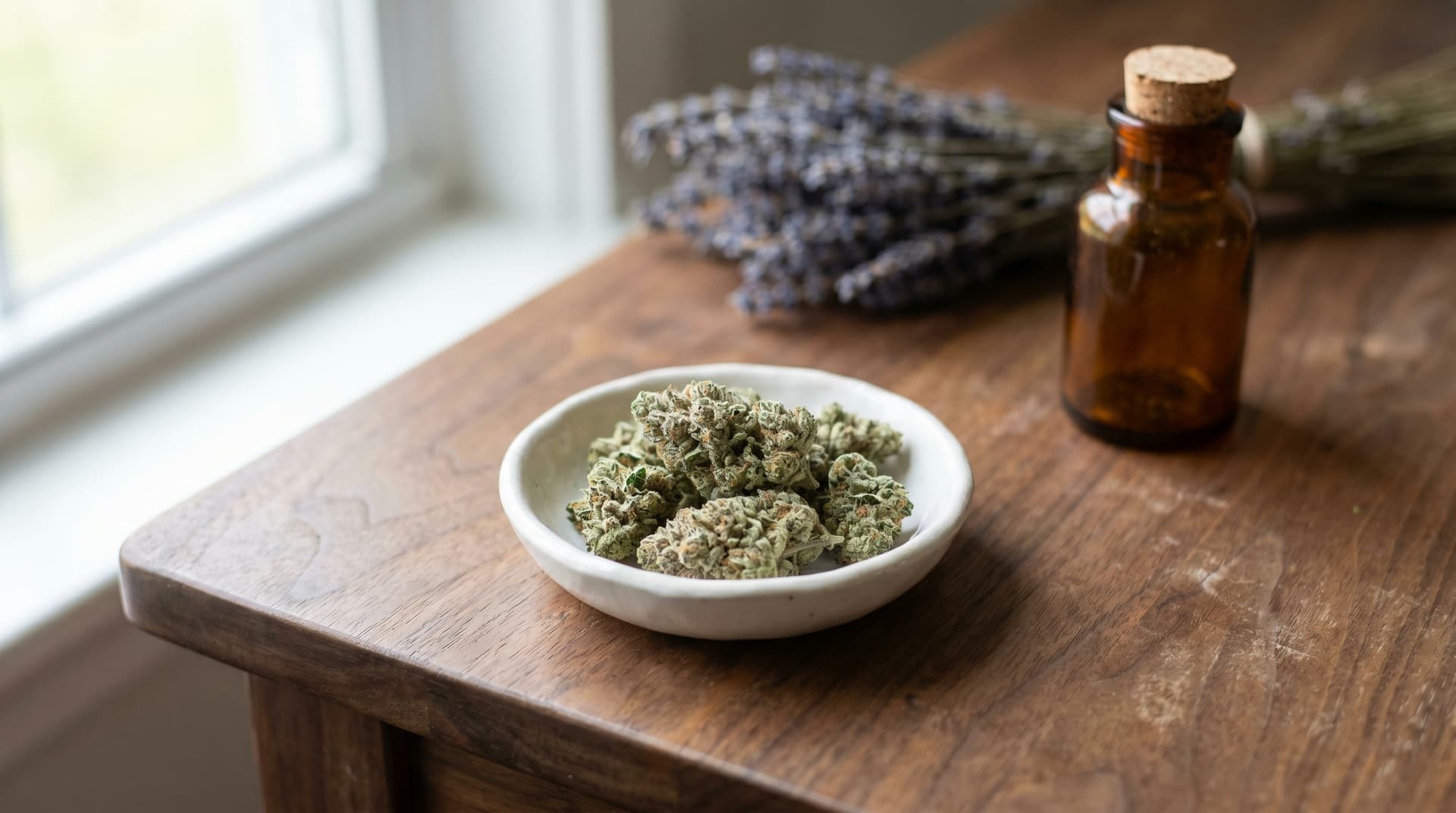
A medicinal cannabis vaporizer has one job: deliver the same dose, the same way, every time. Precise temperature control, consistent loads and a clean vapor path make it much easier to find what works for you and repeat it. We cover 50 vaporizers on this site, and the ones in this guide are the ones we'd hand a patient. For our ranked list, see the best vaporizers for medical use; this page is about using one well.
Vaporizing heats cannabis without burning it. In a 2007 study of 18 people, vapor delivered about the same THC as smoking with much less carbon monoxide. You still get the cannabinoids and terpenes in your flower, and vapor is far easier on the throat. It's gentler than smoke, not harmless, and our roundup of the safety research covers what the studies found.
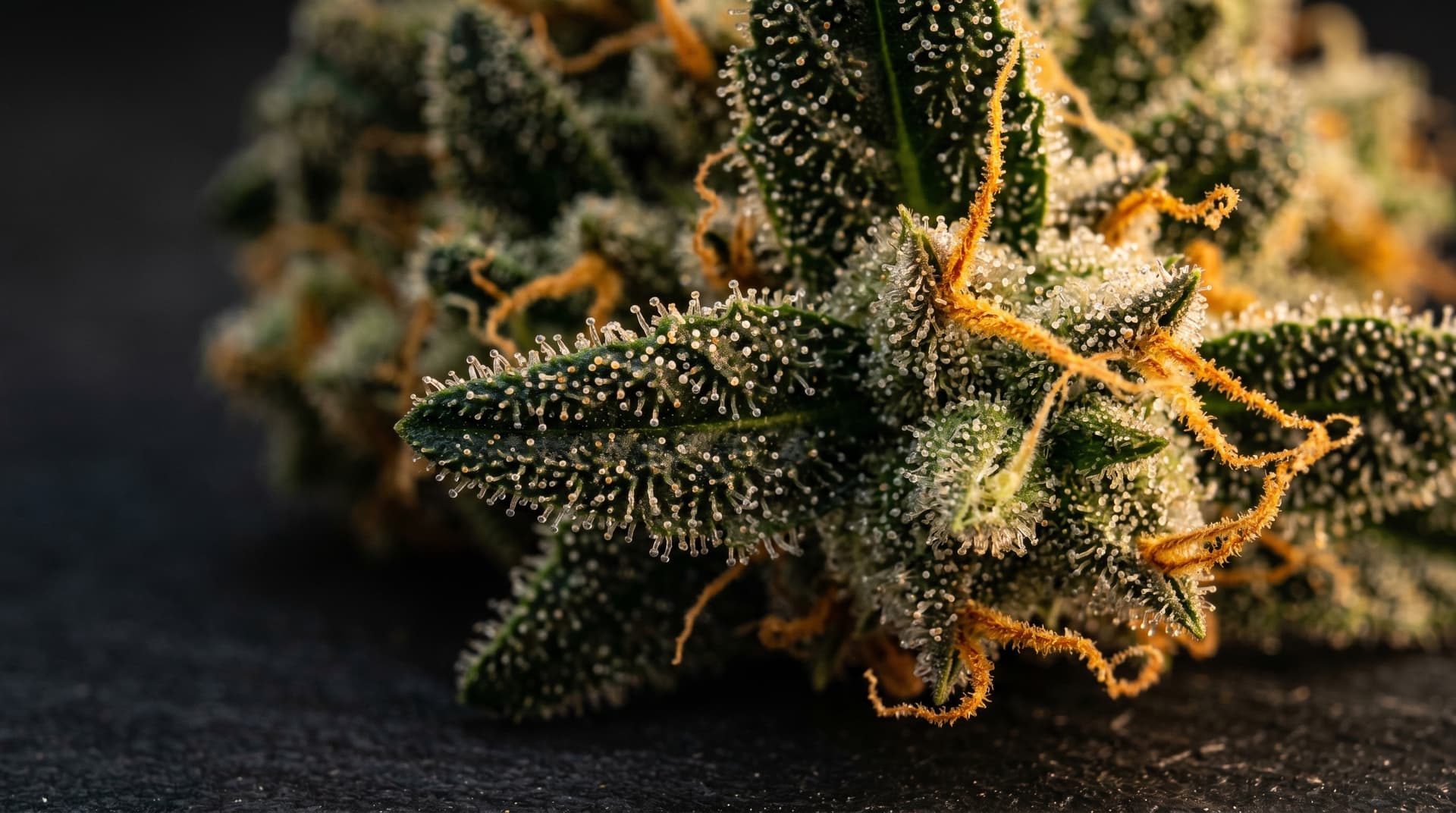
Trichomes, the tiny resin glands on the flower, hold the cannabinoids and terpenes you're after.
If you're transitioning from smoking to vaporizing, the switch is straightforward. What matters most is matching a vaporizer to how you medicate rather than chasing features built for enthusiasts.
Vaporized cannabis kicks in within minutes
Speed is the biggest reason we steer patients toward vapor. Inhaled cannabis starts working within seconds to minutes and hits hardest after 10 to 30 minutes. Edibles take 30 minutes to 2 hours just to kick in. Inhaled effects last 2 to 4 hours, while swallowed cannabis peaks after 2 to 4 hours and lasts 4 to 8. For patients who vape for pain or nausea, that gap matters.
Vaporizers also let you adjust your dose as you go. Take a draw, give it time to build, then decide whether you need more. Edibles and oil capsules lock you into a fixed dose on a delayed timeline, with no way to adjust once you've swallowed it. Swallowed THC is also harder to predict. A 2007 review of how the body processes cannabinoids puts oral bioavailability at 4 to 20%, because absorption varies and the liver breaks down much of the dose before it reaches your bloodstream. For a complete breakdown of how vaporizers compare to other consumption methods, we cover every delivery route and its tradeoffs.
Vapor starts working in minutes. Edibles can take up to two hours just to kick in.
Temperature control lets you repeat what works
Cannabinoids and terpenes come off the flower gradually as the heat climbs, not all at once. Lower settings give lighter, more flavorful vapor. Higher settings pull more out of the flower, with thicker and harsher clouds. A vaporizer with 1°C control lets you find the spot you like and land on it every session.
Here's what that looks like in practice. Start around 180°C for flavorful vapor. Step up to 190°C when you want thicker clouds. Push toward 210°C near the end of the bowl to get the rest out.
Our temperature guide goes deeper on how each setting changes flavor and extraction.
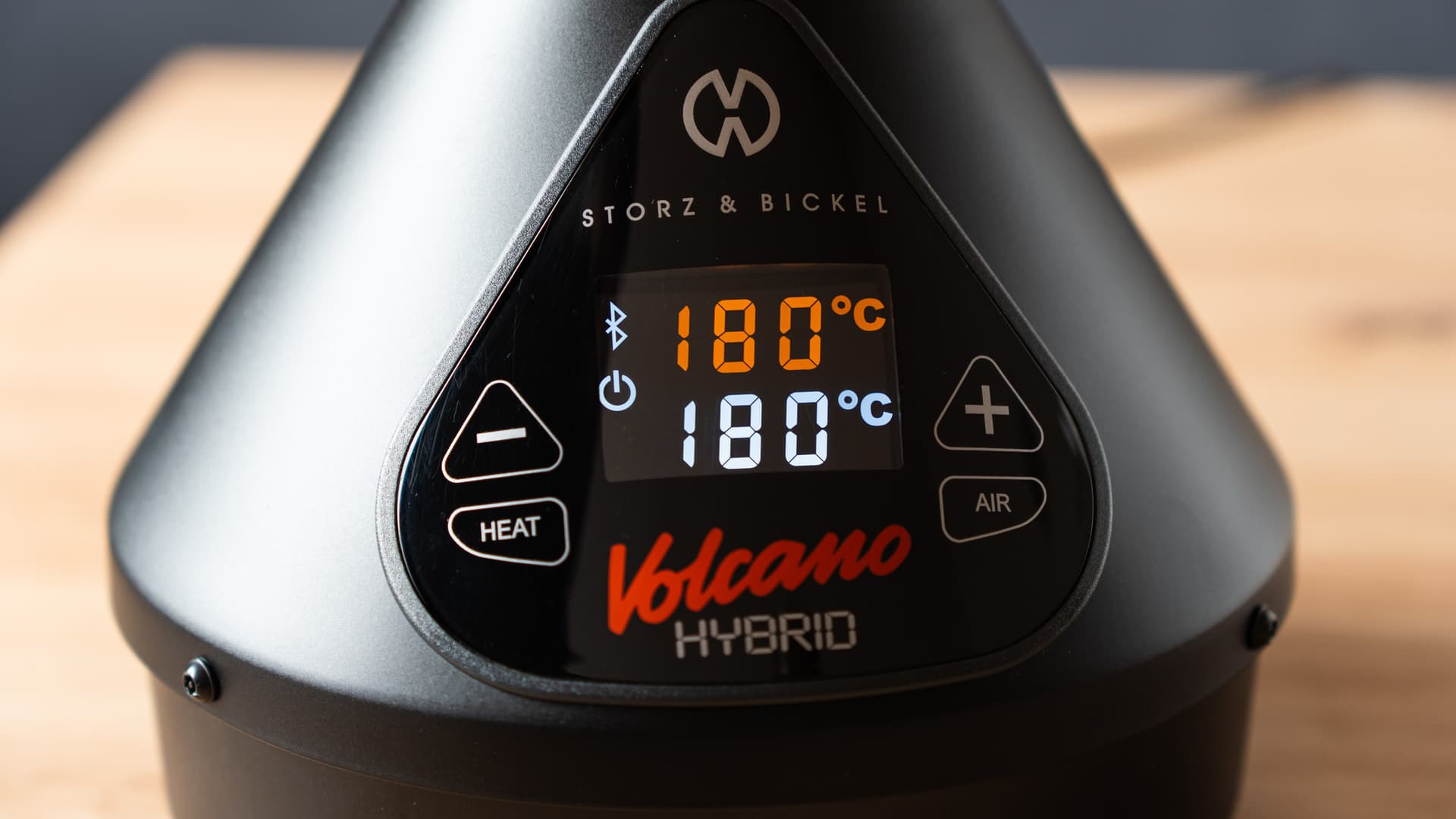
The Volcano Hybrid shows current and target temperature side by side, adjustable in 1°C steps across 40-230°C.
Fixed presets make fine-tuning hard
Vaporizers with 3 or 4 temperature presets force you into big jumps between settings. That's too coarse when you're dialing in a daily routine. If 185°C feels right and 195°C feels like too much, a "low, medium, high" button can't give you the middle.
Every vaporizer we recommend here adjusts in 1°C steps, so you can repeat the exact setting that works for you.
Tip
Five features medical patients should prioritize
1°C temperature control
For us, this is the most important spec for medical use. It lets you repeat the same setting every session. That consistency matters when you're tracking how you respond and adjusting your routine.
Clean vapor path materials
Medical patients inhale vapor several times a day, sometimes for years, so it pays to know what the vapor touches. Look for makers that list their vapor-path materials, like borosilicate glass, stainless steel or ceramic, and spell out how to clean them. The Arizer Solo 3 is a good example, with glass aroma tubes that give some of the cleanest-tasting vapor we've had from a portable.
Consistent loads with dosing capsules
Dosing capsules are small metal cups you fill ahead of time and drop into the oven. Weigh or pack them the same way each time and every session starts from the same amount of flower. That makes it much easier to track your dosing over time. The Venty and Mighty+ take them directly, and the Volcano Hybrid takes them with its capsule adapter.
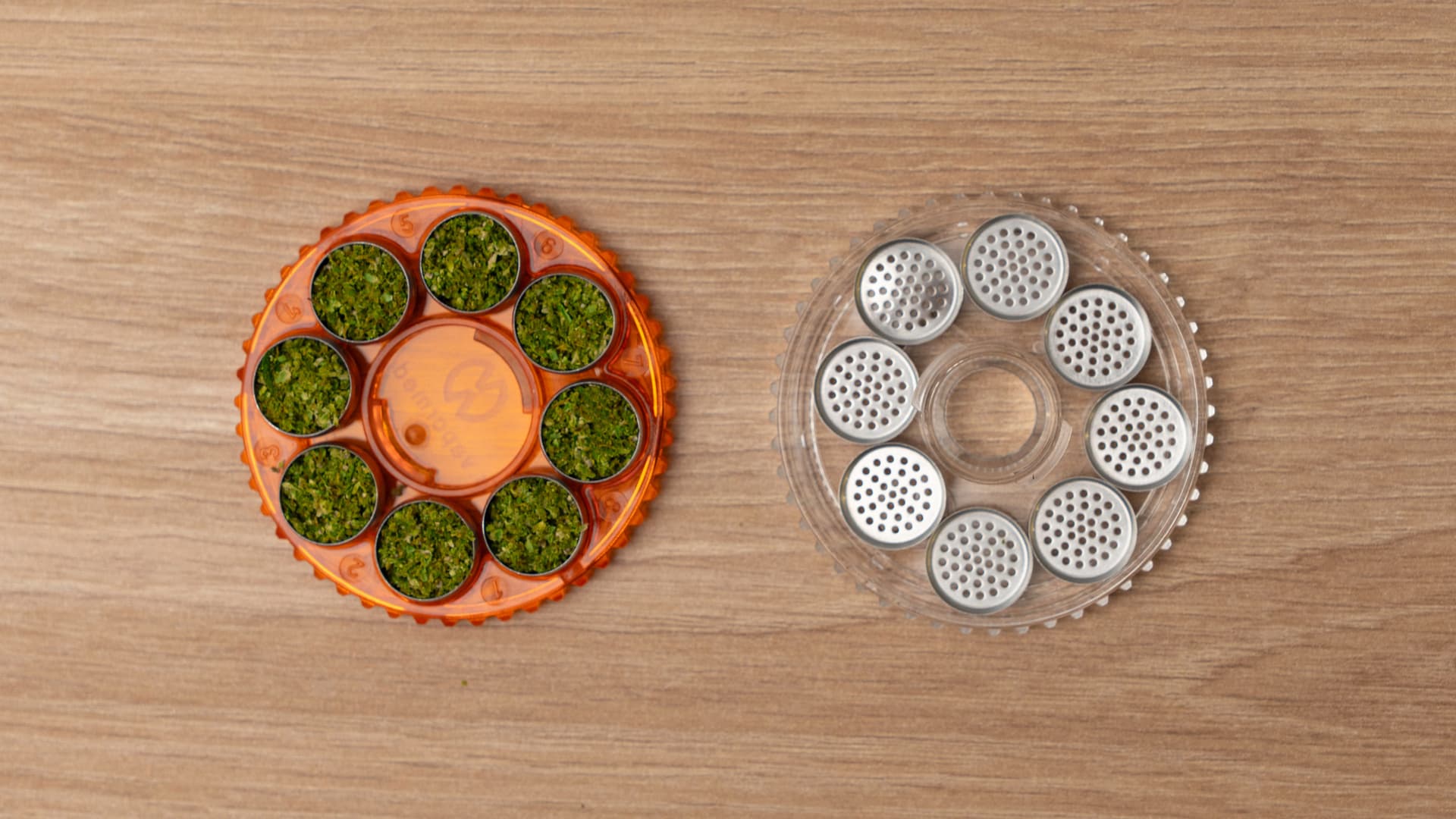
Each magazine holds eight capsules, so you can prep a day's worth in one sitting.
Session mode for long sittings, on-demand for quick hits
A session vaporizer stays at temperature for several minutes, which suits patients who medicate in longer sittings for ongoing symptoms. An on-demand vaporizer heats in short bursts when you press the button, so you can take a single hit and put it away. That's handy when you only want a draw or two.
Some vaporizers offer both modes. Match the heating style to how you usually medicate.
All-day battery for uninterrupted treatment
Running out of battery mid-session is annoying for anyone. When you medicate on a schedule, it throws off your whole day. We look for 8 or more sessions per charge, or pass-through charging so you can vape while plugged in.
Convection, conduction or hybrid
Conduction heats cannabis through the chamber walls, so it warms fast but needs a stir. Convection pushes hot air through the load for even extraction and no stirring. Hybrids like the Venty, Mighty+ and Volcano Hybrid do both, which is why we pick them for patients who want every session to match. Our guide to heating methods explains each type in more depth.
Bring your vaporizer into the prescriber conversation
Tell your prescriber you plan to vaporize flower, share the temperature and capsule load you use, and keep a simple log of dose, time and effect. That log is what makes follow-up appointments useful.
Your first session, step by step
Start small and change one thing at a time. That's how you land on a routine you can repeat.
- Grind your cannabis medium-fine.
- Weigh about 0.1 g into a dosing capsule and load it.
- Set the temperature to 180°C.
- Take one slow draw.
- Wait 10 to 30 minutes and note how you feel.
- Next time, step up 5°C or add a draw.
Write down the date, temperature, load and draws each time. After a week, that log shows you and your prescriber what works.
Desktop vaporizers deliver the most consistent sessions at home
Desktop vaporizers plug into the wall, so there's no battery to run down mid-session. They suit patients who mostly medicate at home and want the smoothest, most reliable vapor.
The Volcano Hybrid is our top desktop pick. Its hybrid heating reaches 180°C in about 40 seconds, and the roomy filling chamber handles long sessions easily. You get both balloon bag and tube delivery. Fill a balloon, set it down, and sip at your own pace over the next few minutes. Or attach the tube, leave the pump off, and draw straight through the chamber.
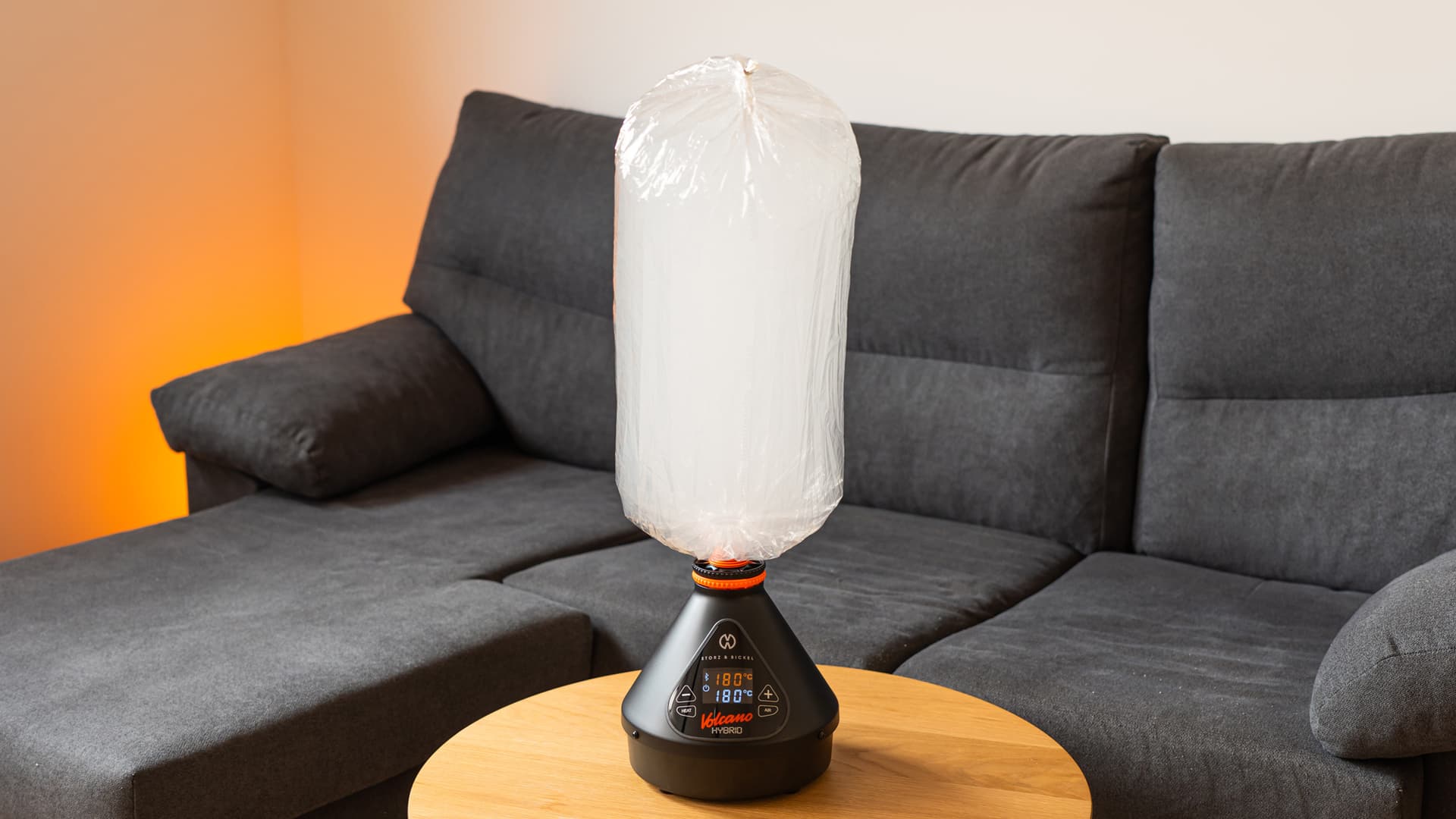
Fill the bag once, set it down, and sip without holding anything hot.
If you need a certified medical model, Storz & Bickel sells the Volcano Medic 2 and Mighty+ Medic. Both are TÜV-certified medical vaporizers, classified under the DIN EN 60601 standard for medical electrical equipment and built under ISO 13485 quality management. They aren't approved for sale in the US and some other countries. Our guide to the best vaporizers for medical use compares them with the consumer Hybrid and Mighty+.
For patients on a tighter budget, the Arizer XQ2 uses pure convection heating, a glass bowl, and both balloon and whip options. It adjusts in 1°C steps and costs far less than the Hybrid. See our full desktop vaporizer rankings for more options.
Best portable vaporizers for medical patients who need daytime dosing
Portable vaporizers let you medicate away from home, which matters when symptoms follow you through the day. The tradeoff is battery life and slightly less consistent vapor than a desktop.
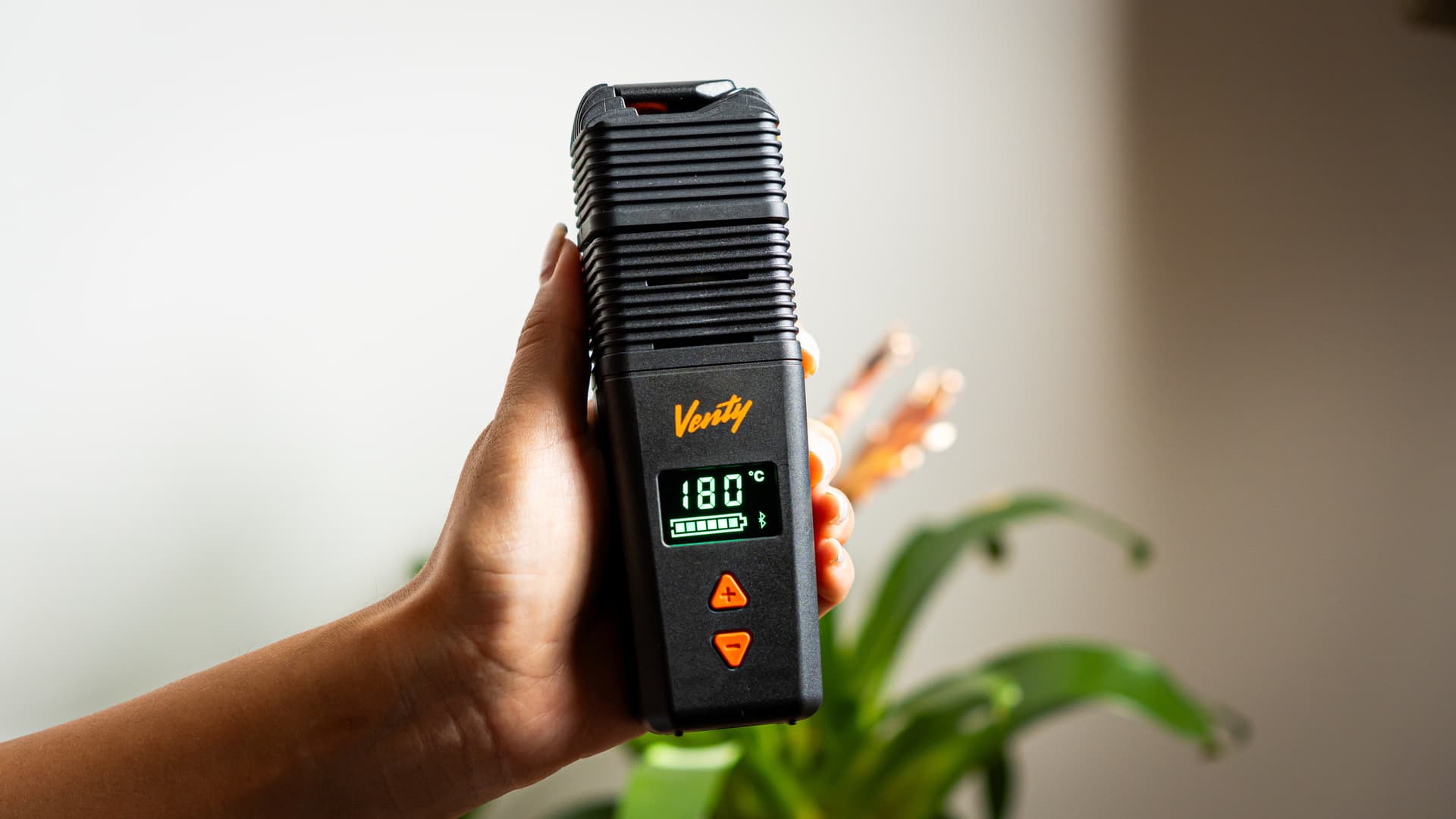
The Venty's 20-second heat-up and capsule support make it our top portable for medicating on the go.
The Venty is our top portable pick for medical patients. It heats up in about 20 seconds, its adjustable airflow goes up to 20 L/min, and its two built-in batteries gave us 11 sessions per charge. It also takes Storz & Bickel dosing capsules, so you can fill a day's worth each morning.
The Mighty+ offers the same hybrid heating and capsule support in a 242 g body. Its roughly 60-second heat-up is slower than the Venty's, but its PEEK plastic cooling unit delivers consistently smooth vapor that's easy on the throat. You load it, set the temperature and never stir. If warm vapor bothers you, the Mighty+ has the best cooling we've tried in a portable.
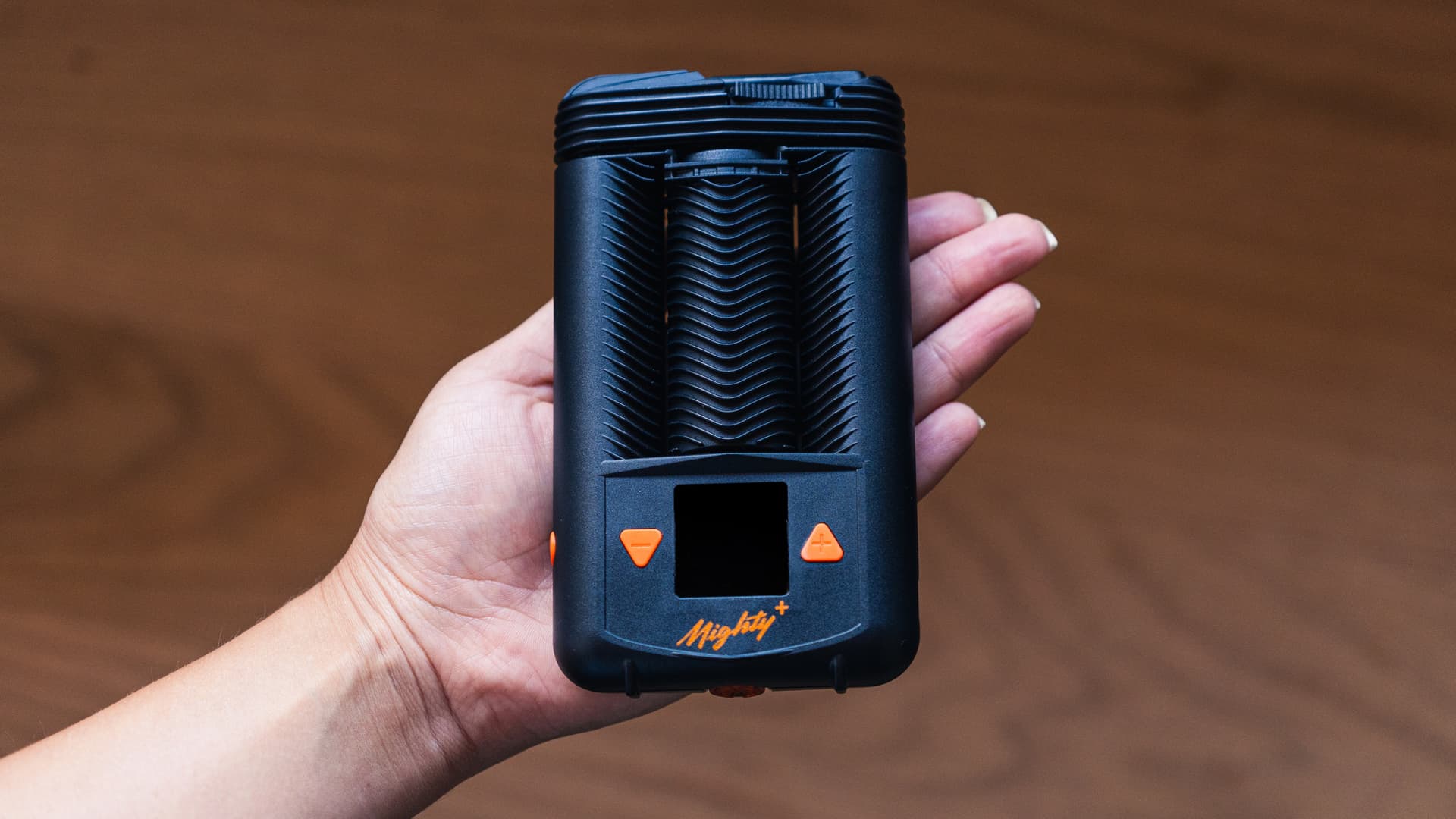
It's a handful, but the Mighty+ rewards you with smooth, no-stir sessions.
Budget-conscious patients should consider the Fury 3. It pairs hybrid heating with haptic feedback and USB-C charging in a 159 g body, heats in about 20 seconds, and costs less than half what you'd pay for a Venty. Its small chamber, about 0.2 g, makes light loads easy. We got 6 sessions per charge, which covers moderate daily use. Our portable vaporizer rankings cover the full lineup.
Matching your vaporizer to how you medicate
How you medicate matters as much as what you're treating. Use this table as a starting point, then adjust temperature and session length as you learn what works for you.
| Your situation | Best approach | Our picks | Starting setup |
|---|---|---|---|
| Long home sessions | Session mode, long even extraction | Mighty+, Volcano Hybrid | Step up the heat as you go |
| Quick hits | Fast heat-up, small capsule loads | Venty | One draw, then wait before the next |
| Sensitive throat | Vapor cooling priority | Volcano Hybrid balloon, Mighty+ cooling unit | Lower heat, cooler vapor |
| Tight budget | Hybrid heat, small chamber | Fury 3 | Light loads, about 0.2 g |
Keeping your medical vaporizer clean
Residue buildup dulls flavor and gets unhygienic over time. If you medicate daily, clean more often than a casual user would. Brush the chamber and screens after every session, and give the cooling unit or mouthpiece a full clean at least once a week. A dirty oven makes vapor taste stale and harsh, the opposite of why you switched.
Most vaporizers clean up with a brush and isopropyl alcohol. Soak only the parts your manual allows, and keep the body dry. Dosing capsules also keep the oven cleaner, since the cannabis sits inside the capsule rather than on the oven walls. Our step-by-step cleaning guide covers model-specific methods and the tools you need.
How to clean any cannabis vaporizer
Step-by-step methods for every major vaporizer, with the tools and intervals that matter most for medical patients.
Key Takeaway
- Home sessions. Volcano Hybrid for the most consistent desktop vapor
- Portable dosing. Venty with 1°C control, capsules, and 11 sessions per charge in our test
- Budget pick. Fury 3 at under half the Venty's price
- Starting point. Begin around 180°C, step up slowly, and note what helps