

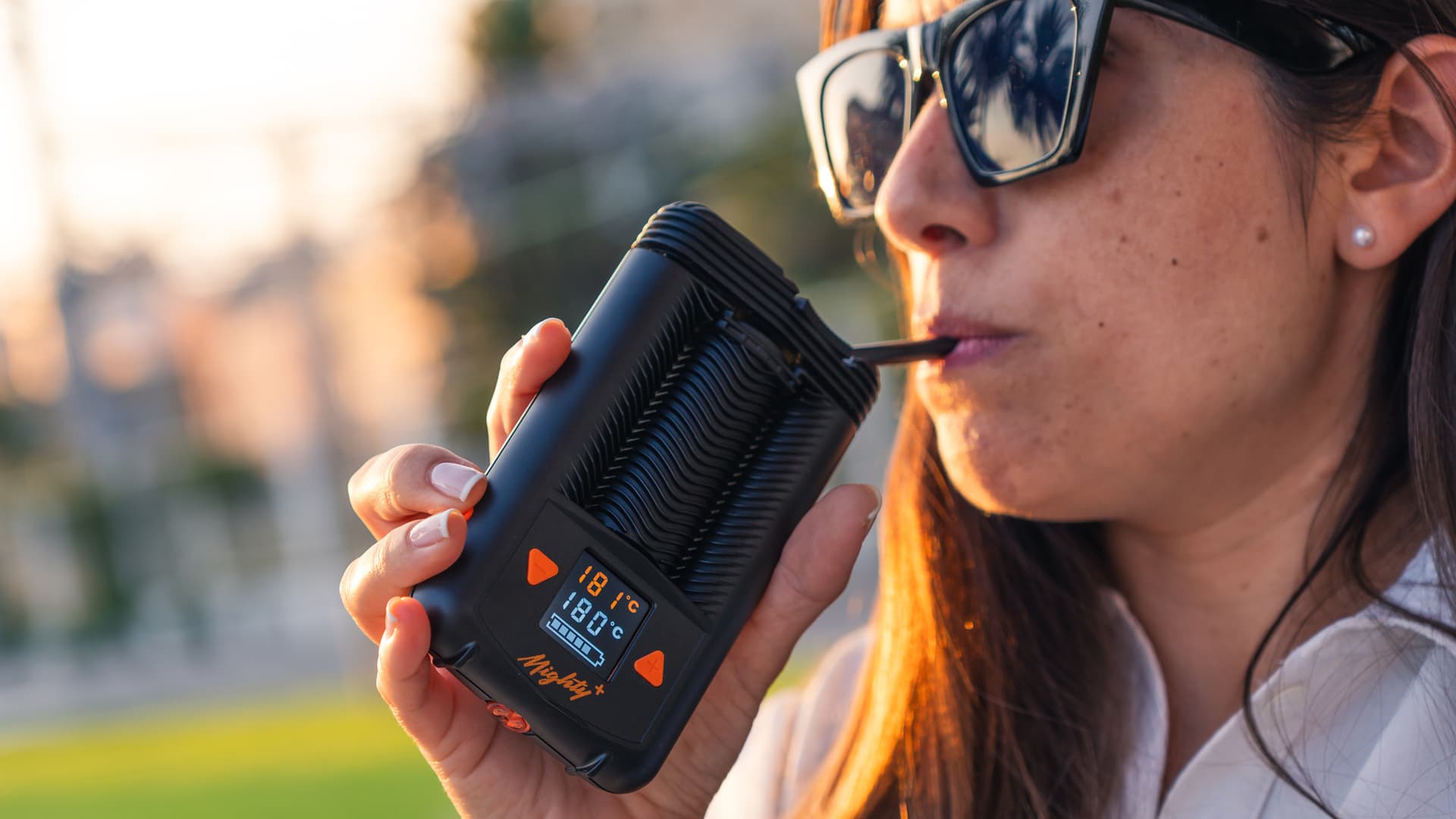
A dry herb vaporizer heats cannabis flower to release cannabinoids and terpenes into an inhalable aerosol, commonly called vapor. It is designed to do this without burning the cannabis, although overheating can cause charring or combustion. The five fundamentals are grind, pack, heat, draw and clean. The details depend on your vape.
Grind texture, packing, airflow and maintenance are useful checks when something feels off. This guide covers first-use preparation, those five fundamentals and how to recognize the end of a session. You can adjust technique without treating every suggested time or temperature as a target you must reach.
Prepare your vaporizer before the first session
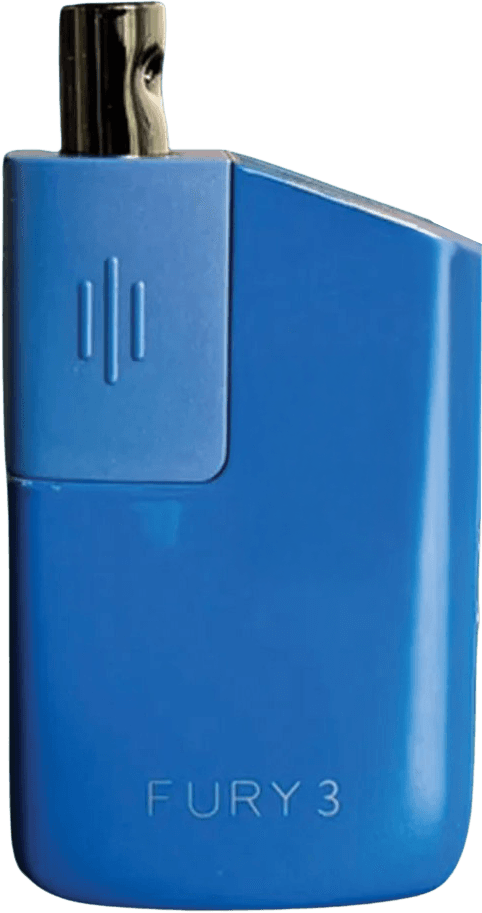
Check the chamber, mouthpiece and removable parts for debris, confirm the assembly and charge an electric portable as directed. First-use cleaning and empty heating cycles vary by model. Healthy Rips specifies one complete five-minute cycle at maximum temperature for the Fury 3. S&B says its factory First Flow process prepares the vapor path, so initial cleaning is not needed for its new vapes.
An empty cycle can also help you learn the controls and notice an unusual odor before loading. Keep it within the model's normal operating limits. There is no universal need for two or three maximum-temperature cycles or balloon fills. If a persistent chemical smell remains, check for debris, assembly problems or a fault rather than continuing to heat until it disappears. Smell alone cannot establish that a vapor path is clean or safe.
Tip

Start with an even grind and adjust for your vape
An even medium to medium-fine grind is a practical starting point for many portables. It exposes more surface than large pieces while leaving space for air to pass through. Coarse-salt texture is a useful visual comparison, not a particle-size specification.
Large uneven pieces may heat unevenly. Powder can compact or pass through some screens, especially when packed firmly. Neither means every coarse or fine grind fails. Your chamber, screen, moisture level and packing all affect the result. Our grinding guide covers the choices in more detail.
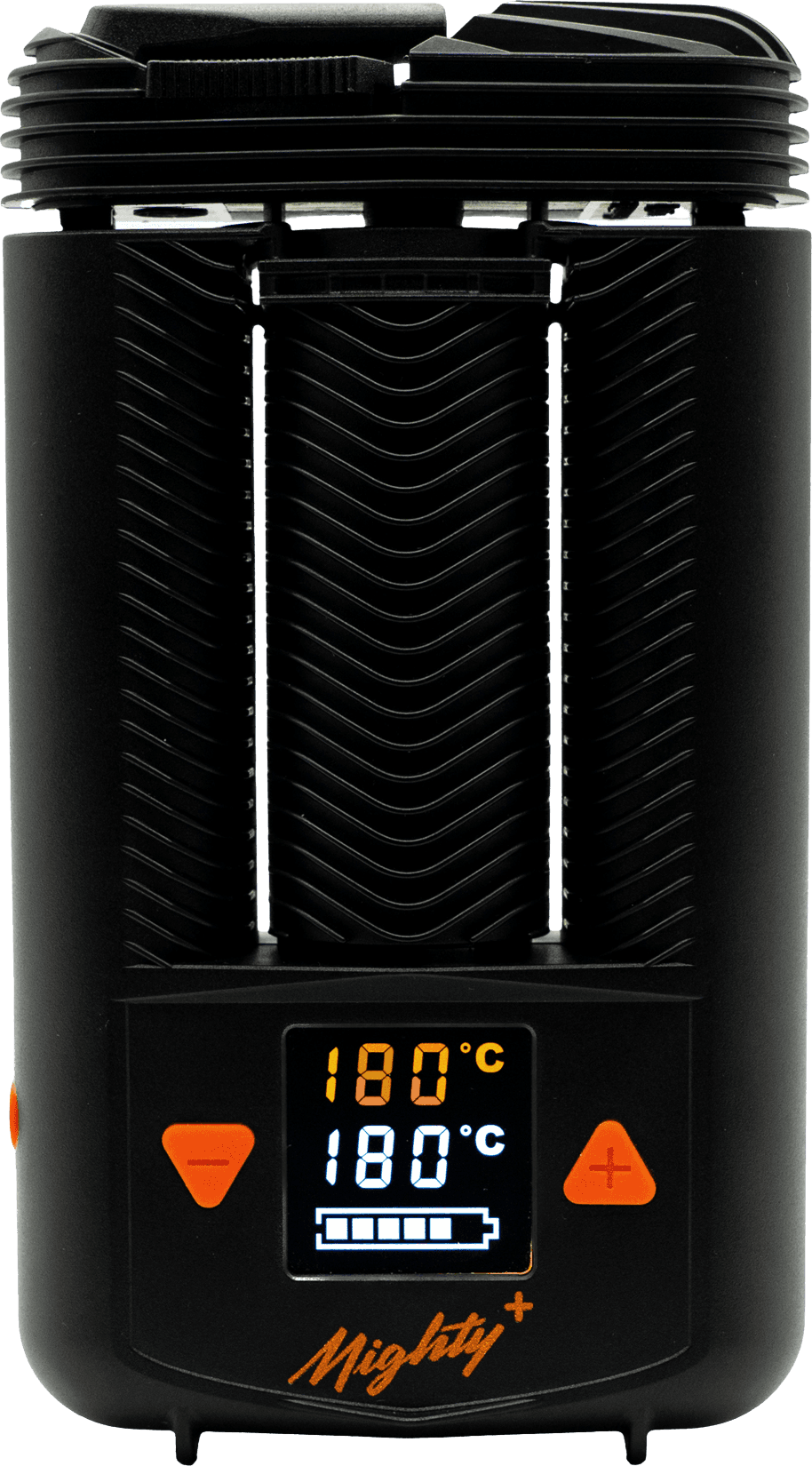
Conduction heating relies on contact with a heated surface; convection uses hot air through the load. These principles help explain packing differences, but they do not provide one grind recipe for every vape. The Venty and Mighty+ use both. Tinymight recommends medium-fine grinding for its convection design, so convection does not automatically mean coarse material.
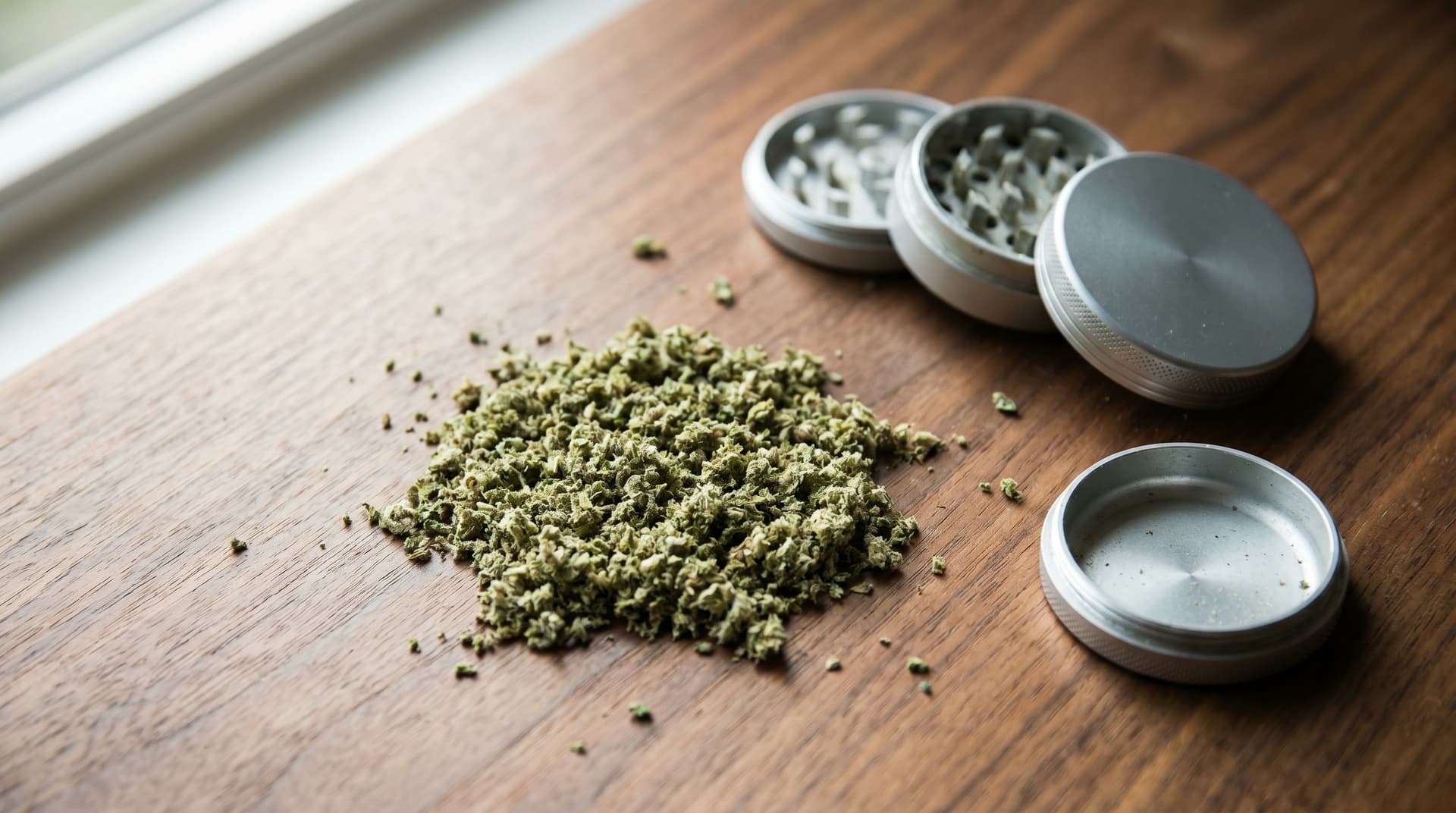
An even grind with visible pieces offers a useful starting texture. Adjust it to your chamber and screen. Illustration.
Load the chamber while preserving airflow
Use the fill level and packing style suited to your model. For scale, Healthy Rips lists about 0.175-0.205 g for the Fury 3, roughly 0.2 g. That is an approximate chamber capacity, not a standard dose. The amount that fits changes with the material, grind and compression.
A gentle settling or light tamp can help keep the load in place. Some conduction ovens work well with a firmer pack; other chambers work better loosely filled. The Venty's operation instructions say to fill to the rim without overfilling or compressing tightly. Do not force extra cannabis in to reach a particular weight. If the loaded vape becomes much harder to draw through, check the pack and screens.
Dosing capsules make advance loading and swapping convenient, and can reduce loose debris in the oven. Use capsules that fit your model. The standard Storz & Bickel capsules compatible with the Mighty+ and Venty are aluminum, not stainless steel. Capsules can change draw resistance, so check airflow after inserting one and let a hot capsule cool before handling it. Our capsule guide covers loading and practical care.
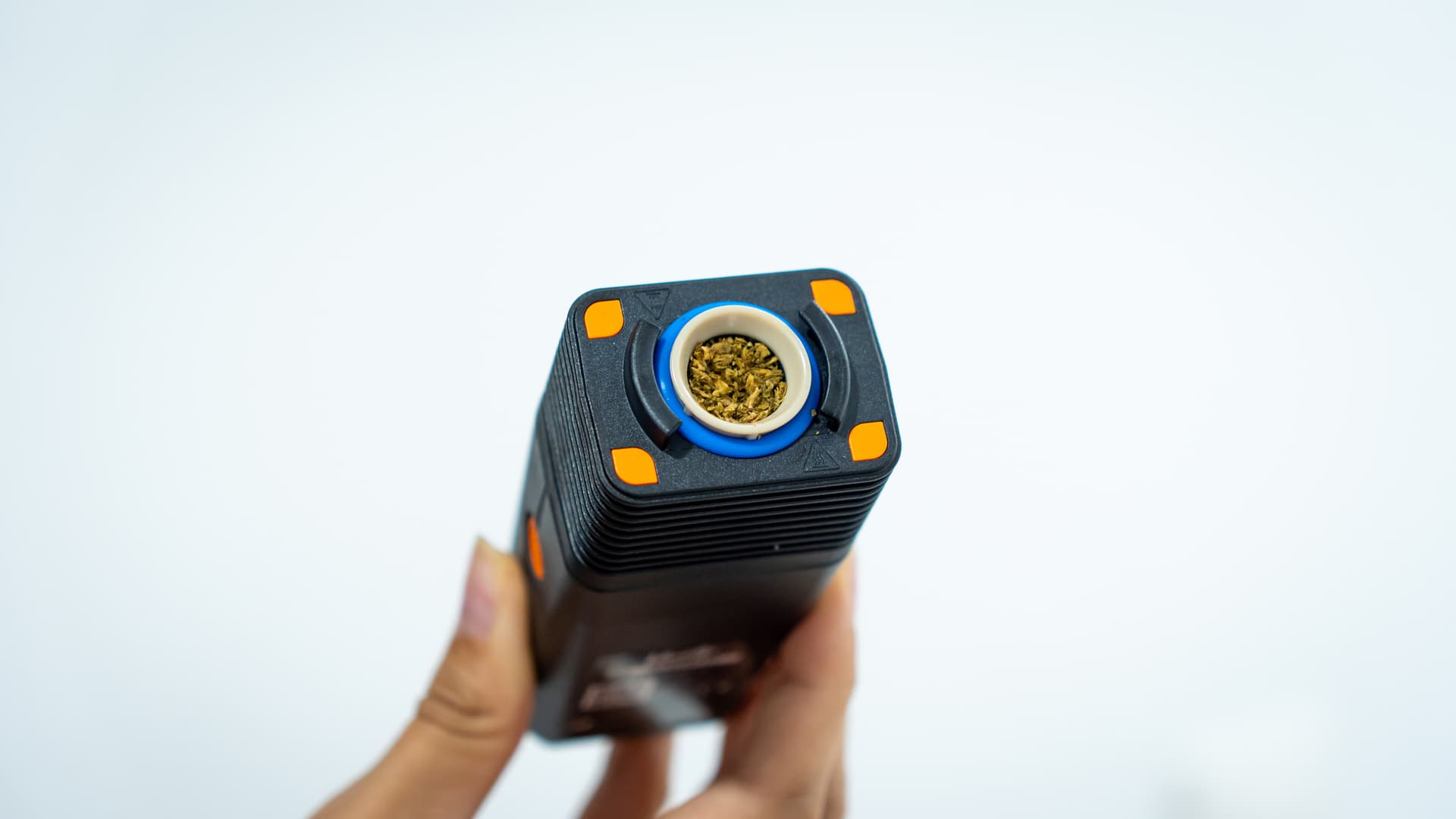
Keep the load within the chamber's intended fill level, with room to close the mouthpiece and maintain airflow.
Choose a moderate setting and adjust to taste
On an adjustable portable such as the Mighty+ or Venty, 180°C is a useful starting example and the factory base setting. Lower settings often give lighter vapor and a different flavor balance; higher settings often produce denser vapor. They do not reliably select a particular cannabinoid, guarantee a lighter effect or make someone unimpaired.
If you enjoy changing temperature during a session, try small increases, such as 5-10°C, after assessing the flavor and comfort. This optional "temperature stepping" approach lets you explore the load gradually. You can also stay at one setting or stop. Our temperature guide explains the variables; isolated-compound boiling points are not exact extraction switches inside cannabis flower.
With presets, check what the levels represent for your model instead of assuming the second-lowest is always equivalent to 180°C. Torch-heated vapes use their own cues and technique. Hybrid heating alone does not guarantee even extraction at every setting, and pure convection alone does not guarantee better flavor.
Little visible vapor is not proof that the temperature is too low or that no cannabinoids are being delivered. If the draw feels harsh, reduce intensity and check the load, airflow and cleanliness rather than forcing a longer inhale.
Draw steadily for a comfortable length of time
A slower, steady draw can improve output on some vaporizers. A five-to-ten-second draw, or counting to eight, can be a technique to try if it feels comfortable, not a required inhalation length or a universal fix. Stop sooner if you need to. Flow-sensitive heaters may deliver less heat to the load during a very fast draw, while others compensate more effectively.
Check the basics before changing several things at once: charge and heating mode, readiness, mouthpiece seal, fill level, screen cleanliness and airflow setting. A clogged screen or leaking cooling unit can also cause weak output. We do not have comparative data that ranks coarse grinding, loose packing, low temperature and fast inhalation in a universal order of likelihood.
Warning
Session mode keeps the heater active until shutdown or until you stop it. Timers differ: the Fury 3 offers three to seven minutes, while the Venty has an inactivity-based shutoff. On-demand mode activates heat for individual uses. On the Tinymight 2, hold the button, wait for the ready vibration, draw and release the button. The heater follows the button, not a breath sensor; Tinymight also offers session mode.
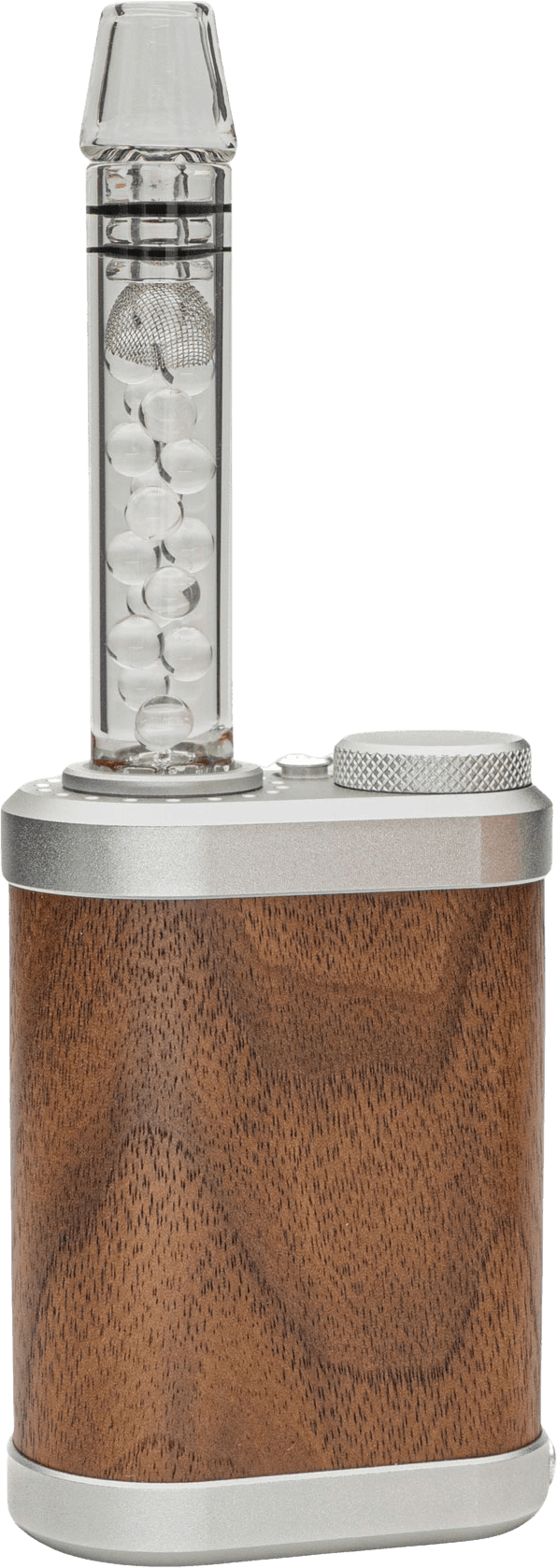
Draw resistance varies between models. The Venty's adjustable airflow is rated up to 20 L/min, and its heater responds to inhalation. That maximum is a product specification, not a flow you need to achieve. Our draw technique guide discusses adapting your draw to the vape.
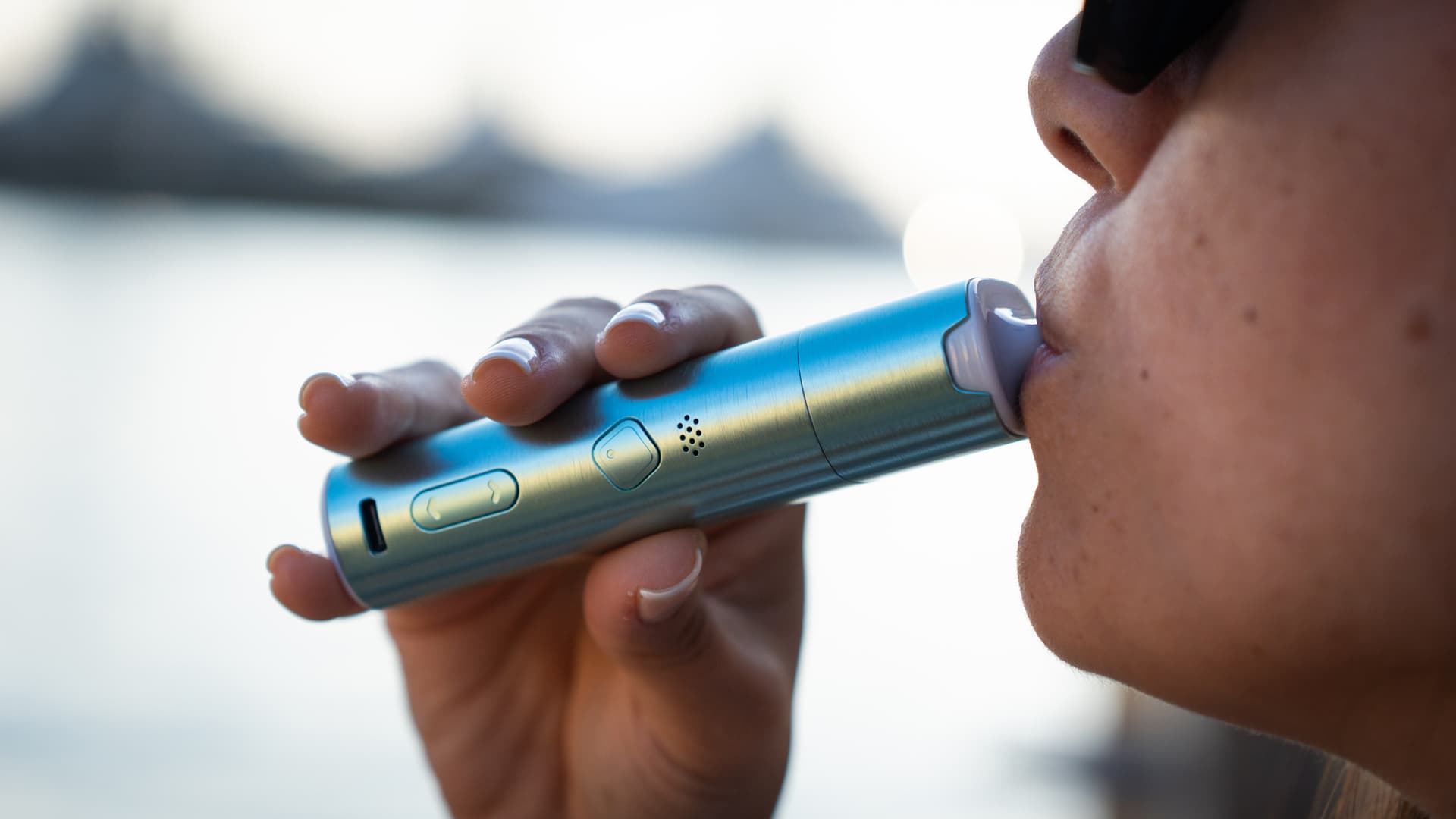
Use a steady draw that feels comfortable. The right pace depends on the vape and its airflow setting.
Recognize when your session is done
Thinner vapor and a change toward a toasted or popcorn-like taste are practical signs that a load has changed. Session length and draw count vary with the cannabis, heating, load and your preferences. You do not have to finish a timer or make every load dark brown.
Once the chamber is comfortable to handle, empty it and inspect the material. Uneven color can suggest uneven heating, but does not identify a single cause. Check grind, packing, fit and technique together. Ash, charring or a smoky taste call for stopping and checking the heating method, not chasing another draw.
AVB (already vaped bud) can still contain cannabinoids. Laboratory studies distinguish compounds recovered in vapor from those left behind; color alone does not measure either. If you choose to save AVB for reuse, label it and store it out of children's and pets' reach. It is not a predictable-strength edible ingredient, and evenly brown material is not proof of a particular dose or complete extraction.
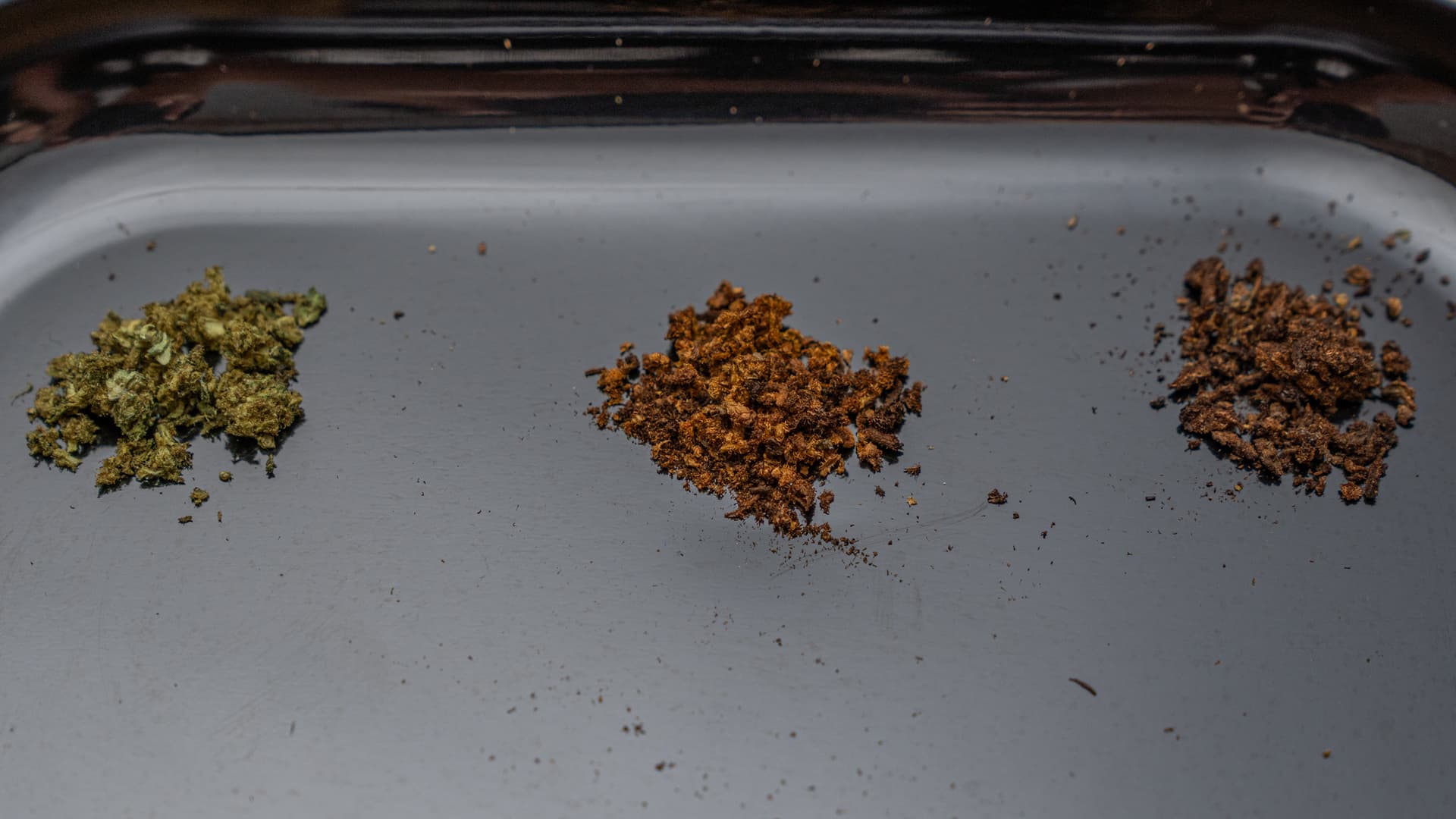
Color shows visible differences after heating. It does not measure remaining cannabinoids or set a required endpoint.
Brush after use and clean buildup as needed
Regular cleaning helps preserve airflow and keeps old residue from affecting flavor. A quick brush after emptying is useful; wait until the chamber can be handled comfortably. Clean sticky buildup when brushing no longer removes it, airflow worsens or the model's maintenance interval is due. A universal three-to-five-session alcohol routine is unnecessary.
For an oven compatible with alcohol cleaning, switch off and let it cool, then use a lightly moistened swab without letting liquid drip inside. Isopropyl alcohol works well on suitable glass and metal parts, but inspect the whole component, including seals, adhesives and electronics, before soaking it. For example, the Tinymight manual excludes O-rings from its solvent bath. Never submerge the powered body, and let cleaning liquid evaporate completely before heating again.
Our vaporizer cleaning guide separates quick brushing from component-specific deep cleaning. It covers choosing a method that removes residue without damaging the complete part.
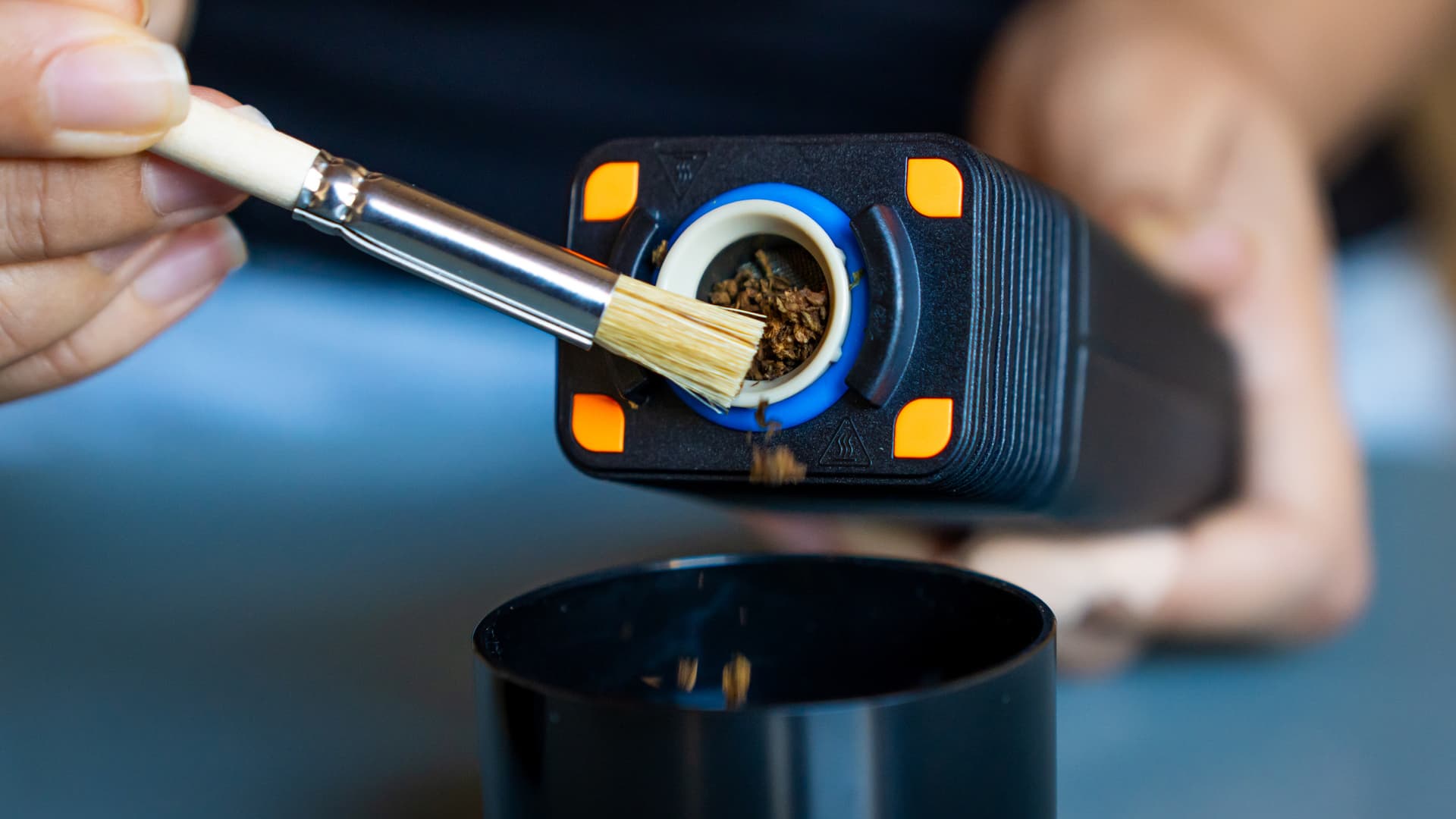
Brush loose material from the empty chamber before it accumulates. Take care around the screen and chamber edge.
About the original testing claims. This guide originally described tests across our catalogue, claimed faster pulls lowered heater temperature by 10-15°C on most portables, and referred to cleaning tests on over 30 vapes. The underlying unit list, measurements and protocols are not available here. Those claims are not verified benchmarks for your vape. Earlier Mighty+ and Venty load examples of 0.3 g and 0.25 g likewise lack a documented weighing method.
The complete vaporizer cleaning guide
Practical brushing and deep-cleaning methods, with separate guidance for chambers, glass, cooling units and seals.
Key Takeaway
- Start with an even grind: adjust texture to the chamber and screen
- Preserve airflow: use the intended fill level and avoid forcing in extra material
- Treat settings as adjustable: 180°C is one portable starting example, not a promised effect
- Draw comfortably: slower can help, but an eight-second inhale is optional
- Brush and inspect: choose deeper cleaning by buildup, component materials and the model's maintenance needs