

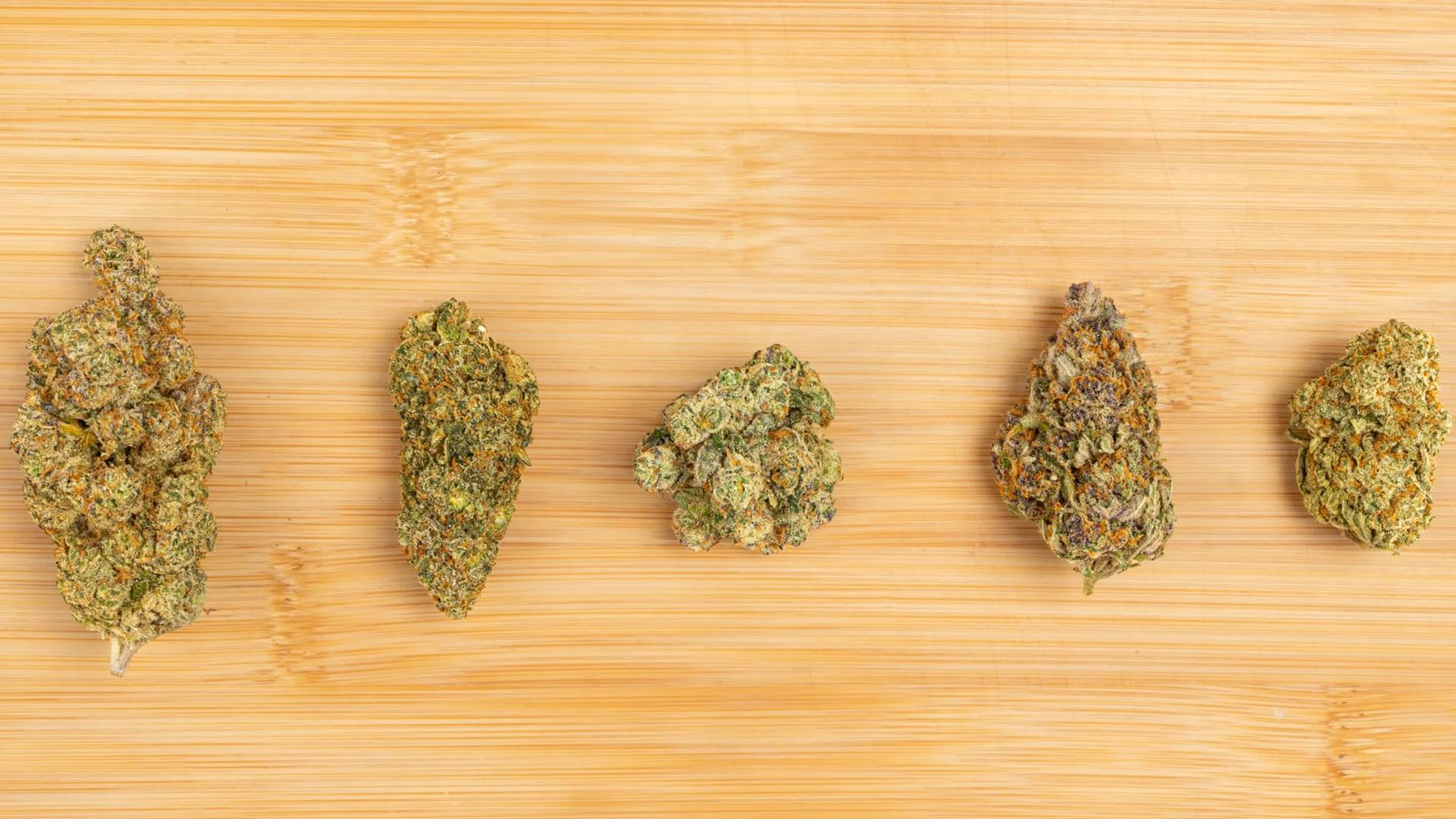
Texas has not banned dry herb vaporizers, and it has not banned hemp flower outright. It changed the math. Under a state rule that took effect March 31, THCA counts toward the THC limit, and most high-THCA flower and pre-rolls cannot pass the retail test.[1]
A separate 2025 law makes it a crime to sell cannabinoid vape cartridges and disposables. Whether a Texan can be charged for holding flower bought before the rules changed is a less settled question, and police agencies do not answer it the same way.
A formula, not a flower ban, cleared the shelves
The Department of State Health Services (DSHS) rule, 25 TAC §§300.101 and 300.301, adds potential delta-9 from THCA to a product's THC count. The formula is delta-9 THC plus 0.877 times THCA, generally measured against a 0.3% dry-weight limit, with an allowance for lab measurement uncertainty.
A low delta-9 number on a label is no longer enough to show a product complies. KUT reported that the rules effectively removed most smokable hemp. We explained why heating turns THCA into THC in our piece on the THCA flower loophole.
Here is where products stood as of Nov. 11:
- High-THCA flower and pre-rolls: Most cannot pass the total delta-9 test.
- Low-THC CBD flower: Not banned just because it is flower. It must meet testing, sourcing and other requirements.
- Cannabinoid vape cartridges and disposables: Sales have been barred since Sept. 1, 2025.
- Delta-8 and similar products: Commercial manufactured versions have faced controlled-substance treatment since July 31, 2026.
- Gummies, drinks and tinctures: Some compliant products remain on sale at registered retailers to buyers 21 or older.
Texas law also prohibits processing or manufacturing a consumable hemp product for smoking, under Health and Safety Code Chapter 443. That language dates to 2019. It covers making products, and it is not the same wording as a blanket ban on possessing flower.[2]
The vape law targets sales, not empty vaporizers
SB 2024 took effect Sept. 1, 2025. It makes it a Class A misdemeanor to sell, offer, market or advertise a covered e-cigarette product that contains, or is marketed as containing, any cannabinoid. That means any cannabinoid, not only delta-8 or THC.[3]
The statute lists commercial acts. By its text, it does not make possession of an empty vaporizer a crime, and its definition excludes prescription medication.
Delta-8 falls under a third set of rules. A state scheduling action took effect July 31 after the Texas Supreme Court reversed an injunction. The state describes an exception for naturally occurring trace delta-8, and what counts as "trace" is itself disputed.
Possession turns on how the product is classified
The hemp statute permits possession of a consumable hemp product that was processed or manufactured in compliance with Chapter 443. The DSHS rule has its own language on possessing and transporting certain noncompliant products.
Neither settles every criminal case.
KUT reported that the reinstated drug schedule appears to reach THCA, that the hemp exemption in statute is in tension with that reading, and that local agencies interpret the question differently. Austin police consider packaging relevant, KUT reported, and delta-8 labeling could establish probable cause for a felony arrest.
The penalty depends on the category. If a product is legally classified as marijuana, knowingly possessing a usable amount of two ounces or less is a Class B misdemeanor. If it is a Penalty Group 2 controlled substance, possessing less than one gram by aggregate weight can be a state jail felony.[4]
Those are separate statutes, and neither applies automatically to every hemp product. A receipt, original package or certificate of analysis may help identify a product. None guarantees that police or a court will treat it as lawful, and anyone facing a possession question should talk to a Texas criminal defense lawyer.
The medical program allows vapor, with its own limits
The Compassionate Use Program runs apart from the retail hemp market. A qualified physician may prescribe low-THC cannabis to a permanent Texas resident with a listed condition. The list includes cancer, PTSD, epilepsy, certain chronic pain, traumatic brain injury and Crohn's disease.[5]
The law defines low-THC cannabis as no more than 10 mg of tetrahydrocannabinols per dosage unit. A physician may prescribe inhalation of an aerosol or vapor if it is medically necessary. Burning cannabis and inhaling the smoke is excluded from medical use.
A dispensing organization cannot dispense a package or pulmonary inhalation device containing more than one gram of tetrahydrocannabinols. Patients need a prescription recorded in the state registry and a product from a licensed dispensing organization.
For dry herb vape owners, the vapor allowance has a limit. It does not establish that a patient may fill a personally owned vaporizer with retail or home-grown flower.
Two court challenges, no hearing date
The March rule has been blocked, revived and challenged again in less than eight months.
June 22, 2025
Gov. Greg Abbott vetoed SB 3, a broader proposed hemp-THC ban.
Sept. 1, 2025
SB 2024 took effect, restricting sales and marketing of cannabinoid e-cigarette products.
Dec. 26, 2025
DSHS published proposed hemp rules after Abbott issued Executive Order GA-56.
March 31, 2026
The revised rules took effect, with the total delta-9 test, a 21-plus sales rule, ID checks and higher fees.
June 5, 2026
The Fifteenth Court of Appeals declined to keep a Travis County judge’s block in place during the state’s appeal. The rule became enforceable again.
July 31, 2026
A separate state scheduling action on delta-8 took effect.
The June 5 order did not decide whether the rule is lawful. This month, the Fifteenth Court of Appeals canceled arguments that had been set for Dec. 8 and said the case would be reset, the Texas Tribune reported. No replacement date has been reported.
In October, Green Nation and the Texas Hemp Constitutional Alliance filed a new challenge in Travis County.[7] They argue the agency exceeded its authority on THCA testing and fees, KXAN reported. The Texas Health and Human Services Commission declined to comment on pending litigation, according to KXAN.
The adopted rules set annual fees of $10,000 per manufacturing facility and $5,000 per retail location. The San Antonio Express-News reported earlier fees of $258 and $155, respectively.
Federal limits tighten Dec. 11
Washington is moving on a separate track, which we covered in our report on the federal 0.4 mg THC cap. Public Law 119-37 set Nov. 12 as the date on which intermediate and final hemp-derived products containing cannabinoids that the cannabis plant cannot naturally produce lose federal hemp status.[6]
Most of the federal redefinition follows on Dec. 11, absent another change. It brings a total-THC standard that includes THCA and a 0.4 mg combined per-container limit for total THC and specified similar-effect cannabinoids in final products. Products above that threshold lose the federal hemp definition.
Two dates are on the calendar: the federal standard on Dec. 11, absent another change, and a new Texas Legislature on Jan. 12, 2027. If you are choosing a vaporizer for legal low-THC flower in the meantime, our buying guide covers what to look for. Neither restores a product to a shelf on its own. Until a court or lawmakers change the rule, the March formula still decides what a Texas shop can sell: delta-9 THC plus 0.877 times THCA, against a 0.3% limit.