
San Francisco has put its first cannabis café rulebook on paper, and the biggest question is the one it does not answer. The Office of Cannabis opened public comment on proposed operating standards for a new Cannabis Café Permit on Sept. 11. Comments close Sept. 25.[1]
The draft covers security, inventory, staff training and how to keep on-site cannabis from walking out the door. It does not say whether customers will be allowed to smoke, or only to vape and eat. State law leaves that choice to the city.
Four permits stand between an operator and opening night
The proposal defines a café as "a fixed place of business where Cannabis and/or Cannabis Products are sold to Customers exclusively for the purpose of Consumption on the premises."
To open one, an operator needs four separate approvals: the new San Francisco Cannabis Café Permit, a valid California storefront retailer license, a Department of Public Health Cannabis Consumption Permit under Health Code Article 8A, and any other city permits or inspections that apply to food, entertainment or the building itself.
Every operator must follow an approved operations plan. The plan has to address at least eight areas:
- Security
- Receipt and storage of cannabis
- Delivery procedures
- Operation of designated consumption areas
- Accommodations for medical patients
- Employee duties
- Procedures to stop customers from leaving with cannabis sold for on-site use
- Emergency procedures
Consumption is allowed "only within areas approved under the Cannabis Consumption Permit," the draft states. Operators must mark those boundaries and keep written procedures "designed to discourage customers from removing cannabis products intended for on-site consumption from the designated consumption area or the Premises."
Photo: VapeExperts/AI
Staff who supervise consumption must be trained to prevent unauthorized removal, to refuse service when the law requires it, and to report incidents. Training records must be available to the Office of Cannabis on request.
Café names cannot suggest cannabis may be sold to anyone under 21 or be likely to entice minors. Operators may hand out free or nominal-cost medicinal cannabis through an approved Compassion Program. Violations can bring a notice of violation, administrative penalties, permit suspension or revocation.
The food and music came from Sacramento, not City Hall
The right to serve food and book bands does not come from this month's draft. It comes from AB 1775, a state law introduced by Assemblymember Matt Haney on Jan. 3, 2024, and signed by Gov. Gavin Newsom on Sept. 30, 2024, as Chapter 1004 of that year's statutes.[2]
Jan. 3, 2024
Assemblymember Matt Haney introduces AB 1775.
Aug. 31, 2024
AB 1775 is enrolled after passing the Legislature.
Sept. 30, 2024
Gov. Gavin Newsom signs AB 1775 as Chapter 1004, Statutes of 2024.
Sept. 11, 2026
San Francisco’s Office of Cannabis opens rulemaking on café operating standards.
Sept. 25, 2026
Written public comments are due to the Office of Cannabis.
The law lets a city or county authorize a licensed retailer or qualifying microbusiness to prepare or sell non-cannabis food and drinks in the consumption area, to host "live musical or other performances," and to sell tickets to those shows. Food must meet the California Retail Food Code and be stored and displayed apart from cannabis. Hemp-based food does not count as "noncannabis."
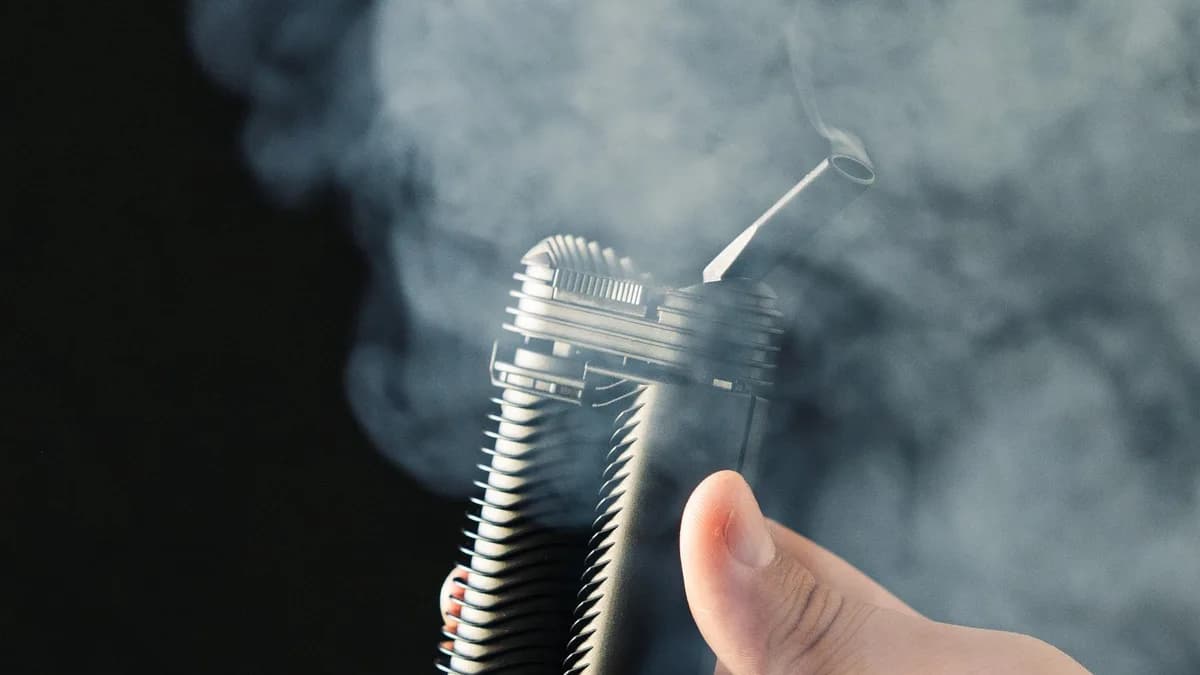
Photo: VapeExperts
A hand holds a Storz & Bickel Crafty+ vaporizer as vapor rises from its mouthpiece. Whether devices like this count as smoking is a question San Francisco's draft cannabis cafe rules leave unresolved.
San Francisco supervisors approved local enabling legislation in July, according to Marijuana Moment. The September draft fills in how a permitted café must run day to day.[3]
Some rules are fixed by the state and the city cannot loosen them. The consumption area must be limited to people 21 and older. Every entrance must warn that cannabis use, including smoking, is permitted. Consumption cannot be visible from a public or non-age-restricted area. "Sale or consumption of alcohol or tobacco is not allowed on the premises," the statute says.
The state says smoke or vapor. San Francisco has not picked.
AB 1775 lists "smoking, vaporizing, and ingesting" as the methods a local government may allow. It also says a city may permit one or more of those forms while prohibiting others.
San Francisco's draft does neither. It uses the generic word "consumption" and defers to whatever areas the health department approves under the consumption permit.
The state law does not treat smoke and vapor identically, though. Several of its worker-protection rules attach to smoke alone.
Employees are permitted "at their discretion and without penalty or sanction to wear a mask for respiration, including N95 and NIOSH N95 rated masks in any area where cannabis is smoked," at the employer's expense. Workers in smoking areas must receive written secondhand-smoke guidance, and secondhand smoke must appear in the employer's injury-and-illness hazard analysis.
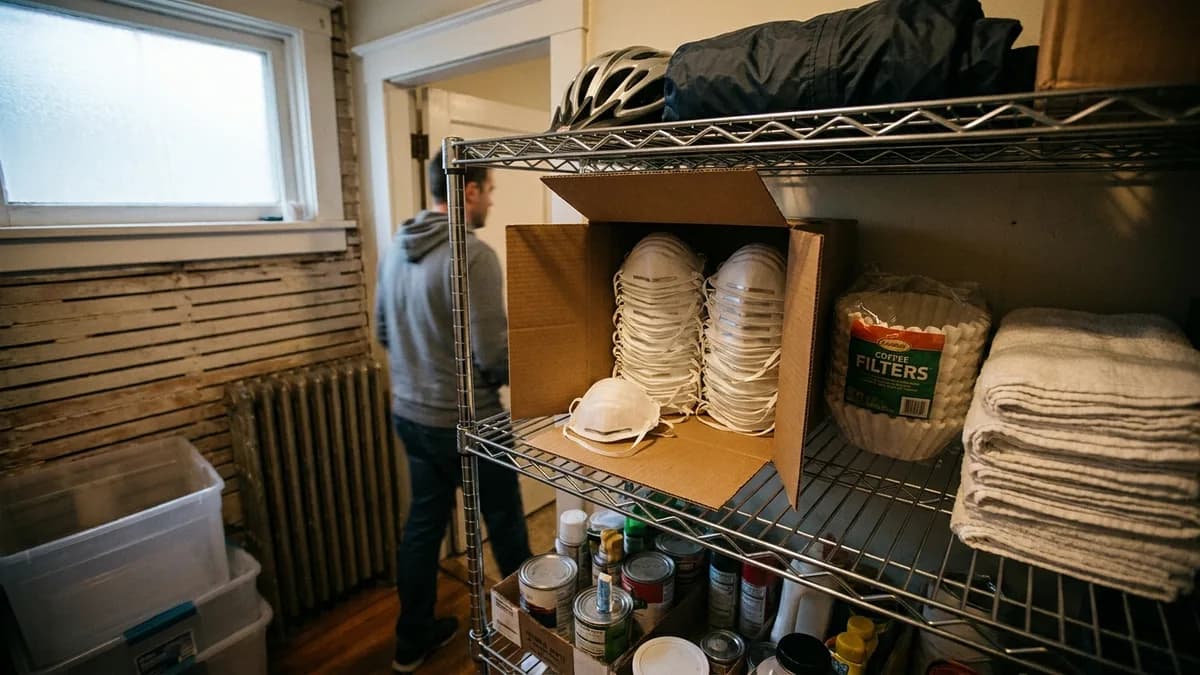
Photo: VapeExperts/AI
Other rules apply to both. "Smoking or vaporizing of any cannabis product by an employee or customer is not allowed in the food preparation, food storage, or warewashing area." And an "adequate" ventilation system under the law is one that stops smoke and odors from migrating into other parts of the building or neighboring properties. The law sets no air-change rate.
Whether that combination pushes operators toward vaporizer-only rooms is a question the draft leaves for the health department's permit. Food service and live performances add workers and non-smoking patrons who spend time near the consumption area.
Vapor is not the same as clean air
Vaporizing heats cannabis without combustion, so the state's mask and hazard rules, which attach to smoke, would not apply. That does not make the exhaled aerosol disappear.
A 2025 chamber study led by Xing Tang, with Hugo Destaillats among the co-authors, simulated secondhand cannabis-vape aerosol in a test room. After 60 minutes, particle-number concentrations remained 21% to 57% of peak, and fine-particle mass remained 33% to 69% of peak, according to a summary of the study.[8]
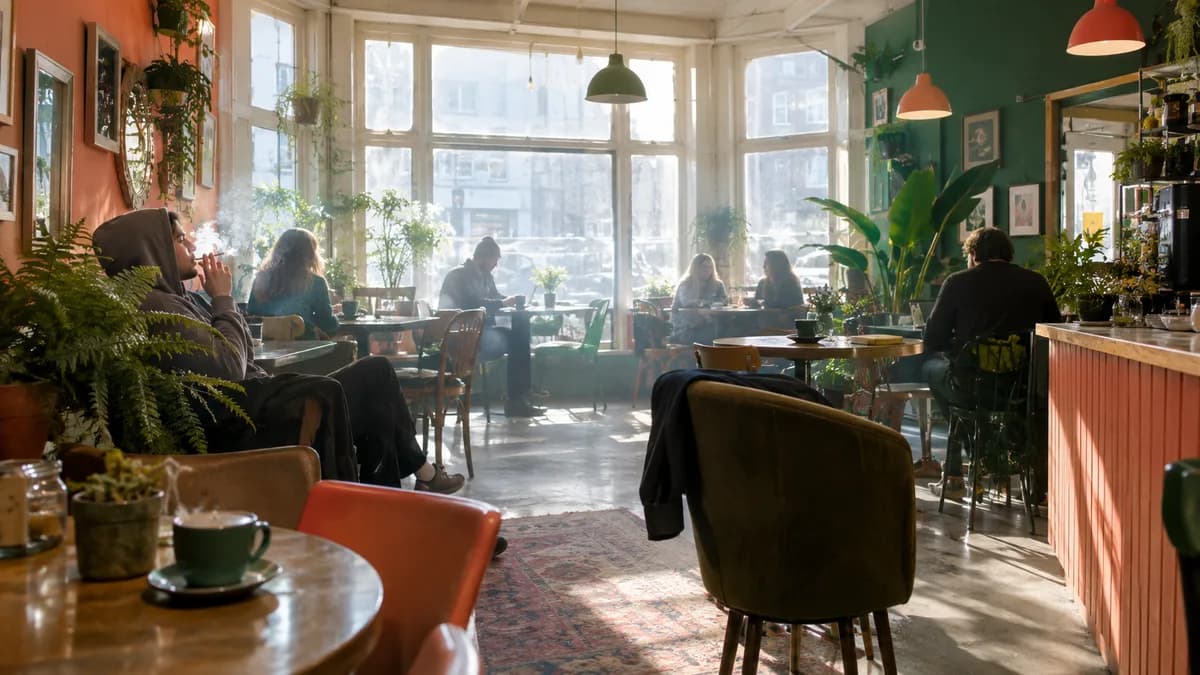
Photo: VapeExperts/AI
That was a controlled chamber, not an operating café, and it measured particles rather than health outcomes. It does not show that vaping and smoking carry equal risk.
A 2026 review in Environmental Science & Technology put the broader point plainly. Indoor smoking of psychoactive substances "exposes not only users through 'firsthand smoke' … but also bystanders through pathways of 'secondhand smoke' … and 'thirdhand smoke.'"[7]
The authors cautioned that "broad generalizations about exposure dominance can misrepresent risks, particularly for nonusers and children."
The draft leaves ventilation design to other departments. Whether San Francisco will publish an inspection standard that separates smoke from vape aerosol is one of the details the comment period may surface.
Massachusetts wrote three license types and is phasing them in
San Francisco is not the only place writing lounge rules this year. The Massachusetts Cannabis Control Commission approved social-consumption regulations in December 2025. They took effect Jan. 2, 2026.[4]
The two models differ in shape. San Francisco ties the café to an existing storefront retailer selling cannabis for on-site use.
Massachusetts created three license tracks: a supplemental license for existing operators, a hospitality license that can support a standalone lounge or a designated space inside a non-cannabis business such as a venue or lodging business, and a marijuana event organizer license for festivals and temporary events.
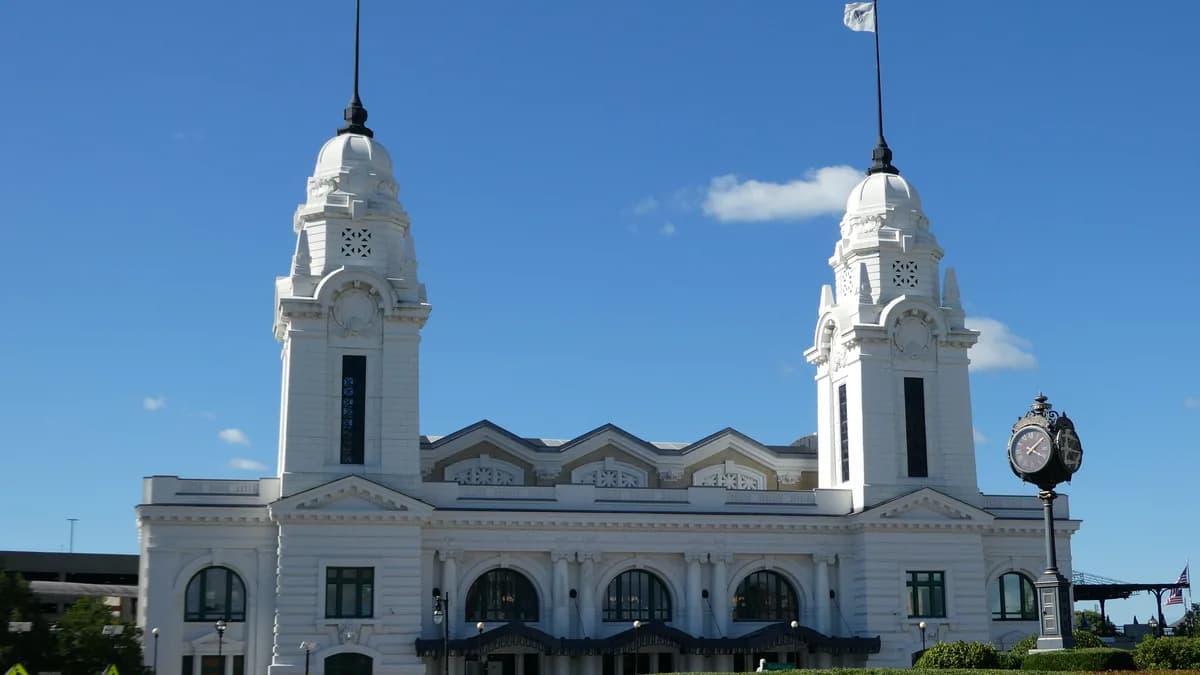
Photo: Pi.1415926535/Wikimedia Commons (CC BY-SA 4.0)
Worcester Union Station from Washington Square, September 2022. Worcester is among the Massachusetts cities where the state's phased cannabis cafe license rules apply.
Massachusetts also wrote method separation into its rules. Smoking areas must be isolated from non-smoking areas and from sales and service areas. Venues may sell no more than half the normal purchase limit for on-site use. The first 36 months of licensing are reserved for social-equity applicants, microbusinesses and craft cooperatives.
The commission expects applications for the supplemental category, the first to open, by the end of 2026. State officials anticipate the first licenses around the beginning of 2027, according to New England Public Media. The hospitality and event tracks are further behind.[9]
That rollout is happening in a market that passed $10 billion in cumulative adult-use sales on Sept. 5, 2026, and recorded $1.65 billion in sales in 2025. It also comes as Massachusetts voters weigh a ballot question to roll back legalization, which we covered when the measure qualified for the ballot.
California's numbers run larger. The state collected $261.7 million in cannabis taxes in the second quarter of 2026, up from a revised $249.8 million in the first quarter, according to the Department of Tax and Fee Administration.[5] Since retail sales began in 2018, the state has taken in nearly $8.4 billion, the governor's office said.[6]
What the comment period can and cannot settle
Written comments go to officeofcannabis@sfgov.org or to the Office of Cannabis at 49 South Van Ness Ave., Suite 660, by Sept. 25. The office can revise the standards in response. The rulemaking page lists no date for final adoption.
Even a final version of this document will not answer every question. Kitchen construction, entertainment permits, occupancy and ventilation design fall to other departments. The health department's consumption permit decides where people may consume and, by extension, how.
That is the decision to watch. AB 1775 gives San Francisco the power to allow vaping and edibles while banning combustion, or to permit all three. The September draft takes neither path, so whether a San Francisco cannabis café ends up smelling like a smoke room or a vape lounge will be settled by the health department's permit terms, not by this month's rulebook.