

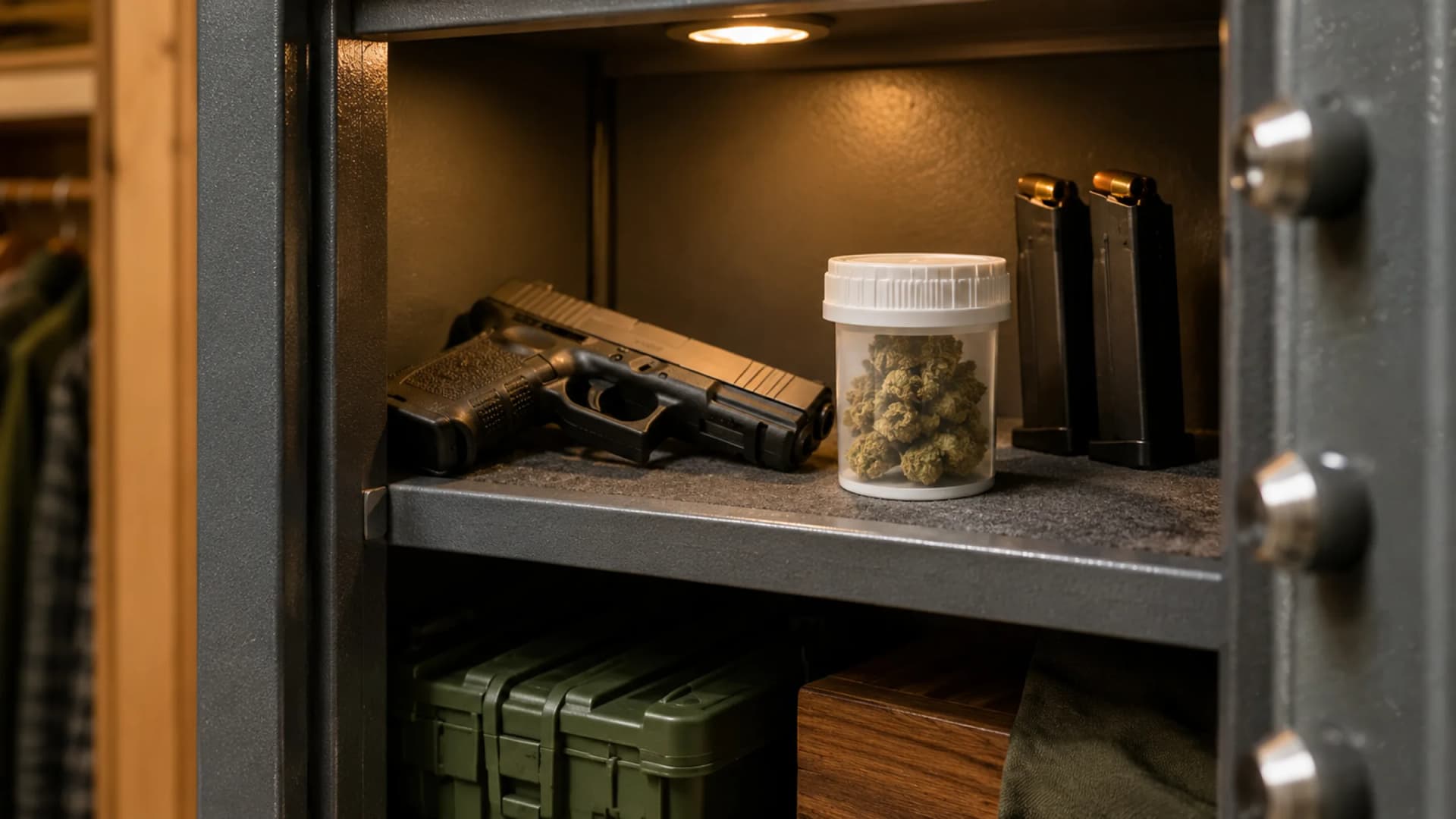
A federal gun charge that rests on nothing more than regular cannabis use cannot stand. The Supreme Court said so on June 18, and not one justice disagreed. The law behind that charge still stands, and three months later the gap between those two facts is where state-legal patients, prosecutors and gun dealers now operate.
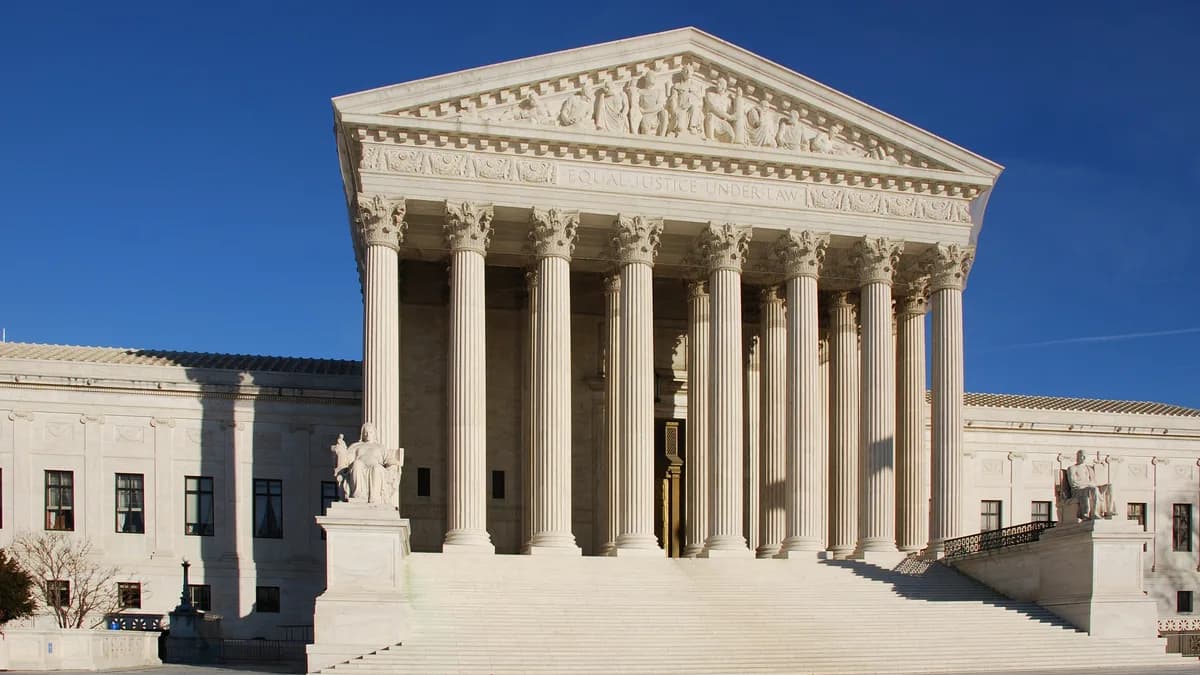
Photo: Jarek Tuszyński/Wikimedia Commons (CC BY-SA 3.0)
The west facade of the US Supreme Court building in Washington, DC, with its marble columns and the inscription Equal Justice Under Law. The court issued the ruling on the cannabis-related gun charge.
The case is United States v. Hemani. Ali Danial Hemani, a dual U.S.-Pakistan citizen born in Texas, told federal agents he used cannabis about every other day and kept a gun at home. Agents had searched his family's house in 2022 during a terrorism-related investigation. They charged him with none of that. The only charge was possessing a firearm as an "unlawful user" of a controlled substance.
That crime, under 18 U.S.C. §922(g)(3), carries up to 15 years in federal prison, and a conviction triggers lifetime disarmament as a felon. A district court in Texas threw the indictment out. The Fifth Circuit agreed. The government asked the Supreme Court to bring the charge back.[2]
Nine justices, one judgment, no dissent
The Court affirmed the dismissal 9-0. Justice Neil Gorsuch wrote for seven justices: Chief Justice John Roberts and Justices Clarence Thomas, Sonia Sotomayor, Brett Kavanaugh, Amy Coney Barrett and Ketanji Brown Jackson. Justice Samuel Alito, joined by Justice Elena Kagan, agreed with the result but not the reasoning.
"The government's prosecution of Mr. Hemani under §922(g)(3)'s unlawful user provision is inconsistent with the Second Amendment," Gorsuch wrote.[1]
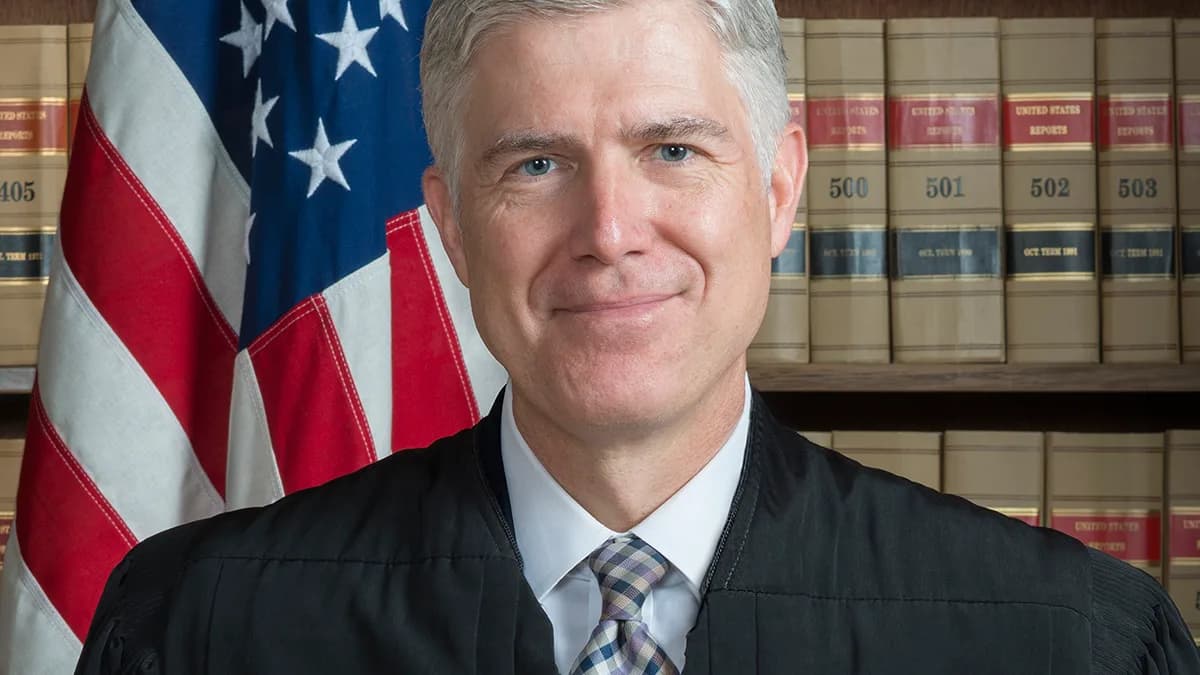
A Supreme Court justice in a black robe stands before shelves of United States Reports volumes and an American flag in an official portrait. The Court ruled unanimously to void a gun charge tied to cannabis use.
The government had leaned on colonial and 19th-century laws aimed at "habitual drunkards." Gorsuch found that history "targeted different kinds of people, did so for different reasons, and operated in different ways." Those old laws reached people too incapacitated to manage their affairs, aimed to protect estates and families rather than prevent gun violence, and required a hearing before anyone lost liberty.
The record on Hemani had none of that. The Court found no evidence of how much cannabis he used, how potent it was, whether it impaired his daily functioning, or whether he had ever been dangerous. The government's theory, Gorsuch wrote, "extends equally to a husband who regularly takes his wife's prescription Ambien to sleep and a college student who routinely uses a friend's Adderall to cram for exams."
Jan. 31, 2025
The Fifth Circuit rules for Hemani in case No. 24-40137.
June 2, 2025
The solicitor general asks the Supreme Court to hear the case.
Oct. 20, 2025
The Court grants review.
March 2, 2026
Oral argument. Sarah M. Harris argues for the government, Erin E. Murphy for Hemani.
April 23, 2026
The solicitor general files a post-argument letter on the federal rescheduling of medical cannabis.
June 18, 2026
The Court affirms dismissal, 9-0 in judgment.
July 20, 2026
Judgment formally issues.
Alito would have stopped at the thin record. "In these circumstances, marijuana use today is like alcohol use at the founding," he wrote. "It is widespread and increasingly considered socially acceptable in many quarters."
Two other justices wrote separately. Jackson, joined by Sotomayor, called the history-based test from Bruen "unworkable" and open to "inconsistent and arbitrary application."
Thomas joined the majority but raised a different concern. He wrote that §922(g)(3) "appears to exceed Congress's enumerated power to regulate interstate commerce," and urged lower courts to revisit whether Congress can criminalize local possession because a gun once crossed a state line.
The "millions of Americans" problem
The Court also pointed to the scale of legal cannabis. It cited material showing 40 states, three territories and the District of Columbia had legalized some cannabis use. The Census Bureau reported this month that 30 states plus D.C. collected an estimated $3.55 billion in cannabis excise taxes between July 2025 and June 2026.[7]
Gorsuch wrote that this left the government "awkwardly positioned to suggest that the millions of Americans who now regularly use marijuana are categorically and unusually dangerous."
The size of that group has been counted. Jonathan P. Caulkins of Carnegie Mellon University analyzed 27 national surveys covering 1,641,041 respondents from 1979 to 2022. Daily or near-daily cannabis use rose roughly 15-fold per capita between 1992 and 2022. By 2022, 17.7 million Americans used cannabis daily or near-daily, against 14.7 million daily or near-daily drinkers.[6]
Daily or near-daily users in the U.S.
Source: Caulkins, Addiction (2024)
"A growing share of cannabis consumers report daily or near daily use, and their numbers now exceed the number of daily and near daily drinkers," Caulkins wrote. His study measures how many people use, not whether they are dangerous with a firearm.
Schedule III arrived mid-case and cut both ways
Seven weeks after oral argument, the federal government changed cannabis law. Acting Attorney General Todd Blanche signed a partial rescheduling order that moved FDA-approved cannabis products and cannabis handled under qualifying state medical licenses to Schedule III, listed at 91 FR 22714 and effective April 28.[4]
Photo: VapeExperts/AI
The solicitor general flagged the development to the Court in a letter the same week. The majority then used the shift against the government. Schedule III recognizes a currently accepted medical use and a lower abuse profile than Schedule I. Gorsuch treated that as an illustration that a drug's schedule reflects medical and regulatory judgments, not a finding that everyone who uses it is violent.
Schedule III does not, however, take cannabis out of the gun statute. Section 922(g)(3) reaches unlawful use of "any controlled substance," which includes drugs in Schedules III through V. Codeine-containing medications used without a prescription fall under the same words.
What Schedule III opens is a statutory argument the constitutional ruling did not resolve. A patient taking an FDA-approved Schedule III drug on a valid prescription is ordinarily not an "unlawful user." A patient holding only a state medical card, or a state doctor's recommendation, is in a different position, because state authorization is not the same as a federal prescription.
Adult-use cannabis sits outside the rescheduling order entirely. The Court decided the Second Amendment question and left the statutory one open. Whether state-only medical authorization makes a patient's use federally lawful enough to defeat §922(g)(3) is now a question for lower courts.
What the ruling did not decide
Hemani is an as-applied ruling. It struck the prosecution of one man on one record. The statute itself was not declared facially unconstitutional, and the majority expressly left open cases involving addiction, present intoxication, individualized evidence of danger, or proof that a specific drug creates a special risk of firearm misuse.
The Fifth Circuit has already underlined that narrowness in a later published opinion, noting that Hemani did not decide cases with evidence of present intoxication or individualized dangerousness.[5]
Photo: VapeExperts/AI
Old convictions are moving too. On Aug. 20, Judge Thomas L. Parker of the Western District of Tennessee vacated Jessica Garner's §922(g)(3) conviction and sentence, finding the statute unconstitutional as applied because her record showed no cannabis-related dangerousness.
Legal-news accounts describe lower courts beginning to differ on remedy: whether prosecutors may return to court and add dangerousness findings that the original record lacked. Those reports point to the Eighth Circuit remanding some cases for new findings, while the Fifth and Seventh Circuits have decided as-applied challenges on the existing record.
The Court also left Congress a path. The majority said lawmakers could target users of a particular drug after making evidence-based findings that it presents a special risk of firearm misuse.
The trap at the gun counter
For a patient buying a firearm, the ruling has changed little at the point of sale. As of the reporting we reviewed, the marijuana warning on the ATF's Form 4473 had not clearly been replaced with final nationwide instructions implementing Hemani. A "yes" answer to the drug-use question can block the sale. An inaccurate "no" is a separate federal crime.
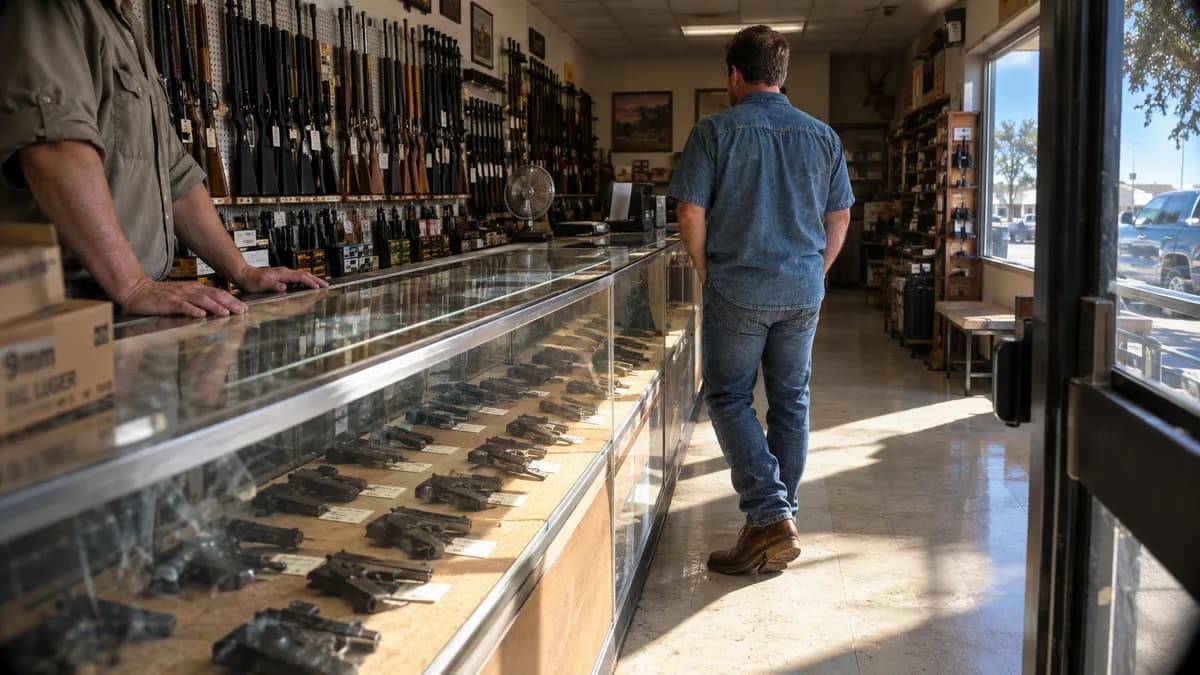
Photo: VapeExperts/AI
The Justice Department has moved on one front. Its Aug. 20 final rule in the Federal Register revives the firearm-rights-restoration process under 18 U.S.C. §925(c), and for that process it excludes cannabis from its definition of "controlled substance." People whose only drug history is cannabis use or cannabis addiction are not presumed ineligible.[3]
DOJ tied the carveout directly to the ruling, saying Hemani held that Hemani's regular use "did not necessarily establish that he posed a danger to himself or others." The department acknowledged the exclusion "goes beyond the facts at issue" in the case but called it "necessary to improve the administrability of the restoration process."
The Duke Center for Firearms Law notes the rule governs only the restoration program. It does not amend §922(g)(3).[8]
The next two dates are set. The DOJ restoration rule takes effect Sept. 21. On Sept. 28, the government's response is due on a new petition from Jersom Andu Mena, who asks whether §922(g)(3) can operate without a hearing or an individualized finding of danger, consistent with Bruen, Rahimi and Hemani.
That petition captures where the law now sits. The charge against one man is gone, and no justice would have kept it. The statute that produced it remains in force, and the question of what it can still reach has moved to the lower courts, the ATF's forms and, possibly, back to the Supreme Court.