
North Carolina has three cannabis markets and no statewide rule that reaches all of them. The governor's advisory council estimated residents spent about $3 billion on illegal marijuana in 2022.[2] Intoxicating hemp sells openly with no statewide minimum age. Legal marijuana sales exist only on Eastern Band of Cherokee Indians land.[3]
Gov. Josh Stein, a Democrat, wants to fold all of it into one licensed, age-restricted adult market. He has held that position since June 2025, when he created the North Carolina Advisory Council on Cannabis. In April the council recommended licensed adult sales. Its final report is due by the end of 2026.[7]
The obstacle is the Republican-led House. Speaker Destin Hall says the current law is not tenable. He has not backed legalization. And a federal cap of 0.4 milligrams of THC per hemp product now takes effect Dec. 11, after Congress pushed it back one month.
Stein wants cannabis sold like liquor
Stein's template is the state's Alcoholic Beverage Control system. "Let's have a system actually not very dissimilar from the ABC system," he told WRAL in June 2025. "We have controlled sales and people know what they're buying."

Photo: 總統府/Wikimedia Commons (CC BY 4.0)
10.31 總統接見美國北卡羅萊納州州長史坦(Hon. Josh Stein)訪問團 - 54890928162
The council's April interim report framed the decision as a fork in the road.
"The state now faces a choice about whether to continue allowing this marketplace to operate without comprehensive oversight or to establish a regulatory framework designed to protect the health, safety, and well-being of North Carolinians," the report said.
The council recommended licensed cannabis sales to adults and a single set of rules for all intoxicating cannabinoids, rather than separate hemp and marijuana systems. It called for testing, labeling and oversight. It is still working on impaired-driving enforcement, lab integrity, licensing and where the tax money would go.
The council cited the $3 billion estimate as evidence that prohibition has not stopped a large market from operating. The reporting did not explain how the council reached that figure or whether it counts purchases made across state lines.
On Aug. 21 the council heard from the ABC Commission on how a state-run retail model works. North Carolina's liquor system has 171 local ABC boards running 452 stores. It returned $713 million in fiscal 2024 and $696 million in fiscal 2025 to state and local government, law enforcement, alcohol education, rehabilitation and health programs.
The adult-use states the council examined collected between $33 million and $552 million a year in cannabis taxes. That range is not a North Carolina forecast.
The ABC Commission itself flagged limits on what it could take on. "I would love to have more than three commissioners because it really kind of handcuffs us," said Renee Metz, the commission's assistant general counsel.
The speaker agrees on the problem, not the fix
Hall put his view on the record in July, after hundreds of hemp workers and business owners came to the legislature to oppose the pending hemp bill.
"Folks recognize that the current state of our law is not tenable. There are basically no rules. Things being sold that shouldn't be. Things being sold to kids that shouldn't be sold. The question is what to do about it," Hall said.
He delayed the House vote and said a smaller group of members would study the options. No vote will come before lawmakers return after the November election. His office later named "common-sense issues like age restrictions and potentially harmful synthetic products" as areas where agreement is possible.[4]
The House has a longer record on marijuana itself. The Senate approved limited medical cannabis bills three times from 2022 to 2024. The House never allowed one to become law. The 2024 Senate vote was 33-9.
The current medical vehicle, the NC Compassionate Care Act, HB 1011, was referred to House Rules on April 16, 2025. It has not moved since and has no recorded vote.[8] No adult-use bill has passed either chamber.
A 0.4-milligram limit would clear most shelves
The live fight is HB 328, "Regulate Hemp-Derived Consumables." The Senate adopted the conference report 37-6 on July 2. The House received it July 30, sent it to Rules and did not vote.[1]
The conference text would cap total THC at 0.4 milligrams per finished-product container. It would exclude synthetic and chemically converted cannabinoids, bar sales to anyone under 21, and push products over the limit into the state's controlled-substance framework. The state cap would stand on its own, even if Congress later softened the federal rule.
Hemp beverages now sold in North Carolina commonly contain 5 or 10 milligrams of THC per container. A 0.4-milligram cap would remove most current beverages, gummies, vapes, delta-8 products and THCA flower from the market rather than regulate them.
Photo: VapeExperts/AI
March 6, 2025
HB 328 filed in the House.
April 16, 2025
House passes second reading 112-0.
June 19, 2025
Senate passes its version on second reading 35-7.
April 21, 2026
House votes 95-18 not to concur; bill goes to conference.
July 2, 2026
Senate adopts conference report 37-6.
July 30, 2026
Conference report filed in the House and referred to Rules.
Aug. 4, 2026
House leaders delay a vote until after the November election.
Adrian Larrea, founder and CEO of Haze Bev Co., said his drinks sell at about 250 locations in three states. He hoped to add more than 300 locations over the next year. The company employs five people directly and, by his count, supports work for about 100 more through contractors, distributors and manufacturers.
"We can't just stop everything right now, but it is having us look twice at what size our production runs are and what we're doing, because nobody wants to get caught with a lot of product that can't be sold or is made illegal," Larrea said.
WRAL reported an industry estimate of at least $1 billion a year for the state's hemp economy. Other industry-backed accounts put it at $4 billion and 16,000 jobs. Neither number comes from a state study or tax data.
The federal clock moved but did not stop. Funding legislation passed the U.S. House 370-48 and pushed the federal 0.4-milligram standard from Nov. 12 to Dec. 11. Congress did not repeal it.[5] State legalization would not override that federal hemp rule.
U.S. Sen. Ted Budd, a North Carolina Republican, opposed any further delay. "There is no valid reason to allow the continued sale of these dangerous hemp-derived products commercially," he said.
Three roads, and voters can't open one themselves
North Carolina has no citizen initiative. Voters cannot gather signatures and put legalization on the ballot the way Ohio or Missouri voters did. A referendum would need approval from the legislature, and a constitutional amendment needs a three-fifths legislative vote under Article XIII of the state constitution. That leaves the outcome with the same House that has not moved a cannabis bill.
Photo: VapeExperts/AI
The narrowest road is a hemp deal in November. Reporting from WRAL and Carolina Journal identified a purchase age of 21, limits on synthetic cannabinoids, lab testing, child-resistant packaging, warning labels and licensing as areas with broad agreement. The open question is whether lawmakers keep an adult hemp market under those rules or adopt the 0.4-milligram cap that ends most of it.
The middle road is medical. The Senate has passed medical bills three times, and HB 1011 is already sitting in House Rules. A medical-only law would still leave four separate systems: a capped medical program, a hemp market of uncertain size, tribal adult-use sales, and illegal sales everywhere else. Stein's unified market is designed to prevent exactly that split.
The widest road is adult-use legalization. That requires a House majority that does not exist today. It is the same gap between how people use cannabis and how the law treats it that we tracked in our look at public opinion and cannabis law worldwide.
Regulators are planning for a market that may not come
The council is designing regulatory machinery before any law authorizes it. On Aug. 26 it examined expanded toxicology testing for cannabis-impaired driving. Experts told the council that detectable THC in a driver's system does not by itself prove impairment at the time of the stop. Lab oversight, ABC-style distribution and taxation were still on the table in early September.
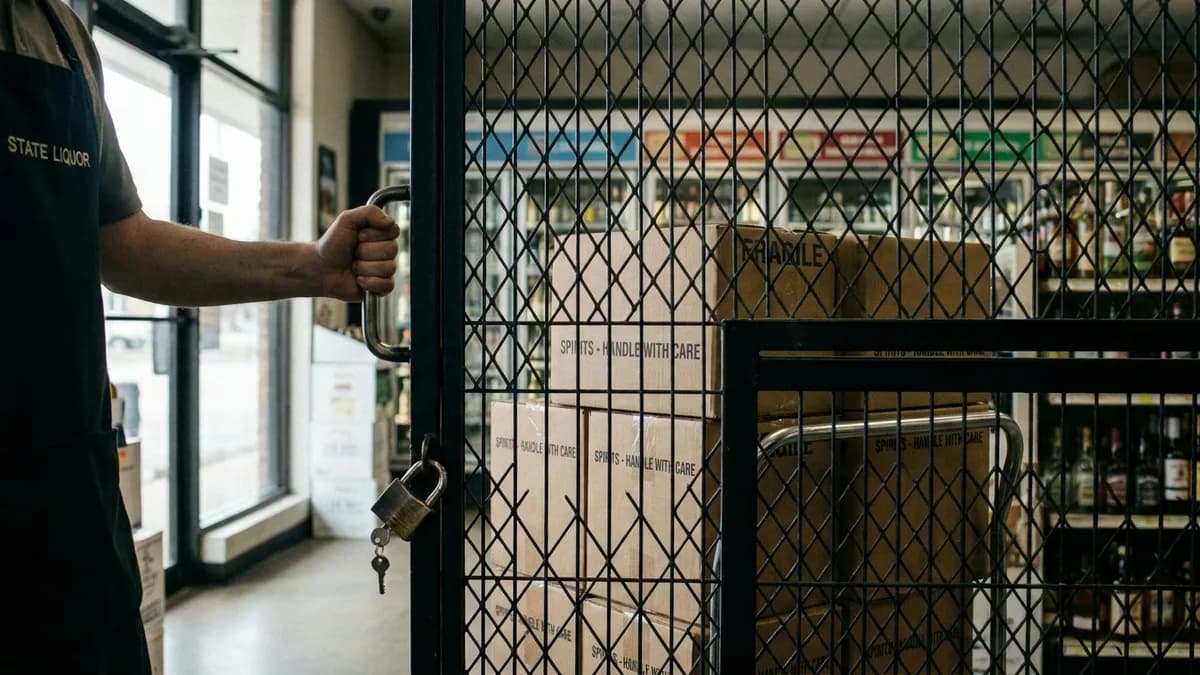
Photo: VapeExperts/AI
Public health voices caution against treating regulation as risk-free. Dr. Nora Volkow, director of the National Institute on Drug Abuse, has said that as more states legalize, greater dispensary density and proximity to homes are linked with increased use among adults.[9]
A 2026 McGill University research summary found legalization generally increased adult use, with youth effects less apparent, alongside higher cannabis-related emergency visits and poison-center calls.[10]
Three dates now decide the shape of North Carolina's market. Lawmakers return after the November election with HB 328 or a narrower age-and-testing bill in hand. The federal 0.4-milligram standard takes effect Dec. 11. The council's final recommendations land on Stein's desk by the end of the year.
Dr. Larry Greenblatt, the state health director and the council's co-chair, is not counting on a particular outcome. "We are not in any way convinced that we are definitely moving to be a marijuana-legal state," he said. "It could happen, but it may not."[6]
Until the House moves, the three markets stay where they are. Marijuana is legal on tribal land and illegal everywhere else in the state, and intoxicating hemp sells with no statewide age limit. The council can write the rules, but only the legislature can make them law.