

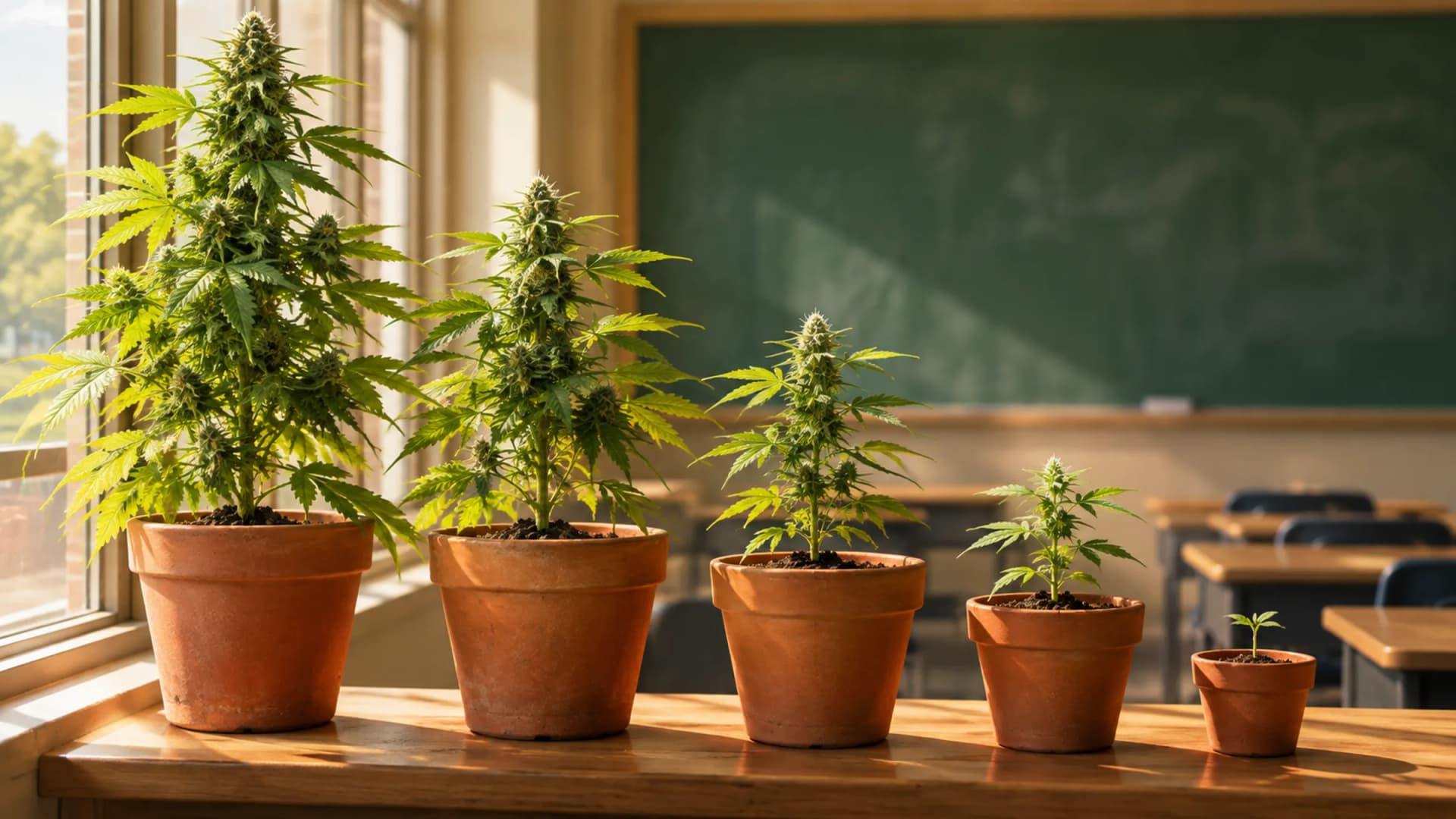
Fewer American high school students say they used cannabis in the past month than at any time since federal health officials started asking in 1991. The Centers for Disease Control and Prevention's 2025 Youth Risk Behavior Survey puts that share at 12.9%.[1]
That compares with 17.0% in 2023 and 23.1% in 2011, the year before Colorado and Washington voted to legalize adult use. The two-year drop is 4.1 percentage points. Since 2011, the decline is 44% in relative terms.
Lifetime use fell too, from 39.9% in 2011 to 25.5% in 2025.
The data arrived six weeks before Massachusetts voters decide Question 8, which would end the state's licensed adult-use retail market.
High schoolers reporting marijuana use
Source: CDC Youth Risk Behavior Survey
The cannabis numbers sit in the dataset, not the headline report
The CDC made the 2025 survey results available on September 21. The cannabis figures come from the survey's interactive data tool. The agency's news release does not give them.[2]
Its companion report, Youth Health in Focus, highlights diet, physical activity, sleep, digital behavior and mental health. Stateline reported that, unlike prior editions, the 2025 headline report largely leaves out substance-use findings, even though the survey collected them.
Photo: VapeExperts/AI
Dr. Jennifer Shuford, the CDC's deputy director and chief medical officer, described the report's broader youth-health results as "meaningful improvements." Her statement did not address marijuana or legalization.
The survey defines "current use" as at least one use in the previous 30 days, not daily use. It samples students in grades 9 through 12 nationwide and relies on what they report. Minnesota Public Radio, examining the new data, reported that the national series reached 26.7% in 1999.
The survey counts how many students used cannabis at all. It does not measure cannabis use disorder, and a national before-and-after comparison cannot show whether state laws drove the decline.
Minnesota shows the same direction, with gaps
A separate University of Minnesota analysis, reported by MPR on September 24, found past-month use among the students it examined fell from about 13% in 2013 to 5% in 2025. Differences between groups of students persisted. That analysis uses its own sample, not the CDC's.
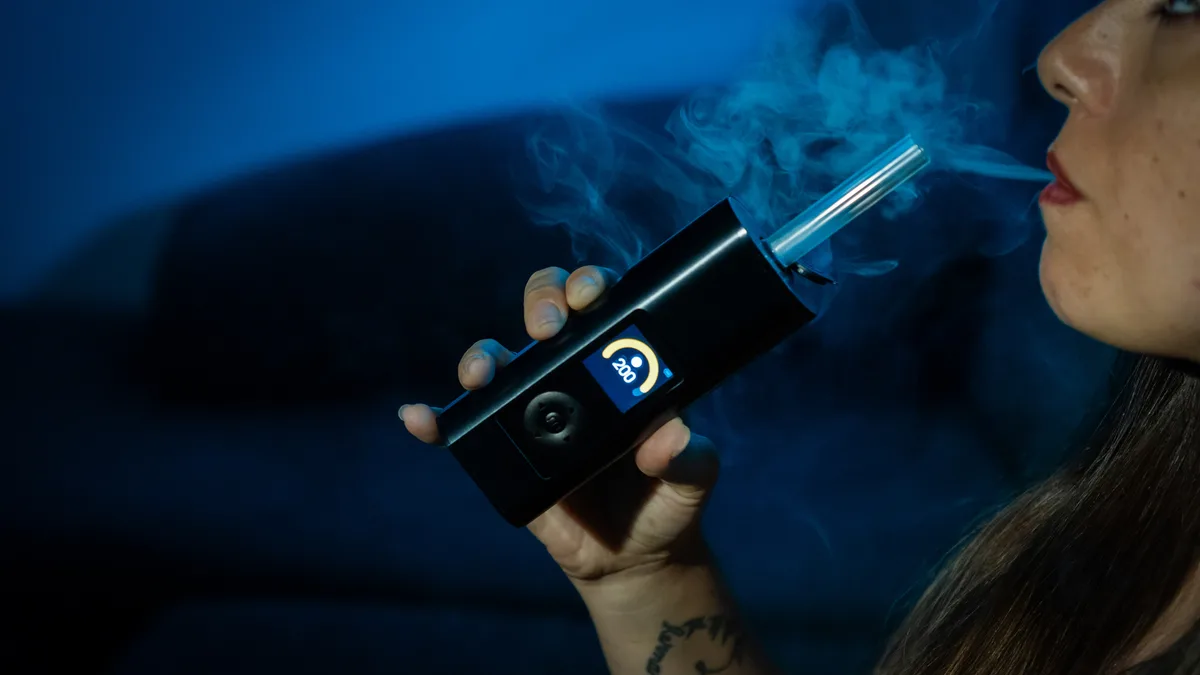
Photo: VapeExperts
A woman exhales vapor while using an Arizer Solo 3 vaporizer. Devices like these are sold through regulated adult-use markets in Massachusetts and Minnesota, where teen cannabis use has continued to decline.
Lead author Marla Eisenberg said the results point two ways.
"The biggest takeaway for me was that something's working in terms of reducing cannabis use overall and reducing some disparities. So we need to figure out how we can take some of that positive action and apply it where we did not see reductions in disparities," Eisenberg told MPR.
California counted diagnoses, not users
A study published September 11 in the journal Addiction measured something the CDC survey does not. Researchers followed 637,461 Kaiser Permanente Northern California members aged 13 to 17 from January 2014 through February 2020. They counted 8,804 new cannabis use disorder diagnoses.[3]
Before California's November 2016 legalization vote, diagnoses were trending down each year (adjusted rate ratio 0.95; 95% confidence interval 0.92 to 0.97). Six months after the vote, the model found an upward shift in that trend (aRR 1.26; 95% CI 1.14 to 1.38).
Photo: VapeExperts/AI
Six months after retail sales began in January 2018, the trend shifted down again (aRR 0.86; 95% CI 0.76 to 0.98). The later upward trend (aRR 1.02) had a confidence interval of 0.96 to 1.09, which crosses 1.0, so the model could not separate it from no change.
Those ratios describe changes in the slope of a trend line. An aRR of 1.26 does not mean 26% of teenagers developed a disorder.
Lead author Alisa Padon of the Public Health Institute said the study was built to fill a gap in survey data. "Most surveys of adolescent cannabis use tell us how many teens have tried cannabis, but don't tell us how many are developing a disorder that brings them into clinical care," she said.
The authors note the study covers one insured Northern California population with no comparison group, so shifts in screening, care-seeking or broader mental health trends cannot be ruled out. Data collection ended before COVID-19.
Boston doctors see no tidal wave, and no cure-all
The Boston Globe reported state survey evidence of falling use in Massachusetts. The share of 16- to 20-year-olds reporting daily or near-daily use roughly halved between 2019 and 2023, to 7%. That age band differs from both the CDC's high schoolers and the California study's 13- to 17-year-olds.
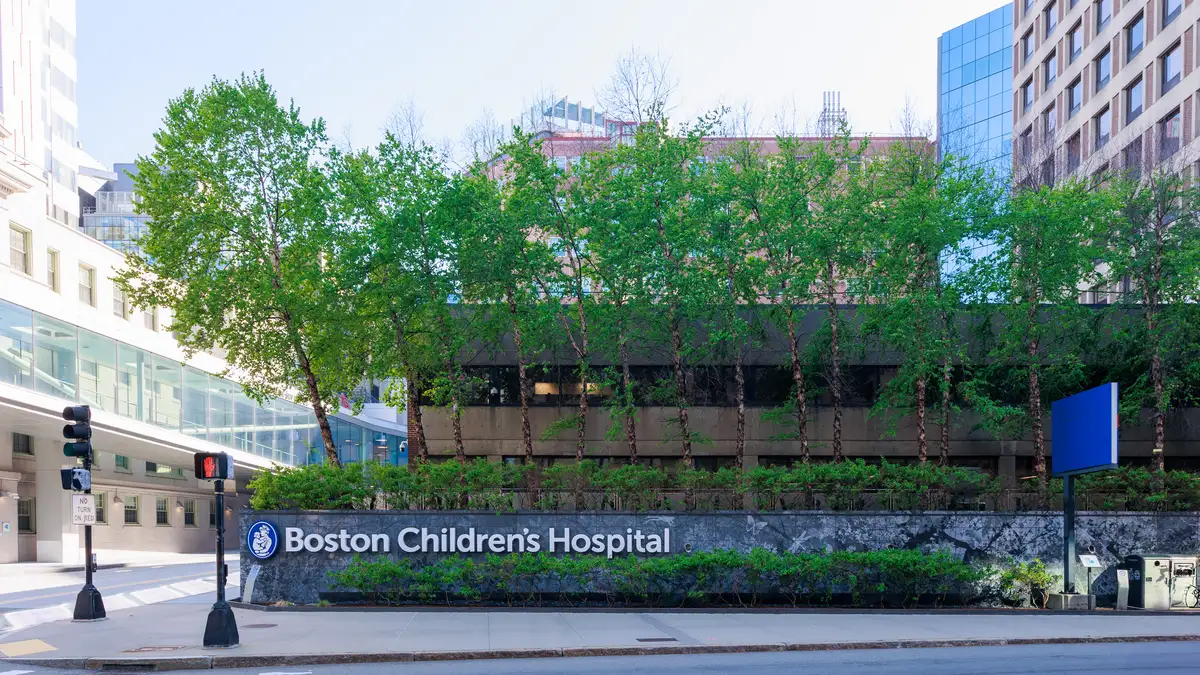
Photo: Kenneth C. Zirkel/Wikimedia Commons (CC BY-SA 4.0)
Boston Children's Hospital on Longwood Avenue in Boston. Doctors at Boston hospitals report no surge in teen cannabis cases ahead of the Massachusetts repeal vote.
Dr. Sharon Levy, chief of addiction medicine at Boston Children's Hospital, told the Globe the increase in adolescent use after legalization had not become "the huge tidal wave that I think people were fearing could potentially occur." The Globe also reported her continuing concerns about addiction and psychosis in young people.
Dr. Kevin Hill, director of addiction psychiatry at Beth Israel Deaconess Medical Center and a professor at Harvard Medical School, criticized the state's rollout but did not back repeal.
"I'm not a fan of how things have gone down in Massachusetts, but I don't think that repealing everything is going to be a panacea," Hill told the Globe.
He also said: "Kids who wanted to get cannabis have always been able to do that, and I don't think that having tons of stores in Massachusetts has really changed that."
What Question 8 would and would not do
A yes vote would end the state's licensed adult-use retail framework and change possession rules. It would not eliminate the medical program. It would not make possession of up to one ounce by an adult a criminal offense, according to the Secretary of the Commonwealth's ballot summary, as reproduced by Western Mass News.
Photo: VapeExperts/AI
The measure would take effect on January 1, 2028.
A University of New Hampshire Survey Center poll released September 24 found Question 8 lacks support.[4] The Telegram & Gazette reported the breakdown among likely voters: 71% no, 24% yes and 5% unsure.
The Cannabis Control Commission reported that adult-use sales totaled $1.65 billion in 2025 and $1.09 billion from January through August 2026, including a record $156 million in June. The market passed $10 billion in cumulative sales on September 5.
Voters decide on November 3. A yes majority would close licensed adult-use retail on January 1, 2028, while leaving the medical program intact and keeping adult possession of up to one ounce out of the criminal code. A no majority keeps the market open, and the question the CDC survey cannot answer, whether legal sales changed what teenagers do, stays open with it.