

Michigan has shut down the processor that made Muha Meds vape cartridges for the state and fined it $2 million, a penalty that MLive and the company's own compliance manager called unprecedented. The orders take effect today. Neither order names a product, a batch or a retailer.
The Cannabis Regulatory Agency revoked Michigan Investment 10 LLC's medical processor license, PR-000165, and ordered its adult-use processor operation in Pinconning closed.[1] CRA Executive Director Brian Hanna signed the medical final order on September 14. The agency announced it September 16 and said both orders take effect September 24, 10 days after the signature.[2]
The penalty followed two formal complaints and a contested hearing. On June 18, 2026, an administrative law judge issued a proposal for decision finding that the agency had proved every count of its November 15, 2023 complaint. MLive reported the case involved 31 violations.
"As discussed below, the undersigned concludes that [CRA] has met its burden of proof as to all counts of the formal complaint issued on November 15, 2023," the judge wrote.
A camera pointed at a wall
The violations fall into five groups: surveillance and security failures, inventory and seed-to-sale tracking problems, noncompliance with mandatory testing procedures, unauthorized business arrangements, and broader processor-operation failures. Hanna singled out one detail in the extraction room.
"These were egregious violations, capped by the fact that their camera in the extraction room was pointed at a wall instead of the activity it was supposed to monitor," Hanna said.
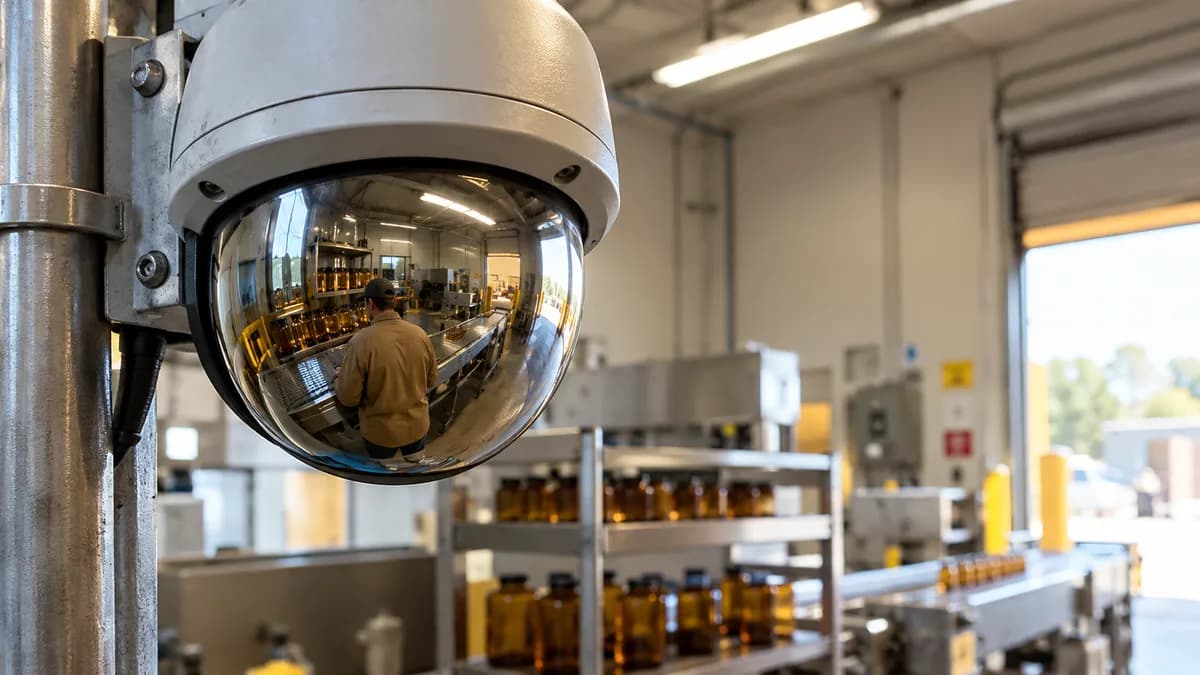
Photo: VapeExperts/AI
Aaron Baggett, the company's compliance manager, told MLive the camera was a backup. "We did have one camera facing the wall, but it was a redundant setup," he said. "There was another camera in that same booth capturing all the necessary footage, and the CRA has access to that."
Baggett said the agency was "grasping at straws" over the camera and called the fine "unprecedented." He said the company might appeal but declined to discuss litigation details.
Hanna said the rules at issue exist to protect the public. "Michigan's cannabis laws and rules are designed to protect public health and safety and ensure accountability throughout the regulated market," he said. "When a licensee disregards those requirements to this extent, the CRA will take appropriate action."
The order does not say what was in the carts
Neither the CRA announcement nor the accessible text of the final order names a contaminant, a failed batch, a Metrc package tag, an affected flavor, a retailer list or a consumer recall. The record shows that testing and tracking rules were violated. It does not show that any cartridge contained pesticides, metals, microbes or a thinning agent.
The distinction limits what a customer can conclude. A testing violation means the rules on how batches are sampled, tracked or released were not followed. It is not a lab result.
Testing rules carry extra weight for cartridges because bulk oil and a filled cart are not the same product. Bulk-oil compliance testing may not capture contamination introduced by cartridge hardware or variation among filled cartridges.
In a 2025 study in Scientific Reports, Zuzana Gajdosechova and colleagues at the National Research Council Canada, Natural Resources Canada and Health Canada tested five cartridges from each of six legal Canadian vape products. They found aluminum, cobalt, chromium, copper, nickel, tin and zinc particles in the liquids.[3]
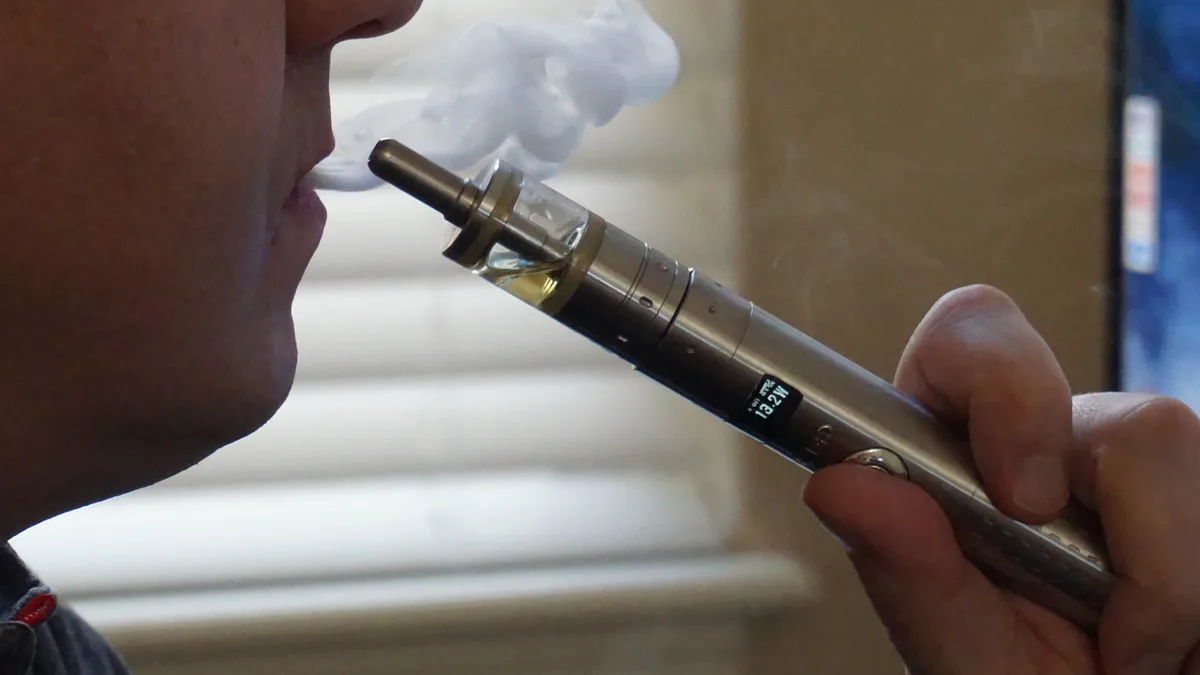
Photo: Vaper City/Wikimedia Commons (CC BY-SA 4.0)
A man uses a vape pen indoors in this archive photo. Michigan regulators fined the maker of Muha Meds vape cartridges $2 million and ordered a shutdown, without saying what the carts contained.
"The elemental composition of the metal components in the cartridges matched the detected particles, providing strong evidence that cannabis vape liquids are contaminated by the metal components of vaping devices," they wrote.
That was Canadian hardware, not Michigan oil, and the Michigan order reports no such finding. We covered the broader contaminant picture in our earlier reporting on pesticides and heavy metals.
How to check a cart you already bought
Because no package list exists for this case, the brand name alone cannot tell a customer whether a product came from Michigan Investment 10. Muha Meds products made in another state, hemp-derived versions and counterfeits are not connected to this order. The record and the CRA's own consumer guidance point to five checks:
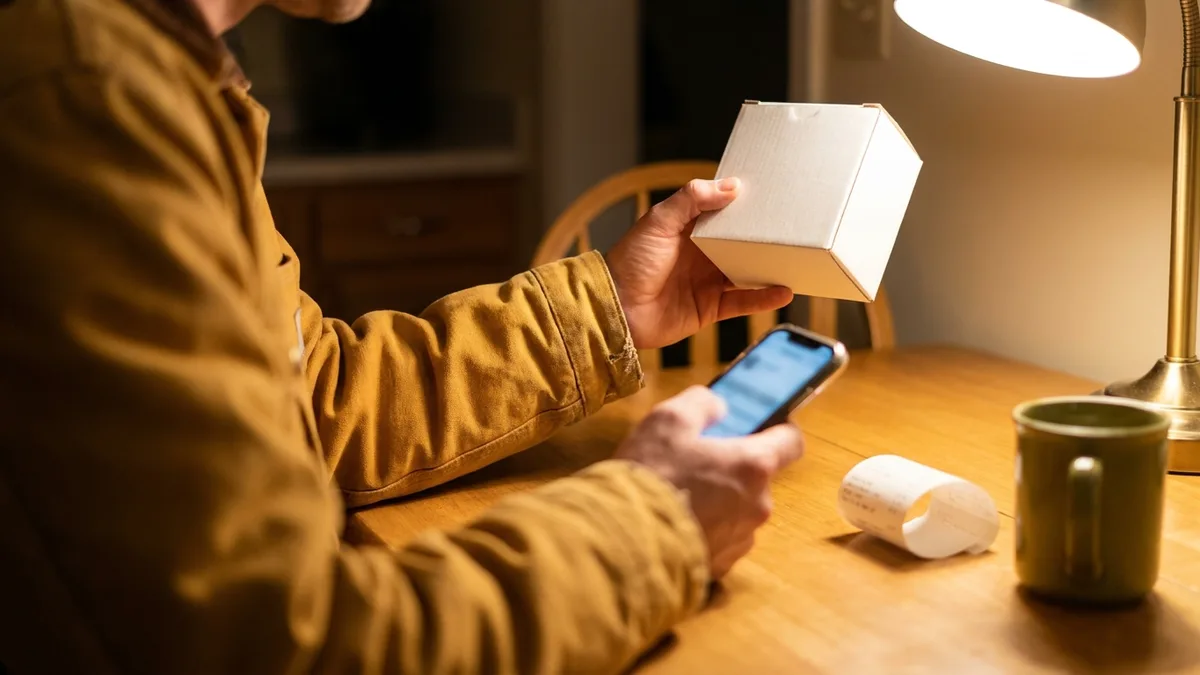
Photo: VapeExperts/AI
- Keep the package and receipt. Note the product name, test dates, processor name and package or source identifier.
- Confirm the seller and processor were licensed through the CRA's public licensing database, where disciplinary documents are attached to licensee records.
- Ask the retailer for the originating processor and the Metrc package number, and for the batch certificate or test record.
- Check the CRA recall page. A genuine Michigan recall names products and lists affected package tags and sales locations, as the agency's September 18 Hash Melts recall did. No Muha Meds advisory has been posted.
- Report any reaction to the CRA at 517-284-8599 and to a health-care provider.
Newer Muha packaging carries a scratch-off code or app scan, according to one Michigan retailer. That confirms the product is not counterfeit. It says nothing about whether a specific Michigan batch met testing and tracking rules.
Nearly three years from suspension to closure
The case did not begin in 2023. MLive reported at least four CRA complaints against the company over time, including a 2022 matter that was later withdrawn. The complaint that produced this order was filed on November 15, 2023, along with a summary suspension that a judge lifted two months later.
Nov. 15, 2023
CRA files a formal complaint and summarily suspends the processor licenses.
Dec. 4, 2023
Post-suspension hearing is held.
Jan. 8-9, 2024
Contested-case hearing before an administrative law judge.
Jan. 12, 2024
The judge dissolves the summary suspension; the plant keeps operating during the case.
June 18, 2026
The judge issues a proposal for decision finding CRA proved every count.
July 8, 2026
Michigan Investment 10 files exceptions to the proposal.
Sept. 14, 2026
Hanna signs the amended final order: revocation, closure and a $2 million fine.
Sept. 24, 2026
The orders take effect.
The plant operated for more than two and a half years between the lifted suspension and the final order.
The brand keeps selling
The order reaches one processor, not the brand. MLive reported that separate Muha Meds retail locations in Detroit and Ypsilanti still held active licenses and that branded products remained on store menus after the announcement.
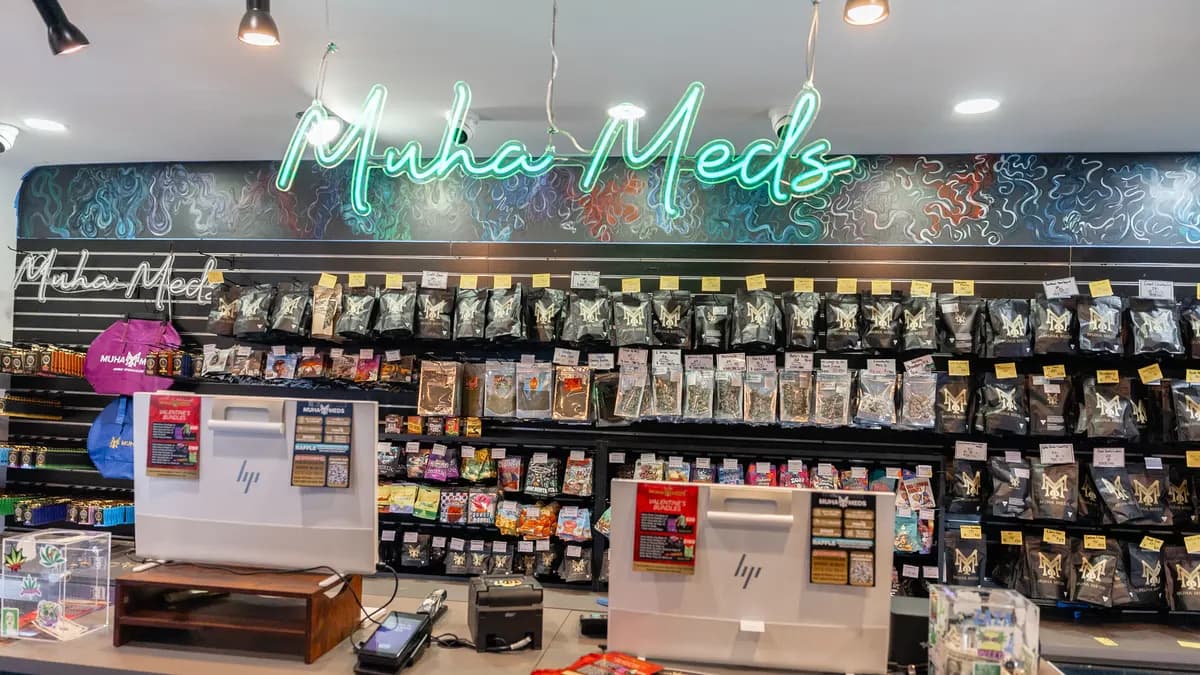
Photo: Google Maps profile of Muha Meds Ypsilanti Retail Store
A neon Muha Meds sign hangs above shelves of branded cannabis bags and two checkout terminals at the Muha Meds Ypsilanti retail store. Michigan has fined the brand's maker $2M and ordered a shutdown.
Two questions stay open. The publicly accessible order does not say whether inventory already shipped to retailers may be sold, must be returned or must be destroyed.
Nothing in the order prevents Muha Meds from contracting with another licensed Michigan processor. Products made under a different license would need to be distinguished from Michigan Investment 10 stock.
As of September 22, no judicial appeal or court stay had been reported.
The medical order gives Michigan Investment 10 30 days from today to pay, which puts the deadline at October 24. Baggett has said an appeal is possible. For anyone holding a Muha Meds cart, the record still names no product, and only a CRA advisory listing package tags would change that.