

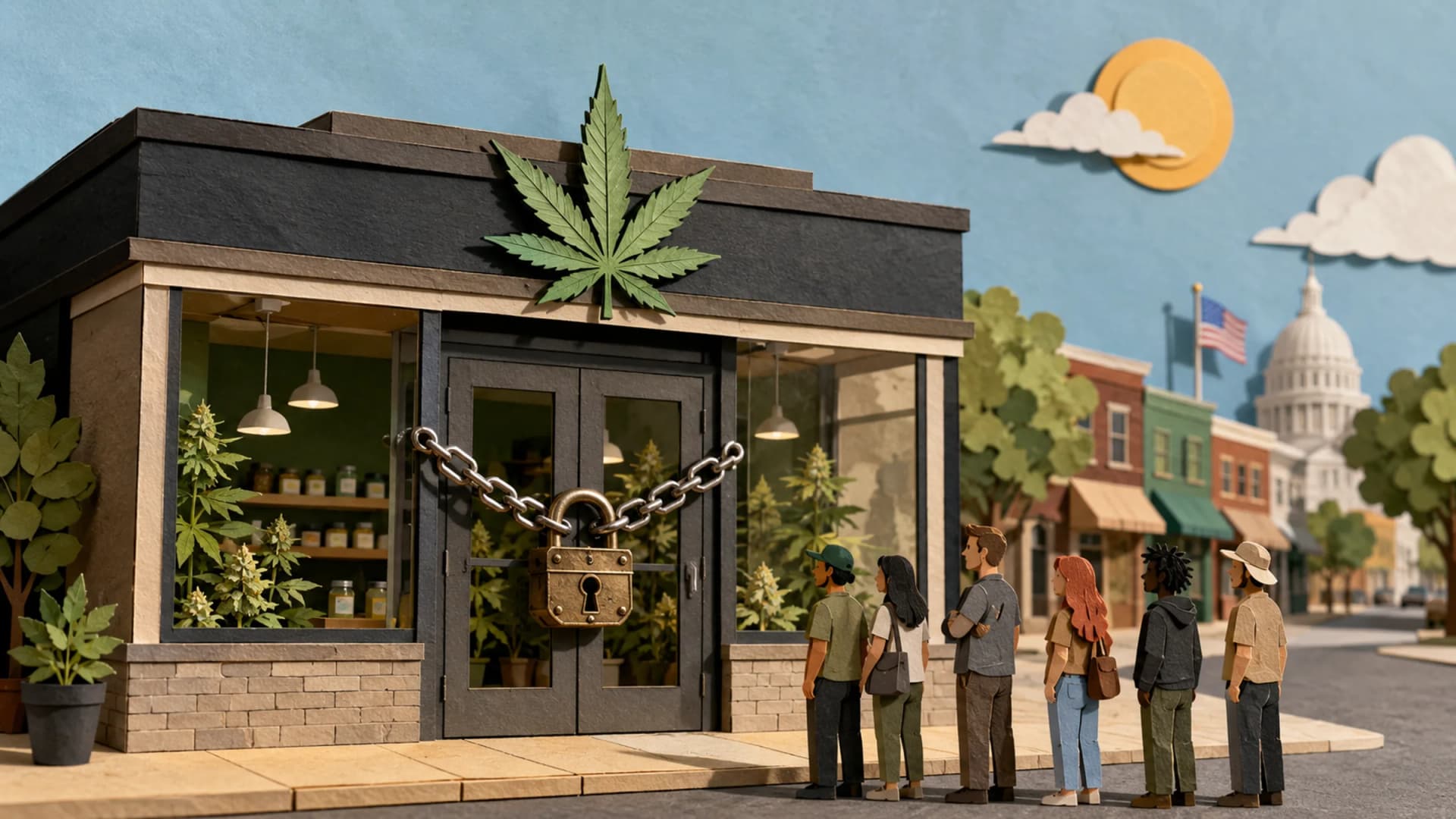
In 1969, 12% of Americans told Gallup that marijuana should be legal. In October 2025, 64% did. That is a 52-point swing in one lifetime. Yet this week, 57 years after that first poll, federal lawyers are still arguing over whether cannabis belongs in Schedule I, the strictest drug category the United States has.
The pattern repeats around the world. Voters changed their minds about cannabis years, sometimes decades, before their laws changed. This is the story of that gap: where opinion turned, what turned it, and why statutes still lag.
A 52-point swing in one lifetime
Gallup's legalization series is the longest continuous record of the shift. Support reached 50% in 2011, hit 58% in 2013, and peaked at a record 70% in 2023.[1] It has since slipped, to 68% in 2024 and 64% in 2025, a decline driven largely by a 13-point fall among Republicans.
US support for legalizing marijuana (Gallup)
Source: Gallup
Cannabis belongs to a small family of historic opinion reversals. Gallup approval of interracial marriage rose from 4% in 1958 to 94% in 2021. Same-sex marriage support went from 27% in 1996 to around two-thirds today. There is no standard measure proving cannabis moved fastest, but it moved in that company.
The medical majority came first
The polling contains a split that matters more than the headline number: the gap between medical and recreational acceptance.
Pew Research Center asked the question three ways in February 2024. 57% said cannabis should be legal for medical and recreational use. 32% said medical only. Just 11% said not legal at all. Add the first two and 89% of Americans accepted at least medical legality. Even among Republicans aged 18 to 29, 57% backed both uses.
That medical consensus was built in the 1990s. AIDS and cancer patients in San Francisco, led by figures like Dennis Peron and Mary Jane "Brownie Mary" Rathbun, reframed cannabis around nausea, appetite and palliative care. On Nov. 5, 1996, California voters passed Proposition 215 with 55.6%, shielding qualified patients and caregivers from state penalties.[3]
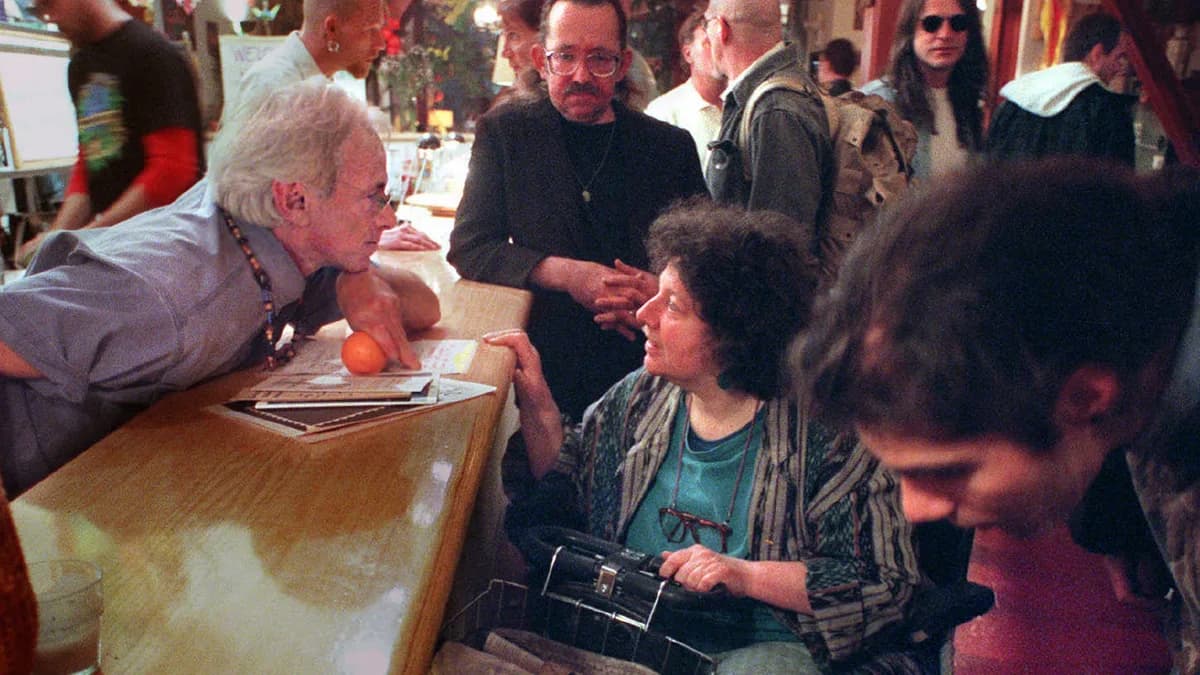
Photo: Karl Mondon/KRT/Newscom
Dennis Peron leans in to listen to Sue Glover, who has multiple sclerosis, at the Cannabis Buyers' Club bar in San Francisco in 1996. The club provided marijuana for medical purposes.
The politics had been pointing this way far longer. In 1977, President Jimmy Carter asked Congress to drop federal criminal penalties for possession of up to one ounce. "Penalties against possession of a drug should not be more damaging to an individual than the use of the drug itself," he wrote.[2] The Reagan-era drug war interrupted that liberalization for a generation. The medical movement revived the debate.
People changed their own minds
A common explanation is generational replacement: old opponents died, young supporters voted. Research on US opinion points to a different account.
Sociologists Jacob Felson, Amy Adamczyk and Christopher Thomas found that most US liberalization happened within cohorts. Americans of many ages reconsidered.[4] Their strongest explanations were declining religious affiliation, declining punitiveness and changing media frames, not rising cannabis use or spillover from legal states.

Photo: Storye book/Wikimedia Commons (CC BY-SA 4.0)
Sunlight falls on wooden pews inside St Mary's Church at Nun Monkton. Attitudes toward cannabis have shifted in communities worldwide, even as many laws remain unchanged.
Two other forces show up across countries. First, risk perception fell. France's official EROPP survey found that the share of French adults who considered cannabis dangerous from the first try fell from 54% in 1999 to 38% in 2023.
Second, arrest came to look disproportionate. The UNODC estimated 244 million cannabis consumers worldwide in 2023, about 4.6% of people aged 15 to 64. It also counted seven million formal police contacts for drug offenses in 2022, roughly two-thirds of them for use or possession of any drug. Many voters who dislike cannabis concluded that a criminal record was worse than the conduct.
Where majorities wait on parliament
In several democracies, reform now polls ahead of the law, and the law has not moved.
The United Kingdom is the clearest case. A 2026 YouGov survey found 47% support and 43% oppose legalization, and 55% prefer either legalization or decriminalization when given three options. Cannabis remains Class B. Possession can in theory bring five years in prison, an unlimited fine or both.[6]
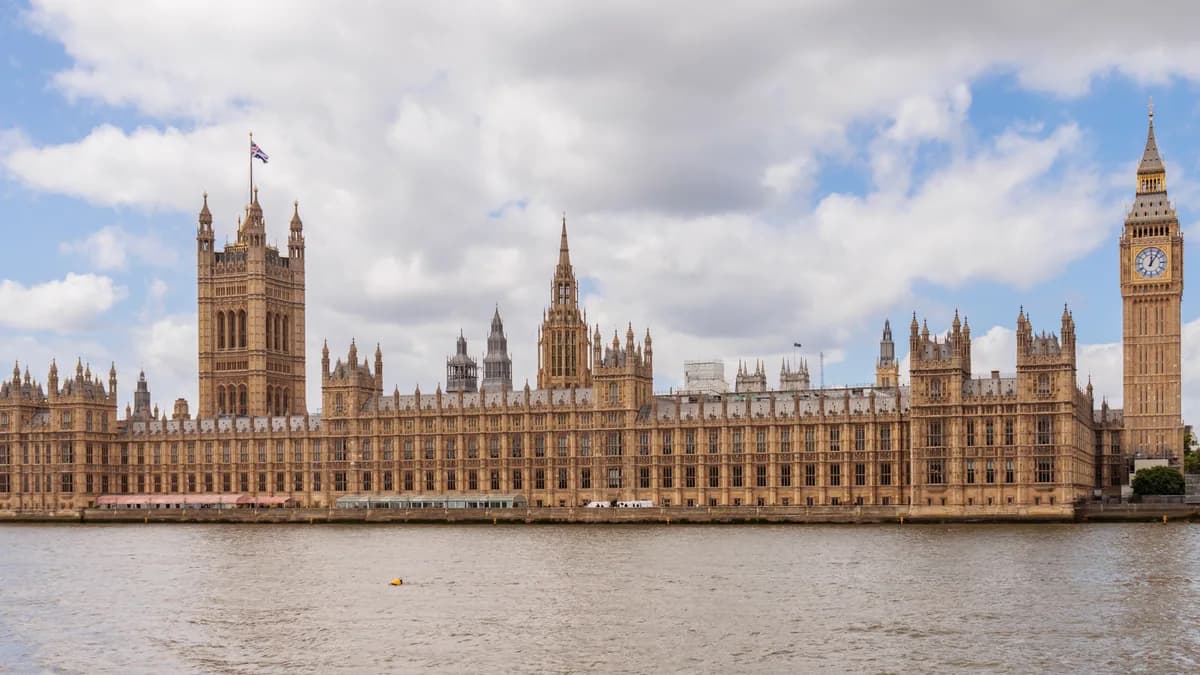
Photo: Terry Ott from Washington, DC Metro Area, United States of America/Wikimedia Commons (CC BY 2.0)
Houses of Parliament in 2022 (cropped)
Australia's official household survey found 45% support and 33% opposition in 2022-23, the first time support clearly led. Roughly four in five Australians favored a health response over a criminal one for possession.[5] Recreational cannabis remains illegal federally and in most states.
France shows normalization without a reform majority. Risk perception has fallen sharply, and 40% of French adults say users should be free to make the choice. But the official 2023 survey concluded a majority still rejects decriminalization.
Part of the explanation is that "legalize cannabis" bundles many separate questions. A voter can back patient access, oppose jail, and still distrust commercial stores, advertising and high-potency concentrates. Legislatures must answer all of it at once. Intense minorities, including police groups and older reliable voters, punch above their weight in that fight.
Where the law jumped ahead of the voters
The gap runs the other way too. Uruguay approved the first national legal cannabis market in December 2013 while 58% of Uruguayans reportedly opposed legalization. President José Mujica's government sold it as a public-security experiment, not a response to demand.[7]

Photo: Bicentenario Uruguay/Wikimedia Commons (CC BY-SA 2.0)
José Mujica speaks to a journalist holding a television microphone during an outdoor interview in 2014. As Uruguay's president, Mujica signed cannabis legalization into law ahead of public opinion.
Brazil repeated the move by court order. In March 2024, a Datafolha poll found 67% opposed decriminalizing possession. Three months later, the Supreme Federal Court ruled that holding up to 40 grams or six female plants for personal use is not a crime, citing privacy, liberty and the unequal treatment of poor, Black and mixed-race defendants.[8] Chief Justice Luís Roberto Barroso told reporters: "We did not legalize anything. We are only confronting a perverse discrimination … that is indefensible."
Mexico shows the opposite bottleneck. Public opinion flipped hard, from 85% opposed to recreational use in 2013 to 58% in favor in a 2021 Consulta Mitofsky poll, and the Supreme Court recognized a constitutional right to personal adult use. Congress has still failed to build a legal supply system.
Germany reversed the usual sequence: the law moved first, and opinion appears to have followed. When the Bundestag voted in February 2024, a YouGov poll found only 47% support against 42% opposition.[9] Then-health minister Karl Lauterbach framed it as damage control, not celebration: "We have two goals: to crack down on the black market and improved protection of children and young people." By December 2024, a poll commissioned by the German Hemp Association found 59% backing regulated sales, and a spring 2025 YouGov survey found only 38% wanted the law repealed. Czechia followed on Jan. 1, 2026, letting adults 21 and older grow three plants and hold up to 100 grams at home, without commercial sales.
Japan is the clearest counterexample. Its revised law, in force since Dec. 12, 2024, allowed approved cannabis-derived medicines but explicitly criminalized use and raised maximum penalties to as much as seven years. A July 2024 survey found 57% of Japanese respondents did not see cannabis as a legitimate healthcare solution. Medical accommodation and harsher recreational law can arrive together.
Smoke gave way to vapor
The way people consume cannabis changed ahead of the law too. Markus Storz began developing the Volcano vaporizer in Germany in the 1990s and sold the first units in 2000, decades before his country legalized possession.[13] The device gave cannabis a medical-device aesthetic at a time when the legal category for it barely existed.
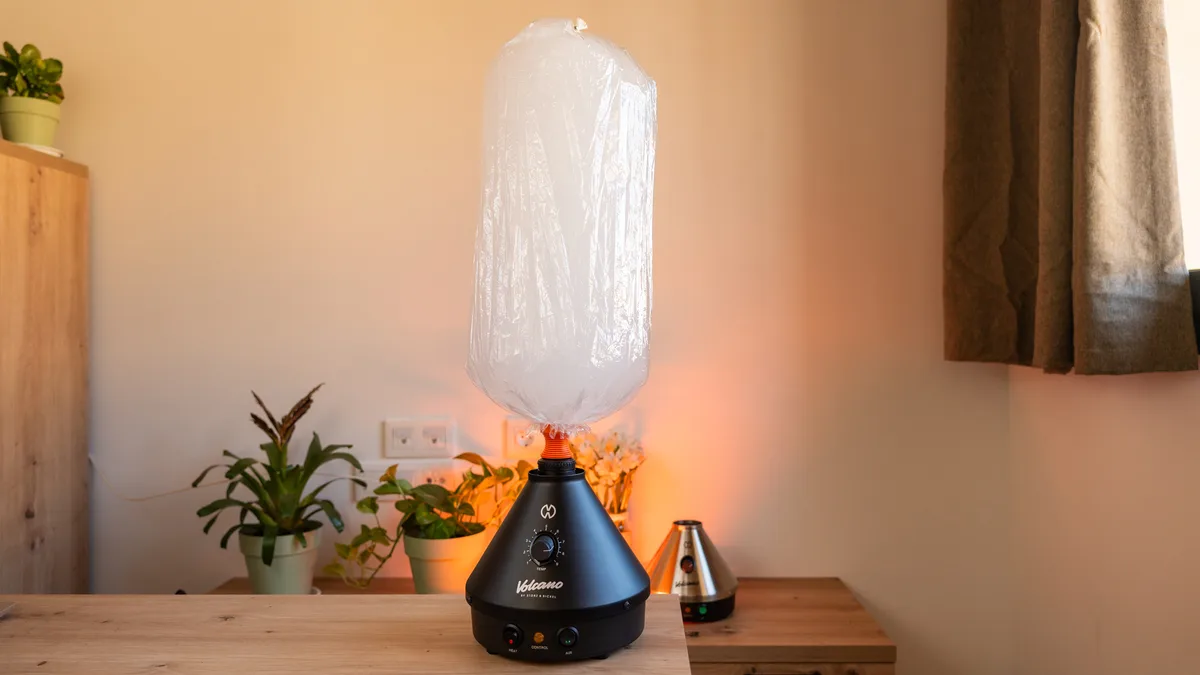
Photo: VapeExperts
A Storz & Bickel Volcano Classic vaporizer fills a balloon bag on a tabletop. Desktop devices like this helped smoke give way to vapor as global attitudes toward cannabis shifted faster than the laws.
The health case followed. A 2007 pilot study led by Donald Abrams compared smoked cannabis with a Volcano in 18 participants. THC delivery was similar, while expired carbon monoxide was significantly lower with the vape.[12] The study was small, but it established the core distinction between heating cannabis flower and burning it.
Legal markets accelerated the shift. Health Canada found that among past-year consumers, smoking fell from 89% in 2018 to 69% in 2024, while 37% reported using a vape pen. Awareness rose alongside use: the share of consumers rating regular vaporization a moderate or great risk climbed from 38% to 55% after legalization. Normalization did not necessarily mean people decided cannabis was harmless.
A hearing wraps up this week
Which brings the story back to Washington. In April, the federal government moved a narrow slice of cannabis, FDA-approved marijuana medicines and marijuana covered by qualifying state medical licenses, into Schedule III.[10] Ordinary cannabis stayed in Schedule I. The action acknowledged medical use for specified products while keeping adult-use cannabis under the strictest federal controls, even as 64% of Americans tell Gallup it should be legal.
The broader question is live right now. A DEA hearing on transferring marijuana from Schedule I to Schedule III began June 29 and is scheduled to conclude no later than July 15.[11] Fifty-seven years after Gallup recorded 12% support, the United States is still deciding whether cannabis has accepted medical use at all.