

In Sweden, police do not need to find cannabis to open a cannabis case. A urine or blood test can be the evidence. Use itself is a crime, and it has been since 1988.
That makes Sweden a rare case in Europe. And it makes the country's history with the plant stranger. Long before cannabis became a moral question, Sweden grew hemp as everyday technology.
A hemp country before it was a zero-tolerance country
Hemp in Sweden is old. A 2013 study in Scientific Reports documented hemp pollen in Rödön parish, Jämtland, dated to around 100 to 200 AD.[1] The same study found more hemp pollen and seeds from the Viking Age, 800 to 1050 AD, including near Lake Mälaren by Stockholm, and pollen, seeds and fibres at Lake Siljan in Dalarna.[1]
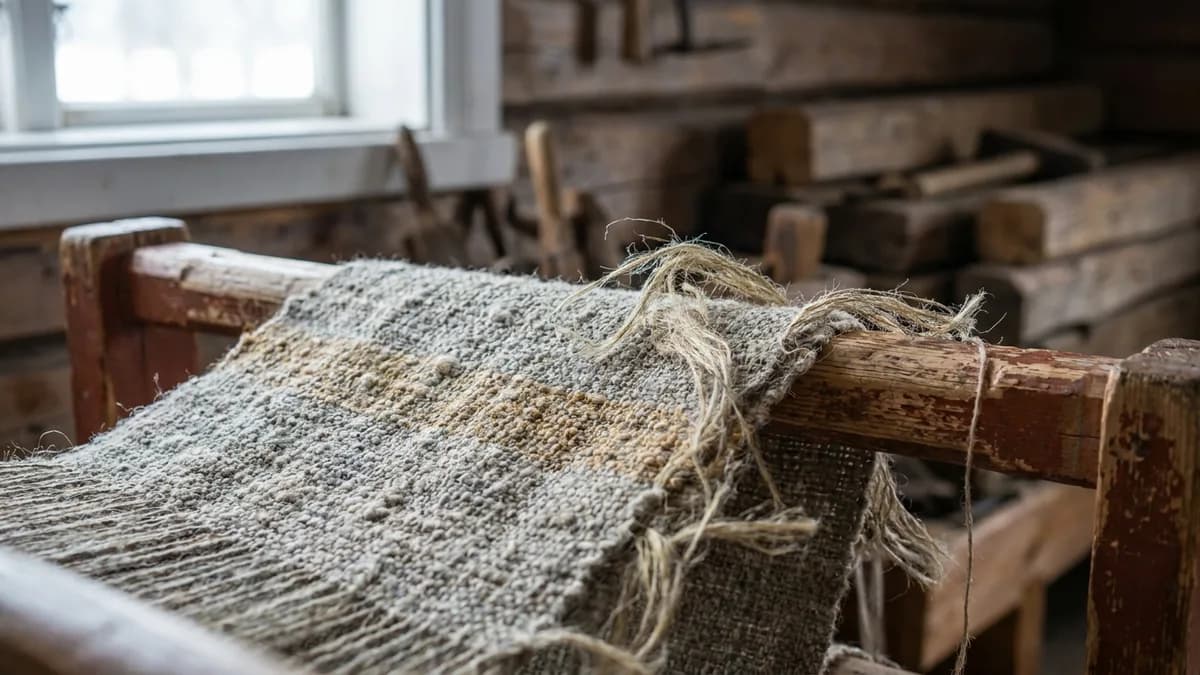
Photo: VapeExperts/AI
The researchers also tested four historic textiles. Two pieces of the famous Överhogdal Viking wall-hanging turned out to contain hemp, in some cases mixed with flax. Their conclusion: hemp was used for fine textile work in Viking and Early Medieval Scandinavia, not just rope and sacks.[1]
One caveat matters. The evidence covers cultivation and fibre. There is no solid evidence from these finds that Viking-era Swedes used cannabis for psychoactive purposes.[1]
One theory of contagion became national doctrine
Modern Swedish drug policy has an architect: Nils Bejerot, a psychiatrist and police doctor. Bejerot argued that drug use spreads socially, like an epidemic, and that policy should target users as well as traffickers. His ideas fed the goal of a "narkotikafritt samhälle," a drug-free society. He is also widely associated with the term "Stockholm syndrome," coined after the 1973 Norrmalmstorg bank robbery.
A comparative study by the European Parliament put the doctrine plainly: "In Sweden all non-medical use of drugs is regarded as drug abuse and no distinction is made between soft and hard drugs."[2]
The law followed the doctrine in steps.
1968
Sweden passes the Narcotic Drugs Punishment Act, penalizing possession, transfer, manufacture and sale.
1988
Personal drug use itself becomes a criminal offense.
1993
Imprisonment is added to the penalty scale for minor drug offenses, which allows police to use compulsory urine and blood tests to prove use.
2019
The Supreme Court rules that CBD preparations containing THC are narcotics, even if made from approved industrial hemp.
The 1993 change is the key procedural detail. Because minor drug offenses can carry prison, police gained the power to demand bodily testing. Sweden became one of the few European countries where biological traces alone can support a criminal case.
Two scoreboards, two verdicts
By its own preferred metric, Sweden's model performs. The Public Health Agency of Sweden reported that in 2024, past-year cannabis use among adults aged 16 to 84 was 3.5% for men and 1.6% for women. Among 16-to-29-year-olds, it was 7.4% for men and 5.1% for women.
The EU as a whole sits far higher. The EUDA estimates 8.7% of EU adults aged 15 to 64 used cannabis in the past year, about 25 million people, and 15.3% of young adults aged 15 to 34.[3]
The second scoreboard is harder for the model's defenders. EUDA data show Sweden recorded 474 drug-induced deaths in 2023, or 63 per million residents aged 15 to 64. The EU27 rate is 24.7 per million.[4]
Drug-induced deaths per million residents, ages 15-64
Source: EUDA, European Drug Report 2025
Reporting years differ slightly (Denmark's figure is from 2022), and Sweden is not Europe's highest. EUDA lists higher rates in Estonia at 135 per million, Latvia at 130, Norway at 94, Finland at 88 and Ireland at 82.[4]
The trend also gives prohibition's defenders new material. The Public Health Agency reported drug-related deaths fell 37% between 2015 and 2024, to 424 deaths in 2024. Opioids were involved in about 90% of deaths where substances could be identified, with oxycodone the most common. These deaths are opioid-driven, not cannabis-driven.
Photo: VapeExperts/AI
Critics read the same numbers differently. Their argument, as summarized in Swedish drug-policy research and harm-reduction advocacy, is that criminalizing use pushes people away from health services, spends police resources on possession and use cases, and delayed harm reduction compared with European peers. On that front, EUDA data show Sweden distributed 1,865,146 syringes through specialized programs and 2,483 take-home naloxone kits.[4]
Enforcement, meanwhile, has intensified. Sweden reported just over 44,000 drug seizures in 2024, up almost 30% from 2023.[5] Cannabis resin seizures rose from 1.2 tonnes in 2013 to 8.8 tonnes in 2023.[5]
Trace THC turns a CBD bottle into a narcotics case
The 2019 Supreme Court ruling in case B 177-19 shows how absolute the THC line is. The court held that CBD oils containing THC are narcotics, even when made from EU-approved industrial hemp. "It is clear that the exception for industrial hemp only relates to plants of the genus Cannabis," the ruling stated, as reported at the time. The plant is exempt. A processed preparation with THC is not.
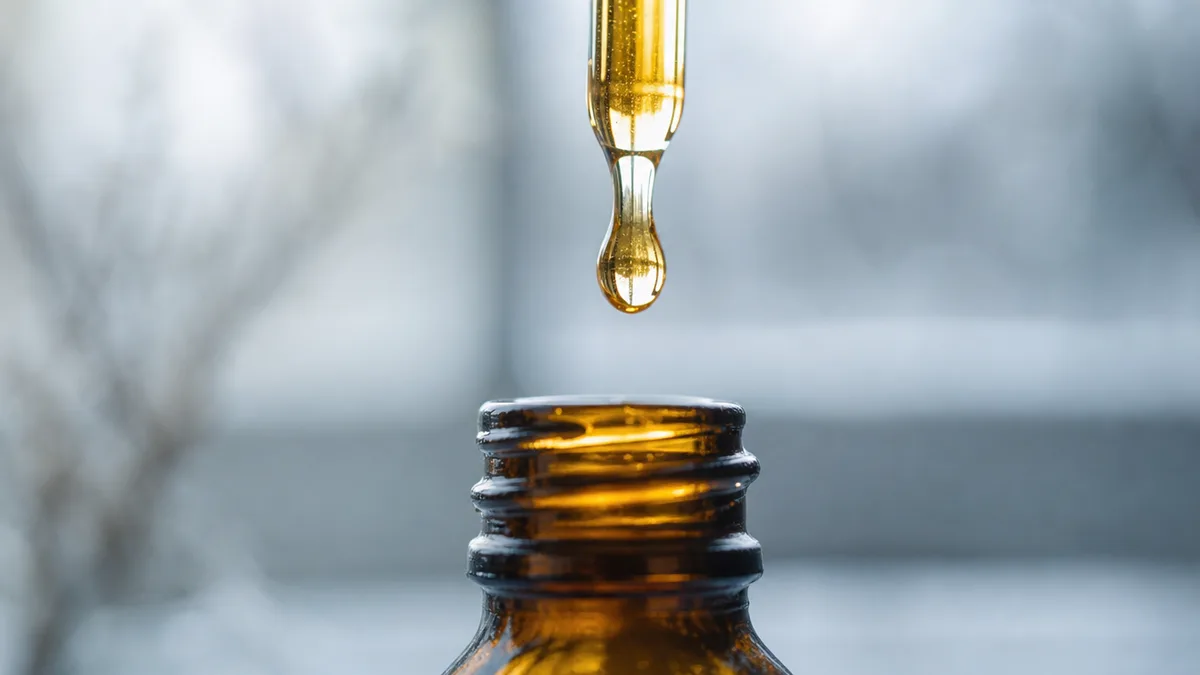
Photo: VapeExperts/AI
Sweden does have medical cannabis in a narrow sense. Cannabinoid medicines such as Sativex are available under restrictive conditions, and plant-based access has been handled case by case through exemptions. It is not a broad patient-access model like Germany's or the Netherlands' pharmacy system.
Vaporizers exist here, but the culture stays hidden
For our readers, the practical picture is stark. A dry herb vaporizer is a legal object in Sweden. Using it with THC cannabis is a crime, and a test can prove it. That keeps Swedish vaporization culture hidden rather than public, with none of the visible patient use or club scenes found in Germany or the Netherlands. The 2019 ruling extends the risk to CBD vaping: a full-spectrum vape liquid with trace THC can be treated as a narcotic preparation, while THC-free isolate sits in a safer but still regulated space.
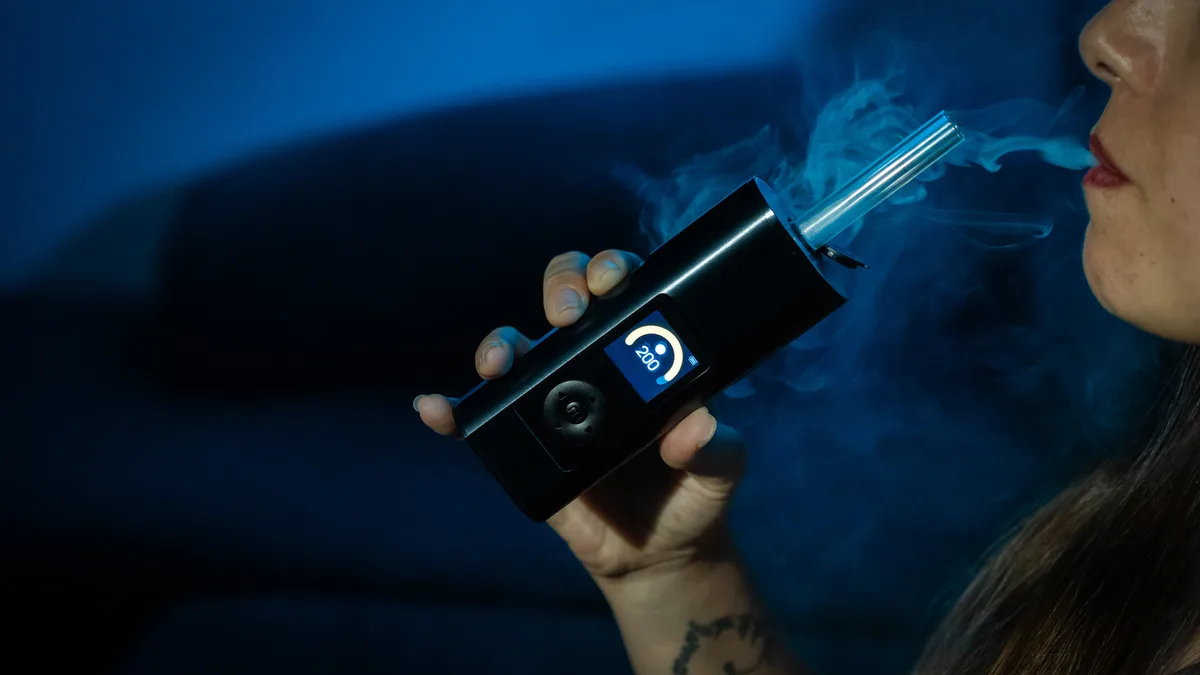
Photo: VapeExperts
A woman exhales vapor while using an Arizer Solo 3 vaporizer. Devices like these are legal to sell in Sweden, but the country's zero tolerance drug policy keeps users out of public view.
Around Sweden, the map keeps changing. Malta legalized limited home growing in December 2021, Luxembourg in July 2023, Germany in February 2024, and Czechia in January 2026, while the Netherlands began a regulated supply-chain experiment in 10 municipalities in 2025.[3] Sweden's political mainstream still treats recreational reform as a threat to prevention and youth protection.
What to watch
- How Swedish law treats returning travelers who legally consumed cannabis in Germany, with THC still detectable in their blood. The territorial question has not been settled publicly, and we will watch for test cases.
- Whether the 37% decline in drug-related deaths since 2015 continues in the Public Health Agency's next annual report, and how both sides of the debate claim it.
- Sweden's position in the EUDA's 2027 data, especially drug-induced deaths per million relative to Denmark, Germany and the Netherlands.
- Any new court decisions on CBD products following the B 177-19 line, which will determine how much of Sweden's hemp-derived market survives.
Two thousand years ago, Swedes retted hemp by their lakes and wove it into wall-hangings. Today the same genus of plant can turn a blood sample into evidence. Whether that arc bends again is now a question Sweden's neighbors are forcing onto its agenda.