

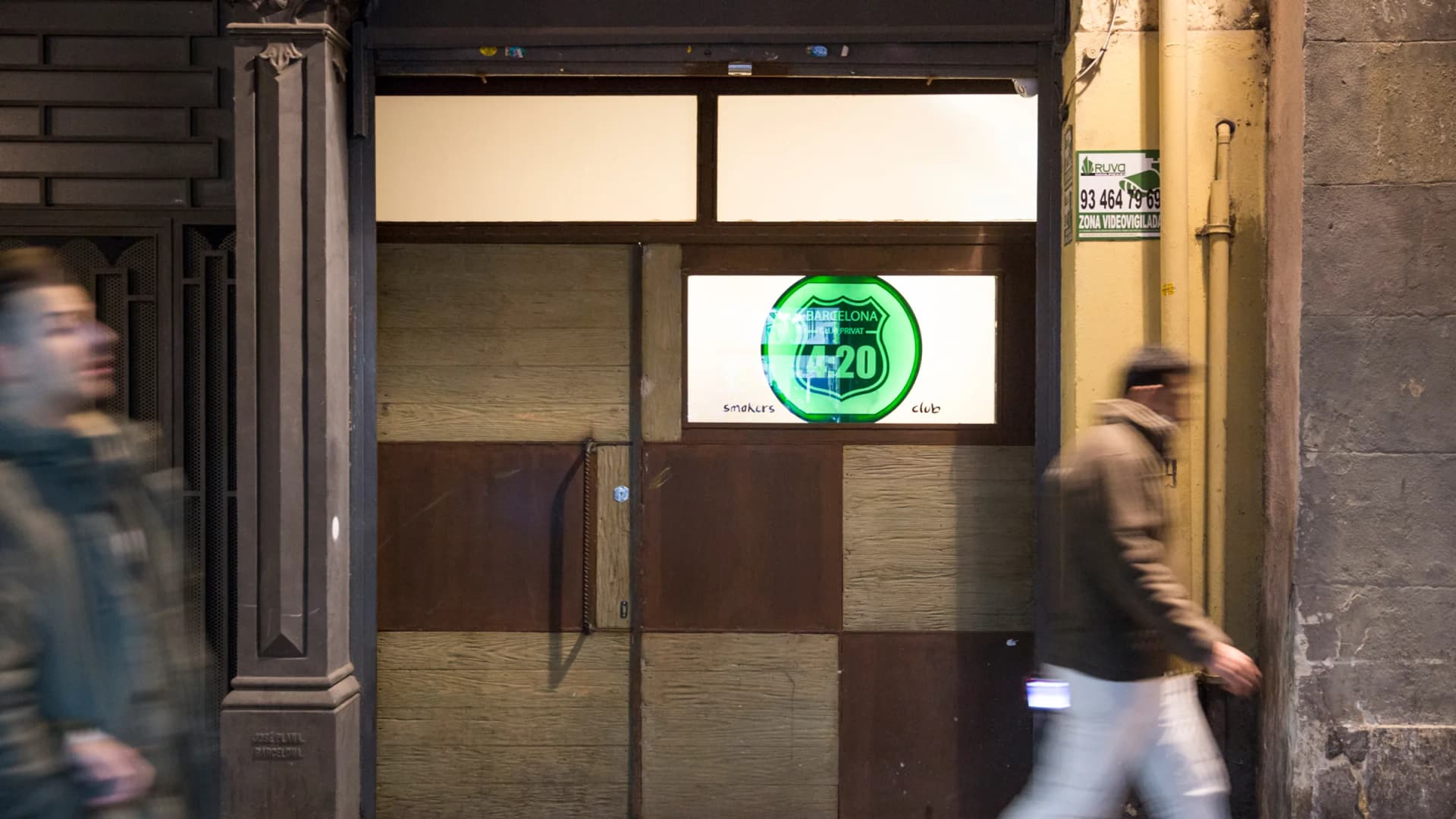
Barcelona has an estimated 200 to 400 active cannabis clubs, according to commercial directories and guides. Not one of them holds a license to grow, stock or hand out a single gram. That is not an oversight. Spain has no license to give.
The clubs exist in a gap between rules. Private personal consumption is not a criminal offense in Spain. Public possession or use is an administrative offense. And cultivating or supplying cannabis in a way that promotes another person's consumption can be prosecuted as trafficking. Everything the clubs do happens in the space between those three lines.
Three rules built the gray zone
Spain's Penal Code Article 368 punishes cultivation, trafficking and any act that promotes or facilitates illegal drug use. For cannabis, the penalty band runs from one to three years in prison plus a fine of one to two times the drug's value.
The Citizen Security Law handles the public side. Possession or consumption in public places is a serious administrative offense, with fines from €601 ($660) to €30,000 ($33,000).[1] Cultivation visible from a public place falls under the same law.
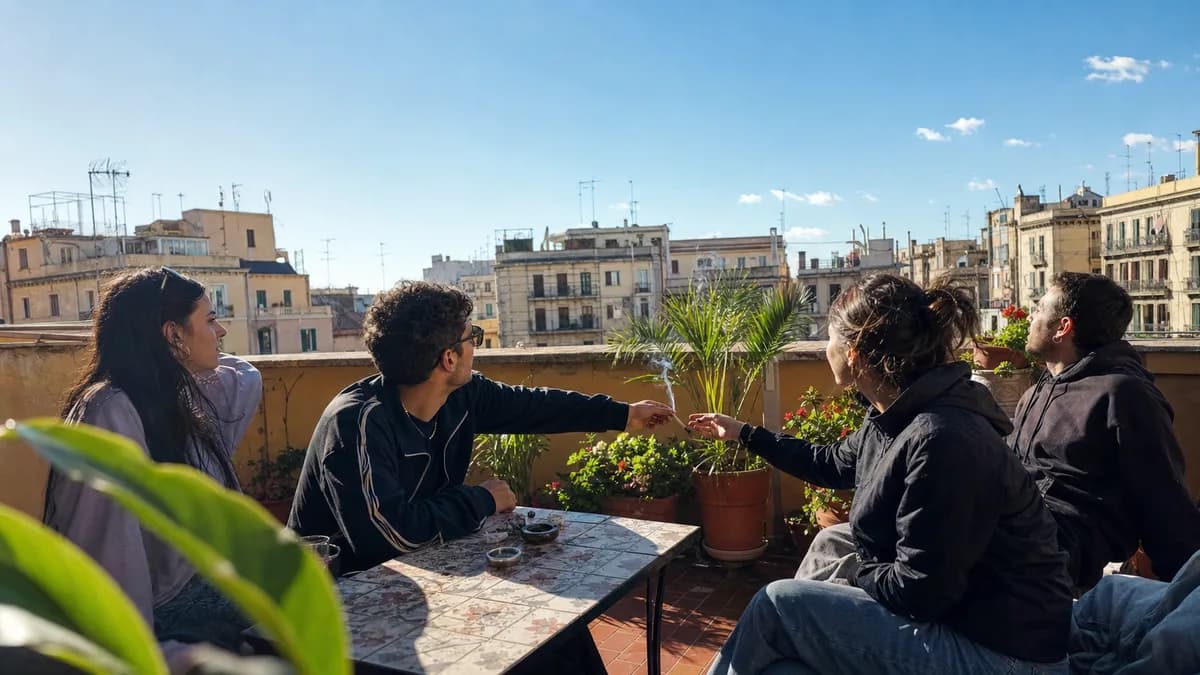
Spanish courts carved a narrow exception out of Article 368: the doctrine of consumo compartido, or shared consumption. It covers a small, predetermined group of existing consumers, in a closed private location, with a modest quantity, consumed immediately, with no profit motive and no risk the cannabis reaches outsiders. It was built for friends pooling money. Activists built an institution on it.
From a test crop to a movement
The Asociación Ramón Santos de Estudios sobre el Cannabis, or ARSEC, formed in Barcelona in 1993. It asked prosecutors whether adults could collectively grow for their own use, planted a crop and was prosecuted. Organizers were convicted, but the case showed that collective cultivation would be judged on purpose, structure and risk of diversion, not on consumption alone.
The Basque Country turned that opening into a model. Pannagh, registered in Bilbao in 2003 and associated with activist Martín Barriuso, kept member lists, consumption forecasts and nonprofit accounts. Barriuso became a leading figure in the FAC, the Spanish federation of cannabis associations, and networks including ENCOD exported the Cannabis Social Club concept across Europe. Barriuso's 2011 paper called the clubs "a normalizing alternative underway."
1993
ARSEC forms in Barcelona and plants a collective test crop.
1997
A Supreme Court proceeding produces convictions for ARSEC organizers.
2003
Pannagh registers in Bilbao, formalizing the club model with records and forecasts.
2015
The Supreme Court rules against the Ebers, Three Monkeys and Pannagh clubs.
2017
Catalonia passes Law 13/2017 to regulate cannabis-consumer associations.
2018
The Constitutional Court annuls the Catalan law as an intrusion on state criminal law.
2025
Royal Decree 903/2025 creates a hospital-only medical cannabis route, excluding flower.
The Supreme Court drew a line in 2015
Three 2015 judgments, tied to the Ebers, Three Monkeys and Pannagh clubs, rejected the idea that association papers convert organized supply into shared consumption.
Ebers had roughly 290 members. The court found its ongoing cultivation and distribution too large, institutionalized and open-ended for the narrow exception. Pannagh had more than 300 members and, according to accounts of the judgment, planned supplies exceeding 100 kilograms per six-month period. The court held the organization could not contain the risk of cannabis reaching beyond a closed circle. The phrase repeatedly drawn from the 2015 cases is that "organized, institutionalized and persistent" cultivation and distribution through an association open to new members can constitute trafficking.

Photo: FDV/Wikimedia Commons (CC BY-SA 3.0)
An aerial view shows the Tribunal Supremo building in Madrid, with the city's rooftops in the background. The Supreme Court issued a 2015 ruling that drew a legal line for Spain's cannabis clubs.
The court set no safe membership number, crop size or inventory. It said the exception grows less plausible as a club gets bigger, more permanent and more retail-like. Every case since has turned on the facts of one association at a time.
The rulebook that no longer exists
Catalonia tried to write the clubs into law. Law 13/2017 required nonprofit status, member registers, a 15-day waiting period before first distribution, a 60-gram monthly limit per member (20 grams for ages 18 to 21) and a production ceiling of 150 kilograms of dried flower per year per association.[2]
The Constitutional Court annulled the law in September 2018, ruling that Catalonia had effectively redrawn the boundaries of a criminal statute, a power reserved to the Spanish state. Yet the annulled numbers live on. Club websites and legal guides still repeat the 150-kilogram cap and 60-gram allocation as if they were valid Spanish limits. They are not. The sector is, in part, self-regulating according to a statute that legally no longer exists.
Inside a club: ledgers, dues and a trap at the door
A defensible club tries to look like a cooperative, not a shop. Members apply with government ID, are recorded as existing consumers, often need a sponsor, and pay annual dues commonly reported at €20 to €50 ($22 to $55). Consumption forecasts drive collective production. Each allocation is logged. Resale, supply to nonmembers and public consumption are banned.
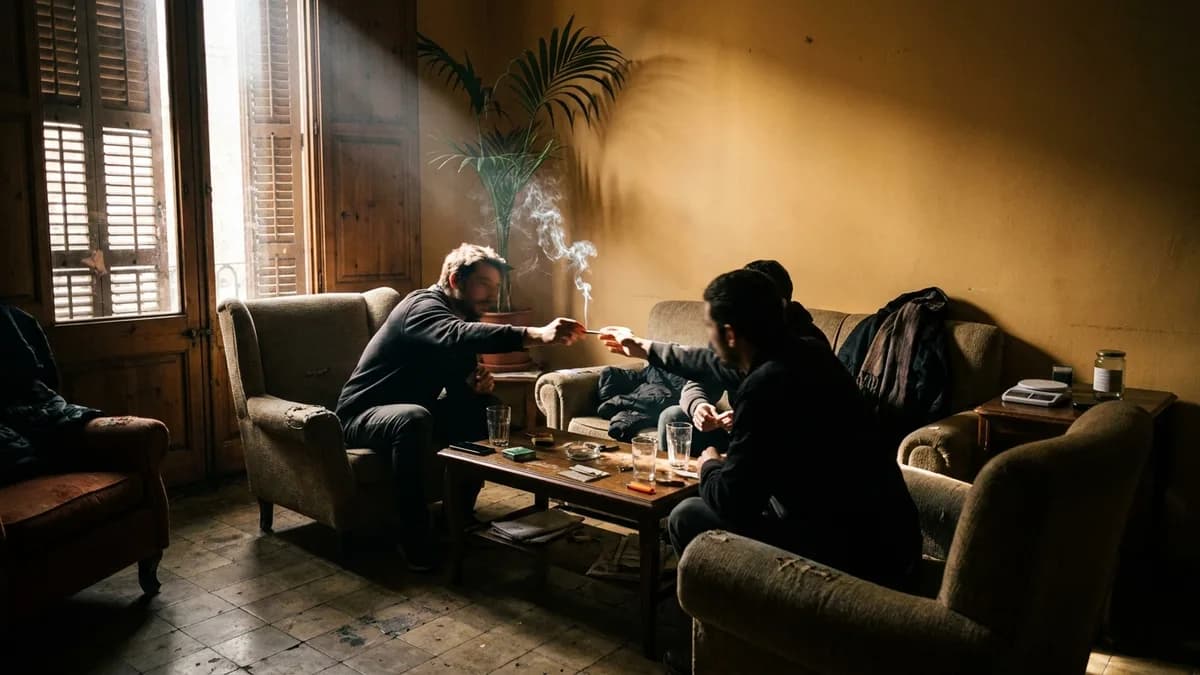
Inside the club walls, sharing among members is the whole point; the legal trouble starts at the door.
The language matters too: clubs speak of aportación (contribution) and dispensación (dispensation), never sale. But terminology is not a defense. A court can look at prices, cash handling, wages, stock, sourcing and whether surpluses reach managers.
Even a compliant member faces a trap at the door. The doctrine favors immediate consumption in a private space. The moment an allocation crosses onto a street or public transport, the €601-to-€30,000 fine band applies, regardless of where the cannabis was headed.
Tourists strain the theory
Barcelona's tourism economy pushed the model toward its most vulnerable form. Promoters work nightlife districts, "invitation" websites function as ads, and some clubs sell one-year memberships to visitors leaving in days. No national rule bars foreigners from joining an association. The problem is that mass tourist recruitment contradicts the legal narrative of a small, predetermined group. A club serving a constant stream of first-time visitors can resemble a shop charging an entrance fee. Tourists also face scams: fake invitation fees, touts, inflated contributions and false assurances that cannabis can be carried legally through the city.
Enforcement is closing in on the retail lookalikes
Mayor Jaume Collboni's administration in Barcelona has pursued closures since 2024, with more than 30 clubs shut, according to one local report. The strategy does not require trafficking convictions: planning, licensing, fire-safety and nuisance rules can close premises on their own.
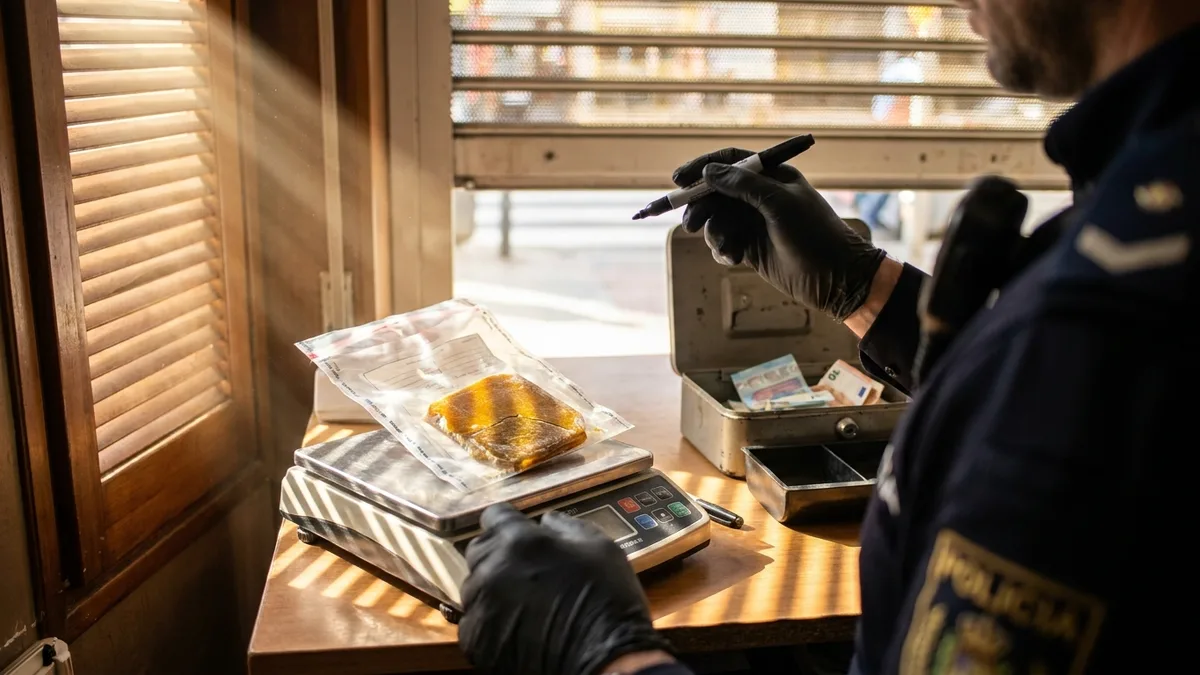
When raids happen, the scales come out: weights and packaging often tell inspectors the whole story.
In July 2026, police dismantled a purported club in Dénia that allegedly let anyone buy drugs and walk out without genuine membership. Reports list six arrests, 2,126 grams of cannabis flower, 1,031 grams of hashish, 601 prepared joints and €670 ($740) in cash, with authorities saying the operation targeted foreign holidaymakers.[3] On July 14, Madrid police reported dismantling a "false association" in San Blas, seizing about 2 kilograms of cannabis, more than 1 kilogram of hashish and nearly 400 grams of high-potency wax valued near €30,000 on the illicit market, with five arrests.[4] The prepared joints and bulk concentrates matter as evidence: they fit a picture of ready-to-go retail, not forecast-based collective cultivation.
Medical cannabis moved; the clubs did not
Spain approved Royal Decree 903/2025 in October 2025, creating a narrow medical route: standardized preparations prescribed by hospital specialists and dispensed through hospital pharmacies. By July 2026, Curaleaf said the medicines regulator had registered the first two preparations, one THC-dominant and one CBD-dominant, as CAN-1 and CAN-2.[5] We covered that registration when it was announced.
The medical framework excludes raw flower and inhaled cannabis entirely. Secretary of State for Health Javier Padilla reportedly told a Senate committee that recreational legalization was "completely off the plan." So patients who have used vaporizers in clubs for years have no legal route to vaporized flower, while adult-use reform sits nowhere on the national agenda.
Where vaporizers fit in the club world
Clubs are lounges, not takeout counters, and that made them natural spaces for dry herb vaporizers: shared desktop units, portable vapes, temperature comparisons and tobacco-free sessions. That matters in Spain, where joints are traditionally mixed with tobacco, so switching to a vaporizer cuts both combustion products and nicotine exposure at once. Vapor is not harmless, and long-term comparative data remain limited, a distinction we have written about before.
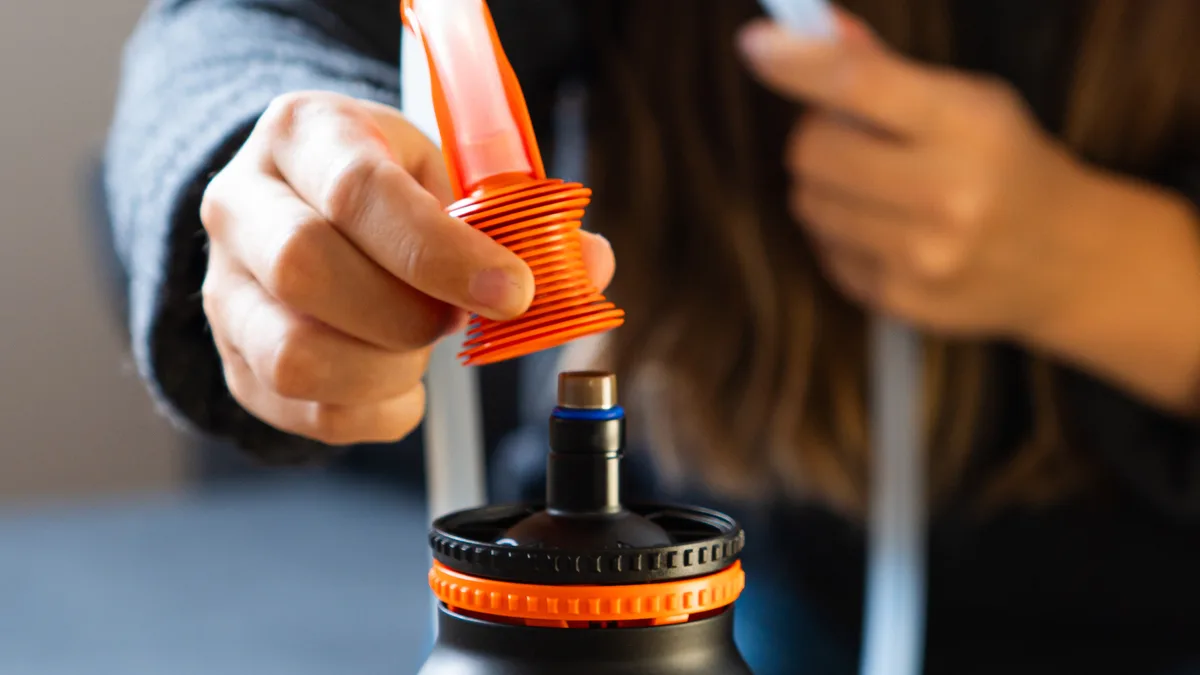
Photo: VapeExperts
A user attaches a whip mouthpiece to a Storz & Bickel Volcano Hybrid vaporizer. Desktop vaporizers like these are common fixtures in Spain's cannabis clubs, which operate without clear legal backing.
Harm reduction inside clubs remains voluntary, though. Barcelona-based Energy Control offers cannabinoid testing, from a basic profile at €50 ($55) to a wider scan at €70,[7] but no rule requires clubs to test anything. And a tobacco-law project approved by the government on July 21, 2026, which extends smoking restrictions to electronic devices, could give municipalities another tool to restrict club lounges without ever ruling on the cannabis itself.[8]
The security climate is not softening. Catalan Interior Minister Núria Parlon said in July that the government was working to improve investigations into the region's cannabis production economy, and to "reventar los negocios," smash the businesses, behind it.[6]