

Musicians have treated cannabis as studio equipment for a century. Louis Armstrong called it medicine. Snoop Dogg smokes on stage. Bob Marley made it sacrament. But controlled research keeps returning the same result: cannabis changes how ideas feel more reliably than it changes how good they are.
That gap between the mythology and the data is the real story. Some artists built durable rituals with clear boundaries around dose, timing and task. Others, including Lady Gaga and Brian Wilson, later described the same ritual as a trap.
Jazz smoked first
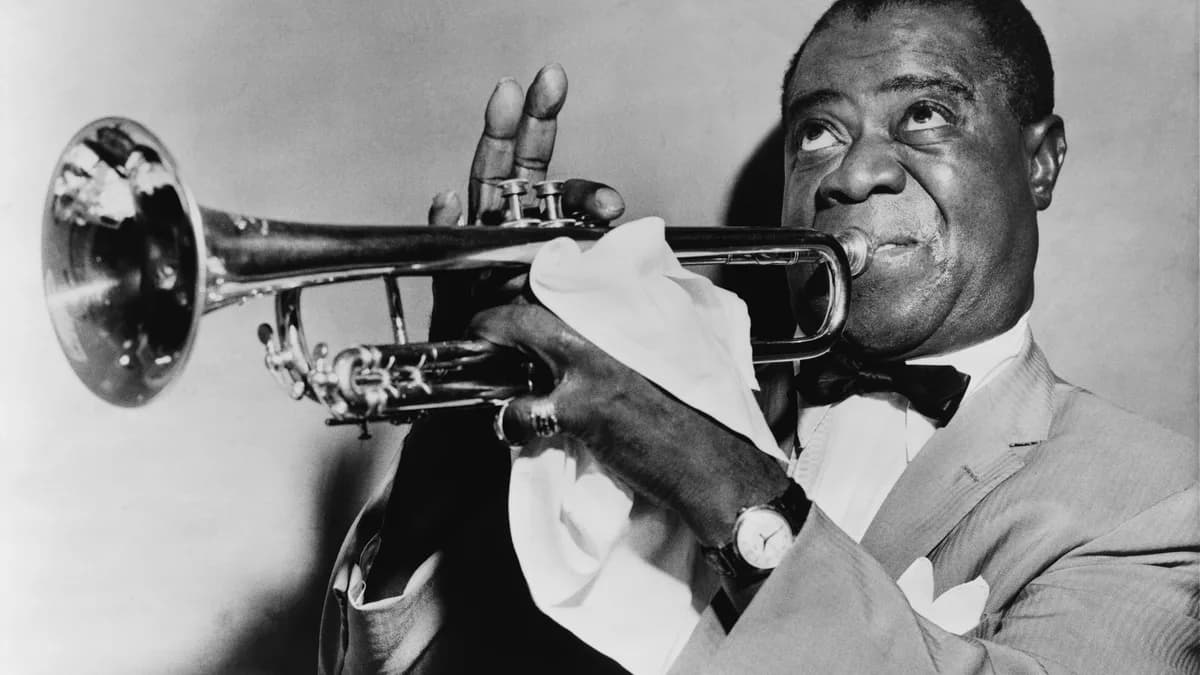
Photo: World-Telegram staff photographer/Wikimedia Commons (Public domain)
Louis Armstrong plays the trumpet in an archival portrait, holding a white handkerchief in his hand. Jazz musicians like Armstrong were among the first to be linked with cannabis culture.
Cannabis entered recorded American music through jazz, decades before the rock counterculture. Musicians called a cannabis cigarette a "viper" and the plant "gage," "tea" or "muggles," and they wrote it into the songbook.
1928
Louis Armstrong and His Hot Five record "Muggles," period slang for cannabis.
1932
Cab Calloway popularizes "Reefer Man."
1936
Stuff Smith records "If You’re a Viper."
1976
Peter Tosh releases the album "Legalize It."
1978
Bob Marley and the Wailers release "Kaya," opening with "Easy Skanking."
1992
Dr. Dre’s "The Chronic" makes cannabis a hip-hop identity.
1993
Snoop Doggy Dogg’s "Doggystyle" cements the persona.
2015
Miley Cyrus and the Flaming Lips release "Dooo It!"
Louis Armstrong is the best-documented early witness. In recollections published in Louis Armstrong, in His Own Words, he wrote of cannabis: "We always looked at pot as a sort of medicine, a cheap drunk and with much better thoughts than one that's full of liquor."[8]
Armstrong tied cannabis to social ease, reflection and relief from racial hostility and brutal touring conditions. He and drummer Vic Berton were arrested for possession outside the Cotton Club in Culver City in November 1930, almost four decades before weed and rock became synonymous.[8]
Bob Marley used herb inside Rastafarian practice, where "reasoning" sessions frame cannabis as an aid to contemplation, unity and self-knowledge. That is a spiritual and political argument, not a productivity claim, and many famous cannabis quotes attributed to Marley circulate far beyond their sourcing.
Snoop never puts it down; Etheridge will not take it onstage
Snoop Dogg is the clearest example of fully integrated use. He has smoked during performances, in filmed studio sessions and while freestyling, and his interviews frame cannabis as part of normal functioning rather than a rare spark.[6] He even employs a professional blunt roller whose job, both have said publicly, includes reading the timing and social context of the room.
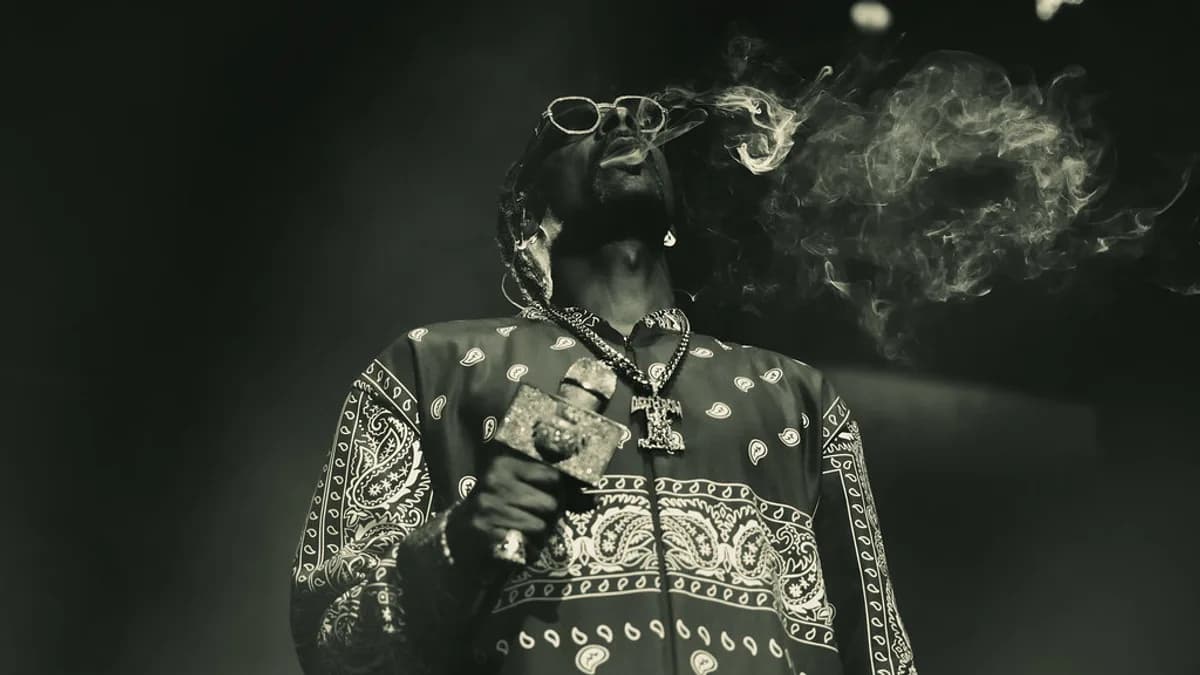
Photo: kingArthur_aus/Flickr (CC BY 2.0)
Snoop Dogg performs onstage in a paisley shirt, exhaling smoke while holding a microphone. The rapper is among musicians who say cannabis fuels their creativity.
His daily consumption numbers, often repeated online, are frequently jokes or promotion. And his 2023 "giving up smoke" announcement was an ad campaign for a smokeless fire pit, not a retirement from cannabis.
Melissa Etheridge sits at the other end. She has described using cannabis during chemotherapy for breast cancer to manage nausea, appetite loss, pain and distress, which kept creative work physically possible.[4] But she has said in interviews that she does not want to be high when she goes onstage.
Willie Nelson falls somewhere between. He has credited cannabis with helping him quit heavy drinking and cigarettes and with making him less irritable, a case for cannabis sustaining the musician rather than writing the songs. By 2019 he acknowledged that years of smoke had affected his lungs, and family reports indicated he shifted to noncombustible forms.
The popular maxim "write high, edit sober" is often draped over these artists. Our reporting found it is a community rule of thumb, not a documented routine of any headline artist; nobody on this list has confirmed it in a direct interview.
Miley Cyrus wanted "super clear and sharp"
Miley Cyrus built years of imagery around cannabis, then walked away from it. In a 2017 Billboard interview, she said she stopped because she wanted to be "super clear and sharp," describing three weeks without cannabis as her longest break in years.[5]
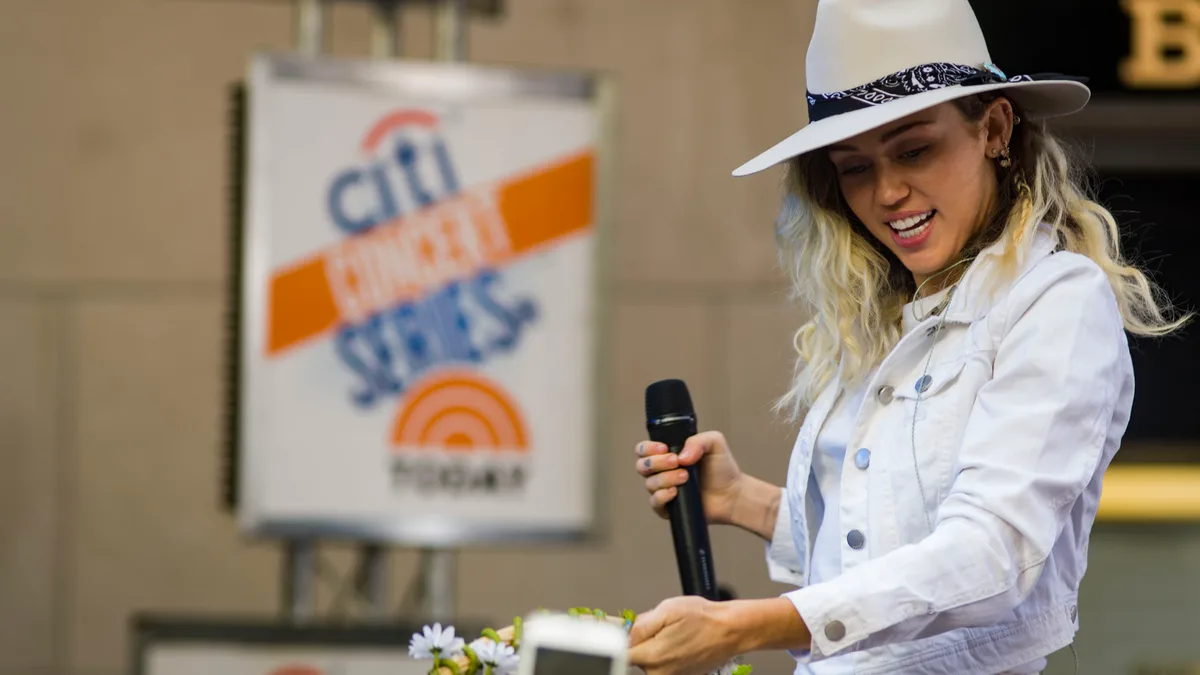
Photo: Mass Communication Specialist 3rd Class Casey J. Hopkins/Wikimedia Commons (Public domain)
Miley Cyrus holds a microphone while performing on the Today show in a white hat and denim outfit. The singer has spoken about wanting a super clear and sharp mind while making music.
By July 2026 she was describing a structured, sober-sounding method for her next album. She told Wonderland she started from a fixed 10-song track list and a rough concept, a framework she said gave her "a really strong compass without making the process feel forced."
"I trusted that the vision would reveal itself instead of trying to control every piece from day one," she said. Openness, intuition and surprise, the experiences usually credited to weed, delivered inside a clear-headed workflow.
The lab: ideas feel better, they are not better
The research broadly supports the narrower claims and undercuts the grand ones. A 2017 study by Emily LaFrance and Carrie Cuttler found sober cannabis users rated themselves as more creative and scored higher on one convergent-thinking measure than nonusers, but the advantage largely disappeared once openness to experience was accounted for.[2] Curious, unconventional people may simply be more likely to use cannabis.
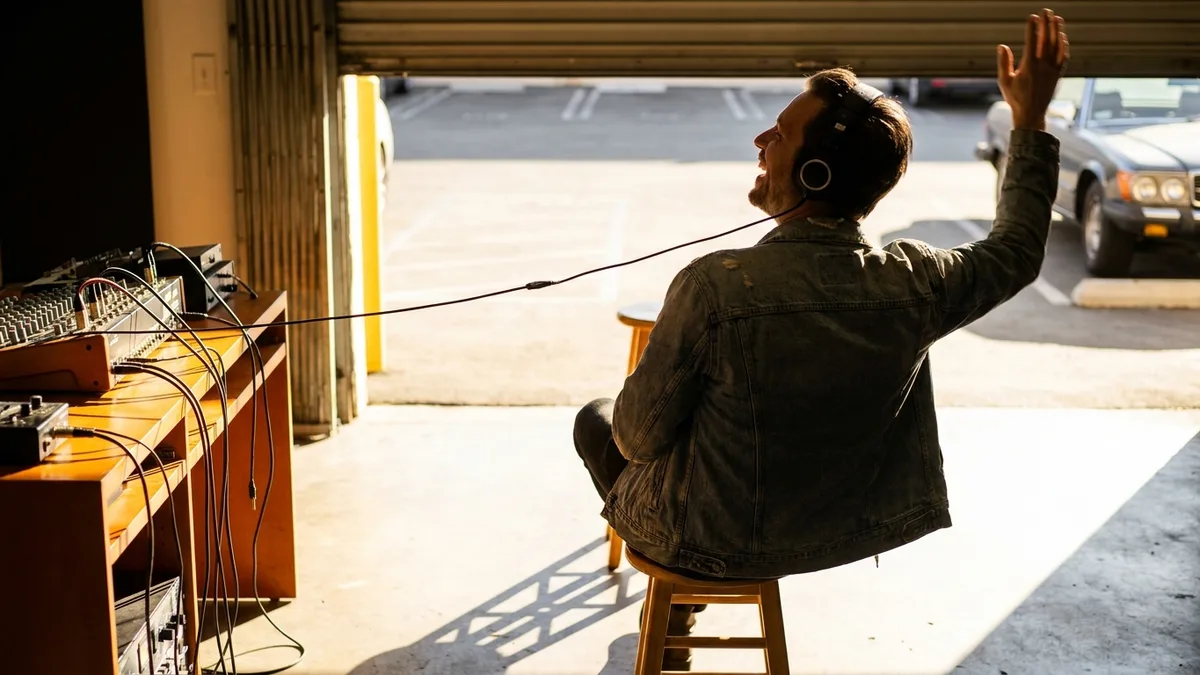
That playback might sound like a hit to you, but the judges in the lab are notoriously harder to impress.
A separate line of work by Yu Tse Heng, Christopher Barnes and Kai Chi Yam, published in the Journal of Applied Psychology, found acutely intoxicated participants were more jovial and rated ideas, including other people's, more favorably. Independent judges found no gain in actual creative quality.
The chorus may not be better. The artist, grinning at the playback with an arm flung up in delight, may simply feel less ambivalent about it.
A Volcano vape tested the dose myth
The most direct test for our readers came from Mikael Kowal and colleagues in 2015. In a randomized, double-blind study, 54 regular cannabis users received placebo, 5.5 mg or 22 mg of THC through a Volcano 9.1 vaporizer at 230°C, with 18 participants per group and balloons bagged so nobody could guess the dose from vapor density.[1]
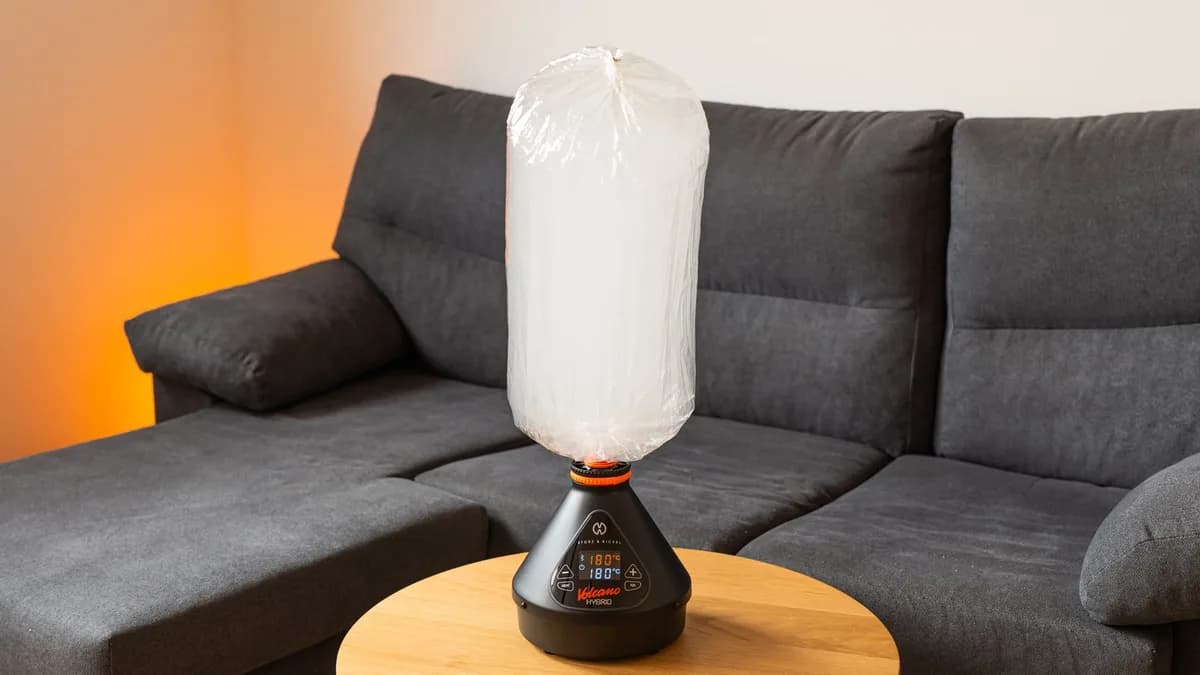
Photo: VapeExperts
A Storz & Bickel Volcano Hybrid vaporizer fills its balloon on a living room table. Researchers used the device to deliver precise cannabis doses in a study questioning the drug's link to creativity.
The 22 mg group scored worse than both placebo and the low dose on idea fluency, flexibility and originality. The 5.5 mg group did not beat placebo on anything, and neither dose improved convergent thinking.[1]
A vaporizer made the dosing cleaner and skipped combustion, the reasons singers and wind players reach for dry herb vaporizers in the first place, and Snoop himself put his name on a Grenco Science G Pen in the 2010s. Better hardware did not produce better ideas. The study used short lab tasks with mostly male regular users, so it says nothing about ensemble improvisation or months of revision; what it does say is that more THC is not more creativity.
When the ritual stops being a choice
Gaga and Wilson show where the boundaries matter. Wilson's accounts of the Pet Sounds and Smile era shifted over time, sometimes crediting drugs with opening musical doors, sometimes connecting them to fear, voices and collapse, all inside a life that also included LSD, amphetamines, cocaine and psychiatric vulnerability.[7]
Gaga drew the line most precisely. In 2013 she told an interviewer she had smoked as many as "15 to 20 marijuana cigarettes a day with no tobacco" and said, "I have been addicted to it, and it's ultimately related to anxiety coping."[3]
Armstrong's "better thoughts," Snoop's stagecraft and Etheridge's chemo relief all describe cannabis doing a specific job at a specific time. Gaga described what the same plant sounds like when the job disappears and only the dose remains.
"I was living on a totally other psychedelic plane," she said, "numbing myself completely."[3]