

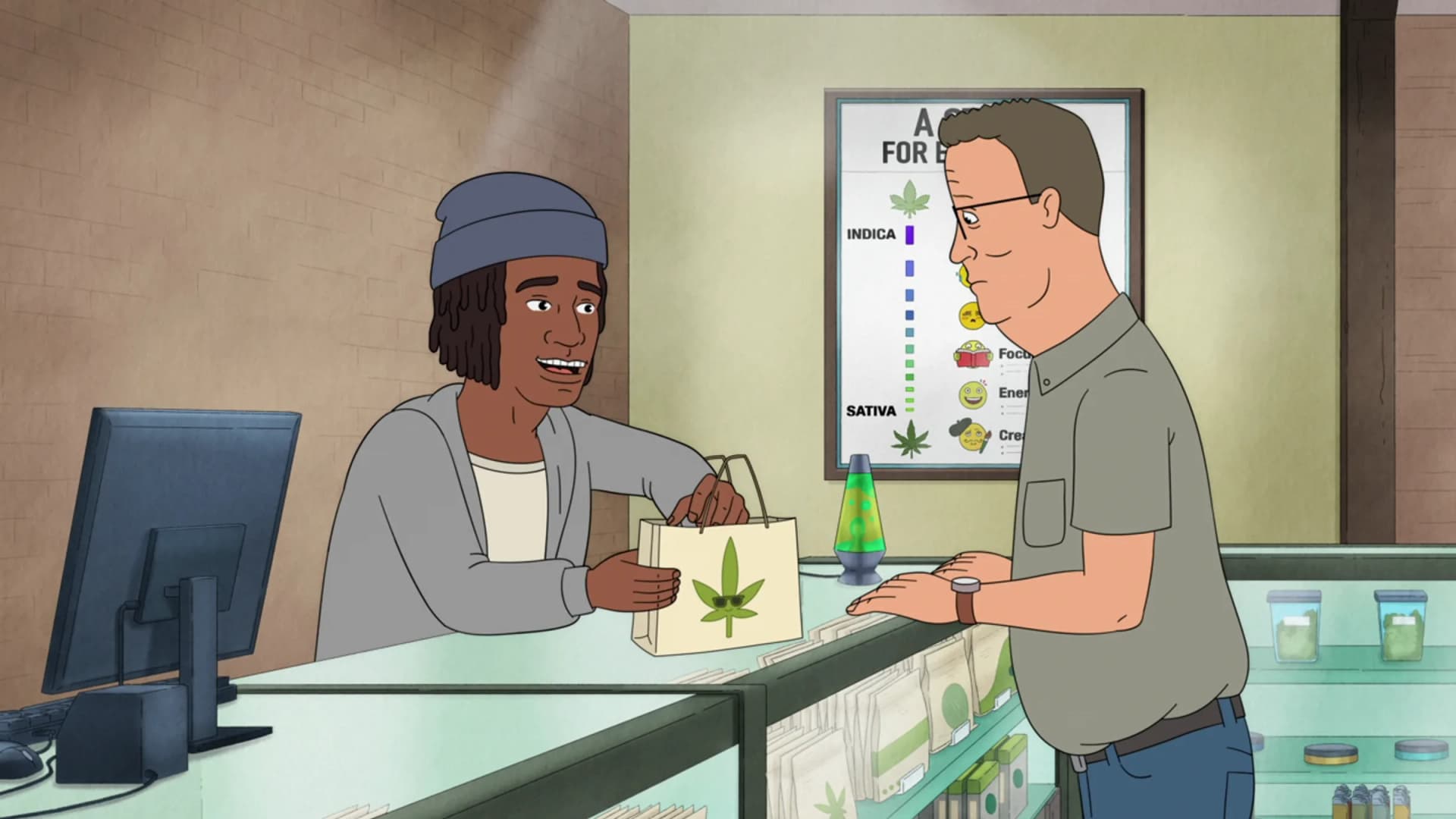
Hank Hill buys weed now. In the King of the Hill season that premiered on Hulu on July 20, the episode "Ch-Ch-Ch-Changes" sends the famously rule-following Texan across the state line to a New Mexico dispensary, shopping for cannabis to ease Peggy's menopause symptoms.
The writers did not have to invent the trip. Sales data from New Mexico's border towns suggest real Texans make the same drive in large numbers, and leave millions of dollars behind.
A town of 17,400 outsells Las Cruces
Sunland Park sits minutes from west El Paso and holds about 17,400 residents. Its dispensaries sold more than $5 million of medical and adult-use cannabis in June 2026, the El Paso Times reported, citing state data. Las Cruces, a far larger city, sold $2.6 million the same month.
That works out to at least $287 in monthly sales per Sunland Park resident, an annualized pace above $3,400 per person, figures difficult to explain through local consumption alone. The paper reported Sunland Park ranked second only to Albuquerque in city-level sales, with roughly one-thirtieth of Albuquerque's population.
June 2026 cannabis sales in New Mexico border-area cities
Source: El Paso Times / N.M. Cannabis Control Division data
The pattern repeats along the line. Hobbs faces the Permian Basin oilfields, Clovis sits about nine miles from the Texas state line, and tiny Texico shares a community with Farwell, Texas.
Statewide, New Mexico reported $49.8 million in cannabis sales in July 2026 and roughly $335 million for the year through July, with all-time sales past $2.4 billion, according to figures attributed to the state's Cannabis Control Division reporting portal.
Nobody counts the Texans, but the math does
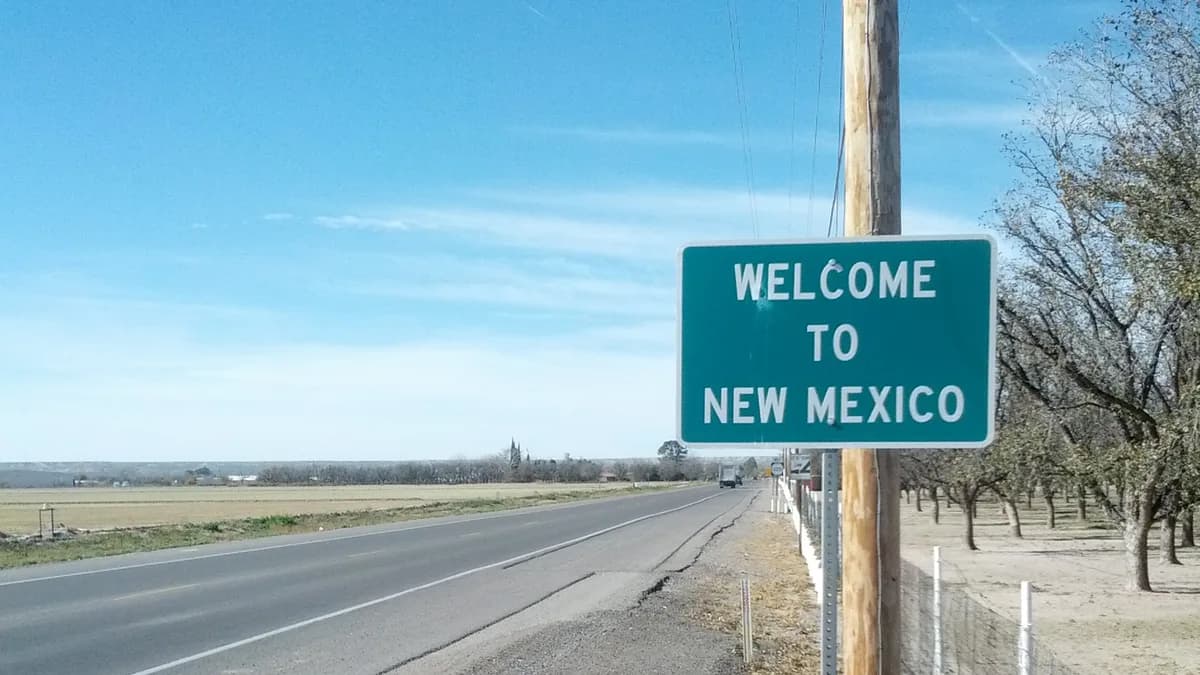
Photo: Anjbe/Wikimedia Commons (Public domain)
A green sign reading Welcome to New Mexico stands beside a rural highway near Anthony at the Texas border. Border towns like this have become cannabis boomtowns fueled by Texan customers.
New Mexico does not require residency for adult-use purchases; a Texas driver's license proves age. And the state's regulator does not publish any resident-versus-nonresident sales split, so the strongest evidence of Texan demand is the per-capita arithmetic itself.
Operators are less shy. Obi-Wan Cannabis advertises its Sunland Park store as 4.5 miles, about eight minutes, from El Paso, names UTEP and Fort Bliss as nearby markets, and stays open until 11 p.m.
"El Paso residents have been crossing into Sunland Park, NM to shop ⦠since we opened," the company says on its site.
Darren, owner of Tree Amigos Cannabis in Carlsbad, described the same dynamic in the state's southeast in a recorded interview. "A big chunk of our sales go to Texans. So ⦠we're going to support them. They're supporting us," he said.
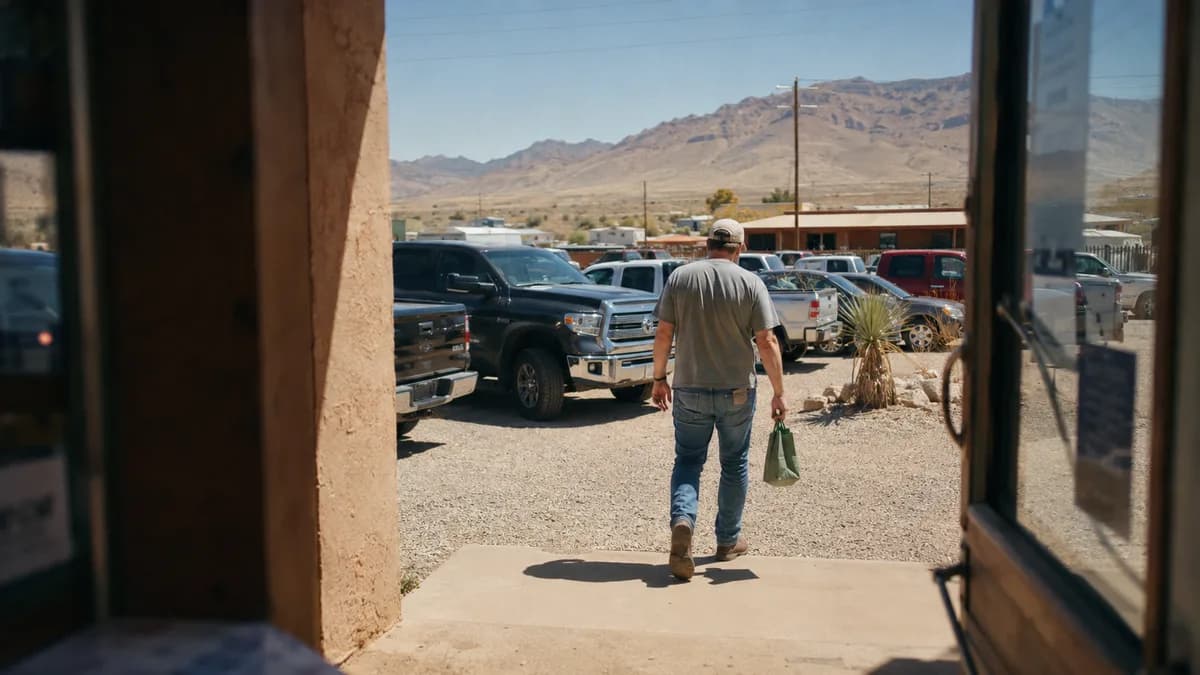
The money matters to towns this size. New Mexico's adult-use excise tax rose to 14% on July 1, 2026, and is scheduled to climb one point a year until it hits 18%, with municipalities taking a share on top of local gross-receipts tax. At $5 million a month, even a small cut is real budget for a city of 17,400.
Texas keeps narrowing the lane at home
Texas has a medical program, but it looks nothing like a New Mexico dispensary. The Compassionate Use Program requires a Texas resident with a listed condition and a physician's prescription entered into a state registry; it offers no adult-use sales, no conventional cannabis flower and no smoking.[2]
House Bill 46, effective September 1, 2025, expanded the program: up to 15 dispensing licenses, satellite locations, and new conditions including chronic pain, traumatic brain injury and terminal illness, with a 10-milligram THC cap per dosage unit.
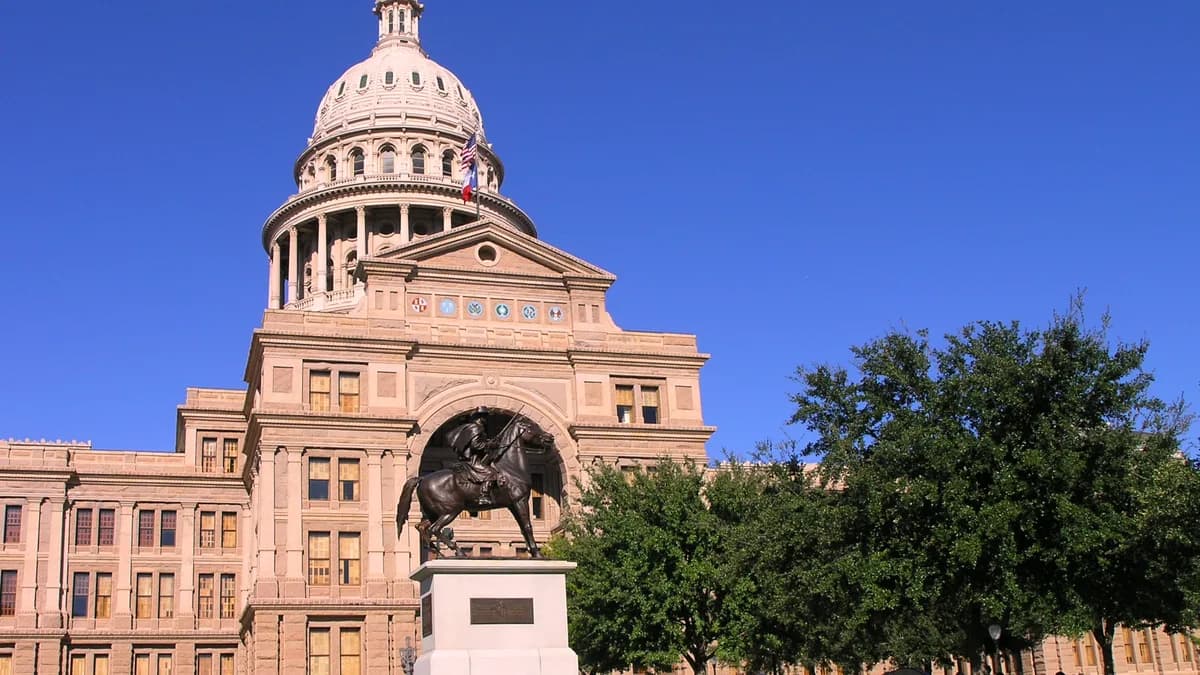
Photo: Daniel Mayer/Wikimedia Commons (CC BY-SA 3.0)
A Texas Ranger monument and a historic cannon stand on the lawn of the Texas State Capitol in Austin. Texas lawmakers continue to narrow cannabis rules as residents travel to New Mexico border towns.
Then the hemp market, the one legal THC outlet most Texans actually used, got cut back.
June 22, 2025
Gov. Greg Abbott vetoed SB 3, a broad THC ban passed by the Legislature, citing constitutional concerns and calling for regulation instead.
Sept. 1, 2025
House Bill 46 took effect, expanding the Compassionate Use Program to 15 licenses and new qualifying conditions.
May 1, 2026
The Texas Supreme Court upheld state health officials’ authority over THC isomers in Sky Marketing Corp. v. DSHS.
July 31, 2026
Reinstated rules took effect, placing delta-8, delta-10 and similar products under Schedule I treatment in Texas.
The July 31 change pulled manufactured delta-8, delta-10 and similar intoxicating products from Texas smoke shops, the Texas Tribune reported. Low-dose hemp-derived delta-9 edibles and drinks within the 0.3% dry-weight limit remain legal.
Vape products and flower took the hit, demand a border market can absorb. The El Paso Times noted Sunland Park's proximity may cushion El Paso from the disruption felt in interior Texas.
Policy and public opinion diverge, at least as measured by one survey. A 2025 University of Houston poll was reported to find 62% of Texans support adult-use legalization and 79% support full medical legalization.
The purchase is legal. The drive home is not.
A Texan 21 or older can legally walk into a New Mexico dispensary and buy up to 2 ounces of flower, 16 grams of extract or 800 milligrams of edibles. The moment that bag crosses back into Texas, it becomes contraband: cannabis bought legally elsewhere remains illegal to possess in Texas, and transporting it between states violates federal law.[1]
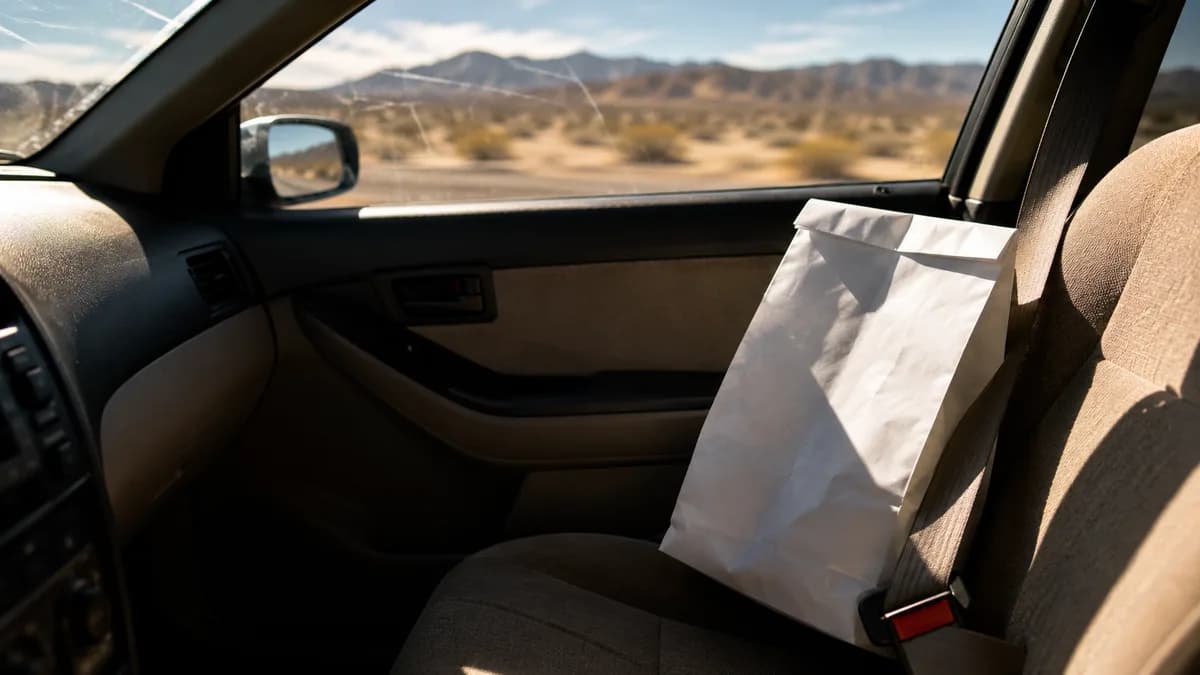
Retailers can lawfully sell to adults with Texas IDs. They cannot lawfully market cannabis for interstate transport, and customers who intend to carry purchases home cannot candidly say so.
The risk is not evenly distributed across products. Texas often charges cartridges and concentrates under penalty groups based on total product weight, so a vape cartridge can expose a returning shopper to more serious charges than a small amount of flower.
After July 31, possession of certain non-delta-9 THC products can start at the state-jail-felony level: 180 days to two years and a fine up to $10,000, depending on product, weight and lab evidence.
For a discreet, medical-minded shopper, a vaporizer or metered cartridge can read as cleaner and easier to dose than a joint, and years of Texas hemp retail taught customers the language of milligrams and cartridges. The device that can feel most like medicine is the one Texas law can treat most harshly on the ride home.
Hank's real offense is the return trip
The new episode turns on the same trap. Hank does not embrace cannabis as rebellion; he researches it as a caregiver for his wife, the same profile border operators describe in veterans, retirees and oilfield workers using vapes and gummies for pain and sleep. His legal exposure, like theirs, begins not at the register but at the state line.
It is a long way from "High Anxiety," the 2000 episode in which Hank accidentally smokes a joint and panics that a drug test will cost him his propane job. Fans recognized the 26-year reversal immediately.
One viewer on the show's Reddit forum summarized the character arc: "Pilot Hank would NEVER have gone to buy pot." The border economy suggests he has plenty of company. A town of 17,400 does not sell $5 million of cannabis in a month to itself.