

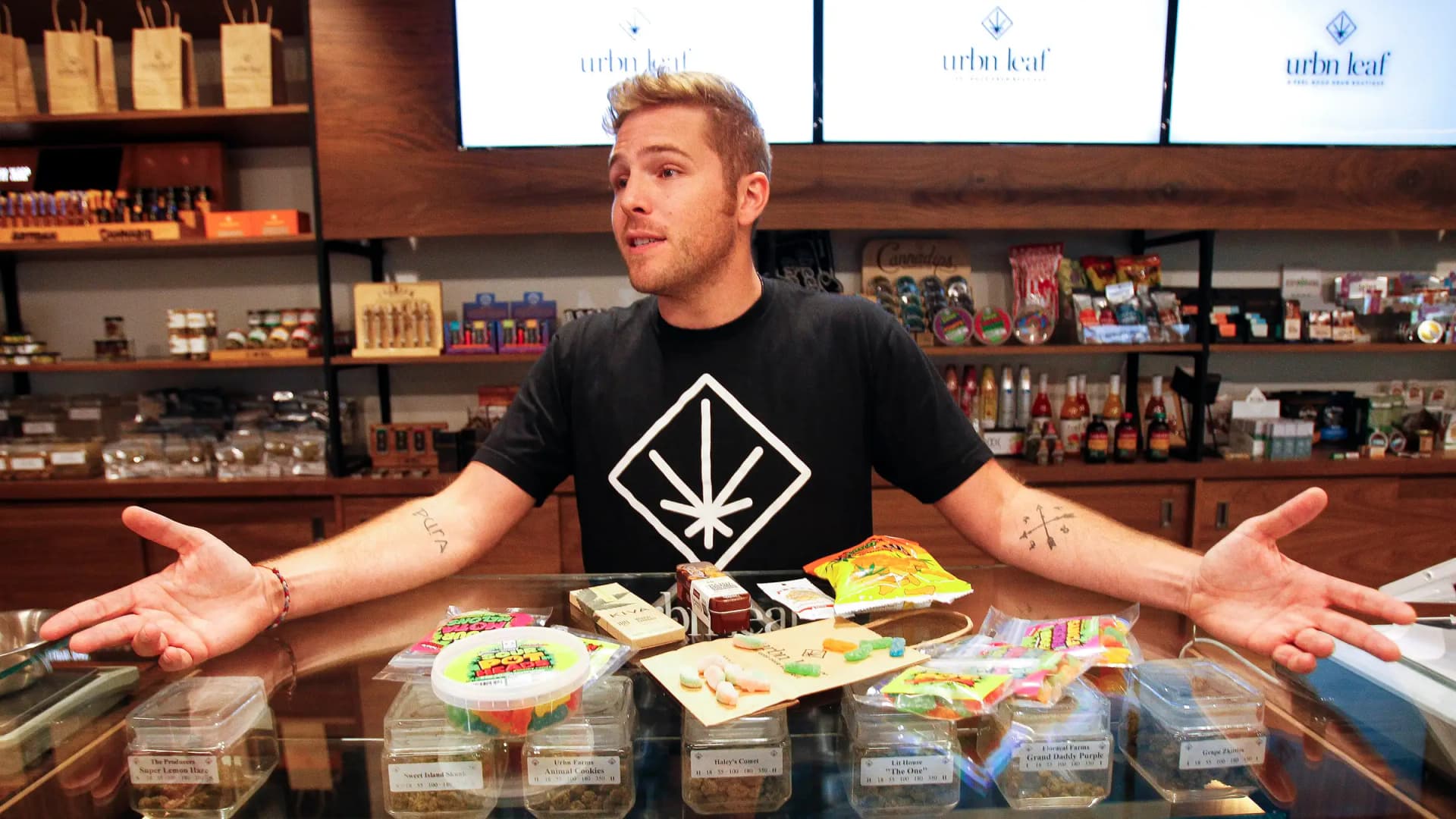
The guard checks your ID like a bouncer. The lobby holds you in line like a DMV. The label lists milligrams and batch numbers like a pharmacy. Then the person answering your health questions turns out to be a retail clerk who may be working toward a sales quota.
That mismatch shapes the first dispensary visit. The store borrows the signals of three institutions Americans already understand, while the role customers most often want filled, medical guidance, falls to retail staff. For a first-time shopper, the practical question is which of those signals to rely on.
The potential audience for that first visit is enormous. SAMHSA counted 64.2 million Americans age 12 or older who used marijuana during 2024, including 44.3 million in the past month.[1] Nobody tracks how many walk into a licensed store for the first time each year. But the customer base keeps broadening: a 2025 JAMA Internal Medicine analysis of 15,689 older adults found past-month cannabis use among people 65 and older rose from 4.8% in 2021 to 7.0% in 2023. Researcher Rebecca Delaney told reporters that "a lot of older adults are turning to cannabis, and it's not necessarily to get high… It's really because they just want a better quality of life and to spend more time with families and friends."
Older shoppers are especially likely to arrive expecting medical guidance. The person behind the counter, however, is not a pharmacist.
The door works like a DMV
For adult-use sales, the age is 21, including for out-of-state visitors. You need an unexpired, physical government photo ID: driver's license, state ID, passport or military ID. Staff may examine it by hand or scan it. A scan can verify your birth date, catch some fakes, and in some states give the retailer a legal defense. It does not automatically mean the store keeps your data. Oregon, for example, allows scanning for age verification but restricts storage and sharing of the information.[7] A reasonable question at the desk: does this scan only verify my age, or do you retain the data? A well-run store can answer.
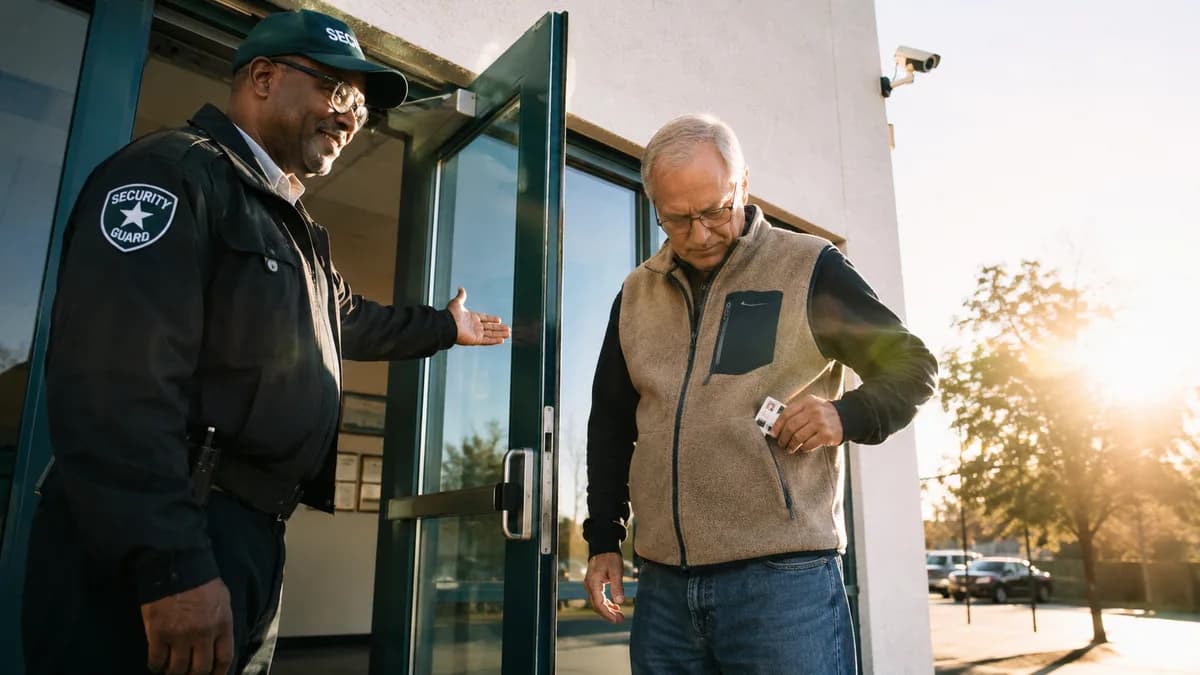
The armed guard and the locked vestibule reflect the business model, not the customer. Dispensaries hold large amounts of cash and easily resold inventory, and state security plans often require cameras, alarms and controlled access. The threat is real; a Berkeley dispensary suffered an armed takeover robbery in July 2026. The same hardening cuts the other way, too: Oregon data cited in local coverage showed reported marijuana-store thefts falling from 14 in September 2025 to one in May 2026.
Purchase limits are the next surprise. Legalization did not create one national system. California caps a purchase at 28.5 grams of flower and 8 grams of concentrate. Massachusetts raised its daily adult-use limit to two ounces in April 2026. Oregon runs separate daily caps for flower, concentrates, extracts, edibles, plants and seeds. Check your own state regulator before assuming anything. And remember what the license does not cover: no public consumption in most places, no carrying across state lines even between two legal states, no federal property, no impaired driving.
The register works like 2005
Bring cash. Marijuana remains federally controlled; the DEA held new hearings on the proposed move from Schedule I to Schedule III from June 29 through July 15, 2026, with no final decision announced as of this writing.[6] Federal illegality creates money-laundering and reporting risks that keep most banks and card networks out. Visa has explicitly warned that "cashless ATM" systems, which disguise retail purchases as ATM withdrawals, violate its rules.
In practice you will see an on-site ATM with a fee, "debit" transactions rounded up to the next $5 or $10 with change returned in cash, or app-based ACH payments. Direct credit card payment remains rare. Ask how a debit swipe is actually processed and what fees apply. A bipartisan cannabis banking bill was reportedly reintroduced in Congress in June 2026 but had not become law; we covered the banking fight in our earlier reporting.
The budtender is not your pharmacist
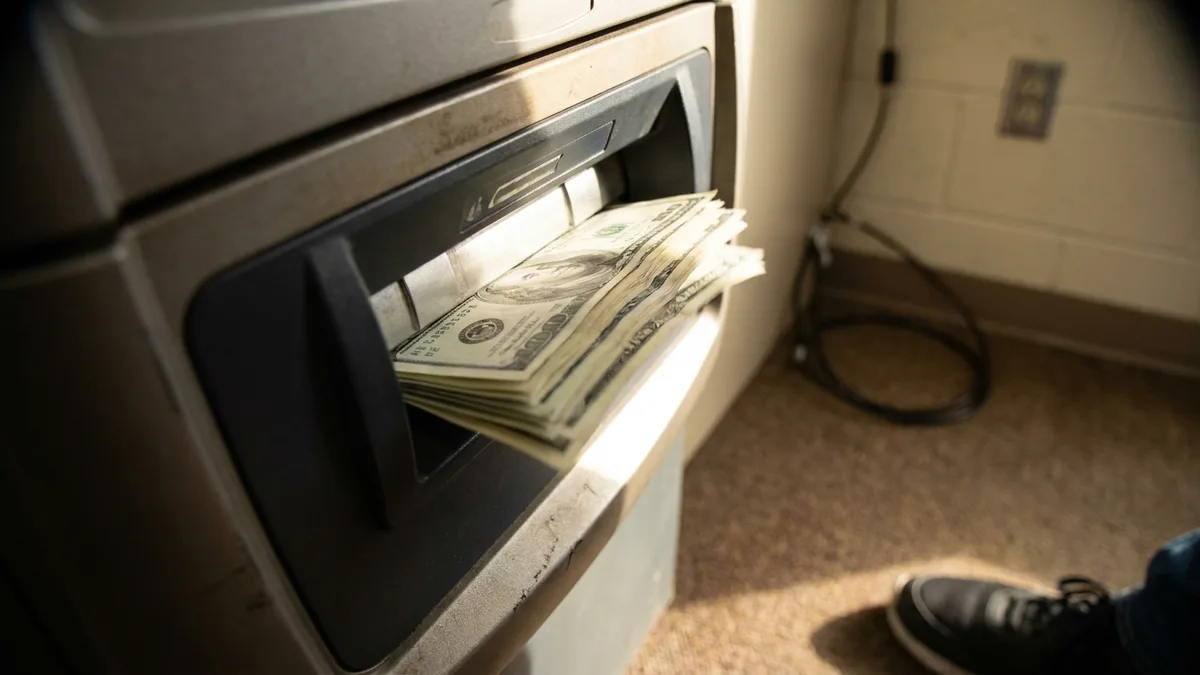
That on-site ATM is your best friend at the counter, so hit it before you get in line.
The most frequently cited research on dispensary staff is a 2016 survey of 55 dispensary employees, published in Cannabis and Cannabinoid Research. It found that 94% gave customers specific cannabis advice while only 20% reported any medical training and 13% scientific training. And 21% acknowledged that the need to move inventory affected their recommendations.[2] The authors concluded some employees recommended cannabis for conditions where it had not been shown effective, or might make things worse.
A 2018 mystery-shopper study examined what that advice looks like in practice. Researchers phoned 400 Colorado dispensaries posing as a pregnant customer with morning sickness. About 69% recommended cannabis and roughly 36% said it was safe during pregnancy,[3] advice that contradicts guidance from the American College of Obstetricians and Gynecologists, which says there is no medical indication for cannabis during pregnancy or postpartum.
Training has improved since then. Massachusetts requires a four-hour responsible vendor course covering laws, ID checks and impairment. Maryland requires annual approved training for cannabis business agents.[8] But passing a diversion and ID course is not pharmacology. A 2026 Niskanen Center policy paper put it plainly: "The budtender remains essentially a sales role rather than a health-facing, risk-screening, guidance-providing professional." The paper argues tipping and quota-based pay conflict with a duty of care.
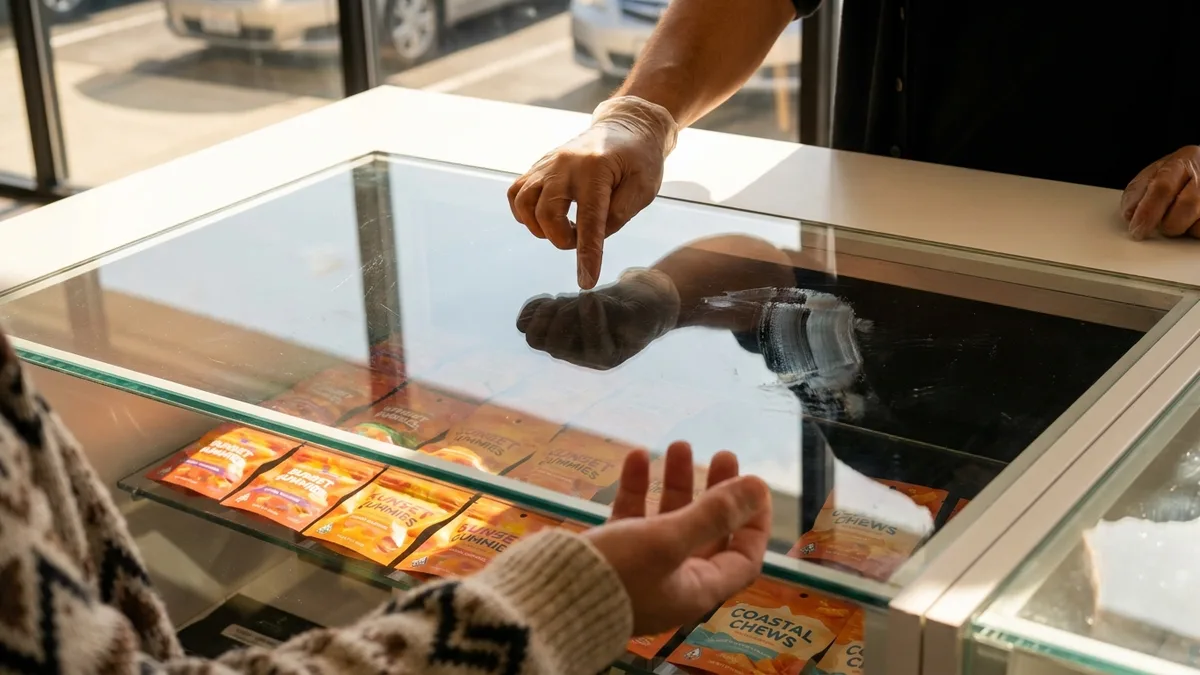
That confident tap on the glass is a sales pitch, not a prescription, so bring your own questions.
So keep the budtender inside the role they can actually fill. Good questions:
- Which products are lowest in THC?
- How many milligrams are in one piece, one puff or one measured drop?
- How long does this format take to start, peak and wear off?
- Can you show me the batch-specific lab report?
- Is this discounted because it is old or being discontinued?
Questions about prescriptions, pregnancy, disease treatment or replacing medications belong with a clinician or pharmacist, not the counter.
The biggest number is not the best buy
Many first-time shoppers reach for the highest THC percentage on the menu, but the label itself may not be true. A 2023 study bought flower from licensed Colorado stores and independently retested it: about 70% of samples came in at least 15% lower in THC than their labels claimed,[4] consistent with industry concerns about potency inflation and lab shopping.
Even accurate numbers are weak predictors of experience, research suggests. A 2020 JAMA Psychiatry study compared flower at 16 to 24% THC with concentrates at 70 to 90%. Concentrate users reached far higher blood-THC levels but did not consistently report feeling more intoxicated or perform worse on impairment measures.[5] Potency still matters as a risk variable, because higher THC makes it easier to take a large dose fast. It is just a poor stand-alone measure of quality. The same skepticism applies to terpene marketing and indica-versus-sativa shorthand: useful conversation starters, weak prescriptions.
The modern menu is also far bigger than a jar of flower. Headset's point-of-sale data for the 12 months ending June 2026 shows where the money actually goes.
U.S. cannabis sales by category, 12 months ending June 2026
Source: Headset
For a THC-naive adult, the most defensible edible starting dose is 2.5 mg THC, with 5 mg as the upper end of a first experiment, not an automatic starter. BC Cancer describes 2.5 mg as a reasonable starting amount and notes even low doses can cause side effects. Edibles may take 30 minutes to two hours to begin and up to four hours to peak. Do not add a second dose because the first hour felt uneventful.
Inhalation gives faster feedback, which makes titration easier: one small puff, then wait. Low-THC flower in a dry herb vaporizer like the Mighty+ 8.7 offers that control without combustion, using the same flower sold by weight. Oil carts are a different product entirely. Many contain 70 to 90% THC, one long draw can deliver more than expected, and the label rarely says how many milligrams a puff delivers. Concentrates like live resin, rosin and diamonds, the formats behind the 710 holiday, are poor first purchases: small handling differences produce large dose changes.
Read the lab report like a skeptic
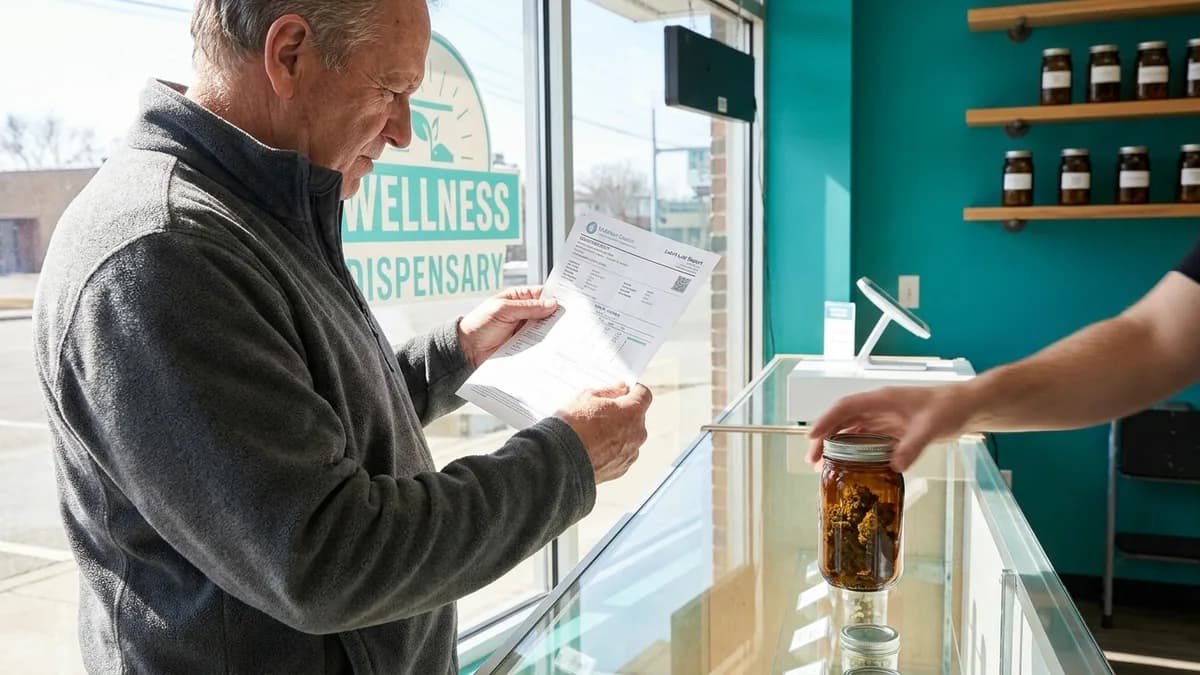
Squinting at the lab report is a good instinct, since the number on the label may not tell the whole story.
Every legal product should trace to a certificate of analysis, a lab report for a specific batch. Check the batch number on the report against the number on your package, not just the strain name. Then scan the panels: potency, pesticides, microbial contamination, heavy metals, residual solvents. A QR code should open a report for that exact batch, not a marketing page.
A passing report is evidence, not a guarantee. Colorado's Marijuana Enforcement Division advisory page listed multiple contaminated-product notices in 2026,[9] including a concentrate that initially passed testing and was later found to contain a prohibited pesticide after selling at 10 dispensaries. In Maine, nearly 25 strains or products faced recalls or safety advisories since late 2024, most involving yeast or mold. Keep your package and receipt in case of a recall.
Freshness is another risk. Ask for harvest and packaging dates. Weak or hay-like smell, powdery dryness, musty odor or an old lab report attached to a supposedly new batch all suggest a bargain is really stale inventory.
What the store is, and is not
Labels alone will not save a confused shopper. A 2026 University at Buffalo-led survey of nearly 200 New York consumers found substantial gaps in understanding ingredients, doses and legal-market symbols: three-quarters could not identify their own state's required cannabis symbol, picking California's instead.[10]
So walk in with one sentence: this is my first legal purchase, and I have little or no tolerance. Trust the ID check and purchase limits as compliance. Treat the lab report as useful but imperfect evidence. Treat the menu as marketing until its claims are translated into dose, ingredients, freshness and test results. And treat the budtender as what the research says they are: a product guide whose most trustworthy answer to a medical question is "I don't know."