

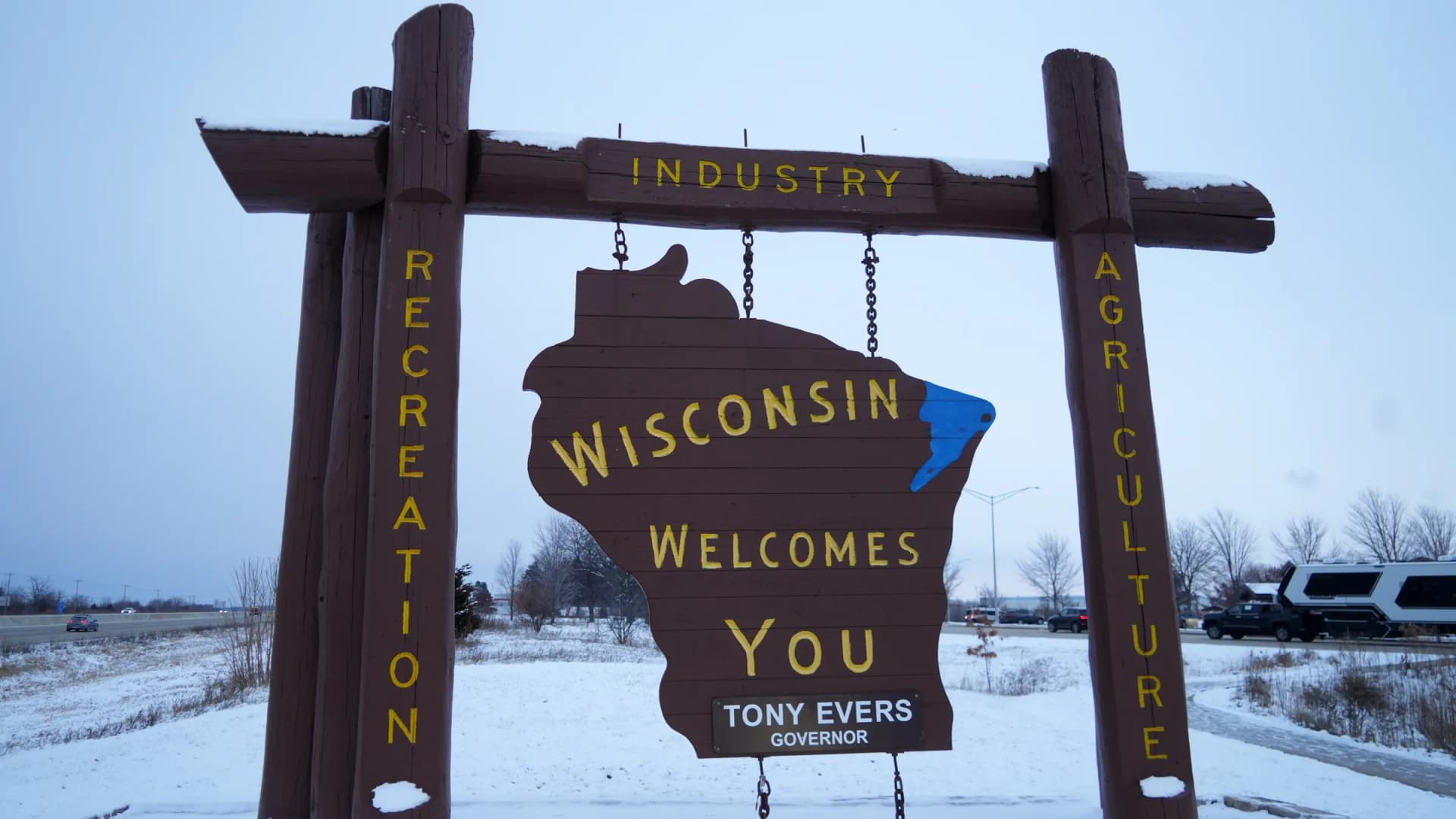
Wisconsin has not changed its cannabis law. Possession is still a crime. There is no comprehensive medical program, no patient registry and no dispensary. What has changed is the political map, and that is why legalization is being talked about as a live possibility for 2027.
Voters go to the polls November 3 to pick a governor, all 99 Assembly seats and 17 of 33 Senate seats. If Democrats gain a net seven legislative seats and win the governor's office, the party whose governor has proposed legalization since 2021 would control the whole process. If they fall short, the outcome depends on how far Republicans have moved.
Seven seats stand between Democrats and full control
Republicans hold the Senate 18-15 and the Assembly 54-45.[4] Democrats need a net gain of two Senate seats and five Assembly seats. Those margins trace to new district lines.
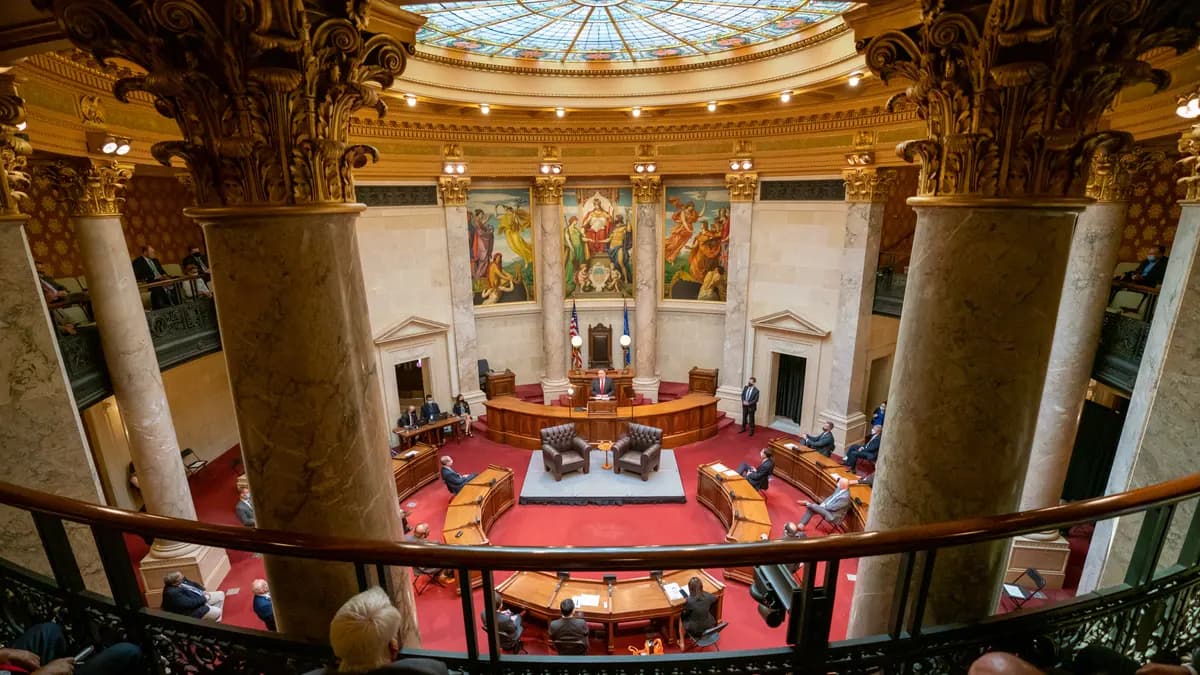
Photo: U.S. Department of State from United States/Wikimedia Commons (Public domain)
Secretary Pompeo Delivers Remarks in the Senate Chamber of the Wisconsin State Capitol (50378281008)
The Wisconsin Supreme Court struck down the old legislative maps on December 22, 2023. Gov. Tony Evers signed replacement maps on February 19, 2024. Before the 2024 election, Republicans held the Senate 22-10. After one election under the new maps, that margin was 18-15.
Senators serve staggered four-year terms. That means 2026 is the first year the full Senate map faces voters.
John D. Johnson, a research fellow at Marquette Law School's Lubar Center for Public Policy Research and Civic Education, put it this way: "This is the first time that the full effect of the 2024 redistricting is being felt, which is why Democrats have such a real chance of winning the chamber." He named Assembly Districts 88, 61 and 51 as pivotal and said Democrats would likely need to win all three.
The two candidates want two different laws
Democratic nominee David Crowley, the Milwaukee County executive, supports both medical and adult-use legalization. He told the Milwaukee Journal Sentinel the state is losing money to its neighbors.
"Wisconsin is falling behind and losing hundreds of millions of dollars in tax revenue as residents cross state lines to purchase legal products and pay taxes in other states," Crowley said. "Legalization would allow us to regulate the market, set safety standards, and direct revenue toward priorities like education, health care and public safety."
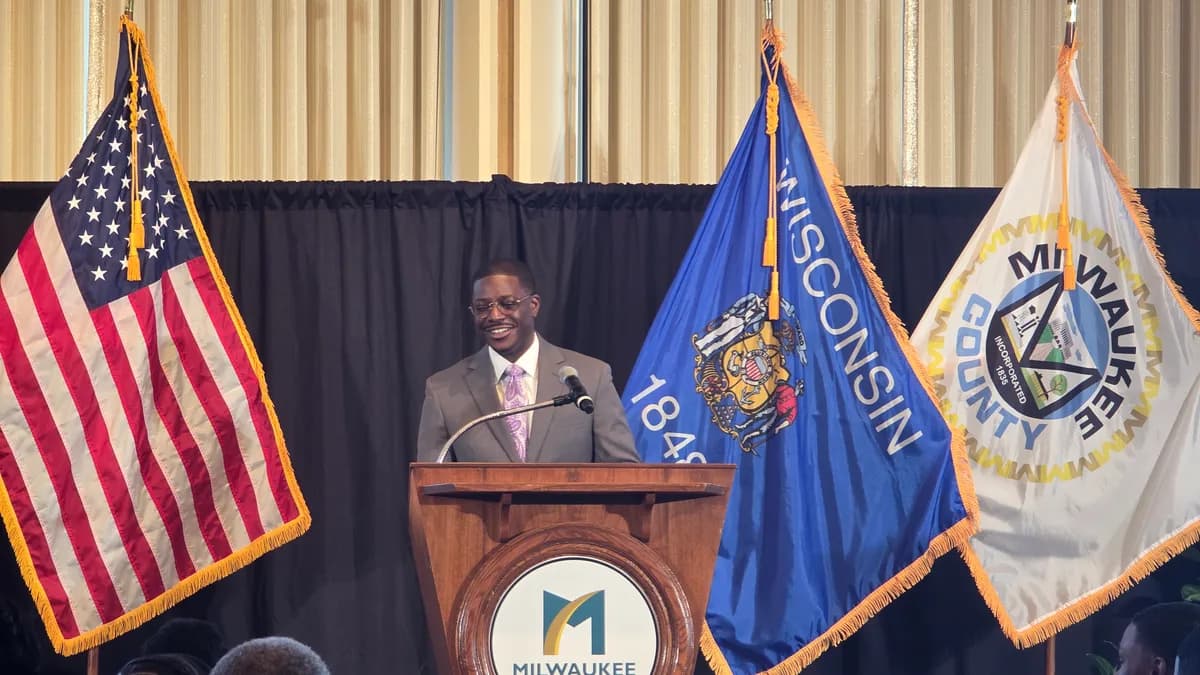
Photo: HarvestLife/Wikimedia Commons (CC BY-SA 4.0)
Milwaukee County Executive David Crowley speaks at a podium flanked by the U.S., Wisconsin and Milwaukee County flags at his 2025 State of the County Address. Crowley is one of the candidates in the Wisconsin race where cannabis...
Republican nominee Tom Tiffany, a U.S. representative, rejects adult-use sales. His platform now supports a medical program with "strict age requirements, responsible oversight and strong protections to keep marijuana out of our schools and away from children."
"I have supported additional research into marijuana in Congress, and I believe that research will help guide further decisions," Tiffany said.
That leaves two likely endpoints. A Crowley win with a Democratic Legislature puts adult-use on the table. A Tiffany win, or divided government, points toward a medical-only program or another stalemate.
Rep. Mark Pocan, a Wisconsin Democrat in Congress, told Marijuana Moment on September 10 that Democrats would have a "really good chance" of passing legalization if they "flip the legislature."[3] He also said a bill could move even under new Republican leadership.
"Most of the folks I've talked to in the Wisconsin legislature want to change it because we're surrounded by states that have it legal," Pocan said.
Why every bill has died so far
Evers has put cannabis reform in his budget proposals since 2021. Republican-controlled committees removed it each time.

Photo: VapeExperts
A person brushes ground herb into the filling chamber of a Storz & Bickel Volcano Classic vaporizer. Devices like this remain in legal limbo in Wisconsin, where every legalization bill has stalled in the Legislature.
This year Democrats filed companion bills, SB 1045 and AB 1061, covering adult possession, medical cannabis, licensed production and sales, testing, prior convictions and intoxicating hemp. Neither advanced before the session ended.[2]
A narrower Republican medical bill from Senate President Mary Felzkowski and Rep. Patrick Snyder got further than any prior proposal. It cleared a committee but never reached a final vote. Felzkowski later said opposition inside the Republican caucus and its leadership kept the measure from getting the votes it needed in the Senate.
Polling shows broad support for both approaches. Marquette Law School polling shows support for adult-use legalization rising from 50% in 2013 to 67% in 2025.[5] In 2024, 86% of Wisconsin voters backed physician-authorized medical cannabis, including 78% of Republicans, 84% of independents and 95% of Democrats.
We have covered this gap between opinion and law in other countries. Wisconsin is a domestic version of the same pattern.
What prohibition costs at the state line
A first possession conviction in Wisconsin carries up to six months in jail and a $1,000 fine. A subsequent qualifying offense can be charged as a Class I felony, with up to 3½ years and $10,000.[1]
Arrests continue. FBI data compiled by NORML shows Wisconsin agencies reported about 12,050 marijuana arrests in 2025. Roughly 11,470, or about 95%, were for possession.[10][11] Wisconsin was one of the states where marijuana made up more than half of all drug arrests; the totals depend on how many agencies reported.
Illinois, Michigan and Minnesota all sell adult-use cannabis. A 2023 Wisconsin Policy Forum calculation found about half of Wisconsin adults lived a little over an hour from a dispensary. A legislative estimate cited by Marijuana Moment, which has not been independently located, put Wisconsin residents' spending at Illinois stores above $121 million in 2022, generating about $36.1 million in Illinois taxes.
Adult-use cannabis sales in states bordering Wisconsin
Source: Illinois IDFPR; Michigan Cannabis Regulatory Agency
Neither state's data can say how much of that came from Wisconsin buyers.[8][9] Nationally, the U.S. Census Bureau reports state cannabis excise collections rose from $3.06 billion in FY2022 to $3.55 billion in FY2026, a 15.7% increase. Michigan reported about $110.6 million and Illinois $71.8 million in the second quarter of FY2026 alone.[14]
The shopping trip itself is legal. The drive home is not. Each neighbor sets its own limit for adults 21 and older:
- Illinois: 30 grams of flower, five grams of concentrate and infused products with 500 milligrams of THC.[15]
- Michigan: 2.5 ounces, including no more than 15 grams of concentrate.[16]
- Minnesota: two ounces in public, eight grams of concentrate and edibles totaling 800 milligrams of THC.[17]
None of those allowances authorize carrying the product into Wisconsin. Cannabis bought legally becomes contraband at the border, and crossing a state line also brings federal law into play.
What a Wisconsin market would and would not change
For the resident who now drives to Illinois or Michigan, a functional Wisconsin market would change several concrete things:
Photo: VapeExperts/AI
- Cannabis bought in Wisconsin could be possessed under Wisconsin law. The state-line possession trap would end.
- Retail moves closer, cutting travel time and cost.
- Wisconsin gains its own testing and recall authority over potency, pesticides, residual solvents, heavy metals, microbes and banned diluents.
- Accurate labels and child-resistant packaging become required, which is uneven in the current intoxicating-hemp market.
- Medical patients could buy and carry inside Wisconsin without legal exposure on the way home.
- Excise and sales taxes now paid to Illinois and Michigan stay in Wisconsin.
- A bill could include dismissal, resentencing or expungement for past convictions.
What legalization would not deliver is a store on day one. Licensing, rulemaking, lab approval, local zoning and seed-to-sale tracking typically take 12 to 24 months after enactment, depending on whether lawmakers use an existing agency or build a new commission.
Wisconsin already polices vapes, just not cannabis ones
Wisconsin would not write vape rules from scratch. Under 2025 Wisconsin Act 15, electronic vaping products must appear in a Department of Revenue directory. Hemp vape makers had to submit certifications and lab documents to get listed.[6]
Sales of unlisted hemp vapes were barred starting in July 2026. On September 1, forfeitures of $1,000 per product, per day took effect, and unlisted products can be seized and destroyed. That directory is a regulatory system that could shape a future cannabis-vape market.
A legalization bill would also likely borrow from the states next door. Common features in Illinois, Michigan and Minnesota include:
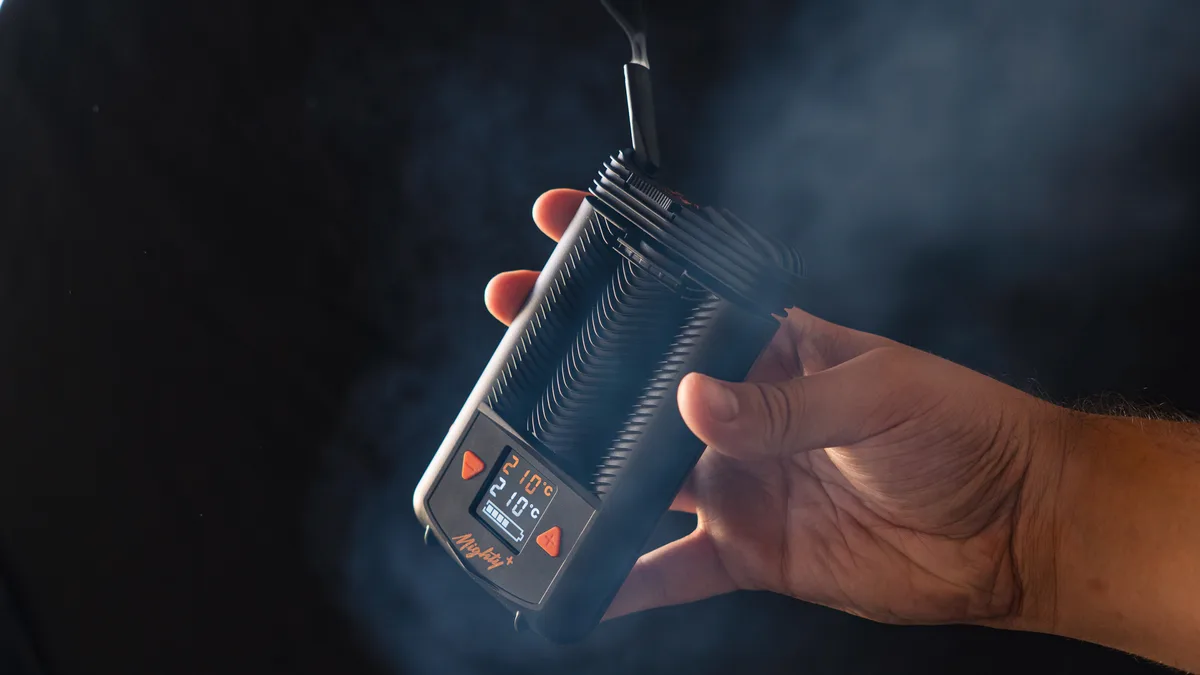
Photo: VapeExperts
A hand holds a Storz & Bickel Mighty+ vaporizer as vapor rises from its mouthpiece. Wisconsin regulates nicotine vapes but has no framework for cannabis devices like this one, a gap the election could change.
- Sales only through licensed, age-checked retailers for adults 21 and older.
- Batch testing for potency, pesticides, heavy metals, microorganisms and residual solvents.
- Ingredient disclosure for vape oils and extracts.
- A ban on vitamin E acetate and similar additives.
- Child-resistant, tamper-evident packaging with a universal cannabis symbol and THC warning.
- Seed-to-sale tracking with recalls, and separate possession limits for concentrates.
Illinois adds a potency tax. The Illinois Department of Revenue charges 10% on products at or below 35% THC, 25% above 35% THC, which captures most vape cartridges, and 20% on infused products, before regular and local sales tax.[7] Michigan keeps cannabis vapes inside its licensed cannabis system rather than treating them as ordinary retail hemp.
The health case for those rules traces to 2019 and 2020. The CDC counted 2,807 hospitalizations or deaths and 68 confirmed deaths in the EVALI outbreak. It linked the illness to vitamin E acetate, found mostly in informally sourced THC cartridges.[13]
Researchers say regulation is where the work starts
Researchers have documented trade-offs that go beyond either campaign's talking points. Wayne Hall of the University of Queensland and Michael Lynskey of King's College London reviewed the U.S. experience in World Psychiatry. They found legalization lowered cannabis prices, raised potency and made cannabis more available to adults.[12]
They found adults appear to use more often, "but not so far among youth," and that some cannabis-related emergency visits and hospitalizations rose. Their recommendation was directed at any state considering the step.
"Governments that propose to legalize and regulate cannabis use need to fund research to monitor the impacts of these policy changes on public health," they wrote.
What November 3 decides
Wisconsin is not on the verge of enactment. It is on the verge of an election that decides whether a bill can reach the floor at all. A Crowley win plus two Senate seats and five Assembly seats makes adult-use legislation viable in the 2027 session, though tax structure, home cultivation, licensing caps and local control could still divide a narrow majority.
Any other result narrows the field to medical cannabis, with Felzkowski's committee-approved bill as a possible starting point, or to nothing at all. On a 12-to-24-month implementation timeline, even a bill passed early in 2027 would not put a licensed Wisconsin store in business before 2028.
Until then the rules stay as they are. The purchase is legal a little over an hour away for half the state's adults. Possession becomes illegal the moment the car crosses back into Wisconsin, and November 3 decides whether that line moves." }