

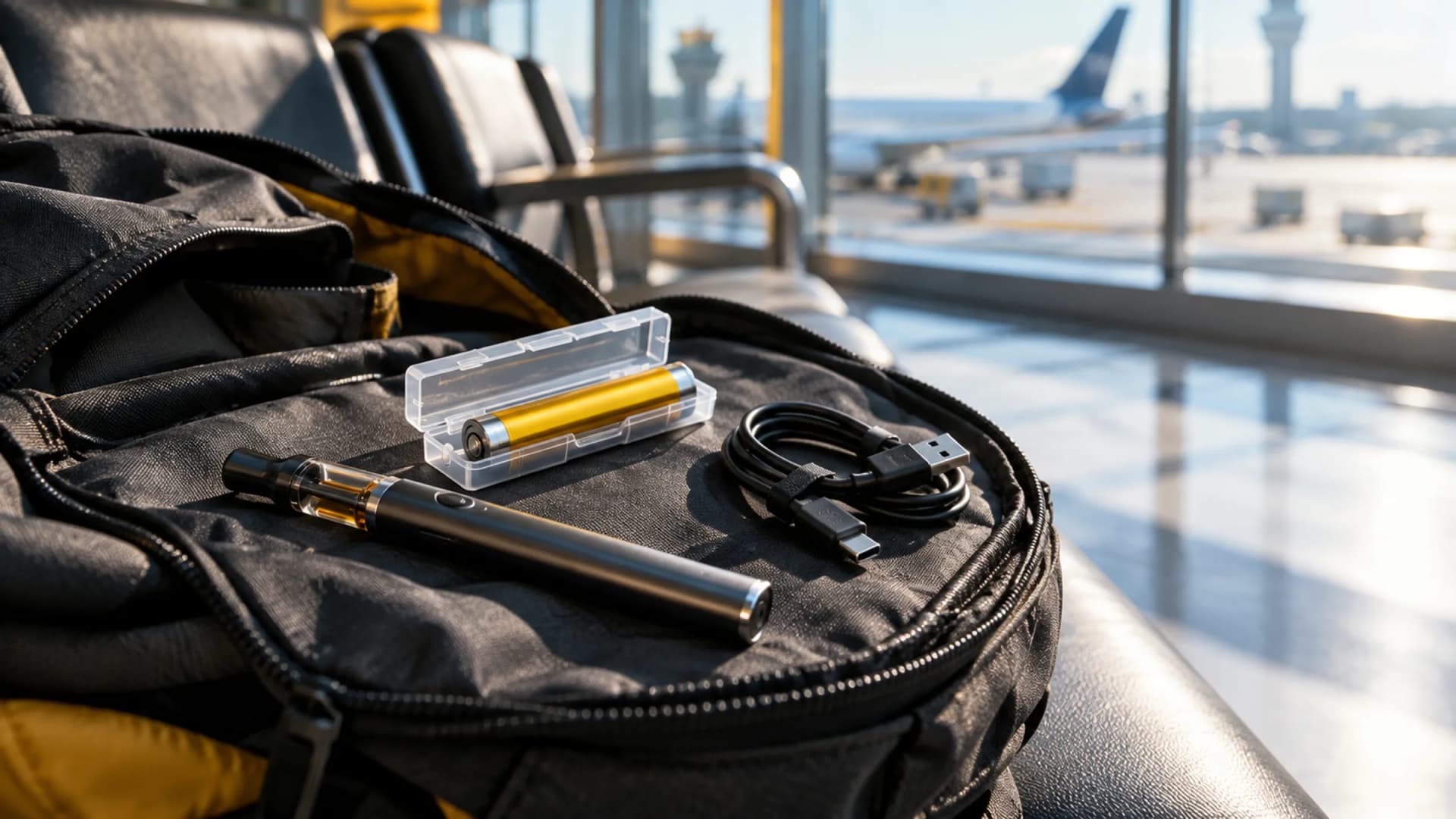
Americans who fly abroad with any cannabis product, including CBD, risk arrest. That was the message from the State Department on Sept. 8. The warning covers a long list: marijuana, THC, CBD, edibles, vape cartridges, oils, concentrates and prescribed medical marijuana.[3]
The message did not change a single federal rule. It was a travel-safety reminder posted through the department's official TravelGov account by the Bureau of Consular Affairs. No new statute, no new TSA procedure, no new customs program came with it.
Photo: VapeExperts/AI
The warning is a renewed international-travel reminder, not a new TSA marijuana ban.
The warning covers your prescription too
The department's list was broad. "Do not travel internationally with cannabis or cannabis-derived products, including marijuana, THC, CBD, edibles, vape cartridges, oils, concentrates, or other cannabis products," the post said.
State legality does not travel with you. "Just because a cannabis, THC, or CBD product is legal in your home state does not mean you can take it abroad. This includes prescribed medical marijuana," the department said.
The destination's law does not help either. "Even if cannabis is legal or decriminalized where you're going, bringing it or any cannabis-derived products across an international border can result in arrest or other criminal penalties," the post said. We looked at which countries allow cannabis in our 2026 cannabis tourism guide; the State Department's point is that the border, not the destination, is the risk.
The department told travelers to start packing with a "completely empty bag" and check every compartment. Its reason: "Americans have been arrested after unintentionally bringing cannabis products into another country, including edibles, vape cartridges, oils, and concentrates." The post named no cases, dates or arrest totals behind that statement.
Photo: VapeExperts/AI
Nothing changed at the TSA checkpoint
For domestic flights, the Transportation Security Administration said its rules are the same as before. "TSA's policy on medical marijuana has not changed," a TSA spokesperson told Marijuana Moment.
The spokesperson described what officers do when they find cannabis. "If any illegal substance or evidence of criminal activity is discovered during security screening, TSA will refer the matter to a law enforcement officer," the spokesperson said.
TSA's published page matches that. The agency screens for threats to aviation, not drugs, but officers must refer suspected illegal substances to police. The page lists "Medical Marijuana" as "Yes (Special Instructions)" for both carry-on and checked bags, then adds that marijuana and certain cannabis-infused products, including some CBD oil, remain illegal.[1]
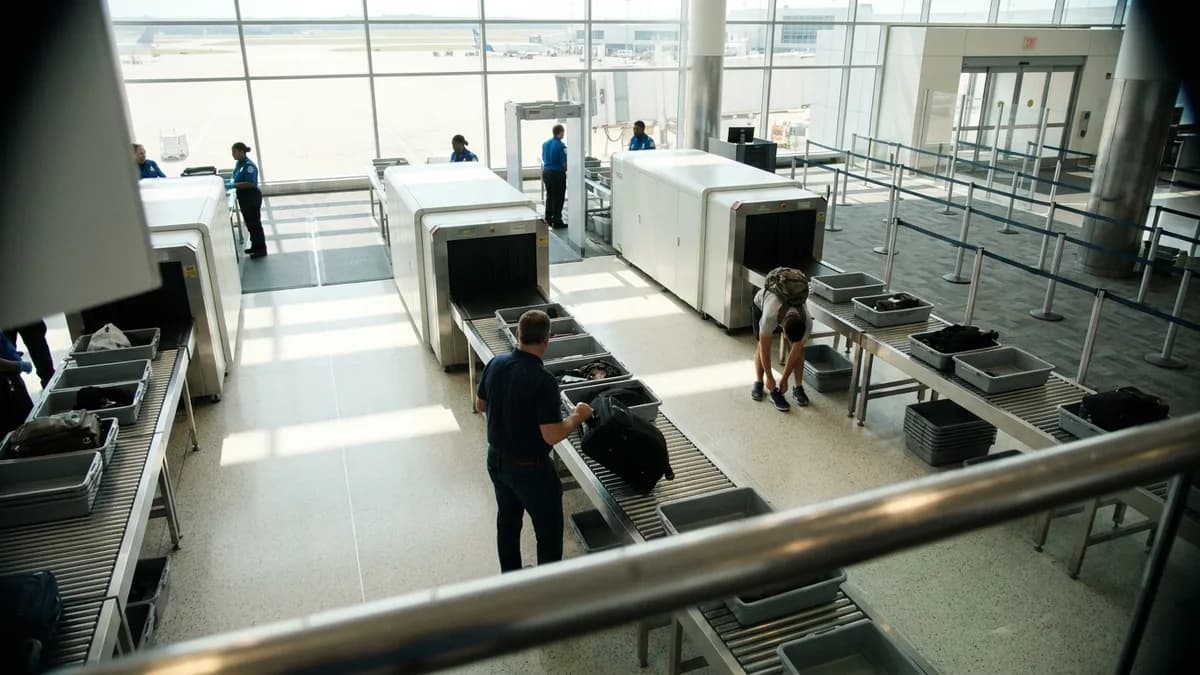
Photo: VapeExperts/AI
The exception is narrow. TSA's page allows cannabis products with no more than 0.3% THC by dry weight, or products approved by the FDA. Dispensary marijuana does not meet either test. Flying from one legal state to another does not create a federal exemption.
Vaporizers fall under TSA's battery rule
A dry herb vaporizer raises two separate questions at the airport. The first is about the battery, and TSA answers it clearly.
TSA treats vaporizers as electronic smoking devices. They are carry-on only and may not go in checked luggage. The vape must be protected against accidental activation. Each installed lithium-ion battery may not exceed 100 watt-hours.[2]
Those rules apply whether the vaporizer has ever touched cannabis or not. An empty, clean vape still cannot ride in the hold.
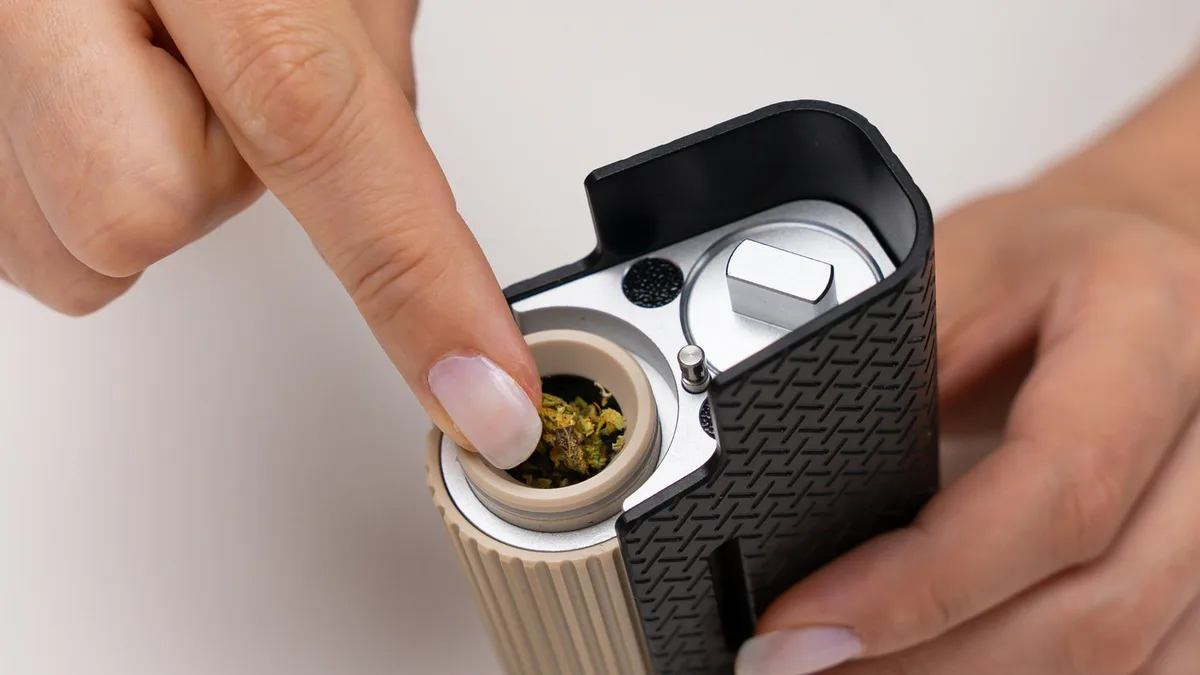
Photo: VapeExperts
A user loads ground herb into the chamber of a Frolic vaporizer. Battery-powered devices like this fall under TSA's lithium battery rules, and the State Department warns against carrying any cannabis abroad.
TSA publishes no residue standard
The second question is about what is inside the vaporizer. A vape holding flower, spent material or visible THC-rich residue can be treated as involving an illegal substance and referred to police.
Here the published guidance stops. TSA sets no minimum amount of residue that triggers a referral, and it publishes no "clean enough" standard for a used vaporizer. A traveler who empties and cleans a vape has removed the cannabis product. Whether a trace left in a chamber counts is a call TSA leaves to its officers and to the police they call.
Abroad, the vaporizer itself can be the problem. The State Department's warning targets cannabis products, but foreign countries may separately ban vaporizers or drug paraphernalia regardless of what is inside.
For a domestic flight, a dry herb vaporizer owner has two written rules to follow: carry the device on board, and keep each battery under 100 watt-hours. What remains unwritten is how clean the chamber must be before TSA officers treat it as empty. For an international trip, the State Department's answer is simpler: leave every cannabis product at home.