
The cannabis travel map you knew two years ago is gone.
Thailand re-criminalized recreational cannabis on June 26, 2025. Amsterdam is debating whether to lock tourists out of its coffeeshops. And the United States quietly became one of the easiest cannabis destinations to reach, with social lounges now legal in 15 states plus the U.S. Virgin Islands.
If you are planning a trip around legal weed this summer, where you go matters more than ever. Some places will sell to you. Some will fine you. And some will hand you a year in prison.
As Cannigma put it in May 2026, cannabis tourism "looks nothing like it did two years ago."[1]
The U.S. became the easy answer
Twenty-four states and D.C. now allow adult-use sales. But the real change is the consumption lounge boom.
For years, the catch in legal states was the same: you could buy weed, but you had nowhere to use it. Hotels ban it. Public smoking is illegal almost everywhere. Lounges fix that.
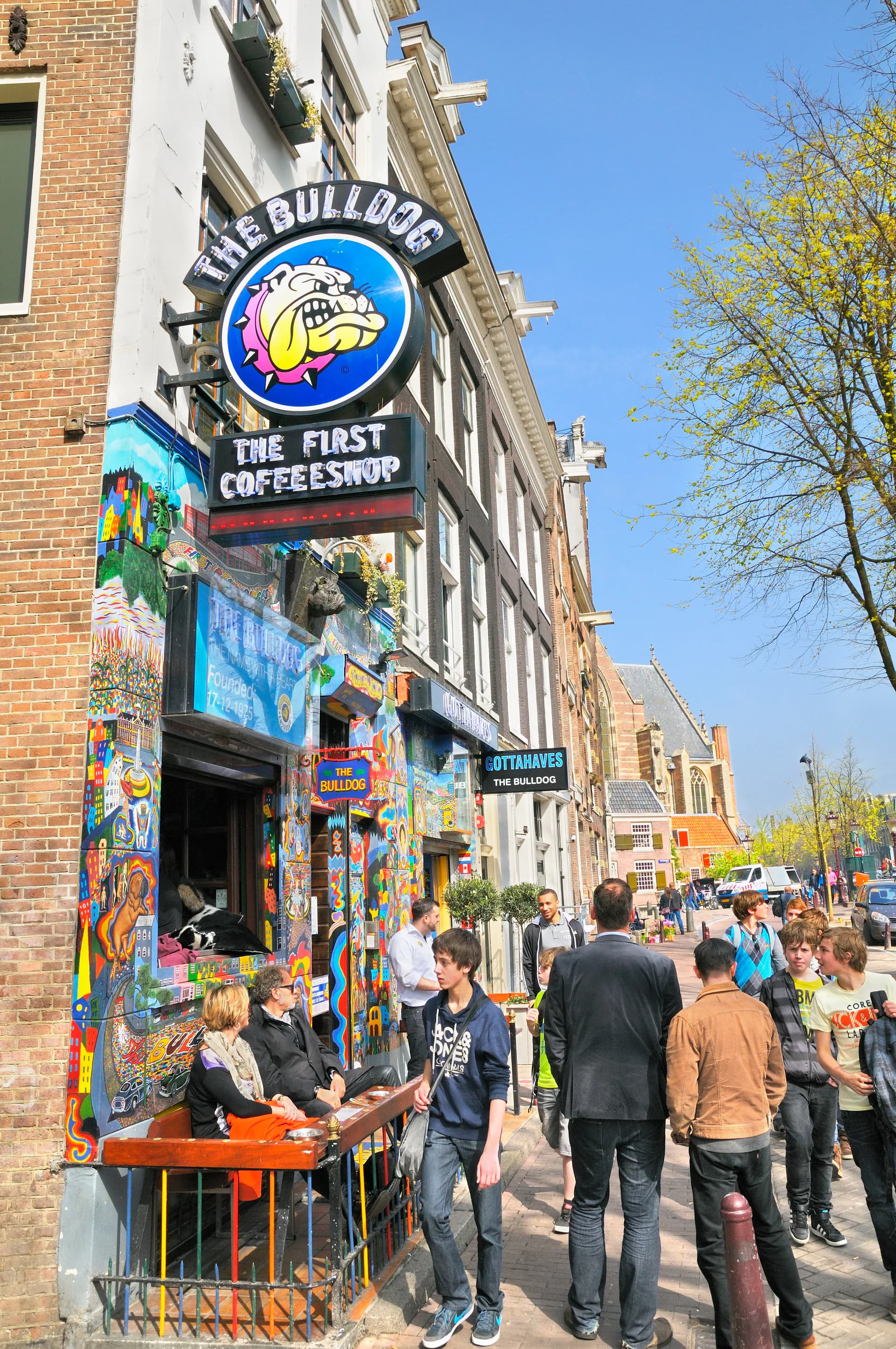
Photo: Chris Harris/UCG/Universal Images Group/Newscom
The exterior of The Bulldog, the famous first coffeeshop at Oudezijds Voorburgwal in the Red Light District of Amsterdam, Netherlands.
California's AB 1775, effective January 1, 2025, lets licensed lounges serve fresh food, non-alcoholic drinks, and live entertainment alongside cannabis. West Hollywood, San Francisco, Palm Springs, and Sacramento moved first.
The 420.school report called it "a fundamental shift in public policy and consumer behavior, moving beyond the 'couch-lock' stigma."[2]
Las Vegas is rebuilding its scene too. After Smoke and Mirrors closed in April 2025 over heavy regulations, The Society Lounge opened on Paradise Road in April 2026, joining Planet 13's 3,000-square-foot Dazed! venue. Nevada caps lounge patrons at a 50mg THC session limit.
Denver still runs the most mature ecosystem in the country: dispensary bus crawls, cultivation visits, and Puff Pass & Paint art classes.
Where the vaporizer became the point
One San Francisco lounge shows where this is heading.
SPARC on Mission Street operates as a vaporization-only consumption lounge built around Volcano desktop vaporizers. The 420.school writeup described it as a "Starbucks-style" room where patrons work on laptops while they vape, not a smoke-filled den.
That model solves a regulatory headache. New Jersey's 2025 lounge rules require rigorous ventilation and air filtration. A vape-only policy cuts those compliance costs and quiets health objections at once.
Matador Network's 2025 analysis noted that discreet methods, including vape pens, are no surprise given that public smoking stays illegal even in legal jurisdictions. For a tourist in an unfamiliar city, a portable vape offers the path of least resistance: no smoke, little odor.
Canada is the boring, reliable pick
Federally legal since 2018, Canada remains the most legally predictable destination.
Vancouver permits public consumption wherever tobacco is allowed. Toronto and Montreal both run robust dispensary scenes.
The first Cannabis Hospitality Summit was held in Vancouver on April 17, 2026.[5] Operators in Whistler and the Okanagan Valley have started bundling 420-friendly stays with cultivation tours.
Amsterdam still works, but watch the politics
Tourists 18 and older can still buy up to 5g per visit at roughly 220 coffeeshops.
But the door is wobbling. A tourist ban is back on the Amsterdam city council agenda after the March 18, 2026 local elections, as DutchNews.nl reported.[3] Mayor Femke Halsema favors a ban but wants council backing first.
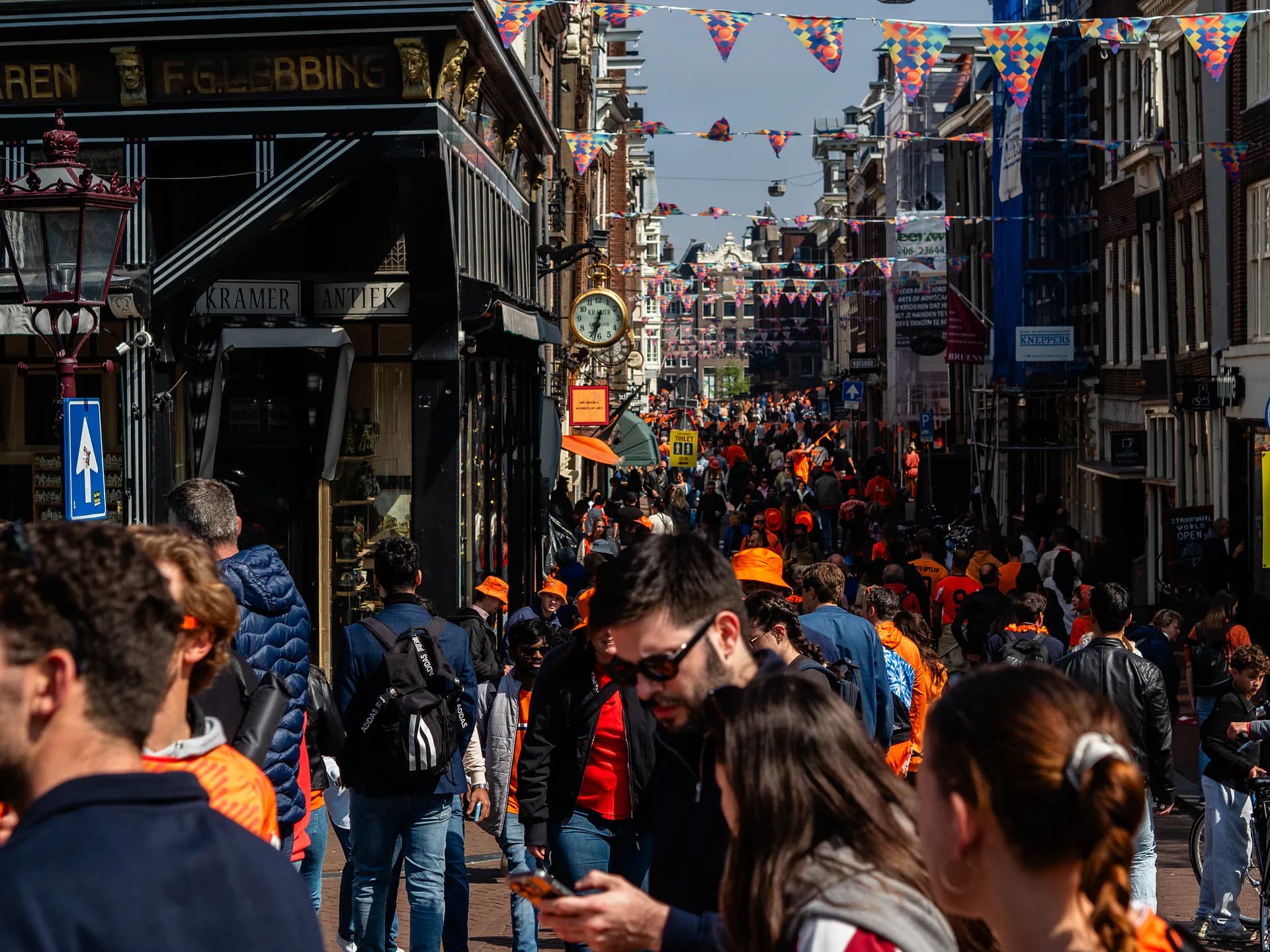
Photo: Ana Fernandez/ZUMAPRESS/Newscom
Crowds fill the streets during King's Day celebrations in Amsterdam, Netherlands, Saturday, April 26, 2025.
Not everyone thinks it would work. University of Amsterdam criminologist Dirk Korf, who studied the existing tourist ban in the southern provinces, said simply: "It simply won't work."
Dingeman Coumou of the residents' association d'Oude Stadt cited research suggesting fewer tourists would come if a ban took hold.
For summer 2026, Amsterdam is open. Past that, watch the headlines.
Barcelona: the grey zone everyone loves
Barcelona runs 200-plus cannabis social clubs in a legal grey area.
The clubs are private, nonprofit membership groups. Tourists can join with no residency requirement, but you need an invitation or referral, valid ID, and 18-plus (many want 21-plus). Annual fees run €15 to €50, with contributions of €8 to €25 per gram.
The rules are strict. Cannabis can only be consumed inside the club. Carry it outside and you face a fine of €500 to €1,000.
Enforcement is tightening. In early 2024, Barcelona City Council ordered 30 clubs to close over municipal violations.[9] The model is popular, but it sits on shaky legal ground.
Where you can hold it but not buy it
Two European countries legalized possession and then forgot the retail part.
Germany lets adults possess 25g in public and 50g at home, and grow three plants, since April 1, 2024. But Cannabis Social Clubs require six months of German residency, so tourists are shut out. There is no commercial retail.[6]
The Czech Republic followed on January 1, 2026: adults 21-plus can possess 25g in public and 100g at home. There are no legal sales, no clubs, no retail.[4] Activist Lukas Hurt announced the Senate's approval as a historic milestone.
The bottom line is the same in both. You can legally have cannabis and have nowhere legal to buy it.
Residents only: Malta and Switzerland
Malta was the first EU country to legalize adult use in December 2021, yet tourists cannot touch the legal supply. Its harm-reduction clubs require Malta residency and a valid ID card.[7] Public consumption carries a €235 fine, though Herb.co reported that no odour fines had been issued by February 2026.
Switzerland runs seven pilot trials across cities including Zurich, where 2,100 participants take part in a program running through autumn 2026.[8] Only trial participants get access. For everyone else, it is CBD only.
Thailand: the door slammed shut
The most dramatic reversal belongs to Thailand.
After decriminalizing in 2022 and building a freewheeling dispensary scene, the country re-criminalized recreational cannabis on June 26, 2025. Flower is now a "controlled herb" requiring a PT 33 prescription from a Thai-licensed practitioner, valid 30 days.[10]
Foreign medical cards are not recognized. By February 2026, 7,297 of 18,433 dispensaries had closed. Remaining operators have a three-year transition window through 2028.
Penalties vary by source, ranging up to a year in prison and a 20,000-baht fine. The takeaway is simple: recreational cannabis tourism in Thailand is over for summer 2026.
The money behind the map
The whole category is still growing fast.
A May 2026 Strategic Market Report pegged the global cannabis tourism market at $11.0 billion in 2025, projecting $26.9 billion by 2032 at a compound annual growth rate of 13.7%.[11]
Hawaii's Department of Health estimated in January 2026 that tourists would add $11.5 million a month to cannabis demand under adult-use, with domestic visitors willing to spend $124.65 per trip.[12]
Why this matters for your summer
If you want a legal purchase and a legal place to use it with zero ambiguity, the United States and Canada are your safest bets right now. Amsterdam still delivers, but treat it as a this-year window.
Skip the gap countries unless possession alone is enough. Germany and the Czech Republic will let you carry weed, not buy it. And cross Thailand off your recreational list entirely.
Wherever you land, a portable vaporizer travels well: less smoke, less smell, and fewer reasons for anyone to ask questions.