


Teenagers in one of California's largest health systems were being diagnosed with cannabis use disorder less often each year. Then voters approved recreational cannabis in November 2016, and the trend flipped. By early 2020, new diagnoses were back to roughly where they stood in 2014.
That is the core finding of a study published September 11 in the journal Addiction by Alisa A. Padon of the Public Health Institute and colleagues at Kaiser Permanente Northern California, the University of Southern California and UC San Francisco.[1] The team tracked 637,461 Kaiser members ages 13 to 17 from January 2014 through February 2020.
In that time, 8,804 teens received a new cannabis use disorder diagnosis, according to a Kaiser Permanente Division of Research summary.
What the study did not measure matters as much as what it did. It counted diagnoses recorded by clinicians, not how many teens used cannabis, how often, how strong the product was or whether they vaped it. The authors cannot say how much of the rise reflects more disorder and how much reflects more detection.
The decline stopped six months after the vote
Before Proposition 64, new diagnoses fell about 5% a year (adjusted rate ratio 0.95, 95% confidence interval 0.92 to 0.97). Six months after passage, the trend reversed. The model recorded a slope change of 1.26 (1.14 to 1.38), meaning diagnoses shifted from falling to rising. Kaiser's summary put it in plain terms: down about 6% a year before the vote, up about 8% a year after.
Photo: VapeExperts/AI
Store openings changed the picture again. Licensed retail sales began January 1, 2018. Six months later, the model found a slope change of 0.86 (0.76 to 0.98), a slowing of the rise. The confidence interval stayed below 1.0, so the slowing was unlikely to be chance.
What remained after that was an upward drift of 1.02 a year (0.96 to 1.09). That interval includes 1.0, so the data could not rule out a flat line. The biggest modeled change followed the ballot, not the shops.
The paper notes that Prop 64's passage did more than promise future stores. It legalized adult possession and home cultivation on the spot and reduced penalties for underage possession. The model applied a six-month lag to both milestones.
January 2014
Study observation period begins; teen diagnoses are on a declining path.
November 2016
Voters approve Proposition 64. Adult possession and home growing become legal; underage penalties drop.
May 2017
Six-month lag point where the model places the reversal from falling to rising diagnoses.
January 2018
Licensed adult-use retail sales begin statewide.
July 2018
Six-month lag point where the model detects a slowing of the post-passage rise.
February 2020
Follow-up ends, before the pandemic. Diagnoses are back near their 2014 level.
A diagnosis is not a survey answer
Most youth cannabis data comes from anonymous surveys. This study used something different: a clinician writing a diagnosis into a medical record. Padon, who is research director at Getting it Right from the Start at the Public Health Institute, said that is the point.
"Most surveys of adolescent cannabis use tell us how many teens have tried cannabis, but don't tell us how many are developing a disorder that brings them into clinical care," Padon said. "The public health goal is to reduce the harms caused by cannabis use and we cannot reduce what we do not measure."
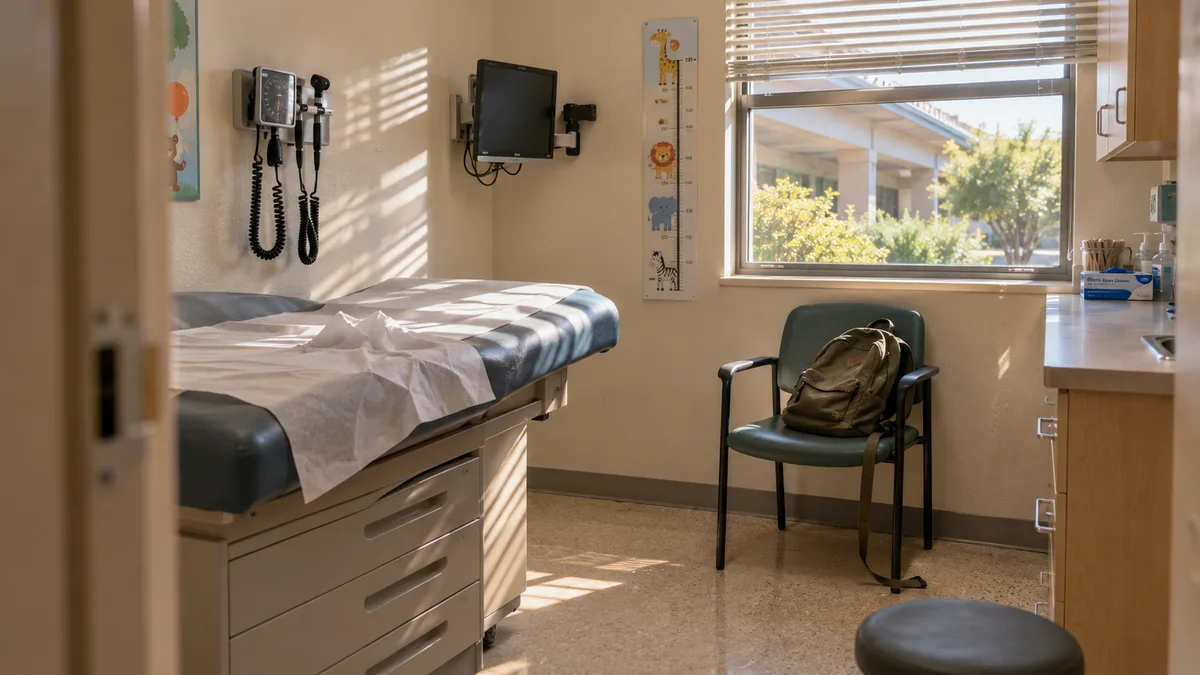
Photo: VapeExperts/AI
A recorded diagnosis depends on more than a teen's cannabis use. It requires a visit to the health system, a willingness to disclose, a clinician who screens and recognizes the problem, and a code entered into the chart. The study did not separately estimate changes in screening, disclosure, coding or health care use over the period.
Senior author Kelly C. Young-Wolff, a scientist at the Kaiser Permanente Division of Research, framed the result as a policy link. "The new study shows that cannabis laws are tied to changes in young people's rates of cannabis use disorder," she said.
The authors listed other limits. Prop 64 applied statewide, so there was no unexposed California comparison group. The data came from one integrated Northern California health system. And follow-up ended in February 2020, before the pandemic reshaped teen health care and substance use.
A warning published 10 days earlier
On September 1, Addiction published a commentary by Sergio Rueda, a cannabis surveillance and mental health researcher, on exactly this kind of data.[2] It was not written about Padon's paper. But it describes the problem her team faced.
"Legalization may alter the sensitivity and specificity of case ascertainment, conflating changes in true incidence with changes in case detection," Rueda wrote.

Photo: VapeExperts/AI
His commentary cited a review that found 56 administrative-data studies defining cannabis use disorder. None reported checking their diagnosis codes against a clinical gold standard. Rueda reported no conflicts of interest.
"Without validation, the magnitude of this bias cannot be quantified, nor can its net direction be established with confidence, and so observed trends may exaggerate or obscure the effects of legalization," he wrote.
Teen use itself went back down
Kaiser points to a companion analysis in JAMA Network Open that used confidential teen self-reports from the same system. Use had been falling before legalization. It rose after passage but before stores opened, reaching 9.5% in early 2020. By 2024 it had fallen to 6.5%, close to its pre-legalization level.
That pattern lines up with the diagnosis trend between 2016 and 2020. It does not show a lasting surge in teen use after 2020.
National surveys tell a similar story. The 2025 Monitoring the Future survey found past-year cannabis use at about 8% of eighth graders, 16% of tenth graders and 26% of twelfth graders, statistically unchanged from 2024 and historically low for the older grades.
Photo: VapeExperts/AI
Adults are a different matter. A national analysis published in August found cannabis use disorder among men rose from 7.3% in 2021 to 9.3% in 2024, and among women from 4.5% to 5.6%.[4] Moderate-to-severe cases rose too.
Whether stable teen use and rising teen diagnoses can coexist, with a smaller group of users facing higher risk, is a question the California study raises but cannot answer.
Potency and vapes are not in the data
The paper has nothing to say about the modern product market: high-THC oils, concentrates and vapes. It did not record THC concentration, flower versus concentrates, vaping, dabbing or edibles, number of use days, dose, or where teens got their cannabis.
Young-Wolff connected the findings to the market anyway, without claiming the study measured it. "As potency has risen, it's more important than ever that families understand this is a product that can be addictive and, for some kids, requires real medical care," she said.
Nora D. Volkow, director of the National Institute on Drug Abuse, was not involved in the study, though NIDA funded it under grant R01 DA053192. She told The New York Times in August that "the higher the content of the drug, the higher the risk for addiction."[5]
In a separate interview with Reason, Volkow said researchers "lack comprehensive data on the types of cannabis that people are using," including THC concentrations and how they relate to addiction potential.
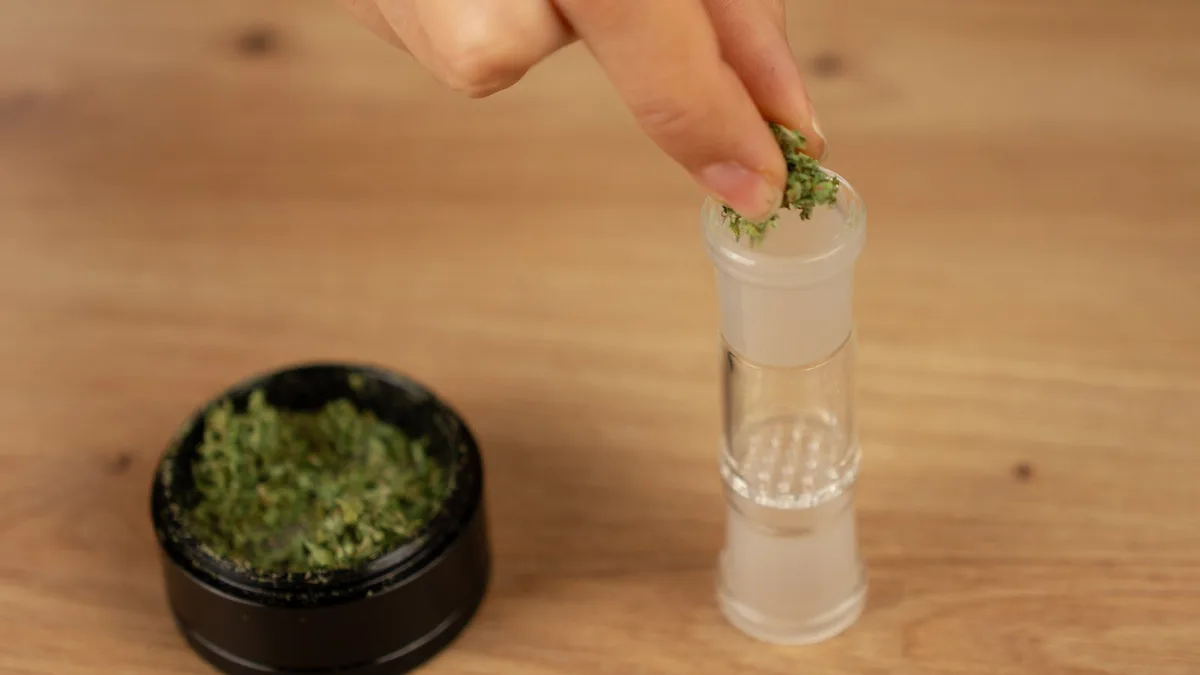
Photo: VapeExperts
A hand loads ground cannabis into the glass bowl of an Arizer XQ2 vaporizer beside an open grinder. The study linking teen diagnoses to Prop 64 did not track potency or vaporizer use.
California's legal market has generated nearly $8.4 billion in state tax revenue since January 2018, the Governor's Office said on September 2.[3] The state says that money funds childcare, youth substance-use prevention, medical research and environmental recovery.
The study did not link store counts, prices or sales to diagnoses in any county.
Two sentences, one next step
Padon says the field cannot reduce what it does not measure. Rueda, writing before her paper appeared, argued that administrative diagnosis codes need validation against a clinical gold standard before a rising line can be read as rising disease.
Until that happens, he wrote, the direction of the bias cannot be pinned down. "Neither can we interpret what we have not validated."
The Northern California data show that teen diagnoses stopped falling after the 2016 vote. What they cannot yet show is whether more teens got sick, or whether more of the sick ones got noticed.