

People have been inhaling heated cannabis for more than 2,400 years, but the electric vaporizer only took off in the 1990s. From hemp seeds on hot stones to 120W portables and Bluetooth apps, each generation of technology solved a problem left by the last.
Short version: heated cannabis is ancient, the Volcano made vaping repeatable in 2000, portables went mainstream around 2012, and ball vapes are the latest leap.
Vaporizer history timeline at a glance
- 5th century BCE: Herodotus describes Scythians breathing the fumes of hemp seeds thrown on red-hot stones.
- 1927: Joseph Robinson files a patent for an electric vaporizer.
- 1965: Herbert A. Gilbert is granted a patent for a smokeless, battery-heated cigarette.
- 1993: Eagle Bill Amato learns the heat-gun method and takes it to Amsterdam.
- 2000: The Volcano launches and sets the desktop standard.
- 2003: Hon Lik files the patent behind the modern nicotine e-cigarette.
- 2012: The first PAX helps make battery portables mainstream.
- 2014: Storz & Bickel releases the Mighty and the app-controlled Crafty.
- 2015: DynaVap's first VapCap popularizes battery-free on-demand vaping.
- 2019: The Volcano Hybrid adds tube delivery, a digital display and Bluetooth.
- 2021: The Mighty+ arrives with USB-C charging, and the FlowerPot B1 brings a dedicated ruby ball head.
- 2023: The Venty arrives, drawing up to 130W.
- 2025: The Frolic packs a 120W heater and a swappable 21700 cell, and the Tempest 2 puts a ball vape in your pocket.
Ancient civilizations heated cannabis on hot stones over 2,400 years ago
The Greek historian Herodotus described Scythian hemp rituals in the fifth century BCE. Scythians threw hemp seeds onto red-hot stones inside felt-covered tents and breathed in the fumes as a communal ritual.
Digs in the Pazyryk Valley of Siberia later turned up bronze vessels holding stones and charred hemp seeds, a lot like the setup Herodotus described. A 2019 residue study found cannabis burned in wooden braziers at the Jirzankal Cemetery in western China around 500 BCE.
Seeds sitting right on hot stones smoulder, so this was closer to smoking than to true vaporization. Still, the idea of heating cannabis and breathing in what rises off it is far older than any gadget. Precise, repeatable vaporization needed technology that wouldn't exist for more than two thousand years.
People have inhaled heated cannabis for over two millennia. What changed was control.
Who invented the electronic vaporizer?
The idea is older than most people think. Joseph Robinson filed a patent for an electric vaporizer in 1927 (US1775947). His design heated medicinal compounds on an electric coil and mixed the vapor with air drawn in through vents. Herbert A. Gilbert's 1965 patent described a smokeless, non-tobacco cigarette that pulled air through a flavor cartridge and past a battery-heated element, so you inhaled warm, flavored air instead of smoke.
The nicotine e-cigarette as we know it traces back to Hon Lik, who first filed his flameless electronic cigarette patent in 2003. None of these were built for cannabis. That story runs through hot knives and a heat gun.
Eagle Bill Amato put vaporizing on the map in the 1990s
Before any purpose-built vape, plenty of people pressed cannabis between two stove-heated knives. It was quick, but there was no way to control the heat, and a lot of it ended up as smoke.
Eagle Bill Amato learned the heat-gun method from a Californian grower in 1993. He refined it and took it to Amsterdam, where the Hash Marihuana & Hemp Museum has run a vaporizing exhibit since 1993. The Shake 'N' Vape pipe he became known for was even simpler: a glass pipe you heated under the bowl with a lighter.
His demos made a simple point. Heat cannabis gently and you inhale cannabinoids and terpenes as vapor instead of smoke. For users concerned about their health, this mattered enormously.
Neither setup had temperature control. You judged the heat by feel, and consistent results demanded a lot of practice. Repeatability was the main problem, and it would take a German engineer to solve it.
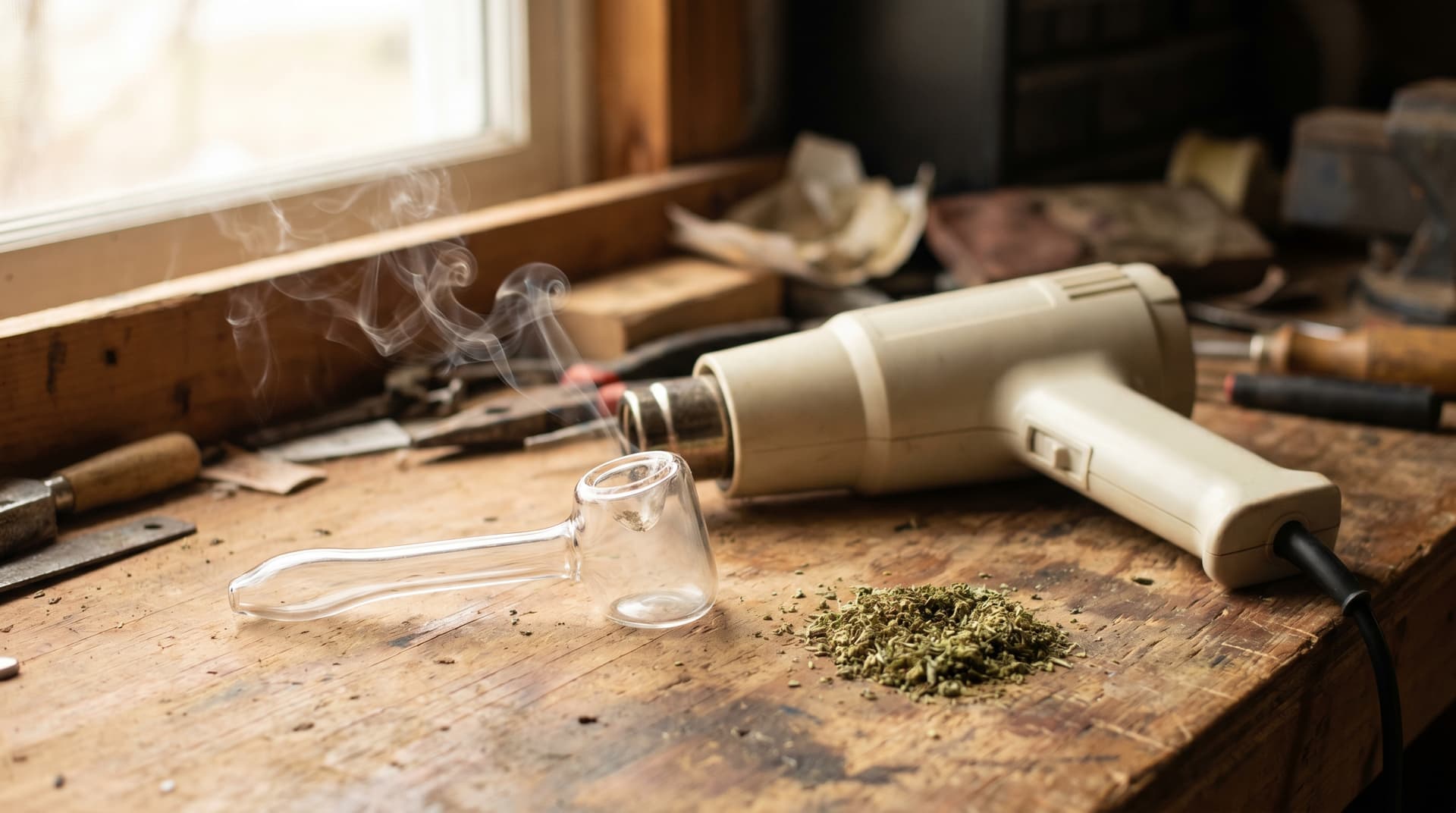
An illustration of the heat-gun method: a glass pipe, a heat gun, and a willingness to ignore convention.
The Volcano set the desktop standard in 2000
The Storz & Bickel timeline starts in 1996, when Markus Storz began developing the Volcano. It launched in 2000 as the model we now call the Volcano Classic, and Jürgen Bickel joined him to form Storz & Bickel in 2002.
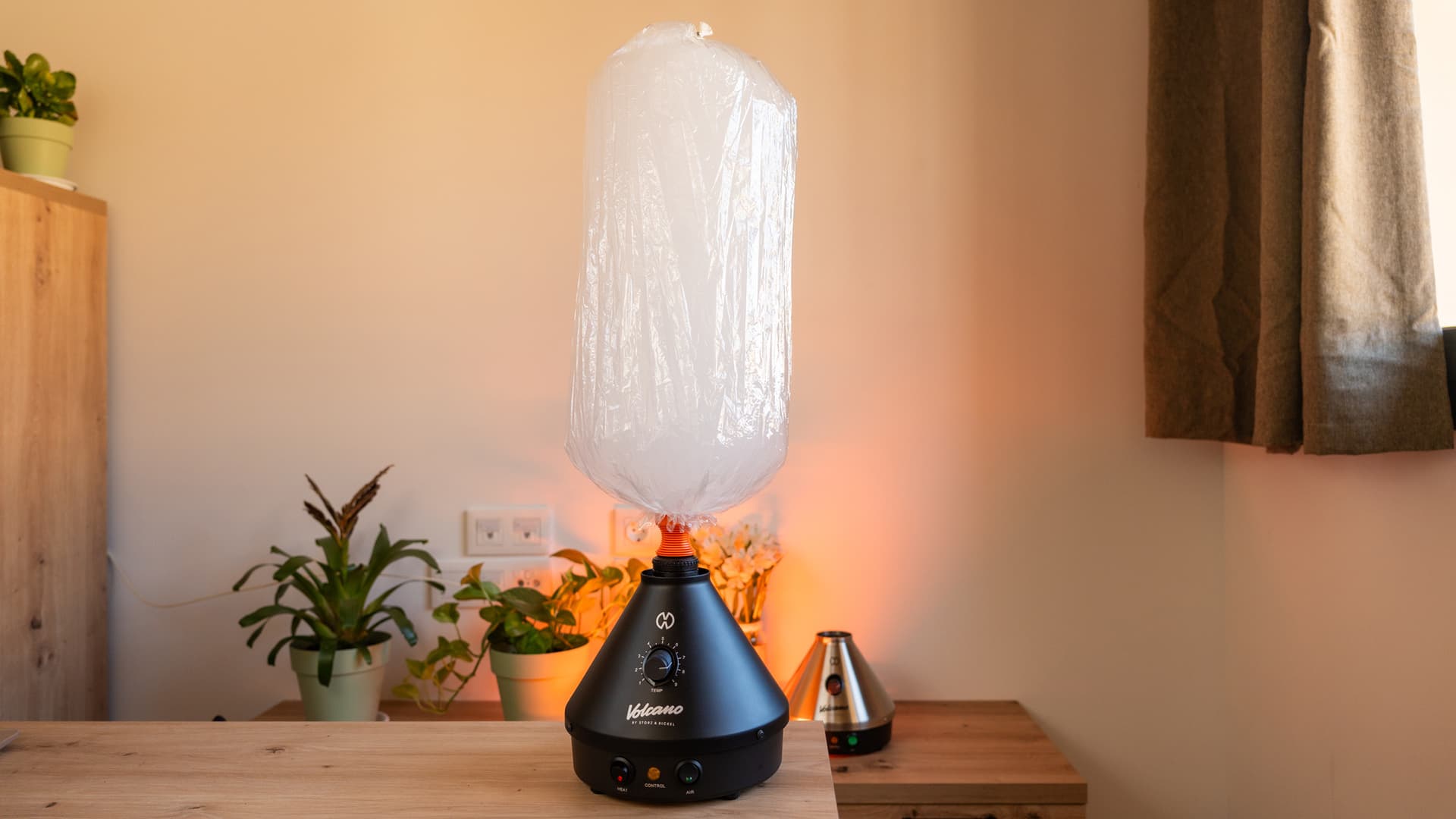
It wasn't the only desktop around, since Vaporbrothers had been selling box-style vapes since 1999. What the Volcano brought was a finished, dependable product. A convection heater pushes hot air through ground cannabis and fills a detachable balloon bag. You then sip the vapor at your own pace.
The Volcano solved the heat gun's repeatability problem. An analog temperature dial let you find a setting and return to it session after session. With the same grind and load, the results came out nearly identical. The build quality was equally remarkable, and the Classic is still on sale 26 years later.
Its limitations shaped the next generation. Balloon-only delivery meant no direct-draw tube option, and the analog dial made fine-tuning difficult. At 1.6 kg, the Volcano also lived permanently on a countertop. In 2019 the Volcano Hybrid fixed the first two, adding tube delivery, a digital display that sets temperature in 1°C steps, and Bluetooth. It's still a plug-in desktop, though.
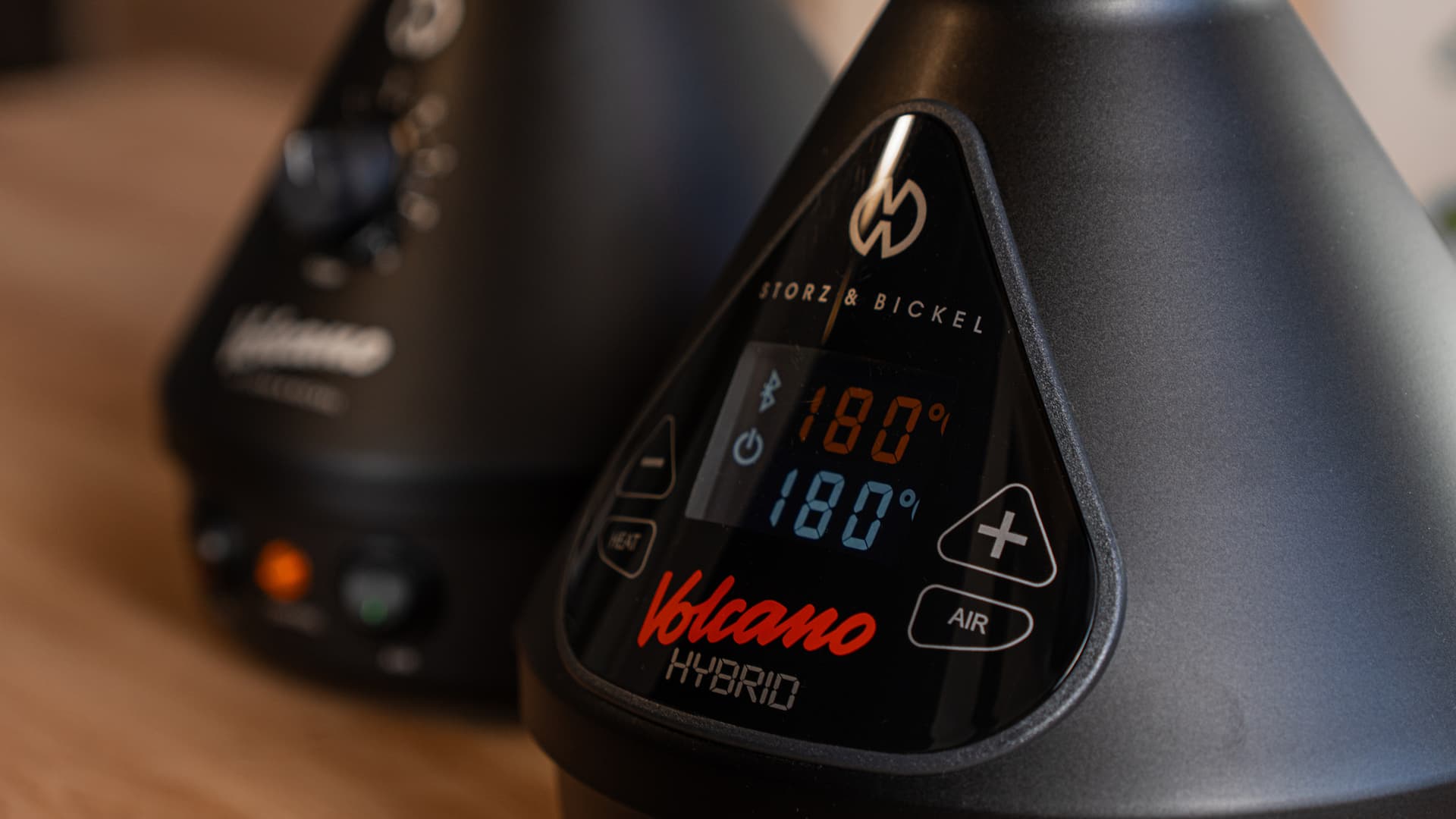
19 years separate these two controls. The Classic uses an analog dial, while the Hybrid's digital display sets temperature in 1°C steps.
The Volcano line also played a key role in legitimizing vaporization for medical use. In 2010 Storz & Bickel launched the Volcano Medic, a dedicated medical model sold in Europe, Canada and Israel under its Vapormed brand.
Portable vaporizers went mainstream in the 2010s
Arizer's original Solo and the first PAX, which arrived in 2012, made battery-powered portables feel normal. Cannabis vaporization left the living room and went out the door with you.
Many early portables relied on conduction heating, where cannabis touches a heated surface directly. Conduction allowed compact builds and fast heat-up times, but it often extracted unevenly. The cannabis closest to the oven walls cooked faster than the center, so you had to stir mid-session for consistent results.
Storz & Bickel entered the portable market with the Mighty and Crafty in 2014. The Mighty's hybrid heating surrounds cannabis with both conducted and convected heat, which gives an even extraction with little or no stirring. The Mighty+, released in 2021, refined the design with USB-C charging and a ceramic-coated chamber. It remains one of the portables we recommend most.
The session vaporizer became the familiar portable format during this era. The oven stays hot for several minutes while you take a series of draws, so you can settle in and pace yourself. For a closer look at how these heating approaches differ in practice, see our guide.
The same decade brought the 510-thread cartridge pen, a simple battery with a standard screw thread that made pre-filled oil cartridges an everyday way to vape cannabis. Our concentrate vape guide covers cart batteries and dab pens. This guide sticks to flower vaporizers, where the heating story is more interesting.
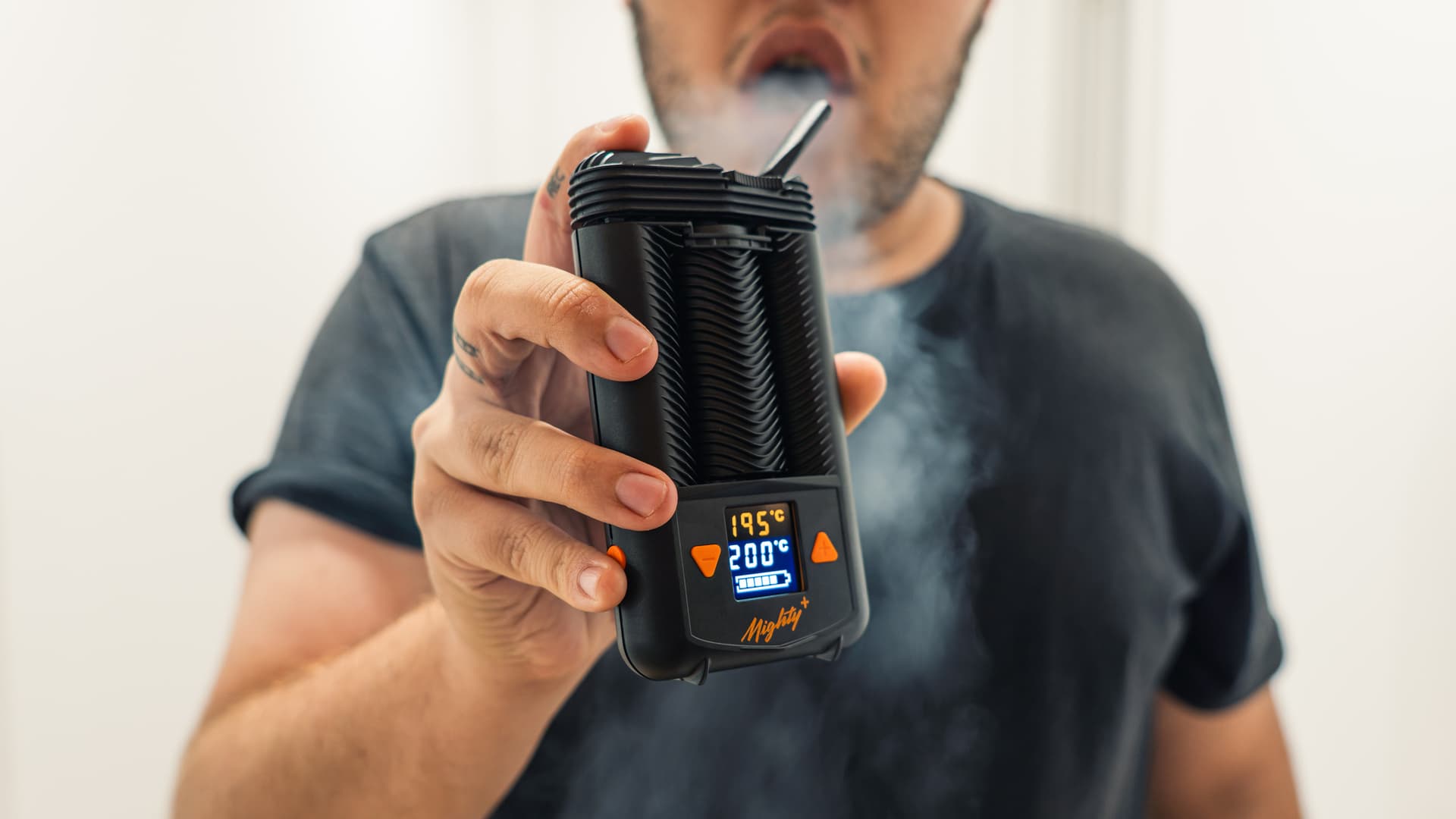
The Mighty+ arrived in 2021 with USB-C charging. Its LCD shows the current and target temperature at a glance.
On-demand heating gave users single-hit control
While session vapes served most buyers, a parallel track focused on on-demand vaporizers. These heat cannabis when you draw instead of keeping the oven hot for a whole session. Less cannabis cooks away between hits, which matters for microdosers and anyone who prefers a single draw to a 5-minute session.
DynaVap popularized battery-free on-demand vaping. Its first VapCap arrived in 2015 with a glass body and a stainless steel cap that clicks when it's hot, and all-metal models followed. That click tells you when to stop heating, which takes most of the guesswork out of using a torch.
Electronic portables like the Tinymight, whose maker started out in 2019, showed that battery-powered convection could rival desktop flavor. The current Tinymight 2 runs both on-demand and session modes, and its convection flavor stood out in our Tinymight 2 review. To our taste, hot air that only moves through the cannabis while you draw gives brighter flavor than constant-contact heating. The split between session and on-demand modes became a defining feature of high-end portables throughout the 2020s.
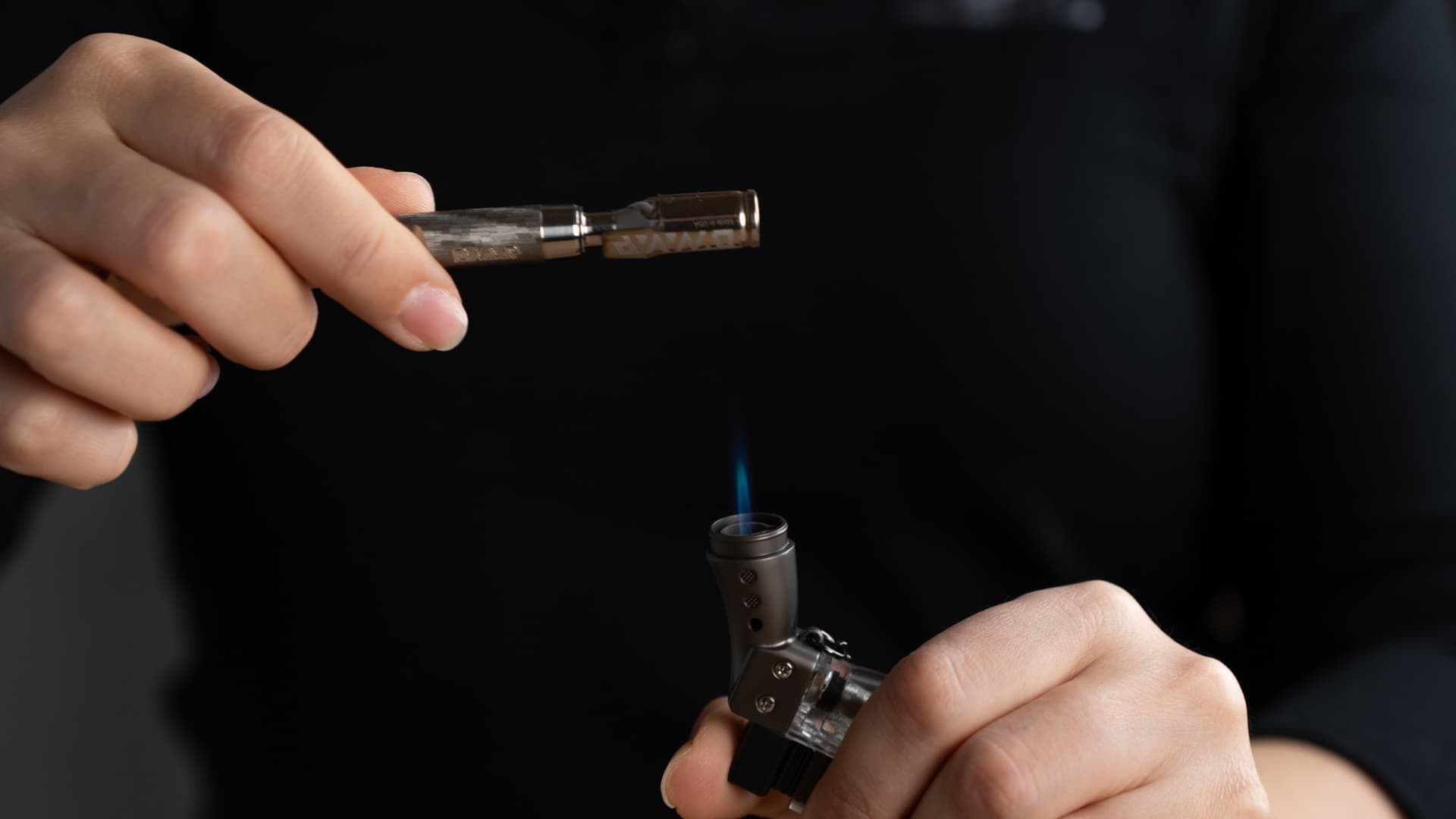
No battery, no electronics, just a thermal click that tells you when to stop heating.
Ball vapes redefined desktop extraction in the 2020s
We see ball vapes as the biggest desktop development since the Volcano. They pack ruby or zirconia spheres into the heater, storing a lot of thermal energy that the air picks up as you draw.
Cannabis Hardware's FlowerPot story starts with customers adding balls to its Vrod, and dedicated heads followed. The B1 head is Grade 2 titanium and holds ruby balls. The FlowerPot B1 remains one of the fastest-extracting desktops we've tested.
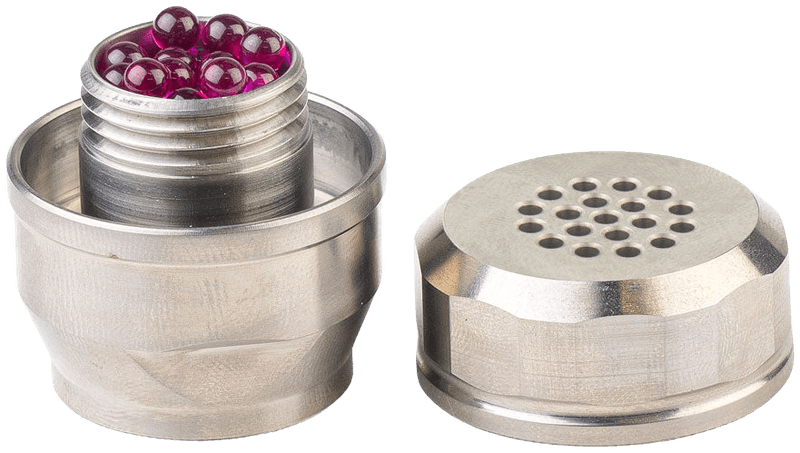
The FlowerPot B1 head opened up: a bed of ruby balls inside the titanium housing, with the 19-hole top cap beside it.
The key advantage is thermal mass. All those heated spheres keep the air temperature steady through a long draw. In our sessions, that means much less of the heat drop you feel on a conventional desktop when you pull hard. Ball vapes now fill half the picks in our desktop rankings, and they have their own ball vape rankings.
The concept has even gone portable. The Tempest 2 from Mad Heaters packs zirconia balls into a mostly Grade 5 titanium body that weighs 46 g with its aluminum heat shield. A butane torch or an induction heater supplies the heat.
Where vaporizer technology stands today
Portable vaporizers have closed much of the performance gap with desktops. The Frolic from Limelight Herb packs a 120W heater, airflow up to 25 L/min and a removable 21700 battery. Those are numbers we used to associate with plugged-in desktop hardware.
Several technology trends define the current generation:
Higher wattage heaters. Top portables like the Frolic and the Venty now run well past 100W. That power helps with fast heat-up and steady convection during long draws.
Removable standardized batteries. Swappable 18650 and 21700 cells let you carry a spare and keep going. A fresh cell takes seconds to install, which beats waiting on a USB-C charge.
App integration and firmware updates. The original Crafty offered Bluetooth app control back in 2014. Many flagship portables now pair with an app, and some add custom temperature curves, session timers and firmware updates.
Portable ball vapes. Torch-heated designs like the Tempest 2 fit ball-vape convection into a pocket-sized body. That blurs the line between categories that used to be miles apart.
Despite these gains, we think desktops still hold an edge in raw extraction speed and steady heat. A ball vape's heated spheres give it a deep reserve of energy to draw on. For daily users, today's best portables deliver more than enough performance. For connoisseurs chasing maximum flavor density, the desktop class still leads.
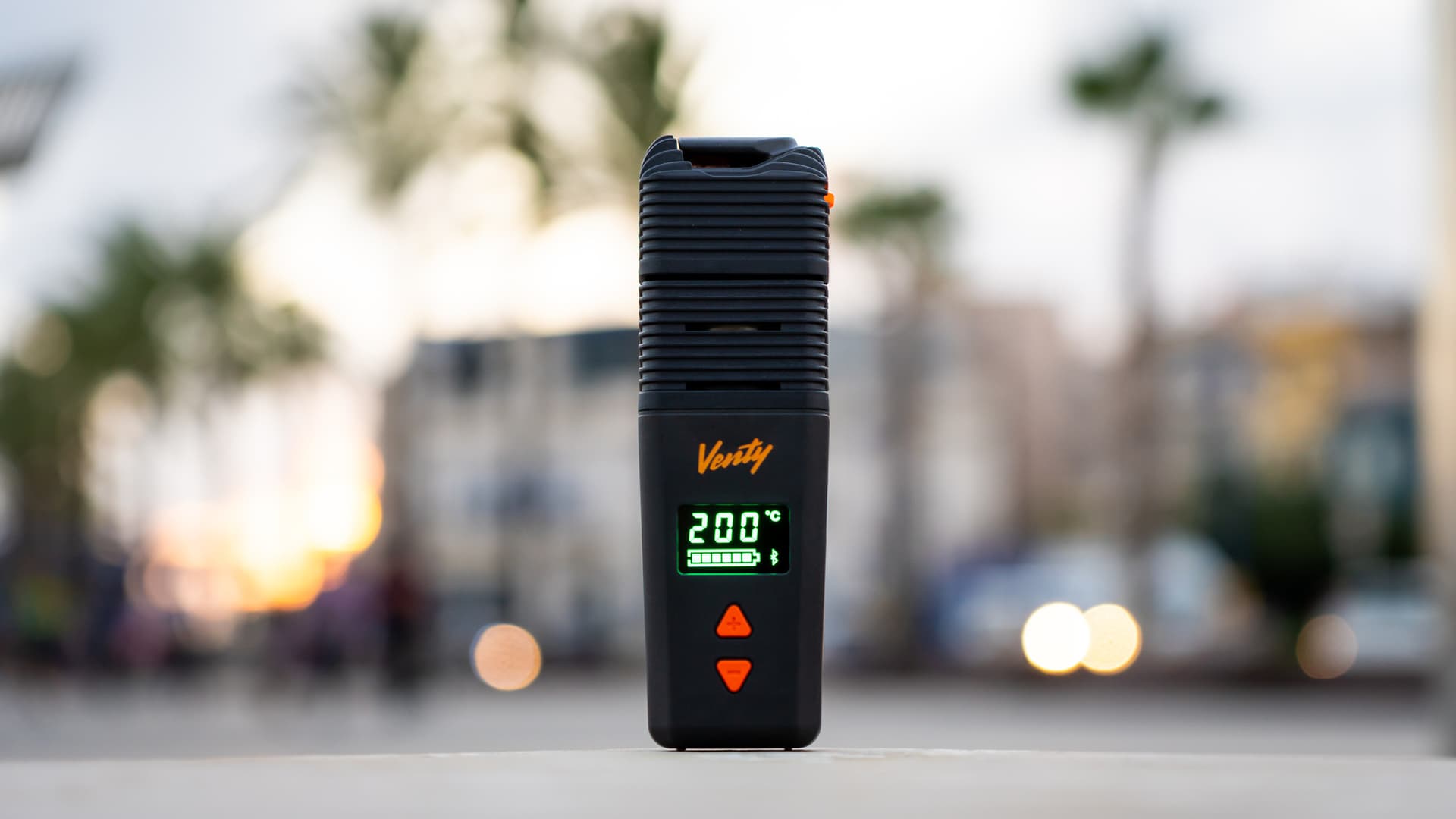
The Venty draws up to 130W and heats up in about 20 seconds, so there's barely a wait before your first draw.
Health motivations drove adoption from the start
Harm reduction runs through this whole story. Eagle Bill promoted vaporization specifically as a healthier alternative to smoking cannabis. Storz & Bickel later built a dedicated medical model, the Volcano Medic, in 2010.
Published research supports the core premise. A 2004 lab study ran cannabis through the Volcano and compared the vapor with smoke. The vapor was overwhelmingly cannabinoids with trace amounts of three other compounds, while the smoke held more than 111 identified compounds, including polynuclear aromatic hydrocarbons. In a 2007 study of 18 people, the Volcano delivered blood THC levels similar to smoked cannabis. Exhaled carbon monoxide barely rose after vaping, while smoking pushed it up.
Many buyers today look for the same things medical users do: glass or stainless steel vapor paths, isolated airpaths and 1°C temperature control. The science behind vaporizer safety keeps growing as more places legalize medical cannabis.
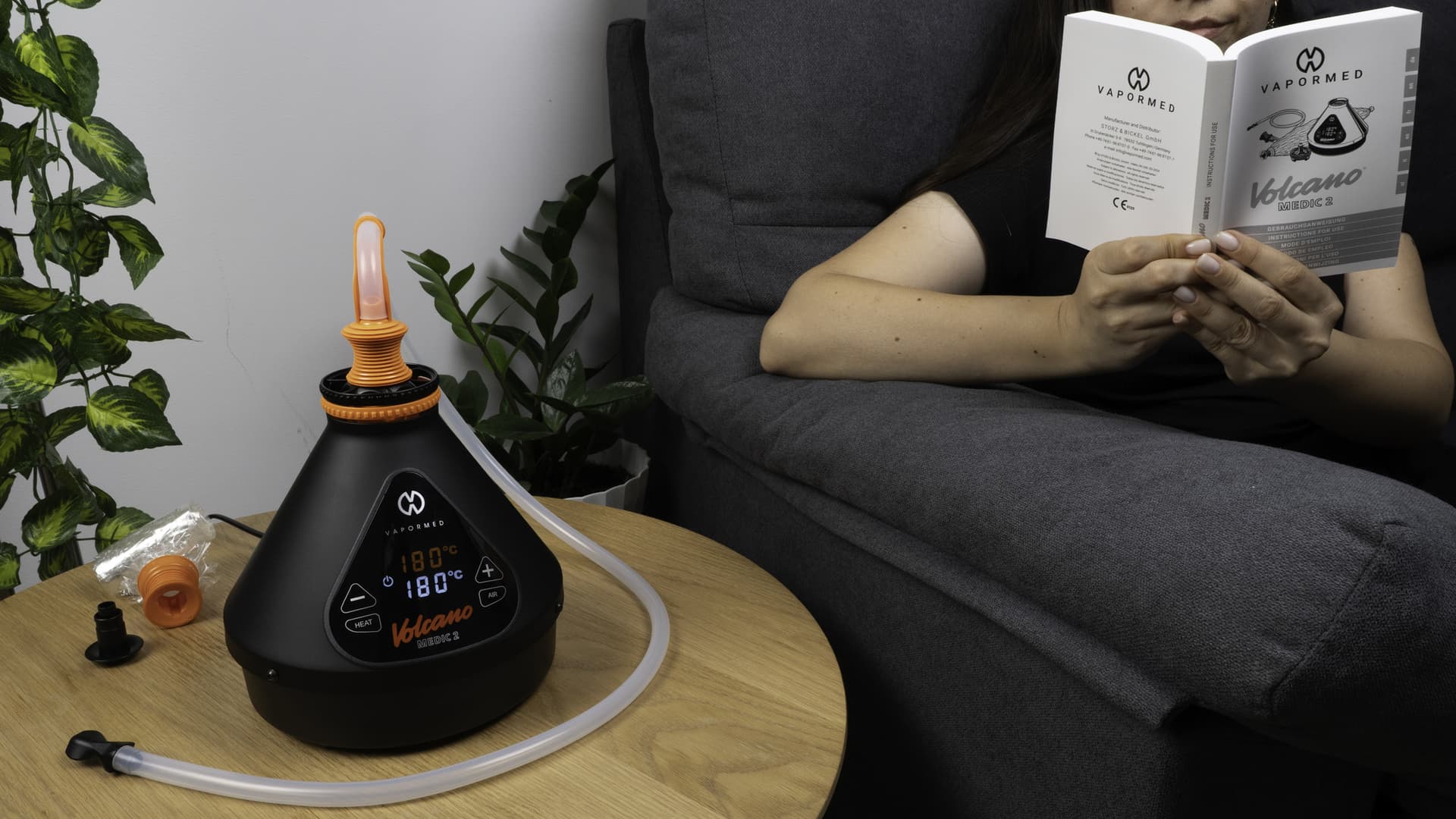
The Volcano Medic 2 is the medical version of the Volcano, sold under the Vapormed brand.
Key Takeaway
- Heated cannabis is ancient. Scythians used hot stones, and the electric vape took off in the 1990s
- Control is the real innovation. From guessing heat-gun distance to setting temperature in 1°C steps
- Portables now rival desktops. 120W heaters and swappable 21700 cells close much of the gap
- Ball vapes extract fast. Heated spheres store energy and hand it to the air as you draw
- Each generation solves one problem. Repeatability, portability, speed, precision