

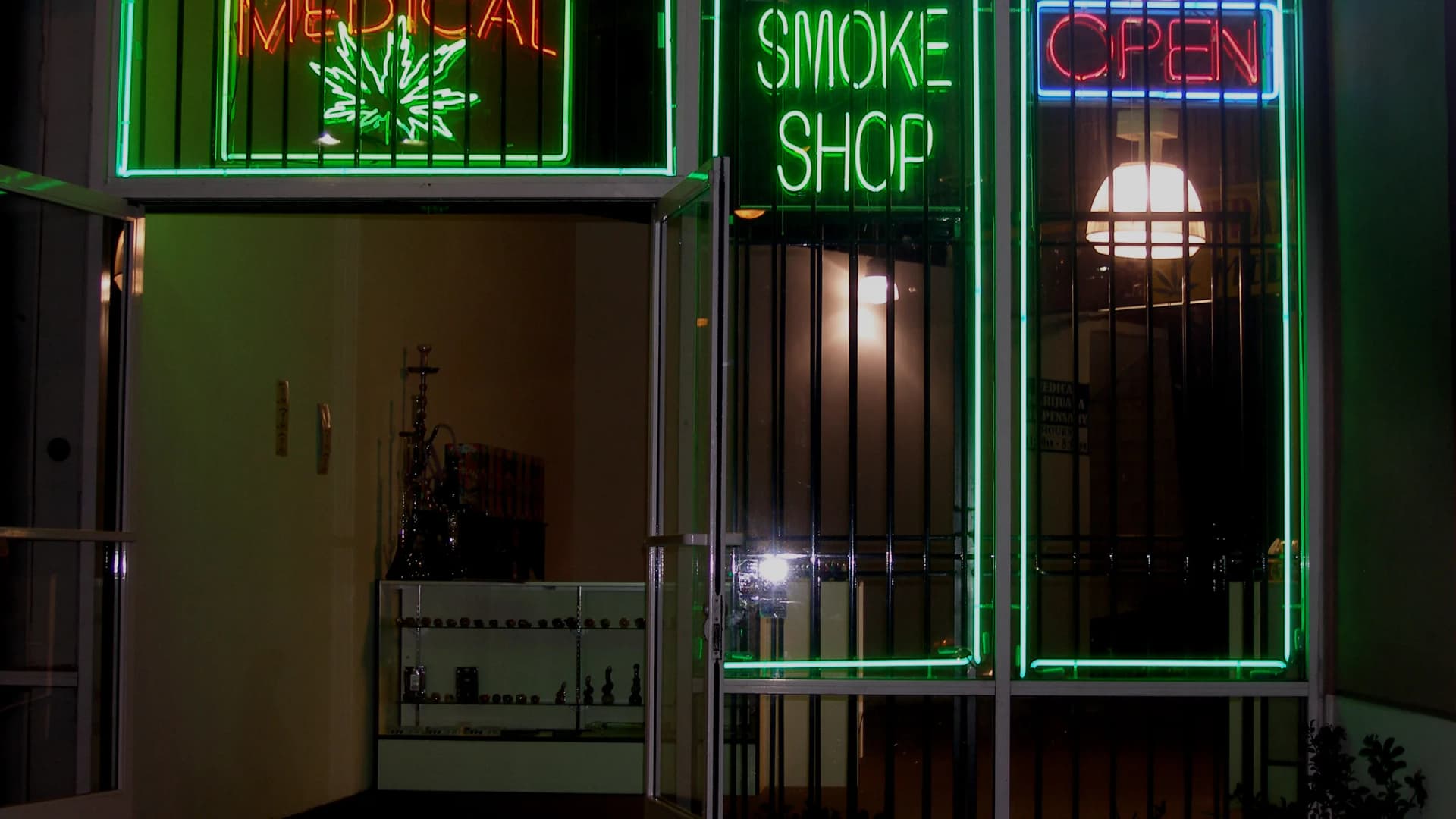
Cannabis stays a Schedule I drug in Wyoming. On July 7, Attorney General Keith Kautz, acting as the state's Commissioner of Drugs and Substances Control, issued a final decision keeping marijuana and naturally derived THC in Schedule I under the Wyoming Controlled Substances Act.[1]
The decision blocks the state-law change that would otherwise have followed the federal government's April rescheduling of certain medical cannabis products. Kautz's order covers "all marijuana products, including marijuana subject to a state medical marijuana license."[1]
"This decision is final unless altered by statute," Kautz wrote.[1]
The federal change was narrower than the headlines
The April federal action did not move all cannabis to Schedule III. Acting U.S. Attorney General Todd Blanche signed AG Order No. 6754-2026 on April 22, and the rule took effect April 28. It moved two categories to federal Schedule III: cannabis in FDA-approved drug products, and cannabis covered by a qualifying state medical license.[2] We covered the order in detail when it landed (our earlier coverage).
The Justice Department described the change as "immediately placing both FDA-approved products containing marijuana and marijuana products regulated by a state medical marijuana license in Schedule III of the Controlled Substances Act."[2] Adult-use cannabis, unlicensed cannabis, bulk crops and synthetic THC stayed in federal Schedule I.[2]
Photo: VapeExperts/AI
Under Wyoming Statute 35-7-1011, the state normally matches a federal scheduling change within 30 days. But the commissioner can object, publish reasons, hold a hearing and issue a final decision. Kautz filed his objection in late May and held the required public hearing at the Wyoming Capitol on June 18. The hearing drew eight email comments, split 4-4 between keeping Schedule I and moving to Schedule III. One person testified in person, favoring Schedule I.
Kautz says the call belongs to lawmakers
Kautz argued that automatic conformity would import a policy Wyoming never adopted. The state has no medical cannabis program, no licensing system and no recognition of other states' patient cards.
"The Wyoming Legislature has not legalized medical marijuana, has not approved a state licensed medical marijuana regulatory scheme, or approved of recognizing any other state's medical marijuana issued licenses," Kautz wrote. "Therefore, placing marijuana subject to a state medical marijuana license in Schedule III of the Wyoming Controlled Substances Act is inconsistent with the police powers exercised to date by the Wyoming Legislature."[1]
He added: "The question of whether to remove any type of marijuana from Schedule I of the Wyoming Controlled Substances Act is for the Wyoming Legislature and should not be done through the administrative rule making process."[1]
The decision does not touch FDA-approved prescription drugs. Wyoming already schedules those individually: dronabinol sits in state Schedule III, nabilone in Schedule II, and Epidiolex is no longer controlled in Wyoming at all.
Wyoming appears to be the first state to complete a formal administrative opt-out and issue a final decision keeping Schedule I after the April federal order. It was not the first to push back. Tennessee's governor signed a law on April 23 blocking state officials from rescheduling cannabis unless the General Assembly first builds a regulatory framework.[8] Wyoming was also one of eight states whose Republican attorneys general raised concerns in December, one day after President Donald Trump's executive order directing expedited rescheduling work.[10]
What changes for Wyoming patients: nothing
The federal order is permissive. It recognizes qualifying state medical programs where they exist. It does not require a prohibition state to create one, issue patient cards or license dispensaries.
That means a Wyoming resident cannot lawfully buy dispensary cannabis in the state by citing federal Schedule III status. An out-of-state medical card creates no possession defense either, because Wyoming has neither a medical program nor reciprocity. Kautz's order specifically kept state-licensed medical cannabis in Schedule I.[1]
A single cartridge can cross the felony line
Wyoming law treats liquid concentrates far more harshly than cannabis flower. Under state statute, possession of up to 3 ounces of plant material is generally a misdemeanor, punishable by up to 12 months in jail and a $1,000 fine. For liquids, the misdemeanor threshold is just 0.3 gram. Above the threshold, possession can be a felony carrying up to 5 years and a $10,000 fine.[3]
Many prefilled THC cartridges hold well over 0.3 gram of liquid. A package sold as a small consumer unit in a legal state can exceed Wyoming's felony threshold. How prosecutors measure the liquid can vary case by case, and buyers should not assume any one-cartridge exception exists.
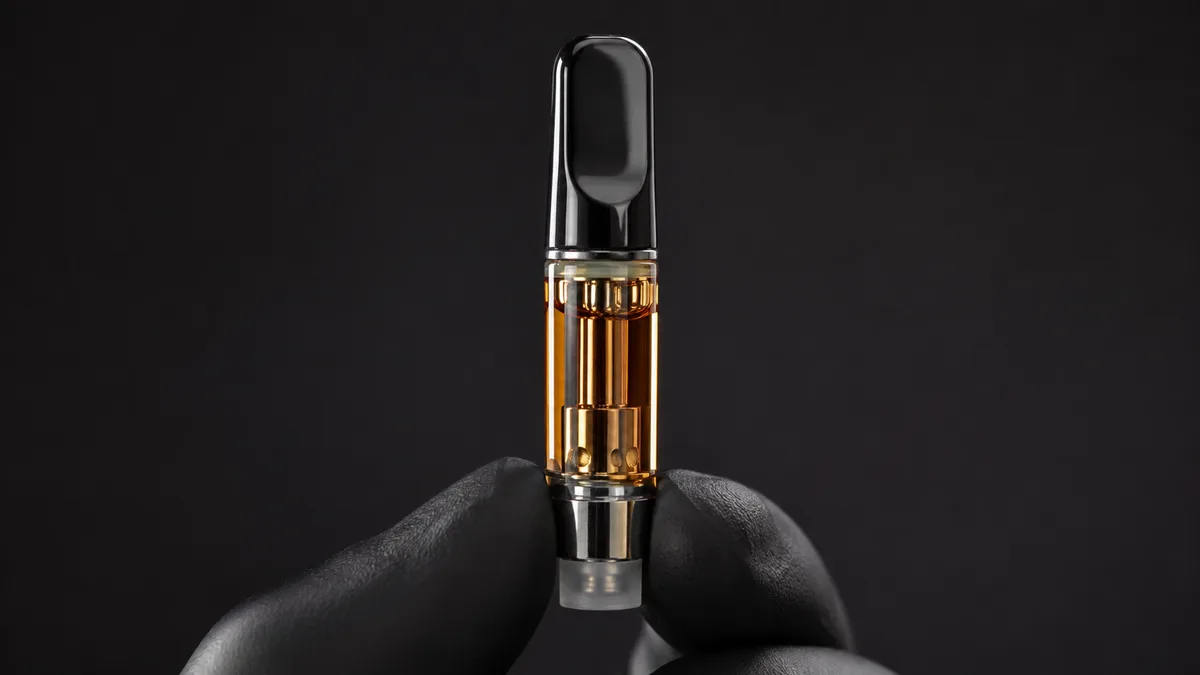
Photo: VapeExperts/AI
Hemp vapes sit in a separate legal category, but a tight one. Wyoming's 2024 Senate File 32 banned synthetic substances in hemp products, applied a 0.3% total-THC limit using post-decarboxylation testing, and pulled delta-8 and other psychoactive THC isomers into the restrictions.[4] The July decision does not newly outlaw compliant nonintoxicating CBD vaporizer products. It also does not protect delta-8, converted cannabinoids or cannabis-derived vape oil. An out-of-state label is not proof a cartridge meets Wyoming's rules.
Polls point one way, the statute another
The University of Wyoming Survey and Analysis Center has tracked state opinion for years. Its 2020 survey of 614 residents (margin of error ±4 points) found 85% support for medical cannabis with physician authorization and 75% opposition to jail for small possession.[7]
Wyoming adult support for allowing adults to possess marijuana
Source: University of Wyoming Survey & Analysis Center
National sentiment ran the same direction during the federal comment period, though the data is self-selected, not a poll. A peer-reviewed Johns Hopkins University analysis of 42,913 public comments on the 2024 rescheduling proposal found roughly 92.4% wanted cannabis moved out of Schedule I; only 6.74% opposed any change.[9] "Many commenters have lived under state legalization for medical or adult use for years already," said Hopkins addiction researcher Johannes Thrul. "Their expectation of federal policy reflects that reality."[9]
Wyoming lawmakers had a vehicle this year. Bipartisan HB166, filed February 11 to move cannabis to state Schedule III, was not considered for introduction and died on February 14.
The federal fight is not over
Two federal proceedings could reshape the landscape Kautz just opted out of.
The DEA's separate hearing on broader rescheduling of cannabis began June 29 before Chief Administrative Law Judge Derek C. Julius and must conclude by July 15. The DEA, as proponent, carries the burden of supporting a wider Schedule III placement.[5] Wyoming is not a listed participant, though Nebraska, Idaho, Indiana and Louisiana are participating together.[6]
Meanwhile, the April order itself is under attack in court. Smart Approaches to Marijuana and the National Drug and Alcohol Screening Association filed D.C. Circuit case No. 26-1106 on May 4, and state challenges have joined it in the same court.[5] We reported on those state lawsuits in earlier coverage.
Even a broader federal rescheduling would not automatically override Wyoming's criminal law. It would trigger another 30-day conformity question, and the commissioner could object again.
What to watch
- July 15: the DEA hearing must close by this date. The judge's findings and recommended decision come later, and no immediate final rule should be assumed.[5]
- D.C. Circuit No. 26-1106: if the court vacates the April order, qualifying medical cannabis could return to federal Schedule I. Wyoming's state status would not change, since it never left.[5]
- The Wyoming Legislature: Kautz's order leaves lawmakers free to alter the result by statute. Whether sponsors revive HB166-style language, revisit the 0.3-gram liquid threshold, or leave the law untouched is now the open question in Cheyenne.
- A second conformity fight: if the DEA finalizes broader rescheduling, watch whether Wyoming's commissioner files another objection under the same statute.
For now, the rule in Wyoming is simple and unchanged. No medical card, no dispensary, no reciprocity, and felony exposure for a vape cartridge that would pass as pocket change in Denver.