

Does legalizing cannabis make psychosis more common? The largest studies say the answer is not what either side of the debate wants to hear. Legal status alone shows little effect. What the data keeps flagging instead is heavy use, young users, and high-THC products.
The biggest U.S. study found nothing
A study in JAMA Network Open, published Jan. 25, 2023, tracked 63,680,589 insurance beneficiaries across the United States from 2003 to 2017. The researchers counted 7,503,907 psychosis-related diagnoses and 20,799,285 antipsychotic prescriptions, then compared states with and without legal cannabis.[1]
Rates in legal states looked slightly higher, but every estimate's confidence interval crossed 1.0. That means the differences could be due to chance. Recreational states with retail stores showed a rate ratio of 1.39, with a confidence interval of 0.98 to 1.97.[1]

Photo: VapeExperts/AI
"The findings of this study do not support an association between state policies legalizing cannabis and psychosis-related outcomes; further research into this topic may be informative," wrote lead author Holly Elser of the University of Pennsylvania.[1]
One caveat matters. The data ends in 2017, before many adult-use markets matured and before today's high-potency concentrates spread widely.[1]
Ontario's schizophrenia rate held steady, but a warning sign grew
A 2025 cohort study followed 13,588,681 Ontario residents aged 14 to 65 from 2006 to 2022. Among the 118,650 people with a documented cannabis use disorder (CUD), 8.9% developed schizophrenia. Among everyone else, the figure was 0.6%.[2]
The share of new schizophrenia cases linked to CUD nearly tripled, from 3.7% before legalization to 10.3% after. Among men aged 19 to 24, it reached 18.9%.[2]
"The proportion of incident cases of schizophrenia associated with CUD almost tripled during a period of substantial liberalization of cannabis policy," the research team led by Daniel Myran of the Ottawa Hospital Research Institute wrote.[2]

Photo: VapeExperts/AI
But the same study reported that Ontario's overall schizophrenia incidence stayed stable across the whole period. Diagnoses of psychosis not otherwise specified rose from 30.0 to 55.1 per 100,000 people, an 83.7% increase.[2]
Stores mattered more than the law
Canadian researchers have split the post-legalization era into two phases. The first, from October 2018 to February 2020, had tight rules and few stores. The second, from March 2020 onward, brought edibles, extracts, vape products, and far more retail.
A 2023 study in Molecular Psychiatry tracked 6,300 emergency department visits for cannabis-induced psychosis across Ontario's 14.3 million people. The restricted legalization period showed no change. The commercialization period brought an immediate 30% increase in visits. For people aged 19 to 24, the increase was 63%.[3] Cocaine- and methamphetamine-induced psychosis visits showed no comparable change.[3]
Hospitalization data tells a similar story. Cannabis-attributable hospitalizations rose from 3.99 per 100,000 in January 2015 to 6.46 per 100,000 in March 2021, with cannabis-induced psychosis showing the largest relative increase, a rate ratio of 1.40 during the commercialization period.[5]

Photo: VapeExperts/AI
An earlier study in the Canadian Journal of Psychiatry found that cannabis-induced psychosis ER visits in Ontario and Alberta doubled between April 2015 and December 2019. Yet its time-series models found no break at the moment of federal legalization. "Implementation of Canada's cannabis legalization framework was not associated with evidence of significant changes in cannabis-induced psychosis or schizophrenia ED presentations," the authors, led by Robert Callaghan, concluded.[4] Much of the rise was already underway before legal sales began.
Potency keeps climbing
The National Institute on Drug Abuse tracks THC levels in cannabis seized by the DEA. Average potency has quadrupled since 1995.[6]
Average THC in DEA-seized cannabis samples
Source: National Institute on Drug Abuse
Potency is where the psychosis research gets most specific. The 2019 EU-GEI study in The Lancet Psychiatry, led by Marta Di Forti of King's College London, found daily cannabis use carried 3.2 times the odds of a psychotic disorder compared with never using. Daily use of high-potency cannabis raised that to 4.8 times.[8]

Photo: VapeExperts/AI
The National Academies reached a similar conclusion in its 2017 review. Frequent use showed a stronger association with psychosis than occasional use, "suggesting a dose-response relationship between cannabis use and the risk of a psychotic outcome."[9]
What this means for flower and concentrate users
The research points to exposure, not device type. NIDA reports that dispensary flower and concentrates can exceed 40% THC, while seized flower averaged 16.14% THC in 2022.[7] A daily concentrate habit delivers a very different THC dose than occasional sessions with flower in a dry herb vape.
No study in the current evidence base shows that vaporizing flower is protective against psychosis compared with smoking when THC dose and frequency are the same. The variables the literature keeps identifying are daily use, CUD, young age of exposure, and high potency.[8] The 2025 Ontario data adds one more: a cannabis-induced psychosis episode is worth taking seriously, since people with documented CUD developed schizophrenia at 8.9%, roughly 15 times the rate of everyone else.[2]
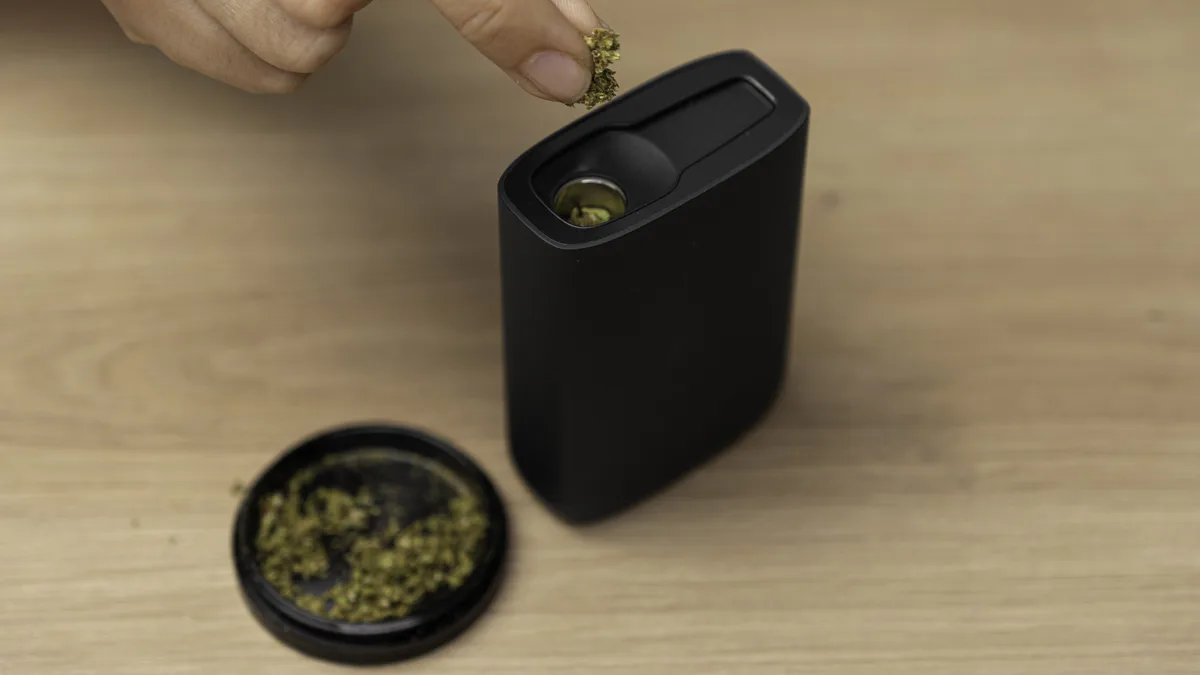
Photo: VapeExperts
A user loads ground cannabis flower into a Fenix NEO vaporizer. For flower users, experts say potency matters more than the method of consumption when it comes to psychosis risk.
This fits a pattern we covered in our look at cannabis and alcohol harm research: the headline comparisons matter less than who is using what, how often, and at what strength.
What to watch
- Will U.S. researchers update the claims data past 2017? The strongest American evidence predates most mature adult-use markets and the concentrate boom, and the study's own authors called for further research.[1]
- Do potency rules become the next policy fight? The Canadian data suggests retail expansion and product variety, not legal status, tracked with rising psychosis presentations. That points toward debates over THC caps, concentrate rules, and potency-indexed taxes rather than legalization itself.
- Can health systems act on the CUD signal? The Ontario numbers concentrate risk among young men with cannabis use disorder, which raises the question of whether screening and early-psychosis programs will start treating cannabis-induced psychosis as a sentinel event.
The next round of studies should tell us whether commercialized U.S. markets look more like Ontario after March 2020, or like the null result from 2017. We will be watching for both.