

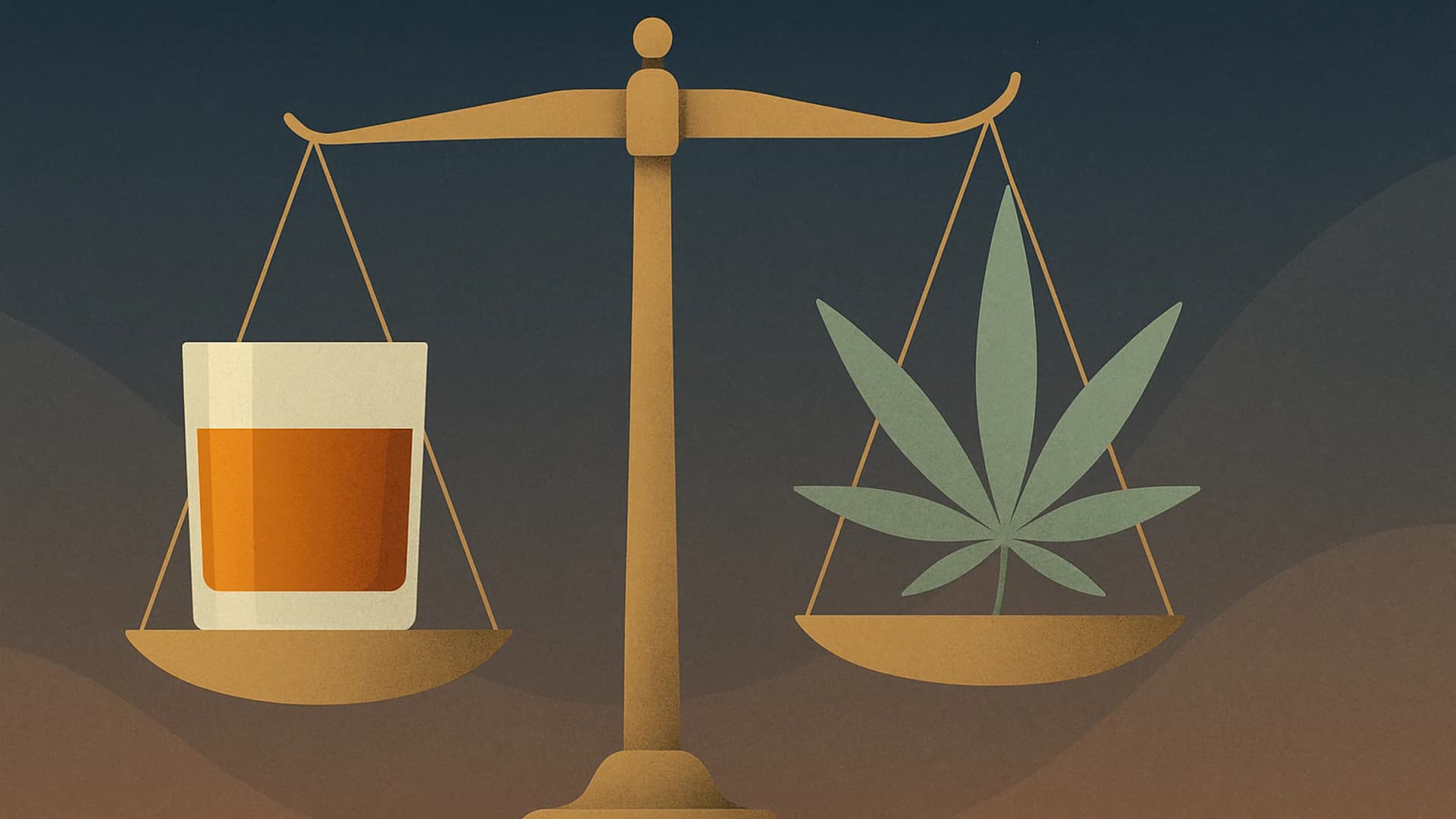
A government-funded study released in 2026 ranked alcohol the most harmful drug of 16 tested, scoring it 79 out of 100. Cannabis landed last with a score of just 15.
The gap matters because U.S. health policy is moving in two directions at once: regulators just loosened alcohol guidance while new heart research raises fresh questions about cannabis.
Alcohol topped the harm list. Cannabis came last.
A panel of 20 experts scored 16 substances across 16 dimensions of harm, both to users and to others, on a 0 to 100 scale. The work was funded by the Canadian Institutes for Health Research and published in the Journal of Psychopharmacology.
Alcohol scored 79 and ranked first in 9 of 16 harm categories[8], including physical health damage, mental impairment, injury, and economic cost.
Tobacco came second at 45. Cannabis ranked dead last at 15, according to NORML's analysis of the study.[3]
Cannabis's highest score came from organized criminal activity, a harm tied to its illegal market rather than the plant itself.
Alcohol kills about 178,000 Americans a year
Roughly 178,000 Americans die each year from excessive alcohol use, according to the CDC. That is about 488 deaths a day.
The figure is up 29% from about 138,000 deaths during 2016 and 2017. Two-thirds come from chronic conditions like cancer and liver disease. The rest come from crashes, poisonings, and suicides.
Cannabis, by contrast, has zero confirmed fatal overdoses from THC alone in recorded medical history. Unlike alcohol and opioids, THC does not strongly suppress breathing.
The Surgeon General named alcohol a top cancer cause
On January 3, 2025, then-Surgeon General Dr. Vivek Murthy issued an advisory calling alcohol the third leading preventable cause of cancer in the U.S., after tobacco and obesity.
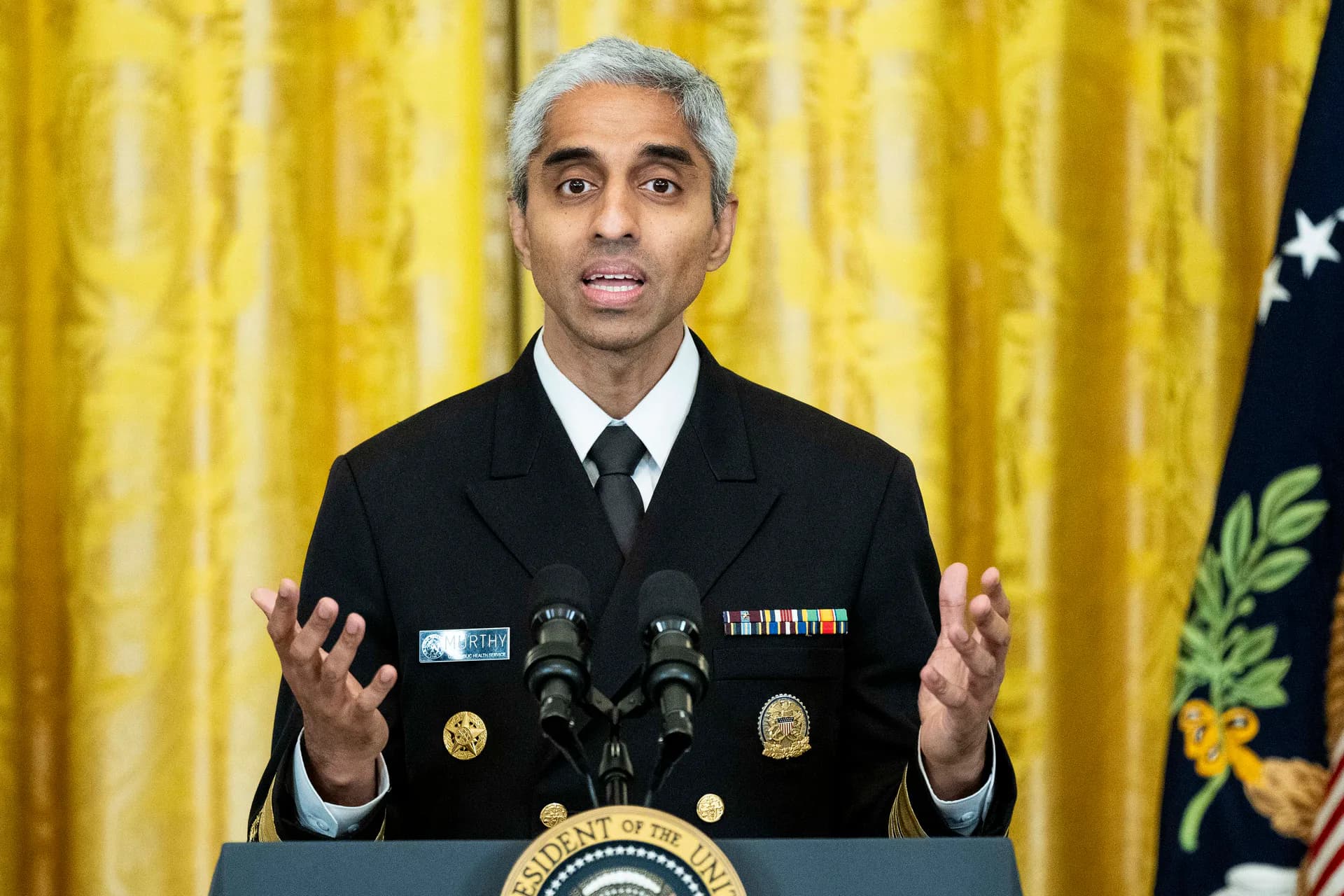
Photo: Photo: Michael Brochstein/ZUMAPRESS/Newscom
Surgeon General Vivek Murthy at the White House. Murthy called alcohol a leading preventable cause of cancer before leaving office.
Alcohol causes about 100,000 new cancer cases and nearly 20,000 cancer deaths each year. It is causally linked to at least 7 cancers, including breast, colorectum, esophagus, liver, mouth, and throat.
Brown University noted breast cancer risk climbs with as little as one drink a day.[12]
Only 45% of Americans know alcohol raises cancer risk, compared to 89% for tobacco.
"Yet the majority of Americans are unaware of this risk," Murthy wrote in the advisory.
Temple University cancer researcher Antonio Giordano pointed out that the National Toxicology Program has listed alcohol as a known human carcinogen since 2000, its highest rating.[13]
Federal guidelines dropped alcohol limits anyway
On January 7, 2026, HHS and USDA released the 2025 to 2030 Dietary Guidelines for Americans, which removed all specific daily alcohol limits for the first time since 1980.
The old rules capped men at two drinks a day and women at one. The new language reads only: "Consume less alcohol for better overall health," with no numbers.
The American Association for the Study of Liver Diseases called the removal scientifically unsound.[14]
New research complicates the cannabis safety case
Cannabis may not be harmless for the heart. Three large studies in 2025 raised concerns.
A retrospective study of 4.6 million people under age 50, presented at the American College of Cardiology and published in JACC Advances, found cannabis users had 6.2 times the risk of heart attack and more than four times the stroke risk.
All participants were free of high blood pressure, diabetes, and tobacco use at baseline. Lead author Ibrahim Kamel said cannabis use should be part of a doctor's cardiovascular workup, like asking about cigarettes.
A UCSF study of 55 people, published in JAMA Cardiology, found vascular function roughly halved in both cannabis smokers and THC-edible users.[9][10]
A meta-analysis of 24 studies in the BMJ journal Heart linked cannabis to 2.1 times the risk of cardiovascular death.[6]
The caveats are real. All three studies are observational, not randomized trials. The UCSF study had just 55 people. None rigorously separated dose, frequency, or smoked versus edible use.
Cannabis may help heavy drinkers cut back
A first-of-its-kind trial offered a twist. Researchers at Brown University tested whether cannabis directly changes how much people drink.[11]
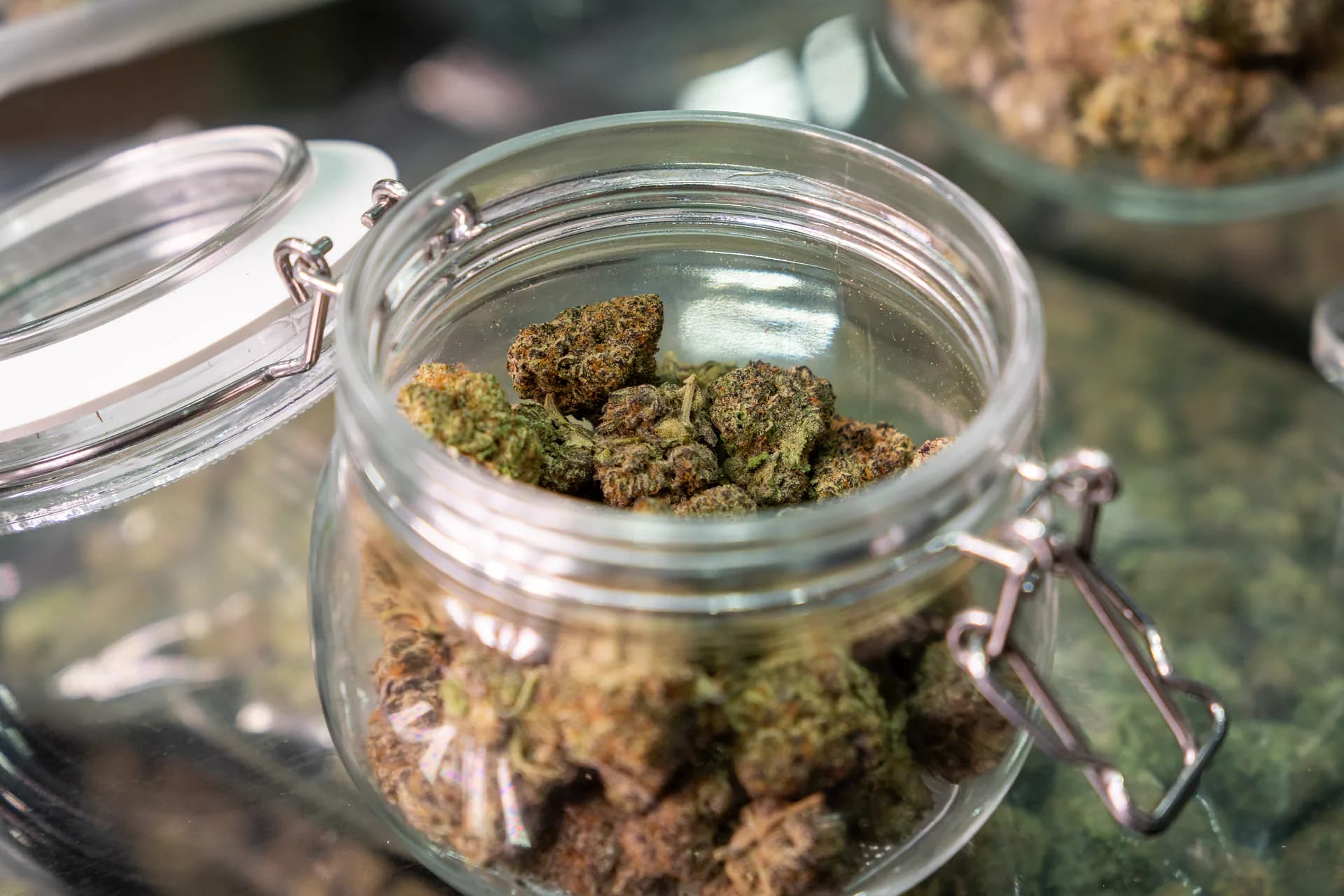
Photo: Photo: Nathalie Jamois/ZUMAPRESS/Newscom
Cannabis buds displayed at a 2025 hemp expo. The 2026 harm study scored cannabis the lowest of all substances at 15 out of 100.
The placebo-controlled trial of 157 heavy drinkers found cannabis with 7.2% THC cut alcohol consumption by 27% over a two-hour window. Cannabis with 3.1% THC cut it 19%.
"Cannabis reduced the urge for alcohol in the moment," lead researcher Jane Metrik said.
She added a warning: "We can't tell anyone yet, 'you should use cannabis as a substitute for problematic or heavy drinking.'"
What this means for you
If you weigh the two substances, the harm data still strongly favors cannabis over alcohol on death and cancer. But the 2025 heart studies are a real signal worth watching, especially if you smoke.
The UCSF finding that edibles also harmed blood vessels matters. If your reason for choosing cannabis is health, the combustion question is central. Our vaping vs. smoking guide breaks down why heating cannabis flower without burning it avoids the smoke chemicals UCSF flagged.
What happens next
The DEA's hearing on broader cannabis rescheduling begins June 29, 2026. For now, only FDA-approved marijuana products and state-licensed medical cannabis moved to Schedule III, while recreational cannabis stays Schedule I.
Researchers across both fields agree on one thing: better long-term studies are overdue. As the science fills in, the harm gap between these two substances remains the clearest finding on the table.