

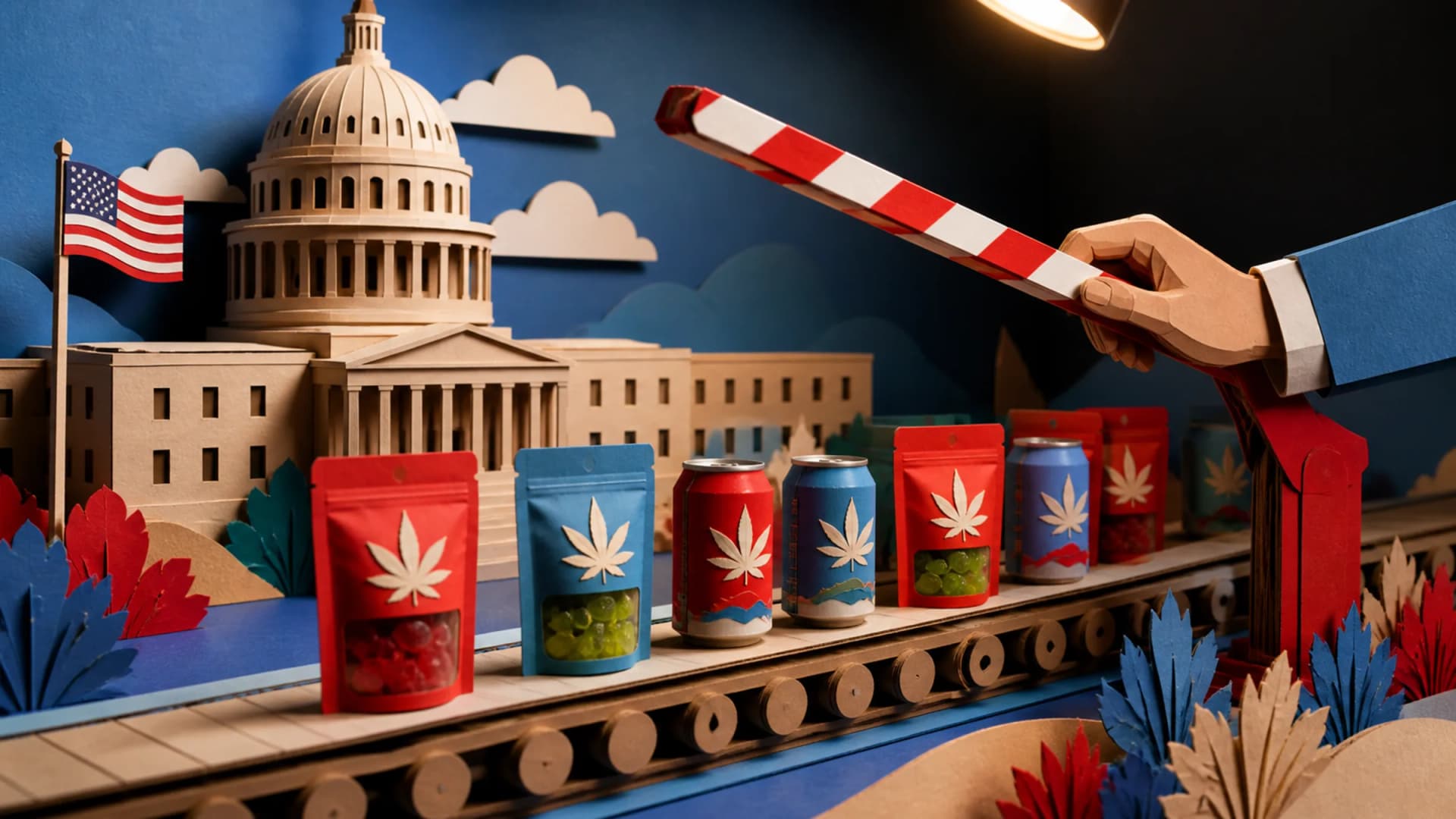
THCA flower, delta-8 products and intoxicating hemp vape cartridges may get 29 extra days of federal legality. Senate appropriators released stopgap funding text on August 2 with a provision, Section 2019, that would push most of the new federal hemp restrictions from November 12, 2026 to December 11, 2026.[2]
The delay is not law yet. Senators voted 89-4 on August 3 to advance the funding package, but that was a cloture vote on the motion to proceed, not final passage.[3] Until the Senate passes the bill, the House accepts identical language and the president signs it, November 12 remains the deadline.[1]
Photo: Martin Falbisoner/Wikimedia Commons (CC BY-SA 3.0)
Capitol at Dusk 2
We covered the underlying law in our federal hemp THC cap explainer. Here is what has changed.
What the delay would and would not cover
Section 781 of Public Law 119-37, enacted last November, rewrites the federal hemp definition. It replaces the 0.3% delta-9 THC plant test with a total-THC test that counts THCA, and it caps final consumer products at 0.4 milligrams of total THC per container.[1]
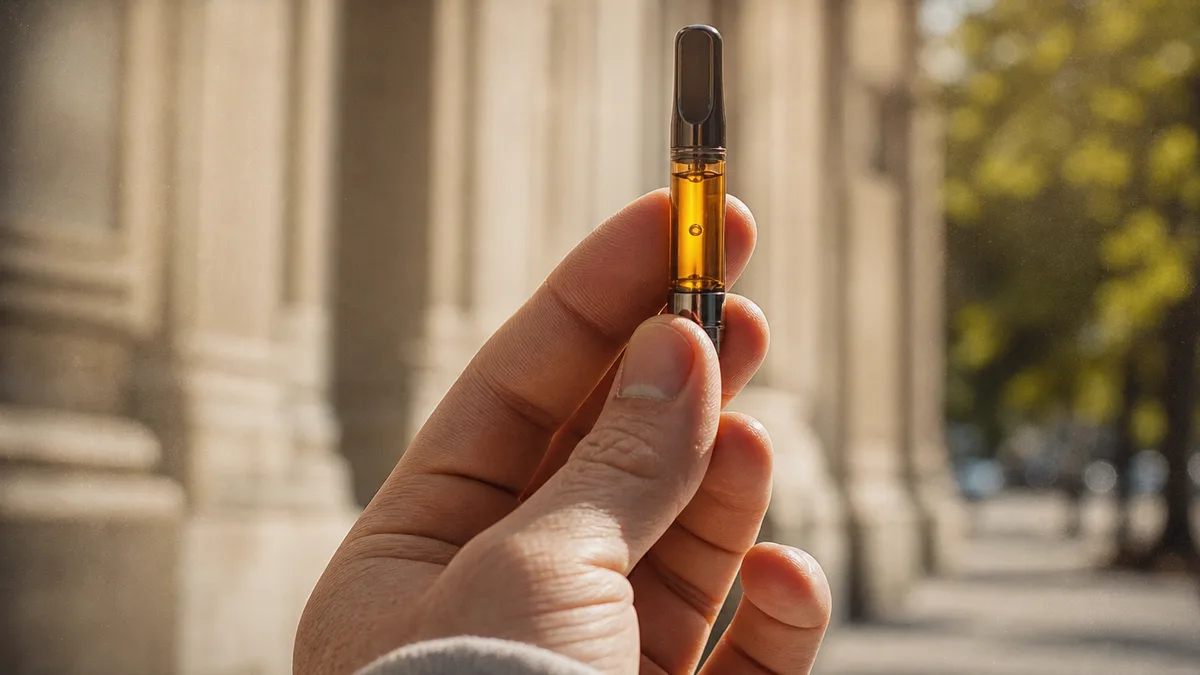
Photo: VapeExperts/AI
That cap matters for vape buyers because the law defines "container" as the innermost retail package, expressly including a cartridge. The limit applies per container, not per dose, so a standard intoxicating hemp cartridge would fall outside the hemp definition entirely.[1]
The Senate draft would postpone the total-THC test, the 0.4-milligram cap and the exclusion of naturally occurring cannabinoids made outside the plant until December 11.[2] One category still loses hemp status in November: products with cannabinoids "that are not capable of being naturally produced by a Cannabis sativa L. plant."[2]
The extension would not override state law. A product could stay federal hemp through December 10 and still be illegal in a given state.
Nov. 12, 2025
Public Law 119-37 enacted; new hemp definition set to take effect in 365 days.
Jan. 15, 2026
Sens. Klobuchar, Paul and Merkley introduce a bill proposing a longer delay.
Aug. 2, 2026
Senate appropriators release stopgap text with the Section 2019 delay.
Aug. 3, 2026
Senate votes 89-4 for cloture on the motion to proceed to the funding vehicle.
Nov. 12, 2026
Current-law effective date for the new hemp definition.
Dec. 11, 2026
Proposed delayed date, coinciding with the funding bill's expiration.
Minnesota senators pushed the provision
Sen. Amy Klobuchar, D-Minn., whose state built a regulated market for low-dose hemp THC edibles and drinks in 2022, took credit for the language in an official release.[5]
"This delay was immediately necessary to give Minnesota hemp producers and customers certainty, while giving Congress more time to get to a long-term fix," Klobuchar said.[5]
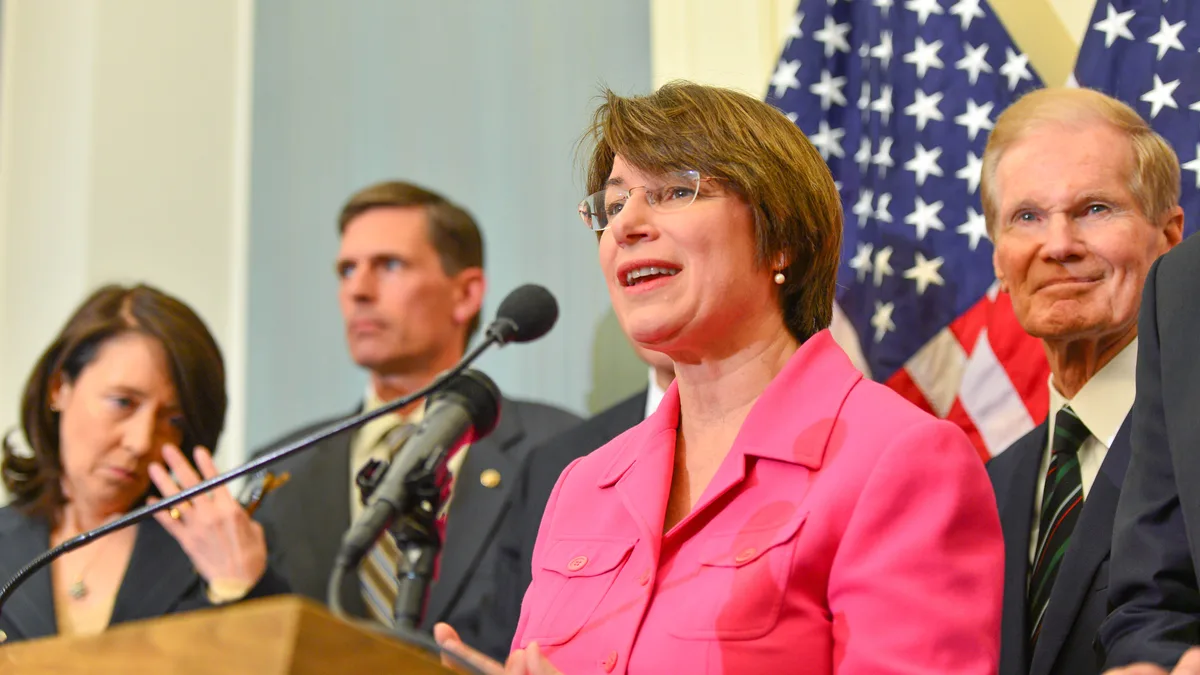
Photo: Senate Democrats/Wikimedia Commons (CC BY 2.0)
A U.S. senator speaks at a podium during a press conference on FAA reauthorization legislation, flanked by colleagues and American flags. Minnesota senators pushed a provision to delay a hemp THC ban by 29 days.
A longer-term alternative already exists in the House. H.R. 9830, from Reps. Andy Barr and Angie Craig, would regulate hemp products with a 21-plus purchase age, testing rules and FDA-set potency standards instead of the 0.4-milligram cap.[8] We covered that bill when it was introduced.
35 attorneys general want the delay killed
Opposition arrived fast. On August 4, a bipartisan coalition of 35 state and territorial attorneys general, including California's Rob Bonta, New York's Letitia James and Indiana's Todd Rokita, urged congressional leaders to reject the extension.[6]
"We respectfully urge Congress to continue that leadership by rejecting any effort to delay, repeal, suspend, or weaken the November 2025 redefinition of 'hemp'," the letter said.[6] Smart Approaches to Marijuana, which said it helped organize the letter, also reported that Sen. Ted Budd, R-N.C., is preparing an amendment to strike the hemp provision; no amendment text had been filed as of publication.
The evidence on regulation versus prohibition is contested. A 2024 JAMA study of 2,186 12th graders found past-year delta-8 use was highest in states with no delta-8 rules, and its authors wrote that state-level regulations "may be associated with lower adolescent use."[9]
Past-year delta-8 use among U.S. 12th graders, 2023
Source: JAMA
What 29 days buys shoppers, and what it does not
If the delay becomes law, THCA flower, hemp delta-9 drinks and gummies, most delta-8 products and intoxicating hemp cartridges could stay in interstate commerce through December 10.[2] That would ease the pressure for November liquidation sales and keep online and smoke-shop shelves stocked a few weeks longer.
It changes little for manufacturers. A one-month reprieve is too short to justify new production runs or harvest contracts, and vape makers carry the highest exposure because the cartridge itself is the regulated container. Whitney Economics has pegged hemp-derived cannabinoid retail sales at roughly $28 billion a year, an industry-used estimate rather than government data.
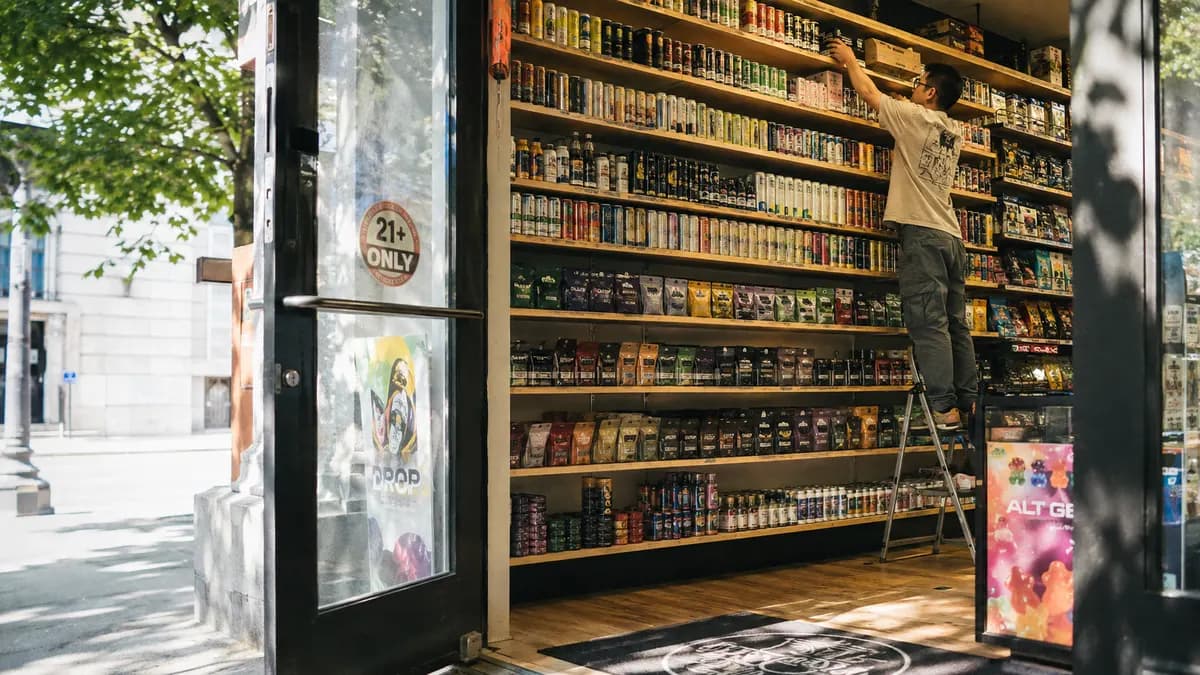
Photo: VapeExperts/AI
The House complicates the math. It passed a different stopgap, H.R. 9770, which funds the government only through December 4 and contains no hemp language, so the two chambers must reconcile their bills before anything reaches the president.[4]
MC Nutraceuticals, a Colorado hemp-ingredient maker, summed up the industry's read of the moment: "This industry lobbied for its life, and moved the line."[7] The line moved 29 days. Section 2019 expires with the funding bill on December 11, which means the same cliff returns the moment this one is cleared.