

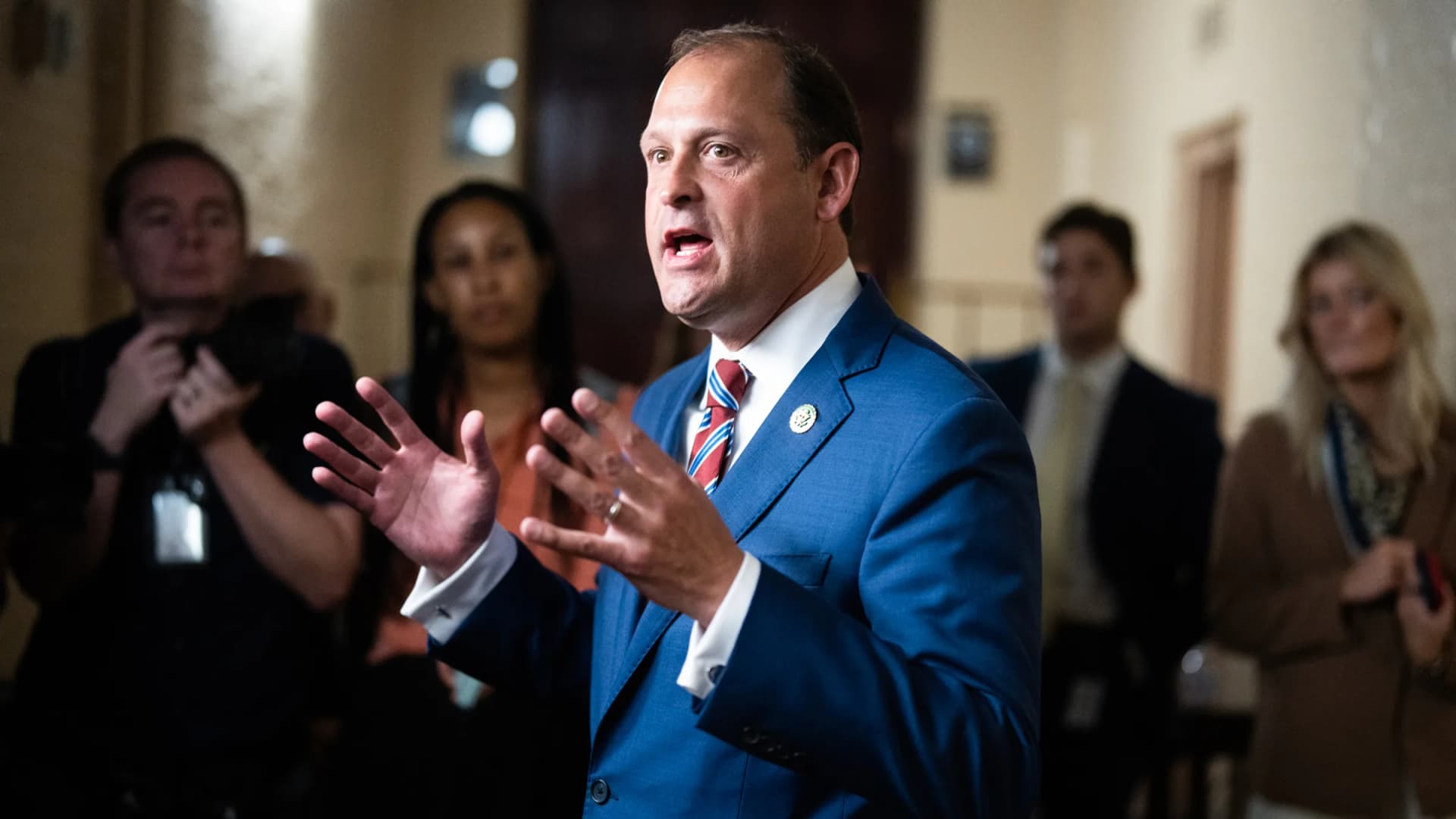
Congress has 110 days to decide whether most hemp THC products stay legal. On July 22, Reps. Andy Barr, R-Ky., and Angie Craig, D-Minn., introduced the Lawful Hemp Protection Act, a bipartisan bill that would replace the near-total federal restriction on consumable hemp products set to take effect November 12, 2026.[1]
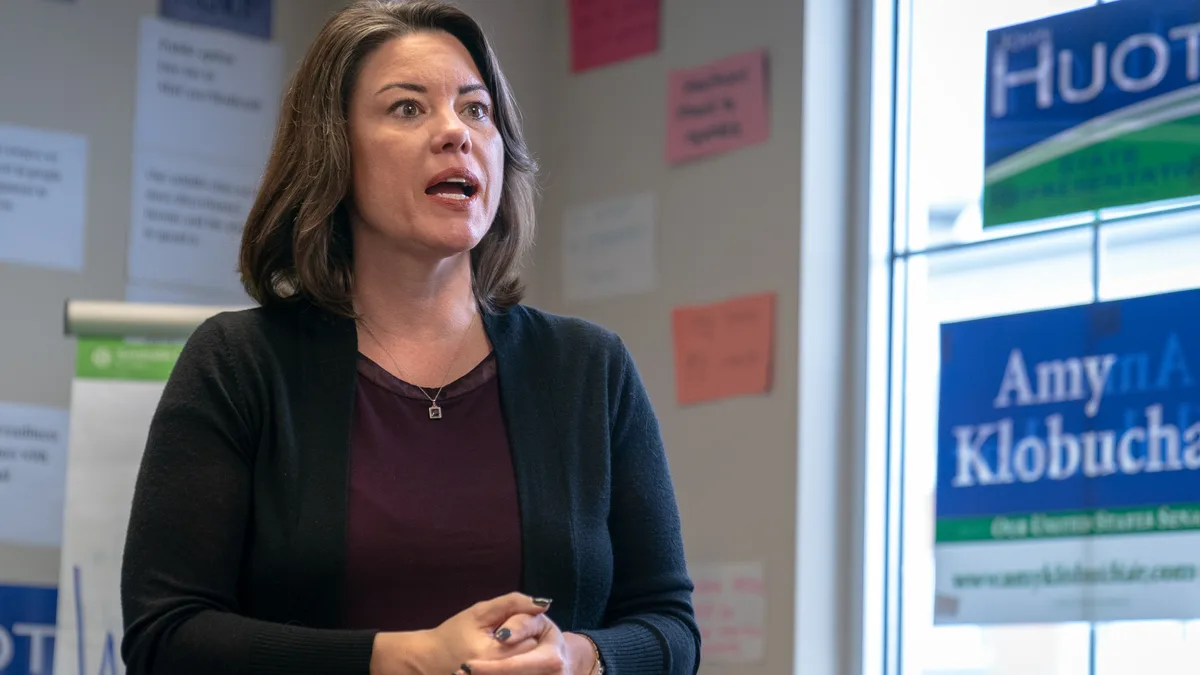
Photo: Lorie Shaull/Wikimedia Commons (CC BY-SA 2.0)
Rep. Angie Craig speaks at a campaign event in Apple Valley, Minnesota. Craig represents a state where lawmakers are weighing a new hemp bill to replace the November THC ban with rules.
Barr's office describes the measure as the first comprehensive federal framework for hemp-derived consumer products. His office also told reporters the White House approved the legislation.[5] A June 24 letter from White House budget director Russell Vought had already asked House Speaker Mike Johnson to adopt Barr's approach or, at minimum, delay the November restrictions.[2] We found no public statement from President Donald Trump personally endorsing the bill.
The law it would replace catches more than delta-8
Section 781 of Public Law 119-37, signed November 12, 2025, rewrites the federal hemp definition 365 days after enactment. We covered that law when it passed in our earlier report. It replaces the 0.3% delta-9 THC test with a 0.3% total THC test that expressly counts THCA. It caps finished hemp products at 0.4 milligrams of total THC per container. It excludes cannabinoids made outside the plant. Products that fall outside the definition become marijuana under the Controlled Substances Act.[3]
The container cap reaches far beyond intoxicating gummies. Full-spectrum CBD oils with trace THC, beverages, tinctures and vape cartridges all exceed 0.4 milligrams per container once the math runs across a whole bottle or cart.
What the Barr-Craig bill changes
According to Barr's summary, the bill would raise the hemp threshold to 1% total THC by dry weight, restrict sales to adults 21 and older, require testing through the production chain, mandate child-resistant packaging and health warnings, and require consumable products to be grown, processed and packaged in the United States.[1] It directs the FDA to set maximum cannabinoid limits within 12 months, keeps synthetic and artificially modified cannabinoids illegal, and preserves interstate commerce while letting states impose stricter rules.
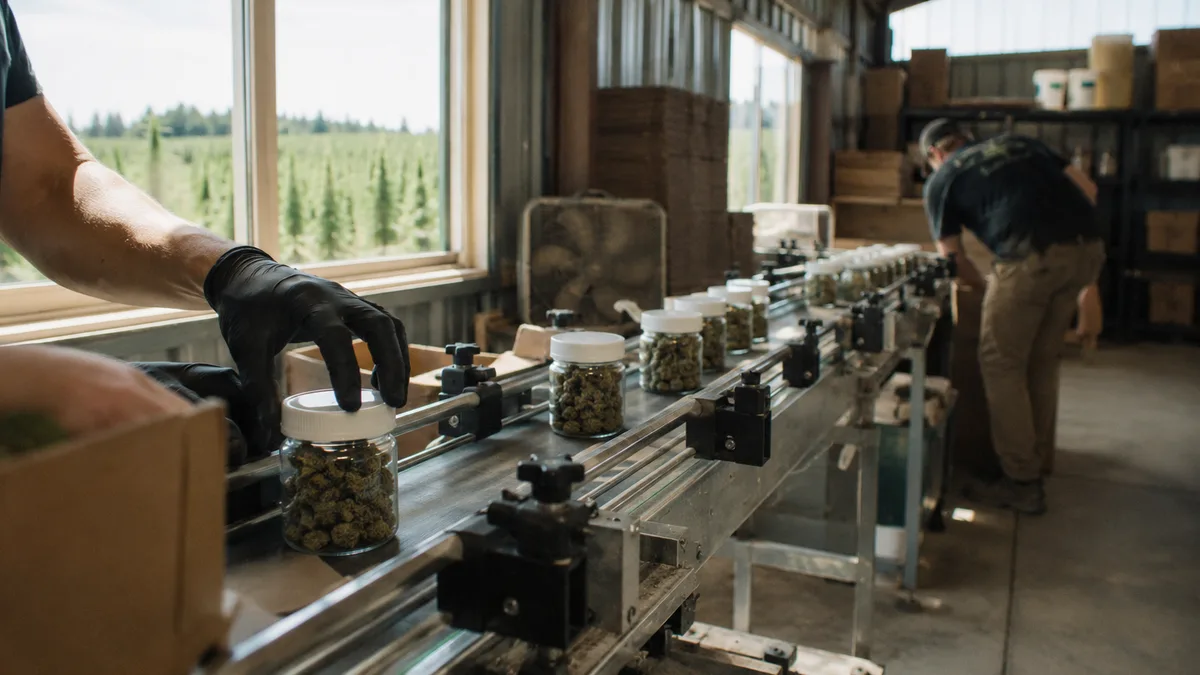
Photo: VapeExperts/AI
It also builds a tax and distribution system. Hemp beverages would pay 5 cents per milligram of THC, about $0.25 on a 5-milligram can, and move through an alcohol-style three-tier system of manufacturers, wholesalers and retailers. Other THC consumables would pay 5% of retail price.[4]
The U.S. Hemp Roundtable, which supported the bill's development, says fallback limits would apply if the FDA misses its deadline: 5 mg THC for ingestible products and 50 mg THC for inhalables and topicals. Those numbers come from an industry summary, not a published bill text, and the official text was not yet posted as of this writing. Whether the inhalable limit applies per serving or per package remains unconfirmed.
THCA flower stays on the wrong side of the line
The 1% threshold helps farmers whose crops drift slightly hot. It does not help the smokable and vapable THCA flower market. Commercial THCA flower commonly tests at 15% to 25% THCA. Flower at 20% THCA sits roughly 20 times above the proposed 1% limit, before the molecular-weight conversion used in total-THC calculations.
For readers who grind hemp flower into a dry herb vaporizer, that means the Barr-Craig bill is not a rescue. Only unusually low-THCA flower under the 1% line would clearly qualify as hemp based on the available summary.
Carts face a 50-milligram question
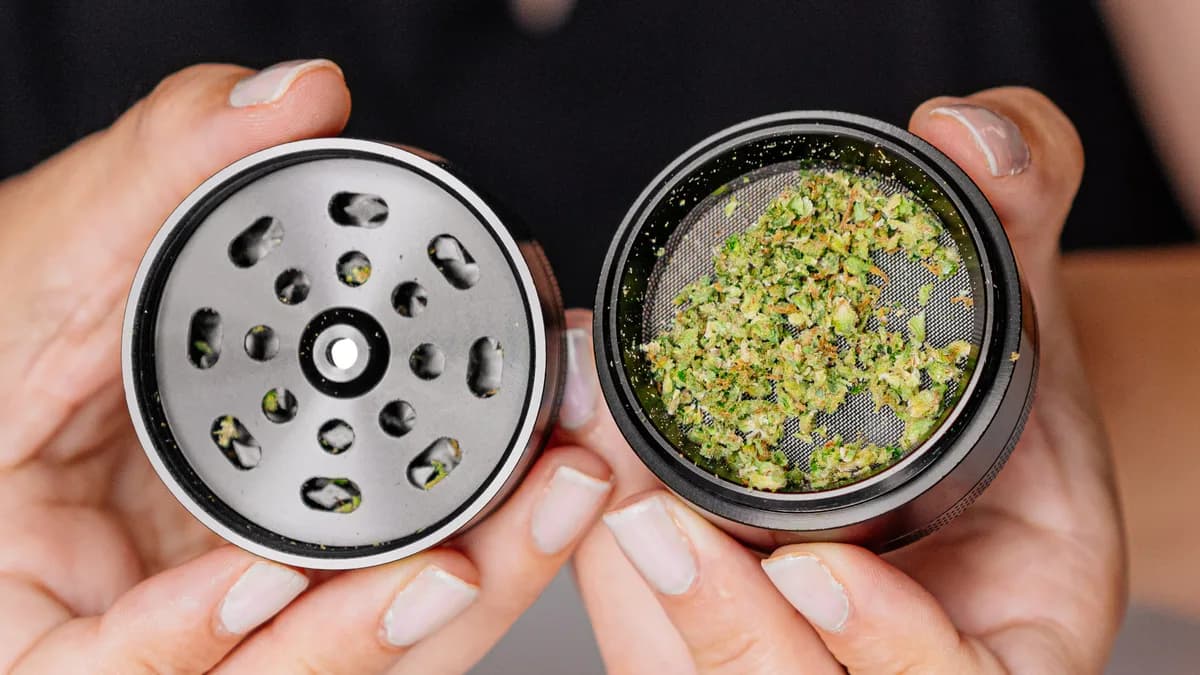
Photo: VapeExperts
A user holds an open grinder filled with ground flower prepared for an Arizer Air MAX vaporizer. THCA flower like this would remain prohibited even under the bill's proposed rules replacing the November THC ban.
The math is harder still for cartridges. A one-gram cart testing at 80% THC holds roughly 800 mg of THC, about 16 times the reported 50-milligram fallback for inhalables if that limit applies per package. A metered vape with multiple legally defined servings might fare differently, depending on FDA rules and the bill's final definitions.
Most delta-8 carts face a separate wall. Commercial delta-8 is generally made by chemically converting CBD, because the plant produces delta-8 only in trace amounts, according to research from Ohio State University's Drug Enforcement and Policy Center.[6] The bill bans cannabinoids synthesized or modified outside the plant, the same exclusion as current law.
The likeliest survivors are full-spectrum CBD products with non-intoxicating trace THC, plus low-dose edibles and beverages. A 5-milligram gummy or drink would be illegal under the 0.4-milligram container rule but could qualify under the reported fallback limits.
Farmers, drinks and poison-center calls
The stakes reach past vape shops. USDA reported U.S. hemp production value of roughly $739 million in 2025, up about 64% from the prior year, with $482.6 million of that in floral and cannabinoid hemp.[7] Craig said the bill would give "regulatory clarity to Minnesota farmers, brewers and small business owners" and counter "short-sighted federal policies that threaten Minnesota jobs and consumer choice."[1]
Photo: VapeExperts/AI
Supporters of the November restrictions point to child safety. A 2026 Journal of Addiction Medicine study found poison-center calls for cannabis exposures among children 12 and under rose from 153 in 2009 to 11,324 in 2024.[9] Lead author Raymond E. Bertino of the University of Illinois College of Medicine Peoria said possible fixes include "review of federal cannabis policy, improvement of child-resistant packaging, further limiting the maximum THC per edible package, and increased vigilance by parents and cannabis users." The data cover cannabis products broadly, not hemp alone.
Barr says his bill answers those concerns with regulation rather than prohibition. The framework, he said, "allows this important industry to continue to grow while ensuring products are safe and kept out of the hands of children."[1]
A late start against a hard deadline
The bill arrived fewer than four months before the deadline, and its path is unclear. Barr's earlier version, Amendment 54 to the FY2027 agriculture spending bill, was denied a House floor vote in June. As of July 23, no committee markup, floor schedule or Senate companion for the full framework had surfaced.[5]
Nov. 12, 2025
Trump signs Public Law 119-37. Section 781 restrictions take effect in 365 days.
Nov. 17, 2025
Rep. Nancy Mace files H.R.6209 to repeal Section 781 outright.
Jan. 13, 2026
Rep. Jim Baird files H.R.7024 to push the deadline to November 2028.
May 28, 2026
Barr offers Amendment 54 to the FY2027 agriculture spending bill.
June 2, 2026
The House Rules Committee declines to allow a floor vote on the amendment.
June 24, 2026
OMB Director Vought asks Congress to adopt the framework or delay Section 781.
July 22, 2026
Barr and Craig introduce the standalone Lawful Hemp Protection Act.
Nov. 12, 2026
Section 781 restrictions take effect unless Congress acts.
A simpler off-ramp already exists. Rep. Jim Baird's Hemp Planting Predictability Act would stretch the implementation period to three years, moving the deadline to November 2028.[8] The Vought letter explicitly named an extension as an acceptable fallback.[2]
Christopher Lackner, president of the Hemp Beverage Alliance, is not waiting for that debate to resolve. "Representative Barr's bill is a smart, bi-partisan, stakeholder-supported solution," he said. "We urge Congress to fast-track this legislation."[1]
Photo: VapeExperts/AI
Fast is the operative word. Unless a markup, a Senate sponsor or a spending-bill rider changes the picture, the 0.4-milligram container rule becomes federal law on November 12.