

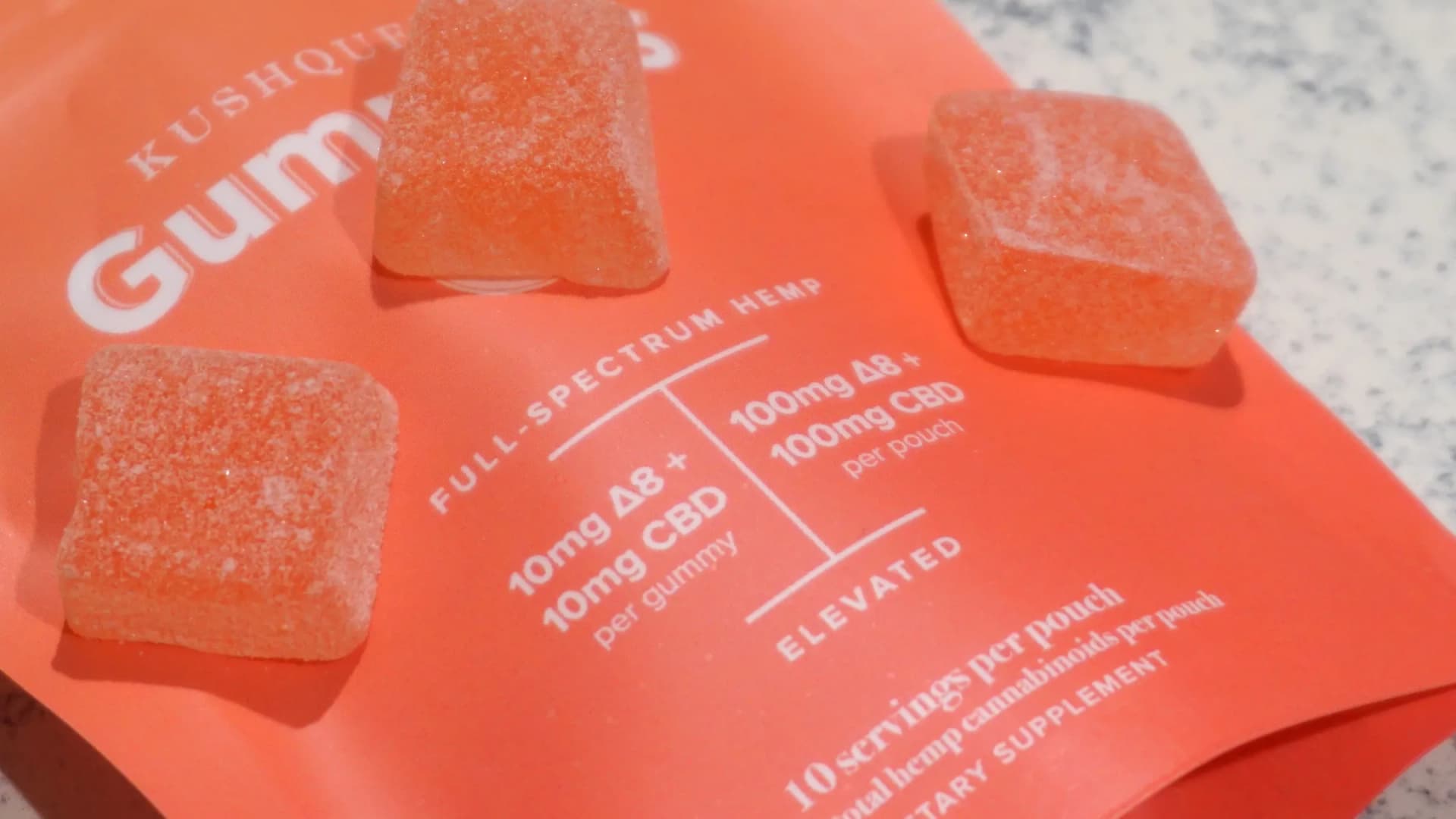
A delta-8 gummy that was legal to buy in Texas on July 30 can now support a felony charge. On July 31, a long-delayed Texas Department of State Health Services classification took effect, making manufactured delta-8 THC and similar cannabinoids Schedule I controlled substances under state law.[1]
The change covers possession, not just retail sales. And it did not come from a new law. DSHS reinstated schedule language it first adopted in 2021, published in the July 10 Texas Register, after the Texas Supreme Court ruled in May that the health commissioner had the authority all along.[3]
Marijuana law did not change. Neither did the rules for compliant hemp-derived delta-9 products. Two weeks in, that combination is producing confusion in shops, felony exposure for consumers, and record cannabis sales across the New Mexico line.
A gummy can now be charged harder than a bag of flower
The scheduling covers commercially manufactured delta-8, delta-10, delta-6, THCP and other non-delta-9 THC compounds made by converting CBD or otherwise concentrating cannabinoids beyond what hemp naturally contains. Only trace amounts occurring naturally in compliant hemp fall outside it.
Photo: VapeExperts/AI
DSHS put its enforcement position plainly in a statement: "Effective July 31, 2026, more than trace amounts of any THC other than delta-9 are considered controlled substances. These products are subject to detention/embargo and referral to law enforcement."[1]
Guidance from the Texas District & County Attorneys Association says delta-8 possession starts as a state-jail felony, charged by weight under Section 481.116. For less than one gram, that means 180 days to two years in a state jail and a fine of up to $10,000. Texas commonly counts the weight of the whole mixture, not just the active THC, so a package of gummies can weigh in far above one gram.[2]
Marijuana sits under a different statute. Possession of two ounces or less of cannabis flower remains a Class B misdemeanor under Texas Health and Safety Code Section 481.121.[2]
A single delta-8 gummy can now carry a heavier charge than a small bag of marijuana.
What stays legal on the shelf
Compliant hemp-derived delta-9 edibles, beverages and tinctures remain legal, provided they meet Texas testing rules and stay within the 0.3 percent dry-weight ceiling. Non-intoxicating CBD, CBG and CBN products were not targets of the July 31 action. The Texas Compassionate Use Program still supplies low-THC cannabis, capped at 10 milligrams of THC per dosage unit, to registered patients.[4]
THC vapes are a separate trap. A 2025 Texas law already prohibits retail sales of vape products containing cannabinoids, so a cartridge can be illegal to sell even if its delta-9 content is otherwise compliant. That prohibition predates the July 31 change and stands on its own.
A second set of DSHS rules, in effect since March 31, complicates THCA flower. Those rules count THCA toward a total-THC calculation and add testing, packaging and fee requirements. An appeals court lifted the injunction against them on June 5, and the industry's effort to restore it is pending in the Fifteenth Court of Appeals as case 15-26-00099-CV, where plaintiffs filed briefing in mid-August.
Police say possession counts, not just retail
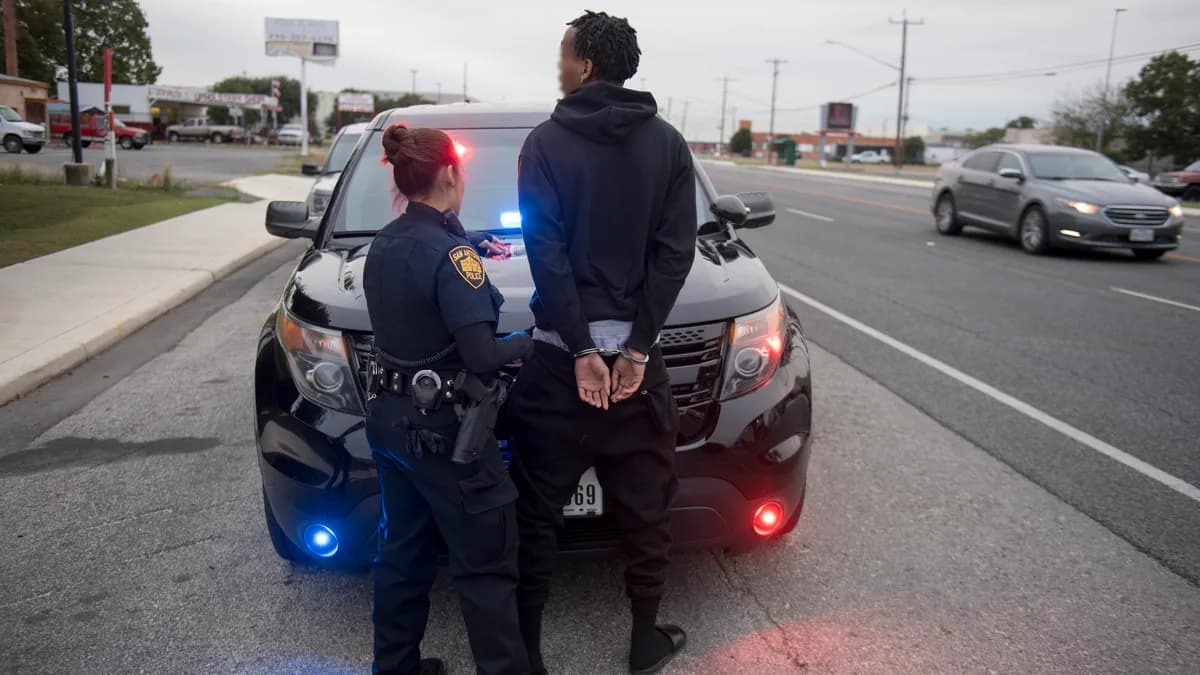
Photo: Office of Public Affairs from Washinton DC/Wikimedia Commons (Public domain)
Operation Triple Beam San Antonio 2017-31 (38974589982)
Law enforcement has confirmed it will treat the covered products as controlled-substance cases. "The San Antonio Police Department will follow Texas law and will enforce the reclassification of Delta-8, Delta-10 and other hemp derived cannabinoids as Scheduled 1 controlled substances," a department spokesperson told Texas Public Radio.
The Bexar County District Attorney's Office said it will "continue to prosecute any possession, sale, or delivery of any controlled substance that our legislature has identified as illegal," with cases reviewed using certified crime-lab results.
Austin police advised consumers to keep legal hemp products in original packaging so officers can see the labeled delta-9 concentration. KUT noted the limit of that advice: packaging does not make a delta-8-labeled product legal, and APD did not explain how an officer would identify the cannabinoid in a gummy without lab testing.
May 1, 2026
The Texas Supreme Court rules DSHS had authority to schedule manufactured delta-8.
June 5, 2026
The court issues its mandate, clearing the way for enforcement.
July 10, 2026
DSHS publishes the reinstated Schedule I definitions in the Texas Register.
July 31, 2026
The definitions take effect; delta-8 possession becomes a felony.
Aug. 1, 2026
Hemp retailers and a distributor file a federal challenge to the ban.
Aug. 9, 2026
A federal judge denies an emergency order to block enforcement.
A federal judge let the ban stand
On Aug. 9, U.S. District Judge Jeffrey Brown denied an emergency temporary restraining order sought by two retailers, a distributor and a consumer, finding they had not shown irreparable harm, Bloomberg Law reported. A fuller preliminary-injunction request remains pending, with the plaintiffs arguing the state rules conflict with the 2018 Farm Bill and burden interstate commerce.
"Being denied one at this stage does not decide our case. We expected a hard fight, and we remain confident in the law," lead counsel Andrea Steel told the Texas Tribune.
Justice Evan A. Young framed the state court's view of where the fight belongs. "If the legislature desires to legalize powerful drugs, it has every tool it needs to do so, and to do so unmistakably, as we expect for such a major change to social policy," he wrote in the Sky Marketing opinion.[3]
The border is absorbing the demand
New Mexico sells adult-use cannabis to anyone 21 or older, resident or not. June sales data from the state's licensing regulator, reported by the El Paso Times, show outsized volume in towns serving the El Paso market. Sunland Park, a town pressed against the Texas line, sold more than $5 million of cannabis in a single month.
June 2026 cannabis sales in New Mexico border towns
Source: New Mexico Regulation and Licensing Department, via El Paso Times
Statewide, New Mexico logged roughly $46.9 million in combined sales in June and about $49.8 million in July across 1,256,210 transactions. The sales data does not record purchasers' home states, though geography and operator reports point at El Paso. For broader travel context, see our guide to legal cannabis destinations.
The legal line has not moved, only the shoppers. Cannabis bought legally in a Sunland Park dispensary becomes contraband the moment it crosses back into Texas, and a New Mexico receipt or medical card is no defense under Texas possession law.
Both sides claim the health evidence
Photo: VapeExperts/AI
Supporters of the crackdown point to safety data. The FDA logged 104 adverse-event reports involving delta-8 between December 2020 and February 2022, with 55 percent requiring intervention or hospital admission; poison centers recorded 2,362 exposures in roughly the same window, 41 percent involving patients under 18.[5] "It's about time, Texans need to know that this industry does not sell safe products," Aubree Adams of Citizens for a Safe and Healthy Texas told the Texas Tribune.
Product testing backs some of that concern, at least for vapes. University of Rochester researchers who tested 27 delta-8 vape products from 10 brands found none accurately labeled for delta-8 content, unlabeled cutting agents in 11, synthesis byproducts in all of them, and metals including nickel, chromium, lead and mercury. The study supports tighter testing and manufacturing rules; it does not test whether criminalizing possession works better than regulating production.
Critics argue prohibition redirects demand rather than ending it. A 2024 study in JAMA found 11.4 percent of U.S. 12th-graders reported past-year delta-8 use, with higher use in states without legal adult-use cannabis or delta-8 regulations.[6] "It's recriminalizing a lot of cannabis products that have been completely legal and allowable in the state for many years," said Sarah Todd of the Texas Cannabis Policy Center.
Retailers pivot while the deadlines stack up
Photo: VapeExperts/AI
Texas had more than 14,000 registered hemp retail locations before the ban, including 974 in Austin, spanning smoke shops, convenience stores, restaurants and bars. Industry figures quoted by the Texas Tribune estimate the change removes 60 to 90 percent of THC products from some retailers' shelves; that is an industry estimate, not an audited count.
Many shops are shifting to compliant delta-9 inventory rather than closing. Lukas Gilkey, CEO of Hometown Hero, said delta-8 was only about 5 percent of his company's sales but described the cumulative state pressure bluntly: "Their strategy is now to kill us by death by a thousand paper cuts."
The next shock arrives from Washington. On Nov. 12, unless Congress intervenes, Public Law 119-37 narrows the federal hemp definition to a total-THC standard, excludes manufactured cannabinoids, and caps finished products at 0.4 milligrams of total THC per container, a limit that would reach even the delta-9 drinks and gummies Texas still allows.[7]
Photo: VapeExperts/AI
For now, consumers navigate five overlapping legal regimes: the July 31 schedule, the March hemp rules, the 2025 vape-sales ban, ordinary marijuana law and the coming federal change. Robin Scoville, who works at Austin Vape and Smoke, described what that looks like behind the counter. "We really try to stay up to date on the information we tell people, because there's misinformation everywhere," she told KUT. "It's just like a tug of war of confusion."