

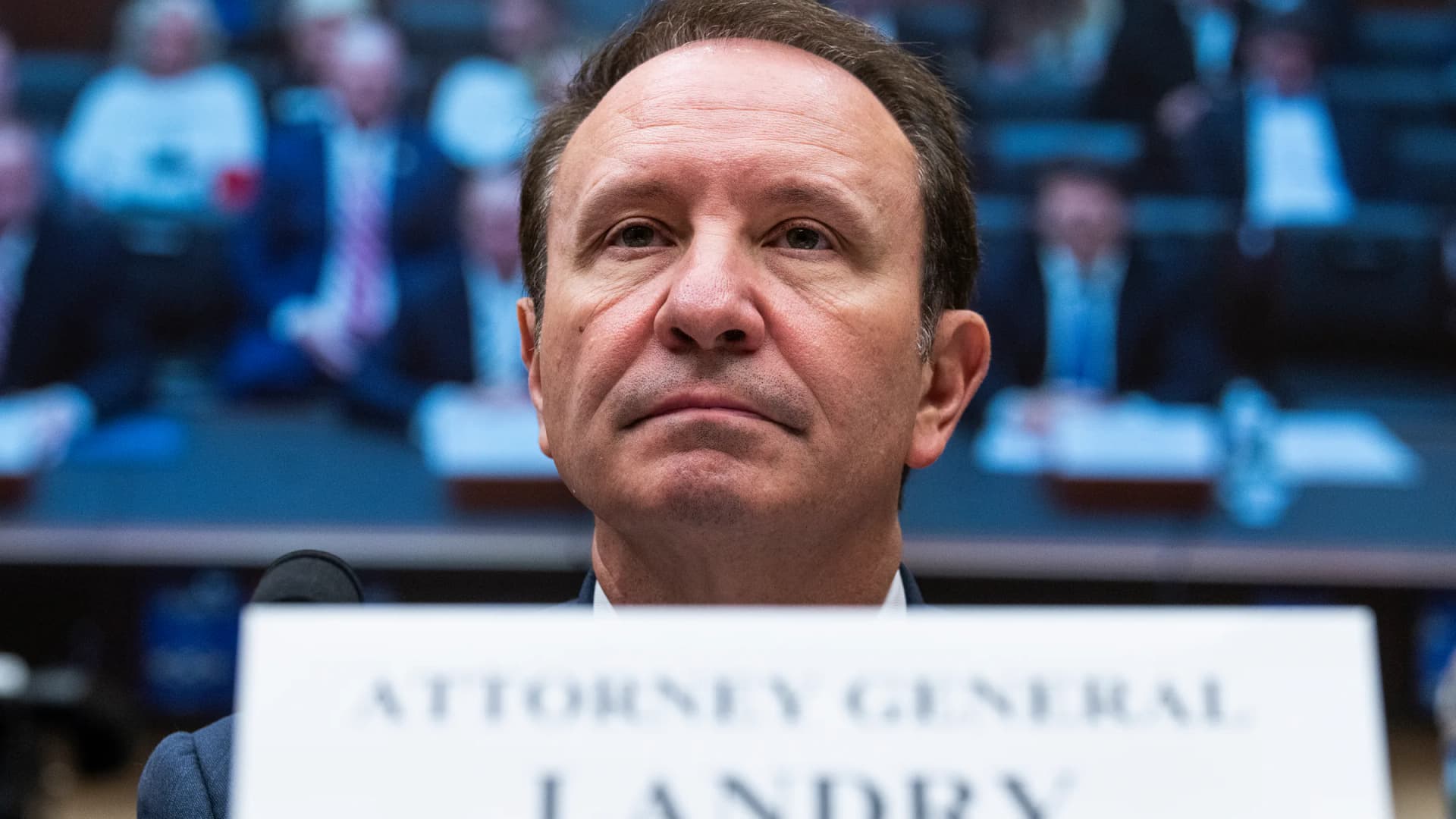
Two Republican state attorneys general are now trying to undo the medical marijuana win that landed in April. Indiana and Nebraska filed a lawsuit asking a federal court to vacate the order that moved medical cannabis from Schedule I to Schedule III.[1]
If they succeed, medical cannabis products dispensed under state licenses, including vaporizer flower and concentrates, could revert to Schedule I.
This is the legal fight we flagged when cannabis got rescheduled but not the way you think. The challenge has now landed in court.
Indiana and Nebraska are the last two states standing
The petition was filed May 22, 2026 in the U.S. Court of Appeals for the District of Columbia Circuit, the country's main federal regulatory court.
It started with three states: Indiana, Nebraska, and Louisiana. All three attorneys general are Republicans.
Then Louisiana withdrew on May 29. AG Liz Murrill filed a motion to drop out and gave no explanation.[3] The DOJ did not oppose it.
Louisiana runs an established medical marijuana program. Suing to block a rule that helps state-licensed medical programs put the state in an awkward spot.
What the order actually did
On April 22, 2026, Acting Attorney General Todd Blanche signed AG Order No. 6754-2026. It immediately moved two categories of marijuana to Schedule III.
Those two categories are FDA-approved marijuana drug products and marijuana sold under a qualifying state-issued medical license.
Adult-use marijuana, unlicensed bulk marijuana, and synthetic THC stayed in Schedule I.
The Justice Department framed it as delivering on a Trump promise to expand medical treatment options. Blanche said the move allows research on the safety and efficacy of the substance.
The lawsuit is about process, not science
The states are not arguing that cannabis is dangerous medicine. They are arguing the government broke the rules to reschedule it.
Blanche used a treaty-obligation pathway under the Controlled Substances Act. That route lets the attorney general reschedule a drug without the normal notice-and-comment rulemaking, public hearing, and HHS scientific review.
The petition says the order violates the Administrative Procedure Act, exceeds the AG's authority, and is "arbitrary, capricious, an abuse of discretion, and not in accordance with law." It asks the court to "declare unlawful and vacate this final agency action."
Indiana AG Todd Rokita's office said one of its top priorities is protecting Hoosier families and young people from the dangers of expanded marijuana access.
Standing may decide everything
Before the court touches the legal theory, the states have to prove they were harmed. That question, called standing, may be the whole ballgame.
Indiana has the strongest case. It bans both medical and recreational marijuana and is one of roughly 10 states with no legal sales. It can argue rescheduling increases cross-border flow into the state.
Nebraska is weaker. Nebraska voters approved medical marijuana in 2024, which creates tension with an AG suing to block a rule that helps those programs.
Jocelyn Brasher, a Nebraska Democratic candidate for attorney general, said voters should be outraged that taxpayer money is being spent to fight a reform they overwhelmingly approved at the ballot box.
Three lawsuits, one consolidated case
The state petition is not alone. The D.C. Circuit consolidated three challenges under Case No. 26-1136 on May 27.
| Petition | Filed | Who | Detail |
|---|---|---|---|
| SAM / NDASA | May 5 | Smart Approaches to Marijuana; drug screening group | Represented by former AG William Barr's firm |
| State AGs | May 22 | Indiana, Nebraska (Louisiana withdrew) | All Republican AGs |
| Coalition | ~May 29 | Doctors, addiction services, MMJ International Holdings | Names Trump personally as a defendant |
Kevin Sabet, CEO of Smart Approaches to Marijuana, said his coalition welcomes the state lawsuits and called the order illegal.
The third suit names President Trump as a defendant and raises 13 grounds, including separation-of-powers claims.[4] One plaintiff, biopharmaceutical company MMJ International Holdings, says it is not anti-marijuana but wants patient products backed by science.
What this means for medical vape patients
If a court grants a stay or vacates the order, the gains from April vanish. Medical cannabis products under state licenses, including vaporizer flower and concentrates, would go back to Schedule I.
Medical operators would lose the 280E tax relief and the expedited DEA registration pathway they are racing to claim before the window closes around June 27.
Your state's medical program still runs under state law either way. What you would lose is the federal legitimacy and tax relief that Schedule III added.
Two dates to watch
The next milestone was a June 4 deadline for SAM to file procedural motions, possibly including a motion to stay the order. A granted stay would suspend Schedule III, restore 280E tax liability, and undercut every DEA application filed under the new pathway.
Then comes June 29, when the DEA opens a separate administrative hearing on rescheduling all marijuana, including recreational, with a July 15 target to conclude.
Congress is moving too. A House Appropriations Committee rider blocking rescheduling funds passed committee 32-28, but it still has to clear the full House, the Senate, and the president who ordered the reform.[6]
The full timeline and case documents are tracked by Ohio State's Drug Enforcement and Policy Center. For now, medical cannabis stays in Schedule III, and a federal court will decide whether it stays there.