

The DEA's hearing on moving all cannabis to Schedule III reached its mandated end date today, July 15. The moment courtroom observers keep talking about took about five minutes. A Harvard expert called to argue against rescheduling reportedly told the government's lawyer that cannabis fits the Schedule III standard.
A five-minute cross-examination steals the show
Dr. Bertha Madras, a professor of psychobiology at Harvard Medical School, testified on July 6 for Smart Approaches to Marijuana, the most prominent group opposing rescheduling. She spent more than three hours arguing that state-dispensary cannabis lacks pharmaceutical purity, consistent dosing, validated manufacturing and conventional randomized-trial evidence.
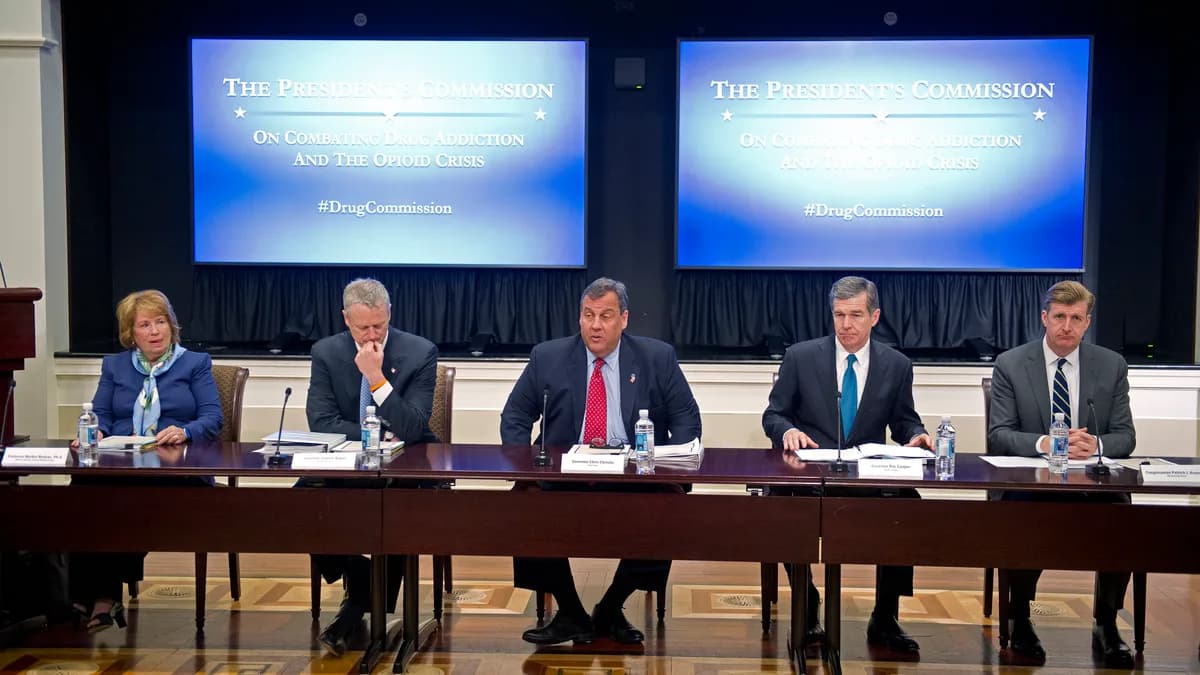
Photo: Consolidated News Photos/Newscom
Dr. Bertha Madras, professor of psychobiology at Harvard Medical School, speaks alongside other panelists in the Eisenhower Executive Office Building in Washington in June 2017.
Then came a cross-examination that, according to courtroom correspondent Gretchen Gailey of The Dales Report, lasted about five minutes. During that exchange, Madras reportedly agreed that marijuana meets the definition of a Schedule III substance. The Marijuana Herald, citing an unnamed source, reported that she answered "yes."
A caution is in order. Chief Administrative Law Judge Derek C. Julius prohibited broadcasting, and DEA has promised a corrected transcript only after proceedings conclude.[1] The exact question and answer have not been verified against an official record. A separate daily account from The Drug Report described Madras's cross-examination without mentioning the concession. Until the transcript appears, the exchange is reported, not conclusively established.
If the accounts hold up, the answer gives DEA a record citation against the claim that its own opposition witnesses proved cannabis belongs in Schedule I. It does not erase Madras's three hours of direct testimony, and the judge must weigh the whole record, not one word.
Seven participants, all opposed, and DEA carrying the burden
The hearing at DEA headquarters in Arlington, Virginia, opened June 29 with an unusual structure. DEA selected seven outside participants, all apparently opposed to broader rescheduling, including SAM, the Tennessee Bureau of Investigation, a drug-testing association and a four-state coalition of Nebraska, Idaho, Indiana and Louisiana.[1] Pro-rescheduling groups such as NORML were excluded on the theory that supporters would not be "adversely affected or aggrieved" by the rule; Julius declined to disturb that selection.[3] We covered the participant fight in our earlier report on the opponents-only lineup.
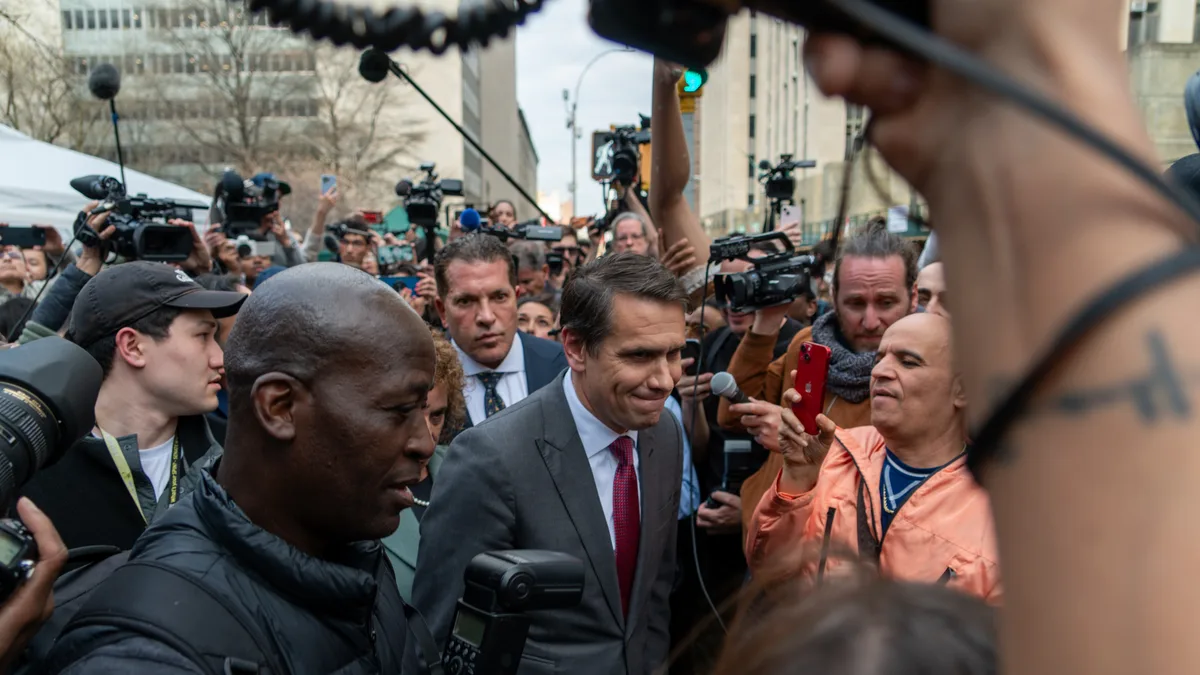
Photo: BruceSchaff/Wikimedia Commons (CC BY-SA 4.0)
Todd Blanche Outside Manhattan Criminal Courthouse
But the proceeding was one-sided only in the participant sense. DEA itself is the proponent of the rule. As Julius wrote in his preliminary order, "The Government, as the proponent of the proposed rule, has the burden of proof."[2] DEA opened with an FDA controlled-substance official and a pain physician testifying in support of Schedule III.
The question is narrow. Julius defined it as "whether the remainder of marijuana, as defined in the CSA, should be transferred from its current place on schedule I of the list of controlled substances to schedule III."[2] FDA-approved cannabis drugs and qualifying state medical cannabis already moved to Schedule III under an April 22 order signed by Acting Attorney General Todd Blanche.[4]
Opponents built their own counter-record. SAM subpoenaed Dr. Luli Akinfiresoye, a pharmacologist in DEA's own drug evaluation section, who reportedly defended the agency's older five-part medical-use test and said cannabis lacks reproducible chemistry. A TBI agent testified about more than 10,000 pounds of cannabis seized coming from jurisdictions she described as "deregulated," a figure that so far rests on a single published account. The four-state coalition presented last, on July 14, with announced witnesses including Yale cannabis researcher Dr. Deepak Cyril D'Souza; no verified account of that final testimony was available by press time.
April 22, 2026
Blanche moved medical cannabis to Schedule III and ordered a new expedited hearing.
June 18, 2026
DEA selected seven outside participants; Julius issued his preliminary order.
June 29, 2026
The hearing opened at DEA headquarters with the government presenting its case.
July 6, 2026
Madras testified for SAM and reportedly conceded the Schedule III fit on cross.
July 14, 2026
The four-state coalition gave the final scheduled presentation.
July 15, 2026
Statutory end date for the hearing. No official transcript published yet.
The government's evidence base is already on the record
The hearing tests conclusions HHS reached in 2023: that cannabis has less abuse potential than Schedule I and II drugs, an accepted medical use for pain, anorexia and nausea, and moderate or low physical dependence risk. HHS also found cannabis consistently ranked in the lowest group for overdose deaths among comparators including heroin, cocaine and benzodiazepines.
President Trump's December 2025 executive order summarized the scale of medical use: more than 30,000 licensed practitioners across 43 U.S. jurisdictions authorized to recommend cannabis for more than 6 million registered patients.[5]
A court case could freeze what's already done
Photo: VapeExperts/AI
The bigger near-term risk sits in the D.C. Circuit, not the hearing room. Three consolidated petitions challenge the April medical order, arguing DOJ stretched the treaty provision of the Controlled Substances Act and bypassed normal procedures.[3] A pending stay motion could suspend the existing Schedule III treatment, the DEA registration pathway and the associated Section 280E tax relief that Treasury and IRS have said applies to qualifying activities.[6] DOJ told the court on July 2 that petitioners came "nowhere near satisfying the demanding standard" for a stay. We reported earlier on the states suing to block rescheduling.
The deadline is the start, not the finish
Nothing changes for cannabis consumers today. DEA must publish the corrected transcript, the first check on the Madras "yes." Parties are expected to file proposed findings and briefs on a schedule not yet public. Julius then writes a recommended decision with no firm deadline, and under 21 C.F.R. §1316.66 parties get 20 days after that report to file exceptions.[7] The DEA administrator makes the final call, and the judge's recommendation does not bind him. Reuters legal analysis has suggested a late-2026 final rule is possible but not guaranteed.[3]
Photo: VapeExperts/AI
Even a final Schedule III rule would not legalize adult-use sales, permit interstate commerce or approve dispensary products. A 2026 analysis by researchers Brad Rowe, Agnes Balla and Daniele Piomelli put it plainly: "Schedule III should be treated as a transitional status."