

For 50 years the DEA fought to keep cannabis in Schedule I. Now it is standing in its own hearing room arguing the opposite, and the only outside voices allowed in the door want it to lose.
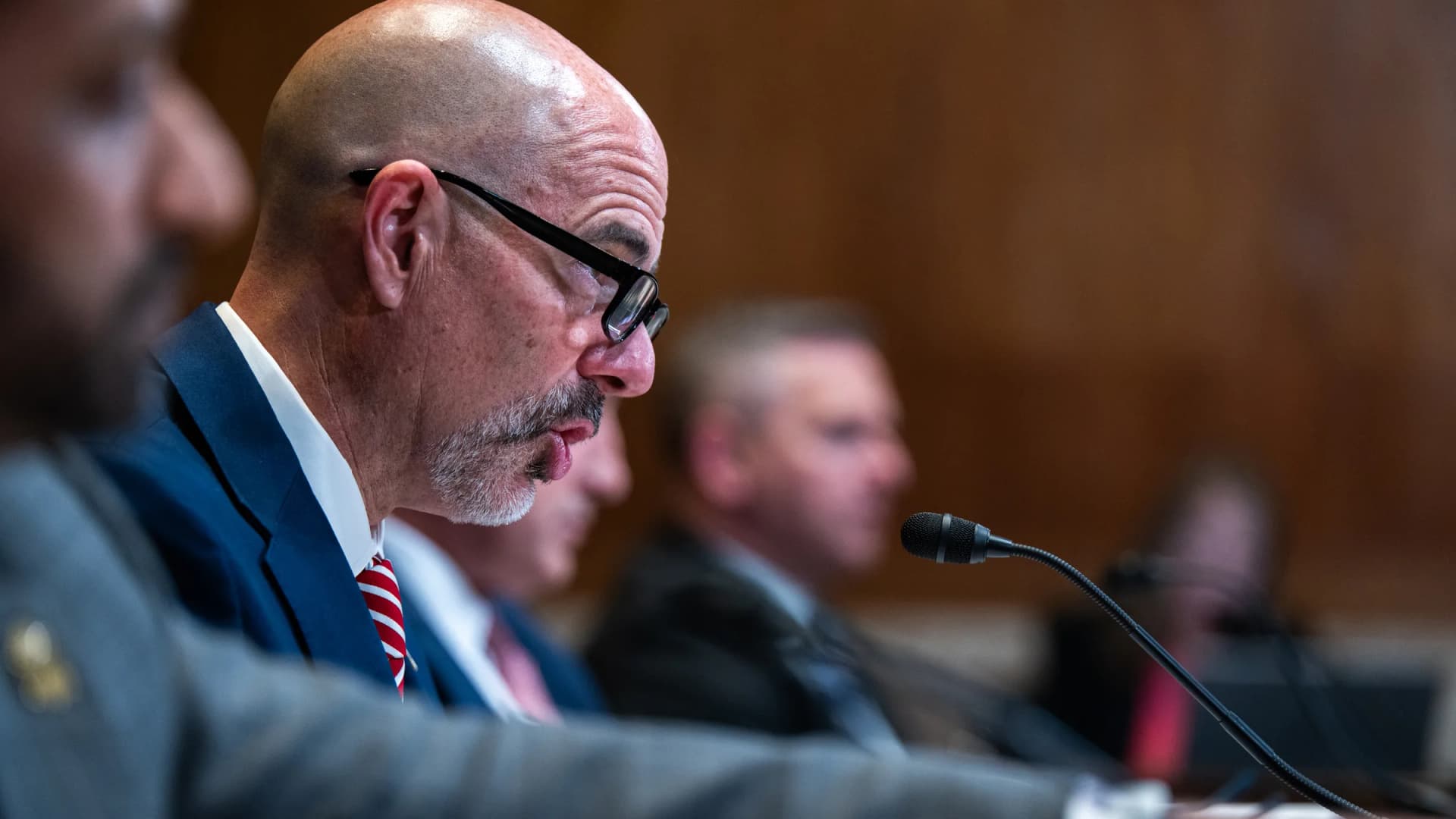
The Drug Enforcement Administration opened its expedited hearing on moving cannabis from Schedule I to Schedule III on June 29 at its headquarters in Arlington, Virginia.[1] The proceeding runs 9 a.m. to 5 p.m. daily, recessed on July 3, restarted July 6, and must conclude no later than July 15.[2] When it ends, an administrative law judge will weigh a record built almost entirely by people who oppose the rule.
The government argues against its own history
DEA lawyer James J. Schwartz opened the hearing by framing Schedule III as a matter of risk-benefit math, not legalization. "All controlled substances are dangerous. However, controlled substances must be evaluated by risks they pose, balanced by medical benefits they provide," he said, according to reporting from Filter. The hearing, he said, is about "regulation, not legalization."
The government's first witness was Dominic Chiapperino, director of the Controlled Substance Staff at FDA's Center for Drug Evaluation and Research. Asked whether cannabis produces fewer overdose deaths than comparator substances, he reportedly answered: "Yes, that's what we observed."[7] That quote comes from in-room reporting and has not yet been checked against the official transcript.
Photo: VapeExperts/AI
DEA's second witness, New Hampshire physician Dr. Corey Burchman, reportedly testified about using medical cannabis to reduce opioid use in pain patients. High Times, citing in-room sources, quoted him saying that "withdrawal from opioids is like a dumpster fire" while cannabis withdrawal is "more like a dying glowing ember of a campfire."[7]
Kevin Sabet, president of Smart Approaches to Marijuana and a leading prohibition advocate, told Filter the agency is now in the "super-awkward position of arguing the opposite of what it's been arguing for the last 50 years."
Seven seats, zero supporters
DEA Administrator Terrance Cole selected seven outside participants for the hearing.[3] All of them oppose broader rescheduling:[5]
- National Drug & Alcohol Screening Association
- Tennessee Bureau of Investigation
- Smart Approaches to Marijuana
- The states of Nebraska, Idaho, Indiana, and Louisiana
- DUID Victim Voices
- Kenneth Finn, MD
- Phillip A. Drum, PharmD
The agency's logic: the government itself is the proponent of the Schedule III rule, so only people "adversely affected or aggrieved" by it qualify as "interested persons" under DEA regulations.[2] Reform supporters were told they did not meet that definition.[4]
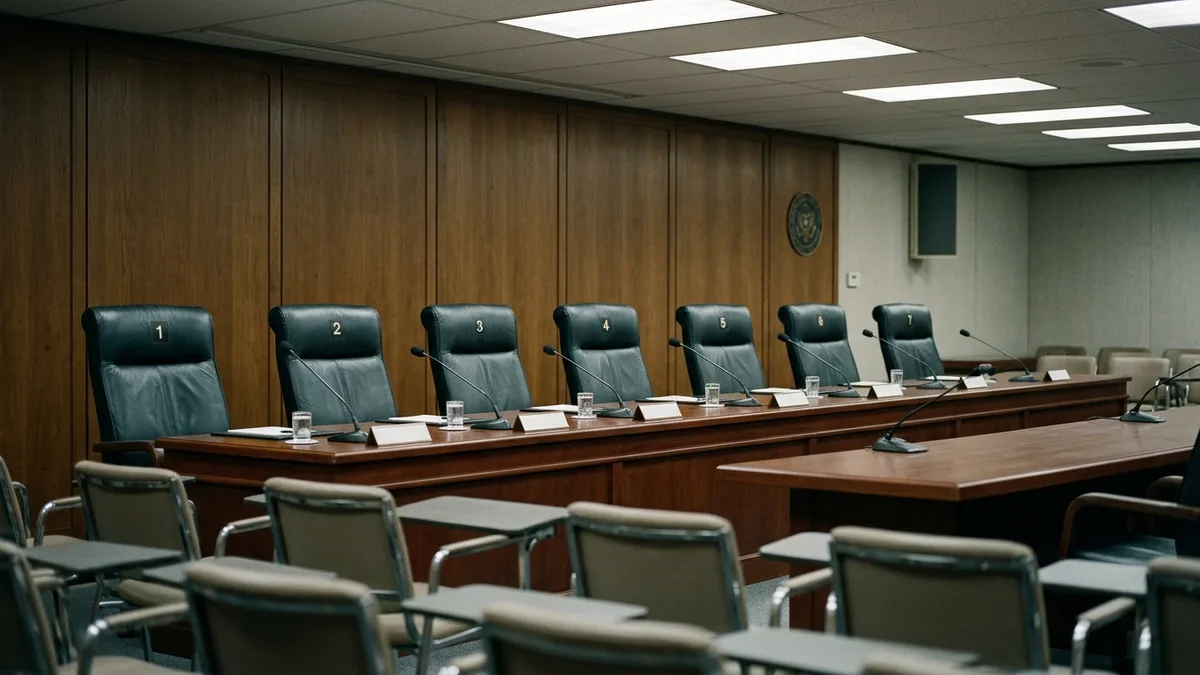
Photo: VapeExperts/AI
Advocates are not buying it. Robert Rush of the Rights and Reason Project said, "I just don't think it's a transparent process. I don't think it's legit, and I think people should really be outraged about the way this process has proceeded."[4] Morgan Fox, political director of NORML, said that "since 1972 when NORML filed the first cannabis rescheduling petition ... the DEA has made it clear that it is vehemently opposed to removing cannabis from Schedule I and will fight to keep it there."[4]
Opponents go after the medical use test
Day two turned into an attack on the science behind the government's own recommendation. Opponents challenged the newer two-part test that HHS and FDA used to find cannabis has a "currently accepted medical use." Marijuana Moment reported that Chiapperino acknowledged cannabis would not have passed the older five-part test, and that the newer approach was communicated to officials in July 2023.[6] That account rests on a single outlet until transcripts post.
The HHS recommendation, delivered in August 2023, found cannabis has accepted medical use and a lower abuse and dependence profile than Schedule I or II drugs.[11] The Justice Department built its 2024 proposed rule on that finding.[9]
Photo: VapeExperts/AI
The drug-testing industry is up next. The National Drug & Alcohol Screening Association scheduled testimony from Executive Director Jo McGuire and Patrice M. Kelly for July 2 and July 6, arguing rescheduling would affect "federally mandated drug testing programs" and that HHS "may not authorize SAMHSA-certified laboratories to test for Schedule III controlled substances."
Medical cannabis is already Schedule III
This hearing is not deciding everything. In April 2026, Acting Attorney General Todd Blanche issued a final order that already placed FDA-approved cannabis products and state-licensed medical cannabis into Schedule III.[8] That order followed President Trump's December 2025 executive order directing the Attorney General to finish the Schedule III rulemaking "in the most expeditious manner."[10]
The April order is in effect but under legal fire. State attorneys general and other challengers have filed cases now before the D.C. Circuit, as we covered in our earlier reporting. The current hearing decides only whether cannabis as a whole moves to Schedule III.[2]
Photo: VapeExperts/AI
No cameras, no livestream
You cannot watch any of this. The hearing is open to the public and credentialed media in limited capacity, but video and audio recording are barred, and cell phones are banned from the courtroom.[1] Chief Administrative Law Judge Derek C. Julius ordered that the hearing "will not be televised, livestreamed, or broadcasted in any way," according to Americans for Safe Access, which asked him to reconsider. DEA says a finalized corrected transcript will post after the proceedings conclude.[1]
What happens after July 15
Once testimony closes, Julius issues findings and a recommended decision. The DEA Administrator then decides whether to finalize broader rescheduling, modify the rule, or walk away.[2]
The administrative path looks favorable. The government is the rule's proponent, HHS already recommended Schedule III, and DEA's own witnesses spent the opening days defending the science.[9] But the opponent-only record cuts the other way. Every cross-examination, every data gap conceded on the stand, becomes ammunition for the litigation that will almost certainly follow a final rule.
For cannabis consumers, the stakes are practical. Schedule III would lift the 280E tax penalty for qualifying state-licensed medical cannabis businesses, and Treasury and IRS reportedly plan guidance on that after rescheduling.[4] It would also ease research restrictions that the December executive order was built around.[10]

Photo: VapeExperts/AI
We will be watching for the transcript release after July 15, the NDASA and SAM testimony, and movement in the D.C. Circuit. The government has 10 days left to make its case. Its loudest critics have the same 10 days, and all seven seats.