

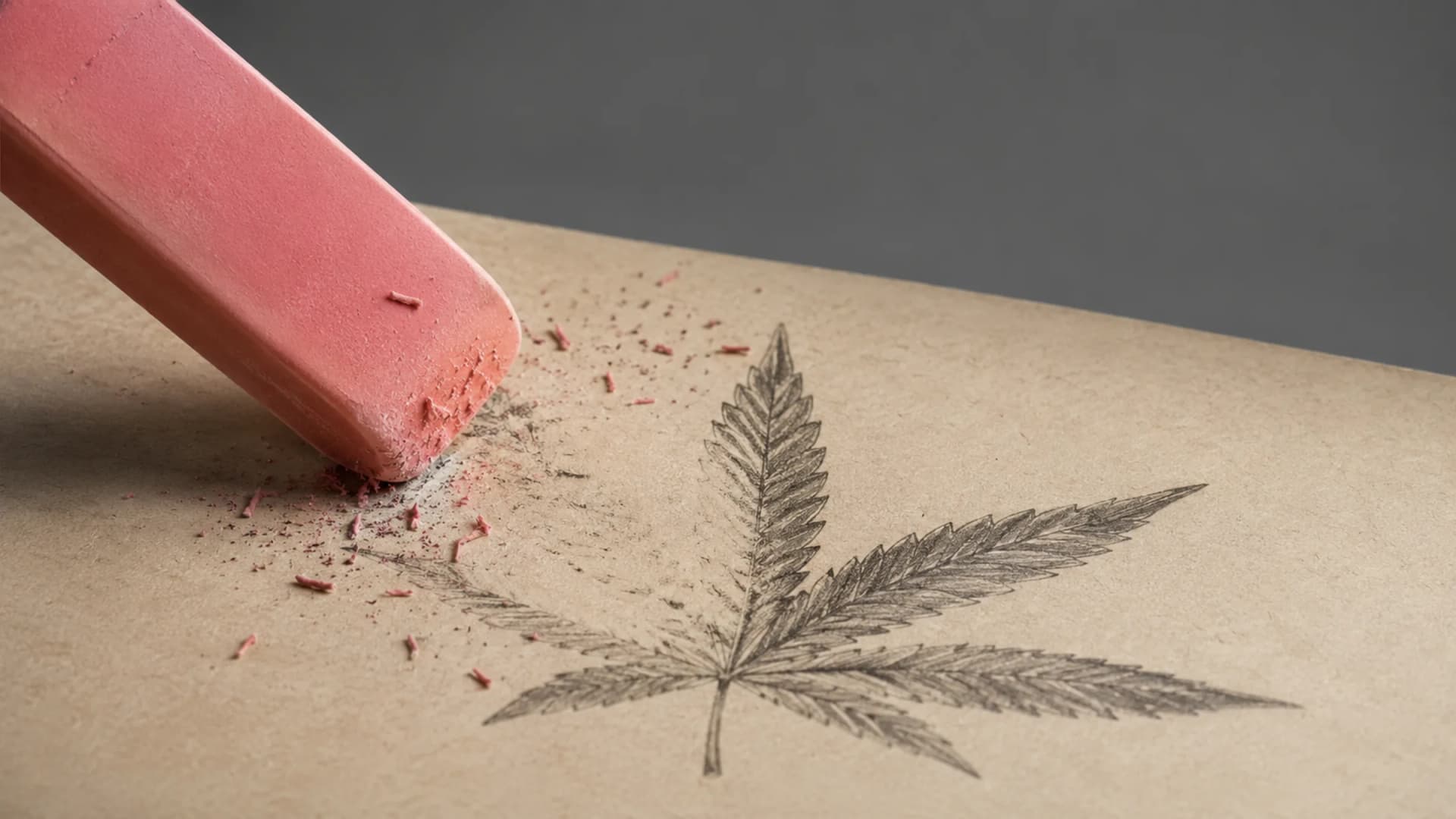
For about a week, there was a plausible argument that Virginia had no law against selling marijuana. A drafting problem in the state's new budget arguably repealed the felony distribution statute on July 1, 2026, a full year before its replacement takes effect. Prosecutors flagged it. An internal state police email briefly told troopers there was nothing left to enforce. Then state officials shut the argument down.
The bottom line has not changed. No store can legally sell recreational cannabis in Virginia until July 1, 2027.[3] This story continues our earlier coverage of Virginia's 2027 retail launch.
A repeal without a date
Virginia's cannabis framework rode into law inside House Bill 30, the 2026-28 state budget.[7] The package repealed two statutes: §18.2-248.1, which bans marijuana sale and distribution, and §4.1-1105.1, which bans possession by people under 21.[1] The replacement laws were delayed until July 1, 2027. Prosecutors argued the repeal language did not carry the same delayed date. Read literally, the old bans died with the budget on July 1, 2026, and the new ones would not exist for another year.
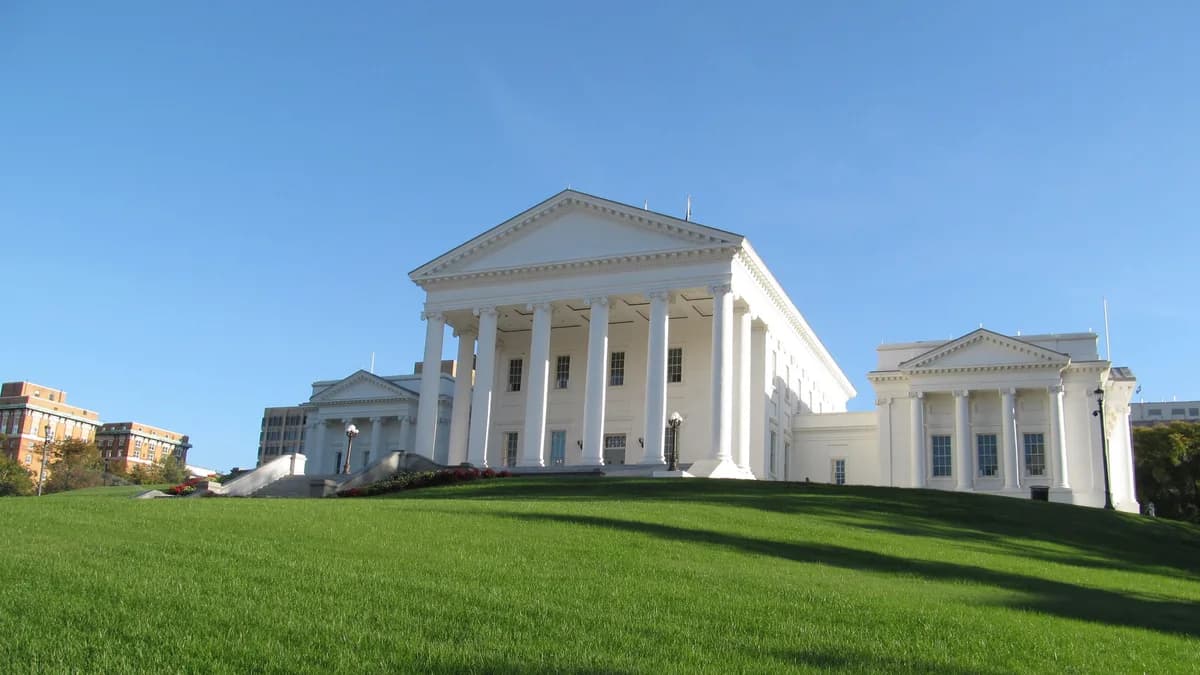
Photo: Doug Kerr from Albany, NY, United States/Wikimedia Commons (CC BY-SA 2.0)
The Virginia State Capitol in Richmond stands atop a grassy hill under a clear blue sky. The building houses the legislature that fixed a budget error nearly erasing the state's weed laws.
Nate Green, the Williamsburg-James City County Commonwealth's Attorney and a former president of the Virginia Association of Commonwealth's Attorneys, said his colleagues spotted the gap while preparing training materials. "It has at a minimum invited the argument that the old laws were repealed as of July 1, 2026," he told The Virginian-Pilot. "They created a word problem, and word problems go against prosecutors. If it's unclear, we lose. We only get to win when the words are clear."
The stakes were not small. The distribution statute carries a Class 1 misdemeanor for up to one ounce, a Class 5 felony for one ounce to five pounds, and five to 30 years in prison above five pounds.[1]
Police wavered, then reversed
The confusion reached law enforcement. In an internal Virginia State Police email first reported by Virginia Scope, Lt. Brandy A. Molinar wrote: "As of July 1, 2026, there are no Code of Virginia violations related to marijuana." The email told personnel to report recent enforcement actions while the agency sought guidance, and said seizures over five pounds could potentially be referred to the DEA. Those details have only been independently published by Virginia Scope.
Superintendent Col. Jeff Katz publicly walked that back. "I would like to make it clear that the Virginia State Police will continue to enforce existing laws, in line with the Code of Virginia," he said in a statement reported by Virginia Scope.
Photo: VapeExperts/AI
"Unmistakable error"
By July 8-9, the Virginia Code Commission had updated the online code to mark both old statutes as effective through June 30, 2027. State law lets the commission correct "unmistakable printer's errors, misspellings and other unmistakable errors" when statutes go into the code.[2]
Commission chair Del. Marcus Simon, D-Fairfax, said the executive committee found that an immediate repeal would produce an "absurd result" and that the omission was an "unmistakable error." He told the Virginia Mercury: "We did accelerate things a little bit as sort of a way to quell the controversy."
Prosecutors fell in line. Virginia Beach Commonwealth's Attorney Colin Stolle told Cardinal News he never accepted the early-repeal reading: "I believe those laws are still valid and enforceable."
March 14, 2026
The General Assembly passed retail cannabis bills targeting a January 2027 launch.
May 19, 2026
Gov. Abigail Spanberger vetoed HB642 and SB542.
June 16, 2026
Spanberger and legislators announced a budget compromise: sales begin July 1, 2027.
June 29, 2026
Spanberger signed the budget containing the cannabis framework.
July 1, 2026
The budget took effect. Prosecutors flagged that two repeals lacked a delayed date.
July 7, 2026
An internal State Police email said no marijuana violations remained in the code.
July 9, 2026
The Code Commission fixed the code; police and prosecutors confirmed enforcement continues.
What adults can and cannot do right now
Nothing about the episode changed the rules for consumers. Under current law, adults 21 and older may:
- Possess up to two ounces of cannabis in public[6]
- Grow up to four plants per household at their primary residence, tagged and out of public view
- Share up to one ounce with another adult, with no payment of any kind
Buying recreational cannabis remains illegal everywhere except the medical program. "Gifting" schemes, where a shop sells a sticker or shirt and throws in cannabis, are expressly excluded from legal sharing. Unlicensed sellers still face misdemeanor or felony charges.[1] The only regulated purchase channel is the medical-cannabis program run by the Cannabis Control Authority.[3]
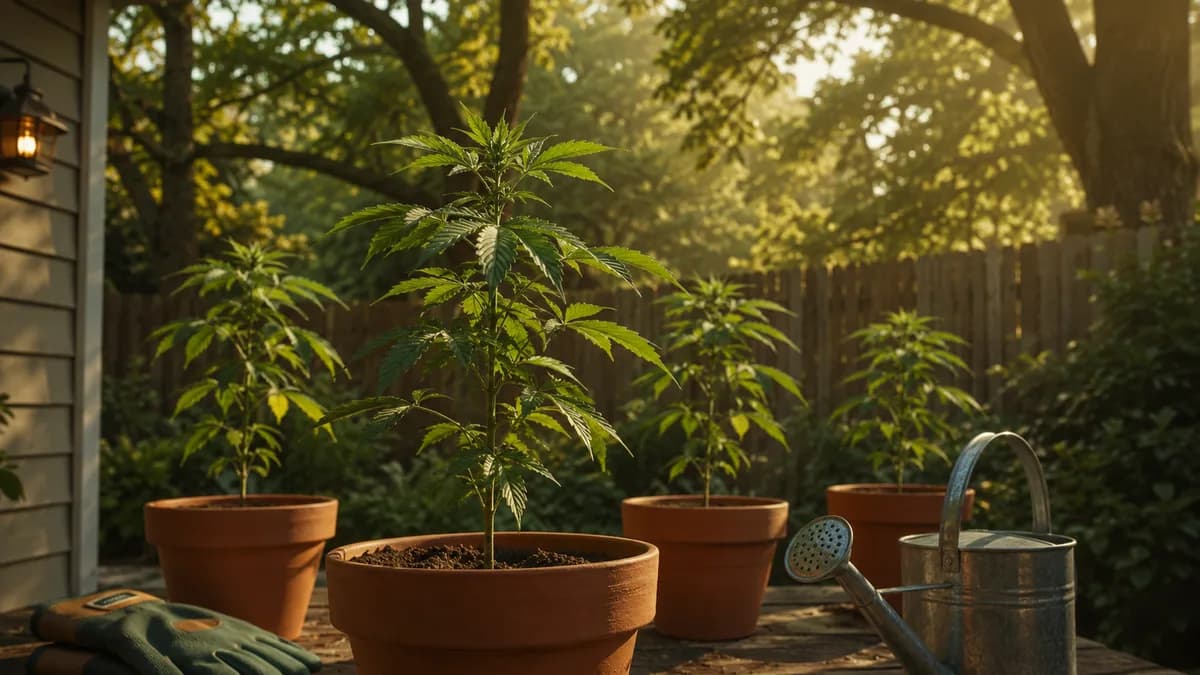
Photo: VapeExperts/AI
The 2027 market is coming on a fixed schedule. Under the budget compromise, the CCA must adopt regulations and open some license applications by February 1, 2027, issue initial licenses by May 1, 2027, and allow sales from July 1, 2027, with up to 350 retail stores and a 6% state cannabis tax rising to 8% after July 2029.[5] Localities can add 1% to 3.5%. Separately, starting August 15, 2026, hemp products with more than two milligrams of total THC per package can no longer be produced or sold in Virginia.[4]
The argument is closed, but not tested
One caveat remains. No court had ruled on either the original budget language or the Code Commission's correction as of mid-July. A defendant charged for conduct during the gap could argue that the enrolled session law governed on the date of the offense, and that moving an effective date goes beyond fixing a typo. Virginia's Supreme Court has held that when a penal statute permits "two reasonable but contradictory constructions," the reading favorable to the accused wins. The Commonwealth would answer with the legislation's structure, the explicit 2027 replacement date, and the commission's correction authority.[2]
Green, the prosecutor who first raised the alarm, considers the matter settled. "I have confidence that the action taken by the Code Commission has addressed and eliminated the argument that the General Assembly intended to repeal the prohibitions against the underage possession or distribution of marijuana before the new laws become effective next July," he told the Virginia Mercury.