

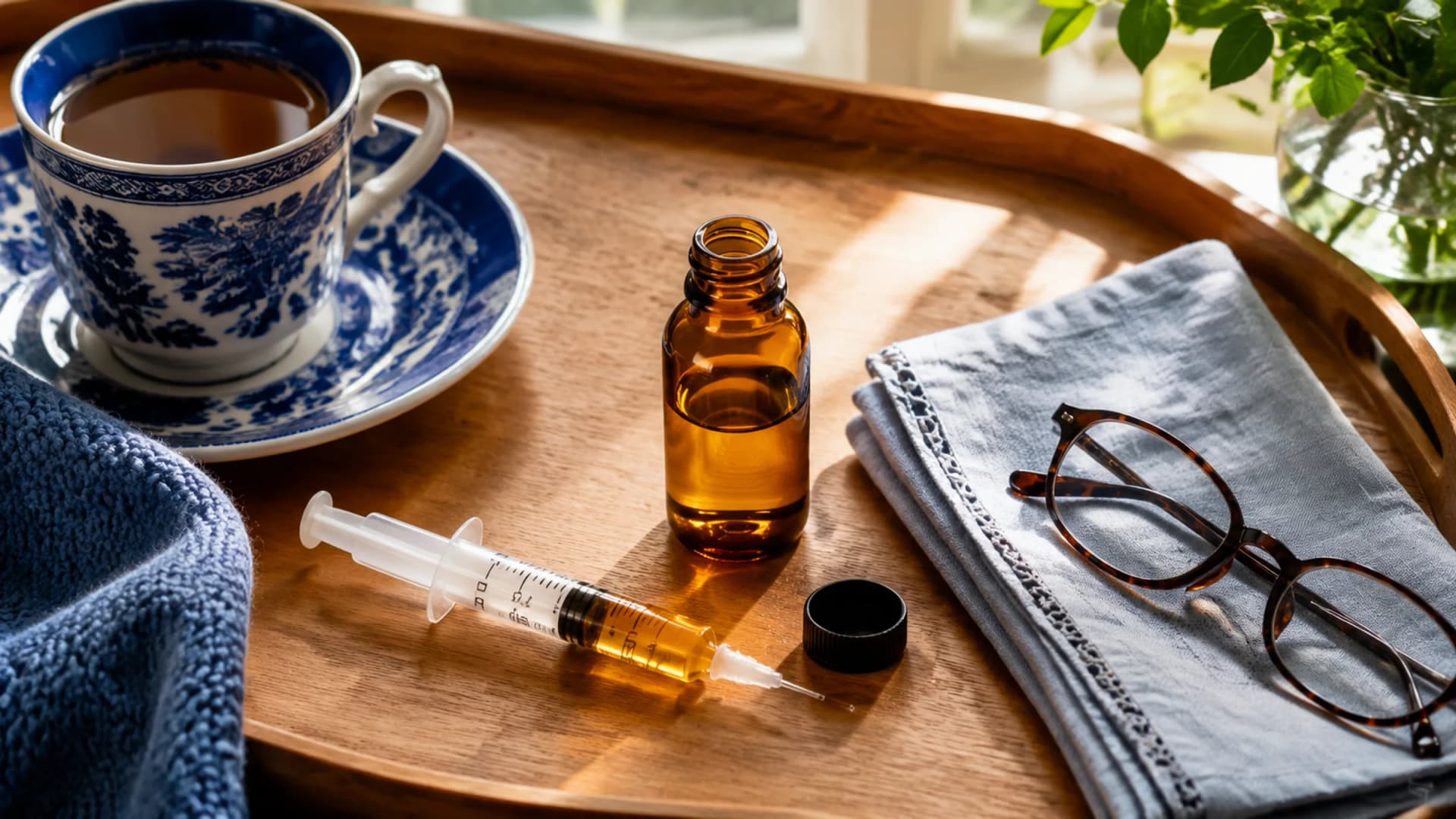
Nearly nine in 10 hospice-eligible dementia patients who took a precisely dosed oral THC/CBD oil improved on clinician ratings of agitation in a Phase 2 trial. Fewer than one in four improved on placebo. Researchers presented the results at the Alzheimer's Association International Conference in London on July 14.[1]
The trial is called LiBBY, short for Life's End Benefits of cannaBidiol and tetrahYdrocannabinol. It was a multicenter, randomized, double-blind, placebo-controlled study registered as NCT05644262. It enrolled 120 people with Alzheimer's disease or another dementia, clinically meaningful agitation, and hospice enrollment or hospice-level disease criteria.[3] Ten medical centers conducted visits in participants' homes or places of residence, according to Georgetown University, where co-principal investigator Brigid Reynolds works.[1] The cohort's mean age was about 80, and 75% lived in community settings, per the conference release.
Four milligrams of THC, twice a day
The medicine was not smoked, vaporized, or a conventional edible. It was a purified suspension in digestible oil containing 2 mg THC and 100 mg CBD per milliliter.[2] Patients took 1 mL twice daily in week one, then 2 mL twice daily through week 12. That works out to 8 mg THC and 400 mg CBD per day at the maintenance dose.[1]
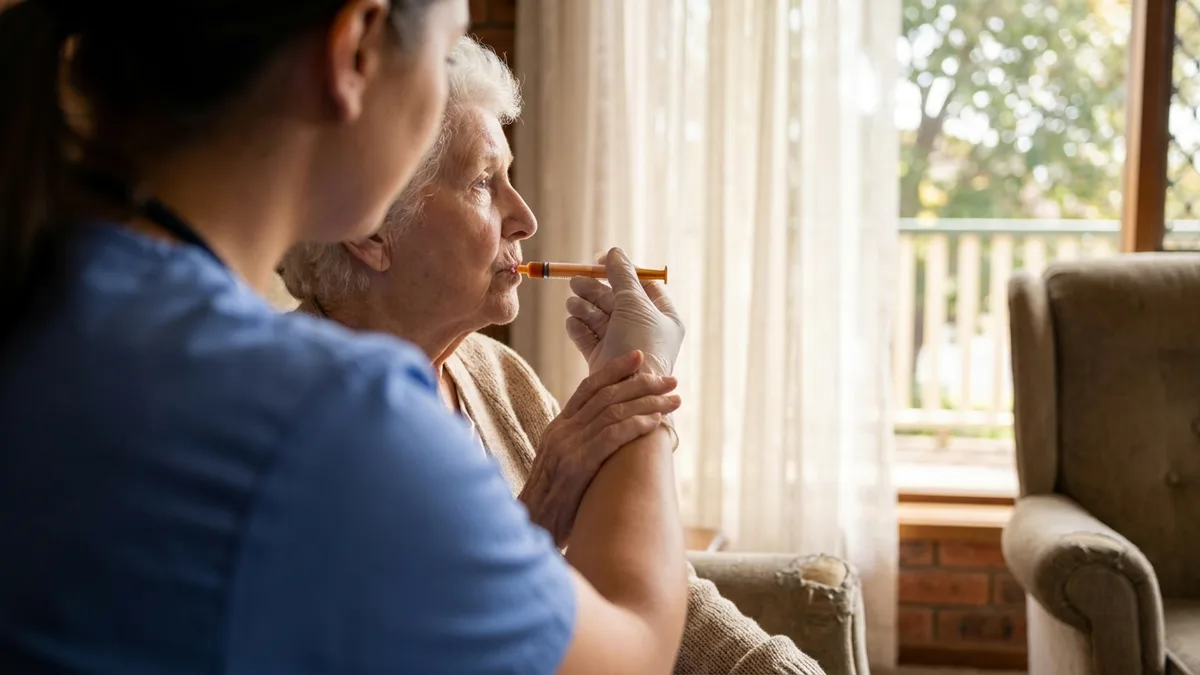
Photo: VapeExperts/AI
The oil could be swallowed, placed on the tongue, or given through a feeding tube. That matters for people with advanced swallowing or cognitive problems.[2]
Nearly 9 in 10 improved
The primary endpoint was change at two weeks on the 29-item Cohen-Mansfield Agitation Inventory, a scale that runs from 29 to 203.[3] The treatment group beat placebo by 6.27 points at week two (p=0.0004) and by 8.23 points across the full 12 weeks (p<0.0001).[1]
Clinician-rated improvement showed a wider gap.
Clinician-rated improvement in the LiBBY trial
Source: AAIC 2026
"Rarely do we see close to 90% of patients in a trial respond positively to a new medication," said Jacobo Mintzer, a psychiatrist at the Ralph H. Johnson VA Healthcare System and professor at the Medical University of South Carolina, who presented the results. He called the study "a robustly positive, randomized, controlled trial that represents a major step forward in treatment for a population that has been historically overlooked in clinical research."
Participants who continued into an optional open-label extension kept improving, and those who crossed from placebo to the active oil improved and held that gain through week 24, Georgetown reported. Detailed week-24 effect sizes have not been released.[1]
More deaths in the treatment arm
Adverse events were roughly balanced: 46.7% of the treatment group versus 42.4% of the placebo group had any adverse event. Serious adverse events were not balanced: 23.3% versus 11.9%. Investigators judged none of the serious events related to the study drug and described infections and gastrointestinal problems as expected in this frail population.[1]
The New York Times reported eight deaths in the treatment arm and three in the placebo arm.[2] Investigators found no pattern in causes of death. The full peer-reviewed paper, which has not yet been published, will need to detail that imbalance.
Don't swap in a dispensary bottle
The investigators drew a hard line between their formulation and what consumers can buy. "People should not assume that products available at dispensaries or online are equivalent to what was studied in this trial," Reynolds said. Commercial products "may vary widely in their composition, quality and dosing, making them potentially ineffective or even harmful."[1]
Photo: VapeExperts/AI
Independent experts agreed on the caution. Kevin Hill, director of addiction psychiatry at Beth Israel Deaconess Medical Center, called the result "a very robust finding" but added: "It's exciting that this presents another option to treat agitation, but it doesn't mean that people should be giving their parents medical marijuana because cannabinoids have their own risks. Treatment of agitation should be overseen by a medical professional."[2]
Ryan Vandrey, a professor of psychiatry at Johns Hopkins who co-authored a separate dronabinol trial but was not involved in LiBBY, called the study "a significant advancement." He said medical cannabis is "never a first-line therapy" and should be considered "when the existing treatments are either ineffective or cause unacceptable side effects."[2]
Why this wasn't a vape trial
LiBBY tested one route only: a metered oral oil. Its results say nothing about vaporized cannabis, and no one should treat a vape as a substitute for the studied medicine.
The open questions are real. Inhalation works within minutes, which could in theory help with fast-emerging symptoms. But a patient with advanced dementia must understand a vaporizer, hold a mouthpiece, and take a consistent breath. The dose delivered by a vape shifts with the product, the puff, and the inhalation. Effects fade faster than oral oil. Any inhaled cannabinoid product for this population would need its own trial, with its own dosing, efficacy, and lung-safety evidence. The oral route also allowed something no vaporizer can: administration through a feeding tube.[2]
What caregivers should know
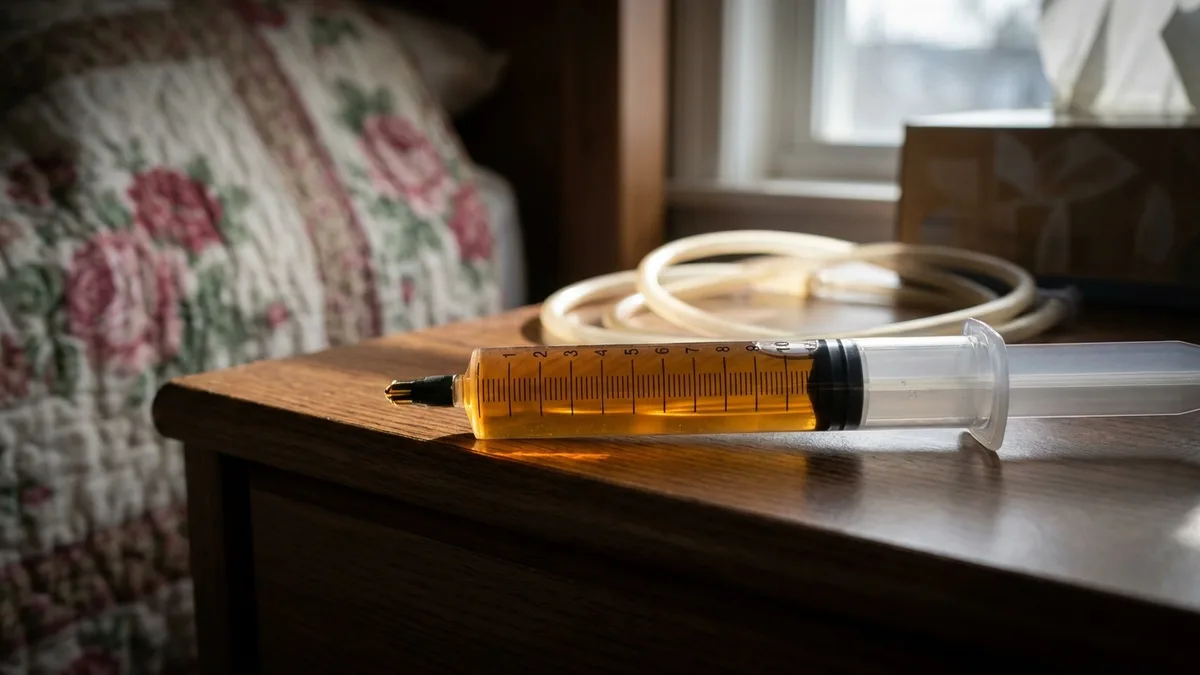
Photo: VapeExperts/AI
The Alzheimer's Association recommends looking for causes first. Pain, infection, constipation, hunger, overstimulation, and medication effects can all present as agitation, and non-drug strategies come before any prescription.
For anyone whose doctor is weighing cannabinoids, the trial itself offers a template. LiBBY required a study partner with roughly five hours of weekly contact who supervised every dose and reported behavior.[3] The maintenance dose of 400 mg CBD daily is high enough that drug interactions matter: a UK government safety review flagged CBD interactions with liver enzymes and medicines including warfarin and tacrolimus.[6] A May 2026 meta-analysis of seven cannabinoid studies in dementia found sleepiness was the clearest safety signal, with a risk ratio of 2.25.[4]
A large and growing audience
The stakes are wide. A USC-led model estimates 5.7 million US adults age 51 or older are living with dementia in 2026, with 5.2 million care partners providing 6.8 billion hours of unpaid care and a total burden of $818 billion.[5]
Photo: VapeExperts/AI
Older adults are also more familiar with cannabis than they used to be. Past-month use among Americans 65 and older rose from 4.8% in 2021 to 7.0% in 2023, a study in JAMA Internal Medicine found.[7] We covered that shift in our earlier reporting on older adults and cannabis, and the American Medical Association's recent guidance weighed both benefits and risks for seniors.
What comes next: a full peer-reviewed publication with complete mortality and week-24 data, posted trial results on ClinicalTrials.gov, and a confirmatory Phase 3 trial. The exact formulation, made by MediPharm Labs, is not commercially available or FDA-approved. None of those steps had happened as of July 21.
For families in the trial, the gap between research and reality is already personal. Dennys Gonzalez told the New York Times his 87-year-old father became more tolerant of help during the study, then deteriorated after treatment ended. "It's a shame they don't still have that available," he said. "It actually worked."[2]