

The American Medical Association wants flavored cannabis vapes off the market in every state. At its June Annual Meeting, the group's House of Delegates adopted a policy backing "a complete ban on the production, marketing, and sale" of "cannabis-based ECIG flavored devices and cartridges."[1] The same meeting produced a second cannabis policy with a very different tone: a call for education and research on cannabis use in older adults.
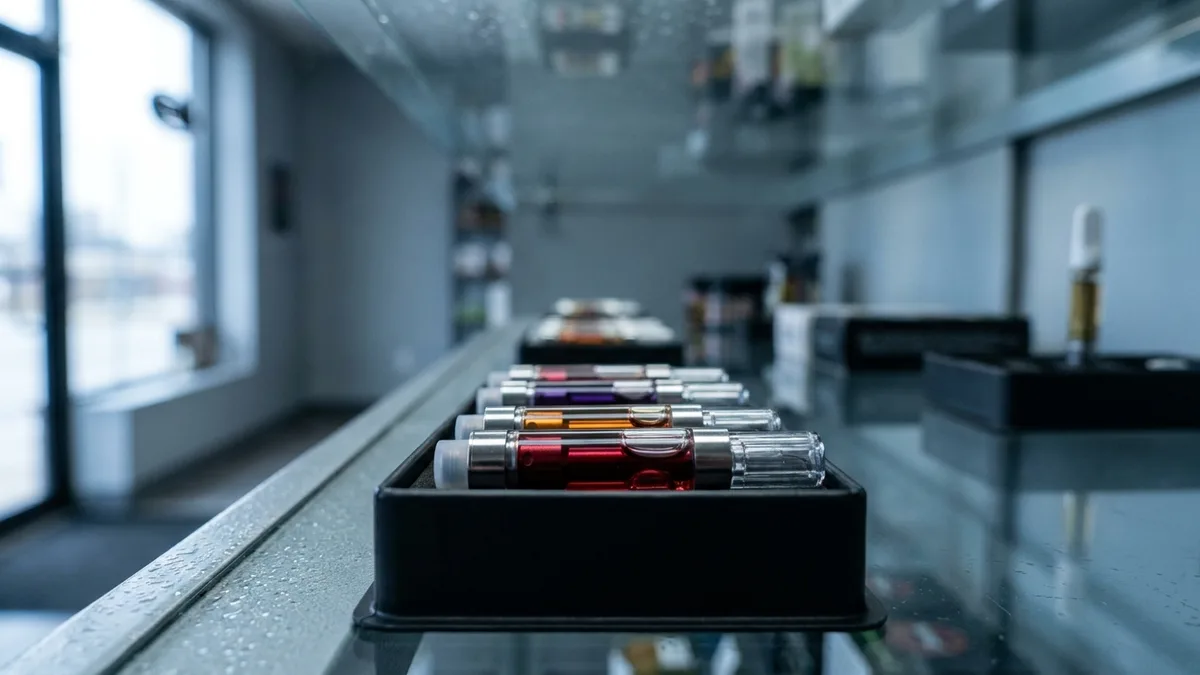
Photo: VapeExperts/AI
Neither vote changes any law. AMA policy is an advocacy position. But state medical societies and lawmakers often use AMA positions as templates for bills and agency rules.
Delegates call for a "complete ban"
The flavored vape policy came through Resolution 232, titled "Banning Flavored Cannabis E-Cigarettes." The final language directs the AMA to push for prohibiting flavored cannabis vaping products in regulated cannabis dispensaries, hemp product retailers and other outlets, and to pursue legislative changes supporting a nationwide ban.[1]
The AMA's Reference Committee B wrote in its final report that it "heard unanimous testimony in support of Resolution 232."
Bobby Mukkamala, MD, the AMA's president, said in the group's June 10 press release: "There is no public health justification for flavoring e-cigarette and vape products in ways that make them more attractive to children and teens."
The youth numbers behind the vote
Flavor restrictions in vaping have long rested on nicotine data. FDA's 2025 National Youth Tobacco Survey found 89.4% of current youth e-cigarette users used flavored products, with fruit the most popular, followed by candy, mint and menthol.[2]
The cannabis-specific evidence is newer. A 2023 study led by Benjamin Chaffee of the University of California, San Francisco found that among adolescent non-users, model-predicted willingness to try a cannabis vape was 18% for fruit and sweet flavors versus 6% for tobacco or unflavored versions.[3] The authors wrote: "In this online non-probability sample, flavors in nicotine and cannabis vape products increased adolescents' willingness to try them."
Monitoring the Future data published in the Journal of Adolescent Health show flavored cannabis vaping rose across all three surveyed grades between 2021 and 2024.[4]
Cannabis vapers in each grade using flavored products
Source: Monitoring the Future / Journal of Adolescent Health
Richard Miech of the University of Michigan, who works on Monitoring the Future, said of the trend: "Flavored vaping solutions offer a discreet mode of cannabis use, with flavors apparently enhancing their appeal."[4]
Adults use flavored cannabis vapes too. A January 2026 research brief from the Washington State Liquor and Cannabis Board said about 57% of U.S. adults who vaped cannabis in the past year used flavored products.[7]
For older adults, research instead of restriction
The second policy, Resolution 512, directs the AMA to support clinician education on medical cannabis in older adults, highlighting "both its potential benefits and risks," and to encourage research into therapeutic uses such as managing agitation in people with cognitive impairment.[1]
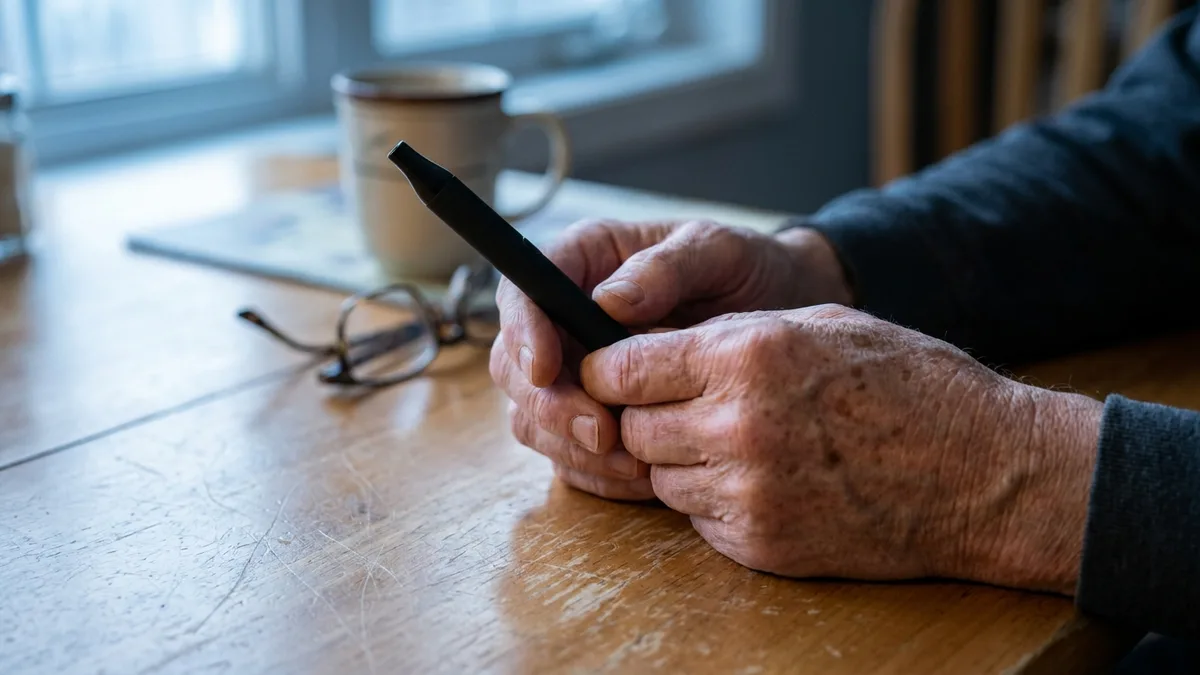
Photo: VapeExperts/AI
The timing tracks the data. A JAMA Internal Medicine study of 15,689 older adults found past-month cannabis use among people 65 and older rose from 4.8% in 2021 to 7.0% in 2023.[5] A Rutgers-linked study found that among older adults who used cannabis in the past year, only 19.18% discussed it with clinicians.[6]
The evidence base remains thin. A 2023 scoping review in PLoS One concluded that for older adults, "the benefit-to-risk ratio is unclear."[9]
Cartridges in scope, flower mostly out
The adopted language names "devices and cartridges." That points at flavored oil carts: fruit, candy, dessert, ice, mint and menthol distillate products sold in dispensaries and hemp shops.
Cannabis flower sits outside that language. A dry herb vaporizer like the XMax V4 Pro heats ground flower. There is no flavored liquid, cartridge or e-liquid formulation to ban. A state could write a broader rule covering all flavored inhaled cannabis, including terpene-treated flower, but the AMA text does not ask for that.
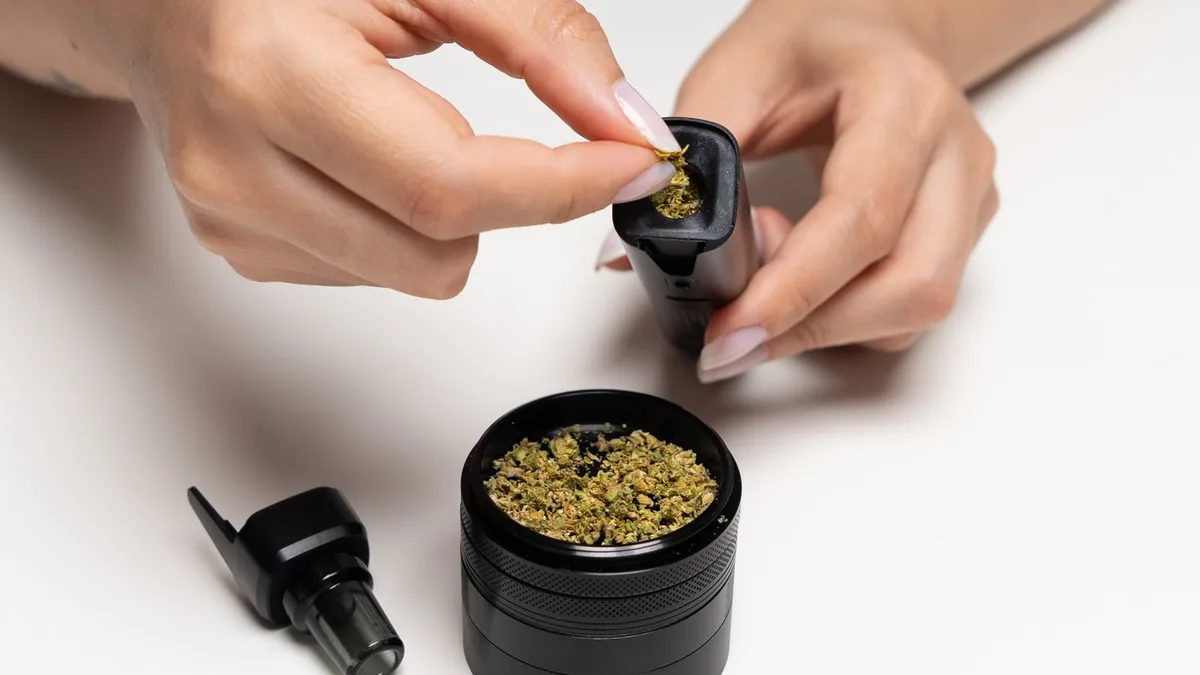
Photo: VapeExperts
A user loads ground cannabis flower into an XMAX V4 Pro vaporizer. Dry herb devices like this one would largely fall outside the flavored-vape ban the AMA is urging, which targets cartridges.
There is precedent for the narrower approach. New York's Office of Cannabis Management has barred a list of flavors in vaporized and inhaled adult-use products since September 2023, including candy, dessert, soda, cereal, mint and menthol.[8] How each statute treats cannabis-derived terpenes and strain-authentic flavor profiles will decide which cartridges survive in any given state.
What to watch
- Which state medical societies pick up the AMA language. The Illinois State Medical Society sent a flavored cannabis e-cigarette resolution toward the AMA during the 2025-2026 cycle, and the pipeline can run back to statehouses.
- Whether state cannabis agencies copy New York's rule, and whether bills like New York Assembly A8581 advance.
- How lawmakers draft the flavor definition. Language limited to added flavors in cartridges leaves flower and dry herb vapes alone. Broader "flavored inhaled cannabis" language would not.
- Whether flavor bans move buyers to unregulated carts. We flagged a related substitution question in our earlier look at claims that vape restrictions steer users back to smoking. Jurisdiction-level data will be the test.
- As of early July, no federal legislation or FDA rule had implemented the AMA's position.[1] The next signal will come from statehouses, not Washington.