

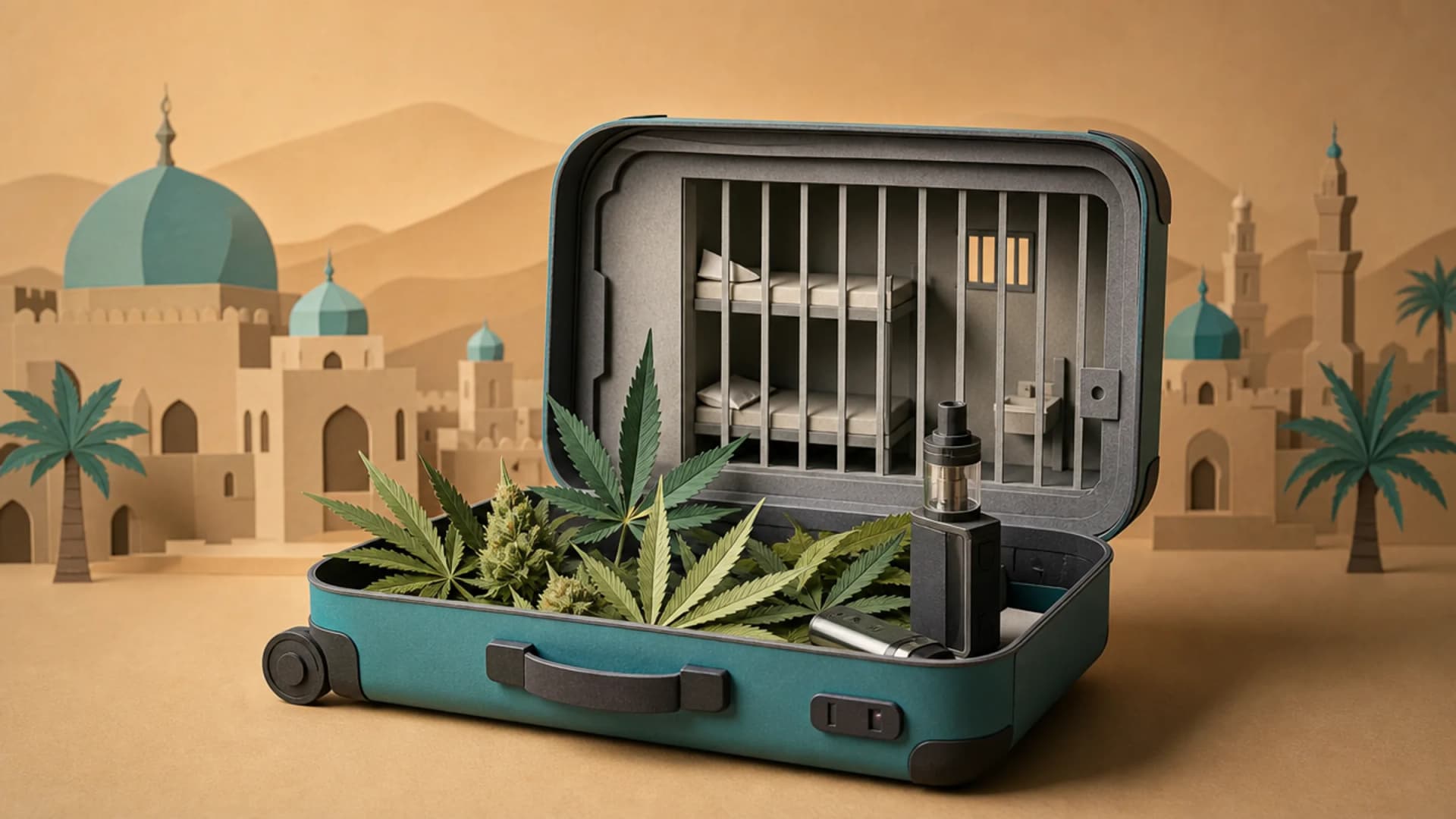
Billy Hood, a British football coach, was sentenced to 25 years in Dubai in 2021 after four bottles of vape liquid containing cannabis oil were found in his car.[2] Three years later, the UAE signed a rule that lets some first-time tourists caught with drugs at the border pay a fine and enter the country. Both things are true. The gap between them is the real story of cannabis in the Middle East.
Photo: VapeExperts/AI
Governments across the region are building licensed medical and industrial hemp channels. None of them are building a consumer CBD market. For travelers, the rule has barely moved. A CBD vape cartridge in a carry-on can still mean prosecution from Dubai to Doha.
Dubai fines some tourists now. Cartridges still mean court
The UAE rewrote its drug law with Federal Decree-Law No. 30 of 2021, which took effect in January 2022. It criminalizes narcotic and psychotropic substances except for supervised medical and scientific uses.
One reform got wide attention. Food, drinks, and products containing listed cannabis or THC ingredients brought in by travelers would be seized and destroyed, not punished, for first-time possession. Vapes were carved out. "Carrying vape cigarettes that are filled with CBD oil is different from carrying food or drink or medicine that contain THC," senior Dubai judge Ali Galadari told The National in December 2021.
Legal consultant Ayham Al Moghrabi told the same outlet: "I saw many people get charged with bringing in products that contain THC that are allowed in their countries, but they had no idea it was not allowed in the UAE."
Then came Cabinet Resolution No. 43 of 2024, signed April 24, 2024. It applies to non-resident foreigners caught at land, sea, or airport entry points with scheduled drugs below listed personal-use weight limits.[1] The penalties are administrative for many first cases:
- First offense: AED 5,000 to 20,000 ($1,400 to $5,400) fine, entry only after payment
- Second offense: AED 10,000 to 30,000 ($2,700 to $8,200), deportation, a 3-year entry ban
- Third offense: AED 50,000 to 100,000 ($14,000 to $27,000), deportation, permanent ban
- Certain higher-risk schedule items: AED 50,000 to 100,000, deportation, and a permanent ban even on the first offense
The resolution's schedule expressly includes "cannabis, cannabis resin and cannabis extracts," cannabis plants, THC, dronabinol, and delta-9-THC variants.[1]
Enforcement has real history behind it. In the first quarter of 2019, Dubai police and customs reported 97 arrests for cannabis or CBD oil in vaping devices, up from 2 in the same period of 2018, mostly at border points. Brigadier Eid Thani Hareb, a Dubai anti-narcotics official, said at the time that CBD oil was illegal in the UAE and treated the same as cannabis.
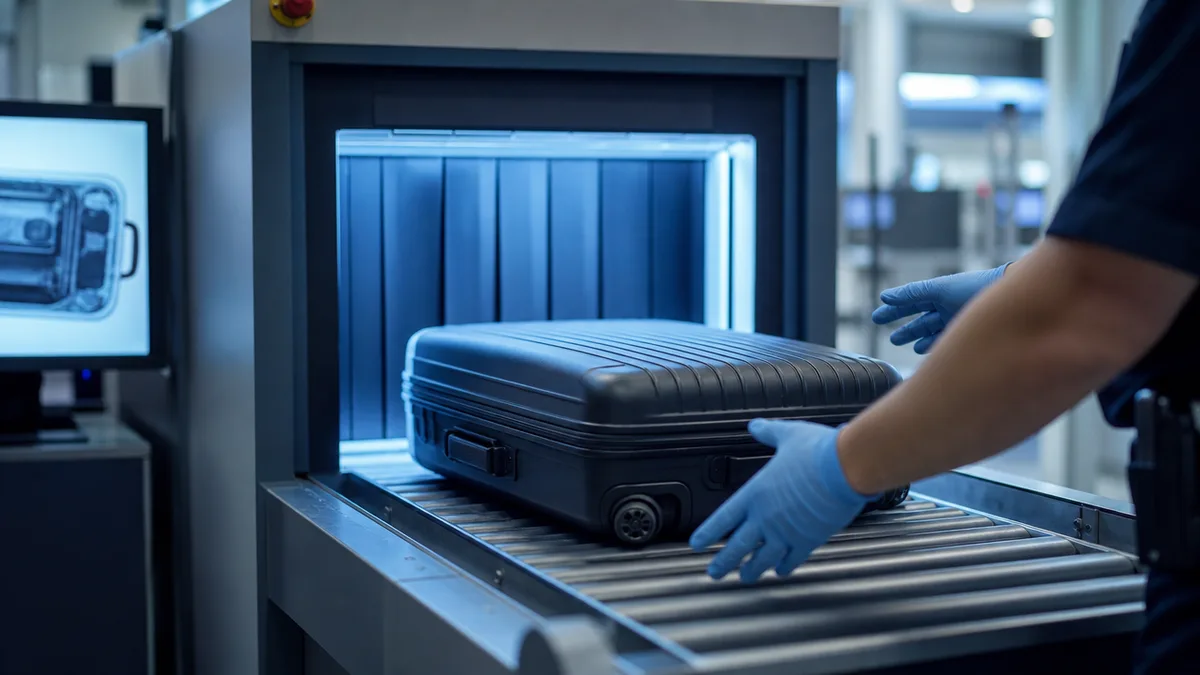
Photo: VapeExperts/AI
The named cases show the stakes. Hood's sentence was later reported reduced to 10 years. The UAE public prosecution said "Mr Hood was convicted based on evidence including the items found in his possession, information on his phone, third party statement, and his own confession."[2] His supporters dispute the case. Separately, a British woman received 10 years and an AED 50,000 ($14,000) fine after arriving at Dubai airport with 307 vape pods containing CBD oil, plus cocaine and hashish, according to court reporting. In 2019, an American defendant was tried after officers found 37 e-cigarette filters containing marijuana oil and 147 cannabis candies weighing more than 818 grams.
The newest change is Federal Decree-Law No. 24 of 2025, effective January 1, 2026. It regulates industrial hemp for licensed industrial uses and legally authorized medical products. It bans personal and recreational hemp use and prohibits hemp in foods, dietary supplements, veterinary products, smoking products, and most cosmetics.[10] The lane is pharmaceutical and industrial, not a tourist CBD pen.
April 2019
Dubai police report 97 cannabis and CBD vape arrests in the first quarter, up from 2 a year earlier.
December 2021
Legal reforms spare first-time travelers carrying THC food or drink, but keep CBD vapes chargeable.
January 2022
Federal Decree-Law No. 30 of 2021 takes effect, replacing the prior drug framework.
April 2024
Cabinet Resolution No. 43 sets fines and entry bans for non-resident first-time border cases.
January 2026
Federal Decree-Law No. 24 of 2025 opens licensed industrial and medical hemp channels.
Israel built the market everyone else avoids
Israel has regulated medical cannabis since 1992 and runs the region's only mature program. A 2025 academic review of Israeli Medical Cannabis Unit reports by Joshua Aviram of Ariel University tracked active licenses from 3,097 in 2011 to a peak of 140,483 in January 2024, followed by a 7.5% decline to 129,900 by March 2025 after a 2024 reform shifted many patients to HMO prescriptions.[3]
Active medical cannabis licenses in Israel
Source: Israeli Medical Cannabis Unit reports, via Aviram 2025
Inhalation sits inside the medical system. Israeli products include dried flowers for smoking or vaporizing, oils and extracts, and a metered-dose inhaler approved in 2019. Cannabis flower accounted for over 94% of usage by 2025, and the review estimated the market at $252 million to $684 million annually at its peak.[3] December 2024 was the biggest import month on record, at 4,446 kg of flower.[3] The cabinet approved medical cannabis exports in January 2019, and in May 2020 the government authorized them to begin within 30 days.[4]
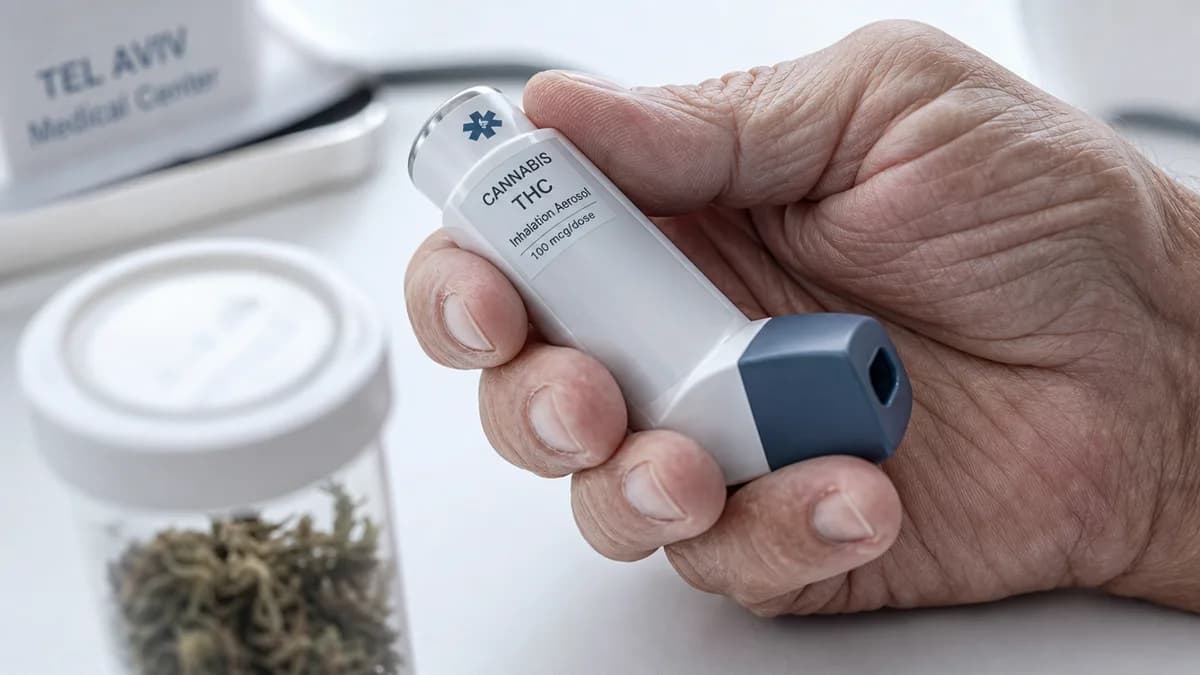
Photo: VapeExperts/AI
Consumer CBD is murkier. In early 2022, then-Health Minister Nitzan Horowitz announced CBD would be removed from the Dangerous Drugs Ordinance if total THC stayed at or below 0.3%. Later legal commentary says implementation and consumer access remained unclear. The announcement is documented. A finished consumer market is not.
"Israel's MC program reflects a dynamic interplay between policy reforms and patient treatment patterns," Aviram wrote, adding that "the findings underscore the importance of maintaining consistent national reporting standards to guide evidence-based MC policy and clinical practice."[3]
Lebanon legalized farming, then waited five years
Lebanon's parliament approved cannabis cultivation for medical purposes on April 21, 2020, becoming the first Arab country to do so.[5] Law No. 178/2020 covers medical, pharmaceutical, and industrial purposes, with a licensing authority setting geographic areas and THC and CBD concentrations.
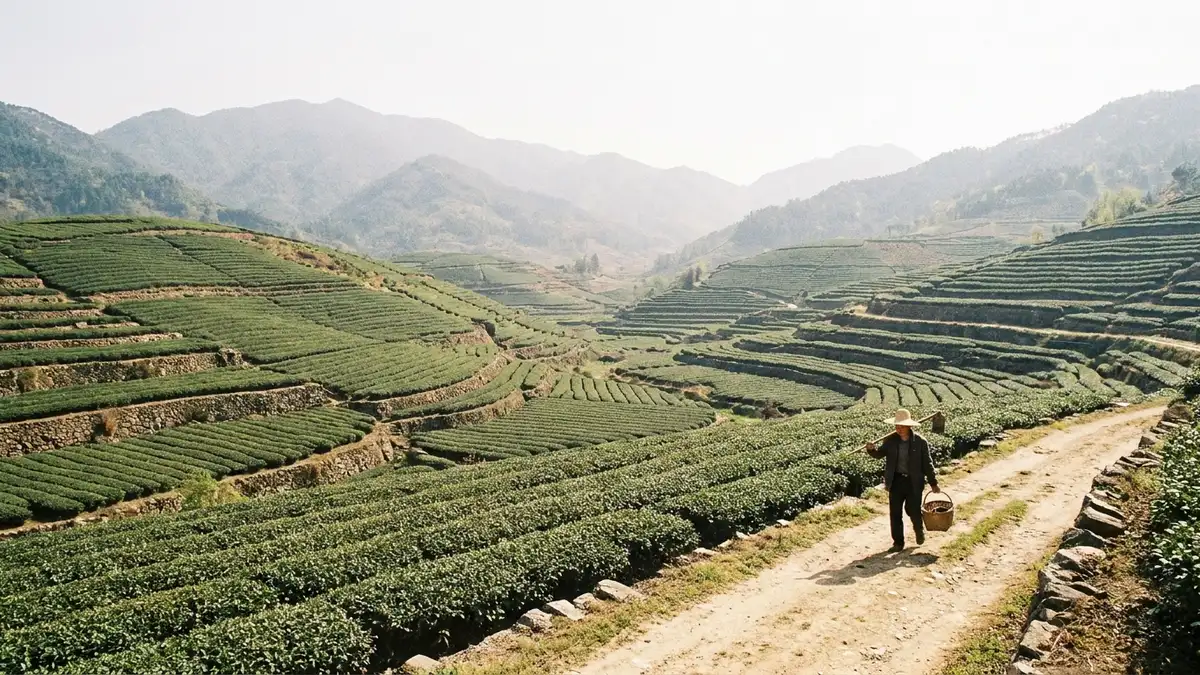
Photo: VapeExperts/AI
A peer-reviewed analysis found the cultivation law applies to cannabis containing less than 1% THC and creates a licensing commission across seeds, planting, harvesting, manufacturing, and exports. But the law "does not specify the process by which medicinal cannabis will be made available to the public in Lebanon and does not address the legal status of recreational cannabis."[6] Lebanese and regional media reported in 2025 that the regulatory authority was only then being appointed, with licensing expected to follow after years of delay. The opportunity is export cultivation, not a domestic vape shop.
The rest of the Gulf is not moving
The hard-line bloc treats CBD as a narcotic, and several states restrict vaping hardware on top of that. Travelers who pack any vaporizer for these routes face two separate legal problems.
- Saudi Arabia: The Ministry of Interior says smuggling narcotics into the kingdom can be punished by death; drug users can face 2 years in jail and foreigners can be deported.[8]
- Qatar: Law No. 9 of 1987 includes death and life imprisonment for serious or repeat drug offenses. Vaping devices and e-liquids are banned or seized at the border, with reported fines up to QAR 10,000 ($2,700).
- Kuwait: Ministry of Interior materials cite the death penalty or life imprisonment and fines up to KD 500,000 ($1.6 million) for trafficking.[7] A tougher anti-narcotics law entered force on December 15, 2025, according to state news agency KUNA.
- Oman: Public prosecution reporting cites up to 10 years plus RO 15,000 ($39,000) for supplying narcotics. Oman also banned the sale of e-cigarettes and shisha products, with fines up to OMR 1,000 ($2,600), doubled for repeat violations.
- Bahrain: Law No. 15 of 2007 prohibits narcotic substances and plants except in authorized cases.[9]
- Jordan: Law No. 23 of 2016 punishes personal use or possession with 1 to 3 years and a JOD 1,000 to 3,000 ($1,400 to $4,200) fine, according to a MENAHRA report quoting the statute.
Photo: VapeExperts/AI
What to watch
- Which products the UAE actually licenses under Federal Decree-Law No. 24 of 2025 once it operates through 2026, and how "legally authorized medical products" gets defined in practice.
- How UAE ports apply Cabinet Resolution No. 43 of 2024 to CBD cartridges specifically, given the schedule lists cannabis extracts and THC, and whether case reporting shows fines or full prosecutions.
- Whether Israel publishes a final implementing order settling consumer CBD status, and whether license numbers stabilize after the 7.5% decline that followed the 2024 HMO reform.
- Lebanon's regulatory authority: appointments, first licenses, and whether any patient-access rules emerge alongside export cultivation.
- Early enforcement under Kuwait's new anti-narcotics law, in force since December 2025.
The regional direction is controlled lanes, not open markets. Until a country writes authorization for a specific product and a specific person, the packing rule for Gulf airports stays the same as it was when Billy Hood was arrested.