

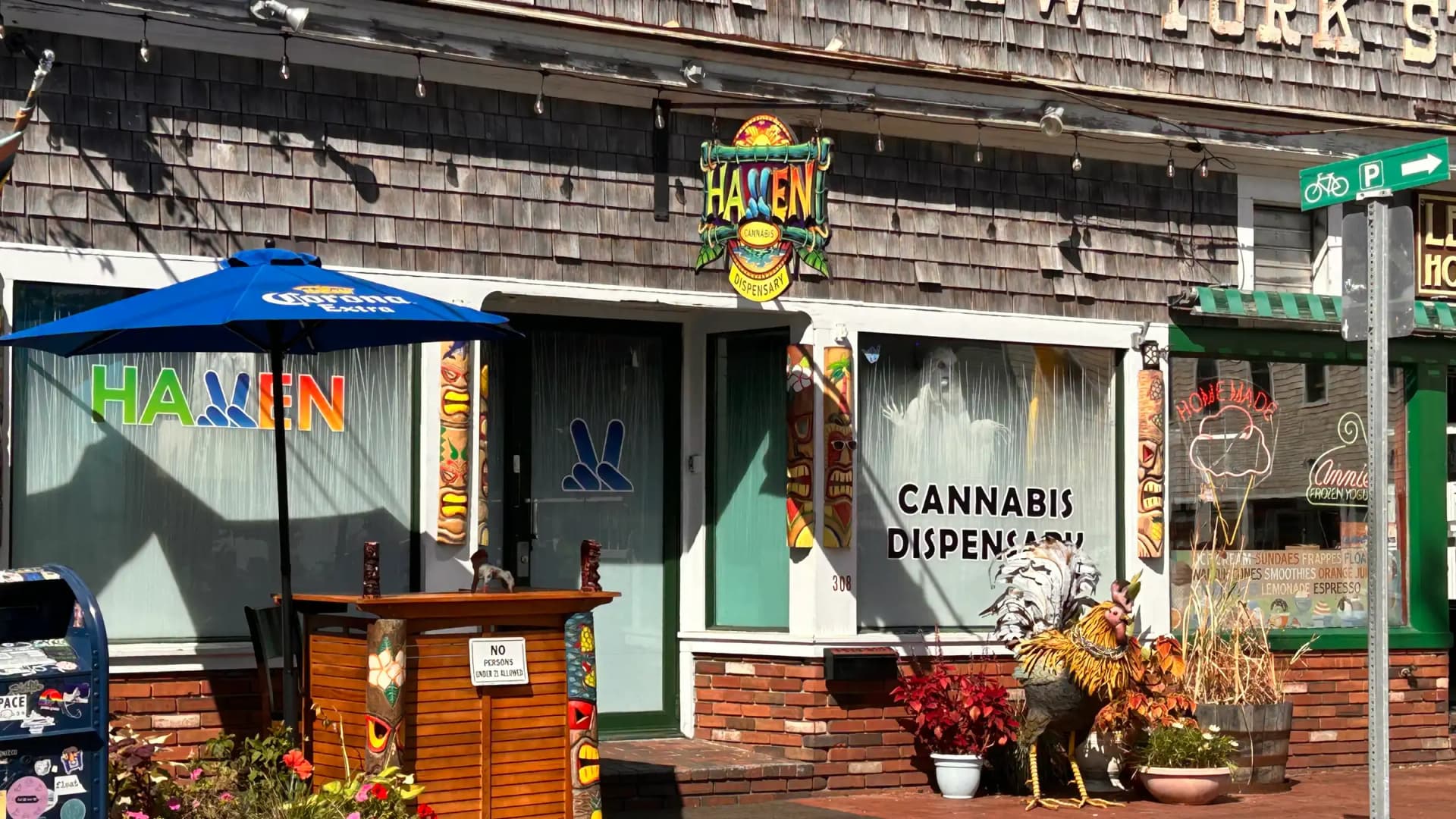
No U.S. state has ever asked voters to reverse a voter-approved cannabis market. Massachusetts is about to. On Nov. 3, 2026, the state is on track to vote on "An Act to Restore a Sensible Marijuana Policy," a ballot measure that would shut down adult-use cannabis sales, cultivation, and taxation.[2] The last legal hurdle fell on June 12, 2026, when the Massachusetts Supreme Judicial Court rejected a challenge and cleared the measure's path to the ballot.[1]
Voters approved legalization here in 2016 with about 54% support.[1] Ten years later, they may be asked to take it back.
Photo: VapeExperts/AI
What the measure would actually do
The proposal repeals Chapter 94G and Chapter 64N, the laws governing adult-use cannabis and its taxation.[1] The medical marijuana program stays. So does limited possession.
Under the bill text transmitted to the Legislature as H.5002, adults 21 and older could still possess 1 ounce or less of cannabis, including up to 5 grams of concentrate. They could gift up to that amount. Possession between 1 and 2 ounces would carry a $100 civil penalty and forfeiture.[2]
The Cannabis Control Commission would survive, but only to regulate the medical program. Existing adult-use businesses could apply on an expedited basis for medical dispensary licenses, or sell their remaining inventory to medical operators.[1]
If voters approve, the repeal takes effect Jan. 1, 2028.[2]
The court said the question is fair
Cannabis operators tried to stop the measure in court. A complaint filed April 1, 2026 by plaintiffs including Stem Haverhill owner Caroline Pineau argued that Attorney General Andrea Campbell should not have certified the petition.[6]
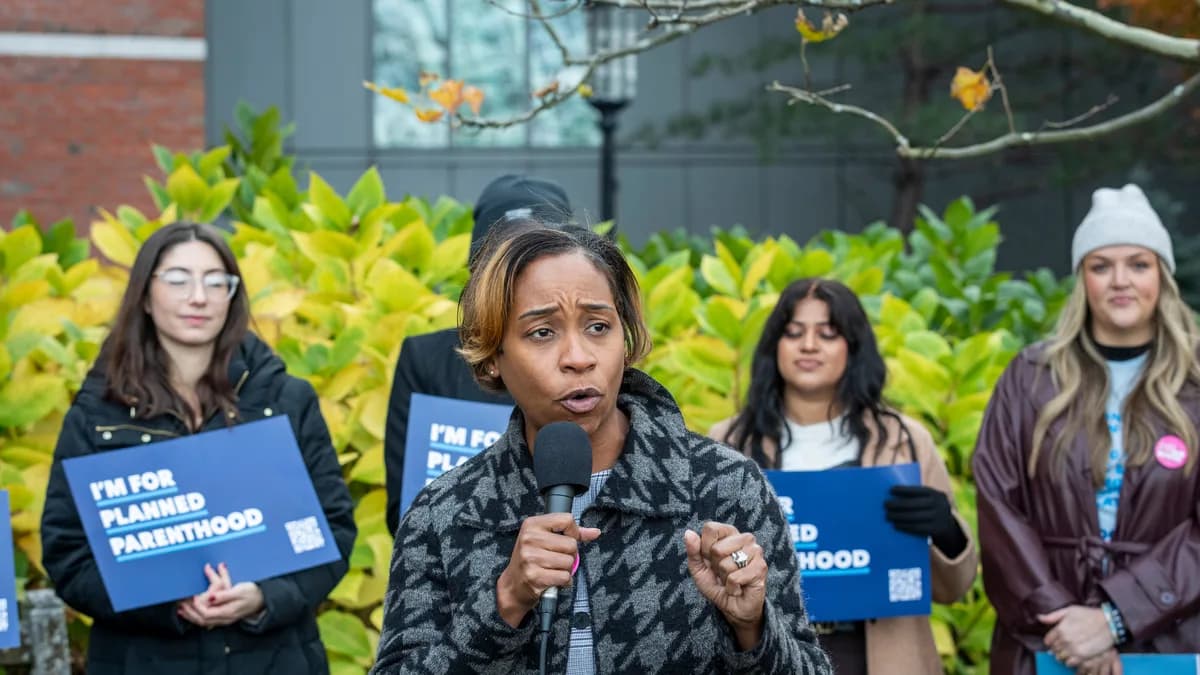
Photo: Marilyn Humphries/Newscom
Massachusetts Attorney General Andrea Campbell speaks outside the John Joseph Moakley Courthouse in Boston in November 2025.
The SJC disagreed. Justice Gabrielle R. Wolohojian, writing for the court, concluded: "We conclude that the Attorney General did not err in certifying the petition on either of the claimed grounds, and that her summary of the petition is fair."[1]
That ruling ended the last realistic legal path to keep the question off the ballot.[7]
How the measure got this far
The campaign has cleared every procedural gate so far:[3][4]
Sept. 3, 2025
Attorney General Andrea Campbell certified the petitions.
Jan. 7, 2026
Secretary William Galvin transmitted the measure to the Legislature with 78,301 certified signatures, above the 74,574 threshold.
Jan. 22, 2026
The State Ballot Law Commission rejected a challenge alleging misleading signature-gathering.
May 5, 2026
The Legislature let its deadline pass without acting, triggering a final signature round of roughly 12,429 signatures.
June 26, 2026
The Boston Globe reported that proponents said they had submitted enough final signatures, with official certification expected in July.
Who wants repeal, and who is paying for it
The measure is backed by the Coalition for a Healthy Massachusetts. Multiple outlets have reported the coalition received $1.55 million from SAM Action Inc., the political arm affiliated with Smart Approaches to Marijuana, a Virginia-based anti-legalization group.[8]
Coalition spokesperson Wendy Wakeman told the Boston Globe after the SJC ruling: "The Court correctly recognized that voters deserve the opportunity to evaluate whether the promises made by the marijuana industry have matched the realities experienced in our communities."
On the other side, cannabis business owners, advocates, and elected officials launched the Stop the Repeal campaign on June 25, paid for by the Committee to Protect Cannabis Regulation. MassCann is also urging a No vote, telling supporters: "A YES vote supports repeal. A NO vote protects the existing regulated market."
The polls favor No, with one warning sign
The best-documented public poll shows repeal losing badly. The UNH Survey Center Bay State Poll, conducted Feb. 12 to 16, surveyed 670 residents and found 63% opposed repeal, including 48% strongly opposed, while 20% supported it. The margin of error was 3.8 points.[5]
One later survey suggests a closer contest. A Polity Research Consulting poll for the Retailers Association of Massachusetts, reported by a single outlet, found 48% No, 41% Yes, and 11% undecided among 608 registered voters. That result has not been independently confirmed, but it hints the race could tighten if repeal backers focus their message on youth access and impaired driving.
What's at stake: a $1.65 billion market
The numbers are not small. The Cannabis Control Commission reported that adult-use sales topped $1.65 billion in 2025, a record, across 46.3 million transactions. The state collected $289 million in adult-use tax revenue in FY2025. Roughly 21,000 agents work in the adult- and medical-use sectors, and 416 consumer-facing businesses held notices to commence operations in November 2025. Cumulative gross sales passed $9 billion by March 2026.
Photo: VapeExperts/AI
CCC Chair Shannon O'Brien said in January: "The cannabis industry in Massachusetts continued to mature in 2025 with the number of cannabis businesses reaching the highest point since adult-use sales began in 2018."
The stakes are not evenly distributed either. We covered how legalization's economic gains have been unevenly shared, and the operators with the thinnest margins would have the hardest time converting to medical licenses.
What repeal means for cannabis vapes
For our readers, the practical picture looks like this. Adult-use cannabis vape products, concentrates, and flower sold through recreational dispensaries would disappear from legal shelves on Jan. 1, 2028, because the entire adult-use product framework sits in Chapter 94G.[2] Medical patients could still buy cannabis flower and vaporizer cartridges through licensed medical dispensaries.[1]
Home possession stays legal at 1 ounce, so owning and using a dry herb vape would not change. What changes is where the cannabis comes from.
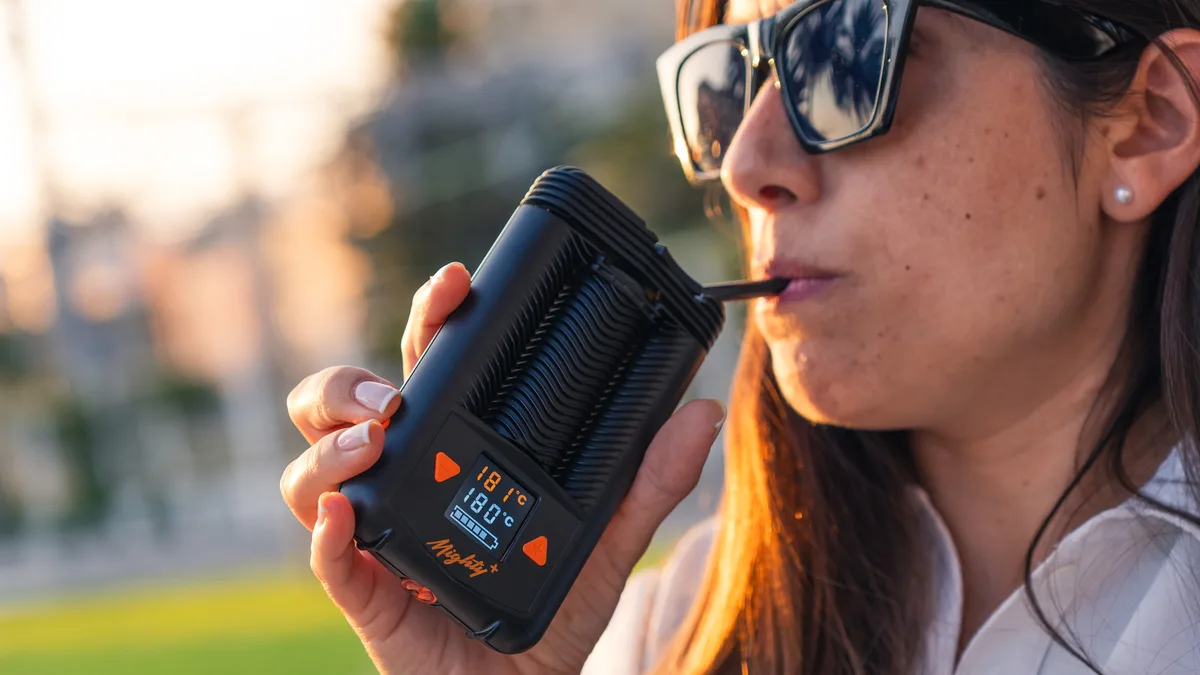
Photo: VapeExperts
A woman uses a Storz & Bickel Mighty+ vaporizer outdoors. Massachusetts voters will soon decide a first-of-its-kind repeal of legal cannabis, a move that could reshape the state's market for cannabis vapes.
Here is the irony the No campaign will hammer. The CCC's own March 2026 research found that 73% of past-year consumers reported buying cannabis at a "store" in 2023, and the agency cautioned that "store" may include smoke shops and online sellers of hemp-derived THC products "that are neither regulated by the Commission nor age-restricted." Repeal closes the tested, regulated channel. It does nothing about the untested one.
A test case for a national rollback
Massachusetts matters beyond its borders. This is not a red-state backlash story. It is a mature, high-revenue, heavily regulated market in a legalization-friendly state, where the CCC's own survey data put adult-use support at 81% in 2023. Axios called the vote a "bellwether test."
Forbes reported that organized rollback efforts are also active in Maine and Arizona, with SAM leadership discussing multi-million-dollar backing for initiatives in both Maine and Massachusetts.[8] If repeal runs competitively here, expect the playbook, focused on youth use, potency, and impaired driving rather than moral opposition, to travel.
Final certification of the ballot question is expected this month. Then comes a four-month campaign over whether the first state to vote cannabis legal by referendum in New England becomes the first state anywhere to vote it back out. We will be watching the OCPF finance filings, the ballot language, and every poll between now and November.